Argo Blockchain’s bitcoin holding has now surpassed 1,000

0

Argo Blockchain Share Price

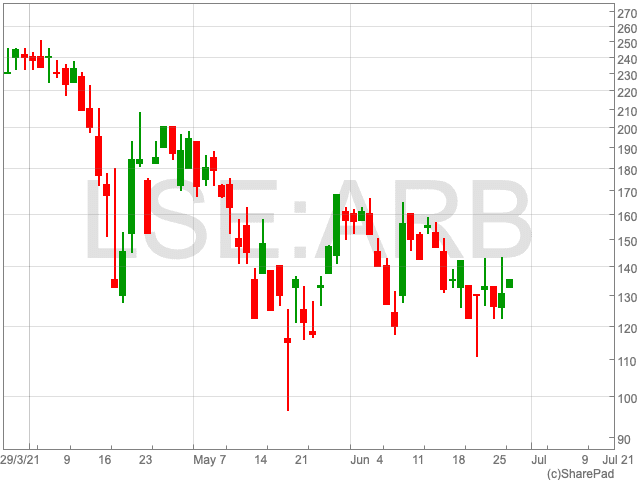
The Argo Blockchain share price (LON:ARB) has been tumbling since it reached its high point in March. Having been as high as 360p, it now stands at 129.9p, after bitcoin plummeted in recent months. However, year-to-date, it remains up by 175.8%. Investors are still interested in the company as many see bitcoin as playing a pivotal role in the future of finance. While analysts, who have mixed views, continue to have their say on the cryptocurrency.
Update

In its last update, Argo confirmed it mined 166 bitcoin during May, up from 163 in April. This brings the total amount of bitcoin mined since the start of the year to 716, and its total holding to 1,108 bitcoin.

Peter Wall, Chief Executive of Argo said: “May has been a busy month. We have continued to deliver strong revenue and as a result, Argo’s Bitcoin holding has now surpassed 1,000 BTC. We are also delighted to have signed the Crypto Climate Accord and to have been involved in the creation of the Bitcoin Mining Council. These initiatives have the potential to enact systemic change within our sector and speed up the rate at which miners switch to renewable energy to power their operations. We are also pleased to announce Argo’s strategic investment into WonderFi. Access to this emerging sector needs to be democratised and we believe WonderFi is in an excellent position to achieve this.”

Analysts

The dive in the price of bitcoin caused analysts to cut their revenue forecasts for Argo Blockchain for the remainder of this year and the following. Analysts at FinnCap now believe that Argo Blockchain will make £60m in 2021 and £77.1m in 2022. FinnCap has set a price target for the Argo Blockchain share price of 220p.

Bitcoin

It goes without saying that the Argo Blockchain share price is intimately linked to the performance and adoption of bitcoin.

As bitcoin hovers above $30,000, analysts have mixed views on what could happen next. While some see further declines to below $30,000, others see the crypto heading north. “We believe that there is not much downside in the short term as we trade near the bottom end of the $30,000-$42,000 trading range,” Delta Exchange CEO Pankaj Balani told Coindesk.

What now for the travel sector as stocks tumble?

0

Merkel making case for tighter travel restrictions in the EU

Travel stocks took a beating on Monday as Angela Merkel suggested that the EU should categorise the UK as a “country of concern”, in addition to implementing restrictions to those travelling from the UK.

The proposal by the German chancellor appears to be ongoing, and due the fact the Delta variant is so prevalent in the UK, could apply to those who have not yet been fully vaccinated.

While Boris Johnson is due to hold talks with Merkel this week, UK travel stocks plummeted on Monday.

At 3pm on Monday, the IAG share price was down by 5.2%, the easyJet share price lost 4.5%, and in addition to others, the Rolls-Royce share price was down by 3.85%.

“Summer 2021 was supposed to bring salvation for the UK travel sector as lockdowns were lifted and arms were jabbed,” comments Danni Hewson, AJ Bell financial analyst. “Instead it has brought more confusion and a dawning realisation that a big money booking boost isn’t on the cards.

Even if the EU’s policy doesn’t materialise, holiday makers will have to read the small print of their booking after country after green lit country seems to be lining up change requirements.

“Malta, Spain and now Portugal are changing the goal posts, worried that pennies won’t be the only thing Britons will bring with them,” said Hewson.

“Though travel companies have reported a surge in bookings there have also been many stories of would-be-tourists hedging their bets and it’s likely many of those will decide to err on the side of caution and plump for their British booking. There are too many variables, too few certainties. No parent wants to get stranded at an airport with disappointed children or to spend their full holiday stuck in one hotel room.”

Changes to the furlough scheme are just days away and this could cause skittishness within the industry.

“How far can airlines and travel companies stretch their meagre incomes, how long can they juggle costs, how much extra pressure will the new wage bill add? There are no easy answers and every day seems to bring more questions,” said Hewson.

Burberry share price plunges as CEO steps aside after five years

0

Burberry Share Price

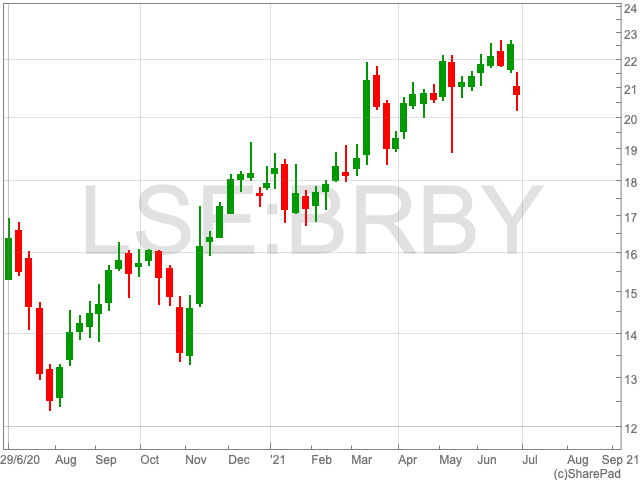
The Burberry share price (LON:BRBY) is down by 8.04% on Monday as news broke that Marco Gobbetti is stepping down as chief executive of the luxury brand. The slide comes on the back of what has been a long bull-run over the past 12 months, with Gobbetti steering the company back towards its pre-pandemic level, albeit with some hiccups along the way. Since the turn of the year the Burberry share price is up by 13.71%, while over the past 12 months it has added 30.7%. It still remains someway short of 2,329p, its level before its stores were forced to close down across the world. However, shareholders will be hoping the new leader can maintain the FTSE 100 company’s recent momentum.

Marco Gobbetti

After nearly five years at the helm of Burberry, Marco Gobbetti stepped down from his role as chief executive of the luxury fashion brand. Gerry Murphy, the Burberry chairman, heaped praised on the departing chief executive:

“The board and I are naturally disappointed by Marco’s decision but we understand and fully respect his desire to return to Italy after nearly 20 years abroad. With the execution of our strategy on track and our outlook unchanged, we are determined to build on Burberry’s strong foundations to accelerate growth and deliver further value for our shareholders,” Murphy said.

The Burberry share price move following Gobbetti’s exit certainly suggest investors agreed with Murphy’s sentiments. This could cause difficulties for the company moving forward, adding pressure to find a high quality replacement.

“Investors must always resist the temptation to fall for the ‘cult of the CEO’ because one person cannot do everything at a firm, no matter how driven or talented, but the share price plunge shows how disappointed by Marco Gobbetti’s decision to step down from the top job at Burberry,” says AJ Bell Investment Director, Russ Mould.

There does not seem to be any negativity behind the decision, simply a desire on Gobbetti’s part to be with his friends and family in his native Italy.

Gobbetti compares favourably to the firm’s other CEOs when judging the performance of the Burberry share price compared to the FTSE 100 under their respective tenures.

% change in% change in
CEOTenureBurberry share priceFTSE 100
Rose Maria BravoJul 2002 to Dec 2005*87%31%
Angela AhrendtsJan 2006 to Apr 2014246%21%
Christopher BaileyMay 2014 to Jun 201712%8%
Marco GobbettiJul 2017 to present35%(2%)

“That might not match the spectacular share price gains forged under Angela Ahrendts or Rose Maria Bravo, but allowances must be made for the different economic and market backdrops, as well as Burberry’s higher valuation. The company was valued at just over £1 billion when it came to market in 2002 and £2 billion when Angela Ahrendts took over, while its price tag now is some £9 billion, so the law of large numbers will have some effect,” said Mould.

“With Burberry re-energised and firmly set on a path to strong growth, I feel that now is the right time for me to step down,” Gobbetti said in a statement.

“I have every confidence that the creativity and strong values that define Burberry will continue to drive the company’s future success.”

China’s industrial profit growth slows adding to inflation concerns

0

Officials have suggested that China’s recovery is patchy

Soaring commodities prices negatively impacted the performance of Chinese industrial companies during May.

The impact trickled down to the rest of the Chinese economies and is adding to concerns over inflationary pressures.

Profit levels at China’s industrial firms jumped by 36.4% in May year-on-year, according to data from China’s National Bureau of Statistics. The official data showed a slowdown compared to the 57% rise the month before.

It seems that the increasing prices of raw materials are squeezing margins at China’s industrial businesses.

Officials have suggested that China’s recovery is patchy, despite it appearing to be the first out of the blocks as the rest of the world reeled from the coronavirus pandemic.

“The foundation for recovery is not yet solid,” said Zhu Hong, an official at the statistics bureau.

Concerns remain that it is also causing an onset of inflation across the world, amid the ongoing debate among central bankers over raising interest rates.

The Bank of England recently predicted inflation would exceed 3%, which is above its target for a “temporary period”.

However, the news did not motivate the Bank of England to urgently act by tightening its policy.

“The economy will experience a temporary period of strong GDP growth and above-target CPI inflation, after which growth and inflation will fall back,” the monetary policy committee said.

While US consumer prices rose by the most since 2008 during the month of May as concerns over inflation escalated.

Pent-up demand in the US is facing up to a shortage of goods, from lumber and steel to chemicals and semiconductors, that are used in the manufacturing processes of key goods.

The Fed now expects interest rates to go up in 2023, about 12 months earlier than previous expectations.

While China is the second largest economy on the planet, it remains hugely influential in the functioning of the rest of the world.

Policymakers in China have been doing their best to contain spiralling metals prices, including shifting supplies from the government’s reserves. However, as demand picks up again, the impact of these efforts may not touch the sides.

FTSE 100 slides as Burberry chief steps down

0

Having opened flat, the FTSE 100 is down by 0.47% to 7,102.22 during the morning session on Monday as healthcare, consumers goods, utilities and miners proved to be the only sectors to show any positive signs of life.

“Global markets kicked off the week with a subdued tone, with minimal changes to the major indices across Europe and Asia,” says Russ Mould, investment director at AJ Bell.

While investors were not too pleased to hear that Marco Gobbetti, the chief executive of Burberry, had stepped down, causing the Burberry share price to fall by 6.44% at the time of writing.

“That shows how much he is credited with the success of the luxury goods business,” Mould said.

“Share prices can rise when a CEO resigns if the market didn’t like the incumbent as it suggests optimism towards the company finding someone better to do the job. Equally, share prices can fall when a CEO resigns if they are an integral part of the company’s success,” Mould added.

Brent crude oil prices held firm above $76 per barrel while gold nudged 0.1% ahead to $1,784 per ounce.

“Higher oil prices aren’t good for airlines as fuel is a major cost. That factor, together with fading hopes of a profitable summer for the industry, saw shares in the major airlines decline between 2% and 3%, including weakness in EasyJet and Jet2.”

FTSE 100 Top Movers

Informa (1.23%), AstraZeneca (1.02%) and British American Tobacco (1%) are leading the way on the FTSE 100 early on Monday.

At the back of the pack is Burberry (-6.44%), IAG (-4.08%) and Whitbread (-2.44%).

JD Sports

JD Sports on Monday confirmed an agreement has been reached to buy Deporvillage, the online sports retailer in Spain.

The deal for an 80% holding amounts to €140.4m (£120.3m).

The FTSE 100 company said that Iberian Sports Retail Group, the holding company in Spain it owns 50% of, has agreed to purchase 80% of the shares in Deporvillage.

Greggs confirms sales recovery surpassed expectations

0

The Greggs share price is up by over 1% on Monday morning

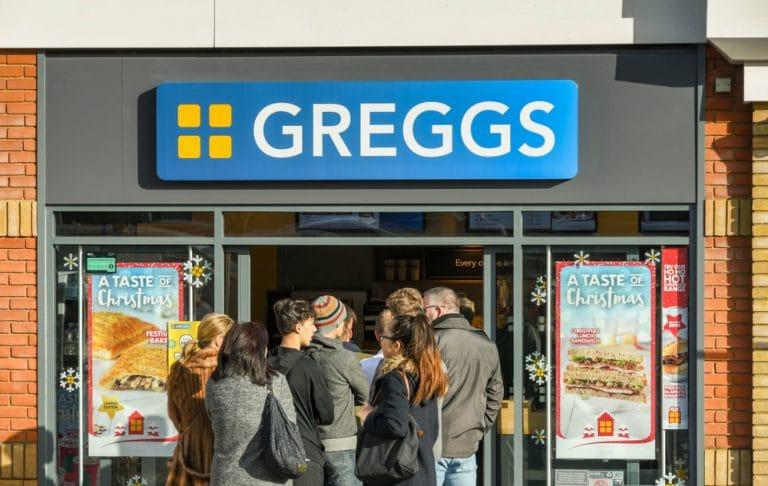
Greggs (LON:GRG), the baker, said that its recovery in sales surpassed its own expectations, which it believes could have a positive impact on the FTSE 250 company’s end of year results.

The company initially expected its sales to be negatively impacted by further competition as restaurants and cafes began reopening as lockdown restrictions continued to be eased.

However, Greggs confirmed that its sales have grown recently.

“In recent weeks the impact of pent-up demand for retail has reduced but, nonetheless, like-for-like sales growth in company-managed shops has remained in positive territory ranging between 1 and 3 per cent when measured against the same period in 2019,” the company said in its latest trading update.

The company also suggested that its end-of-year profits could exceed expectation and reach levels seen before the pandemic if the government continues to ease lockdowns at its current rate.

“Whereas some retail businesses only a temporary surge in sales as lockdown restrictions eased, thanks to pent-up demand, Greggs appears to have been able to sustain decent sales growth even after that initial flurry of activity across the retail sector in April,” says Russ Mould, investment director at AJ Bell.

“Movement of people either by foot, public transport or car is key to Greggs’ success. It has outlets strategically located in transport hubs, motorway service stations, shopping locations and offices. Assuming we’re not all stuck at home as per 2020, Greggs could do well given its affordable prices and formula for having attractive products and ability to appeal to customers throughout the day.”

“Some places like cafes are overly dependent on the morning trade, for example, whereas Greggs gets customers on their way to work, for mid-morning and mid-afternoon snacks, lunchtime and on the way home from work. That gives it a major advantage and sees the tills ringing throughout the day.”

The Greggs share price is up by 1.05% on Monday morning to 2,587p.

Back in March Greggs reported its first loss in 36 years during 2020 as sales dropped by a third following nationwide lockdown measures.

JD Sports set to buy online sports retailer Deporvillage in Spain

0

JD Sports will take 80% holding worth €140.4m

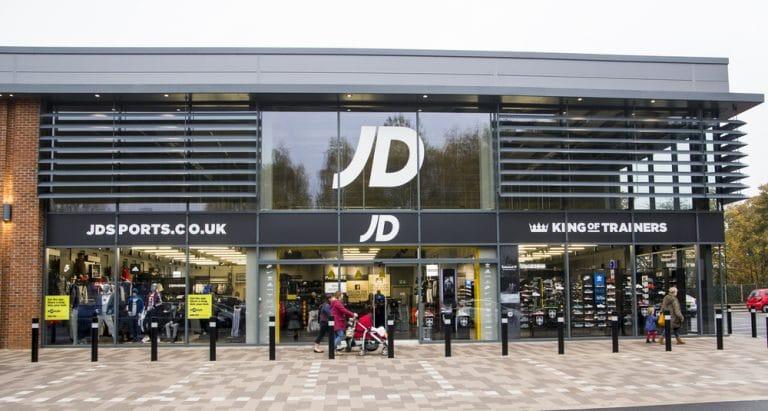
JD Sports (LON:JD) on Monday confirmed an agreement has been reached to buy Deporvillage, the online sports retailer in Spain.

The deal for an 80% holding amounts to €140.4m (£120.3m).

JD Sports confirmed that Iberian Sports Retail Group, the holding company in Spain it owns 50% of, has agreed to purchase 80% of the shares in Deporvillage.

Deporvillage is based in Manresa, Catalonia and sells running, cycling and outdoor goods, among other things, online.

Having started out in 2010, the retailer began selling to UK customers in 2018, and now has websites across Europe.

The JD Sports share price fell by 1.26% during the morning session, down to 940.6p.

Upon completion of the deal, Deporvillage‘s senior management team will keep a 20% stake in the business, as its CEO will remain in the same position.

“Deporvillage has a strong consumer-centric approach and is the market leader in its categories in Spain with significant potential for further international development,” JD executive chairman, Peter Cowgill, said.

“We look forward to closing the transaction and welcoming the Deporvillage team to the group.”

The JD Sports share price is headed up the FTSE 100 on Friday on a week that saw the sportswear brand spend five consecutive days in the green.

VietNam Holding pulls out of only private equity investmemt

The realisation will not have a material impact on Vietnam Holding’s net asset value

Vietnam Holding (LON:VNH) confirmed it has entirely pulled out of its position in ABA as the trust paid off the bonds and accrued interest.

In July 2019 Vietnam Holding made a private equity investment amounting to 139.8bn Vietnamese dong (VND) via convertible bonds.

“The investment was a private-equity transaction, structured with a negotiated set of terms and conditions, including the right to convert into equity once the foreign ownership limits allowed,” the trust said in a statement.

Towards the end of 2020 Vietnam Holding decided not to exercise the conversion option, and instead seek repayment of the bonds.

The realisation will not have a material impact on Vietnam Holding’s net asset value, the company said.

As at the close of business on 25 June 2021 and based on an estimated NAV, 95.87% of VNH’s assets are in listed equities and 4.13% in cash. There are no unlisted positions in the portfolio.

Earlier this month the UK Investor Magazine Podcast was joined by Craig Martin, Chairman of Dynam Capital, manager of the Vietnam Holding Investment Trust.

Vietnam Holding provides exposure to the evolution in the Vietnamese economy through banking shares, but also steel and construction companies.

Vietnam’s economy is becoming increasingly digital with many Vietnamese using smart phones for digital transactions, but with around 60% of the population still unbanked, there is significant opportunity for greater adoption as the middle class grows.

UK regulator bans crypto exchange Binance from UK

FCA issued a warning to Brits using the crypto exchange

Binance, one of the world’s largest crypto exchanges, has been told to halt its activities by the Financial Conduct Authority (FCA), one of the largest cryptocurrency exchanges in the world.

In addition to ruling that Binance cannot conduct any “regulated activity” in the UK, it sent out a warning about the exchange, suggesting people beware of its adverts making claims about the performance of investments on the platform.

Binance has been given until Wednesday evening to comply with the FCA ruling.

It comes as regulators across the world are coming down on crypto exchanges, often citing its use for illicit activities.

At present, Binance Group is based in the Cayman Islands, whereas Binance Markets Limited is an affiliate company based in London. The company has a range of other entities spread all over the world.

“Binance Markets Limited is not permitted to undertake any regulated activity in the UK. This firm is part of a wider Group (Binance Group). Due to the imposition of requirements by the FCA, Binance Markets Limited is not currently permitted to undertake any regulated activities without the prior written consent of the FCA,” read a statement by the FCA.

“No other entity in the Binance Group holds any form of UK authorisation, registration or licence to conduct regulated activity in the UK,” it continued.

The FCA does not regulate cryptocurrencies, however it does regulate cryptoassets. Companies must have authorisation from the regulator in order to sell or advertise such products in Britain.

This means that UK customers are not allowed to use Binance’s offering to bet on whether the price of a cryptocurrency goes up or down.

They are, however, still allowed to use the website to buy and sell crypto.

In January 2020 the FCA became the anti-money laundering and counter-terrorist financing supervisor of UK cryptoasset businesses, under the Money Laundering Regulations (MLRs).

Crypto firms wishing to continue their operations in the UK were required to register with the FCA in order to adhere to the MLRs.

However, the regulator failed to assess and register all the companies that had applied in time for the initial deadline.

This meant many firms faced the prospect of being legally required to halt their business activity in the UK.

Tip: A money magnet

Electric vehicles and offshore wind turbines require specific rare earths that are not easy to find. So, a company with a well-advanced project is highly valuable - particularly when it is outside of China, which dominates the market.
Neodymium-Praseodymium (NdPr) oxide is the key element in the manufacture of magnet metals, required for electric vehicles and demand is only going to increase over the next decade.
One fully listed mining company has an attractive rare earths project and the backing of the government of the country where that project is based. It is also planning a new processin...