GSK share price: new biotech deal secured as investors keep pressure on

0

GSK Share Price

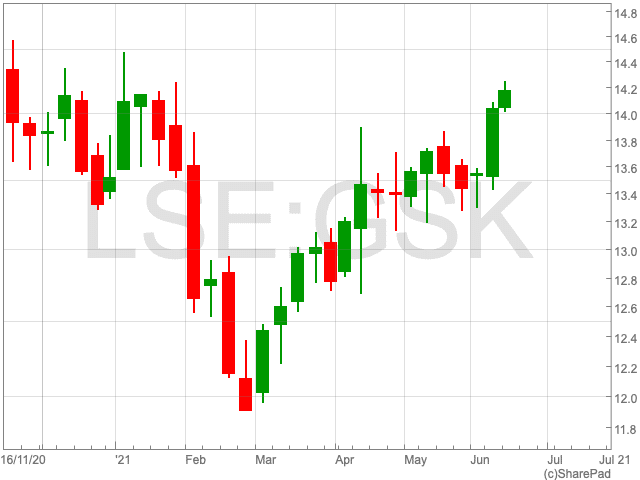
It has been a tough past 12 months for the GSK share price (LON:GSK), as the pharmaceuticals company has significantly underperformed the FTSE 100. However, despite being down by 11.42% over the past 12 months, the GSK share price has regained some momentum. Having added over 3% since the beginning of the year, it now stands at $1,418, its highest point since 2020.

GSK trailed its major rivals, each bringing their variations of the coronavirus vaccine to the market, and its revenues fell, causing investors to turn away from the company. However, more recently it has managed to push on. Investors will be curious to know if it can sustain this mini-resurgence both in the short and long-term.

US Biotech Deal

On Tuesday an announcement emerged that could somewhat appease investors who have been previously displeased by the pharmaceutical giant’s recent performance. GSK has put pen to paper on a deal to pay a US biotech firm $2.1bn to work together on a cancer treatment.

The British pharma firm will pay an American biotech company an upfront payment of $625m to collaborate on an antibody treatment in its second phase trials for advance solid tumours.

GSK will become the only pharma group to have antibodies that target three checkpoints, which are capable of shutting down the immune system, which fights against cancer. It plans to find a more effective solution to treat a variety of cancers, by combining its recently approved Jemperli with these antibodies. GSK will begin looking into these combinations next year.

Pressure from Investors

The biotech deal comes as GSK sets outs its plan for the future of the company next week following its consumer health business ‘spinning off’ in 2022. Pressure remains on Emma Walmsley, the chief executive of GSK, to give hope to investors around the future prospects of its drugs manufacturing.

Elliott Management, the American hedge fund, is leading the way having invested billions into the company. The company has a record of being robust in getting the most out of its investments which could serve GSK well moving forward.

While the mood around the GSK share price is not exactly an optimistic one, it is possible to see where the catalyst for a bull run could come from now and into the future.

Vietnam – a digital dragon, guarding a hoard of gold.

Vietnam had the best performing stock market in the world in May, with its benchmark VN All Share Index up more than 32%. over the first five months of 2021. It is currently the world’s highest growth market, achieving nearly a 3% growth in GDP in 2020 while many other markets plummeted due to the pandemic. Despite recent outbreaks of new Covid-19 variants, Vietnam is also back on course to reach its 30-year track record of 6.5% growth.                    

Vietnam’s stock market ranks as the second most liquid in South-East Asia, recently recording more than $1bn of transactions a day, with almost 800,000 new stock market accounts opened in the last 12 months. There is now a total of 3.2m stock trading accounts in Vietnam compared with an estimated 2.2m in the UK. The new investors, who are also young consumers, are increasingly digitally connected, smartphone and app-enabled, and keen to embrace the new Industrial Revolution.

The strong rise in Vietnamese stocks selected by Vietnam Holding (LSE: VNH) made it the top performing investment trust in the UK in May by Net Asset Value increase, and the second highest by share price increase. This actively-managed high-conviction fund, is purely Vietnam focused, and up around 90% this financial year (June 30 year-end), strikingly with more than 28% outperformance against the VN Index benchmark. According to its manager, Dynam Capital, its portfolio is set for more than 40% growth in earnings per share and sits around 11x Price-to-earnings for 2021, which is in line with the investment strategy of ‘Growth at a Reasonable Price: GARP’. Notwithstanding this strength in performance and the future potential, the fund currently trades at a discount of 20% to its Net Asset Value on the London Stock Exchange, providing an attractive entry point for those looking to diversify their investments.

Dynam recently hosted a webinar to look under the bonnet of the VNH portfolio and in particular the fund’s largest holding, FPT, which is a key player in the digitalisation of Vietnam’s economy, and a leader in a sector that is estimated to grow to $52 billion in value by 2025. FPT has been the number one holding in VNH’s portfolio for over 18 months and has seen its stock price rally 60% this year alone. An on-demand recording of the webinar featuring a presentation made by FPT is available here.

Vietnam’s internet penetration reached 69% in 2020 and 70.3% in 2021. This is among the highest in Asia, though behind China (107%) and Japan (77%). Double digit growth, therefore, surely lies ahead. The cost of accessing broadband is low in Vietnam – the cheapest plan is equivalent to less than GBP 5.8 per month, compared to Thailand’s GBP 15, Korea’s GBP 20, Indonesia’s GBP 25, and according to BT’s website, GBP 28 in the UK. As we have seen, cheaper access to fast internet can contribute greatly to economic growth. For FPT, fast internet means customers can stream content over their rapidly growing Pay TV business. Pay TV has around 55% penetration in Vietnam, less than China’s 76% and South Korea’s 99%, so room to grow.

Vietnam’s digital development is uniquely benefited by geography. It is a 2000-mile-long country, and narrow in places, which favours long high-capacity fiber-optic backbones, with smaller spurs to the regions and rural areas. It also has smaller legacy copper networks than in the US and Europe, so fewer roads to dig up. The country currently has an estimated 100,000 telecom towers, one of the highest levels per capita in Asia, providing mobile voice and data coverage and accommodating the future roll-out of 5G. 

In addition to being the top domestic IT services company in Vietnam, FPT is an emerging digital champion internationally with its provision of software and services to Fortune 500 companies. 20 years ago, Indian software companies, such as Infosys, Wipro, Satyam and TCS handled an increasing amount of outsourced IT work for the world’s multinationals. One catalyst for this was the infamous “millennium bug” or Y2K coding short-cut that was expected to cause global chaos with fears that aeroplanes would fall out of the sky and missiles fire by accident all simply by the hypothetical resetting of dates on computers at the stroke of midnight on the 1stof January 2000. The success of the software outsourcing model in India created an industry worth around US$150 billion, or 8% of the country’s  GDP. Vietnam’s software engineers on average cost one third of the level of those in India and China, so the opportunity for a Vietnamese company such as FPT to be competitive is immense. Already FPT serves many Japanese and US companies, who are trying to move their activities to the cloud, and upgrade their technologies to adapt to new customer usage patterns.

The final pieces in the digital picture are education and government regulations. FPT trains around 40,000 software engineers a year at its campuses across Vietnam, creating a deepening pool of talent for domestic and foreign companies alike. Engineering jobs within growth areas, such as Artificial Intelligence, Blockchain, and Cloud computing, should be readily available. The government is also pushing hard for digital technologies as a way to scale Vietnam’s development as a modernising industrial nation. It is looking to promote e-payment and e-government. Soft infrastructure is as important as hard infrastructure, and both can have a multiplier effect on economic growth.

Visit www.vietnamholding.com for more information on the opportunities in Vietnam.

The future of space and rocket advancement with Orbital Machines

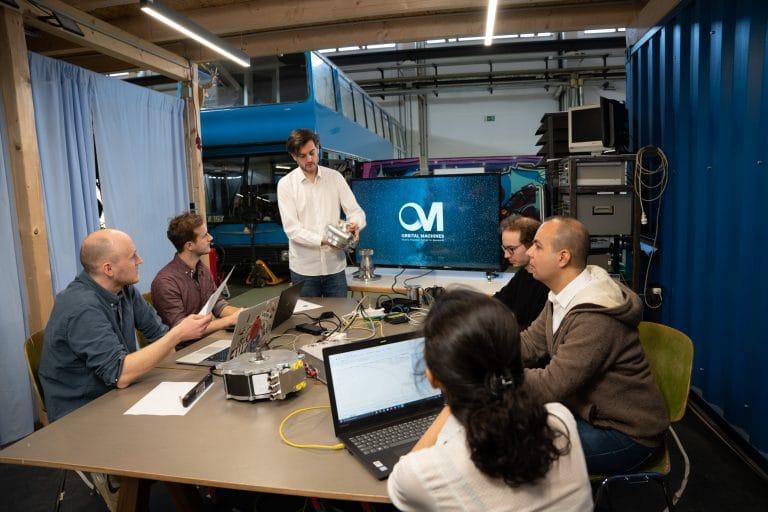
The UK Investor Magazine Podcast is joined by CEO and Founder of Orbital Machines, Eivind Liland.

Orbital Machines is solving a major pain point for the micro launcher industry, building scalable electric motopump systems, ready to be implemented into aerospace and space applications.

The Norwegian based company is providing an electric based solution for smaller launches in an overall private space industry that is estimated to worth $1.4 trillion by the 2030s.

Although Orbital Machines are setting their sights on electric propellant pumps initially, Eivind outlined where he sees the business evolving with other components for rockets such as sensors and connectivity facilitators so rocket makers do not have to build everything from scratch.

Eivind discusses what Space travel could look like in the future, including the need to produce propellant in space. He mentions his interest around mining in space and travel to further reaches of the solar system to sustain humanity.

Orbital Machines are currently overfunding at Seedrs. Check out their campaign at Seedrs.com now

19% of adults have less than £100 in savings

0

Survey shows the ‘further widening of the financial wellbeing gap in the UK’

Nearly one fifth of adults hold less than £100 in savings, a survey has revealed.

In a sign that financial inequality may be widening, around the same proportion of people have increased the amount they are saving on a monthly basis during the pandemic.

Yorkshire Building Society conducted the survey, which found that 19% of adults had less than £100 saved, while 21% of people were not saving at all.

13% of people have zero savings to their name and over 26% of people have less than £500 stored away.

On the other hand, 17% of people who took part in the survey said they were able to reduce their debt levels during the pandemic.

Tina Hughes, director of savings at Yorkshire Building Society, said: “Our new research continues to highlight just how fragile many people’s finances are, with the shocking figure that nearly a fifth of all UK adults have less than £100 in savings.”

“It also shows the further widening of the financial wellbeing gap in the UK. While we know it can be hard for people to put money away, especially with rising living costs and in a low-interest environment, we mustn’t overlook the impact saving has on people’s financial and mental wellbeing.”

People’s financial situation often has a direct impact on their mental health, as 22% reporting trouble sleeping due to the fact they are concerned about money.

Hughes added: “Now more than ever, with current and potential future economic uncertainty, it’s important for people to try to build their financial resilience and for us as a society to help people to save.

“Money worries can make people anxious, so we want them to know they don’t have to suffer in silence and we’re here to help them to manage their money during difficult times.”

Baby Boomers and Gen Xers have given out £8.2bn to family during the pandemic, with 25% of over 50s lending an average of £1,300 each.

More than half of parents and grandparents raided their savings to do so according to a separate survey.

India to classify bitcoin as an asset class says report

Cryptocurrency Regulation Bill likely to be put forward in the oncoming Monsoon Session of Parliament

India may soon classify bitcoin as an asset class, according to a report, after it initially took an unwelcoming view of the digital currency.

Industry sources have suggested, according to a report from The New Indian Express, that the government will make moves soon while the Securities and Exchange Board of India (SEBI) will oversee regulations as the classification for bitcoin is changed.

The report added that India’s crypto experts have held talks with the finance ministry over the construction of new regulations.

In May it was reported that the government was seeking expert opinion as consensus was established that banning bitcoin was an outdated decision, highlighting a shifting stance within the Indian government.

A Cryptocurrency Regulation Bill is likely to be put forward in the oncoming Monsoon Session of Parliament.

“We can definitely say that the new committee which is working on cryptocurrencies is very optimistic on cryptocurrency regulation and legislation,” Ketan Surana, Director and chief financial officer, Coinsbit, told the New Indian Express.

India’s commitment to treating bitcoin as an asset class follows decisions by other countries to alter their approach. Notably, El Salvador, which made bitcoin legal tender alongside the US dollar.

Paraguay could soon follow as a member of its congress made plans to put forward a bill aimed at making the South American country more hospitable to the crypto industry.

Following a strong surge at the end of the weekend and into Monday, bitcoin is sitting above $40,000 as it awaits further announcements by policy makers and institutional investors from across the world. Its market capitalisation stands at $752.81bn.

Homebuilder Bellway makes record land investment amid rising house prices

0

Bellway has agreed to purchase 15,982 plots since the beginning of August

Bellway (LON:BWY), the FTSE 250 homebuilder, said on Tuesday that it expects demand for new homes to be strong for the remainder of the financial year, on the continued support from the government, as well as low lending rates.

The company expects to sell in the region of 10,000 homes during the year ending in July, up from 7,522 units the year before.

Bellway also confirmed it has made a record investment in land since last August.

The homebuilder has agreed to purchase 15,982 plots since the beginning of August, well up 10,620 during the 2019 financial year.

Bellway said its most recently bought plots are valued at £891m and that the average gross margin is around 23%.

Over the same period of time, house prices have jumped, down in part to the stamp duty holiday.

“Bellway is making hay while the sun shines. Amid strong demand for homes, the housebuilder is setting itself up for the future with its record investment in land acquisitions,” says AJ Bell investment director Russ Mould.

“While land prices may not be quite as depressed as they were in the initial stages of the pandemic, it is still an opportune time to buy and this should have positive implications for the profitability of homes built on these plots and for future growth.”

“The stamp duty holiday has clearly been a driver for demand but there are other factors at play as people look to get more space, largely for home working, in the wake of the pandemic. This in turn means people are buying more of Bellway’s larger, higher quality homes, which is driving up average selling prices,” Mould added.

“The main negative is the rising raw material costs and difficulties in securing skilled labour. At the moment these headwinds are having only a limited impact as house prices surge ahead. However, Bellway and its peer group may face a more difficult situation if the housing market cools.”

Revolutionising the NewSpace industry with OrbitalMachines

Orbital Machines wants to revolutionize the NewSpace industry by supplying standardized, reliable and affordable systems and components to rockets of all types. 

Their first product is an electric propellant pump for the small launch vehicle industry

14th June they reached the minimum target of €300.000 on Seedrs, and have 14 days left to overfund the campaign up to €1.000.000. This will enable the company to respond to the customer traction they have gotten so far.

“We are experiencing overwhelming interest in our first product: the electric propellant pump. It is ready to be commercialized with the overfunding Seedrs campaign, by starting more customer projects, and speeding up development.” – Eivind Liland says

Orbital Machines already have two ongoing projects: one with Copenhagen Suborbitals and their rocket Spica, and one with commercial customer Venture Orbital Systems and their small launcher Zephyr. Hydrotests, cryogenic tests and static fire tests are scheduled over the next year.

By exploiting new technological opportunities and economies of scale, Orbital Machines will supply the industry with standardized, affordable and reliable components for frequent launches. With more than 100 small launch vehicles in development world-wide, the growth in Orbital Machines’ primary market has just begun.

Our first goal is to commercialize the propellant pump, developing standardized parametric designs and repeatable methods to quickly and sustainably supply small launch vehicle companies with affordable, light and efficient pumps.” Liland continues. 

The emergence of small companies and organizations involved in space activities demands a supply market that can help reduce risk and cost. Reusability, frequency, weight and price are the main aspects Orbital Machines will address to beat existing solutions.

“When we have commercialized the propellant pump we want to move on to the other critical components and systems of a rocket. We will benefit from parametric design experience, standardized production and technological possibilities of integration. We will become a total supplier, the “Intel inside” if you want, of the NewSpace industry”, Liland concludes.

This is their third successful crowdinvest campaign, previously concluded two on the Norwegian platform Folkeinvest. You can join this growth prospect in an industry with most of its history ahead of us.

If you’re interested in learning more, request a copy of the Orbital Machines investment deck or if you’re ready to jump straight in – join Seedrs campaign HERE.

FTSE 100 at pandemic peak as UK jobs markets shows signs of improvement

0

A solid UK jobs report led to the FTSE 100 opening at its highest level since the pandemic began this Tuesday.

“The most relevant figure this morning was the claimant count change reading for the month of May. Instead of adding another 25,000, there was a 92,600 drop in claimants, not far off double the upwards revised 55,800 reduction posted in April,” said Connor Campbell, financial analyst at Spreadex.

Though the resulting gains for the FTSE 100 were hardly gobsmacking, a 0.2% increase was still enough to push it to its best open since the end of February, or the start of 2020’s pandemic-plunge. The index remains 20 or so points short of yesterday’s intra-day peak.

Elsewhere a 0.6% increase for the DAX lifted the German bourse to a fresh all-time high, while the CAC was pushing for a recent peak of its own as a 0.4% rise left it 5 points off 6,650.

“In contrast the Dow Jones remains without momentum, though a prospective 0.1% increase this afternoon would lift it back above 34,400,” Campbell added.

“There’s a flurry of activity pre-open that will likely alter the Dow’s eventual performance this afternoon. Retail sales for May are set to drop to -0.6% month-on-month, but with the core reading jumping from -0.8% to 0.4%. PPI, meanwhile, is expected to dip from 0.6% to 0.5%.”

FTSE 100 Top Movers

Associated British Foods (3.62%), Just Eat (2.06%) and Ferguson (1.86%) are leading the way on the FTSE 100 early on Tuesday.

While trailing at the other end of the pack is Intermediate Capital Group (-3.38%), Anglo American (-2.24%) and Antofagasta (-1.97%).

UK unemployment rate falls to 4.7% on record jump in employee numbers

0

Wages grew at the fastest rate since 2007

The number of employed people in Britain jumped by a record number during May as coronavirus restrictions were eased further, and pubs and restaurants began serving people indoors again.

However, the employment figure remains over 500,000 below the pre-pandemic high.

The headline unemployment rate fell for a fourth consecutive month to 4.7% for the quarter ending in April.

Tax data made available on Tuesday shows UK companies increased their employment numbers by 197,000 in May, the large increase in a single month since records began as far back as July 2014. The total number of employed people now stands at 28.5m.

In addition, wages also grew at the fastest rate since 2007 for the year ending in April, while the figures are somewhat skewed by comparisons with depressed wages a year ago, in. addition to a high number of job losses among low-paid employees.

“The latest forecasts for unemployment are around half of what was previously feared and the number of employees on payroll is at its highest level since April last year,” finance minister Rishi Sunak said.

Laith Khalaf, financial analyst at AJ Bell, commented:

“All the dials in the labour market are pointing in the right direction, but they’re heavily distorted by the gravitational pull of the furlough scheme, lockdown lifting bottlenecks, and the effect of annual comparisons now lapping the first wave of the crisis. We won’t get a clear picture of the health of the post pandemic economy until the back end of this year, and that means the Bank of England isn’t going to rush to any interest rate hikes in the next few months, even if the UK looks to be firing on all cylinders.”

“Hospitality businesses are getting friction burns, as the entire sector opens up and looks for staff to service a horde of customers, hungry to make the most of their new freedoms. However, after an initial round of playing catch up, there’s only a certain amount of food and booze customers will want to consume and so the growth from reopening can’t be extrapolated infinitely. That applies across a whole host of sectors and indeed the UK economy at large.”