Avacta Group share price jumps as lateral flow test approved by UK regulator

1

Avacta Group Share Price

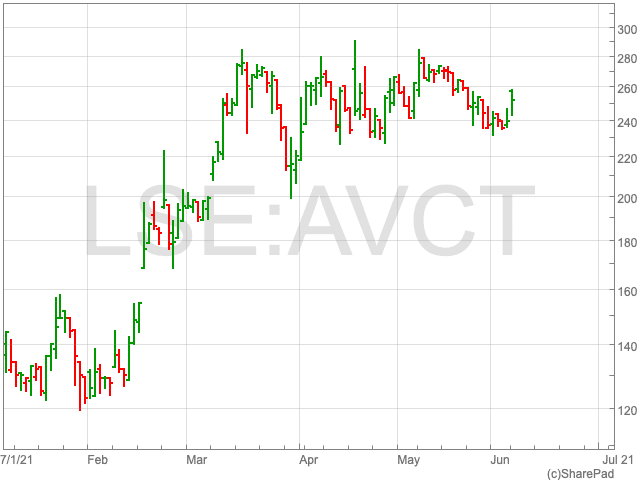
The Avacta Group share price (LON:AVCT) is up by 6.21% on Monday to 253.84p per share. Going further back, over the last 12 months and more, the biotechnology company has performed well, as have many firms involved in the production of coronavirus tests. Before Covid-19 caught the world by storm, Avacta was focused on cancer therapies and diagnostics. Since then, Avacta found an additional purpose, which boosted its share price.

Over the last six months shares in Avacta Group are up by 105%. While over the last year and three years, shares in Avacta have risen by 60.5% and 641% respectively. The question that remains is how long will demand for Covid testing products support the Avacta Group share price and by how much.
Lateral Flow Test

Today’s move came as the diagnostics and cancer therapy developer revealed that the Medicines and Healthcare products Regulatory Agency (MHRA) has confirmed registration of its ‘AffiDX’ SARS-CoV-2 antigen lateral flow test for Covid-19. This allows the AIM-listed company to put the product on the market in the UK for it to be used professionally. Product registration from a recognised body in the European Union could soon follow.

Avacta said the purpose of its lateral flow test is to provide a cost-efficient and speedy way of identifying people who are most likely to infect others. This is also referred to as having a high viral load.

The company reported that its lateral flow test, when tested in April, found a 100% sensitivity for identifying infectious people with viral loads measured by PCR of Ct<27.

Avacta confirmed ongoing commercial discussions with distributors and end-user customers in nations that accept the CE-mark for in vitro diagnostic products.

“I am delighted to receive confirmation of the registration of the AffiDX SARS-CoV-2 antigen test from the MHRA,” said Avacta Group chief executive Dr Alastair Smith.

“It is a transformative milestone for Avacta’s Diagnostics Division being the first CE marked product powered by the Affimer platform that has been brought to market.”

The AIM-company will now turn its attention to focusing on the commercial roll-out, which could boost the Avacta share price, as well as playing a significant role in allowing economies around the world return to normal.


Bitcoin set to become legal tender in El Salvador

Bitcoin holds steady as announcements come from El Salvador and Paraguay via Twitter

The president of El Salvador confirmed on Sunday that he will make bitcoin legal tender in the Central American country.

Pending backing by the country’s congress, El Salvador would become the first country in the world to officially adopt the cryptocurrency.

Bitcoin would operate alongside El Salvador’s current currency, the US dollar.

Nayib Bukele, the president of El Salvador, said it would become easier for Salvadorians living in other nations to send money back home.

“In the short term, this will generate jobs and help provide financial inclusion to thousands outside the formal economy,” Bukele said at the Bitcoin Conference 2021 in Miami.

If it passes through congress, financial services would be opened up to 70% of El Salvador’s people who do not currently own bank accounts, according to the president.

The country’s economy relies largely on money being sent from abroad, totalling 20% of El Salvador’s GDP.

A mobile payments app by the name of Strike is working to introduce bitcoin to El Salvador.

“Adopting a natively digital currency as legal tender provides El Salvador the most secure, efficient and globally integrated open payments network in the world,” Strike founder Jack Mallers said.

“This is the shot heard ’round the world for bitcoin. Adopting a natively digital currency as legal tender provides El Salvador the most secure, efficient and globally integrated open payments network in the world,” Mallers added.

Paraguay

Heading further south, further crypto news is emerging, this time in Paraguay.

Again taking to Twitter, Paraguayan MP Carlos “Carlitos” Rejala hinted at a PayPal/bitcoin related announcement.

https://twitter.com/carlitosrejala/status/1401712725886132224?s=20

Translated into English, Rejala said: “I’ve been saying this for a long time: Our country needs to move hand in hand with the new generation. The moment has come, our moment. This week we will start on an important project that will help innovate Paraguay for the whole world to see.”

Despite the news coming out over the weekend the market is largely flat on Monday. Over the past 24 hours, bitcoin is up by 0.82% to $36,363.

China’s export growth below expectations in May as copper falls

0

Chinese exports 3.2% below expectations in May

Export growth in China slowed by a more than expected amount during May, as revealed by data from the National Bureau of Statistics.

Exports rose by 27.9% in May compared to the month before, albeit down from 32.3% in April. It also fell below consensus forecasts for 32.1% growth.

Imports jumped by 51.1%, 7% higher than in April. Despite falling below consensus expectations of a 53.5% jump, it was still the fastest growth in over ten years.

Copper prices fell on Monday too, leading to concerns over a slowing of demand for the red metal. Due its wide usage, copper is looked to as a bellwether of the world economy.

The copper composite was down 2.8% at 446.3¢ around lunchtime.

“The only news that came out since (the dip) is the China export data,” a Singapore-based metals trader told Reuters.

“Friday’s rebound had already run its course, so there’s a need to retrace lower first before it (price) can go up. The medium-long term view is still bullish due to a weaker U.S. dollar,” the trader added, referring to a 1.7% gain in London on Friday.”

Capital Economics said told Sharecast: “We think that trade volumes, which are well above their pre-virus trend, will drop back over the coming quarters. Admittedly, supply constraints should start to ease later this year. But the pandemic-induced surge in demand for Chinese exports appears to be losing momentum and should reverse as global consumption patterns normalise on the back of vaccine rollouts and easing social distancing restrictions.”

“The relatively modest level of the PMI export orders indices – which measure the share of firms seeing rising orders – underlie how concentrated the current strength of foreign demand is, making it vulnerable to a pullback.”

House prices see fastest growth in seven years and ‘likely to keep rising’

0

Since May 2020 nearly £22,000 has been added to the average house price

House prices in the UK are expected to continue rising despite reaching record levels in May, according to Halifax.

Halifax, one of the UK’s biggest mortgage lenders, revealed that the price of a home jumped by 1.3% in May, brining the average selling price to a record £261,743. Many are making efforts to secure deals as the UK’s stamp duty holiday begins to draw to a close.

Since May 2020, nearly £22,000 had been added to the average house price, as the UK saw a gradual easing of its lockdown restrictions.

At a yearly rise of 9.5%, it is the fastest rate of growth in seven years.

Halifax’s findings echo Nationwide’s report from last week which suggested that UK house prices rose by an annual 10.9% over the same time period.

The Halifax managing director, Russell Galley, said: “Heading into the traditionally busy summer period, market activity continues to be boosted by the government’s stamp duty holiday, with prospective buyers racing to complete purchases in time to benefit from the maximum tax break ahead of June’s deadline, after which there will be a phased return to full rates.”

In addition to a move int the average price of a home, there has been a shift in the type of homes people are looking to move into during the pandemic. The working from home surge has created interest in bigger homes outside of city centres and with gardens.

“These trends, coupled with growing confidence in a more rapid recovery in economic activity if restrictions continue to be eased, are likely to support house prices for some time to come, particularly given the continued shortage of properties for sale,” Galley said.

Sam Mitchell, CEO of online estate agent Strike, said: “Contrary to the British weather, the UK property market was red-hot in May and house prices showed no signs of cooling.

“The fast approaching stamp duty holiday deadline has helped turn the market into a frenzy, but there are other factors at play here. A sense of normality is returning as restrictions lift and the vaccination roll out progresses, while we’ve also seen a major uplift in the 95% mortgage offering which has helped more first-time buyers come to the market.

“Many will be questioning if this level of demand will last once the stamp duty holiday begins to taper off, but let’s not forget that the UK is still faced with a major supply and demand imbalance issue. A lack of new stock, particularly houses with outside space and in rural locations, will continue to push prices up by being outweighed by demand. Plus, the Government may well have something else up its sleeve to support the market once the stamp duty holiday ends.”

FTSE 100 off to tepid start as inflation fears linger

0

The FTSE 100 made a tepid start on as weak Chinese export data emerged, in addition to comments from US Treasury Secretary Janet Yellen that she would not be averse to higher interest rates because it would signal the economy was on the mend.

Less than three hours into the week the UK index is up by 0.2% to 7,082.97.

Yellen’s comments contain a “hint of menace for the markets given what rising rates normally mean for the performance of equities,” says Russ Mould, investment director at AJ Bell.

“This hint of menace might become something more genuinely frightening for investors if it is followed by a high level of inflation when the US figures are published later this week.”

“Very quickly the issue of rising prices and their impact on monetary policy could become front and centre again, after being pushed to the back of the market’s mind by a US jobs report on Friday which, while not terrible, presented a fragile enough picture of employment to suggest the US Federal Reserve would maintain low rates and financial stimulus for longer.”

FTSE 100 Top Movers

Royal Mail (2.91%), along with homebuilders Persimmon (2.46%) and Taylor Wimpey (2.43%), lead up the FTSE 100 early on Monday.

At the other end, Anglo American (-2.70%), Antofagasta (-2.01%) and Fresnillo (-1.88%), have seen the biggest falls so far today.

Reckitt Benckiser

Reckitt Benckiser (LON:RKT) will make a £2.5bn loss by selling its underperforming baby formula business in China to a private equity company called Primavera Capital Group. The FTSE 100 consumer goods company took over the business four years ago as part of its acquisition of Mead Johnson. The deal for the baby milk group came to $16.6bn.

Reckitt will now sell the majority of the Chinese division to Primavera for $2.2bn. The deal will amount to $1.3bn once costs are taken into account. Once all costs are factored in, including goodwill, Reckitt will lose £2.5bn with the sale. It will also retain an 8% stake in the business.

Oil falls back while investors look ahead to Iran nuclear talks this week

Brent crude oil reached highest level since May 2019

Oil retreated having touched multi-year highs on Monday, as the eyes of investors turn to talks this week between Iran and other nations over a nuclear deal that could push supplies of crude oil.

Brent crude oil was down by 0.9% to just over $71.20 a barrel early this morning, having reached $72.27 hours before, its highest level since May 2019.

West Texas Intermediate crude for July reached $70 for the first time since October 2018, but turned around, and came back down to $69.10 a barrel, a fall of 0.8%.

It is possible that some investors sold their contracts to cash in on profits when WTI reached $70, Avtar Sandu, a senior commodities manager at Phillips Futures in Singapore, told Reuters.

“The primary concern is about Iranian barrels coming back into the market but I don’t think there will be a deal before the Iranian presidential election,” Sandu said.

Figures showing that China’s crude oil imports fell in May by 14.6% compared to the year before could also have impacted prices.

Prior to today’s moves, both Brent and WTI rose over the past two weeks as fuel demand picks up in America and Europe as coronavirus restrictions are being eased in time for the summer.

Analysts have said that demand for oil across the world is expected to surpass supply in H2 of 2021 as OPEC+ implements an easing of supply cuts.

Support for the price of oil also came as talks between Iran and other nations over a nuclear deal stalled.

A fifth round of talks is expected to commence on June 10, while it has been reported that the US could lift economic sanctions on oil exports from Iran.

In America there has been a slowdown in the rate of growth of oil and natural gas rigs for the first time in six weeks, while the growth of drilling has also slowed.

CMC Markets analyst Kelvin Wong suggested that “U.S. oil drillers are less enthusiastic in adding more U.S. oil production and hence reduces the risk of a supply glut in the global oil market in H2 2021.”

Reckitt Benckiser records £2.5bn loss following sale of baby formula business

0

Reckitt Benckiser will retain an 8% stake in the business

Reckitt Benckiser (LON:RKT) will make a £2.5bn loss by selling its underperforming baby formula business in China to a private equity company called Primavera Capital Group.

The FTSE 100 consumer goods company took over the business four years ago as part of its acquisition of Mead Johnson. The deal for the baby milk group came to $16.6bn.

Reckitt will now sell the majority of the Chinese division to Primavera for $2.2bn. The deal will amount to $1.3bn once costs are taken into account.

Once all costs are factored in, including goodwill, Reckitt will lose £2.5bn with the sale. It will also retain an 8% stake in the business.

“Reckitt’s deal to sell its China baby formula business helps to draw a line under one of the biggest strategic mistakes in its history,” said AJ Bell investment director Russ Mould.

“Questions were asked right from the start as to why Reckitt spent so much money buying Mead Johnson, a baby milk group which generated approximately half of its sales in Asia at the time of the acquisition in 2017.”

“Competition has been tough in the China baby formula market and the acquisition turned out to be a major disappointment. Three years after the deal, Reckitt took a £5 billion goodwill charge linked to the purchase of Mead Johnson, effectively putting its hands up and saying it got it wrong.”

The Reckett board put some of the business’ struggles down to closures of the Hong Kong border during the pandemic.

The consumer goods company wrote down the value of the baby milk business by £5bn, a fall in its book value of nearly 33%, as executives conceded that future profit margins would not meet their hopes.

Reckitt Benckiser chief executive Laxman Narasimhan said: “Today’s announcement marks another step in our strategy to rejuvenate growth and create long term value. As part of this journey, we are actively, and decisively, managing our portfolio.” 

The FTSE 100 firm, based in Slough, employees 40,000 across the world in over 60 nations. During the pandemic, as demand soared, Reckitt saw its sales jump by 12% to £14bn.

Oakley Capital announces investment in Afterbuy and DreamRobot

The move solidifies Oakley Capital’s position as the market-leader provider in the DACH region

Oakley Capital Investments (OCI) announced on Monday that Oakley Capital Origin Fund acquired controlling stakes in Afterbuy and DreamRobot, two of the leading providers of e-commerce software.

OCI will make an indirect contribution via Origin Fund of £6m.

Afterbuy and DreamRobot provide a comprehensive suite of Software as a Service (Saas) solutions for online sellers distributing products via online market places, including Amazon and eBay.

Across both businesses, more than €50m of gross merchandise has been processed to date.

The two investments mark the beginning of a strategy aimed at solidifying Oakley Capital’s position as the market-leading provider for small and medium-sized online merchants in the DACH (Australia, Germany Switzerland) region.

Oakley will support the growth of the businesses through its operational experience and software buy-and-build expertise, drawing on its track-record of successful investments in WebPros and Ekon, it said in a statement today.

Peter Dubens, Managing Partner of Oakley Capital, commented: “This is another example of Oakley’s repeated partnering with talented and trusted business founders, helping us to uncover attractive opportunities that others may not be able to access. As merchants continue to increase their online presence across multiple channels, we see a significant opportunity to build the go-to platform in e-commerce software alongside a talented management team.”

Daliah Salzmann, CEO of Afterbuy, added: “In partnering with Oakley, we look forward to building Germany’s leading e-commerce software provider. A combination of this initial platform investment, a fragmented marketplace and Oakley’s expertise will result in ECOMMERCE ONE being the principal supplier of software solutions to small and medium sized online retailers.”

Just last week Oakley Capital announced that the Oakley Capital IV has agreed to invest in ICP Education Holding, a leading independent group of UK nurseries.

TIP: The AIM share preventing hospital infections

Small pharma companies tend to have one product or technology that could make them a highly successful investment. In some cases, there is a well advanced second treatment using different life sciences technology.
This pharma company has a treatment to prevent serious infections that has already had highly positive phase 2b clinical study results. The next step will be the design of a phase 3 clinical study.
There is also a second, acquired technology that could move to a phase 3 clinical study next year. This is another antimicrobial drug to prevent serious infections.
The share price did ris...

New AIM admission: Artisanal Spirits

The Artisanal Spirits Company owns the Scotch Malt Whisky Society (SWMS), which has 28,300 members around the world. The placing price was at the bottom of the 112p a share to 121p a share price range.
Online sales continue to grow, offsetting the understandably weak performance from venues. International sales grew despite disruption from the UK leaving the EU. The second quarter should benefit from the removal of US tariffs – the additional cost was absorbed by the company.
Management believes that the company has the ability to more than double revenues to up to £40m in 2026. The craft spir...