DFS reported that its full-year sales and profits increases as people in Britain upgraded their homes throughout the pandemic.
The seller of sofas added that orders have held steady throughout the current financial year.
Despite coming up against issues such as supply chain disruptions, DFS expects to meet its earnings expectations.
DFS’s underlying profits before tax rose 55.6% to £105.8m.
Revenue increased by 9.7% to £1.06bn in the year to June 27.
Commenting on the latest results from DFS Julie Palmer, partner at Begbies Traynor, says:
“DFS has sprung back from the pandemic to a comfortable position. As homeowners jumped on the DIY bandwagon it benefitted from the demand of many being stuck at home. The business developed its digital offering giving it the best of both worlds,cushioning the blow of lockdowns. Its integrated retail model puts it in a strong position over competitors as it looks to the future.”
“While the company has had a positive year it’s now facing the same supply chain problems as many businesses. Its investment into its own logistics capabilities and UK manufacturing capacity may shelter it slightly, but DFS may not want to get too comfortable yet.”
Everyman Media Group confirmed that its loss before tax for H1 of 2022 narrowed on lower costs, which means it is now in a strong position to grow.
The London-listed cinema company said it has seen a strong recovery in admissions having fully reopened towards the end of July.
They are now at 80% of levels seen in 2019 as the group exceeded its own expectations and talked up the possibility of sustaining this trend.
“We anticipate that the strong slate expected in 4Q, including the new Bond film, together with further innovative programming, will drive further growth in this figure,” the company said.
The Everyman groups share price is up by 5.88% during the morning session on Thursday.
“Whilst the reporting period was challenging, with our venues closed for 20 weeks, the actions we took at the start of the pandemic and throughout have ensured we are now in a strong position to take advantage of the recovery.”
“We have been encouraged with trading since re-opening on 17May and are looking forward to a strong film slate in the last quarter of 2021. It has been a pleasure to welcome back our staff and see our customers enjoying all the aspects of the great night out that Everyman delivers. Our customers and in particular our members remain highly engaged, demonstrating that we have maintained exceptional brand loyalty throughout the period by keeping a constant dialogue with them.”
“Despite some challenges remaining ahead, we are confident in our business model and that customers will continue to return to Everyman in ever increasing numbers over time. We have had significant support from all our key stakeholders for which we are very grateful. We remain confident in the Everyman brand and our ability to navigate out of recovery and back to growth.”
IT recruitment and services provider Parity Group (LON: PTY) has been disappointing investors for the past few years. Just as the company’s performance appears to be improving there is a step back. Mark Braund became interim executive chairman in June, and he is trying to update the strategy and return the business to growth, although revenues continue to decline.
There has been a post-pandemic bounce in demand for staff, but Parity requires additional investment in order to take full advantage of the opportunities. Management decided to preserve cash during the pandemic and has lost staff, wh...
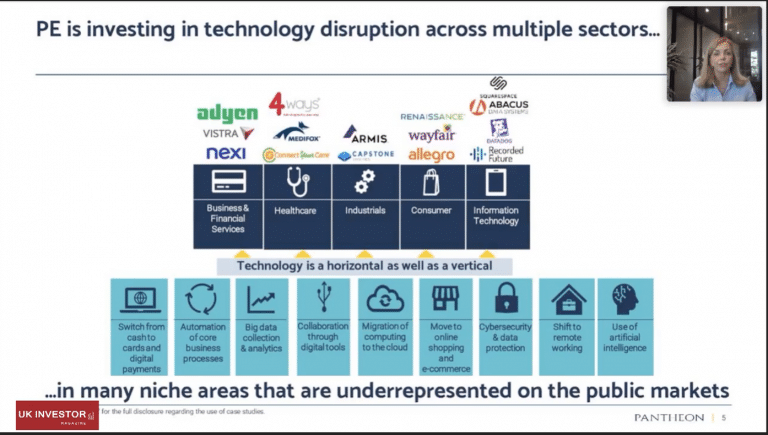
Pantheon International Plc (PIP) provides investors, through its flexible and active investment approach, with access to a global and diversified portfolio of high-quality private equity (PE) backed companies. An investment in PIP gives shareholders access to the growing PE market, effectively making investment opportunities in private companies available to public market investors. It does this by committing to a curated selection of the world’s best private equity managers who might otherwise be inaccessible to many investors, and by investing directly in private companies. Launched in 1987 and a constituent of the FTSE 250, PIP is a company of scale and one of the longest established PE funds on the London Stock Exchange. PIP’s aim is to maximise capital growth for shareholders over the long term.
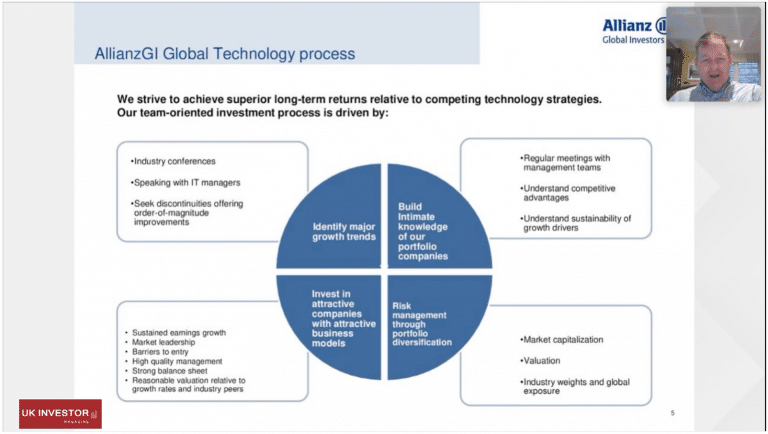
Allianz Technology Trust is managed by the highly experienced AllianzGI Global Technology team based in San Francisco. The team benefits from its close proximity to Silicon Valley where many of the world’s key technology companies are headquartered.
The Trust is a UK listed closed-ended fund which aims to achieve long-term capital growth by investing principally in technology companies globally. The team looks to identify major trends ahead of the crowd and invest in stocks that have the potential to be tomorrow’s Apple, Google or Microsoft.
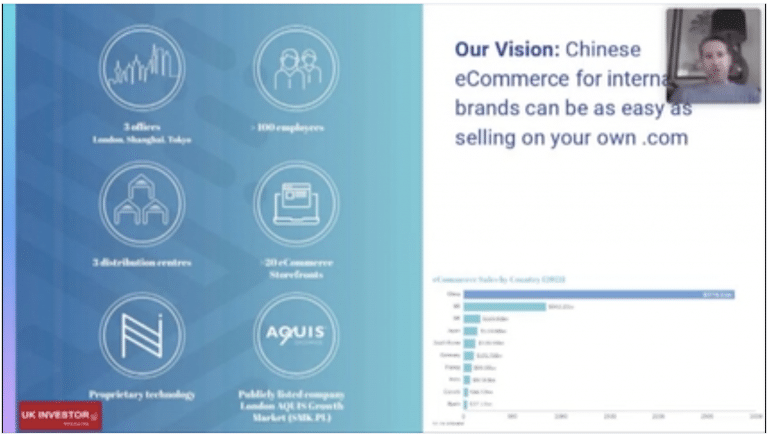
Samarkand Group was founded in 2016 in London, Samarkand is a cross-border eCommerce company focused on connecting Western brands with China, the world’s largest eCommerce market. In the last 5 years, the Chinese eCommerce market has evolved at breakneck speed, yet our mission remains as relevant as ever – to make Chinese eCommerce simple, accessible, and profitable for brands and retailers of all sizes.
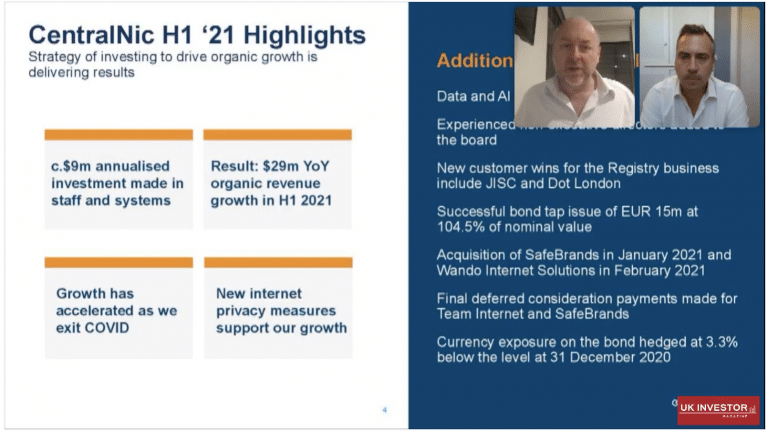
CentralNic (AIM: CNIC) is a London-based AIM-listed company that drives the growth of the global digital economy by developing and managing software platforms allowing businesses globally to buy subscriptions to domain names, used for their own websites and email, as well as for protecting their brands online. Its core growth strategy is identifying and acquiring cash-generative businesses in its industry with annuity revenue streams and exposure to growth markets and migrating them onto the CentralNic software and operating platforms.
The Robinhood share price is up by 6.46% over the past five days as news emerged that the company is testing its own version of a crypto wallet. The move raises some questions over how the Nasdaq-listed company will fare by its move into the crypto space. While the app already allows users to buy and sell crypto, its latest move would enable them to store it all in one place.
The recent spike in its share price comes as welcomed news the Robinhood share price had been trading lower following its Q2 earnings. While the Reddit-induced retail frenzy was pumping up trading levels, the trend appears to have cooled down somewhat. Its pivot to offering crypto wallets could potentially give the company some momentum moving forward.
Crypto Wallet
Robinhood confirmed on Wednesday its intention to test crypto wallets, with a wider roll-out in early 2022. Users will be able to move supported cryptocurrencies in and out of their brokerage accounts.
Customers of Robinhood have demanded that the company provides the service, as crypto transactions exceeded equities for the first time during the last quarter.
“This is the natural next step for us when we think about democratizing finance for all, being able to have a lot more people from a lot of different contexts participate in this emerging market, and wallets are the key,” Aparna Chennapragada, Robinhood’s chief product officer, said in an interview.
The company intends to survey its current crypto-trading customers, around 60% of the app’s 21.3m active users, and pick small group of respondents to begin testing the new wallets and provide feedback, Chennapragada said.
By Robinhood increasing its exposure to crypto, it could also help to reduce risk of its current revenue streams, as other areas of its business have faced question marks recently.
Robinhood said it would receive 0% commissions for crypto trades once the wallets are launched.
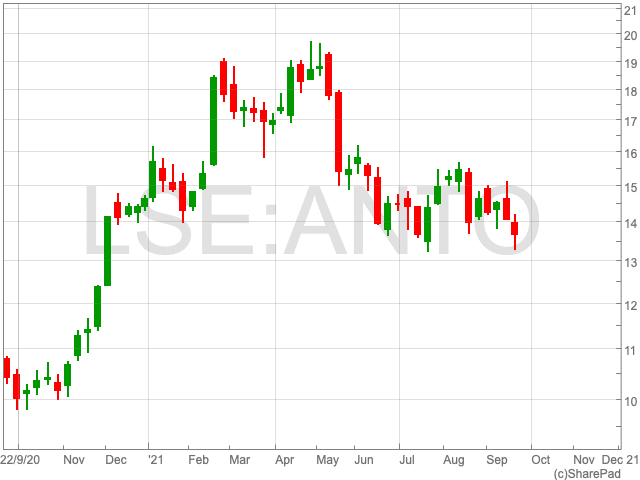
The Antofagasta share price is up by 4.85% on Wednesday as the mining giant enjoyed a bounce back from recent woes on the stock market. Over recent weeks the FTSE 100 company saw its share price dip along with the price of copper and other commodities. The miner saw a resurgence today as there was a glimmer of hope that Evergrande could strike a deal over a bond interest payment that is due.
Year-to-date the Antofagasta share price is down by 7.22%, after it surged in 2020 following the pandemic. Clearly, there is a lot going on, and copper prices can depend on demand in China. This article will take a look at the outlook for Antofagasta heading into the future.
Economic Uncertainty
A key question for the Antofagasta share price is the economic uncertainty that plagues the global economy. The miner’s ability to withstand economic shocks, wherever they may come from, could be vital.
One way to make this judgement is to examine the stock’s value. This can be done by looking at Antofagasta’s earnings yield, which is worked out by dividing its operating profit by its enterprise value. Generally speaking, the higher the Earnings Yield, the more valuable a share.
Antofagasta’s Earnings Yield is currently at 13.9%. This means, compared to the general rule, the company has a low valuation. This could be appealing to investors and reflects well on the company’s ability to withstand difficult economic conditions.
It must be added that while this measure of the FTSE 100 company’s ability to deal with turmoil bodes well, it by no means serves as a guarantee. Furthermore, economic shocks are impossible to predict.
Germany’s benchmark stock index the DAX is growing from 30 stocks to 40 with new stricter rules to govern the companies that qualify. See what’s happening and how it affects your index day trading.
————————–
What’s happening with the DAX index?
On Monday September 20th, STOXX a unit of Deutsche Borse, the German holding company of stock exchanges implemented what Reuters referred to as the biggest overhaul of the DAX index since it was created 33 years ago.
The biggest changes include:
Growing from 30 companies to 40 companies
Strict new index listing criteria
New de-listing rules (to enable faster action in instances like the Wirecard scandal)
Reminder: What is the DAX index?
The DAX is the globally-known benchmark for the German stock market and contains the country’s biggest and best known blue-chip shares. The DAX index is Germany’s equivalent to the FTSE 100 in the UK or the S&P 500 and Dow Jones in the United States.
While many investors use it to track the overall performance of German stocks, it can also be directly day traded as an ETF on the Frankfurt Stock Exchange, as futures and options contracts and as a CFD.
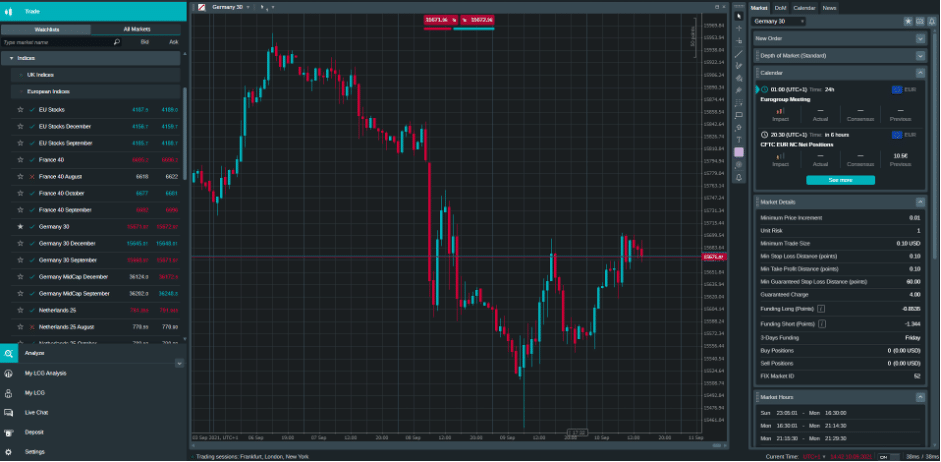
Germany 30 CFD on the LCG Trader platform (3pm GMT 10/9/21)
Past Performance is not an indicator of future performance
The Dax index was created in 1988 and undergoes regular reshuffles whereby some new companies are added, and some are dropped but it has remained very close to its original form for over 30 years.
The DAX index family has expanded over the years. The new rules taking shape will affect all the DAX indices, including the MDAX, SDAX, TecDAX, DAX 50 ESG and DAX ex Financials 30.
DAX 40 Constituents (stocks)
The following table shows the companies and the sector they are in.
Original DAX 30
Adidas
Footwear
Allianz
Financial services
BASF
Basic Materials
Bayer
Healthcare
BMW
Automaker
Continental
Automotive
Covestro
Basic Materials
Daimler
Automaker
Delivery Hero
Online food ordering
Deutsche Bank
Financial services
Deutsche Borse
Financial services
Deutsche Post
Industrial
Deutsche Telekom
Communications
Deutsche Wohnen
Real Estate
E.ON
Utilities
Fresenius
Healthcare
Fresenius Medical Care
Healthcare
Heidelberg Cement
Basic Materials
Henkel
Consumer goods
Infineon Technologies
Technology
Linde
Basic Materials
Merck
Healthcare
MTU Aero Engines
Industrial
Munich Re
Financial services
RWE
Utilities
SAP
Technology
Siemens
Industrial
Siemens Energy
Technology
Volkswagen Group
Automaker
Vonovia
Real Estate
New DAX 40:
Airbus
Plane-maker / defence
Porsche
Automaker
Puma
Shoes & sportswear
Siemens Healthineers
Health technology
Symrise
flavour and fragrances
Sartorius
Lab equipment
Brenntag
Chemicals distributor
Hello Fresh
Home meal kits
Qiagen
Genetic testing
Zalando
Fashion retailer
Source: Wikipedia/ Reuters NOTE: The constituents of the index are subject to change
The new rules for the DAX index
The aim of the rule changes is to raise the bar on what’s required of companies in the DAX index. The major new rules for the DAXas reported by Qontigo are the following:
Companies must be profitable for 2 years before inclusion
Must publish quarterly financial statements and have audited accounts
Companies must appoint an independent audit committee
DAX composition to be reviewed every 6 months (instead of 12)
Turnover requirement replaced by liquidity requirements (trading VOLUME)
Why is the DAX changing?
In a word, Wirecard. The accounting scandal involving the German company that had been escalated to the DAX index only 2 years priorto going insolvent was a major black eye. As of Wirecard’s insolvency in July 2020, a massive €2 billion is unaccounted for in what appears to be massive fraud at one of Germany’s most prized companies and a member of the DAX index.
The hope is that these changes will do two things:
Raise the requirements to qualify for the DAX index
Diversify the index so one stock will have less impact
Will the DAX 40 be better for day trading?
Despite the furore over Wirecard and the wild trading in German markets the weeks surrounding its collapse, the DAX index remains one of the most popular indices to trade at LCG.
As always, there are reasons for both hope and scepticism about the changes.
Pros for DAX 40
A larger number of stockswill bring higher trading volumes, which in turn is good for liquidity. Day traders want as much liquidity as possible to make sure bid ask spreads are low and there are more traders to match your order against.
The Diversificationthat comes with the index becoming 25% larger means the DAX will be less influenced by moves in one or two stocks. This means news from Siemens will have less impact on the price of the DAX than it once did but means news affecting the other smaller companies like Continental AG will have a bigger effect, potentially creating more trading opportunities.
Growth focusednewly added stocks can change the dynamic of the index away from traditional heavy industry to more digital areas of the German economy.
Cons for the DAX 40
The big companies still matter the mostin what is still a relatively concentrated index. With 40 companies the DAX is now more diversified than the Dow Jones Industrial Average but significantly less diversified than the S&P 500.
Germany’s economy is more concentratedthan the United States – in both the number of companies and the industries those companies operate in. From that standpoint, there is only so much that the DAX index can change.
Volatilitycould decrease. Having more constituents in this index will decrease volatility, which could either encourage or discourage day traders who normally would have liked this index due to its aggressive swings
How to trade the DAX 40
To practise trading on the DAX index or over 10,000 other financial instruments including CFDs on forex, shares, indices, spot metals, futures, bonds, options, and ETFs –
Spread betting and CFD trading carry a high level of risk to your capital and can result in loss of your deposits. CFDs are complex instruments and come with a high risk of losing money rapidly due to leverage. Please note that 68% of our retail investor accounts lose money when trading CFDs. You should consider whether you understand how CFDs work and whether you can afford to take the high risk of losing money.
The information provided within this communication has been prepared by London Capital Group Limited (LCG) and is intended for informative purposes only. It is not intended for investment, or commercial advice or an offer or solicitation for the purchase or sale of any financial instrument. Any opinions, news, research, analysis, prices, other information or links to third-party contained within this communication is provided as general market commentary and does not constitute investment advice and is not intended for any form of commercial use. LCG shall not accept liability for any loss, damager including, but without limitation, to any loss or profit which may arise directly or indirectly from use of or reliance on such information.
The information in this article is not directed at residents of EU as well as Australia, Belgium, Canada, New Zealand, Singapore or the United States, and is not intended for distribution to, or use by, any person in any country or jurisdiction where such distribution or use would be contrary to local law or regulation.
London Capital Group (LCG) is a company registered in England and Wales under registered number: 3218125. LCG is authorised and regulated by the Financial Conduct Authority (FCA) under the firm reference number of: 182110. The registered address for LCG is: 80 Cheapside, London EC2V 6EE.