FTSE 100 consolidates ahead of Christmas break

The FTSE 100 was steady heading into Christmas as the UK’s leading index consolidated recent gains just below 9,900.

With a few trading sessions between Christmas and New Year, the FTSE 100 is still in with a chance of breaching 10,000 before the close of 2025.

But it seems unlikely that the level will be breached today with volumes low amid a shortened trading session.

“Not much seemed to be stirring on Christmas Eve on the UK stock market as the FTSE 100 drifted a little lower,” says AJ Bell investment director Russ Mould.

“Weakness in the dollar, expectations for further US rate cuts, concerns about government deficits and debt in the developed world and geopolitical tensions have all been combining to put precious metals on a pedestal.

“However, having hit record levels overnight there were signs of a modest pullback this morning after stronger-than-anticipated data on the US economy. GDP coming in materially ahead of forecasts also helped to propel the S&P 500 to its own all-time highs but has reduced expectations for a near-term cut to US interest rates, which in turn led to mixed trading in Asia.”

Very few stocks moved more than 1% on Christmas Eve, with little impetus for investors to take big bets ahead of a few days off.

The expectation was Metlen Energy & Metals, which rose over 3% and was the top riser.

BP provided the biggest corporate story of the day with the news that it would dispose of its lubricants business Castrol.

2026 will prove to be a fascinating year for the oil major as the new CEO contends with pressure from activist investors amid a rollback of its clean energy plans.

“The next key test for BP, which continues to have its feet held to the fire by activist investor Elliott, is a strategic review expected in February,” Russ Mould said.

“Recently departed boss Murray Auchincloss arguably never recovered from his own strategic reset in February this year which fell short of most investors’ expectations, so BP cannot afford a similar disappointment this time around.

“Unlike Auchincloss, freshly appointed chair Albert Manifold and incoming CEO Meg O’Neill are outsiders. This may make it easier to deliver radical change at BP after its failed effort to transform into a green energy powerhouse.” 

2026 may be the year autonomous vehicles go mainstream – with the help of remote monitoring

For more than a decade, autonomous vehicles have promised to redefine transportation. The industry has endured hype cycles, regulatory pushback, tragic edge-case failures, and varying investor interest.

Yet as 2025 unfolds, something fundamental has changed: autonomous vehicles are no longer science fiction. They are starting to ship at scale.

Across the United States, autonomous vehicle programs are expanding beyond test corridors into live commercial service. Robotaxis are operating without safety drivers. Autonomous shuttles are carrying real passengers in city centers. Delivery robots are navigating sidewalks at scale. After years of incremental progress, 2025 is shaping up to be the year autonomous vehicles finally move from pilot to production.

Waymo now has a fleet of over 2,500 cars, Tesla is targeting the removal of human monitors, and the UK is even preparing to trial Chinese robotaxis in 2026.

But if 2025 marks the visible rollout of autonomy, 2026 may well be remembered for something less obvious, but arguably more important: the widespread deployment of remote monitoring and control infrastructure that allows humans to safely supervise, intervene, and coordinate autonomous systems at scale.

In other words, autonomy’s next chapter will not be defined by removing humans from the loop, but by putting them back in, remotely.

2025: The Commercialisation of Autonomy

Waymo continues to expand its fully driverless robotaxi operations across U.S. cities. Amazon-owned Zoox is accelerating the deployment of its purpose-built autonomous vehicles. Tesla is openly positioning robotaxis as a core pillar of its future business model. US local authorities and universities are launching autonomous shuttle services to address gaps in first- and last-mile transportation.

These are not trials in closed environments. They are revenue-generating, public-facing services operating amid real traffic, pedestrians and weather.

What makes 2025 different is not a single breakthrough in artificial intelligence or sensor hardware. Rather, it is the convergence of three distinct forces that has created a unique moment in the development of autonomous systems.

The first force is the maturation of perception and planning stacks that can now handle the majority of real-world scenarios. These systems have evolved beyond experimental prototypes into robust platforms that can navigate complex environments with greater reliability.

The second force is the evolution of regulatory frameworks that now recognise autonomy as a legitimate service rather than merely an experiment. Governments and regulatory bodies have developed clearer guidelines and pathways for deployment, creating the legal infrastructure necessary for commercial operations.

The third force is mounting economic pressure to deploy automation solutions. This pressure stems from persistent driver shortages, rising labour costs and increasingly severe urban congestion. Together, these economic factors have created compelling business cases that make autonomous deployment not just technologically feasible but commercially imperative.

Yet even as autonomy proves viable, its limits remain clear. Edge cases persist. Construction zones change overnight. Emergency vehicles behave unpredictably. Passengers expect accountability, not algorithms, when something goes wrong.

The missing layer: Remote monitoring and control

Autonomous vehicles do not fail often, but when they do, failure must be resolved instantly.

The industry’s answer is increasingly remote monitoring and control (RMC): centralised command centres staffed by trained human operators who oversee fleets of autonomous vehicles in real time. These operators do not drive continuously. Instead, they supervise, diagnose anomalies, approve decisions, and, when necessary, take temporary control to guide a vehicle to safety.

This model more closely mirrors air traffic control than traditional driving. One human can oversee dozens or even hundreds of autonomous systems simultaneously.

Crucially, regulators are beginning to require this capability.

States and municipalities deploying autonomous shuttles, delivery robots, and robotaxis increasingly mandate remote oversight, fail-safe communications, and documented intervention protocols. Insurance providers and enterprise customers demand the same.

In short, autonomy without supervision is proving unacceptable at scale.

As is typical with all new technologies, companies are taking slightly different approaches to the remote monitoring of autonomous vehicles. Waymo supports its fleet of robotaxis with remote assistance that helps guide the vehicles to make their own decisions, whereas Baidu Apollo Go vehicles, the cars that will be deployed by Lyft and Uber in the UK pilot next year, can be steered directly by a human operator in a control centre.

Tesla advertised for remote-control operator jobs earlier this year, and images posted on social media show steering wheels that appear geared for direct human remote control.

Why 2026 Is the Inflection Point

If 2025 is about deployment, 2026 is about infrastructure. By next year, the operational burden of autonomy will shift from vehicles to networks, from onboard intelligence to off-board supervision.

This is not a software add-on. It could be an entirely new service layer. Companies that provide remote monitoring and control are poised to become the quiet backbone of autonomy, rarely noticed by passengers, but indispensable to operators, cities, and regulators.

One company positioning itself at the center of this shift is Guident, a developer of remote monitoring and control center technology designed specifically for autonomous and robotic systems.

Guident’s model reflects a broader industry realisation: autonomy does not eliminate human responsibility, it redistributes it. Rather than placing a safety driver in every vehicle, Guident enables centralized Remote Monitor & Control Centers (RMCCs) that provide continuous oversight and intervention capabilities across fleets.

The relevance of this model is already visible in municipal deployments. In Boca Raton, Florida, the launch of MICA, the city’s autonomous shuttle service, underscores how cities are pairing autonomous mobility with human-in-the-loop oversight to build public trust and ensure operational resilience.

As autonomous systems expand into delivery, logistics, industrial robotics and public transit, remote monitoring will no longer be optional but rather foundational.

From Vehicles to Fleets to Platforms

What makes the RM&C layer particularly compelling is its cross-industry applicability.

The same remote infrastructure used to supervise robotaxis can support a wide range of autonomous applications across multiple sectors. Autonomous shuttles and buses can leverage the same monitoring and intervention systems, creating more efficient public transport networks. Last-mile delivery robots benefit from identical supervision platforms, enabling reliable package delivery in urban environments.

The infrastructure also extends to warehouse and port automation, where remote oversight ensures smooth operations in logistics facilities. Security and inspection robots can be monitored through the same systems, allowing operators to supervise multiple autonomous units conducting surveillance or facility inspections. Finally, industrial and agricultural autonomy applications can utilise this shared infrastructure, bringing remote supervision to manufacturing floors and farming operations alike.

This positions remote monitoring providers not as vehicle companies, but as platform businesses, a distinction that investors and policymakers alike are beginning to appreciate.

Much as cloud computing quietly became the backbone of the digital and AI economy, remote autonomy infrastructure may become the backbone of physical AI in early iterations.


AIM movers: Windar Photonics hit by China delay and new licence agreement for Aptamer

9

Synthetic binders developer Aptamer (LON: APTA) has signed a licensing agreement with Alphazyme, a Maravai LifeSciences company that supplies speciality enzymes to the life sciences sector. The non-exclusive deal is for a developed Optimer® for use in hot-start PCR applications – when the enzyme switches on when heated. The original development deal was signed in June 2024 and another development project has recently completed.

Checkit (LON: CKT) chief executive Kit Kyte bought 22,935 shares at 21.8p each, taking his stake to 1.73%.

Quantum Helium (LON: QHE) published a year-end update rounding up previous announcements. Priorities for 2026 include receipt of 3D seismic results and integrating this into drilling plans, commencement of flow test at Sagebrush-1 and advancing commercial discussions.

FALLERS

Premier African Minerals (LON: PREM) says it has been issued with a writ of execution of movable property at the Zulu project by a creditor seeking $2.2m. Discussions continue with the creditor, which is JR Goddard Contracting.

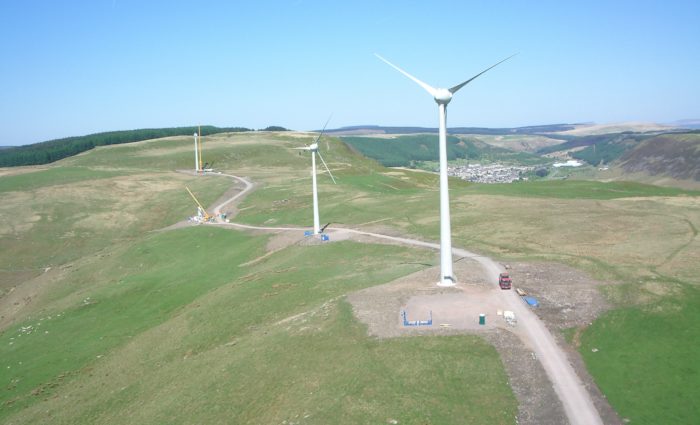
Wind turbine monitoring technology developer Windar Photonics (LON: WPHO) expects record revenues of between €6.5m and €6.8m in 2025. It could reach EBITDA breakeven. There was a delay to an order in China, which will move into 2026.

Store closures and exiting Boots meant that Mothercare (LON: MTC) interim revenues fell by one-quarter to £90.7m. Like-for-like revenues were 6% lower. The pre-tax loss declined from £1.4m to £1.1m due to lower interest charges. The new South Asia joint venture made a positive contribution. Net debt was reduced from £17.1m to £5.8m.

Kefi Gold and Copper (LON: KEFI) raised £774,000 from a retail offer at 1.3p/share, taking the total funds raised to £6.9m with a further £8.9m subscription offsetting outstanding liabilities. The full launch of the Tulu Kapi gold project has commenced now that funding of $340m is in place.  

Packaging manufacturer Robinson (LON: RBN) says trading is in line with expectations and it expects to complete one previously announced property disposal in January. Two more properties are being sold for £2.13m, which is £610,000 more than book value. Cavendish has reduced its 2026 pre-tax profit forecast to £2.7m because of lower property income and the tough outlook in Poland and Denmark.

Oakley Capital backs Sir Ben Ainslie’s America’s Cup team

Oakley Capital Investments has invested in Athena Racing, the British America’s Cup team led by Olympic sailing legend Sir Ben Ainslie, through its Origin II fund.

The investment follows the establishment of the America’s Cup Partnership, a new governance structure positioning the 174-year-old competition as a more commercially viable global sports property. Oakley played a key role in shaping this framework, which grants the five founding teams, including Athena, equal partnership status with board representation and introduces professional management to drive revenue growth.

The deal reflects Oakley’s conviction in premium sports properties with strong heritage and commercial potential. The America’s Cup combines advanced technology, elite competition and significant brand appeal. Only four nations have claimed the trophy since its inception in 1851.

Oakley will support commercial partnership development, brand expansion and operational scaling. Athena Racing will also collaborate with sister company Emirates GBR, Britain’s SailGP representative, to create enhanced sponsor and talent propositions across elite sailing competitions.

“The America’s Cup is the pinnacle of sailing and an icon of sport, won by only four nations since 1851,” said Peter Dubens, Co-Founder and Managing Partner, Oakley Capital.

“We’re partnering with Sir Ben and the Athena team precisely as the Cup enters a new era. With strong governance and a neutral management team focused on audience and media growth, the competition is set to broaden its appeal, improve accessibility and ensure long-term sustainability.”

Today’s announcement follows recent investments in Time Out Group, which is advancing the expansion of its markets business, and in a Spanish hotel management tech company, Paraty Tech.

Oakley Capital Investments’ NAV is up 5% over the past 52 weeks.

Vast Resources announces Tajikistan acquisition

8

AIM-quoted Vast Resources (LON: VAST) has announced the proposed acquisition of Gulf International Minerals in an all share deal and trading in the shares has been suspended. The share price had already risen 4.35% to 0.12p and it is one-third higher over the past week.

Gulf International Minerals is an explorer focused on Tajikistan. It has a joint venture with the Ministry of Industry and New Technologies in Tajikistan covering four gold mining operations and a central processing plant. Of these, Aprelevka produces 10,4000 ounces of gold and 80,000 ounces of silver each year and Vast has been managing the operation in return for 10% of earnings after tax.

There is no JORC compliant resource estimate. The estimated resource range is 179,00 to 782,000 ounces of gold and 28.7 million to 51.5 million ounces of silver.

A placing will raise £7.5m and this will help to fund a JORC compliant resource estimate. It will also help to pay off loans from A&T Investments SARL and Mercuria Energy Trading SA, which have been extended until 30 January 2026.

Vast Resources believes that Tajikistan has significant untapped resources and it has gained experience in the country.  

AIM movers: Pantheon Resources shuts well testing and Indus Gas leaving AIM

5

Alliance Lithium (LON: ALL) has revised and resubmitted its mining licence application for the Ewoyaa lithium project in Ghana. The royalty rate will be between 5% and 12% depending on the spodumene price. Canaccord Genuity assumes 10% in its forecasts suggesting a price between $2,501/tonne and $3,000/tonne, but the price is currently lower. The new lease requires government ratification. The share price jumped 23.5% to 9.76p.

Artemis Resources (LON: ARV) has signed a joint venture deal with Red Metal for the Sharon Dam copper target in Western Australia. It can earn 80% by spending at least $5m over three years. The shae price roe 16.7% to 0.35p.

Professional services provider Christie Group (LON: CTG) is selling visitor attraction software business Vennersys for an initial £500,000 in cash. There is also up to £900,000 of retained consideration subject to performance conditions. The sale should be completed by the end of January. Vennersys is loss making and the disposal could add around £500,000 to 2026 pre-tax profit – £2.8m is the current forecast. The share price gained 7.5% to 107.5p.

Eco Animal Health (LON: EAH) has been granted EU marketing authorisation for ECOVAXXIN® MS, the company’s poultry vaccine against Mycoplasma synoviae. The share price increased 6.67% to 104p.

Naked Wines (LON: WINE) has launched a share buyback of up to £2m via a reverse accelerated bookbuild closing at 4.35pm today. The share price improved 6.43% to 72.8p.

FALLERS

Indus Gas (LON: INDI) is proposing to shareholders that it should leave AIM. A general meeting will be held on 8 January. There is a limited free float, and it has been difficult to raise funds or use shares for acquisitions. Gynia Holdings owns 82.7%. Interim figures show an improved pre-tax profit of $1.93m, up from $1.24m. Indus Gas is awaiting a production sharing contract extension so a new gas sale and purchase agreement can be signed. The share price slumped 58.4% to 4p.

Pantheon Resources (LON: PANR) is suspending flow testing at the Duhle-1 well in order to save costs of around $150,000/day in the winter period. Costs will be lower in the spring. Results have been disappointing so far. The company will analyse data and assess opportunities in other parts of its oil and gas portfolio in Alaska. There is $27.2m in the bank. Zeus has cut its total risked NAV from 73p/share to 53p/share. The share price dived 43.3% to 10.32p.

Mobile Streams (LON: MOS) shares returned from suspension down 35.8% to 0.395p following publication of an admission document and results for the year to June 2025. June 2025. The company, which is changing its name to Gana Media Group, is acquiring the shares it does not own in two Mexican sports betting and media companies. It already owns 28.7% to Estadio Gana, plus convertible loan stock, and 22.5% of Capital Media Sports. Buying the rest of Estadio Gana will cost £31.9m in shares at 0.625p each, while 584.2 million shares a 0.495p each will be issued for Capital Media Sports. Investment in existing Mexican operations enabled full year revenues to rise from £436,000 to £1.41m. Net cash was £1.52m at the end of June 2025 and by the end of September available cash was £991,000.

Enwell Energy (LON: ENW) says that on 18 December the gas processing facilities at its Vasyschevskoye gas and condensate field in Ukraine was attacked by Russian drones. There were no active operations and damage is being assessed. The share price declined 21.4% to 16.5p.

MHA drives international expansion with UAE acquisition

MHA has agreed to acquire Moore Stephens’ UAE operations for £7.4m, marking a strategic push into the Middle East market.

The AIM-listed professional services firm will acquire two businesses, Moore Stephens LLC and Moore Stephens Consulting LLC, which generated £6.5m revenue in 2025. The deal reflects MHA’s strategy of pursuing selective cross-border opportunities to strengthen its international footprint.

MS UAE, established in 1999, operates from Dubai with branches across Abu Dhabi, ADGM, JAFZA, Sharjah and Hamriyah Free Zone. All three partners, led by Managing Partner Farad Lakdawala, will remain with the 95-strong team following completion.

MHA hopes MS UAE to capitalise on the continued influx of high-net-worth individuals, family offices and international businesses relocating to the region.

The £7.4m consideration will be split equally between cash and new MHA shares priced at 154.5p. An initial payment of £6.1m will be made at completion, with the remainder following agreement of completion accounts.

“Strategic M&A continues to be a key enabler of our growth aspirations,” said Rakesh Shaunak, CEO of MHA.

“Following the acquisition of BTSEE, the intended acquisition of MS UAE is another step forward in building a larger organisation and an international platform that enhances client service, strengthens our sector capabilities and creates opportunities for our people.

“MS UAE is a high-quality, well-established practice with strong cultural alignment, and we look forward to updating the market as we progress toward completion.”

Aquis weekly movers: Positive helium flows for Mendell Helium

5

Vault Ventures (LON: VULT) has raised £555,000 at 1p/share. This will be invested in technology. The Vault Accelerator for blockchain and AI development and income generation is in the final stages of implementation. The share price jumped 53.8% to 1p.

Mendell Helium (LON: MDH) says that the flow rate for the Rost 1-26 well in Fort Dodge, Kansas has more than doubled to 250Mcf of helium per day, which equates to $1.4m in income in one year. There are discussions with potential partners for additional wells. The share price increased 27.3% to 3.5p.

SulNOx Group (LON: SNOX) has been granted a patent in Australia. It covers a range of formulation versions which includes both the Berol® 6446 Heavy Sulphur Fuel Oils (HSFO) emulsifiers and Sulnox Eco™ Fuel Conditioners which enhance all diesel, petrol/gasoline and biofuels, and marine fuels. The share price is one-fifth higher at 90p.

The WeShop share price has recovered to $130, although volumes remain low. WeCap (LON: WCAP) shares rose 8.82% to 1.85p and Hot Rocks Investments (LON: HRIP) shares increased 10.2% to 1.625p.

B HODL (LON: HODL) has joined the US OTCQB Venture Market under the code BHODF. The share price gained 7.32% to 11p.

FALLERS

Ananda Developments (LON: ANA) is pleased with the US Presidential executive order to reschedule cannabis in the USA from Schedule 1 to Schedule 3 under the Controlled Substances Act. This recognises the benefit of medicinal cannabis. This will make it more straightforward to gain FDA approval and potentially make it easier to raise money. Trading in Ananda Developments shares ends on 22 December. The share price dived 35.3% to 0.055p.

Mark Horrocks has reduced his stake in Lift Global Ventures (LFT) from 19.96% to 17.9%. The share price dipped 18.2% to 0.45p.

The Smarter Web Company (LON: SWC) has not raised any cash from share subscriptions in the past two weeks, which takes it to four weeks since any subscriptions. The share price slid 9.49% to 35.75p.

Ajax Resources (LON: AJAX) completed a share issue raising £1.2m at 5.5p each and creditors have converted £110,000 of money owed into shares at the same price. Total cash is £2.6m. The share price decreased 8.7% to 5.25p.

First Sentinel has resigned as corporate adviser to Valereum (LON: VLRM) and trading in the shares The company is still trying to complete the transaction with Quorium Global Photonics SPC. The share price fell 7.41% to 12.5p prior to suspension.

EDX Medical (LON: EDX) is commercially launching a new BC95 testing service for early detection of bowel cancer as well as providing assessments of hereditary risks. Interim revenues increased from £18,000 to £173,000, while the loss increased from £1.7m to £2.3m. Cash was £125,000 at the end of September 2025. The share price slipped 6.82% to 10.25p.

Phoenix Digital Assets (LON: PNIX) is redomiciling to Gibraltar. This is due to the regulatory environment and crypto advisory infrastructure. The share price declined 6.38% to 2.2p.

Connecting Excellence (LON: XCE) has bought 8.12682413 Bitcoin for £560,000, taking the holding to 24.77668182 Bitcoin at a total cost of £1.71m. The next update will be on 5 January. The share price slid 4% to 2.4p.

RootstockLabs Ltd has reduced its stake in Coinsilium (LON: COIN) from 6.69% to 5.32%. The share price dipped 3.51% to 2.75p.

AIM weekly movers: Another contract for Tekmar

5

Arc Minerals (LON: ARCM) appointed Remy Welschinger as chief executive from 2 January 2026. He is currently a non-exec of Arc Minerals and President of Viridian Lithium. The executive chairman Nick von Schirnding will become non-exec chairman. The share price jumped 66.7% to 0.625p.

hVIVO (LON: HVO) chief executive and finance director each bought shares in the contact research business early in the week. Yamin Khan bought 3.31 million shares at 6.04p each, taking his take to 1.21%, and Stephen Pickerton acquired 520,000 at 5.5p each. The share price recovered 39.7% to 7.35p.

Offshore energy market services provider Tekmar Group (LON: TGP) has won a contract with an existing customer worth €8m. There is existing infrastructure and potential for near-term production. This for a major UK offshore wind farm. Revenues should be recognised this year and next year. The share price rebounded 39.7% to 11p.

Quantum Helium (LON: QHE) says an independent resource report has been published and the best estimate for the Coyote Wash project in Colorado is 0.97bcf of gross recoverable helium. This takes the gross recoverable resource of the company’s projects to 1.1bcf, which have a gross value of $330m. There are also potential oil resources of up to 750,000 barrels. The company also has a 90% working interest in the Sagebrush helium project which has 2U helium reserves of 101MMscf net.  The share price improved 33.9% to 0.0375p.

FALLERS

Bars operator The Revel Collective (LON: TRC) is in discussions with potential acquirors of its businesses and they would not lead to any return for shareholders. There is no likelihood of raising money through a share issue. Trading in the shares will be suspended on 29 December because the 2024-25 annual report will not be published by the end of the year. The share price dived 76.7%% to 0.035p.

Red Rock Resources (LON: RRR) raised £250,000 at 0.021p/share and an existing shareholder invested £200,000 at 0.025p/share, while another shareholder is converting £200,000 of loan notes into shares at the latter price. The share price declined 35.7% to 0.0225p.

Shares in Polarean Imaging (LON: POLX) declined 35.5% to 0.1p following shareholder voting in favour of leaving AIM on 23 December. JP Jenkins will provide a matched bargain facility.

Virtual product placement services provider Mirriad Advertising (LON: MIRI) says second half revenues are expected to be £200,000, so 2025 revenues will be £400,000. At the end of November, cash was £1m. The cost base is £220,000/month. There will be a trading statement in January. The share price fell 31.6% to 0.0065p.

FTSE 100 creeps towards 10,000

The FTSE 100 crept towards the 10,000 mark on Friday, buoyed by interest rate cuts by the Bank of England and the Federal Reserve earlier in the week.

London’s leading index staged a late rally yesterday afternoon and added another 0.1% on Friday to trade less than 2% away from the key psychological level for the index.

But the gains were less than convincing with fresh concerns about the pace of rate cuts next year putting a dampener on lower borrowing costs announced yesterday.

“The FTSE 100 ticked higher in early trading after lower-than-expected inflation in the US helped lift shares on Wall Street and across Asia overnight,” said AJ Bell head of financial analysis Danni Hewson.

“The knife-edge nature of yesterday’s rate decision by the Bank of England is keeping UK stocks in check and stalled the FTSE 100’s push towards the 10,000 mark. Investors have responded to the reality that we could be approaching the end of the current rate-cutting cycle.

“This saw housebuilders lose momentum as hopes for a significant drop in mortgage costs in the coming months begin to fade away. An unexpected drop in retail sales only added to the gloom around the consumer backdrop in the UK.”

Barratt Redrow was the top faller at the time of writing, losing 2.4%, while Persimmon gave up 1.9%.

JD Sports was also among the faller after Nike shares sank on US trading. JD Sports relies heavily on Nike as a supplier and its struggles with innovation has dogged JD since the start of the year.

“Nike shares fell nearly 11% in after-hours trading after a sharp decline in Chinese demand and the impact of tariffs on margins took the shine off the fact that second quarter revenue had beaten expectations: earnings fell 32% year-on-year,” explained Derren Nathan, head of equity research, Hargreaves Lansdown.

DCC was the top riser, adding 2%, after announcing the results of a tender offer.