Ryanair and BA investigated over refunds for flights during pandemic

0

‘People should not be left unfairly out of pocket’ says the CMA

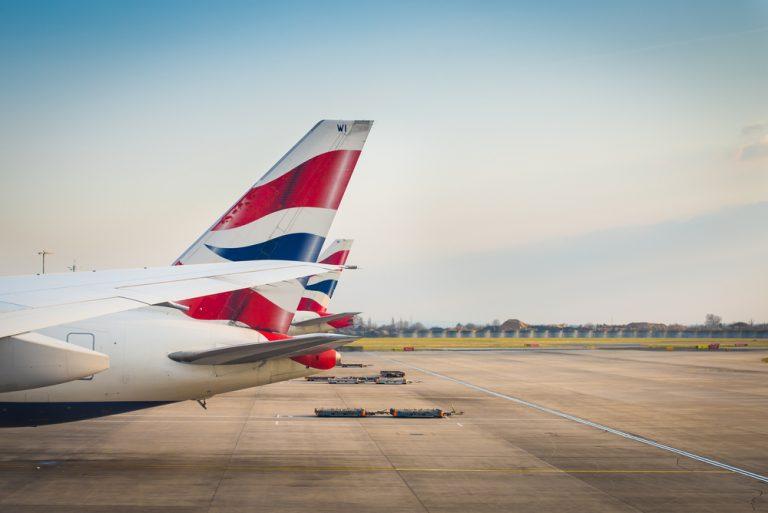
The UK’s competition authority confirmed on Wednesday that it has launched an investigation into whether or not Ryanair and British Airways had broken the law by not providing refunds for flights for passengers who could not legally board during the pandemic.

British Airways offered vouchers and rebooking, while Ryanair offered rebooking, but both refused refunds, according to the Competition and Markets Authority (CMA).

Andrea Coscelli, chief executive of the CMA, commented: “While we understand that airlines have had a tough time during the pandemic, people should not be left unfairly out of pocket for following the law. 

“Customers booked these flights in good faith and were legally unable to take them due to circumstances entirely outside of their control. We believe these people should have been offered their money back.”

The CMA confirmed it has communicated with both airlines and aiming to find a solution, which could involve refunds or another form of reimbursement for those affected.

Ryanair responded to the CMA over its claims about the potential of malpractices by the airline.

“Ryanair has approached such refund requests on a case by case basis and has paid refunds in justified cases,” it said.

“Since June 2020, all our customers have also had the ability to rebook their flights without paying a change fee and millions of our UK customers have availed of this option.”

Shares in major travel companies plummeted last week as the UK government removed Portugal from its green list of safe destinations.

The decision caused chaos among holidaymakers, many of whom rushed to cancel their trips abroad.
Sunak seeks opt-out for City of London from G7 tax plan

0

Britain is one of a number of countries asking for ‘an exemption on financial services’

Chancellor Rishi Sunak is pushing for exemption for the City of London in the G7’s move for a new global tax system targeted at the world’s largest multinational enterprises.

Sunak previously stated that the recent agreement was “historic” however it would force the biggest tech companies to “pay their fair share of tax in the UK”.

However, the Financial Times reported that Britain is one of a number of countries seeking “an exemption on financial services”, as the chancellor is fearful that multinational banks headquartered in London could be impacted.

HSBC makes over 50% of its revenue from China, while Standard chartered, also based in the UK, focuses mostly on Africa and Asia, and conducts little activity in the UK.

Sunak’s move comes as a think tank warned that major US tech firms would pay less UK tax under the G7 arrangement than they do with the status quo.

Tax Watch suggested that the final payment could come in at 50% of what is normally paid and that, based on 2019 numbers, Amazon, eBay, Google and Facebook could save £232.5m per year.

The research added that Google pays around £219m to the digital services tax, although it would pay only £60m to the UK’s exchequer under the current plan.

Similarly for Facebook, its tax take would fall by £30m to £28m. While Amazon would see a £40m fall and eBay a decline of £15.2m taxes paid.

While the companies would end up paying more tax in total, the US Treasury would benefit the most.

The deal will see a global minimum tax of 15% on the biggest companies in the world.

Its aim, as US treasury secretary Janet Yellen puts it, is to end “30-year race to the bottom on corporate tax rates”.

FTSE 250 index constituents’ dividend attractions

A recent research report from broker Peel Hunt suggests that dividend payments are set to bounce back this year and there will be plenty of attractive dividend payers in the FTSE 250 index in particular.
Dividend payments will not go back to the peak achieved in 2018, though. There was £14.4bn paid in dividends by FTSE 250 companies in that year, falling to £12.3bn in 2019 and then £7.8bn in 2020.
A relatively modest recovery to £8.1bn is expected this year, before a further rise to £9.6bn in 2022.
The individual company yields are based on share prices at the end of May, so they may have chan...

Bitcoin threatens to go below $30,000 for the first time this year

Donald Trump called bitcoin a “scam” that would impact the value of the US dollar

Bitcoin is down by over 12% over the past 24 hours as it threatens to go below $30,000 for the first time this year.

Having come close to reaching $40,000 at the end of last week, bitcoin is now trading below $32,000.

The crash follows the president of El Salvador confirming on Sunday that he will make bitcoin legal tender in the Central American country.

The cryptocurrency has been on the ropes during the last month as many investors became worried by increased regulatory scrutiny, in addition to concerns over the environmental impact of the mining process.

Other major cryptos took a dive as well, with Ethereum and Dogecoin down by over 16% and 17% respectively.

Donald Trump

Former US President Donald Trump also weighed in, calling bitcoin a “scam” that would negatively impact the value of the US dollar.

“Bitcoin, it just seems like a scam,” Trump said. “I don’t like it because it’s another currency competing against the dollar.”

Trump also opined that the dollar should be the “currency of the world”.

MicroStrategy

While the crypto market is in a frenzy, MicroStrategy (NASDAQ:MSTR), the business intelligence company headed up by Michael Taylor, appears to be buying more bitcoin.

The company confirmed on Monday that it would be raising $400m by issuing loan notes in order to buy more of the cryptocurrency.

The company currently holds 92,079 bitcoin in its treasury.

Driver Group driving faster into second half

Steady Interims
But Driving faster into the Second Half
The dividend paying Driver Group (AIM:DRV) reported interims to March 2021 today and the price is unchanged at 49.5p. Driver Group is a global professional multi-disciplinary consultancy service including claims, expert witness, and dispute resolution services. A new forensic accounting service is being established, which compliments the construction-related quantum, delay and technical expert services which could become busier coming out of Covid while also fitting into the strategy of focusing on higher margin b...

Consumer spending boosts UK as Brits get ready for summer

0

Consumer spending rose 7.6% in May compared to the same period in 2019

The possibility of the UK economy being buoyed by consumer spending received a boost on Tuesday as it was revealed that spending rose by 7.6% in May compared to the same month in 2019.

Brits spent their money on food, drink and clothing as they began socialising more as lockdowns eased further. This is according to a survey released by Barclaycard earlier today.

The increase in spending is the most substantial since the beginning of the coronavirus pandemic in early 2020.

Spending on essential goods was supported by an increase in supermarket shopping, up 17.7%, and shopping at local specialist food and drink retailers, including butchers and off-licenses, up by 69.3%.

The patchy weather at the beginning of May did little to deter consumers from going back to the shops, as total spending on non-essential goods jumped by 5.8% compared to the same month two years ago, before the pandemic.

Brits sought to refresh their wardrobes to continue socialising, as there was a rise in clothing sales of 8.5%, in addition to sales at department stores which jumped by 8.6%.

Raheel Ahmed, head of consumer products, said: “May was a positive month for a range of categories, with the nation clearly determined to show support for retailers and local businesses. As friends and families reunited after months apart, it is reassuring to see signs of recovery for the entertainment and hospitality industries, both of which have faced significant challenges over the past year.”

“While international holidays continue to be hampered by restrictions, staycations in the UK are providing a welcome boost to the travel sector, as May saw more holidaymakers, particularly in the older age groups, book or embark on trips. With summer – and hopefully more of this warmer weather – on the way, we hope to see these positive trends continue as Brits make the most of their newfound freedoms.”

Pandemic has had massive impact on financial planning across UK

0

Pandemic sees one third of millennials move house to find a better quality of life

The coronavirus pandemic and resulting lockdowns across the UK led to more than one third of 18-34 year-olds moving home, according to research by Close Brothers, an asset management firm.

The 36% of those who moved did so to secure a better standard of life, the findings suggested.

To compare, the figure for those aged 55 and above is 9%, while the average across Britain came in at 21%.

The report highlights the way in which workers across the UK have altered their financial plans due to the events of the past 12 months.

Close Brother’s findings also show a shift towards remote working as 39% are going fully remote, while 30% intend to do so on a part-time basis.

Facebook recently said its employees will be allowed to continue working from home as it thinks remote work “is the future”.

The last 18 months, in addition to impacting the way people approach their mental and physical health, has encouraged many to keep a closer eye on their day-to-day spending, as outlined below.

Top Changes Made to Improve Financial Wellness

OverallMenWomen
Keeping a closer eye on day to day spending63%52%73%
Saving more into an emergency savings fund61%57%65%
Writing a will/ updating an existing will20%19%21%
Saving more into my personal pension19%24%15%
Increasing my contribution to my workplace pension16%19%13%

Jeanette Makings, Head of Financial Education at Close Brothers commented: “For years, we’ve been keeping a close eye on the financial wellbeing of UK employees and in the last few years, there are some signs of trending in the right direction.”

“But the impact of the pandemic and the experience through multiple lockdowns have been a catalyst for some significant lifestyle changes and in employees taking steps to improve their mental, physical, and financial health.”

“At this moment in time employees are more focused than ever about the importance of better managing their finances. It is therefore the perfect time for employers to push harder on their financial wellbeing strategies and better support their employees’ financial health. More employees need it and more employees are ready, willing and able to listen.”

World’s major websites struck by internet outage

0

UK government, Amazon, Financial Times included in those brought down temporarily

A vast internet outage took down some of the world’s most prominent websites, including those of the UK government, the Guardian and Amazon.

The failure was traced back to an error at the American cloud computing services company Fastly, who identified and amended the disruption.

In an error message posted at 10.58 in the UK, Fastly said: “We’re currently investigating potential impact to performance with our CDN services.”

Error messages first started to appear on people’s screens, including “Error 503 service unavailable” and “connection failure”, as early as 11am this morning.

Almost an hour later, Fastly declared the incident over. “The issue has been identified and a fix has been applied. Customers may experience increased origin load as global services return,” the company said in a status update.

Over 20,000 Reddit users confirmed issues with the platform, while in excess of 2,000 users of Amazon raised issues with the online retailer’s website.

Other websites impacted were news organisations CNN, the New York Times and the Financial Times.

The outage didn’t seem to apply to everywhere in the world. While failures were reported in New Zealand, London and Texas, others, including Berlin, reported no issues at all.

“This global outage that affects many high-profile companies does highlight the dependency we have on cloud services and their availability,” said Sergio Loureiro, Cloud Security Director at Outpost24.

“This directly impacts many businesses, including for example Reddit whose entire business is based around their website.”

Bank of England outlines climate stress test for banks and insurance companies

0

Test will analyse the ability of the UK’s major banks and insurers to adapt to the shift towards a net-zero emissions economy

The Bank of England outlined its stress test of the ability of the UK’s financial system to deal with the threat of climate change on Tuesday.

It added that the findings will not yet be used to determine capital requirements.

The central bank’s test will analyse the ability of the UK’s major banks and insurance companies, including HSBC, Barclays and Aviva, to adapt to the shift towards a net-zero emissions economy over the coming years, in addition to the impact of extreme weather conditions.

As the test is relatively new it will not compile results on individual firms at this stage and is set to publish its findings in May 2022. Although this date could be sooner.

The test involves three specific scenarios that cover 30 years. Firstly it will look at early action by governments across the world to reduce emissions, then action that is late, and finally the prospect of taking no additional action.

These scenarios will be judged using two criteria. Firstly, physical impacts, including fires and floods, and financial risks, such as a dramatic change in asset values or the price of carbon.

Responding to the publication of the Bank of England’s climate stress test scenarios this morning, Positive Money senior economist David Barmes said:

“The Bank’s climate scenario analysis may be a useful exploratory exercise, but it’s time to move from exploring to acting. Scenario analysis is incapable of accurately measuring highly complex climate-related financial risks, and we already know enough about the dangers of the climate crisis to justify regulatory action now,” Barmes said.

“It is concerning that the Bank of England appears to be ruling out using climate stress tests to help inform changes to capital requirements. Climate capital rules that reflect the high risk of fossil fuel investments are a necessary inevitability to ensure financial stability and alignment with the government’s climate plans, and the Bank needs to be introducing such policies without delay.”

“By delaying the implementation of climate capital rules, the Bank is undermining its duty to protect financial stability and support net-zero.”

FTSE 100 benefits from sterling’s retreat despite summer slowdown

0

Adding at best 0.27%, the FTSE 100 was sat just below 7,100 after the bell, kept from that level by the 0.6% and 1.2% losses for BP and Shell respectively.

“The summer slowdown felt in effect this Tuesday, with Europe barely able to raise its head from the pillow,” said Connor Campbell, financial analyst at Spreadex.

The index benefited from sterling’s retreat. Cable was down 0.3%, and back below $1.414, while against the euro the pound dipped 0.1% to €1.1619.

The Eurozone was even more lethargic, with the DAX down 0.1% and the CAC up the same amount.

“There’s still a flurry of data from the region that could case a shift. The Eurozone-wide ZEW economic sentiment reading is set to rise from 84.0 to 85.5, while the German-specific equivalent is eyeing a jump from 84.4 to 86.0. The revised Q1 GDP reading, however, is set to remain at -0.6%,” said Campbell.

“At present the Dow Jones doesn’t look interested in upping the ante this afternoon. The futures have the index down 0.1%, and hovering around 34,600. That leaves the Dow within reach of its 35,000 all-time highs, but perhaps reticent to near that level until it gets a gander at Thursday’s inflation data.”

FTSE 100 Top Movers

Intermediate Capital Group (5.64%), Aviva (3.55%) and Flutter Entertainment (3.01%) are the top risers on the FTSE 100 during the morning session.

While Smith and Nephew (-1.33%), Shell (-1.17%) and Evraz (-0.85%) make up the bottom three.

British American Tobacco

British American Tobacco has upgraded its revenue forecasts for the current year on better than expected sales of its non-tobacco products.

The FTSE 100 cigarette company is now anticipating its revenues will grow by 5% on a constant currency basis during 2021, as it saw record growth in the amount of customers for its non-tobacco products. Exchange rates will skim off some of BAT’s gains as it expects an “8% currency headwind” during H1 and the full year.

Aviva

Cevian Capital, an activist investor, confirmed on Tuesday it had acquired a 4.95% stake in Aviva, and that the UK insurer should now be able to return £5bn of excess capital next year.

As an alternative to ousting chief executive Amanda Blanc, Cevian is encouraging the FTSE 100 company’s boss to work on a number of disposals she announced when she took over the company nearly 12 months ago.