
Will a change of leadership impact the Scottish Mortgage Investment Trust share price?

0

Scottish Mortgage Investment Trust Share Price

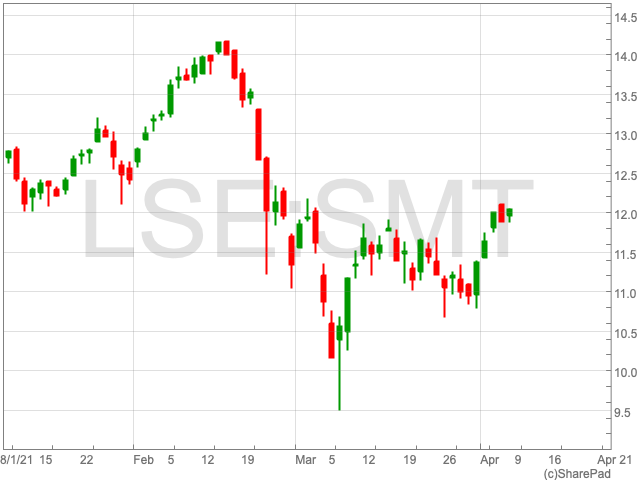
In February shares in Baillie Gifford’s flagship investment trust fell sharply due to a US tech sell-off, rising bond yields and a dip in Asia. However, Scottish Mortgage Investment Trust now appears to be at the early stages of a recovery. In just over a month shares in the trust are up by 19%. While since the beginning of the year, its share price remains down by just over 1%.
Change of Leadership

UK Investor Magazine reported in March that James Anderson, who manages the trust alongside Tom Slater, will step down in April 2022 after nearly 40 years at Baillie Gifford. This could raise concerns for investors over the long-term performance of the fund as it changes hands in a year’s time. After all, when one buys into an actively managed trust or fund, it is the manager’s expertise that offers value.

In the case of the Scottish Mortgage Investment Trust, its recent success can certainly be put down to the competence of Anderson, who generated impressive profits through well timed acquisitions of Tesla, Amazon and Alibaba, among others.

Investors are sometimes made nervous by such a change in leadership. Ryan Hughes, head of active portfolios at AJ Bell, discussed investors’ concerns and looked towards the future of the Scottish Mortgage Investment Trust without Anderson.

“News that James Anderson is stepping down as joint portfolio manager on the Scottish Mortgage investment trust will potentially cause some worry to the thousands of investors who have made fantastic returns over many years,” says Hughes.

“However, it’s important to remember how Baillie Gifford work with the investment process being firmly embedded in the team-based approach and experienced investor Tom Slater remaining at the helm. With Anderson not stepping back for over a year, this has been well planned with a clear handover process for Lawrence Burns to become deputy manager on the trust to support Slater.”

The continuation of leadership at the helm, along with the current team culture, could mean that there are no radical changes to the company’s portfolio when Anderson does leave. This could go some way to quelling investors who will be keeping an eye on the Scottish Mortgage Investment Trust share price.


musicMagpie float to boost Northern VCTs

musicMagpie, the UK’s largest mobile phone recycler, is planning an AIM flotation. There are no financial details in the announcement, but the company’s VCT backers placed a value of well over £90m on the company at the end of September 2020 and the float valuation is likely to be much higher.

Northern Venture Trust (LON: NVT) says in its accounts that it has a 9.8% equity stake in the technology reseller valued at £10.4m. That suggests a valuation for marketMagpie of £106m. However, there was a mixture of ordinary and preference shares, plus £1.39m of loan stock included in the valuation but it is not clear if the loan stock is taken into account in the equity stake. Excluding loan stock, the valuation would be £92m.

Stockport-based musicMagpie, which is the new holding company for Entertainment Magpie Group, started out as buyer and seller of used CDs and DVDs and it branched out into recycling and reselling technology, including smartphones and tablets. It operates a business in the US under the Decluttr brand – non-European revenues were nearly one-third of the group total.

In the 18 months to November 2019, revenues were £191.6m and the reported loss was £2.98m. There was a £3.3m cash inflow from operating activities.

Subsequent trading has been good as the company benefits from its online focus and greater awareness of environmental concerns. The 2019-20 performance is likely to have been better than the previous results.

VCTs

AIM-quoted Mercia Asset Management (LON:MERC) owns Northern Venture Managers, which has three VCTs with stakes in Entertainment Magpie Group: Northern Venture Trust, Northern 2 VCT (LON: NTV) and Northern 3 VCT (LON: NTN). Northern Venture Managers funds owned 36.7% of the company at the end of September 2020.

Entertainment Magpie Group generated a significant amount of uplift in portfolio value of the Northern Venture Trust in the year to September 2020. The flotation of the new holding company musicMagpie should provide a further uplift in valuation.

Bitcoin akin to ‘Chinese financial weapon’ says Peter Thiel

Thiel suggests China wants two reserve currencies

Co-founder of PayPal and venture capitalist Peter Thiel has expressed concerns that China could leverage bitcoin to weaken America’s position on the world stage.

Thiel made the comments at a virtual round-table event hosted by the Richard Nixon Foundation earlier this week.

Thiel, who described himself as a “bitcoin maximalist”, said that the cryptocurrency “threatens fiat money, but especially threatens the US dollar”.

The German-American billionaire said that the Chinese government’s preference would be two global reserve currencies, and not only the dollar. However, he added that China does not want its own currency, the renminbi, to fill that role.

Thiel said it had previously used the euro “in part” as a weapon against the dollar’s status. While the euro was unable to replace the dollar, Thiel argues that China is now turning to bitcoin in the hopes of a different outcome.

“[If] China’s long bitcoin, perhaps from a geopolitical perspective, the U.S. should be asking some tougher questions about exactly how that works,” he said.

IMF argues for wealth taxes in aftermath of pandemic

0

IMF estimates UK debt will reach 103% of GDP

The International Monetary Fund (IMF) has spoken out in favour of wealth taxes, income tax surcharges and solidarity business levies which it says should be paid to support those most impacted by the pandemic, in addition to solving the issue of ever-growing public debt.

The body is encouraging developed countries, such as the UK, to implement temporary tax rises as a way of supporting vulnerable households and demographics.

The US-based organisation has made the case that the global pandemic has “exacerbated pre-existing inequalities in incomes and access to basic services”, as well as posing a threat to low-skilled workers who are left out as economies become more digitised.

The IMF also called on policy makers to think about raising property or inheritance taxes alongside wealth taxes as a way to reform “domestic and international tax systems to promote greater fairness and protect the environment”.

The IMF has forecasted UK national debt to rise to 103% of GDP, which would be an increase of over 20% since 2019.

Commenting on the IMF’s proposed ‘solidarity’ tax on high earners and companies that prospered during the coronavirus crisis, Adam Dunnett, Director at ZEDRA, said:

“A short term solidarity tax is a bold idea and in many ways the spirit of the IMF’s statement, the intentions and motivations behind it are hard to fault. The difficulty comes in the details. Who would be asked to pay the tax and on what amount? The main target for this sort of taxation is, of course, the US based ‘FAANG’ companies who are already being targeted outside the US through various digital service tax proposals and laws.”

“A solidarity tax charge on those businesses would probably be popular globally but faces two obstacles; the US administration is likely to have objections and will repeat some of the arguments it has used in response to digital services taxation. The second obstacle is a practical one – taxes on these types of popular consumer businesses are often passed on to the customer pretty quickly. There is a chance that a one time tax charge on these sorts of businesses could end up being paid by the people it is intended to benefit,” Dunnett added.

FTSE 100 in the green again following reassurance from Fed

0

The FTSE 100 is in the green for the third day in a row, up by 0.2% after a couple of hours of trading on Thursday morning. The index now stands 6,900, its highest price since February 2020, before the pandemic.

This was a result of calming words from the Federal Reserve according to Connor Campbell, financial analyst at Spreadex.

“A dovish set of meeting minutes from the Federal Reserve has further reassured investors that Jay Powell and the gang won’t be turning off the stimulus taps any time soon,” Campbell said.

“Much of this is down to selective hearing on behalf of the FTSE, indulging in things like the IMF’s revised global growth forecasts, and a general sense of optimism surrounding the UK’s post-covid comeback, while ignoring warnings about a vaccine rollout slowdown and the blood clot concerns surrounding the use of the Oxford jab on under-30s,” Campbell added.

Sterling has borne the brunt of those vaccine fears, though avoided another wobble this Thursday. Against the dollar it rose 0.2% to $1.3764, while against the euro it crept up 0.1% to €1.1585.

FTSE 100 Top Movers

Johnson Matthey (3.18%), Aveva Group (3.06%) and Intertek (2.24%) are the top movers on the FTSE 100 at mid-morning trade on Thursday.

At the bottom, Aviva (-3.70%), IAG (-2.18%) and Smurfit Kappa (-2.15%) have been the day’s biggest fallers.

AJ Bell adds Aquis Stock Exchange to its trading platform

0

AJ Bell said decision would give customers greater choice

AJ Bell (LON:AJB), a leading UK investment platform, confirmed on Thursday that it has added Aquis Stock Exchange (LON:AQX) to its online trading platform.

The company said it was a decision made to give customers greater choice over the investments they are able to hold in their portfolios.

The Aquis Stock Exchange is now directly available to AJ Bell‘s retail customers, providing access to approximately 90 listed growth companies.

Stocks on the Aquis Exchange are now available for online trading via AJ Bell’s ISAs, SIPPs and Dealing/General investment accounts.

Andy Bell, CEO at AJ Bell, shared his thoughts on decision to add Aquis Stock Exchange to its trading platform:

“Our goal is to make investing easy for our customers, whether they are managing their investments themselves or with the help of a financial adviser. Many of them have told us they want to be able to trade stocks listed on Aquis Stock Exchange and we are pleased to make this available to them,” said Bell.

Alasdair Haynes, CEO of Aquis Exchange, expressed a similar view:

“We are very pleased AJ Bell has given its clients electronic access to trade AQSE shares. Today, some of the UK’s most exciting growth companies are choosing to get a quotation on AQSE. Since we acquired this business lasts year* we have been making numerous changes to radically raise standards and increase liquidity. We fervently believe in retail investors having equal opportunities to trade as institutional players as part of our mission to get the public back into public markets for the benefit of all stakeholders.”

On 31 March, Aquis Exchange confirmed a strong performance for 2020 as the company released its financial results to 31 December 2020. The AIM-listed company’s revenue climbed by 67% to £11.5m, up from £6.9m in 2019. Aquis Exchange‘s EBITDA rose to £1.5m from £0.0m the year before, while its maiden full-year pre-tax profit swung to £0.5m from a £0.9m loss.

Everyman swings to loss after year of disrupted trade

0

Everyman confirms pre-tax loss of £22.2m

Everyman Media Group (AIM:EMAN) announced on Thursday that it made a pre-tax loss during 2020 as the pandemic severely impacted the business.

However, the cinema company’s outlook is optimistic as it appears lockdown restrictions are being eased across the country.

The British cinema firm reported a loss before tax for last year of £22.2m, a swing from a £2.3m profit in 2019, while its revenue dropped by just over £40m to £24.2m in 2020.

The group said that there was a mere ten weeks of normal trading conditions, with 25 weeks of full closures, and 17 weeks of disrupted business due to coronavirus restrictions. As of May 17 Everyman plans to reopen all of its sites in line with the roadmap set forward by Boris Johnson.

The AIM-listed company retains a positive outlook for the current year as it has a robust upcoming programme of films. However, its statement did also allude to factors outside the company’s control, and so it will not be providing a guidance at this stage.

Alex Scrimgeour, chief executive of Everyman, said:

“Whilst it has been an unprecedented and extremely challenging year, it is clear to me that the team has done an excellent job in navigating those challenges. They minimised all costs during periods of closure, strengthened the Group’s balance sheet, worked with our landlords to achieve rent concession and not least, remained actively engaged with our people and customers throughout,” Scrimgeour said.

“During times in the year when our venues were able to open, the Group continued to enjoy the strong demand for the Everyman offering that it has seen for many years previously. Its innovative approach to providing new content was also welcomed, with the exclusive screening of Gorillaz concerts as well as old James Bond films both proving popular, for example. Exciting, exclusive programming will continue to be important to us as we look ahead.”

“Since joining in January, I have been struck by our strong foundation of supportive staff, customers, shareholders and of course our Board. Moving forward we remain confident that the nation’s love of film remains and that ourpremium offering sets us apart. We will be in a strong position to bounce back, with a great opportunity to return to expansion once more when it is safe to welcome back our customers and our staff in just over a month’s time.”

Everyman is the fourth largest cinema business in the UK by number of venues and a premium leisure brand. Everyman operates a growing estate of venues across the UK, with an emphasis on providing first class cinema and hospitality.

Asos says surge in demand to continue beyond lockdown restrictions

0

Asos gains 1.5m extra active customers

ASOS (LON:ASC), the online clothes seller, announced a 275% jump in its profit halfway through the financial year as it has reaped the benefits from lockdown restrictions.

The AIM-listed company, which recently acquired Topshop among other brands, revealed a 24% increase in its revenue for the six months up to 28 February.

The group’s revenue came in at just under £2bn, with the UK seeing a 39% increase, followed by the EU at 18% and the US with a 16% rise.

The company said the pandemic led to 1.5m extra active customers over the six month period, which means the total is now just under 25m.

“In the coming months we expect a portion of consumer demand will move back to stores as restrictions are eased throughout our markets, but we expect online penetration to remain structurally higher than pre Covid-19 levels,” the company said in a statement.

Asos is expecting to gain higher returns moving forward as customers will increasingly buy clothes for special occasions.

“As a result, our expectations for the full year have increased in line with our outperformance in the first half, and our outlook for the second half is unchanged,” Asos said.

Nick Beighton, CEO of Asos, says the integration of Topshop was going smoothly while praising the overall performance of the company:

“We are delighted with our exceptional first-half performance and proud of the work our teams have put in to achieve this. These record results, which include robust growth in sales, customer numbers and profitability, demonstrate the significant progress we have made against all of our strategic priorities and the strength of our execution capability. The swift integration of the Topshop brands and the impressive early customer engagement is also especially pleasing,” said Beighton.

“Looking ahead, while we are mindful of the short-term uncertainty and potential economic consequences of the continuing pandemic, we are confident in the momentum we have built, and excited about delivering on our ambition of being the number one destination for fashion-loving 20-somethings.”

Winkworth records profit as home buyers seek more space

0

Winkworth performed valuations remotely during lockdown

Winkworth (LON:WINK) said on Thursday that it has seen a surge in house buying as people aim to ensure they have appropriate space to work from home.

However, the estate agent confirmed its profit before tax fell by 6% over the course of last year to £1.53m.

The company’s revenue was down to £6.41m, although it still declared a dividend of 6.68p per share.

The house seller’s profit fell lower than initially anticipated, while its revenue was in line with its forecast.

Simon Agace, chairman of Winkworth, praised the company’s efforts to operate when lockdowns came into effect.

“During both the first and second lockdowns, the benefit of our outlets being in key locations was once again proven. Our local experience meant that we were able to perform valuations remotely and it was noticeable that, on the lifting of lockdown, our clients were delighted to meet us in a controlled environment,” said Agace.

“We believe that this relationship helped to power our recovery, which confirms our confidence in Winkworth’s high street presence. It is not our intention to develop remote working – this pandemic has demonstrated that our business is reliant on teamwork and good communications.”

Agace also commented on changing market trends during the pandemic:

“In recent months we have seen some reduction in interest in lettings and, in particular, there has been lower demand in central London, especially in the foreign student market. As families re-plan their lives, however, the market has swung back towards sales,” Agace said.

“This has been driven by buyers seeking extra room for workspace and gardens, while still maintaining access to central London. Our country offices have experienced an influx of new buyers, while in the suburbs we have been inundated with buyers seeking additional or outside space. We expect this trend to continue.”

Winkworth is a London franchisor of residential real estate agencies positioned in the mid to upper segments of the sales and lettings markets. Winkworth is admitted to trading on the AIM Market of the London Stock Exchange.

Director dealings: Purplebricks

Simon Downing has invested more than £250,000 in Purplebricks (LON: PURP) just before the end of the financial year in April. He acquired 257,884 shares at 97.3p each. Downing has spent nearly £740,000 on the 891,384 shares he owns in Purplebricks.
In March 2018, Downing was appointed as an independent non-executive director of Purplebricks when Axel Springer invested £125m at 360p a share. Axel Springer still has a 26.5% stake. At the end of 2018, he bought 133,500 shares at 148p each.
At the end of 2019, Downing became senior independent non-executive director. Last August, he acquired 500,0...