Avacta coronavirus rapid test approaching ‘clinical validation’

0

Avacta test could allow nightclubs and theatres to reopen

Avacta Group, the medicinal drug company, has provided an update on its ongoing development of a rapid coronavirus test.

The announcement follows a report by the Huffington Post that the UK Government is seeking to use the SARS-CoV-2 rapid antigen test to assist in the government’s plan, known as Operation Moonshot, to open nightclubs, theatres and sporting arenas.

Avacta’s test provides a result within five to ten minutes, which could allow for Operation Moonshot to go ahead.

Dr Alastair Smith, chief executive of Avacta Group, commented on the launch of the rapid test. Smith noted that Avacta’s tests are progressing towards full clinical validation, as well the company being able to meet commercial demands.

“The significant progress achieved in both the Diagnostics and Therapeutics Divisions during 2020 has already enabled us to deliver major value inflection points during the first weeks of 2021,” Smith said.

“We are very excited by the commercial potential of our scalable, rapid coronavirus test. The recently announced clinical data strongly reflects the excellent analytical performance demonstrated in the lab and suggests that it may be, to date, the most sensitive S1 spike protein lateral flow test. We are now confidently proceeding into full clinical validation to support a CE Mark, with a potential commercial launch for professional use around the end of the first quarter of this year.”

“Despite unprecedented pressures on the Diagnostics Division, we now have in place the infrastructure to support the commercial launch of this test. Importantly, we are close to completing the establishment of a complex supply chain for the scalable manufacture of the test kits and we are making timely progress in instituting a quality management system to support the required ISO13485 accreditation for medical devices.”

Avacta Group’s share value rose on Wednesday by 3.75% to 184.67p just before lunchtime. This followed a spike on Monday to 210.85p as rumours intensified over the company’s role in testing the UK’s population in the coming months.

Heathrow posts £2bn loss

0

Heathrow has been hit with a £2bn loss as the Covid-19 pandemic has caused havoc on travel and borders.

The number of passengers who passed through the airport last year slumped by 73% to 22.1m last year, which is the lowest number since 1975.

Heathrow’s chief executive, John Holland-Kaye, remained positive following the prime minister’s road map and was sure that people would be going on summer holidays this year.

He said on BBC Radio 4’s Today programme: “For the aviation sector we can start to plan ahead for 17 May to make sure we’ve got the people and the planes in place so that we can not just get people on their holidays but also get British businesses moving again.”

Airline and travel companies saw a surge of bookings after the announcement and also saw shares grow on Tuesday.

Heathrow has cut 1,000 jobs over the year and has hopes that Rishi Sunak will continue 100% business rates relief and an extend the furlough scheme.

Holland-Kaye said: “Despite £2bn of losses and shrinking to passenger levels we haven’t seen since the 70s, I am hugely proud of the way that our colleagues have kept our passengers safe and the UK’s hub airport open for vital supplies throughout.

“We can be hopeful for 2021, with Britain on the cusp of becoming the first country in the world to safely resume international travel and trade at scale.

“Getting aviation moving again will save thousands of jobs and reinvigorate the economy, and Heathrow will be working with the Global Travel Taskforce to develop a robust plan underpinned by science and backed by industry,” he added.

Miton Global Opportunities Virtual Presentation 23rd February

Miton Global Opportunities (LON:MIGO) presents at the UK Investor Magazine Virtual Conference 23rd February.

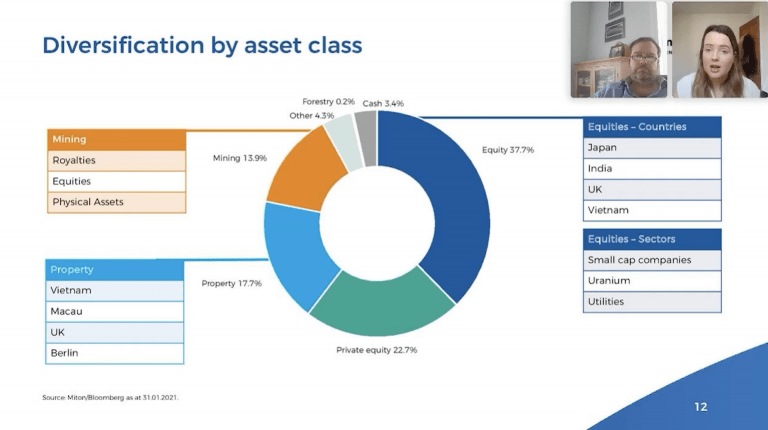
Miton Global Opportunities plc (MIGO) is a closed-end investment company, specialising in deep value opportunities and special situations within the Investment Trust universe. The Trust seeks to exploit pricing inefficiencies in overlooked and unloved closed-ended funds often found in the darker corners of the Investment Trust market.

The Trust offers exposure to a diversified pool of closed-end investment companies, often trading on substantial discounts to their intrinsic value and where the Managers believe there is a catalyst for a re-rating.

Download presentation slides here.

Netcall revenue up 9% as company’s cloud business grows

0

Netcall revenue up to £13.4m

Netcall (AIM:NET), the customer experience software specialist, announced strong end of year results on Wednesday as the company was boosted by the growth of its cloud business. 

Netcall’s revenue was up by 9% in 2020 to £13.4m, while pre-tax profits rose to £0.96m from £0.14m the year before. 

The software company saw significant growth from its Intelligent Automation and Customer Engagement offerings with an increase in usership of both.  

The cloud services annual contract value (ACV) at 31 December 2020, rose by 25% to £8.4m. 

On market opening there was a surge in demand for Netcall shares following its positive results. The AIM-listed company’s share price reached 71.4p during early morning trading on Wednesday, a rise of over 4%. Before 10am Netcall’s share price retreated back to 67.2p, 1% up on yesterday’s close. 

Netcall has stated the company has a strong level of current trading and a healthy pipeline, while the board believes that adjusted EBITDA for 2021 will be ahead of its previous expectations. 

Henrik Bang, chief executive at Netcall, commented on the results:

“Netcall enjoyed a strong first half year performance delivering solid revenue and profit growth despite the ongoing impact of Covid-19 and traded comfortably in line with management expectations. We continued to experience robust demand from our main market segments of financial services, healthcare and government driven by cloud subscription contracts for both Intelligent Automation and Customer Engagement solutions.”

“As we continue to strengthen our product portfolio, such as the recent addition of Robotic Process Automation, we see an increasing number of customers combining the use of both our Intelligent Automation and Customer Engagement solutions, which supports our growth aspirations.”

Triple Point Social Housing REIT presents at the UK Investor Magazine Virtual Conference 23rd February

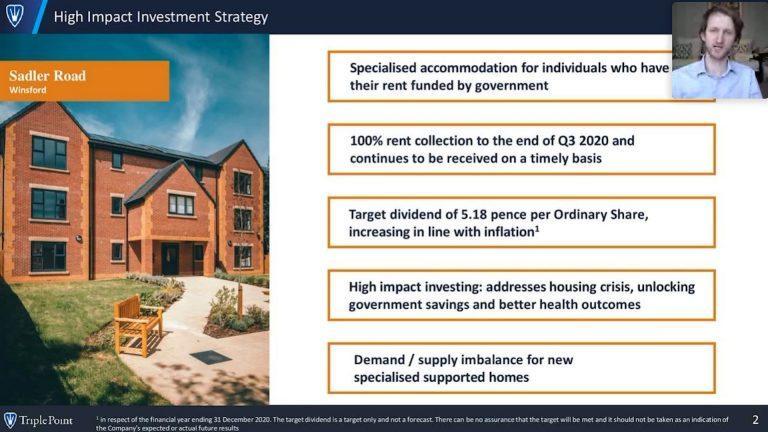
The UK Investor Magazine Virtual Investor Conference 23rd February featured Freddie Cowper-Coles of Triple Point Social Housing REIT (LON:SOHO) who outlined the latest developments at the trust.

Triple Point Social Housing REIT plc is improving the lives of vulnerable people across the UK by meeting the critical demand for specialised supported housing.

SOHO’s homes give residents greater independence and dignity than traditional institutional care whilst still addressing their specialist care needs.

Download slides here

Reckitt Benckiser posts record sales as demand for hygiene products soars

0

Reckitt Benckiser sales grew by 11.8% in 2020

Reckitt Benckiser (LON:RB) reported its highest ever full-year sales growth as the coronavirus pandemic caused a surge in demand for the company’s products. 

The consumer goods company, which sells Dettol and Lysol disinfectants, announced its sales grew by 11.8% to £14bn, with e-commerce sales growing by 56%. 

Covid-19 has heightened the importance of hygiene among the public pushing up demand for Reckitt Benkiser’s leading disinfectant brands. 

Reckitt Benkiser made an operating profit of £2.16bn, compared to a £1.95bn loss the year before. 

The consumer goods company announced a full year dividend of 174.6p, matching 2019’s shareholder payout. 

Reckitt Benckiser shares are up 1.54% to 6,056p at early morning trade on Wednesday. Following a spike in July 2020 at 7,960p per share, Reckitt Benckiser’s share price has since retreated.

This could raise a question mark over the Reckitt Benckiser’s prospects beyond a surge in demand for sanitation products during the pandemic. The FTSE 100 consumer group had a bumper first quarter of 2020 driven by a jump in sales of hygiene products.

Laxman Narasimhan, chief executive at Reckitt Benkiser, commented on the results while looking ahead to further growth opportunities in 2021.

“This past year we delivered a strong revenue performance with nearly £14bn of sales and +11.8% like-for-like growth. eCommerce sales grew by a record +56% and now account for around 12% of group net revenue.  We have made a strong start to implementing our new strategy and proved that we can adapt and successfully respond to rapidly changing market conditions. Our portfolio is clearly resilient – with or without COVID-19 – and we are building a stronger business for the future,” said Narasimhan. 

“Our category-leading germ protection/disinfection brands have all seen substantial market growth, with around 80% of our consumers expecting to retain many of their new improved habits post pandemic. We capitalised on these new behaviours with Dettol and Lysol entering 41 markets, with plans to enter a further 29 markets in 2021.”

Lloyds surpasses analyst forecasts despite profits dropping by over 72%

0

Lloyds seeking to double profitability in 2021

Lloyds (LON:LLOY) has announced its pre-tax profit dropped by 72% over 2020.  

The banking giant’s profit before tax fell to £1.2bn from £4.4bn the year before.

However, Lloyds’ Q4 performance was better than expected, with the bank reporting a £792m pre-tax profit for this period. This figure surpassed average analyst forecasts of £471m. 

The bank paid a £4.2bn impairment charge for loans that are expected not to be repaid due to the pandemic. 

In line with its rivals – HSBC, Natwest and Barclays – Lloyds will reinstate its dividend of 0.5p per share having been blocked last year by the Bank of England 

Lloyds shares are up by 2.3% early on Wednesday morning to 40.15p.

Lloyds will look to expand its insurance and wealth division, as the bank seeks to double its profitability over the coming year.  

António Horta-Osório, chief executive at Lloyds Bank, who will be succeeded by Charlie Nunn in August, commented on both the year gone and the bank’s future prospects. 

“The impact of the coronavirus pandemic on the people, businesses and communities in the UK and around the world in 2020 has been profound. We remain absolutely focused on working together with all of our stakeholders to support our customers and ensure a sustainable recovery,” said Hort-Osório

“Looking forward, significant uncertainties remain, specifically relating to the coronavirus pandemic and the speed and efficacy of the vaccination programme in the UK and around the world. I remain confident that the Group’s clear purpose, unique business model, significant competitive advantages and the customer focused evolution of our strategy we have announced will ensure that the Group is able to Help Britain Recover and in so doing, help transition to a sustainable economy.”

Lloyds is the last of the major banks to announce results over the last week, with all of them surpassing analyst expectations.

S&P 500 surge grinds to a halt as tech stocks dip

0

The S&P 500’s recent advances came to a halt on Tuesday as some of the index’s top performing companies saw significant losses. Moving towards lunchtime in the States the market is down by 0.29% following a sharp dip in the early-morning session. 

The dampening of the S&P 500 follows a recent climb to an all-time high amid economic optimism around the stimulus package, oil prices and the vaccine roll-out. While rising bond yields remain a cause for concern.

Shawn Quigg, a derivatives strategist at JP Morgan, remains optimistic about the US stock market. Quigg has told the bank’s clients they can expect to earn “gains sooner than later, particularly considering the numerous catalysts ahead, their impact on volatility, and the implications that will have on investor positioning.”

S&P 500 movers

Extra Space Storage (7.21%), CBRE Group (5.91%) and MGM Resorts International (5.21%) sat at the top of the pile of America’s top 500 companies. 

At the bottom end, Ledos Holdings (-9.69%), Discovery Inc (-7.60%) and DISH (-5.65%) Network Corp, were the biggest fallers on the S&P 500.

Tesla

At 10am local time Tesla’s share price fell by over 8%, wiping $15bn from CEO Elon Musk’s net worth. However, by lunchtime the S&P 500 company’s share value rebounded to 704.34 cents per share, 1.42% down on the day.

Tech stocks

The notorious “FAANG” tech stocks – Facebook, Amazon, Netflix, Alphabet (Google) and Apple – look somewhat vulnerable following a mass sell-off on Monday. Both Apple and Amazon dipped over 2% in a signal that “investors’ love affair with S&P 500’s tech stocks is cooling” as they look for alternative routes to prosperity following the pandemic, according to Russ Mould, investment director at AJ Bell.

FTSE 100 down as PM unveils cautious plan to ease restrictions

0

With an hour to go before the close of play on Tuesday, the FTSE 100 dipped by half a percent to 6,575.25.

“Although the headline FTSE indices did not move much, there was a great deal of violent movement below the apparently calm surface,” said Russ Mould, investment director at AJ Bell.

Having snuck above the 6,600 mark yesterday the index retreated after Boris Johnson’s speech failed to capture the imagination of investors. However, the announcement by the Prime Minister did provide a timeframe for investors.

“The key dates see schools reopen on March 8, with the ‘rule of six’ from March 29, the reopening of non-essential retail from April 12, indoor restaurants from May 17, and something approaching pre-covid normality from June 21,” said Connor Campbell, financial analyst at Spreadex.

HSBC and IHG announced financial results for 2020, while bitcoin has fallen by over 10% in the last 24 hours following a tweet by Elon Musk.

FTSE 100 movers

The day’s top risers on the index were British Land Co (4.89%), Land Securities Group (4.65%) and Informa (4.17%).

At the bottom of the FTSE 100, Scottish Mortgage Investment Trust (-7.89%), Evraz (-4.66%) and Avast (-4.55%) saw significant falls in their valuations on Tuesday.

HSBC

HSBC (LON:HSBA) announced a fall of 43% in profit for 2020 as its global operations were hit by the pandemic. The FTSE 100 bank is looking to expand further into Asia, “by far the most profitable region” for HSBC, outlining plans to invest around $6bn.

IHG

IHG (Intercontinental Hotels Group) (LON:IHG) has swung to a loss in an unsurprisingly challenging year for the business. The group’s total revenue was $2.39bn, a fall of 48% compared to a year before. The FTSE 100 hospitality company posted an operating loss of $153m, having made a $630m profit in 2019.

Tech stocks starting to look vulnerable following market sell-off

0

Value investing showing signs of a comeback

The notorious “FAANG” tech stocks – Facebook, Amazon, Netflix, Alphabet (Google) and Apple – look somewhat vulnerable following a mass sell-off on Monday. 

The Nasdaq composite recorded its third daily fall of more than 2% with big technology companies taking sizable losses. 

Both Apple and Amazon dipped over 2% in a signal that “investors’ love affair with technology stocks is cooling” as they look for alternative routes to prosperity following the pandemic. 

This according to Russ Mould, investment director at AJ Bell.  

“Gathering concern over inflation, as wage growth accelerates, commodity prices surge and bond yields grind higher, also helps to explain the apparent switch in preference from secular growth plays like tech to cyclical growth and recovery plays – or ‘value’ stocks, for want of a better turn of phrase,” Mould adds.

This can be seen by measuring the relative performance of value stocks (stocks undervalued by the market) against growth stocks (stocks expected to outperform in long-term), such as Apple or Amazon. 

The Invesco QQQ Trust is designed to track the performance of the NASDAQ Composite index’s largest 100 non-financial companies. Its biggest holdings are Apple, Microsoft, Amazon, Alphabet, Tesla, Facebook and NVIDIA and so it is a good proxy for growth.

On the other hand, the iShares Russell 2000 Value ETF follows a basket of nearly 1,500 stocks that offer value characteristics.

While growth stocks have outperformed throughout the pandemic, there is reason to believe the FAANG stocks may not sustain their bullish run through the recovery. 

“Since the start of autumn 2014, when the NYSE FANG+ index was launched and the technology stocks and the FAAANM sextet of Facebook, Alphabet, Amazon, Apple, Netflix and Microsoft really began to come into its own, the Invesco QQQ is up by 223% and the iShares Russell 2000 Value ETF by 57%,” says Russ Mould.

“But the iShares Russell 2000 Value ETF has been making stealthy progress of late. Since Pfizer Monday it has gained 33% while the QQQ is up just 12%, the ‘value’ tracker has surged by 61% compared to 29% advance from the QQQ,” Mould continues. 

“In other words, even when it looked like tech and social media stocks were the only game in town during the second half of 2020, when they continued to post bumper earnings figures and the economic outlook seemed bleak, value and recovery plays were taking the lead.”

The million dollar question for investors is whether the stock market will see the return of value growth after a period of domination by FAANG stocks.