GBP/USD jumps as Bank of England holds interests rates

Bank of England says no negative interests rate in the near future

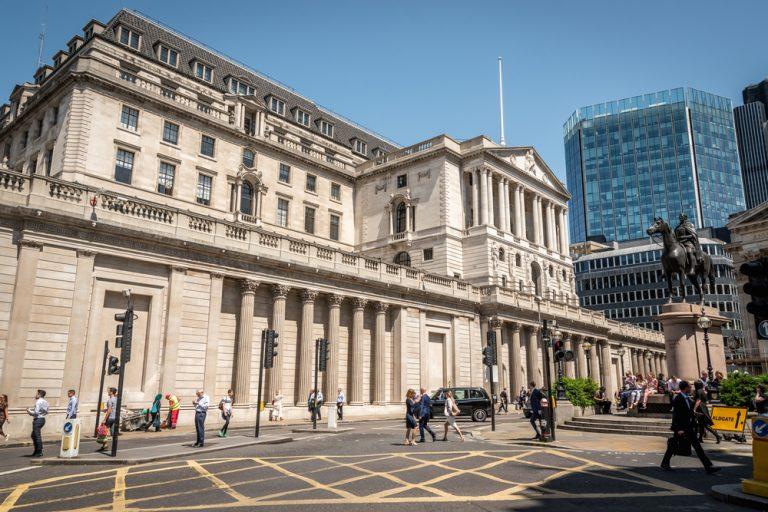
The Bank of England today announced it will not implement a policy of negative interest rates. 

Instead, following a vote by the Monetary Policy Committee, the central bank held interest rates at 0.1%. 

The Bank of England’s confidence in the UK economy caused the pound to strengthen against the dollar. GBP/USD was trading firmly above 1.3650 levels. 

The decision by the Bank of England, as outlined by a statement on its website, was based on a positive outlook for the UK economy. 

“Covid-19 (Covid) vaccination programmes are under way in a number of countries, including the United Kingdom, which has improved the economic outlook,” the statement read.  

The central bank had been considering implementing negative interest rates in recent months, consulting with UK banks and building societies. 

However, today’s report confirmed, while there is no prospect of imminent negative rates, there is a possibility in the future.

“While the Committee was clear that it did not wish to send any signal that it intended to set a negative Bank Rate at some point in the future, on balance, it concluded overall that it would be appropriate to start the preparations to provide the capability to do so if necessary in the future,” the Bank of England report stated. 

Analysts echoed the central bank’s sentiments around the possibility of a strong economic recovery.

“The pace at which the vaccine rollout has progressed has been incredibly encouraging and will provide much needed hope for people and businesses alike,” said Ian Wawrick, managing partner at Deepbridge Capital. 

While Warwick was optimistic about the vaccine rollout, he asserted the need for support for UK companies. 

“Agile companies, which have survived 2020 and provide a product or service which has a genuine medium to long term solution to a recognised problem, will continue to develop and grow but require capital to do so,” Warwick said.

Trident Royalties: exposure to a diversified portfolio of mining commodities

Trident Royalties Plc (LON:TRR) invests in mining royalties at different stages of the mine lifecycle to ensure a strong pipeline of revenue over the long term and acting as an inflation hedge for investors.

Having established a portfolio of 11 mining royalties thus far, Trident Royalties is already enjoying the revenue from royalties over in-production assets whilst investors can look forward to additional revenue from projects set to come online in the near future.

Trident’s portfolio is designed to represent the exposure of the global metals market, leading to a diverse range of projects and commodities, a selection of which are detailed below.

Koolyanobbing Iron Ore

The Koolyanobbing project is situated in Western Australia and is operated by Mineral Resources, a large mining company listed on the Australian Stock Exchange. 

Trident owns a 1.5% free on board (FOB) royalty on the project which produces at a rate of 12-12.7 Mtpa (million tonnes per annum) as of December 2020.

The royalty generated over A$2.4m in revenue in 2020 and was acquired for A$6.65m, with the second quarter revenue increasing 67% from the first quarter as iron ore prices rose alongside further increases in mine production.

There are plans to increase the production rate at the mine to 13 Mpta, representing a great example of how Trident’s revenue can grow in line with a mine, without additional expenditure on the part of Trident.

Lake Rebecca Gold Project

In addition to royalties such as Koolyanobbing which are already providing Trident with revenue, there are a number of projects in the exploration and development phase that will commence revenue generation in the future.

An example of this is the Lake Rebecca Gold Project in Western Australia. The project is operated by Apollo Consolidated and Trident owns a 1.5% Net Smelter Royalty over the entire +1 million ounce deposit.

The royalty was acquired in October 2020 for a total consideration of A$8 million satisfied by $A7 million in cash and the issue of $A1 million shares in Trident Royalties at a price of 29.39p.

Despite the royalty not yet providing revenue, Trident believes such acquisitions are essential for delivering shareholder value over the long term as it expects first gold production in 2023.

There aren’t any revenue estimates attached to the royalty, most probably because forecasts will be subject to gold price fluctuations, but the company has given production guidance of 90-100koz/year.

Mimbula Copper Mine

Trident’s 1.25% Gross Revenue Royalty (GRR) over the Mimbula Copper mine in Zambia is another good example of delivering on its goal to provide exposure to the full suite of mining commodities.

With the global copper market forecast to fall into a supply deficit as copper is a key component of electrification, Mimbula is currently ramping production and provides exposure to a 93.7mt 1.1% copper resource in close proximity to other mines and with access to infrastructure.

There are conditions attached to the Mimbula royalty which see the GRR fall to 0.3% once US$5 million has been paid to Trident. This will again fall to 0.2% after the royalty has paid on 575,000 tonnes of copper. In addition, there is a minimum payment schedule such that Trident will receive minimum payments to recover its investment within 2.5 years, after which it will step-down to 0.3% GRR thereafter.

FTSE 100 reverses early gains following Bank of England rate decision

0

FTSE 100 reversed early gains on Thursday afternoon after the Bank of England kept rates on hold and gave a more positive outlook on the UK economy than expected.

The Bank of England’s optimism around the UK economy saw the pound stage a rally against the dollar and reversed much of the earlier gains seen in dollar earning shares.

The FTSE 100 was trading at 6,495, down 0.2% shortly after 1pm on Thursday. GBP/USD was up 0.22% at 1.3674. 

It was a busy day for the FTSE 100 as a number of high-profile companies announced their results. Shell, BT and Unilever, among others, released trading updates and results early this morning, leading to gains in the morning session.

Shell dividends

The FTSE 100’s biggest story of the day came from oil giant Shell. The company, like its competitor BP, is still feeling the effects of a tough year on the oil industry. However, despite posting a $21bn loss, Shell announced it would be increasing its dividend. The company’s mid-morning trade was largely flat, down to 1,319p. 

In better news for the industry, oil prices rose by just under 2% this week as reports showed US crude stockpiles to be at the lowest point since March. “Oil prices continued to show strength after yesterday’s big gains on signs of tight supply, helping Royal Dutch Shell shares to remain steady despite a patchy set of results,” said Russ Mould, investment director at AJ Bell.

BT

The telecommunications giant’s revenue plunged by £16bn over the first nine months of the financial year. The FTSE 100 company put the fall down to the coronavirus pandemic. As announced in May 2020, BT will not be paying a dividend to its shareholders until 2022, when it will be cut to 7.7p per share.  After an initial early morning rise, BT’s share price dropped back down to 128p, around the closing point from the previous day’s trading.

“It feels like BT should have fared better than it did through the course of the last year. You would have expected a properly structured business which faced a relatively modest impact from both Brexit and Covid to have outperformed rather than underperformed the wider market,” said Russ Mould, investment director at AJ Bell.

Unilever

The share price of Unilever, one of the biggest companies on the FTSE 100, took a dip despite reporting a rise of 3.5% in underlying sales for Q4. In mid-morning trading Unilver shares dipped by nearly 4.5%. 

“Unilever is seen as the market’s old reliable friend, trustworthy and dependable no matter the economic backdrop. Coming in short of full year sales forecasts is not the done thing and so Unilever is somewhat punished by investors today for not delivering the required goods” said Russ Mould, investment director at AJ Bell.  

Unilever shares sink in spite of underlying sales jump

1

Unilever results restore confidence

Unilever, the British consumer goods company, has today announced a rise of 3.5% in underlying sales for the fourth quarter. 

The company’s positive performance was buoyed by strong demand in emerging markets and was in line with analysts’ forecasts. 

Sales grew by 1.9% over the full year with turnover falling by 2.4%. 

Underlying profit fell to €9.4bn, down 5.8% from the year before, due to currency movements. 

In early morning trading Unilever’s share price fell by 4.4%. 

Chief executive of Unilever Andy Jope looked ahead cautiously while taking the positives from the year gone. 

“While volatility and unpredictability will continue throughout 2021, we begin the year in good shape and are confident in our ability to adapt to a rapidly changing environment,” Jope said.

“As a result, we are winning market share in over 60% of our business in the last quarter, on the basis of measurable markets. The business also generated underlying operating profit of €9.4 billion and free cash flow of €7.7 billion, an increase of €1.5 billion.”

The pandemic caused a rise in demand for hygiene goods to the benefit of Unilever. 

Sales of Domestos bleach rose by over 25% year-on-year, while sales of Lifebuoy soap went up by 50%. 

However, the pandemic has caused a sharp fall in foods served in public places, another of the company’s many products and services. 

Strong recoveries in emerging markets helped too, including China and India, where demand picked up during Q4. 

“Unilever is seen as the market’s old reliable friend, trustworthy and dependable no matter the economic backdrop. Coming in short of full year sales forecasts is not the done thing and so Unilever is somewhat punished by investors today for not delivering the required goods” said Russ Mould, investment director at AJ Bell. 

“Full year sales of €50.7 billion is slightly below the expected €51.6 billion figure, which is disappointing but far from disastrous. In its defence, €7.7bn free cash flow is better than €6.7bn expected by analysts as the company has paid more attention to ensuring it is paid efficiently by third parties.

The company has laid out future growth plans which include a major focus on the US, India and China, and making more of the e-commerce channel. Restructuring costs of around €2 billion for the next two years may [be] hard for some Unilever fans to stomach but the company is also targeting €2 billion annual cost savings,” said Mould.

BT profits and revenue down again

0

BT saw a slight easing in profits decline

BT’s revenue has fallen by £16bn through the first three quarters of the financial year. 

The telecommunications company put the 7% dip down to the coronavirus pandemic. 

For the same period, BT’s profit fell by 17% to just under £1.6bn. 

In May 2020 BT announced it would not be paying a dividend to its shareholders until 2022, when it will be cut to 7.7p per share.  

The company’s last dividend was an interim payment of 4.62p per share paid out to shareholders last March.

Chief executive of BT Philip Jansen expects for the company to perform well in the face of continued lockdowns through 2021. 

“During the current Covid-19 pandemic, BT has continued to deliver for our customers and invest in our networks, our modernisation programme, and our products and services in recognition of the ever increasing need for improved and faster connectivity. 

We delivered results in line with our expectations for the third quarter and remain on track to deliver our 2020/21 outlook despite even greater Covid-19 restrictions than previously forecast.”

Jansen does not think Brexit impacted BT’s recent performance and is confident in the company’s EBITDA expectation for 2022/23. 

“With no material impact expected from the Brexit deal and our resilient results so far this year I remain confident in our EBITDA expectation of at least £7.9bn for 2022/23.”

Despite the confidence of the BT board around performance in 2022/23 analysts highlighted underperformance in the past year. 

“It feels like BT should have fared better than it did through the course of the last year. You would have expected a properly structured business which faced a relatively modest impact from both Brexit and Covid to have outperformed rather than underperformed the wider market,” said Russ Mould, investment director at AJ Bell. 

“However, BT faces fairly severe structural challenges including an unhelpful regulatory backdrop, big spending commitments and yawning black hole in its pension scheme.

At least today’s update did reveal a coronavirus-related boost for its Openreach infrastructure unit as lockdown generated massive demand for fibre broadband,” said Mould.

Shell increases dividend despite swinging to $21bn loss

0

Shell’s performance badly impacted by pandemic

Shell announced a $21bn loss for the year as the pandemic decimated demand for oil.

The results are a significant drop-off from 2019 when the company made a profit of $15bn.

Shell’s results followed its rival BP which confirmed an overall loss of $5.69bn in 2020 earlier this week. 

Shell’s Q4 profit was down by 87% year-on-year as energy consumption remained low. 

In mid-morning trade Shell’s share price was largely flat, down to 1,330p. The Shell share price was as high as 1,503p in January 2020. 

Shell has been constrained by the collapse in oil demand throughout the year which pushed prices below zero for the first time in history. 

Having cut its dividend in April for the first time since the second world war, the company expects its interim dividend to be $0.1735 per share.  

The first quarter dividend for 2021 is expected to be announced on April 29. 

Chief executive officer of Shell Ben van Beurden reassured shareholders of Shell’s commitment to its payouts. 

“We are committed to our progressive dividend policy and expect to grow our US dollar dividend per share by around 4% as of the first quarter 2021.”

van Beurden reflected on the company’s performance following a testing year.  

“2020 was an extraordinary year. We have taken tough but decisive actions and demonstrated highly resilient operational delivery while caring for our people, customers and communities. We are coming out of 2020 with a stronger balance sheet, ready to accelerate our strategy and make the future of energy,” he said.

In better news for the industry, oil prices rose by just under 2% this week as reports showed US crude stockpiles to be at the lowest point since March. 

The oil market was also aided by news that Joe Biden’s $1.9trn stimulus package is making progress in the US Congress.

Paypal profits surge over 200%

0

Thanks to a surge in online shopping over the past year, Paypal reported a rise in Q4 profits.

For the last three months of the year, the group’s profits increased by 209% to $1.6bn (£1.2bn). Revenues also surged by 22% to $6.1bn.

Paypal added 73m net new active accounts and total payment volumes hit $936bn.

President and chief executive Dan Schulman commented: “Paypal delivered record performance in 2020 as businesses of all sizes have digitized in the wake of the pandemic. In this historic year, we released more products than ever before and have dramatically scaled our acceptance worldwide, giving our 377m consumer and merchant accounts even more reasons to use our platform.”

For 2021, Paypal has forecast profits of $25bn. Shares increased in after-hours trading by over 5% to 265,82. Shares in PayPal have gained 40% over the past three months.

Wolfe Research analyst Darrin Peller wrote in a note: “We see the (net-new active) guidance as key given concerns among some investors that the (over 70 million) added in 2020 was a pull-forward and would cause a material retrenchment in 2021.”

KPMG partners set to take an 11% pay cut

0

Firm planning move from Canary Wharf headquarters

KPMG will reduce the pay of its partners by 11% to alleviate the impact of the coronavirus pandemic. 

The financial services company also expects to downsize a number of its offices including its Canary Wharf headquarters. 

KPMG announced today that its profit fell by 6% to £288m from £306m the year before. 

The average pay for its partners dropped from £640,000 to £572,000 as job protection remained a priority for the Big Four accounting firm. 

KPMG chose not to furlough any members of staff at the height of the pandemic and even continued to hire at all levels of the business. The costs around moving UK staff to home working also took its toll on the company’s balance sheet. 

Prior to the lockdowns coming into effect, KPMG was experiencing “high single-digit growth”. 

However, many of the firm’s services, including consulting and deals advisory, are now less in demand, as the pandemic takes its toll in the UK economy. 

Audit was the only division within the firm to see a revenue increase to £606m, up 3% from the year before.

Bill Michael, senior partner and chair of KPMG, maintained a positive outlook while asserting the company’s commitment to protecting its staff. 

“I am more optimistic than I was two months ago but the business is being as prudent as possible and making sure partners take a bigger hit than anyone else. It is about the wellbeing of our staff and our people,” Michael said.

Partners from across the sector have taken similar pay cuts amid the Covid slowdown.

In September of 2020 partner pay at Deloitte fell by 17% despite revenues increasing by 10%. While PwC announced towards the tail end of last year that partners would be taking 10% pay cuts.

Great Point Entertainment Income Trust to harness TV and Film productions with £200m IPO

Great Point Entertainment Income Trust is set to raise £200m in an IPO for a first of its kind trust focussed on TV and Film productions.

The trust will be managed by Great Point Investments who will utilise a wealth of experience in the sector, investing £488m in projects such as Doc Martin for ITV, Line of Duty for BBC and Brexit for Channel 4 since 2013.

The Trust will provide investors with exposure to the productions from broadcasters like the BBC, ITV, Sky and Channel 4 in addition to streaming platforms such as Netflix and Amazon Prime Video.

Great Point Entertainment Income Trust will build a portfolio of senior debt secured against pre-sold IP rights.

The income mandate of the trust is highlighted with a target 6% dividend yield as the trust invests the lions share of IPO proceeds over a 9 month period.

“We are excited to offer investors access to the production of film and television content through a London-listed investment trust,” said Norman Crighton, Chairman of Great Point Entertainment Income Trust PLC.

“This is the first of its kind and an opportunity for investors to tap into a market that has proved resilient to both economic downturns and COVID-19, whilst being anchored by some of the world’s biggest media and technology businesses such as Amazon, Netflix, Disney, Apple, Google and Facebook.”

“GPEIT will provide investors with an attractive income stream and modest capital growth achieved through a portfolio of senior loans secured against pre-sold IP rights to finance the production of film and television content. In doing so, GPEIT provides a robust alternative income strategy uncorrelated to traditional financial markets which is highly appealing to investors.

“In Great Point Investments Limited, we have an investment adviser with an unrivalled expertise and track record in delivering successful projects in this sector and we are excited to offer investors access to a listed investment company under their stewardship.”

Reddit market frenzy: lessons and implications for investors

GameStop has dominated headlines over the past week having staged a tremendous rally driven by Reddit forums. This rally has now violently reversed and we reflect on the implications for investors.

Alan Green joins the Podcast to explore the notion of herd mentality in markets and how relationships between financial institutions played out during this period of heightened volatility.

We look at whether the Reddit share frenzy was a consequence of frothy valuations elsewhere in the market or a stand alone phenomenon.

We also pay attention to three UK shares in Bidstack (LON:BIDS), Power Metal Resources (LON:POW) and Lexington Gold (LON:LEX).