GameStop has dominated headlines over the past week having staged a tremendous rally driven by Reddit forums. This rally has now violently reversed and we reflect on the implications for investors.
Alan Green joins the Podcast to explore the notion of herd mentality in markets and how relationships between financial institutions played out during this period of heightened volatility.
We look at whether the Reddit share frenzy was a consequence of frothy valuations elsewhere in the market or a stand alone phenomenon.
We also pay attention to three UK shares in Bidstack (LON:BIDS), Power Metal Resources (LON:POW) and Lexington Gold (LON:LEX).
As Lloyds (LON:LLOY) prepares to report its financial results on 24 February 2021, there is continued speculation on what the outlook is for the bank over the coming year. Investors will be playing close attention to announcements around dividend payouts and the effects of the coronavirus pandemic on the bank.
Lloyds share price
Lloyds shares are sitting at 34p, down from just under 60p per share a year ago. The Lloyds share price is also down from a more recent high of 39.5p in November 2020. While Lloyds shares have not performed well since the turn of the year, there are causes for optimism due to renewed hope for shareholder payouts, in addition to the rollout of vaccines across the UK.
Lloyds dividend
In April 2020, as lockdowns came into effect across the UK, Lloyds did not make any quarterly or interim dividend payments to its shareholders. The company reasoned that this was to “serve the needs of the businesses and households through extraordinary challenges presented by Covid-19”.
The bank’s last dividend of 1.12p per share was paid out to shareholders on December 31 2019. Lloyds’ dividend yield, the ratio which shows how much a company pays out in dividends relative to its stock price, was at 1.8%. This was down from 6.2% at the end of 2018.
Nine months ago, Lloyds was required to halt dividends in order to maintain capital levels by the Bank of England. However, the regulator has now given Lloyds the go-ahead to make shareholder payouts as vaccines give hope to the UK economy.
It is not quite full-steam ahead for Lloyds and the other big banks, whose payouts will be scrutinised by the Prudential Regulation Authority (PRA). The regulator will be keeping a close eye on the Lloyds to ensure it has abided by its “rigorous remuneration regime in an appropriate fashion”.
Bezos ‘to focus my energies and attention on new products and early initiatives’
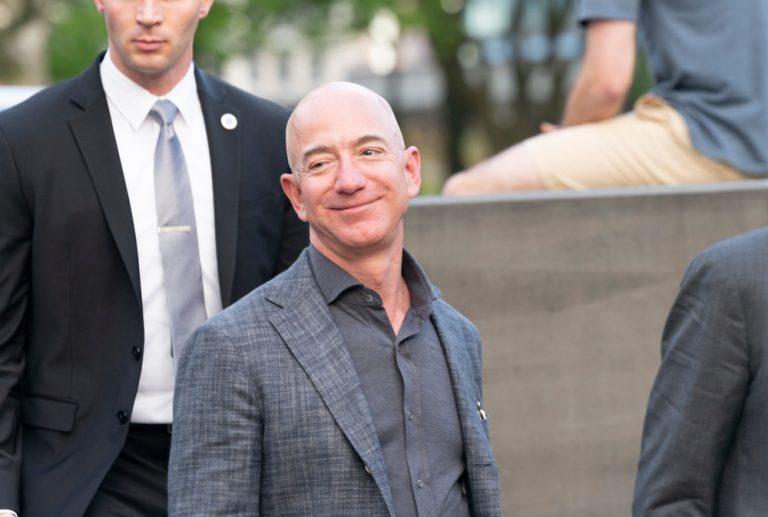
Founder of Amazon Jeff Bezos has stepped down as chief executive of the company he founded nearly three decades ago from a garage.
Bezos, 57, said the decision will give him “time and energy” to focus on other initiatives.
The richest man in the world will be replaced by Andy Jassy, who heads up the company’s cloud computing unit, Amazon Web Services.
In an email sent to the company’s workforce, Bezos announced the transition, and rallied behind his successor.
“I’m excited to announce that this Q3 I’ll transition to Executive Chair of the Amazon Board and Andy Jassy will become CEO. In the Exec Chair role, I intend to focus my energies and attention on new products and early initiatives.
Andy is well known inside the company and has been at Amazon almost as long as I have. He will be an outstanding leader, and he has my full confidence.”
Jeff Bezos turned amazon into one of the most formidable companies in the world.
From its inception as an online book retailer in 1994, Amazon now employs around 1.3 million staff across the world.
The company continues to defy expectations, posting revenues of $125.6bn in Q4, a rise of more than 40% compared to one year before.
“When you look at our financial results, what you’re actually seeing are the long-run cumulative results of invention. Right now I see Amazon at its most inventive ever, making it an optimal time for this transition,” Bezos said.
Andy Jassy, who will replace Bezos at the helm, joined Amazon in 1997 following his MBA from Harvard University, where he graduated cum laude.
Jassy founded Amazon Web Services, a set of global cloud-based products that creates infrastructure used by millions of governments, companies and schools.
The vaccine aims to address various strains of Covid-19
GSK’s share price rose by 0.75% at opening on Monday upon news that the company would be developing a vaccine.
GSK and CureVac, the German pharmaceutical company, have joined forces to develop the next generation of mRNA Covid-19 vaccines.
The company is targeting availability in 2022, subject to regulatory approval, with development to begin immediately.
The €150m collaboration could lead to a vaccine with a multi-valent approach, which would be able to target multiple emerging variants.
New variants of Covid-19 have emerged in Brazil, South Africa and the UK, as the world continues its fight against the infectious disease.
Emma Walmsley, chief executive officer of GSK, believes the vaccine that will be developed by this research project could play a leading role in the fight against the coronavirus pandemic.
“We believe that next generation vaccines will be crucial in the continued fight against COVID-19. This new collaboration builds on our existing relationship with CureVac and means that together, we will combine our scientific expertise in mRNA and vaccine development to advance and accelerate the development of new COVID-19 vaccine candidates,” Walmsley said.
GSK will also support CureVac’s efforts to manufacture up to 100 million doses of the vaccine candidate CVnCoV IN 2021.
Franz-Werner Haas, chief executive officer of CureVac, welcomed GSK’s expertise.
“We are very pleased to build on our existing relationship with GSK with a new agreement to jointly develop next generation mRNA-based vaccines, in addition to our current candidate CVnCoV. With the help of GSK’s proven vaccine expertise, we are equipping ourselves to tackle future health challenges with novel vaccines,” Haas said.
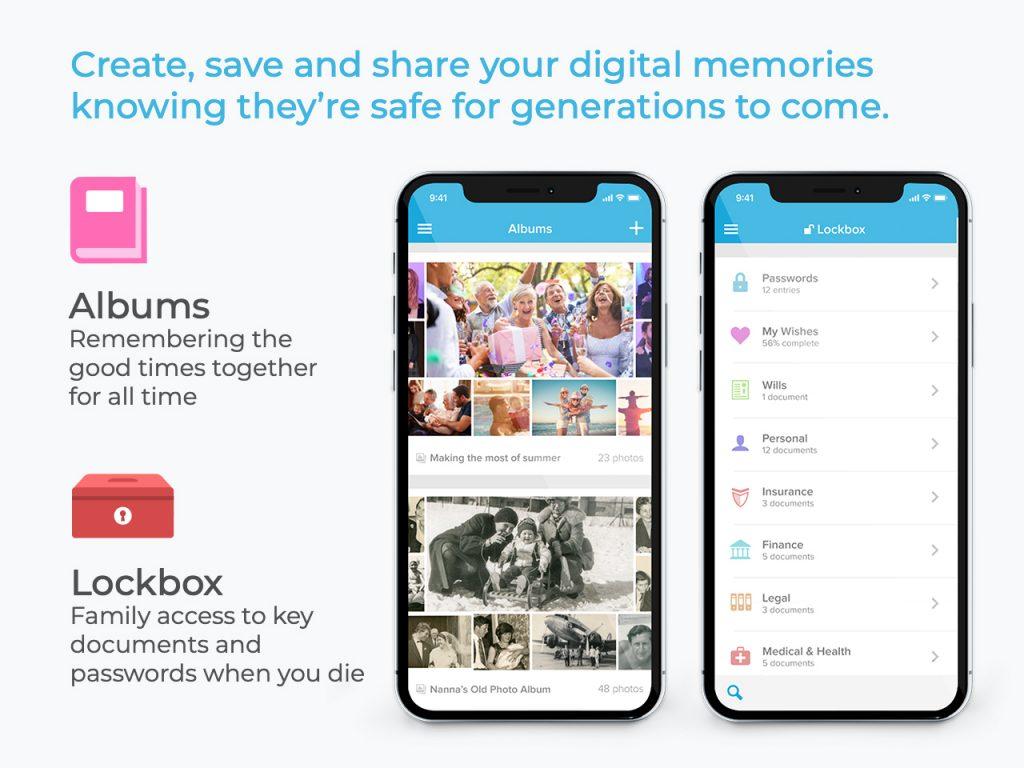
We are all pumping out our data into the cloud. Some of it we’d like to keep forever. Emortal is the startup that wants to help you organize, protect, preserve and pass on your “digital legacy” and protect it from becoming unreadable, otherwise known as “bit-rot.”
Emortal, a UK-based digital family content solution, has so far secured more than £1.5 million through its equity crowdfunding campaign on Crowdcube. The funding round, which originally sought to raise £1 million, has already attracted over 500 Crowdcube investors and is looking to hit £3 million before the end of the raise.
Founded in 2007, Emortal enables families to preserve and pass on something very important; their digital legacies.
“How we create a sustainable business with both the technical means to preserve aging family content and the fiscal means to pay for the continuous curation of our digital legacies long after we are gone is the key issue. Emortal is the first viable solution to this concerning issue” says Colin Culross, the Founder and CEO. “The cornerstone of the Emortal proposition is to tie data preservation in with digital legacy protection to ensure that our digital memories are safe and accessible for generations to come.”
Culross also noted that the solution has been designed to integrate preservation technology with a future proof legacy fund to pay for the continuous updates needed to ensure that its “digital family heritage” lasts for generations to come.
Emortal was subject to an acquisition offer of USD$12.1 millon by Microsoft in 2010. “It is our ambition to launch in Q3 2021 – and to be able to capitalize on further big tech sector interest. Funds from the Crowdcube round will be used to continue the growth and development of the Emortal solution” says Culross.
Emortal, which has been in engineering R&D for more than 10 years, has raised £4.2 million from “friends and family.” It is now looking to raise up to £3.0 million in crowdfunding on the U.K.’s Crowdcube platform, following what it says was a successful BETA test.
The company will use Google architecture to preserve digital memories — photographs, documents, correspondence, videos, interviews and more – indefinitely into the future. The idea is that this will ensure that as operating systems, devices and tech evolves, your entire digital legacy will remain safe, secure and accessible — to only those you choose.
The platform is now set to be launched in the U.K. and U.S. in Q3 this year and will be designed for occasional considered use, for example when taking a picture at a christening, rather than saving every photo you take. It will charge a flat, standard subscription fee of £4.99 a month.
Colin Culross, founder and CEO of Emortal said: “We are keen to use the Crowdcube platform for this raise because Emortal is a service designed for ALL families. We believe the most powerful way for the business to grow is to have thousands of our customers investing in the business.”
The company intends to use the funds from the equity funding round to continue to grow and develop its solution. It operates with the ambition to launch the Emortal solution in Q3 2021 and capitalise on the big tech sector interest. Emortal will be launched in the US and UK in Q3 this year.
The Vodafone share price (LON:VOD) rose by over 4% on Monday’s market opening after the company revealed a resilient trading performance for Q3.
The telecommunication company’s service revenue has increased by 0.4% to €9.4bn.
This figure follows a 0.4% fall during the previous quarter of the financial year.
The group attributed its return to service revenue growth to “continued commercial momentum” which came despite further lockdown measures.
Vodafone saw its service revenue grow by 1% across all segments in Germany, the country’s largest market, up from a fall of 0.1% during Q2.
Whilst Vodafone’s alternative measure of service revenue grew, reported total revenue fell 4.7% to €11.2bn.
Nick Read, group chief executive of Vodafone, praised the company’s return to revenue growth and looked ahead to 2021 with an optimistic perspective.
“I am pleased the Group returned to service revenue growth in Q3 as a result of the continued commercial momentum across our business, including our largest market Germany. Our good trading performance underscores our confidence in the outlook for the full year,” Read said.
Read attributed Vodafone’s record data traffic to lockdowns which increased reliance on the company’s services. He also reaffirmed the goal of Vodafone’s European network to be wholly powered by renewable electricity by July 2021.
“Our networks have successfully delivered another quarter of record data traffic as many countries continue to endure COVID-19 lockdowns and customers depend on our services. We have achieved this while further reducing our carbon footprint and we are making fast progress towards our important target of having our European networks wholly powered by renewable electricity by July this year.”
Mobile call time rose by half after the first lockdown as people in the UK spent more time speaking on the phone.
Moonpig shares jumped 17% as the group joined the stock market on Tuesday, valuing the company at £1.4bn.
The company placed 140m shares at an initial price of 350p. New investors will have a 14% stake in the greetings card company and retailer.
“Now is the perfect time for us to bring the company to the public market, and we are excited about Moonpig’s prospects for the future,” said chief executive of Moonpig Group, Nickyl Raithatha.
The group’s floatation comes after a strong Christmas, where Moonpig reported £156m in sales in the six months to the end of October. This was a record number as the group benefitting from high street closures and people staying at home amid the pandemic.
Dominick Mondesir, EMEA Private Capital Analyst at PitchBook, commented on Moonpig’s IPO and said: ‘’The short-term performance of the Moonpig IPO reflects equity investors willingness to pay for growth, especially for tech-enabled assets. The stock was priced at the top end of its valuation range and surged in its first day of trading.
The challenge for Moonpig and its private equity owner—who are heavily reliant on post-IPO performance due to lock up periods— will be executing on an M&A and organic strategy that allows the company to grow into its lofty valuation once earnings normalize and a sense of normalcy resumes through lifting lockdowns. A potential headwind will likely come from retaining new customers, particularly those in the baby boomer and gen x cohort, who tend to prefer the brick & mortar experience of gift picking,” he added.
Alphabet, the Google parent company, beat estimates for the fourth quarter in 2020 thanks to strong ad spending over the holiday period.
According to IBES data from Refinitiv, analysts expected revenues to come in at $53.13bn. Alphabet beat this and reported revenues of $56.9bn.
The Alphabet advertising business, including YouTube, saw sales rise by 23% on a year ago. They now account for 81% of total sales.
Philipp Schindler, Google’s chief business officer, said in a call: “YouTube continues, in our view, to be amazing for brand advertisers. Our brand business was hit hard in the early stages of the pandemic, but rebounded in Q3 and into Q4. It really helps advertisers reach a younger audience.”
“We now reach more 18 to 49 year olds than all linear TV networks combined. Our direct-response business on YouTube was practically non-existent three years ago. Now, it’s one of our largest and fastest-growing ad offerings on YouTube,” he added.
The strong results from Alphabet come when growth had slowed at the beginning of the pandemic. Haris Anwar, senior analyst at Investing.com, commented: “A stay-at-home holiday shopping season and a continuing ad rebound from the beginning of the pandemic has helped Google to post a strong fourth quarter. This robust turnaround in business should divert investors’ attention for the time being.”
Shares in Alphabet rose over 7% in after hours trading following the group’s earnings report.
Jeff Bezos has announced plans to resign from Amazon this year.
The chief executive and founder has said that he will be stepping down and instead will take on the roll of executive chair.
The news came as the group released its latest financial results. In the final three months of the year, the group reported record sales of over $100bn for the first time. Results were ahead of forecasts and the company recorded an increase of net profits from $3.3bn to $7.2bn in the fourth quarter.
Andy Jassy, chief executive of Amazon Web Services, will replace Bezos. The company provides cloud computing and storage for governments and big companies and has become one of Amazon’s most important businesses. It accounts for 52% of the company’s profits.
“Amazon is what it is because of invention. If you do it right, a few years after a surprising invention, the new thing has become normal. People yawn. That yawn is the greatest compliment an inventor can receive. When you look at our financial results, what you’re actually seeing are the long-run cumulative results of invention,” said Bezos.
“Right now, I see Amazon at its most inventive ever, making it an optimal time for this transition.”
Tim Hubbard is the assistant professor of management at the University of Notre Dame’s Mendoza College of Business. He said: “Andy Jassy stepping into the CEO role at Amazon is a natural fit. Amazon Web Services is a powerhouse within the company, driving a lot of profitability.
“This transition may free up Bezos to focus on other ideas that he’s been accumulating over the years. In one way, I think it might be freeing for him to have the space to personally innovate again, without having to manage the rest of the company.”
“Given the recent successes at Amazon, especially during the pandemic, it’s going to be hard to disrupt their momentum,” he added.
The FTSE 100 climbed on hopes for an economic recovery and a US stimulus package, with hotels outweighing a fall in BP profits.
The FTSE 100 index rose by 30 points to 0.4%, in anticipation of negotiations between President Biden and US Senators for a $1.9tn (£1.4tn) Covid stimulus.
Spreadex analyst Connor Campbell said “all eyes were on” the negotiations after the “lowball $600bn offer made by Republicans over the weekend”.
“A swift and decisive move on the relief bill would keep any other fears at bay,” Campbell said.
Elsewhere in markets silver fell as other companies subject to recent rallies on the back of Reddit forums also retreated.
“Supporting a more positive mood was an apparent calming of the Reddit-inspired frenzy on markets as well as hopes for a vaccine-led exit from lockdown. On the other side of the coin weak results for index heavyweight BP and strength in sterling helped cap some of its gains for the FTSE relative to European indices,” said Russ Mould, investment director at AJ Bell.
BP
BP slumped to an overall loss of $5.69bn in 2020 as the coronavirus pandemic took its toll on the energy market.
By mid-afternoon trade BP was down by 5% to 53p, the second biggest faller in the FTSE 100, behind silver miner Fresnillo.
“The pandemic’s hit to oil demand contributed to the kind of loss that the market just can’t ignore,” said Russ Mould, investment director at AJ Bell.
Silver
Thanks to the continued focus of Reddit traders, silver closed ahead yesterday, however much of those gains reversed in line with other markets which have been the focus of Reddit forums.
“The swarm of retail investors that descended upon Gamestop recently has turned its attention to silver,” said David Madden, analyst at CMC Markets.
However, just one day after reaching its highest price in eight years, silver plunged down by nearly 6% on Tuesday.
Silver prices going back down “isn’t surprising, as any longer-term price upside due to social media-driven collaboration and conspiracy theories was always going to be unsustainable,” Gavin Wendt, a senior resource analyst at MineLife, told Bloomberg.