Barratt Developments shares rise on strong demand

Barratt Developments was one of the top risers on this morning’s FTSE 100 surge in post-lockdown demand.

The group upped its forecast of the number of houses it expects to sell this year thanks to the strong demand as people rush to complete sales before the stamp duty holiday ends.

Following the first lockdown, sales surged by 24% and since then have cooled but continue to be up 9.2% year on year.

“Based on current market conditions and site construction activity, we now expect wholly owned completions to be between 15,250 and 15,750 homes,” said Barratt, which in October had forecast between 14,500 and 15,000 completions,” said Barratt Developments in a statement.

“We have delivered an excellent first-half performance,” the company said. “During the first half we saw an increased sales rate as strong underlying demand was supplemented by pent-up demand from the initial national lockdown, the introduction of the stamp duty holiday and the March 2021 end of help to buy for existing homeowners.”

Since Rishi Sunak introduced the stamp duty holiday over summer, the housing market has seen a boom.

“Given the ongoing mini-boom, prices might have been expected to rise again this month,” said Tim Bannister, Rightmove’s director of property data.

“But instead we have a slight dip, which could be a result of some new sellers pricing more realistically to have a better chance of agreeing a sale in time to benefit from the stamp duty savings on their onward purchase.”

Barratt Development shares rose over 4% at 717.20 (1015GMT).

Pets at Home raises profit guidance, shares rise

0

Pets at Home shares surged on Friday morning after the group shared strong sales over the Christmas period and raised its full year profit guidance.

Despite voluntarily repaying the £28.9m in business rates relief, the retailer expects profits for the year to come in at £77m.

“While renewed Covid-related restrictions on a national level may constrain trade, we remain an “essential” retailer and the measures we continue to take across our stores, veterinary practices and online operations are ensuring we remain in a strong position to meet all of our customers’ pet care needs” said Pets at Home in an update.

As an essential retailer, Pets at Home has remained open over all of the lockdowns and has seen exceptional demand.

Peter Pritchard, the chief executive of the group, said last month: “In spite of the ongoing and wide-ranging impact of COVID-19, there is much to be optimistic about. The market in which we operate remains resilient, with recent changes to our work and leisure patterns supporting rising levels of pet ownership, a good proxy for future growth in both the underlying market and our business.

“We adapted our operations rapidly post the onset of the pandemic, and our focus on customer acquisition is underpinning market share gains across all channels and strong growth in our VIP and Puppy and Kitten clubs, thereby increasing the long-term opportunity of using data-driven, joined-up solutions across our range of products and services to drive customer share of wallet and lifetime value.”

Pets at Home shares rocketed over 7% in trading and are currently 449.07 (0958GMT).

M&S sales plunge over “challenging” Christmas

0

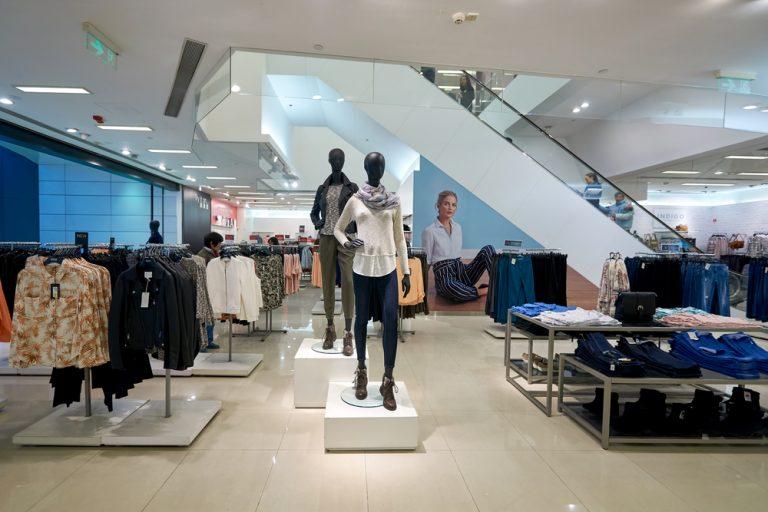
Marks & Spencer (M&S) saw sales fall 8.2% in the three months to 26 December.

In what would normally be a stronger season, clothing sales dropped 25.1% to £787m. In November alone, the group saw clothing sales plunge 40%.

The M&S food court saw a better performance with sales up 2.2% to £1.7bn. International sales suffered and were down overall by 10.4%.

Steve Rowe, Chief Executive said: “Given the on-off restrictions and distortions in demand patterns our trading was robust over the Christmas period. More importantly beneath the Covid clouds we saw a very strong performance from the Food business including Ocado Retail and a further acceleration of Clothing & Home online.  I want to thank all my colleagues for a first-class execution of Christmas for our customers in near impossible conditions. 

“Near term trading remains very challenging but we are continuing to accelerate change under our Never the Same Again programme to ensure the business emerges from the pandemic in very different shape,” he added.

M&S has said that it has been impacted by Brexit and now faces potential tariffs from goods coming from the EU.

Ross Hindle, a retail sector analyst at Third Bridge, commented: “Marks & Spencer saw positive growth in food sales of 2.6%. However the growth is not enough to is offset their fashion-division declines with total sales for the Group down 8.4% for the quarter.”


“M&S’s potential acquisition of Jaeger hints at the potential for a more aggressive shift into the multi-brand space. M&S have numerous large stores which could be filled with non-M&S merchandise in order to drive their top-line. The risk here is whether such brands might cannibalise M&S branded products.”

Despite the pressure faced by their clothing division, the M&S food division is expected to deliver solid results, propelled by both stock-piling and its Ocado partnership. Ocado has outperformed throughout the pandemic gaining 20 basis points in market share, however capacity issues continue to limit the Group’s growth potential.” 

Shares in M&S are currently trading -2.20% at 138.24 (0943GMT). In the year-to-date, shares have fallen from highs of 209.53.

Ryanair to cut flights amid lockdown

0

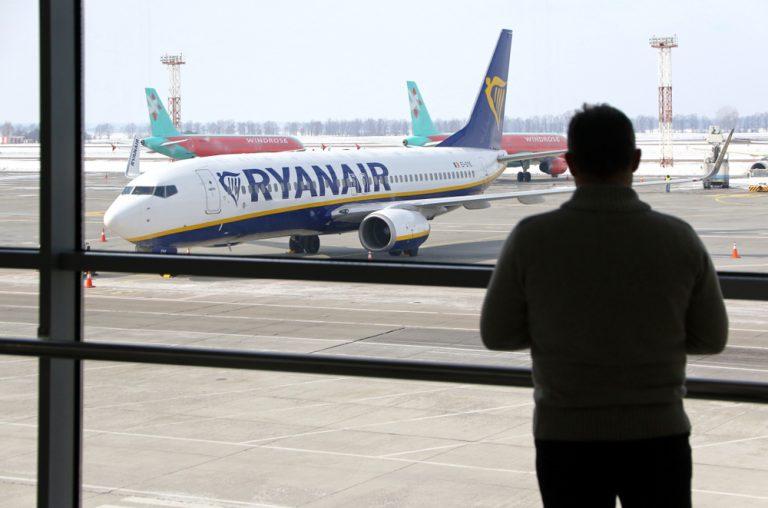
Ryanair will be cutting flights from the end of January in response to the latest lockdown measures.

The budget airline said that “few, if any, flights being operated to/from Ireland or the UK from the end of Jan”.

Ryanair said in a statement: “The WHO have previously confirmed that governments should do everything possible to avoid brutal lockdowns, because lockdowns ‘do not get rid of the virus’.”

“Ireland’s Covid-19 travel restrictions are already the most stringent in Europe, and so these new flight restrictions are inexplicable and ineffective when Ireland continues to operate an open border between the Republic and the North of Ireland.”

“Ryanair does not expect these flight cuts and further traffic reductions will materially affect its net loss for the year to 31 March 2021 since many of these flights would have been loss making.”

“The fact that the Danish Government, with a similar five million population, has already vaccinated 10 times more citizens than Ireland shows that emergency action is needed to speed Covid vaccinations in Ireland.”

“All customers affected by these further flight cancellations and further travel restrictions will receive emails advising them of their entitlements of free moves and/or refunds later today.”

Ryanair has cut its full year traffic forecast from 35m to below 26-30m passengers.

Other airlines including Easyjet and British Airways are also reviewing flights over the lockdown period.

Shares in the group fell 2% on Thursday.

FTSE 100 commodities sector: metals are more attractive than oil

As we start 2021 with a bumper performance in UK equities and a 300+ rise in the FTSE 100, Alan Green joins the first Podcast of the eyar to discuss the dynamics of the rally.

We have previously noted the relative value of UK shares compared to peers in the US, however the recent sharp rally may raise questions over the outlook from here, and whether stocks have got ahead of themselves.

Apart from Entain, who received a takeover approach, the FTSE 100’s top risers in 2021 thus far all reside in the commodities sector with Glencore (LON:GLEN), BP (LON:BP), Shell (LON:RDSB) and Rio Tinto (LON:RIO) all posting gains in excess of 13% YTD.

The prospect of a Biden administration and an economic reopening post-COVID has helped fuel a commodities rally but there is a noticeable divergence appearing in the share prices of oil companies when compared to miners. We explore the factors at play behind these companies and how this could develop in 2021.

We also discuss Blencowe Resources (LON:BRES), Versarien (LON:VRS) and Destiny Pharma (LON:DEST).

With rising metal prices a large part of the recent rally, we draw attention to Trident Royalties, who through their mining royalty business model, can provide exposure to developing mines without the high operating costs associated to junior miners.

Joules reveals strong online sales over Christmas

0

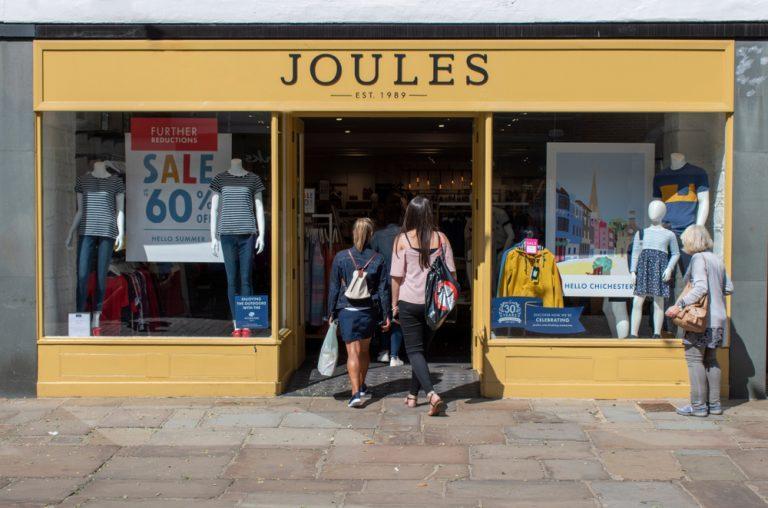
Joules shares fell on Thursday morning after the group revealed a trading update for the seven-week period to 3 January 2021.

Total online sales, including sales through the Friends of Joules digital marketplace, increased 66% year on year, which was driven by traffic growth and improved conversion rates across digital platforms.

In-store sales fell by 58% during the Christmas period, reflecting the enforced closures of non-essential stores and reduced footfall when stores were able to remain open.

Following the national lockdown across the UK, the potential loss in revenues resulting from the closure of its stores is estimated to be in the range of £14m to £18m.

Nick Jones, CEO of Joules, commented: “We are pleased with the continued strong performance delivered across our digital channels during the Christmas trading period and are encouraged by the increasing customer awareness of, and demand for, the Joules brand. This has been supported by our Friends of Joules digital marketplace which added a great range of products and gifting options for customers throughout the Christmas trading period.

“Whilst the latest round of restrictions on store retail across the UK present a further challenge for the retail sector as we enter 2021, we remain very confident that Joules, as a highly relevant, digital-led brand with an engaged and growing customer base and healthy balance sheet, is well positioned to navigate these challenges. As a result, we remain as excited as ever by our long-term growth prospects,” added Jones.

Shares in Joules are trading -5.36% at 171.30 (1053GMT). Shares in the retailer have shed almost 26% of their value in 2020.

Mitchells & Butlers shares fall as group seeks equity

0

Mitchells & Butlers shares plunged on Thursday morning after the group revealed it is exploring a potential equity raise.

The group said that it was looking at various options including raising money from investors amid the disruptions from the pandemic. For every month that pubs and restaurants are forced to close, Mitchells & Butlers lose £40m.

“As a result, the directors believe it is prudent to explore an equity capital raise, to give the group increased financial and operational flexibility,” said the group in a statement. “No decision has yet been made with regards to the timing, size, or terms of any such equity capital raise.”

Last year, the pub chain axed 1,300 jobs due to the impacts of the pandemic.

Phil Urban, the chief executive, commented: “We are now in a third national lockdown. I am consistently impressed by the resilience and energy of our teams as we repeatedly open and close businesses that we have invested in to make Covid secure and urge the government to better understand the huge impact these restrictions are having on the hospitality sector.

“The Job Retention Scheme is temporarily protecting some employment but there is a real and pressing need for support for businesses themselves if we are to return to being the vibrant sector and important employers that we were.

“Mitchells & Butlers was a high performing business going into the pandemic and with the support of our main stakeholders I have every confidence that we can emerge in a strong competitive position once the current restrictions on us are lifted,” he added.

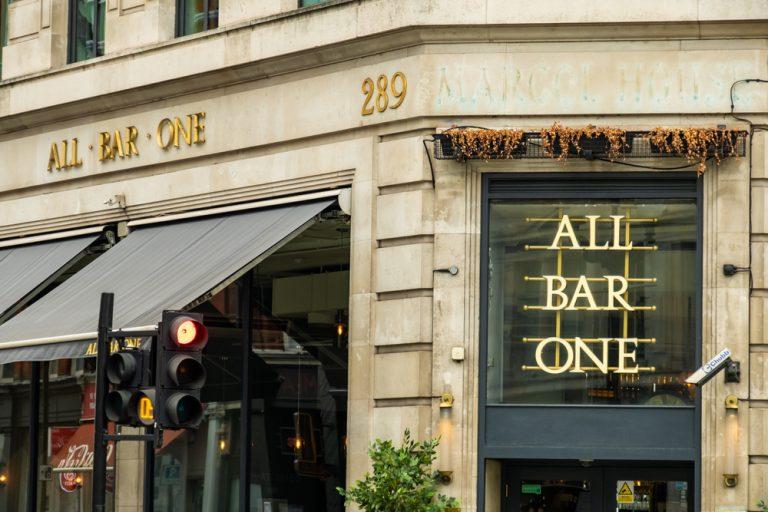
In the first quarter of the year, the group saw a 67.1% drop in sales. The group operates about 1,700 pubs across the UK, which includes chains such as All Bar One, Nicholson’s and O’Neill’s.

Mitchell & Butlers shares are trading 7.58% lower at 219.50 (1032GMT).

Sainsbury’s shares rise on strong Christmas sales

0

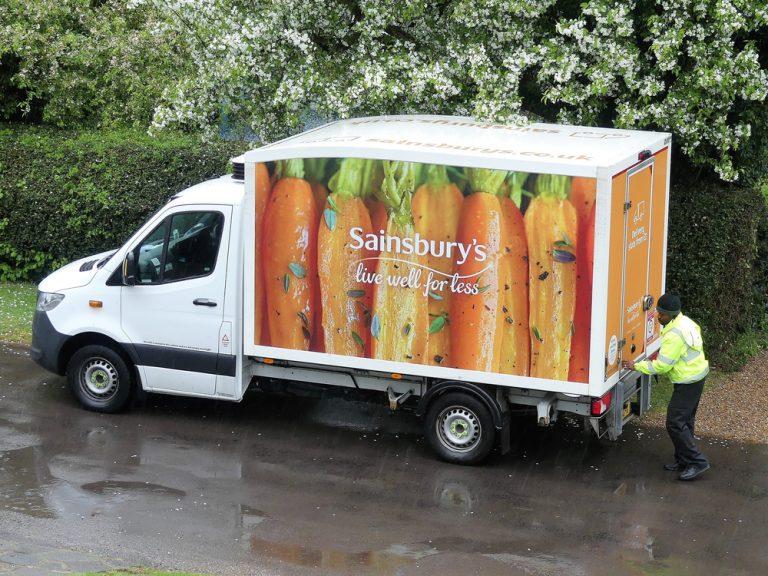
Sainsbury’s has posted strong sales over the Christmas period thanks to the growth in online shopping.

Like-for-like sales surged by 11% over the period, with sales in the supermarket’s premium Taste the Difference range growing by 11%. Premium champagne sales also increased by 52%.

The supermarket has raised its profit guidance and has said that in the financial year to March 2021, it expects to make an underlying profit before tax of at least £330m.

“We made a strong start to delivering our Food First plan and we are also clear on the opportunities to further improve our offer as we look ahead for 2021. Many customers had to change their Christmas plans at the last minute and we sold smaller turkeys and more lamb and beef than normal,” said the Sainsbury’s chief executive Simon Roberts.

“While people had smaller gatherings, they still treated themselves, with Taste the Difference sales up 11 per cent. Premium champagne sales were up 52 per cent, Taste the Difference party food was popular throughout December and people did more home baking than usual with mincemeat sales up 24 per cent. Customers still wanted New Year’s Eve at home to feel special and we sold a record number of steaks.

“More customers bought their food online than ever before and we delivered 1.1 million orders in the ten days to Christmas, double the number of last year. Argos sales were up over eight per cent with Fast Track home delivery and Click & Collect beating expectations for Black Friday and Christmas.

“We remain focused on delivering the plan we outlined in November and look forward to providing a further update on early progress at our Preliminary Results in April,” he added.

Sainsbury’s was one of the top risers on this morning’s FTSE and shares are trading +3.44% higher.

Smith & Wesson shares rally on Capitol siege

1

On Wednesday, gunmakers and shooting accessory equities watched their shares rally, as the Democrat Party take the upper hand in the US Senate. Among these equities was US consumer favourite Smith & Wesson (NASDAQ:SWBI), famous, among other things, for their revolver pistols.

The company watched its shares rally by more than 18% on Wednesday. Now standing at $22.52, the stock is more than three times the value of valuation in January 2020, where it sat at just over $7 a share.

With the Democrats taking two additional Senate seats in Georgia – courtesy of wins by Warnock and Ossoff – the Party looks to have stolen a marginal ‘Blue Wave’ victory, having already captured the presidency and Congress. As stated by Lou Whiteman in The Nasdaq:

“On Tuesday night, the Democrats appear to have flipped two Georgia Senate seats, creating a 50-50 split in the Senate that gives Democratic Vice President-elect Kamala Harris the deciding vote. That has triggered investors to buy into an expected rally in gun sales, causing the stocks to push higher.”

Speaking on the effect this has on gun stocks like Smith & Wesson, Whiteman added that: “Politics is almost never as simple as pundits try to make it, but the conventional wisdom is that the Democrats favor gun control. For that reason, we tend to see a surge in firearm sales when the Democratic Party is in control, on consumer fears they need to either buy now or miss their opportunity.”

This represents a bumper start to 2021 and a continuation of 2020 success, as far as gun manufacturers are concerned. Indeed, firearm sale background checks were already up 34% year-on-year in December, and up 40% year-on-year during the full year, according to the FBI.

If there was already a suspicion that political tensions would lead to an increase in firearms sales, then today’s siege on the Capitol would have only stoked the fear among prospective gun-buyers that the Democrats might be in favour of further gun controls.

Following the updates, Smith & Wesson currently boasts and consensus ‘Buy’ stance from analysts, a target price of $23, and a 58.06% “outperform” rating from the Marketbeat community. The company has a p/e ratio of -98.77, and a dividend yield of 1.10%.

Those entering UK may need negative Covid test

To tackle the rise in new cases, the government has said that travellers entering Europe may need to show a negative test on arrival.

Boris Johnson said at a press conference on Tuesday that the government will be “bringing in measures to ensure that we test people coming into this country and prevent the virus from being readmitted”.

It is understood that travellers may be required to provide a negative PCR test that was taken no more than 72 hours before flying.

The Department for Transport (DfT) said the new measures will be to “prevent the spread of Covid-19 across the UK border”.

“Additional measures, including testing before departure, will help keep the importation of new cases to an absolute minimum,” it added.

Under current rules, people arriving in the UK have to isolate for 10 days. The quarantine period was first introduced in June.

Labour shadow home secretary Nick Thomas-Symonds wrote to the Home Secretary Priti Patel, urging the UK to do more to contain the virus. He wrote: “It is especially worrying given the concerns regarding mutation of the virus that emerged in South Africa, which the health secretary rightly said is ‘incredibly worrying’.

“However, the lack of a robust quarantine system as a result of shortcomings from the government mean that it is virtually impossible to keep a grip on this spread or other variants that may come from overseas, leaving the UK defenceless, and completely exposed, with the nation’s doors unlocked to further Covid mutations.”