Oil reaches its highest price in over a year as Texas freezes over

Cold spell in Texas causes pressure on supply and demand

Oil prices soared to their highest point since January 2020 as vaccine roll-outs provide hope, in addition to a cold spell in energy-rich Texas intensifying demand. 

Brent crude oil was up as high $63.76 before coming back down to $63.25 at midday. An increase of its opening price of 1.3%.  

West Texas Intermediate reached as high as $60.85, before settling at around $60.0, a rise of 1.9% from market opening.  

The news is a continuation of a recent resurgence in oil prices which rose by 5% last week.

While typical factors are at play, including vaccine roll-outs and news of pending stimulus checks, an Artic blast sweeping across Texas is also impacting oil markets.  

After a week of uncharacteristically cold weather across large swathes of the US, temperatures have been forecast to reach all-time lows. Dallas is tipped to fall to -14C.

The Lone Star State’s grid operator warned of “tight grid conditions” ahead as electricity prices raced beyond $2,000 per megawatt-hour last week, way above last year’s average of $25. 

North American natural gas analyst at S&P Global Platts, Luke Jackson, described the effect of the unusual weather conditions on both the supply and demand side. 

“This is kind of like a perfect storm: You have record demand, and you’re losing gas production. It starts creating a competition for gas. There’s not enough gas to go around for everyone,” he said.

Hope remains for a stimulus package being passed shortly to aid the US economy.

Tamas Varga, oil analyst at London brokerage PVM Oil Associates, says Joe Biden’s stimulus package will be approved despite procedural delays. 

“The long-awaited $1.9trn package has not been passed. As the latest US job data hints at struggling market the relief package cannot come soon enough for some,” said Varga.

“The stimulus will likely be approved in some shape or form.”
Pound at highest level against US dollar since 2018 following vaccine news

Pound above $1.39 on optimistic outlook for UK economy

The pound has risen again today following news that the vaccine roll-out is surpassing expectations, in addition to a weak US dollar.

For the first time since April 2018, the pound is valued at $1.39, as optimism over a global recovery lifted the FTSE 100. 

The pound has strengthened since December when the UK and EU put pen to paper on a trade deal. 

This was compounded more recently as the UK shared positive news around its vaccination efforts.

Now up to 15m people have received a vaccination, while the total number of cases has reached 4m. 

Russ Mould, investment director at AJ Bell, feels lowered expectations have caused markets to react positively to the news.

“Government attempts to manage expectations on Covid better are helpful to the market which is now probably pleasantly surprised at just how quickly the UK has vaccinated the most vulnerable sections of its population,” Mould said.

Milan Cutkovic, market analyst at Axi, expects the pound to continue its momentum over the coming weeks. 

“The British Pound is set to extend its winning streak in the near-term, as the successful vaccination campaign could give the UK a major advantage,” said Cutkovic. 

“The currency is likely to test the 1.40 level against the US dollar soon and gain further ground against the Euro.” 

The pound is now at 1.46 against the euro, its highest point since May 2020.

A report by the Bank of England has suggested UK GDP will recover towards pre-Covid levels during the coming year.

“GDP is projected to recover rapidly towards pre-COVID levels over 2021, as the vaccination programme is assumed to lead to an easing of COVID-related restrictions and people’s health concerns,” the report said.

The Bank of England predicts growth of 7.25% during 2022, up from a previously forecast 6.25%.

FTSE 100 starts off ‘without a hint of a hangover’

0

Following a combination of the US stimulus package, positive news over vaccines and rising oil prices, the FTSE 100 began the week in a buoyant mood. The index rose by 70 points, up nearly 1%, as positive economic news broke across the world. 

“After finally getting some impetus on a Friday afternoon, at a time when most of us were winding down for the week, the FTSE 100 has started Monday morning without a hint of a hangover from the weekend,” said investment director at AJ Bell, Russ Mould.

“Government attempts to manage expectations on Covid better are helpful to the market which is now probably pleasantly surprised at just how quickly the UK has vaccinated the most vulnerable sections of its population,” Mould continued. 

Investors are now more able to see the light at the end of the tunnel, albeit with further complications likely along the way. This has been reflected by strong performances this morning across the FTSE 100.

FTSE 100 movers

International Consolidated Airlines (4.97%), Barclays (4.87%) and JD Sports (4.69%) made the most sizeable gains on the FTSE 100 during Monday’s early morning trading.

Tesco (-19.7%) was down after its shares were consolidated, while AstraZeneca (-1.01%) and RELX Group (-0.75%) were the worst performers on market opening, as the company’s share prices did not reflect the day’s positive macroeconomic news.

Rolls-Royce

Rolls-Royce has appointed Panos Kakoullis as the engineering company’s new chief of finance officer. Rolls-Royce announced earlier this year that flying hours would plummet by 45% as increased travel restrictions continue to impact the company. 

The FTSE 100 company’s share price is up by 1.5% in early Morning morning trade upon news of the company’s directorate change.

Rolls-Royce appoints former Deloitte partner as CFO

0

Kakoullis will begin at Rolls-Royce in May

Rolls-Royce has appointed Panos Kakoullis as the engineering company’s new chief of finance officer. 

Kakouliss spent 30 years at Deloitte after arriving at the company as a graduate, before moving to PA Consulting in 2019. He now joins Rolls-Royce as the engineering giant continues its pandemic-induced process of restructuring. 

Rolls-Royce announced earlier this year that flying hours would plummet by 45% as increased travel restrictions continue to impact the company. 

The engineering firm has taken measures to sooth its cash-flow concerns by cutting 7,000 jobs, with a further 2,000 expected by the end of 2022, saving the company £1.3bn per year. 

The Rolls-Royce share price is up by 1.5% in early Morning morning trade upon news of the company’s directorate change. 

The FTSE 100 firm’s share price is down just under 9% since the beginning of 2021, as the outlook for air travel looks bleak ahead of the coming year. 

Kakoullis will succeed Setphen Daintith who will vacate his position in March 2021. 

Rolls-Royce CEO Warren East praised Kakoullis’s track record of streamlining and simplifying as the firm looks to secure its future. 

“We are delighted to announce the appointment of Panos as Chief Financial Officer who will join us in May this year. 

Panos delivered significant transformational change at Deloitte, streamlining and simplifying the business and we look forward to benefitting from his expertise and experience as we deliver on our fundamental reorganisation and secure a sustainable and prosperous future for Rolls-Royce,” East said. 

Kakoullis, who will begin his role in May, struck a similar tone. 

“I am very excited to be joining Rolls-Royce at such a pivotal time,” he said. 

“I have great admiration for Warren, the wider leadership team and the business as a whole and am proud to become part of the team.”

Dr Martens gets ahead of itself

Dr Martens (LON: DOCS) has got off to a good start as a listed company. The footwear manufacturer has jumped from the offer price of 370p to 500p in barely more than a fortnight. It may be difficult to warrant any further short-term share price increase.
Dr Martens is undoubtedly a strong and recognisable brand with a loyal customer base. The management team is experienced, and they have been involved in the management of brands, such as Levis, Lacoste and Cath Kidston.
There is a wide spread of international sales and a good online presence. Three-fifths of sales are the original boots.
The s...

MGC blazes trail for London-listed cannabis companies

MGC Pharmaceuticals Ltd (LON: MXC) has become the first cannabis-related company to gain a Main Market listing following the clarification of the rules last year. The shares got off to a strong start.
The Australia-based biopharma company was already trading on ASX, following a reverse takeover in 2016, prior to the standard listing. One-fifth of the enlarged share capital was issued in the placing, which raised £6.5m at 1.475p a share. The costs of the flotation were £500,000. The market capitalisation was £32.9m.
Figures
In the year to June 2020, revenues were A$2.08m, while the loss was A$1...

JP Morgan will ‘at some point’ trade bitcoin

Pressure to adopt bitcoin intensifies on Wall Street

The world’s leading investment bank JP Morgan has revealed plans to trade bitcoin. 

JP Morgan is the latest major player to back the cryptocurrency by saying it is looking at trading bitcoin “at some point” in the future. 

Daniel Pinto, co-president of JP Morgan told CNBC on Friday that the investment bank’s decision on whether to provide bitcoin services would depend on its clients’ desire to trade the digital currency. 

“If over time an asset class develops that is going to be used by different asset managers and investors, we will have to be involved,” Pinto said. 

“The demand isn’t there yet but I’m sure it will be at some point.”

The announcement came as a result of pressure from the Wall Street bank’s staff. 

Last month, global markets head Troy Rohrbaugh acknowledged an enquiry about the company’s approach towards bitcoin by employees during a town hall meeting. 

JP Morgan follows other major institutions in sounding out positions in bitcoin, as well as those that have made firmer moves. 

Just this month Goldman Sachs invited Mike Novogratz, chief executive of crypto company Galaxy Digital, to host a private forum for its staff members. 

As other large companies, including Mastercard and Visa, outlined plans to involve bitcoin in their respective operations, it appears Wall Street is feeling the pressure to get involved now sooner rather than later. 

Tesla also said it would allocate $1.5bn of its cash holdings into bitcoin, as well as accepting payments.

From just under $30,000 at the end of 2020, bitcoin soared to nearly $50,000 this week, as major players make moves into the space.

Investment bank JP Morgan has recently revealed a long-term price target of $146,000 for bitcoin.

Disney Plus gains 8 million new subscribers over Christmas period

0

Disney revenue down due to park closures

Disney missed out on $2.6bn worth of revenue from its operating income for Q1 2021 due to its theme parks being shut down and/or operating at limited capacity. 

The company’s quarterly revenue dropped to $16.25bn compared to $20.88bn twelve months earlier. However, it was higher than analysts’ estimates of $15.93bn.

The company’s theme parks in California, Paris and Hong Kong remained shut while others remained open with caps on the number of guests. Disney’s movie studio held back a number of releases as theatres remain closed for the most part.

Despite difficulties maintaining revenue levels, Disney succeeded in onboarding customers to its streaming services. 

With 8m new subscribers added over Christmas, Disney’s streaming platform has attracted 94.9 million subscribers in just 13 months.

Bob Chapek, the chief executive, confirmed the group’s sizable customer base, including the ESPN+ and Hulu streaming services, at 146 million paying subscribers

“We believe the strategic actions we’re taking to transform our company will fuel our growth and enhance shareholder value, as demonstrated by the incredible strides we’ve made in our DTC business, reaching more than 146 million total paid subscriptions across our streaming services at the end of the quarter,” Chapek said.

The Disney Plus service was launched in late 2019 and has gone from strength to strength with a combination of robust investment and the company’s plethora of original content.

Tesco share price: special dividend boost for investors

0

While Tesco benefited from its essential status throughout the coronavirus pandemic, including a record breaking festive period, the supermarket’s associated costs are expected to spiral to £810m.

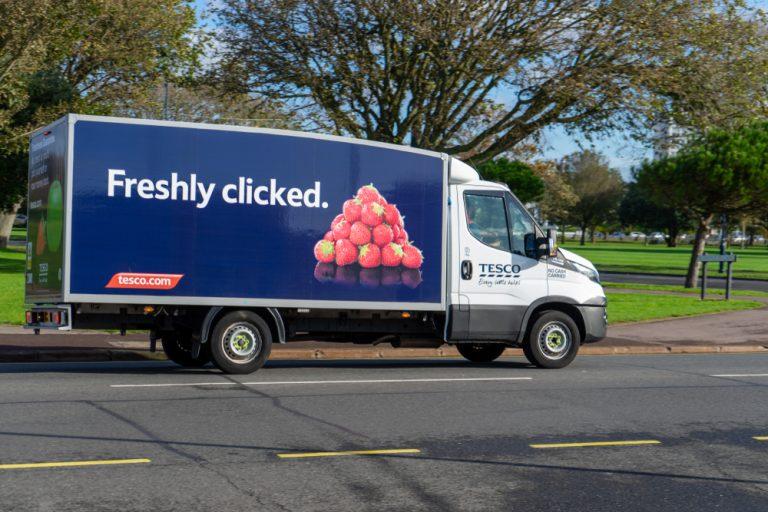
Importantly, Tesco has invested heavily in its delivery capabilities, as UK grocery shoppers are increasingly moving online.

In addition to broad economic concerns, Tesco is coming under pressure from shareholders to act in a socially responsible way. 

A resolution put forward by more than 100 Tesco shareholders, proposing the supermarket does more to combat obesity, will be voted on at Tesco’s AGM later this year.

Tesco share price

Over the last 12 months, Tesco’s share price has dropped by over 6%. However, since the turn of the year, the supermarket’s share price is up from 237p to 240.7p. 

While this doesn’t appear to be overly impressive, compared to the FTSE 100 index, Tesco shares have performed well. Over the past three months, Tesco shares have outperformed the FTSE 100 by 7%. 

Out of 18 analysts covering Tesco, 13 gave ‘buy’ or ‘outperform’ recommendations, three said ‘hold’, and only two gave ‘underperform’ recommendations, as of 14 February 2021.

Tesco dividend

On Thursday Tesco shareholders approved a £5bn special dividend. The dividend is a 50.93p per share payment which amounted to over 21% of the company’s market capitalisation.

The funds came from December’s sale of its Thai and Malaysian operations. Tesco will also use some of the proceeds to make a £2.5 billion contribution to its pension fund.

Prior to the 2021 special dividend, Tesco’s dividend yields have increased year-on-year at 1.5%, 2.6% and 4% in 2018, 2019 and 2020 respectively.

UK economy slumps to its biggest fall in 300 years

0

‘Little to cheer’ in latest UK GDP data

UK GDP shrunk by 9.9% in 2020 as severe lockdowns decimated output.

The severe impact of the pandemic caused a fall in output of more than twice the drop that occurred as a result of the 2008 financial crisis

The economy grew by 1% in Q4 in the face of continued restrictions across the country. However,  the outlook for 2021 is gloomy despite the UK avoiding its first double-dip recession since the 1970s. 

The increase in testing and tracing boosted output, according to Jonathan Athow, deputy national statistician at the ONS, allowing the economy to grow during the final three months of the year.

Suren Thiru, the head of economics at the British Chambers of Commerce, said: “Despite avoiding a double-dip recession, with output still well below pre-pandemic levels amid confirmation that 2020 was a historically bleak year for the UK economy, there is little to cheer in the latest data.”

There are no signs of restrictions letting up yet and the economy will continue to pay the price over the coming months. 

“We anticipate a sharp decline in activity during the first quarter of the year,” said Kemar Whyte, senior economist at the National Institute of Economic and Social Research. “Nevertheless, growth will pick up from the second quarter onwards as restrictions ease on the back of a successful vaccination programme.”

There are positives to take looking towards the longer-term, according to Russ Mould, investment director at AJ Bell. 

“Many households will have saved a significant amount of money during the past year and so there could be a big spending spree when restrictions are eventually lifted,” said Mould.

From an investment perspective, Mould outlined the continued support in businesses most affected by the pandemic. 

“Investors continue to show strong support for certain businesses affected by the pandemic, in the belief that their recovery could be very strong. Airline Jet2 reported ‘significant’ demand for its latest fundraising, where it raised £422 million to help see it through the crisis,” Mould added.