Naked Wines reports +80% sales

0
Naked Wines (LON: WINE) has reported an 80% surge in sales for the first half of the year. The company revealed a rise in sales from £87.5m to £157.1m as more people ordered wine home amid the restrictions. The listed company has raised full-year sales forecast and expects full-year sales increase to be between 55 and 65% – up from previous forecasts of 40%. Chief executive Nick Devlin said: “Naked Wines is a bigger, better business than it was twelve months ago. The last six months have been a critical period in the development of the company.”

“We have delivered exceptional growth and a permanent step change in scale and efficiency for the organisation. We have a business today that is not only larger, but structurally improved and ideally positioned to deliver sustained growth in the coming years.

“Ultimately the most significant impact of COVID-19 on Naked Wines is not found in these interim results, but in the way it has accelerated the growth of the online wine category and increased consumer willingness to trial a new and better way to buy wine.”

“Delivering transformative growth, against a backdrop of new working conditions required by COVID-19, has required us to rapidly solve a series of operational challenges. We have done this whilst maintaining high levels of customer satisfaction and I am tremendously proud of the resilience, flexibility and capability displayed by our staff around the world,” he added. Naked Wine shares (LON: WINE) jumped 7% in early trading and are currently -0.30% at 497,50 (1032GMT).

FTSE 100 opens lower

0
The FTSE 100 opened 47 points lower on Thursday morning amid rising Coronavirus cases. Despite the vaccine positivity this week, which has led to rises in the blue-chip index, investors are becoming aware that it might not become available until after winter. It wasn’t just the FTSE that slumped this morning. European markets were also down with the Dax and CAC 40 both opening 0.6% lower. “The Covid era is not behind us yet,” said Charalambos Pissouros, senior market analyst at JFD Group. “We may experience several more months of rising infections and economic slowdown. However, the upbeat developments with regards to the vaccine suggest that the end of this crisis is approaching.” Some of the biggest fallers on the FTSE 100 this morning were oil companies, travel firms, and financial groups. BP (LON: BP) was down 2.4% and Royal Dutch Shell (LON: RDSA) was 2.2% lower.

Royal Mail posts 90% profit plunge but boosts revenue estimates

0
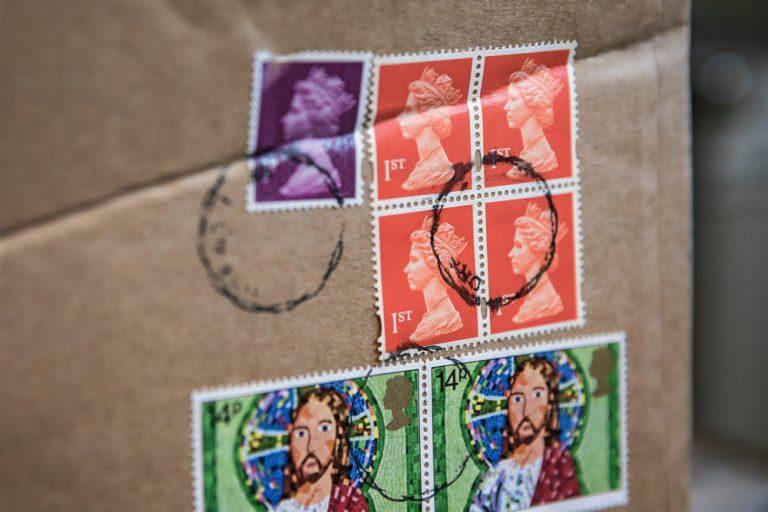
Royal Mail (LON: RMG) has revealed a collapse in profits for the first half of 2020. Pre-tax profits plunged by 90.2% to £17m. However, the group is remaining positive and has said that expected full-year revenues could be between £380m and £580m higher than previously projected. If revenues come in at the upper end of expectations, Royal Mail will “better than break-even”. The group has also posted an adjusted loss of £127m after Corona-related costs and redundancies. Despite the loss, the group did report a 51% increase in domestic parcels – not including Amazon. Parcel volumes have increased as shops shut and people are ordering more online. “For the first time, parcels revenue at Royal Mail is now larger than letters revenue, representing 60% of total revenue, compared with 47% in the prior period,” said Keith Williams, interim executive chair. “As parcel volumes at both Royal Mail and GLS have continued to be robust year to date, revenue performance in the scenario has improved. “It remains difficult to give precise guidance but parcel growth is expected to remain robust in the third quarter, with more uncertainty over trends in the fourth quarter due to the development of the COVID-19 pandemic, further recessionary impacts and trends in international volumes,” he added. Michael Hewson from CMC markets commented on the results and said: The outlook for the business is much more positive now with the company recently competing with Amazon for a £550m one-year contract to deliver 215,000 Covid-19 testing kits a day in the UK.” Royal Mail shares (LON: RMG) are trading +7.13% at 306,40 (0920GMT).

Bitcoin surges to 3-year high amid analysts’ caution

Bitcoin surged to a 3-year high of $17,891 – its highest level since December 2017 – on Wednesday after surging almost 10% over the past 24 hours. The world’s most valuable cryptocurrency, Bitcoin is often lambasted by critics for its historically unreliable price. In March this year, it was trading at just $5000, but in the ensuing market turbulence investors have increasingly turned to Bitcoin in the hopes it will weather the volatility.
When markets prove erratic, investors tend to move their money out of shares and into what are considered “safe havens” – like cash and gold. Although not a typical “safe haven” asset, Bitcoin has bucked expectations and increased in popularity in what analysts are attributing to the combination of extreme market uncertainty due to the ongoing pandemic and brewing geopolitical tensions.
They suggest that cryptocurrencies are now being viewed as a “shelter” from stock market volatility.
Edward Moya, from currency trading firm Oanda, explained: “Covid-19 has disrupted the traditional safe-haven trade and gold’s inability to outperform. Periods of extreme risk aversion have forced many traders to diversify into Bitcoin”.
The fixed supply cap of 21 million Bitcoins leads some to believe that their scarcity makes them innately valuable, potentially shielding the currency from factors such as inflation.
However Shane Oliver, head of investment strategy and chief economist at AMP Capital, warned about making sweeping assumptions on Bitcoin:
“Its huge volatility hardly makes it a safe haven as a store of value. I have far more confidence in the $50 note in my wallet retaining its value over time than Bitcoin, which seems to bounce around like a yo-yo”.
Eric Demith, co-founder of cryptocurrency firm Bitpanda, said that the current Bitcoin price hike is mainly down to institutional money, but added that consumer interest is beginning to pick up according to recent Google Search trends.
“We’re constantly seeing large numbers of daily signups from retail customers joining the crypto market for the first time,” Mr Demith said. “What we’re currently experiencing is a mentality shift where the younger generation see bitcoin as the gold of their generation”.
But Oanda’s Mr Moya warned traders to prepare for more volatility in the coming months, as Bitcoin’s price is expected to waver again:
“The amount of hedge funds and high-frequency trading systems driving Bitcoin higher will likely deliver exaggerated moves once its price nears the $20,000 level. Traders need to expect $1,000 swings in a matter of minutes”. He added that the current headlines lauding Bitcoin’s price surge are peaking interest in people who would not normally invest in cryptocurrencies, driving the value higher, but that people still are generally cautious about cryptocurrencies. There are widespread concerns about fraud following a spate of high-profile hacks.
AMP Capital’s Oliver is still not convinced: “I think most people would put more faith in a digital currency run by their government rather than one like Bitcoin that they have trouble understanding or explaining”.

KisanHub raises over £1m to transform the agri-food supply chain

0
Cambridge-based agritech startup KisanHub has raised £1.12 million for its seed-to-sale platform designed to help “growers, field staff, procurement managers and management teams make informed decisions” about improving sustainability in the agri-food industry. Chief contributions came from the Low Carbon Innovation Fund 2 (LCIF2) with backing from the Future Fund, and was supported by the existing investors, including IQ Capital, Notion Capital, and Sistema_VC. The funds are intended to help the company “accelerate” its business in the UK and Europe and “further promote the values of sustainability in food supply chains with the support from government investors”. The cloud-based connectivity platform combines crop intelligence with supply chain intelligence, ensuring that farms “meet contractual obligations on quality and quantity of the produce” by integrating data from crops, stores, load dispatches, satellites and field sensors. It translates “raw and complex” food supply chain data sets into “actionable insights” to provide transparency and improve the flow of information across the supply chain from seed to sale. KisanHub’s target customers are “agricultural enterprises supplying retailers and processors that work with a network of contract farmers and/or own their own farmland”. For ease of transition, the company is able to integrate enterprises’ existing software or Excel systems in order to provide an end-to-end supply chain management solution. Among KisanHub’s existing users is the global beverage giant, ABInBev, which has implemented the platform in order to connect with the growers and achieve its 2025 sustainability goals. In addition, other major British suppliers including Spearhead, Burgess Farm Produce, Manor Fresh, and Jupiter Group have already partnered with KisanHub. Dmitry Filatov, Managing Partner at Sistema_VC., commented on the news and the opportunities that lay ahead: “KisanHub technology digitises the agricultural supply chain, improving the transparency and efficiency of the procurement process. The pandemic has only increased the demand for such solutions, as food supply security became more important than ever. Many risks, including seasonal and climatic ones, can be averted through the use of sensors and machine learning, and this is what KisanHub does”. Axel de Mégille, director at Turquoise (which manages LCIF2), added: “KisanHub helps keep everyone in the supply chain aware of the state of each batch of produce they are growing, aggregating or retailing, so that they can plan better and reduce waste. This investment fits well into LCIF2’s strategy of investing into technologies that help to reduce greenhouse gases (GHGs).” And Sachin Shende, co-founder and CEO of KisanHub, said: “We are delighted to welcome LCIF2 as an investor in KisanHub. This investment will enable us to grow the business in the UK and Europe and strengthen our links with local and national governments”.  

FTSE stunted as pound gains on Brexit hopes

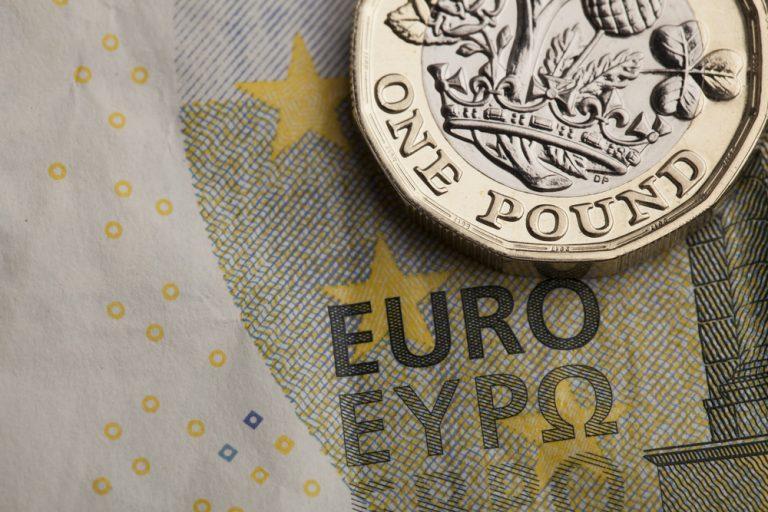
While not moving quite as enthusiastically as they did after previous vaccine updates, Pfizer‘s latest news saw global equities nudge higher on Wednesday. Noticeably muted, though, was the FTSE. Having led the pack in recent vaccine news rallies, the index was weighed the pound rising on renewed Brexit hopes. While the Dow Jones rallied by 0.40%, and the CAC and DAX moved up by just under half a percent apiece, the FTSE lagged slightly behind with its 0.33% gains – having opened with a 35-point loss. Meanwhile, the pound gained 0.31% against the euro, up to 1.1206, while it rallied 0.33% against the dollar, up to 1.3299. Speaking on Brexit chatter and commodities movements earlier in the day, IG‘s Senior Market Analyst, Joshua Mahony, said: “The FTSE 100 is leading European declines, with a strengthening pound once again proving the undoing of the highly international index. With Brexit negotiations running out of time, we are finally seeing some glimmer of hope that a deal could be within reach.” “With rumours of a potential deal early next week, expectation that EU negotiators will update envoys from the 27 member states on Friday does highlight the potential for a breakthrough.” “However, the red lines over fishing rights, the level playing field, and governance remain a likely sticking point which remain a major hurdle that has been insurmountable thus far.” “With no sign that those key topics have been resolved, there will be many sceptics at the prospect of an imminent trade deal.” Today’s Brexit optimism may just be a flash in the pan, with no actual concessions being penned by either side. It may be likely that the game of diplomatic chicken will last until the latter stages of 2020 – as we near the NYE deadline. Where indexes such as the FTSE will likely draw their short-term optimism from will be further vaccine updates. While Pfizer’s news today was more encouraging than ground-breaking, FDA approval for Pfizer or Moderna, or a new candidate from AstraZeneca, would give equities a welcome second wind.

New app launches for investors to track their carbon footprint

0
The first platform for retail investors to track the carbon impact of their investments – an app named Sugi – launched on Tuesday with the aim of helping investors ‘build a greener portfolio’ in line with their values. Sugi, powered by Moneyhub’s Open Finance data and intelligence API, is a free to use app aimed at retail investors who want to compare the carbon footprint of their investments against industry benchmarks. It was founded in 2019 by CEO Josh Gregory, who hailed Sugi’s launch as a step towards simpler and more accessible green investment: “While COVID has accelerated awareness and demand of green investing, it’s hard for retail investors to take action. “Sustainable investing is full of jargon and investors are rightly concerned about greenwashing. Another problem is ESG ratings: they’re meant to simplify complex issues but are themselves very confusing – even for experienced retail investors. All of this ultimately stops more people getting involved. “Working with Moneyhub, the platform with the most comprehensive financial data connections on the market, allows us to give our users unparalleled access to their investment information in one place. “By providing users with simple, objective data, Sugi aims to make green investing easier, understandable and more accessible for everyone”. Unlike the “complex” ESG ratings targeted at institutional investors and asset managers, Sugi shows its users the annual carbon impact of each investment in absolute numbers, and compares the figures against an industry average and carbon data for similar investments. The app contains carbon data for over 15,000 listed equities – 95% of the listed equities market – and over 3,500 exchange traded funds, as well as certain actively managed funds. Sugi has stated its intention to introduce a broader range of funds and more environmental data “in the coming months”. Users can link their investment portfolios – which can include ISAs and SIPPs – to Sugi via Moneyhub’s Open Finance API, enabling them to access “personalised impact data”. Samantha Seaton, CEO at Moneyhub, commented on Sugi’s launch: “Until now, aligning an individual investor’s portfolio with their own values has been virtually impossible, but by utilising the power of Open Banking and Open Finance, we are able to make it easy for investors to build greener portfolios. “Our partnership with Sugi demonstrates the true potential of Open Finance and its ability to solve real-world, complex financial issues, beyond account aggregation and payments. “We are thrilled to be working alongside Sugi to deliver a product that is not only the first of its kind in the UK, but will make a positive impact on our planet as well”. The launch is one of a number of new additions to the increasingly climate-conscious economy, after PM Boris Johnson announced the launch of a ‘green revolution’ to mark London’s Climate Action Week. It follows on the coattails of Chancellor Rishi Sunak’s ‘green gilts’ announcement last week.

PM launches new ‘green revolution’ with 10-step strategy

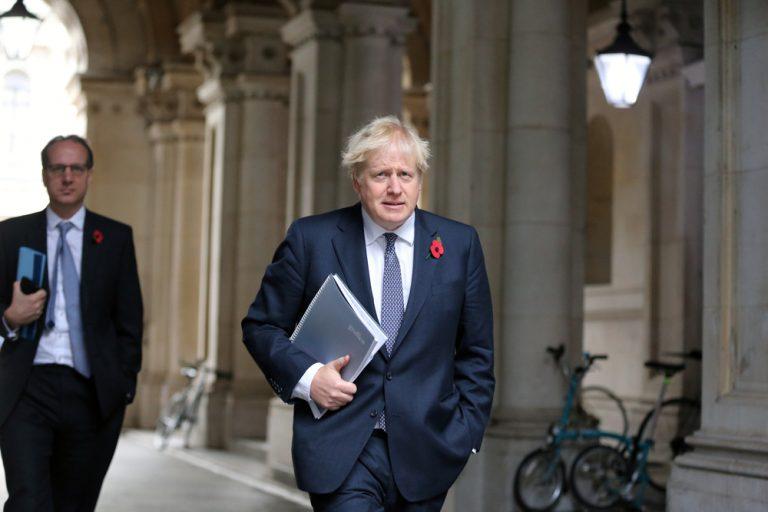
Prime Minister Boris Johnson announced on Wednesday his long-awaited plan for the UK’s ‘green industrial revolution’, outlining an ambitious 10-point strategy to shift away from carbon emissions and generate up to 250,000 jobs. Environmental groups have praised the direction of the plan but critics have questioned the scale and commitment from the private sector. In an article published by the Financial Times on Tuesday, the PM stated that the time has come for the UK to seek green solutions as the country recovers from the coronavirus pandemic. “Now is the time to plan for a green recovery with high-skilled jobs that give people the satisfaction of knowing they are helping to make the country cleaner, greener and more beautiful. “This plan”, he added, “can be a global template for delivering net zero emissions in ways that create jobs and preserve our lifestyles. “Green and growth can go hand-in-hand. So let us meet the most enduring threat to our planet with one of the most innovative and ambitious programmes of job-creation we have known”. The full list of the PM’s climate conscious plan is as follows: 1. — To ramp up UK wind energy production with enough offshore capacity to power every home by 2030. 2. — To invest up to £500m in hydrogen power. 3. — To develop plans for few nuclear power, from large scale to small and advanced modular reactors. 4. — To invest more than £2.8bn in electric vehicles and end the sale of new petrol and diesel cars and vans in 2030 (but still permit the sale of hybrid vehicles that can “drive a significant distance with no carbon coming out of the tailpipe” until 2035). 5. — To achieve “cleaner public transport”, including green buses and new cycle lanes. 6. — To achieve nonstop transatlantic travel by manufacturing zero emissions planes and ships. 7. — To invest £1bn in 2019 alone to “make homes, schools and hospitals greener, and energy bills lower”. 8. — To establish a new “world-leading” industry in carbon capture and storage, backed by £1bn of government investment with focus on “clusters” in the North, Wales and Scotland. 9. — To “harness nature’s ability to absorb carbon” by planting 30,000 hectares of trees per year by 2025 and “rewild 30,000 football pitches’ worth of countryside”. 10. — To invest in and fund new low-carbon technologies, and strive to make the City of London the “global centre for green finance” through sovereign bonds, carbon offset markets and disclosure requirements. While the PM has hailed the plan for “making strides” towards the UK’s net zero by 2050 pledge, some Labour MPs have called it a ‘pale imitation’ of the measures necessary to combat climate change. Shadow business secretary Ed Miliband – whose plan for a green Covid recovery announced in the spring involves £30bn spent over 18 months – said the No 10 proposals fall below the mark and contain several “reheated pledges”. “People are losing their jobs now. This isn’t fundamentally a green stimulus, it’s nowhere near the scale of what is required. “This announcement doesn’t remotely meet the scale of the jobs emergency or the climate emergency. France and Germany are investing tens of billions of euros. This provides, at best, £4bn of new money over several years. “What we needed was a really bold green economic stimulus, and what we got was a pale imitation of that. It’s deeply, deeply disappointing”. Green Party MP Caroline Lucas similarly criticised the plan as “vague and underpowered”, stating: “This is a shopping list, not a plan to address the climate emergency, and it commits only a fraction of the necessary resources”. Others have been more encouraging, however, with the director of SME-focused bank Conister Finance & Leasing Ltd welcoming the PM’s pledges and the opportunities ahead for small and medium-sized businesses. “The government’s plan shows that it is serious about a transition to a new economy, with some concrete commitments announced to accelerate the move towards a net zero carbon economy by 2050. There are significant opportunities for the SME sector to capitalise on this transition”. Randeep Somel, fund manager for M&G’s new Climate Change Solutions Fund launched this week, added: “The UK government is striking at the main sources of CO2 in our economies; power generation, transportation, and building efficiency. “Not only will these investments help the UK in reaching its Paris Climate Deal commitments, they will provide stimulus to an economy that is still reeling from the Covid-19 pandemic. “The UK has begun the process to address a myriad of challenges via its green industrial revolution announcement. While critics may say the £4 billion allocated so far by the government is too small, it is a strong statement of intent and one that is likely to spur private sector investment many multiples of the announced government figure”. Nicola Shaw, the UK executive director of National Grid, rounded off the mixed reaction with a plea for corporations to work with the government to achieve the PM’s commitments: “The prime minister has set out great ambition for the net zero transition including commitments on offshore wind, hydrogen and carbon capture and storage. “Now, industry and government must work together to turn this ambition into reality, with transformational investments to deliver real change, which will create jobs in every part of the country”.


British Land announces reduced dividend, shares fall

0
British Land shares (LON: BLND) were down on Wednesday after the group revealed a loss and a reduced dividend. For the half-year to September 30, the group posted a pretax loss of £757m, which widened from the £440m loss posted in the same period a year previously. Revenues at the group were also lower, falling 22% from £328m to £255m. The group’s portfolio value fell 7.5% to £10.32bn from £11.16bn. Chief executive, Chris Grigg, is to be replaced this week by finance chief Simon Carter. Carter commented on the latest results: “Our first half results naturally reflect the challenges in retail. Against this backdrop, we remain focused on active asset management, working to maximise rent collection and keeping our units occupied with successful retailers. There is a clear preference from shoppers and retailers for out of town, open air retail parks. Our approach and attractive asset mix means that prior to the November lockdown, we were delivering significant outperformance on footfall and retailer sales and a steady improvement in rent collection levels. “We remain thoughtful and active in terms of capital allocation, executing GBP675m of sales since April, enhancing the strength and resilience of our balance sheet. We have also resumed the dividend on the basis of a fixed percentage payout of underlying earnings to provide maximum strategic and financial flexibility. “Going forward, we have four clear priorities for our business: realising the potential of mixed use; progressing value accretive development; addressing the challenges in retail; and active capital recycling,” he added. British Land will be continuing dividend payments of 8.4p. This is lower than last year’s rate of 15.97p. British Land shares (LON: BLND) are trading -2.31% at 499,20 (1537GMT).