
Next to buy major stake in Victoria’s Secret UK
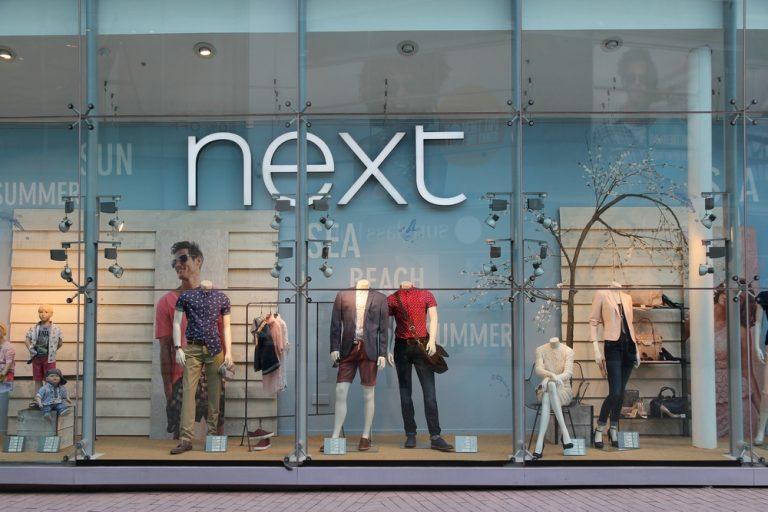
British clothing retailer Next plc (LON: NXT) has agreed to a 51% stake in US-owned lingerie firm Victoria’s Secret (NYSE: LB) after its UK arm fell into administration in June.
The move is expected to save some 500 jobs across the country, after the coronavirus pandemic forced all of its 25 stores nationwide to shut indefinitely and 800 staff members were placed on the government’s emergency furlough scheme.
The newly-agreed joint venture will see Next taking over the majority of Victoria’s Secret UK’s assets and operating all its sites in the UK and Ireland.
Next will acquire 51% of the ownership, while L Brands – the American fashion retailer behind Victoria’s Secret – will continue to own the rest.
L Brands is well-known across the pond for its subsidiary Bath & Body Works.
The financial terms of the agreement have not yet been public, however both firms are still in the process of seeking regulatory approval.
If the deal goes through, it would see Next adopting yet another lucrative fashion brand which has seen the retailer dominate much of the UK high street – with its other ventures including Abercrombie & Fitch, Boss and Under Armour.
Next’s acquisition of Victoria’s Secret could provide a great opportunity to capitalise on interest from younger consumers, with the PINK underwear and clothing ranges proving particularly popular amongst teenagers.
The brand’s lingerie sector is already well-established among twenty-somethings.
Lord Simon Wolfson, chief executive of Next, commented on the firm’s Tuesday announcement:
“Next is very pleased at the prospect of working in partnership to expand the Victoria’s Secret brand in the UK and Ireland both in stores and online”.
Shares at Next were up a modest 1.87% to 6106.00p at BST 16:49 15/09/20, continuing the brand’s rare upward trajectory throughout the course of the pandemic – up 55.69% over the past 6 months.
L Brands, meanwhile, has seen its share price sink 0.034% to USD 29.04 12:06 GMT-4 15/09/20.
TIME Investments backs timber assets and buys Scotland’s largest private forest

Real estate and sustainable investment specialist, TIME Investments, announced on Tuesday that it had bought one of the largest privately-owned forest in the UK – Barracks Forest in Perthshire, Scotland.
The company said the Barracks Forest offers more than 11,000 acres of Sitka spruce and pine trees, which yield FSC-certified wood and timber for products including paper and cardboard. TIME investments says these products are becoming increasingly desirable as the transition from plastics to sustainable alternatives progresses.
The interest in this sector as a whole is also progressing rapidly, with demand for UK forestry more than doubling since 2011, and 14,400 hectares of commercial forestry sold in the UK in 2019. Further, with the value of these sales coming to £121 million, it is estimated that the average gross value of forestry increased by 17% in 2019 alone.
Forestry as an alternative investment opportunity to consider
For four reasons, TIME Investments think that forestry ought to be given more attention by investors.- The company states that forestry tends to have little correlation with other mainstream asset classes. In fact, with both the rise of biodegradable and renewable packaging solutions, and online deliveries, the demand for timber-based products actually increased while orthodox assets depreciated during lockdown. In this sense, it makes for an ideal portfolio diversifier.
- Second, there is strong potential for passive, organic growth and capital appreciation. As crops grow, the volume of timber increases – larger trees can be processed into higher-value products. Also, naturally, underlying land value increases over time, both led by organic land prices and increases in the value of forestry investments.
- The uptake of biomass production and facility installations in the UK and overseas will further increase demand for timber production and see timber waste materials be given profit-making potential.
- The company boasts that its latest acquisition adds to the existing portfolio of its Inheritance Tax service, TIME:Advance. As the description might suggest, this service prioritises assets which are tax-efficient. And while ethical investors might be right to question whether they want to be involved in tax-efficient products, forestry as whole is a burgeoning asset class which in the UK offers two years’-worth of inheritance tax relief; zero income tax on timber revenue; and no capital gains on increases in value on timber. Though, underlying land value is subject to capital gains tax.
Barracks Forest as part of the TIME Investments sustainable investment plan
Having invested in forestry since 2005, TIME:Advance also invests in a biomass plant near the Barracks Forest site. This commitment to clean energy supports the company’s other investments in wind, solar and hydro, which it says enables three quarters of its portfolio to be invested in sustainable and impact investment projects. Speaking on the company’s continued interest in forestry, the company’s Head of Investments, Stephen Daniels, commented: “Forestry assets are becoming increasingly popular with investors because they provide access to a sustainable investment, but also one that we believe offers low volatility and stable returns. Our research shows that 58% of retail investors said they need to think more about the future of the planet for their children – forestry helps them tick this box.”Location Sciences shares fall despite first half progress

Having enjoyed success with its Verify platform, location data verification company, Location Sciences (AIM:LSAI), posted robust progress in its financial performance during the first half of FY20.
Despite Verify revenues being ‘significantly’ short of management expectations, the successful launch of Verify Audience in the US contributed to first half revenue of £650,385, up 43% year-on-year from £454,872 for the previous first half. This was led by Verify revenues increasing 39%, to £157,526, up from £113,536 during H1 2019.
Similarly, the company noted that it had success in reducing costs, with administrative expenses down by 35%, from £1,204,558 to £785,066 year-on-year for the first half.
Despite these areas of notable progress, the company finished the first half in the red, with an EBITDA loss of £334,630. This, however, represents a 63% reduction on previous first-half losses of £908,970 – so Location Sciences are still on a healthy trajectory.
During the six month period, the company expanded its cash reserves from £1,493,904 to £1,652,969, which puts it on a strong footing going forwards.
Location Sciences response
Commenting on the results and the company’s outlook, Chief Executive Mark Slade stated:
“Although COVID has impacted our short-term revenues from Verify, I’m encouraged by the medium-term strategic partnerships we are working on with key agencies and suppliers, particularly in the US. Launching our audience verification platform in the US following successful trials, has been a critical milestone for the business and we are optimistic this will start to have a meaningful impact on revenues in the final quarter of the year. We hope shareholders can appreciate the work going on behind the scenes to build momentum and keep costs as low as possible. As part of our drive to improve shareholder communications, we will also be increasing our social media presence and welcome shareholders to follow our progress and activity on Linkedin and Twitter.”
Investor notes
Despite some notable progress, under-performing revenues saw Location Sciences shares dip by 4.48% or 0.023p, to 0.50p a share 15/09/20 12:30 BST. This price far short of its year-to-date high of 1.88p near the end of January, but ahead of its nadir of 0.43p seen at the start of July.Bidstack shares up 15% on in-game advertising deal with Ubisoft

Native in-game advertising platform, Bidstack Group plc (AIM:BIDS.L) saw its shares rally as it announced it had signed an exclusive partnership with Ubisoft (EPA:UBI).
The deal provides that Bidstack will provide in-game advertising for Ubisoft’s ‘Hyper Scape’, a ” futuristic, free-to-play, urban battle royale game that was officially launched on 11 August 2020″.
The advertisements will be delivered across Hyper Scape-compatible gaming platforms, including Xbox One, Playstation and PC. According to the company, today’s partnership follows Bidstack’s supply-side strategy to focus on partnering with world-leading game developers, in an effort to incorporate their native in-game advertising technology into their games.
Bidstack response
Commenting on the deal and its potential forthe Group, company CEO James Draper stated:“This deal shows the progress the business has made over the last two years. The team at Ubisoft has become a close partner, and together we’re excited to empower advertisers to run campaigns within the cross-platform battle royale Hyper Scape.”
“We look forward to delivering true ‘virtual out of home’ advertising campaigns into these open world gaming environments together with our global relationships with game publishers and developers, agency holding groups and brands direct.”
“This agreement signifies another major milestone for not only the Company but the native in-game advertising industry as a whole.”
Investor notes
Following the update, Bidstack shares rallied over 20% before settling down to a 15.29% or 0.77p rally, up to 5.82p a share 15/09/20 11:40 BST. This price is a 77.80% decrease versus the same day last year, but still ahead of its year-to-date nadir of 3.00p in mid-March.Firstgroup shares rise ahead of AGM

FirstGroup shares (LON: FGP) soared 8.66% on Tuesday as the group saw passenger numbers recover following the Coronavirus pandemic.
An update ahead of the group’s Annual General Meeting revealed stronger than expected financial performance as schools and workplaces return to normal.
Bus passengers have returned to 50% of their pre-pandemic levels, which is significantly higher than the 10% levels they were running on since lockdown.
“Overall, our divisions have delivered better revenue recovery and strong cost control in the period and the group is now expecting to generate a small adjusted operating profit in the seasonally weaker first half of the financial year. This anticipated result is ahead of our expectations earlier this summer,” said FirstGroup in a statement.
“Passengers can be confident that public transport is safe and we are encouraged that activity levels are increasing, especially since the start of the new school year on both sides of the Atlantic. We continue to work with our customers, communities and governments to maintain the availability of our transportation services which are so crucial to the recovery of local economies,” said chief executive Matthew Gregory.
“Although the ongoing impact of the pandemic on the Group continues to evolve, clarity is improving over time. We continue to take all necessary action to protect the business and to ensure the Group is in the most robust position possible to deliver on our strategic plans.
“As we head into the autumn, our priorities are to continue delivering safe, reliable transport services that meet the changing needs of our customers and communities, and to execute the sale of the North American businesses as expediently as possible and in the best interests of all shareholders,” he added.
FirstGroup shares (LON: FGP) are trading +8.07% at 44,20 (1008GMT).
Polypipe shares surge despite 93% profit plunge

Polypipe shares (LON: PLP) surged 8% after the group released interim results for the six months ending 30 June 2020.
The group posted a 93% drop in pre-tax profits, from £31.4m in 2019 to £2.3m. Revenue dropped 22% to £173.6m.
“I want to thank all our colleagues for their dedication, hard work and support through what have been unprecedented times for all of us. I am particularly proud of the way they have rallied to support their local communities despite their own circumstances,” said Martin Payne, the group’s chief executive.
We manufactured visors and distributed them and other surplus PPE into local NHS and care homes, supported the Nightingale programme and other repurposing of NHS facilities for care and recovery, and contributed to many other local initiatives that have made a difference. The health and wellbeing of our colleagues, our customers and our communities remains an absolute priority, and we will continue to operate to the highest standards possible.”
The Group has traded robustly through the crisis with continued improvement in trading in recent months. The early actions we took to secure liquidity have positioned the Group to be able to capitalise on opportunities as they arise during the recovery, as well as continue investing in new product development in line with our strategy.”
We have a balanced exposure to the different elements of the UK construction market which provides resilience, and strong medium-term growth drivers. Whilst we remain mindful of the various risks to the UK’s economic recovery, I am confident the Group is well positioned for the future,” he added.
Polypipe has said that it will consider paying a final dividend for 2020 in May 2021. This depends on continued performance ahead of the operating scenario set out in May. During the height of the pandemic, 1,771 employees were furloughed. The group has made 104 employees redundant, which is significantly less than the 250 people announced earlier this year. Polypipe shares (LON: PLP) are trading +7.83% at 439,14 (0928GMT).
Eve Sleep shares down, despite “strong trading momentum”

Eve Sleep shares (LON: EVE) were down over 7% on Tuesday’s opening after the group released its latest results.
For the six months ended 30 June 2020, revenue fell from £12.9m to £12.2m whilst gross profits increased by 1% to £6.8m.
The company expects full-year revenues to reach £22m due to “strong trading momentum”, whilst the group also boasts a year-on-year increase of customers by 7%.
“This has been a highly unusual and complex trading period,” said Cheryl Calverley, Eve Sleep’s chief executive.
“Eve has benefited significantly from the accelerated switch to online, the temporary closure of high street retailers, and the recent increased consumer investment in the home, which, combined with the hard work on the rebuild strategy, has allowed us to see the fruits of our labour a little sooner than we anticipated.
“The focus now is on building towards a longer-term growth plan as we draw closer to our goal of securing a base as a sustainable, profitable business.
“We do not expect this to be easy, and 2021 like 2020 may well bring both challenges and opportunities as economies shift, consumers reset and competitors rebuild.
“However, I have confidence in our brand, our products, our customer experience and most importantly, our team that we are now well set up to capitalize upon whatever opportunities the next few years may bring,” she added.
Eve Sleep shares (LON: EVE) are trading -14.17% at 5,51 (0901GMT).
NextGen Nano is striving to be at the forefront of green energy innovation

Sponsored by NextGen Nano
NextGen Nano is a high-tech company with a focus on the empowerment of the individual. By decentralising power generation from governments and traditional grids, we are striving to have a deliberate positive environmental impact, whilst reducing reliance on pollutants and finite materials.
NextGen Nano has developed benchmark IP that may hold the key to advancements in the decentralising of energy, in line with recent Government CO2 emission and climate policy goals.
Our breakthrough technology replaces existing solutions (fabricated with pollutant, finite materials) with earth-friendly biopolymers. This breakthrough enables NextGen Nano to develop solar cells that produce energy with unrivalled efficiency at a far lower cost than existing hardware.
This technology allows robust, transparent cells to be applied to flexible surfaces, thus making it more usable and cost-effective than ever before, as well as practical for multiple potential real-world applications.
Next Gen has two main products in PolyPower and NewFusion.
Blending earth-friendly biopolymers with cutting-edge nanotechnology, NextGen’s trademark PolyPower® revolutionises the sector, decentralising power generation and opening up endless market opportunities. PolyPower® provides an extremely flexible, durable and efficient solar cell technology, with a wide range of both industrial and everyday applications.
The New Fusion technology is based on a phenomenon called triplet-triplet annihilation (TTA) – a process in which two triplet excitons annihilate and produce a higher-energy singlet exciton. While the quantum efficiency is lower than that of the phosphorescent OLEDs, the voltage required to drive the device is actually about half that required for phosphorescent OLEDs.
Article written and sponsored by NextGen Nano
Ocado shares surge on “sucessful” M&S switch

Ocado shares (LON: OCDO) surged over 5% on Tuesday after the group hailed a “successful switchover” to Marks & Spencer.
In the 13 weeks to 30 August, sales at the group reached £587.3m as the company switched from Waitrose to Marks & Spencer.
“Our aim is to continue to set the bar as we begin again to welcome new customers who are seeing the benefits of online shopping in ever greater numbers and we remain focused and on track to increase capacity by 40% through to 2021,” said Ocado Retail’s chief executive, Melanie Smith.
“As a result, we can now offer customers more choice and better value than ever before, wider ranges than any traditional retailer, and thousands of products that are only available online through Ocado.com.”
The joint venture with Marks & Spencer got off to a rocky start after a surge in demand led to customers having their orders cancelled.
On the switch, the group said: “the weighting of M&S products in the average Ocado basket is higher than Waitrose prior to the switchover, reflecting positive customer reaction to the addition of M&S to the range”.
Online shopping has boomed over lockdown, with Ocado being a clear winner. The group expects strong underlying earnings of £40m this year due to the continued demand.
Ocado shares (LON: OCDO) are trading +5.51% at 2.484,74 (0847GMT).
Mountfield Group shares fall 46% on “disappointing year”

Mountfield Group shares (LON: MOGP) plunged on Tuesday after the group revealed final results for the year ending 31 December 2019.
Shares in the group plummeted 45% on opening after the group’s results reflected “a disappointing year”.
Pre-tax profits fell from £1,109,332 to £840,740. The board anticipated a fall in profits due to a reduction in margin on some of the larger contracts.
The construction company’s gross margin plunged from 15.5% to 10.4%, while its operating margin fell to 4.1%, from 7.0%.
Looking forward, Mountfield expects a negative impact from the Coronavirus pandemic. The group said: “The Board believes that as regards future prospects, the changes resulting from the COVID-19 epidemic are of a fundamental nature and that these changes are likely to have a long term and materially negative impact on the markets in which the Group Companies operate.”
“The sharp recession that resulted from the steps taken to limit the spread of the virus has impacted the construction business generally, having had a significant, negative effect on the demand for construction services and in activity levels in the industry generally. The Group has also suffered because both Group Companies offer specialist services to small segments of their respective markets.”
Mountfield Group shares (LON: MOGP) are trading -46.21% at 0,51 (0826GMT).