
Unemployment rate grows to 4.1%

Official data published on Tuesday has shown unemployment rates in the UK to rise to 4.1%
As the toll of the pandemic is taking a hit, unemployment between May to July climbed by 0.2% from the three months previous.
The Office for National Statistics said that numbers will continue to increase as the government’s furlough scheme comes to an end in October.
“Some effects of the pandemic on the labour market were beginning to unwind in July as parts of the economy reopened,” said Darren Morgan, director of ecnomic statistics at the ONS.
“Nonetheless, with the number of employees on the payroll down again in August and both unemployment and redundancies sharply up in July, it is clear that coronavirus is still having a big impact on the world of work,” he added.
Commenting on the unemployment results, Rishi Sunak said: “This is a difficult time for many as the pandemic continues to have a profound impact on people’s jobs and livelihoods.”
“That’s why protecting jobs and helping people back into work continues to be my number one priority,” added Sunak.
As the furlough scheme is due to end on 31st October, many MP’s and businesses are calling on the government to extend the scheme.
“The key will be assisting those businesses who, with additional support, can come through the crisis as sustainable enterprises, rather than focusing on those that will unfortunately just not be viable in the changed post-crisis economy,” said Mel Stride, chairman of the scheme.
When the scheme ends, there is likely to be another surge in unemployment.
Domino’s to create 6,000 roles amid strong sales

Domino’s Pizza (NYSE: DPZ) has revealed plans to create 6,000 new roles over the Christmas period.
Thanks to a surge in sales over the pandemic, the takeaway pizza chain has said it will create 5,000 new roles and 1,000 placements for young people.
First-half sales of this financial year leapt 5% as people enjoyed their pizza’s throughout the pandemic. However, pre-tax profits fell 4.6% to £47.6m thanks to the £6.2m in safety measures amid the Coronavirus.
The new roles will include customer service colleagues, delivery drivers, and pizza chefs.
The group will also open up 1,000 apprenticeships under the government’s Kickstart scheme. The scheme offers young people a paid placement with the opportunity to apply for a full-time job after six months.
“It was a privilege to keep our stores open during Covid-19 and to now be in a position to offer thousands more people the opportunity to become a Domino’s team member,” said Dominic Paul, the chief executive.
“We’re also delighted to have applied to support the Government’s Kickstart scheme, offering young people the chance to get back into work and to build lifelong skills through our training programmes.”
“Together, these over 6,000 new roles will help Domino’s continue to safely serve our local communities as we head towards the busy festive period,” he added.
The creation of 6,000 new roles is a stark contrast to the current climate where thousands of jobs have been cut this year.
It is also a welcome change after rivals Pizza Express and Pizza Hut have announced store closures, risking 1,500 roles.
Shares in Domino’s (NYSE: DPZ) are trading at 388,52 (0718GMT).
Dow Jones gripped by tech M&A-nia: Oracle wins US Tik-Tok and Nvidia buys ARM

Surging by 400 points, to 28,050, the Dow Jones rallied by 1.40% on news of a tech sector recovery and what can only be described as Monday ‘M&A-nia’, with two tech-giant buy-ups.
The first of these buy-ups saw some hope of the US-China Tik-Tok scuffle being resolved, with multinational computing corporation, Oracle (NYSE:ORCL), beating Microsoft in the bidding for management of TikTok’s US data. The deal will see Oracle become ByteDance’s partner in operating the Tik-Tok business, and will hopefully allay some of the US’s security concerns (save for a Trump u-turn).
The second buy-out was carried out by US multinational tech company Nvidia Corporation (NASDAQ:NVDA), who on Monday announced it had bought up the Cambridge-based computer chip designer, ARM Holdings, from Softbank for a hefty sum of $40 billion. Nvidia says the deal will create “the premier computing company for the age of artificial intelligence” and states that it will keep ARM’s employees in the UK.
Following the M&A news, Oracle shares rallied 5.23% or US$2.90, to US$59.90 a share. Similarly, Nvidia shares bounced by 5.72% or US$27.85, to US$514.43 apiece.
These rallies saw the Dow Jones enjoy a bright start. They were also assisted by other tech rallies, such as an 8.60% surge from Tesla; a 1.98% bounce from Apple; Microsoft up by 1.62%; Facebook rising 1.82%; and Amazon growing by 0.74%, all of which saw the Dow Jones gripped by a tech stock renaissance. The hope now is that, escaping last week’s fluctuations, tech will repeat its lockdown success and power further growth through this week’s trading.
Unfortunately, Eurozone equities were both unable to emulate the Dow Jones rally, nor were they inspired by the US markets opening. The FTSE and DAX were stagnant, down 0.097% and 0.070% respectively, while the French CAC posted modest success, up 0.35%.
Commenting on the possibilities for Tuesday trading, Spreadex Financial Analyst, Connor Campbell, stated:
“There are a few things that could come to impact tomorrow morning’s open. Firstly, whether the US indices can keep hold of their gains all the way until closing time, something they have struggled with this month. Secondly, the state of the Chinese data in Tuesday’s early hours, especially the retail sales reading, which is set to come in at a 7-month ‘peak’ of 0.0%.”
London City Airport to axe a third of its workforce
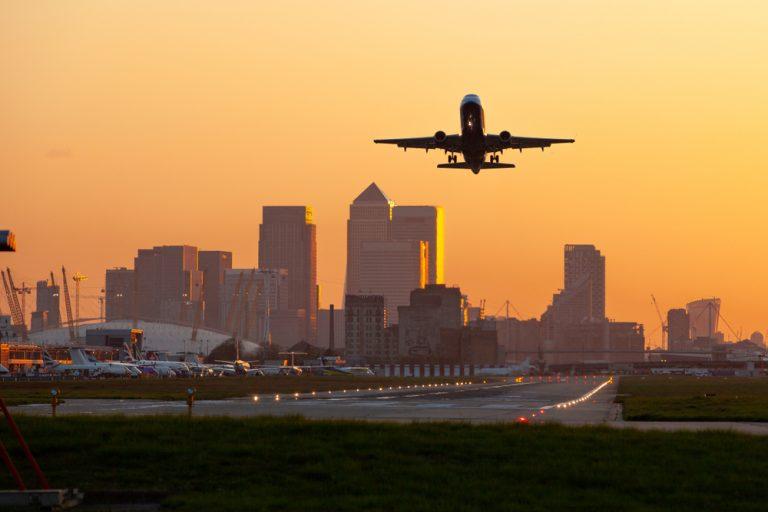
London City Airport has become the latest in the aviation sector to announce a swathe of job cuts, amid plans to lay off 239 staff as part of a “crucial restructuring” drive prompted by the coronavirus pandemic.
The airport, which is based in East London and serves a largely business clientele, was shut for three months during the peak of the UK’s lockdown measures as demand for domestic and short-haul flights plummeted.
Despite reopening in June, London City has still only resumed 17 of its usual routes, with flights expected to remain well below 2019 levels through the winter months into 2021.
Last month, the airport cut all non-essential spending and announced a “temporary pause” to its long-awaited £500 million development project, which was set to see a new terminal extension.
Chief Executive Robert Sinclair released a statement on the airport’s announcement, saying:
“The aviation sector is in the throes of the biggest downturn it has ever experienced as a result of the pandemic. We have held off looking at job losses for as long as possible, but sadly we are not immune from the devastating impact of this virus.
“It is with huge regret that we are announcing this restructuring programme today and our thoughts are with all of our highly valued staff and their families.
“We believe that the difficult decisions we are taking now will enable the airport to bounce back in a better shape when growth returns”.
London City is not the only airport to have made major redundancies lately, with Heathrow already laying off one third of its managers and warning frontline staff to expect imminent pay cuts.
Last week, Heathrow Chief Executive John Holland-Kaye told The Guardian that even the UK’s largest airport had not emerged unscathed from the pandemic:
“Given the lack of passengers, we have to do something and that is the least worst option… We are such as big part of the local economy, if we have large-scale redundancies that would have a similar impact to what we saw with mining towns back in the 1980s, and we want to do everything we can to avoid that”.
Biggest banks lose $635bn during pandemic

New data presented by Buy Shares has revealed that 14 of the world’s largest banks cumulatively lost $635.33 billion in market capitalisation during the coronavirus pandemic.
Some of banking’s biggest names were found to have suffered huge losses, with America’s Wells Fargo down -56.26% in market cap, followed by Spain’s Banco Santander at -46.16%.
The data shows that the steepest decline occurred during February 2020, as fears surrounding the rapid spread of coronavirus gripped economies worldwide.
Not all financial institutions have suffered a similar fate, however, with Japan’s Mizuho Financial Group only down a comparatively meagre -11.33%.
Buy Shares’ figures demonstrate the immense strain that the banking industry was put under during the pandemic, with the financial sector’s near-paralysis leading to heavy falls in market capitalisation.
The notable drop in February goes a long way to explaining the responses of the financial sector as the pandemic began to spread.
Even though coronavirus was first reported by China in December 2019, the lack of information meant it was difficult to predict how disruptive and widespread the infection would turn out to be.
Intervention from central banks in February nonetheless helped to cushion the blow, with the easing of restrictions on liquidity and capital helping to see thousands of institutions through the enormous burden of lockdown measures.
Buy Shares’ warned, however, that although the efforts of governments to keep economies afloat were beneficial to the banking sector, banks “still face some immediate pressures on their capital and liquidity position”.
The fact that the pandemic is by no means over just yet leaves the entire sector juggling with extreme uncertainty; the length and severity of the disruption is still not entirely clear, and it is hard to plan around an infection which always seems to be one step ahead.
Overall, the data indicates that most financial institutions will struggle to generate a profit over the course of 2020, largely due to the sustained period of low-interest rates implemented by big banks such as the Bank of England.
Despite this grim warning, Buy Shares’ figures demonstrate how the pandemic accelerated the shift towards digital banking. Customers and colleagues alike shared concerns over the hygiene implications of handling physical money, which meant more people than ever switched to their mobile and online-based banking systems.
The pandemic also provides a unique opportunity for challenger banks to grow their stake in the market, with traditional banks facing growing competition from sleek and savvy online institutions, who have enjoyed a spike in consumer interest during lockdown.
Buy Shares concluded their report with a message for the industry as a whole, as the challenges ahead begin to take shape:
“Banks will need to adapt to a new customer norm with new business models as well as rethink what drives brand loyalty. Restructure the addressable market to grow beyond the core. Most importantly banks will need to validate long-standing business assumptions. Long-held assumptions that have underpinned the banking business model may vary”.
Chip raises £10.7m in 48 hours in UK crowdfunding’s biggest convertible round

Automatic saving app, Chip, raised £10.7 million in the space of 48 hours from crowdfunding and the government-backed Future Fund, as part of its series A round.
The amount was raised from 6,420 investors in what is both the largest convertible round in UK crowdfunding history, and the largest crowdfunded Future Fund participation. The round also saw 25,000 people register ahead of the launch on Crowdcube, with £2 million being raised in the first ten minutes and £4 million in under an hour.
Continuing its year of optimism
Today’s announcement is just the latest headline in what has so far been a record-breaking year for Chip. Prior to its crowdfunding success, the company had; almost 280,000 registered users; processed more than £165 million in savings; increased deposits by 110%; achieved full FCA authorisation; tripled the size of its team; and validated a new revenue model. Chip said that the proceeds from its recent crowdfunding round will be spent on growth and will allow them to continue discussions with VCs from a position of strength. It added that it hopes these new funds will allow it to improve the infrastructure and capacity to give access to more deposits, and evolve to investment funds, ISAs, LISAs and pensions.Chip response
Commenting on the company’s crowdfunding success, Chip CEO Simon Rabin stated: “This round means big things for Chip. The growth we’ve seen this year has been incredible, but it’s time to take the business to the next level. Right now we are presented with a huge opportunity to capture a slice of Europe’s €30 trillion savings market that’s ripe for disruption, and Chip is poised ready to accelerate and dominate this space as a market-defining savings and wealth management app.” “In conjunction with the Future Fund, the UK government’s initiative backing tech start-ups, we’ve been able to welcome thousands more savers into our investor community and become the largest crowdfunded Future Fund round in the country. However, perhaps the only downside to the overwhelming demand we saw with this round is that we have run out of allocation before the entire 25,000+ who requested access were able to participate. We want to give as many people as possible the opportunity to own a part of Chip and are therefore working on finding a way to allow for more capacity, so make sure you watch this space.”FTSE miners among the headline rise and fall shares on Monday

FTSE 100 miners occupied many of the top spots on the highlight reel on Monday, with three in particular posting some of the biggest blue-chip gains and losses.
Rio Tinto started bright
Leading the pack was Rio Tinto (LON:RIO), bouncing 4.68% after the first bell on Monday morning. This rally took the company to its highest price of the year, and its almost 4% rally on the Australian exchange took it to its third-highest price in the year-to-date, despite the pandemic slowing down its operations. After losing some ground during morning trading, Rio Tinto shares are currently trading at 5,018.39p, up 0.53% or 26.39p 14/09/20 12:00 GMT. The company’s p/e ratio is currently 10.05, its dividend yield is generous at 6.01%.Glencore continues recovery trajectory
The second of our FTSE miners, Glencore plc (LON:GLEN) followed close behind, up 4.35% after the bell. This comes despite consistent headwinds against the company’s growth, including controversies and falling copper prices, and more recently COVID hitting its share price. After more than halving from 239.00p to 112.50p a share between February and March, the company’s shares have since been on a gradual but largely upward trajectory. The now sit up 0.34% or 0.62p at midday, at 182.62p 14/09/20, with some way to go before recovering to pre-pandemic levels. The company’s p/e ratio is currently 14.57, while its dividend yield sits at 4.43%.Fresnillo hops down from its year-to-date high
The third of our FTSE miners, Fresnillo plc (LON:FRES), led the pack of large-cap Monday fallers, down 6.14% or 83.00p to 1,269.00p a share 12:30 GMT 14/09/20. Monday’s drop follows something of a subdued start to the year for the Mexican-focused miner, with 2019 production and profits behind expectations. Today’s price, however, is a blip in an otherwise upward-surging trajectory for Fresnillo shares. Having started the year on 644.00p apiece, shares have more than doubled in value, fluctuating between 1,200p and 1,300p since the end of July. The company’s p/e ratio is encouraging at 74.95, their dividend yield is currently 0.92%.Costain Group shares down 10% on profit plunge

Costain Group shares (LON: COST) fell over 10% on Monday after the group revealed a first-half loss.
The smart infrastructure solutions company released results for the half-year ended 30 June 2020, which showed a 73% fall in operating profits to £5.7m.
Adjusted revenue fell by 8% to £549m.
The group took the brunt of a terminating contract and was on the wrong side of an arbitration decision over the A465 road-building contract in Wales.
Costain Group’s chief executive, said: “We are clearly disappointed with the recent arbitration outcome in relation to the A465 contract which, together with the mutual termination of the Peterborough & Huntingdon contract, has resulted in significant revenue adjustments for these long-standing projects.”
“Looking ahead, assuming no further sustained Covid-19 lockdowns, we are confident of delivering growth in profits and margins next year,” he added.
The company said in a statement: “As a result of the arbitration award and on the basis of the uncertainty of recovery of such costs, and subject to reaching a final settlement, the group’s half year results include a charge to the income statement of GBP45.4 million to adjust the revenue recognised based on the level of cash received to date under the contract. Costain will continue to fulfil its obligations under the contract, with completion scheduled in 2021.”
Costain Group shares (LON: COST) are trading -10.70% at 42,15 (1316GMT).
Why you shouldn’t be concerned IAG shares fell 30%
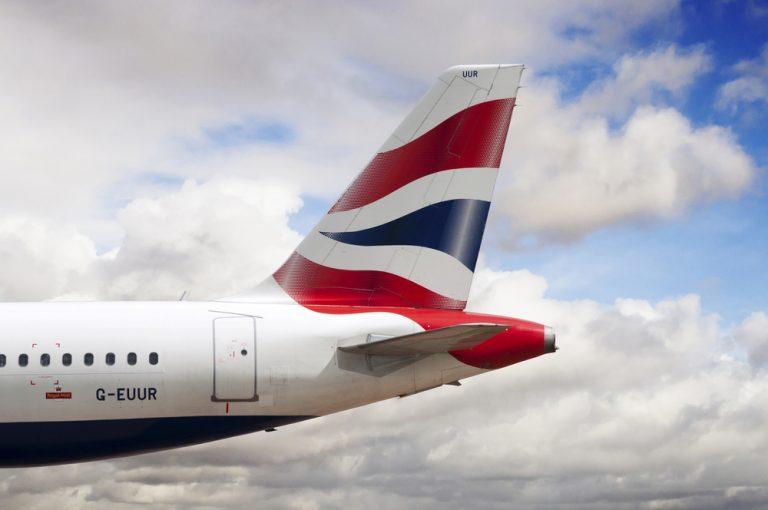
International Consolidated Airlines Group (IAG) (LON: IAG) shares plummeted 30% on Monday morning.
The British Airways owner saw shares fall, however, it was not due to troubles at the airline group. Instead, is linked to a technical issue as the shares trade ex-rights.
Last week, the airline group launched a heavily discounted rights issue to raise €2.74 billion. Investors taking part in the new rights issue have to do so at a price that is 35.9% lower than Thursday’s closing price.
Shares are trading at their lowest since the 2009 financial crash.
British Airways has been hit hard by the pandemic. The group has said that quarantine rules will mean that this Autumn will see travel rates at a 60% reduced compared to this time in 2019.
The airline revealed plans to shed up to 13,000 jobs this year and normal passenger numbers are not expected to return until 2024.
Chief executive Luis Gallego said: “Where travel markets have reopened without border restrictions and quarantine requirements, IAG has been encouraged by the level of pent-up demand that exists for air travel.”
The airline sector is calling on the government to end quarantine rules to encourage flight travel. Heathrow’s chief executive, John Holland-Kaye, said:
“Britain’s economic recovery is falling behind. Heathrow’s traffic figures for August demonstrate the extent to which quarantine is strangling the economy, cutting British businesses off from their international markets and blocking international students, tourists and investors from coming here to spend money.”
IAG shares (LON: IAG) are trading -28.66% at 138,55 (1255GMT).AstraZeneca shares begin rally as Oxford vaccine trial resumes

Shares at Cambridge-based biopharmaceuticals firm AstraZeneca (LON:AZN) have begun a modest rally on Monday as the company resumes its high-stakes coronavirus vaccine trial.
Clinical trials of AstraZeneca’s joint venture with Oxford University were forced to halt last week after it emerged that an anonymous participant had suffered from an alleged “adverse reaction”.
A New York Times article reported that a volunteer from the UK branch of the project had been diagnosed with transverse myelitis – an inflammatory syndrome that can be caused by viral infections – but AstraZeneca have so far not confirmed the speculation.
The trial was routinely paused while an independent body reviewed the incident to determine if it was safe to continue with the late-stage human studies.
Oxford University announced over the weekend that the trial was cleared to resume after regulators gave it the go-ahead, and it has been confirmed that the ill participant is expected to make a full recovery.
AstraZeneca shares were trading at 8,431p at GMT 08:33 14/09/20, giving the FTSE 100 its biggest boost of the morning, but the rally was swiftly tempered by concerns from investors that US President Donald Trump’s executive order to lower drug prices could hurt global pharmaceutical stocks.
By lunchtime, AstraZeneca’s share price had slipped back into the negative at -0.66% to 8,373p, but is still up 3.79% over the past week as investors’ fears that the trial could be scrapped were consoled by regulatory approval to resume studies.