
Onesavings Bank posts 14% fall in profits, shares rise

Onesavings Bank (LON: OSB) has reported a 14% fall in pre-tax profits for the six months to the end of June.
Compared to £182.2m profits for the first half of 2019, the challenger bank’s profits were hit amid the pandemic.
The group’s underlying net loan book grew by 2% to £18.5bn in the period.
Application volumes for products since the housing market reopened are currently approaching 60% of pre-lockdown levels on tighter lending criteria and higher pricing. Onesavings expects to deliver double-digit underlying net loan book growth for the full year.
Andy Golding, Onesavings Bank’s chief executive commented: “I am extremely proud of the way that OSB has performed during the COVID-19 pandemic. Our business model and systems have proved to be very resilient and our colleagues have all demonstrated dedication and flexibility, as they worked hard responding to the needs of our savers and borrowers.”
“It remains too early to say what the full impact of COVID-19 will be on the UK economy, nevertheless we will continue to be there for our customers, supporting them in the best way that we can. The foundations of our business remain extremely strong, with a very strong capital position and a prudent business model, all of which position us well to respond to the challenges and opportunities ahead and to continue to support our colleagues, customers and communities and deliver value to our shareholders over the long-term,” he added.
Shares in the group (LON: OSB) opened higher on Thursday morning. They are currently trading +16.65% at 304.00 (1408GMT).
Rolls Royce shares sink on record £5.4bn loss
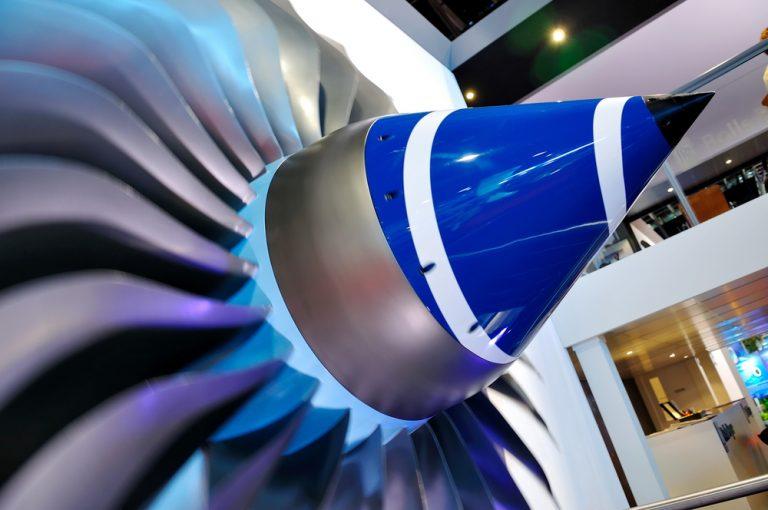
Shares in engine maker Rolls Royce (LON:RR) sank on Thursday after the group reported a £5.4bn loss in the first half.
The destruction of demand for travel was the main driver behind the loss as the company was forced to write down assets and unveil an asset sale programme.
Rolls Royce shares were down over 8% shortly after midday on Thursday.
“We ended 2019 with good operational and financial momentum. However, the COVID-19 pandemic has significantly affected our 2020 performance, with an unprecedented impact on the civil aviation sector with flights grounded across the world,” said Warren East, Chief Executive of Rolls Royce.
“We have responded rapidly to increase our liquidity, with £6.1bn at the end of H1 and a further £2.0bn term loan agreed in H2, to help weather the continued uncertainty around the timing and shape of the recovery in the civil aviation sector.”
“We have made significant progress with our restructuring, which includes the largest reorganisation of our Civil Aerospace business in our history. This restructuring has caused us to take difficult decisions resulting in an unfortunate but necessary reduction in roles. These actions will significantly reduce our cost base, which combined with recovery in Power Systems and continued resilience in Defence, will help us to deliver significantly improved returns as the world recovers from the pandemic.”
“While our actions have helped to secure the Group’s immediate future, we recognise the material uncertainties resulting from COVID-19 and the need to rebuild our balance sheet for the longer term. We have identified a number of potential disposals that are expected to generate proceeds of more than £2bn, including ITP Aero and a number of other assets. Furthermore, in light of ongoing uncertainty in the civil aviation sector, we are continuing to assess additional options to strengthen our balance sheet to enable us to emerge from the pandemic well placed to capitalise on the long-term opportunities in all our markets.”
Flutter Entertainment shares rise despite 70% loss

Flutter Entertainment (LON: FLTR) profits fell 70% in the first half of the year amid the pandemic.
The owner of gambling firms Betfair and Paddy Power saw profits sink from £81m in 2019 to £24m in 2020 as most major sports events have been canceled.
Despite the fall in profits, Flutter Entertainment shares opened higher on Thursday morning as the group remained positive about the post-lockdown activity.
Flutter Entertainment is, however, remaining cautious for the second half of the year due to the uncertainty around Covid-19 related disruption and possible regulatory change across various markets.
Revenue at the group also jumped 49% to £1.52bn.
“The first half of 2020 has been defined by the outbreak of the global Covid-19 pandemic. For Flutter, my primary concern has been to keep our colleagues and customers safe,” said Peter Jackson, the group’s chief executive.
“I am proud of the support we have been able to provide to our employees during this challenging time and the additional safer gambling measures we have put in place to enhance player protection.
“The pandemic has been a highly unusual backdrop for completion of our combination with The Stars Group and I would like to take this opportunity to thank all of my colleagues across the enlarged Group for their hard work, commitment and resilience as we have combined to form one team,” he added.
Flutter Entertainment shares (LON: FLTR) rose 2% to 12,825p on Thursday and are currently trading +1.67% (0845GMT).
BMW to cut 400 jobs at Mini plant

BMW has announced plans to axe up to 400 jobs at the Mini plant in Oxford.
As the demand for cars has taken a hit and production at the site pausing throughout April, the group has said it will cut 400 of the 950 roles based at the plant.
Those affected will be told in mid-September.
“Like other automotive manufacturers, our volume forecasts for 2020 have had to change accordingly,” said Bob Shankly, the BMW Human Resources Director.
“We have, therefore, made the difficult decision to adjust our shift patterns at Mini Plant Oxford from October. This will give us the flexibility we need to adapt our production in the short to medium term, according to developments in global markets.
“Our decision has been made after close discussion with trade union representatives and we are aware that our plans will have an impact on people during an uncertain and worrying time.
“We have sought to protect as many jobs as we can, while also taking the necessary steps to ensure the stability of our business in light of this current period of volatile and unpredictable market conditions.”
Demand in UK sales may have slowly risen during July but total demand remains 41% for the year to date, according to the Society of Motor Manufacturers and Traders.
Rolls-Royce has also announced that it will close one of its plants, in a new cost-cutting drive to adapt to the fall in sales.
EQTEC shares rise following update on first Greek waste-to-energy project

EQTEC shares (LON:EQT) rallied on Wednesday after the waste-to-energy company announced the financial close of Greek gasification plants as part of an agreement with ewerGy.
EQTEC will now supply Equipment and Engineering and Design Services to the project which is worth £2m over 18 months.
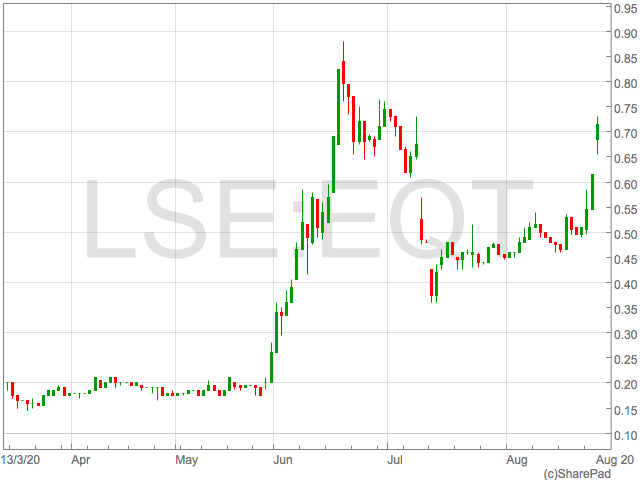
Shares in EQTEC were in excess of 10% higher in early trade on Wednesday following the news. The move means EQTEC shares are now up over 490% in 2020.
 The Greek gasification project is one of many agreements EQTEC are working on to supply their gasification technology to waste-to-energy plants across Europe.
The Greek project will typically utilise farm waste to produce fuel, but EQTEC’s technology is able to convert a wide range of waste forms into fuels, highlighting the huge potential for the technology in the circular economy.
The Greek project will convert farm waste to green electricity and be sent to the grid for distribution across the country.
There are a total of 22 plants earmarked in Greece under the Collaboration Framework Agreement with ewerGy after another 6 were recently added.
“EQTEC’s cooperation with ewerGy and ECO Hellas continues to strengthen and deliver results and we are pleased to have signed an equipment sales and services contract with them, said David Palumbo, CEO of EQTEC.
“With the strong and increasing appetite from traditional banking institutions to provide financing for projects applying EQTEC’s advanced gasification technology, we look forward to commencing the construction of Greece’s first waste to energy gasification plant, which is fully permitted and fully funded.”
“This plant and the growing pipeline of 18 potential projects that we are progressing well in Greece and the Balkan region are expected to deliver value to our stakeholders, local communities and our shareholders. Scalable waste to energy solutions using proven advanced gasification technologies such as EQTEC’s are important in the energy transition and decarbonisation market.”
EQTEC shares were trading at 0.685p, up 11%, shortly before 11am on Wednesday.
The Greek gasification project is one of many agreements EQTEC are working on to supply their gasification technology to waste-to-energy plants across Europe.
The Greek project will typically utilise farm waste to produce fuel, but EQTEC’s technology is able to convert a wide range of waste forms into fuels, highlighting the huge potential for the technology in the circular economy.
The Greek project will convert farm waste to green electricity and be sent to the grid for distribution across the country.
There are a total of 22 plants earmarked in Greece under the Collaboration Framework Agreement with ewerGy after another 6 were recently added.
“EQTEC’s cooperation with ewerGy and ECO Hellas continues to strengthen and deliver results and we are pleased to have signed an equipment sales and services contract with them, said David Palumbo, CEO of EQTEC.
“With the strong and increasing appetite from traditional banking institutions to provide financing for projects applying EQTEC’s advanced gasification technology, we look forward to commencing the construction of Greece’s first waste to energy gasification plant, which is fully permitted and fully funded.”
“This plant and the growing pipeline of 18 potential projects that we are progressing well in Greece and the Balkan region are expected to deliver value to our stakeholders, local communities and our shareholders. Scalable waste to energy solutions using proven advanced gasification technologies such as EQTEC’s are important in the energy transition and decarbonisation market.”
EQTEC shares were trading at 0.685p, up 11%, shortly before 11am on Wednesday.
 The Greek gasification project is one of many agreements EQTEC are working on to supply their gasification technology to waste-to-energy plants across Europe.
The Greek project will typically utilise farm waste to produce fuel, but EQTEC’s technology is able to convert a wide range of waste forms into fuels, highlighting the huge potential for the technology in the circular economy.
The Greek project will convert farm waste to green electricity and be sent to the grid for distribution across the country.
There are a total of 22 plants earmarked in Greece under the Collaboration Framework Agreement with ewerGy after another 6 were recently added.
“EQTEC’s cooperation with ewerGy and ECO Hellas continues to strengthen and deliver results and we are pleased to have signed an equipment sales and services contract with them, said David Palumbo, CEO of EQTEC.
“With the strong and increasing appetite from traditional banking institutions to provide financing for projects applying EQTEC’s advanced gasification technology, we look forward to commencing the construction of Greece’s first waste to energy gasification plant, which is fully permitted and fully funded.”
“This plant and the growing pipeline of 18 potential projects that we are progressing well in Greece and the Balkan region are expected to deliver value to our stakeholders, local communities and our shareholders. Scalable waste to energy solutions using proven advanced gasification technologies such as EQTEC’s are important in the energy transition and decarbonisation market.”
EQTEC shares were trading at 0.685p, up 11%, shortly before 11am on Wednesday.
The Greek gasification project is one of many agreements EQTEC are working on to supply their gasification technology to waste-to-energy plants across Europe.
The Greek project will typically utilise farm waste to produce fuel, but EQTEC’s technology is able to convert a wide range of waste forms into fuels, highlighting the huge potential for the technology in the circular economy.
The Greek project will convert farm waste to green electricity and be sent to the grid for distribution across the country.
There are a total of 22 plants earmarked in Greece under the Collaboration Framework Agreement with ewerGy after another 6 were recently added.
“EQTEC’s cooperation with ewerGy and ECO Hellas continues to strengthen and deliver results and we are pleased to have signed an equipment sales and services contract with them, said David Palumbo, CEO of EQTEC.
“With the strong and increasing appetite from traditional banking institutions to provide financing for projects applying EQTEC’s advanced gasification technology, we look forward to commencing the construction of Greece’s first waste to energy gasification plant, which is fully permitted and fully funded.”
“This plant and the growing pipeline of 18 potential projects that we are progressing well in Greece and the Balkan region are expected to deliver value to our stakeholders, local communities and our shareholders. Scalable waste to energy solutions using proven advanced gasification technologies such as EQTEC’s are important in the energy transition and decarbonisation market.”
EQTEC shares were trading at 0.685p, up 11%, shortly before 11am on Wednesday. Provident Financial shares surge despite HY loss

Provident Financial (LON: PFG) shares surged on Wednesday morning despite the group posting a £28m pre-tax loss for the first six months to the end of June.
The loss was compared to a £43.1m profit for the same period in 2019 – however, the doorstep lender still performed ahead of expectations amid the pandemic.
Revenue fell from £501.5m last year to £445.5m. Amid the pandemic, the group has said that it will not pay out its interim dividend (H1’19: 9.0p per share) and aims to continue payouts when operational and financial conditions normalise.
“The first six months of this year have been the most difficult and testing in my career. However, I am very pleased with how well the Group has responded to the challenges brought about by Covid-19, and how effectively we have operated. We are reporting an adjusted loss before tax for the period of £32.6m, this result is better than our initial view of Covid-19’s potential impact on our businesses. Pleasingly, within this number Vanquis Bank and Moneybarn were both profitable,” said the chief executive, Malcolm Le May.
“Looking forward, our strong financial position will mean that we can keep helping, and responsibly lending to, our customers, many of whom are key workers, as we, and they, face the challenge of furlough support ending and unemployment rising in the coming months. Provident Financial has performed robustly in the first half of the year because we focused on our customers, colleagues and strengthening our balance sheet for the challenges the pandemic would bring.”
“In fact financial and operational performance were better than expected, and therefore we have decided to repay all furlough support to the government. We believe this is the right thing to do, and on behalf of customers have also advocated the government should support wider funding for the sector. Our market will grow due to the pandemic, but at present it appears the supply of credit into the market is decreasing, which cannot be a good outcome for customers, nor a public policy one for the UK,” he added.
Provident Financial shares (LON: PFG) are trading 12.93% at 221.00 (0856GMT).
Virgin Atlantic creditors vote on £1.2bn rescue deal
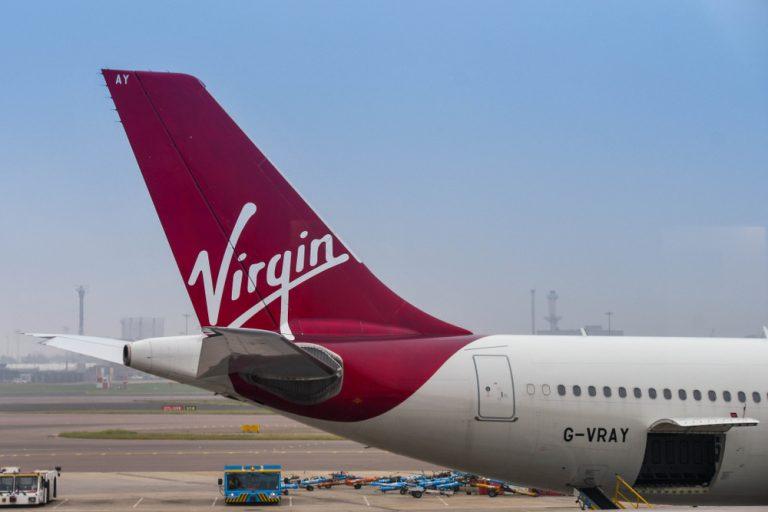
Tuesday will see Virgin Atlantic creditors vote on a £1.2bn rescue deal.
If the plan is not approved, the airline has warned that it is likely to run out of money by September.
After Virgin Atlantic applied and was rejected for state support, the group planned a privately-funded recapitalisation plan, which will fund the airline for the next 18 months.
Virgin Atlantic requires 75% support from creditors – who are voting today at a High Court hearing.
The group announced plans to axe over 3,500 jobs earlier this year in response to the pandemic.
Shai Weiss, Virgin Atlantic’s chief executive, said last month when the group proposed the deal: “Few could have predicted the scale of the Covid-19 crisis we have witnessed and undoubtedly, the last six months have been the toughest we have faced in our 36-year history. We have taken painful measures, but we have accomplished what many thought impossible.”
“The solvent recapitalisation of Virgin Atlantic will ensure that we can continue to provide vital connectivity and competition to consumers and businesses in Britain and beyond. We greatly appreciate the support of our shareholders, creditors and new private investors and together, we will ensure that Virgin Atlantic can emerge a sustainably profitable airline, with a healthy balance sheet,” he added.
The travel sector has been hit hard by the effects of the pandemic. The Association of British Travel Agents (Abta) has said that in total, 39,000 people in the sector have lost their jobs or been told their role was at risk since the pandemic.
The trade body has written to Rishi Sunak asking for support for jobs in the sector.
The latest firm to fall victim is to the pandemic is STA Travel, which last week ceased trading after the business was brought to a “standstill”.
Melody VR buys Napster for $70m

Melody VR (LON: MVR) has announced plans to buy Napster in a $70m (£53.8m) deal.
Melody VR is a tech startup, which uses virtual reality as a way to allow fans to experience music gigs from a range of artists.
The two businesses will initially continue as two separate platforms, however, Melody VR plans to use Napster’s 90mn songs as a shop for users who are streaming gigs.
Shares in Melody VR soared over lockdown, as the group benefitted from the demand in at-home entertainment. Users were able to stream concerts from artists ranging from Lewis Capaldi to Wiz Khalifa.
Shares are currently suspended but are sat at 4.4 pence.
“MelodyVR’s acquisition of Napster will result in the development of the first ever music entertainment platform which combines immersive visual content and music streaming,” said Melody VR’s chief executive, Anthony Matchett.
“For music fans today, live and recorded music are intrinsically linked. We are as keen to see our favourite artists perform live as we are to listen to their albums. Our purchase of Napster, one of the music industry’s original disruptors, is born out of our wish to deliver the world’s foremost music experience, available seamlessly across audio and visual media and in turn presenting a truly next generation music service.”
Bill Patrizio, Napster chief executive, said: “This is a tremendous outcome for two organisations with complementary platforms and loyal audiences, and we could not be more excited to be moving forward as one company.”
“The product, technology and cultural synergies of Napster and Melody VR will bring tremendous innovation for music lovers, artists and the entire music industry,” he added.
DFS shares up on strong demand
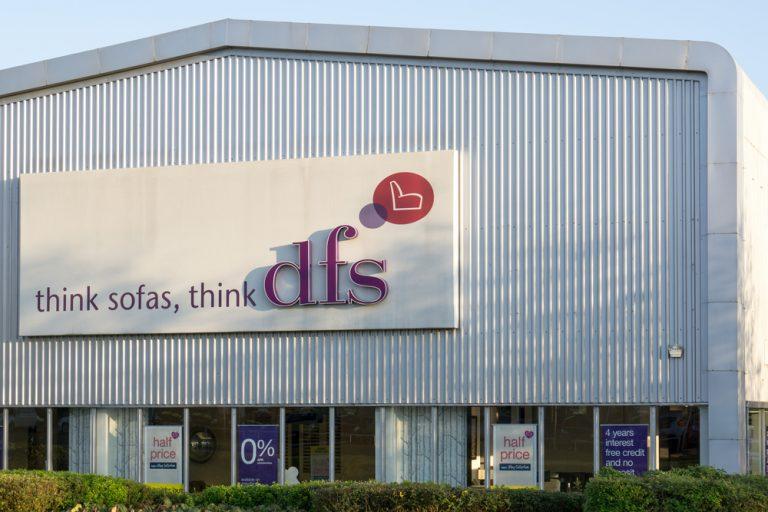
DFS (LON: DFS) posted strong results on Tuesday morning after the retailer saw a growth in revenue and demand following the lockdown.
Demand over the past six weeks has surged and totals revenues of around £70mn – higher than the group’s initial expectations.
Despite the growth in revenues, the retailer remains cautious around Brexit and the pandemic.
“The financial year has started strongly, however, we do note that significant uncertainty related to Covid-19 on UK consumer confidence and the potential impact of Brexit exists and it is exceptionally difficult to assess the outlook beyond the short term,” said the group.
“While positive trading momentum currently remains we do note that some consumers may be bringing forward spending decisions and this may impact trading later in the financial year.”
Shares in the group (LON: DFS) rose over 13% this morning. Shares in the group are currently trading +13.60% at 170.40 (1034GMT).
Arrow Global shares surge on HY results

Arrow Global (LON: ARW) shares soared on Tuesday morning after the group posted “resilient” results for the six months ending June 30.
The asset manager revealed a fall in cash collections from £202.1mn last year to £175.8mn. The group also posted a pre-tax loss of £108.9mn amid the “significant economic uncertainty”.
As Arrow Global Group swings into a loss, the group remains positive and has seen “improving trend in collections performance following the impact of COVID-19 lockdowns.”
Lee Rochford, the chief executive, said: “I am proud of Arrow’s response to the challenges posed by the pandemic. We have protected our people, strengthened our funding and balance sheet, maintained robust operational performance and supported our customers.”
“As we exit the crisis, European banks will be under significant pressure to provision for non-performing loans. With €1.1 billion of discretionary undeployed fund management capital, we are extremely well placed to be a leading investor in this huge market with increasingly attractive returns. We remain resolutely focused on executing our strategy to build a compelling integrated asset manager, offering differentiated access to high yielding assets whilst continuing to treat customers fairly,” he added.
Arrow Group shares (LON: ARW) are trading +13.27% at 90.50 (1008GMT).