
Saga PLC shares soar 77% on £150m equity raise
Saga PLC shares (LON: SAGA) rallied on Tuesday morning after the group announced that it was close it raising £150m in equity capital.
The group previously rejected a private equity offer and instead has raised the funds primarily from Roger De Haan, Saga’s former owner.
De Haan will raise up to £100m in several ways. There will be 224 million new ordinary shares, representing 20% of the current issued share capital of the company. They will be issued at 27p per share, which is a 98% premium to the 13.61p closing price of Saga shares on 28 August 2020.
He also plans to join the Board and become Non-Executive Chairman.
“The board unanimously considers that the proposed equity raise will support the execution of its reinvigorated strategy under its strengthened management team, which it believes will return Saga to sustainable growth and lead to the restoration of significant shareholder value,” said Saga in a statement.
“Saga has continued to make good progress against the plan launched last year and has taken a series of actions in the last six months to protect the business from the significant disruption that has resulted from COVID-19, especially in relation to the Group’s travel operations.”
Shares in the group soared 77% to 24.14p, however, they remain lower than where starting 2020.
“Saga remains in a very tricky place, it has no certainty on when normal service will resume in the travel business, and it will still be saddled with debt, partly associated with its ill-timed launch of two purpose-built cruise ships,” said Russ Mould, investment director at AJ Bell.
“If Saga can steer a course through the current choppy waters one can understand why the proposition might have some merit, given demographic trends should create an increasingly large pool of prospective customers. However, like many businesses, Saga still doesn’t know exactly how a post-Covid future will look,” he added.
Saga PLC shares (LON: SAGA) are currently trading +34.75% at 18.34 (1024GMT).
Location Sciences shares rally 18% as it confirms first contract for its Verify platform

Location data verification company Location Sciences (AIM:LSAI) announced on Tuesday that it had secured a contract with US consumer intelligence company InMarket, for its Verify Audience platform.
The company states that its Verify Audience product is a, “proprietary verification platform, offering independent, media-agnostic analysis and authentication of the accuracy and quality of location-targeted advertising data”, which enables brands, agencies and suppliers to check the validity of location based derived audience segments via a review of historical movements.
Location Sciences said that the product gives it access to the audience segment industry, which it deems a significant part of the location-based advertising market.
The partnership will allow InMarket customers to reach their target audiences, with the audit process analysing the source, quality and accuracy of location data, to verify its suite of up to 1,000 location derived audiences.
Commenting on the contract announcement, Location Services CEO, Mark Slade, commented:
“We are delighted to announce this partnership with InMarket so soon after the launch of our Verify Audience platform in the US. Location data used to build audiences in ad-tech can be extremely valuable, but it can be very difficult for buyers to differentiate the best from the worst data. The fact that InMarket has grasped the opportunity to take the lead in the marketplace when it comes to transparency is a testament to its business and data quality. It is clear that buyers are becoming more aware of the vast differences and nuances in location data, and we expect other agencies and suppliers to follow suit in the coming month.”
Following the news, Location Services shares rallied 17.96% or 0.084p, to 0.55p per share 01/09/20 08:24 BST. This is far short of its year-to-date high of 1.88p near the end of January.Cake Box shares rally 6% with a recovery led by tasty online sales growth

The recent trading update of baked goods retailer Cake Box (AIM:CBOX) told the story of promising customer demand, with the reopening of its stores and strong online sales acting as the icing in the cake.
Between April and May, the company noted that all of its stores in the UK due to lockdown. Having implemented its new safe work and hygiene protocols, the company began reopening its stores, with 131 of its 133 UK stores open by June 1 2020.
Though operating with a limited menu, Cake Box stated that between the start of June and end of August, like-for-like sales were up 14.1% year-on-year in franchise stores, as consumers released pent-up demand.
The real boost, however, came from the growth of its like-for-like online sales, which were up 74% year-on-year. The company said this jump had been aided by increased exposure and appeal of its new delivery service partnerships, offered by Uber Eats, Just Eat and Deliveroo.
In addition to sales picking up, Cake Box added that it had opened five new stores since the start of June, in areas including Swindon and Basingstoke. It continued, saying that it has a good pipeline of franchisees and locations, and would look to target further store openings and new staff appointments at its headquarters.
Further, the company say it will repay £156,000 in furlough payments received from the government under the Job Retention Job. It also stated that it would be paying a special dividend of 3.20p on October 23 2020, with the amount being equal to the final year dividend announced on March 31 and later withdrawn on April 14.
Commenting on its expectations for the coming month, the company’s statement read: “With one month left of the Company’s half year, the Board is encouraged by the trading performance since reopening, its level of cash generation, and the prospects going forward.” Following the news, Cake Box shares rallied 5.92% or 10.30p, to 184.30p per share 01/09/20 08:03 BST. The company’s p/e ratio is 22.31, its dividend yield stands at 0.92%.AstraZeneca receives EU approval for new lung cancer treatment
Cambridge-based pharmaceutical firm AstraZeneca (LON:AZN) has announced the EU approval of Imfinzi as a first-line treatment for adults suffering from extensive-stage small cell lung cancer (ES-SCLC).
The drug is to be used alongside standard chemotherapy after positive results from AstraZeneca’s Phase III CASPIAN trial showed that Imfinzi plus chemotherapy demonstrated a “statistically significant and clinically meaningful overall survival benefit” as a treatment for patients with ES-SCLC.
Imfinzi’s encouraging trial results have boosted hopes that the drug could be instrumental in treating ES-SCLC, which is a “highly aggressive, fast-growing form of lung cancer”, and poses a unique challenge as it “typically recurs and progresses rapidly despite initial response to chemotherapy”.
Lung cancer is the leading cause of cancer deaths worldwide, accounting for about one fifth of all fatalities. Prognosis for patients suffering from ES-SCLC is “particularly poor”, with an average survival rate of just 6% five years after diagnosis.
The CASPIAN trial showed that Imfinzi reduced the risk of death by 27% versus chemotherapy alone, helping patients sustain a median overall survival of 13.0 months versus 10.3 months for chemotherapy alone, and that Imfinzi administered alongside chemotherapy delayed the worsening of cancer symptoms.
Dave Fredrickson, AstraZeneca’s Executive Vice President of Oncology Business, welcomed the company’s pioneering new treatment:
“Imfinzi plus chemotherapy is becoming a new global standard of care for patients with extensive-stage small cell lung cancer, and we are pleased to bring this option to patients in Europe who urgently need it. This is the first immunotherapy regimen to offer both a sustained survival benefit and an improved response rate, as well as a choice of chemotherapies and convenient dosing every four weeks during maintenance”.
Imfinzi in combination with standard cancer treatments is already approved in the USA, Japan and several other countries for the first-line treatment of ES-SCLC, and is currently “under regulatory review” in others.BP to sell London HQ as group adapts to “hybrid” working
As the UK is shifting to flexible working, BP is reportedly planning to sell its London headquarters.
The Times reported on Sunday rent back the building from the new owner before leaving permanently in two years’ time.
The oil giant employs over 6,500 people in the UK and has offices in central London and Sunbury-on-Thames.
The group has said that it plans to move towards a more “hybrid work style”, with a greater balance towards home working.
BP purchased the headquarters in St James’s Square back in 2001 for £117m and could sell it for an estimated £300m today.
Earlier this year, BP revealed plans to axe 10,000 jobs following a global slump in oil demand.
“We are spending much, much more than we make – I am talking millions of dollars, every day,” said chief executive, Bernard Looney in an email to staff.
The news comes as the government is set to kickstart its campaign to get people back into the office.
Transport Secretary Grant Shapps told Sky News last week: “What we’re saying to people is it is now safe to go back. Your employer should have made arrangements which are appropriate to make sure it is coronavirus-safe to work. You will see some changes, if you haven’t been in for a bit, as a result.”
“Clearly there are things you can’t just do remotely, and a lot of those people have carried on working. But for the rest of us, also, you just miss out on that human spark when you’re not with people. You will find the office has been reorganised into a coronavirus-avoidance friendly environment and probably a few changes as a result,” he added.
Amigo Holdings founder calls for takeover, shares surge

Amigo Holdings shares (LON: AMGO) jumped on Friday morning after the lender’s founder called on private investors to support his return.
James Benamor was previously the group’s chief executive, however, left in 2018 and has been in public disagreements with rows over the management ever since.
Benamor has called for the ousting of finance director Nayan Kisnadwala and for himself to be reinstated as chief executive.
Results released today from Amigo Holdings revealed a 31.7% drop in revenue from £71.5m in 2019 to £48.8m for the same period in 2020.
The lender blamed the impact of Covid-19 related payment holidays for the drop in revenue.
Commenting on the Q1 results, Kisnadwala said: “The whole team at Amigo is focused on addressing our legacy issues and building a sustainable business for the long term. Operationally we have turned a corner in our handling of complaints. We are on track to meet the agreement reached with the FCA to resolve our complaints backlog and continue to work with the FCA on its ongoing investigation. We have adequate liquidity and funding to support our ongoing business activity.
We are updating our lending processes and policies to enable Amigo to restart lending in a prudent manner by the end of 2020.”
The firm is no providing full-year guidance for expected performance this year due to the uncertainty around the pandemic and a current investigation by the Financial Conduct Authority.
Amigo Holdings shares (LON: AMGO) are currently trading +15.72 at 13.89 (1237GMT).
Gatwick reveals £321m loss as passenger numbers plunge
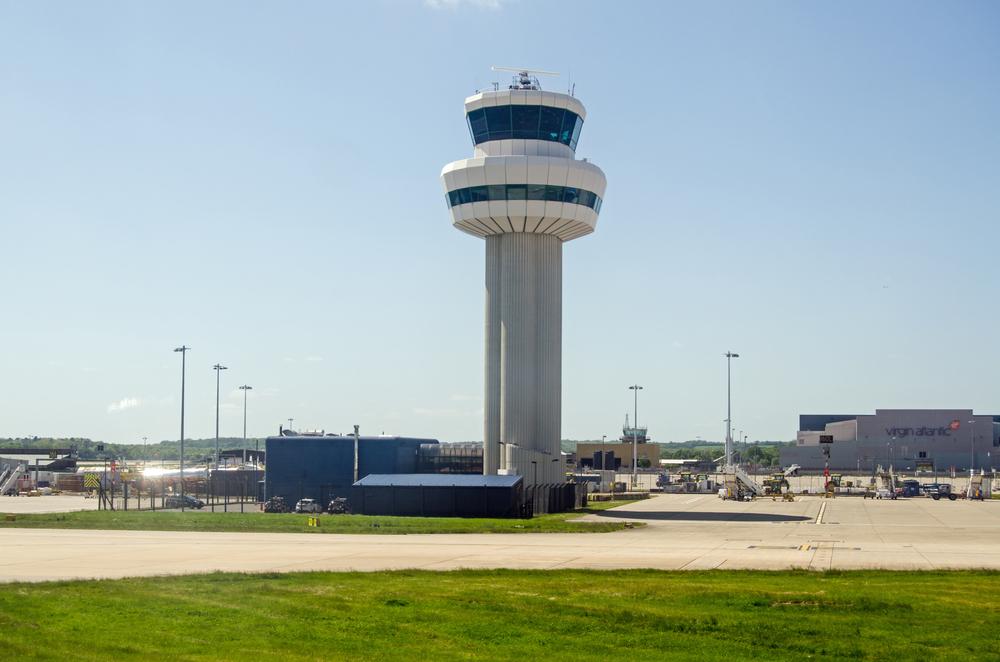
Gatwick airport has swung into a £321m loss amid the pandemic.
Due to a 66% fall in passengers for the six months ending 30 June, the UK’s second-busiest airport revenues plunged from £372m last year to £144m.
As the aviation industry has taken a hit across the world, Gatwick’s numbers highlight the damage the pandemic has really caused.
Passenger numbers in the first six months of 2020 were just 7.5m – compared to the 22m from the same period in 2019. According to Gatwick airport, it will take up to five years to return to normal levels.
As a result, the airport announced plans to cut 600 jobs as part of a restructuring to survive the effects of the pandemic. Gatwick airport has already cut staff this year from 3,046 to 2,515.
Stewart Wingate, the chief executive of Gatwick airport, said: “The negative impact of Covid-19 on our passenger numbers and air traffic at the start of the year was dramatic and, although there are small signs of recovery, it is a trend we expect to continue to see.
As with any responsible company we have protected our financial resilience by significantly reducing our operational costs and capital expenditure.”
Gatwick is not the only airport to have revealed a drastic drop in revenue over 2020. Heathrow airport revealed a £1bn loss for the first six months of 2020.
Heathrow’s chief executive has called for a passenger testing regime.
“As many of our customers have experienced, it’s difficult to plan a holiday that way, let alone run a business,” said John Holland-Kaye.
“Testing offers a way to safely open up travel and trade to some of the UK’s biggest markets which currently remain closed. Our European competitors are racing ahead with passenger testing; if the UK doesn’t act soon, global Britain will be nothing more than a campaign slogan.”
Frontier Developments shares surge on strong sales

Frontier Developments shares (LON: FDEV) jumped over 8% on Friday morning, as the group announced it was set to reach the top end of its sales forecasts.
The developer said that full-year revenue is expected to reach analyst expectations of £83m and £95m – helped by three new video game titles the group revealed on Thursday.
A popular game, Planet Zoo, was released in November 2019 After a highly successful pre-launch marketing strategy, the game achieved the global number one and number two bestseller spots on Steam.
David Braben, Frontier Developments’ chief executive, said: “Planet Zoo’s successful launch and subsequent performance is testament to the superb efforts of our growing team. We now have four successful games in the market each with a clear roadmap of additional content in line with our proven strategy.”
“We have started calendar 2020 in a great position. We’re bringing Planet Coaster to console players and significantly expanding the Elite galaxy this year, and developing two major games for release in the same financial year (FY22) for the first time as a self-publisher. I am also very pleased with the progress with Frontier Publishing, both in growing our internal team, and with the exciting external relationships we are building, helping others make their great games.”
“We have now signed three excellent developers already, and are close to signing more. Working together, we expect to start earning revenue in the next financial year,” he added.
The AIM-listed company is based in Cambridge and has over 400 employees.
Frontier Developments shares (LON: FDEV) surged 8% on Friday’s opening. They are currently trading +8.17% at 2,250.00 (1022GMT).
Pret to axe 2,800 roles as sales plunge
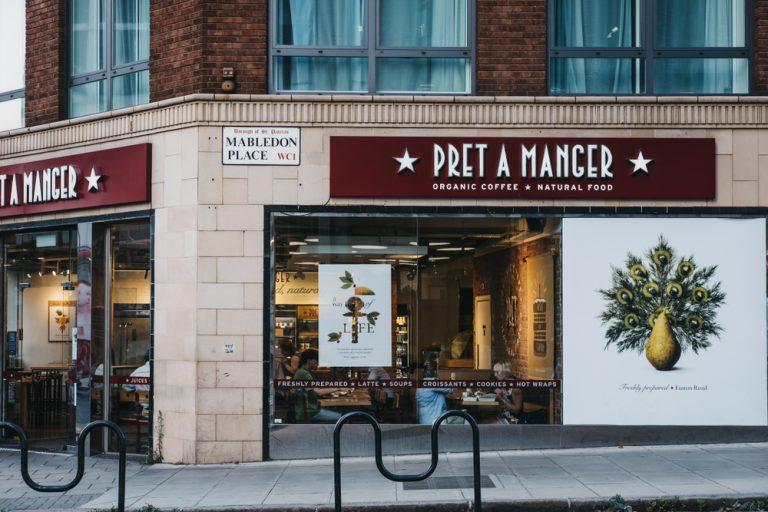
Pret has become the latest company to reveal a dramatic fall in sales amid the Coronavirus pandemic.
Sales 74% compared to the same period last year due to “shorter opening hours, lower transaction levels, and the losses faced by the business in 2020”.
As a result, Pret will be axing 2,800 jobs and permanently close 30 stores.
“I’m gutted that we’ve had to lose so many colleagues,” said Pano Christou, the group’s chief executive.
“Although we’re now starting to see a steady but slow recovery, the pandemic has taken away almost a decade of growth at Pret.
“We’ve managed to protect many jobs by making changes to the way we run our shops and the hours we ask team members to work.”
“I’m hopeful we’ll be able to review all these changes now that trade is improving again, and I’m encouraged by the improvements we’re seeing every week,” he added.
“We’ll soon be announcing a number of big changes to help bring Pret to more people.
“We’re grateful to the government for the support they’ve given our sector, and hope that support will continue as long as possible to give Pret time to adjust.”
Over 24,000 jobs in total have been lost on the high street in administration in the first half of 2020 alone.
The Hut Group plans £4.5bn listing
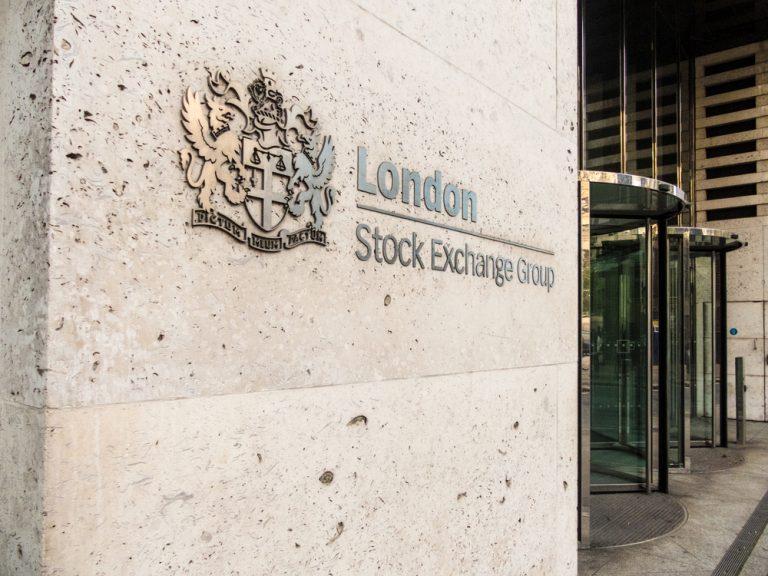
The Hut Group has revealed plans to float on the London Stock Exchange for £4.5bn.
The group owns beauty and fitness brands including the Lookfantasic beauty and Myprotein.
The Hut Group has grown substantially since the start of the year, with revenues rising 35.8% to £676m. Sales in 2019 grew to £1.1bn from £916m during 2018.
It was founded in 2004 and now employs over 7,000 people.
Matthew Moulding, founder and chief executive, said: “Our intention to float The Hut Group on the London Stock Exchange reflects the achievements of the past but also our strong belief in the significant potential for THG in the future.”
“THG has enjoyed strong growth since being founded in 2004, employing more than 7,000 people and establishing a track record of consistent delivery for our customers,” he added.
The company will plan to raise £920m through the sale, which could lead to a large payout of up to £700m in shares for Moulding.
Shares are likely to be listed and begin trading in mid-September.
Citi and JPMorgan are leading the IPO.