
Sunak mini budget means additional 73% of homes exempt from stamp duty
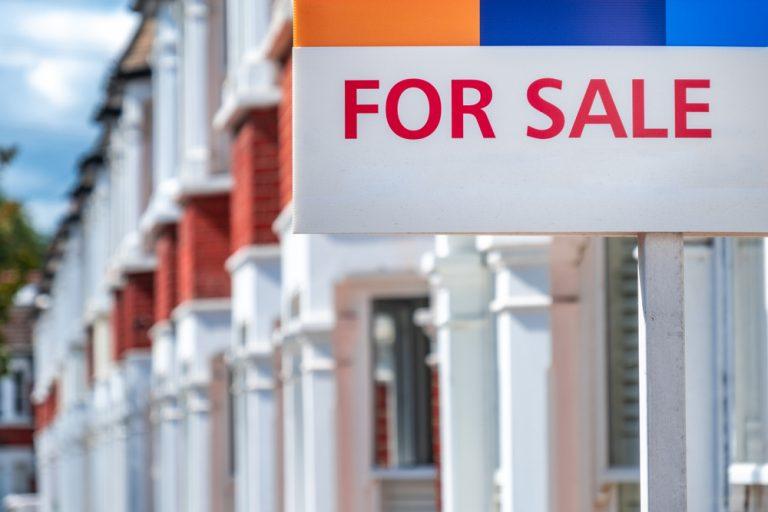
As per predictions, Chancellor Rishi Sunak announced his ‘mini budget’ on Wednesday, in which he brought in a six month stamp duty holiday for all properties up to the value of £500k.
According to analysis by Zoopla (LON:ZPG), the scheme will take the total number of homes eligible for stamp duty exemption from 16% of all sales in England, to 89%, up 73%.
Over a six month period – assuming Sunak doesn’t extend it – the company predicts that consumers will save £1.3 billion in stamp duty payments, with savings of up to £14,999 for first time buyers, buying at the upper end of the allowance.
According to Zoopla, the greatest beneficiaries would be the affordable areas in and around London, in which up to 95% of sales would be exempt from stamp duty. It continued, saying that from today, 28 authorities could expect to see over 90% of home sales free of stamp duty.
Going forwards, the company said that more can and should be done to stimulate the market in the long-term, such as an extension to the Help to Buy scheme or introducing an equivalent replacement.
First Group books £150m loss as Coronavirus hampers transport sector
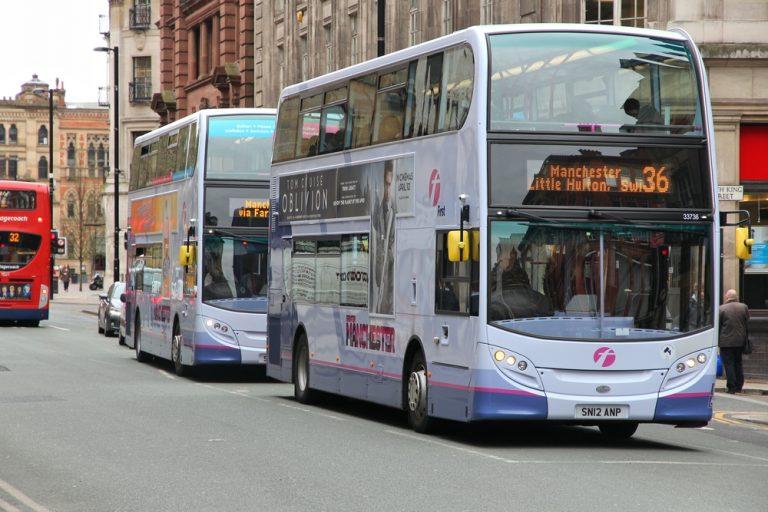
Bus and train operator First Group (LON:FGP) saw their shares dive on Wednesday, as Coronavirus saw the company book a deflated set of full-year results for the period ended March 31.
Unfortunately for the UK travel group, their results included March – the month in which the company saw a 90% reduction in passengers.
Despite booking an impressive 8.8% year-on-year jump in revenues, up to £7.8 billion, the company were hit with an £152.7 million operating loss. This followed on from a £9.8 million profit a year earlier, and a year of trading with broadly similar trends, prior to the pandemic.
The situation for First Group shareholders was equally bleak, with adjusted EPS dropping by 48.9% from 13.3p to 6.8p.
The company looks to be pinning its hopes of recovery on a return to normal trading, with consumers returning to some semblance of normal life. It said it was ‘immensely proud’ of the efforts of its staff – being based in Aberdeen, it will also have to contend with the slower pace of Scotland’s lockdown being lifted.
First Group response
In a cautious but overall hopeful outlook, company Chief Executive Matthew Gregory commented: “There is no way of predicting with any certainty how the coronavirus pandemic will continue to affect the public transportation sector and the impact it may have on customer trends longer-term. However, as leading operators in each of our markets we are strongly positioned for a recovery in passenger demand and for the opportunities that may emerge from this exceptional period.” “Despite the near-term uncertainty, the long-term fundamentals of our businesses remain sound. We are resolutely committed to delivering our strategy to unlock material value for all shareholders through the sale of our North American divisions at the earliest appropriate opportunity. The importance of public transport to society has never been more clearly demonstrated, and we will continue to take all necessary measures to enable the Group to emerge from this unprecedented situation in a robust position.”Investor insights
Following the update, First Group shares plummeted over 17%, before recovering slightly, down 15.82% or 7.78p, to 41.40p per share 08/07/20. This is comfortably below the company’s median target price of 75.00p, and over 60% down on where it was a year ago. The Group’s p/e ratio currently stands at 3.42.AirAsia shares drop 18% with future in ‘significant doubt’
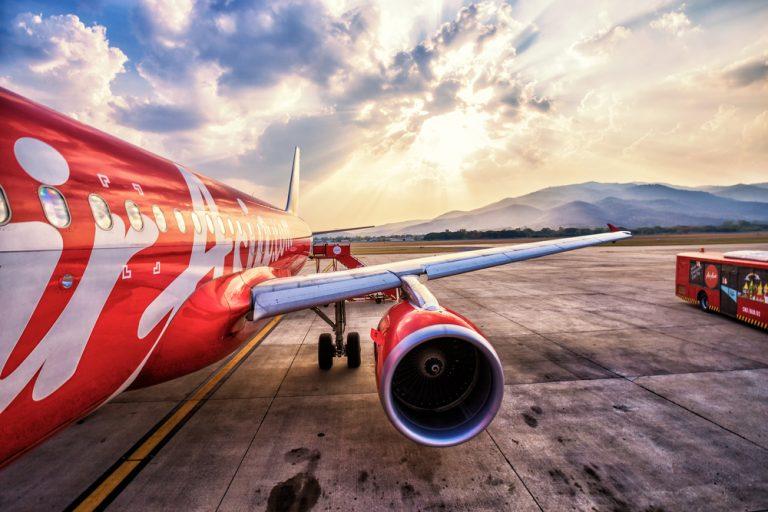
The future of Malaysian budget airline, AirAsia (KLSE:AIRASIA), is in ‘significant doubt‘ according to auditing firm Ernst & Young.
Prior to the challenges posed by Coronavirus, the company’s liabilities already exceeded its current assets by 1.84 billion ringgit (£340 million).
With tight travel restrictions and grounded flights, AirAsia cash flow and balance sheet have been hit even further. After suspending all flights in late March, the company booked a record quarterly profit of 804 million ringgit, almost £150 million.
In its statement to the Kuala Lumpur exchange on Tuesday, Ernst & Young stated that the AirAsia financial position “[indicates] existence of material uncertainties that may cast significant doubt on the Group’s and the Company’s ability to continue as a going concern,”
The company said that it was in talks to enter into joint ventures which may lead to additional investment. It was also applying for bank loans and considering other proposals for raising additional capital.
AirAsia is owned by tycoon Tony Fernandes, who also owns QPR football club. In a statement, Mr Fernandes said:
“This is by far the biggest challenge we have faced since we began in 2001,”“Every crisis is an obstacle to overcome, and we have restructured the group into a leaner and tighter ship.” “We are positive in the strides we have made in bringing cash expenses down by at least 50% this year, and this will make us even stronger as the leading low-cost carrier in the region,” he added. Following the news, AirAsia shares dipped 17.54% or 0.15 ringgit, to 0.70 ringgit per share 08/07/20 17:00 GMT+8.
Jaguar Land Rover: over 2,000 agency jobs lost
Over 2,000 jobs at Jaguar Land Rover are at risk, equating to about 40% of DHL Supply Chain staff in manufacturing plants.
The staff most at risk are fulltime and agency employees currently at major factories including Castle Bromwich, Solihull, Ellesmere Port, and Halewood.
“In light of highly challenging trading conditions in the global automotive sector and the unprecedented impact of the coronavirus pandemic, we have made the difficult decision to restructure our linefeed and freight operations supporting the Jaguar Land Rover contract,” said DHL.
“We are now in consultation with our employees and their representatives and will make every effort to redeploy as many colleagues as possible to our other operations nationwide.”
The trade union Unite has called upon the government to protect staff in the car manufacturing sector, who are particularly at risk within the Coronavirus pandemic.
The union said it hopes to minimise the job cuts.
“This is a massive, bitter blow for a dedicated workforce – and on the eve of the chancellor’s speech [on more emergency measures to reduce the economic impact of the pandemic] underscores the urgency of need for jobs-saving action from the government,” said Matt Draper, Unite’s national officer for logistics.
“Again, while governments in Spain, France and Germany are acting swiftly to secure a future for their car manufacturers, we see no such ambition from the UK government and as a result jobs are going,” he added.
Car manufacturers across the country have been hit in the pandemic. Last week, the SMMT said that one in six UK automotive jobs could be at risk if the government didn’t act now. Over 6,000 jobs were lost in the sector in June alone.
Global equities stung by US COVID cases and potential second lockdown

After a somewhat sore day of trading, global equities were shown mercy with a (very) partial recovery towards the end of the Tuesday session.
After being forecast to drop over 200 points, the Dow Jones dipped and then regained ground, down 140 points to 26,147. In the meantime, the S&P 500 and Nasdaq played the part of the odd ones out, up by 0.099% and 0.80% respectively – with the Nasdaq having hit its second record high within a week, on Monday.
The story was more bleak in the Eurozone, however, with the CAC down 0.89% to 5,036 points, and the DAX dropping 1.06% to 12,599. It was the FTSE, though, that led the dip, with hoteliers such as Whitbread (LON:WTB) giving tentative trading updates. The index dropped over 1.6%, before recovering to a drop of 1.48%, at 6,193 points. This is far off the UK index’s happy zone, which is somewhere above 6,350 points, and follows a month which began with it touching 6,500.
While the losses in the UK and the Eurozone are somewhat deserved – with not only fears of regional lockdowns being implemented more widely, but also stark EC economic predictions – US indices seemed to ignore the worst of the bad news with far more modest declines.
Speaking on the global equities turnaround from the Chinese rally on Monday, and the prospect of a second wave of lockdowns, Spreadex Financial Analyst Connor Campbell commented:
“A second round of fresh 5-year highs for the Chinese stock market failed to produce the same boost it did on Monday, with the threat of returning lockdown measures in various spots around the globe casting doubt on Europe’s recent rally.”
“Melbourne has been placed under a new 6-week lockdown after a 191 case spike in new cases were confirmed in state of Victoria. Elsewhere South Africa’s total number of cases has passed 200,000, the highest figure in Africa.”
“Of course then there’s the US, the gold standard of coronavirus mismanagement. Between Friday and Sunday alone the country saw 200,000 fresh infections, with the number of cases in Florida alone doubling from 100,000 to 200,000 in less than a fortnight. All this before considering the impact the weekend’s 4th July celebrations will have on the infection rate.”
For anyone who remembers the old adage of ‘when the US sneezes, the whole world catches a cold’, today’s global equities pessimism seems to be history repeating itself. The only difference is, the US is the sick man making everyone else sick, but now chooses to be ignorant of its own ailment.FTSE retreats nearly 100 points on gloomy European economic forecast
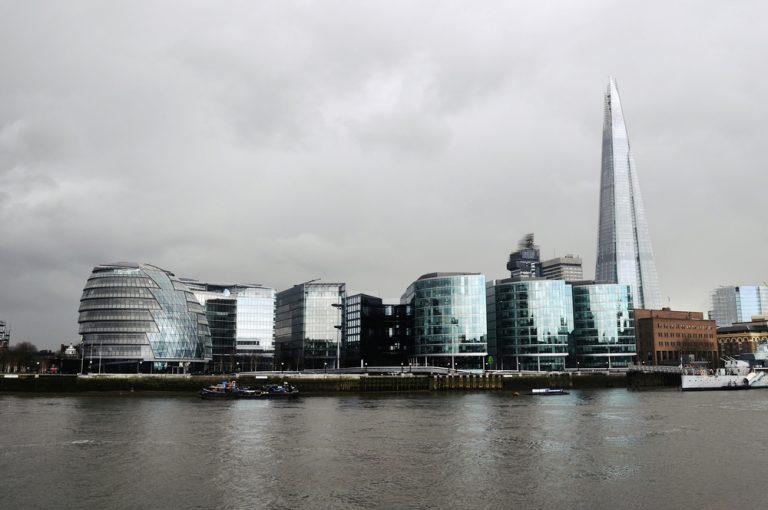
The FTSE 100 index (INDEXFTSE:UKX) has dipped 1.54% or 96.70 points on the back of Tuesday’s gloomy Summer 2020 Economic Forecast published by the European Commission (EC), projecting an 8.7% contraction of the economy across the year – significantly worse than the earlier 7.7% prediction from the EC’s Spring Forecast back in May.
Despite the “swift and comprehensive” response of EU member states to the coronavirus pandemic, the EC outlines that the impact of the crisis is going to hang over the European economy for a while longer than initially thought. The gradual lifting of lockdown measures at “a more gradual pace” than assumed by the Spring Forecast has stifled hopes of a quick recovery, and dragged down growth projections for 2021.
The European economy is expected to gain traction over the next quarter, however, with the loosening of lockdown restrictions and the long-awaited reopening of the retail and service sectors. Early data for May and June have already indicated that “the worst may have passed”, although the EC was quick to emphasise that the recovery remains “incomplete and uneven” across the EU member states.
Paolo Gentiloni, Commissioner for the EC’s ‘An Economy that Works for People’, commented on today’s figures:
“Coronavirus has now claimed the lives of more than half a million people worldwide, a number still rising by the day – in some parts of the world at an alarming rate. And this forecast shows the devastating economic effects of that pandemic. The policy response across Europe has helped to cushion the blow for our citizens, yet this remains a story of increasing divergence, inequality and insecurity. This is why it is so important to reach a swift agreement on the recovery plan proposed by the Commission – to inject both new confidence and new financing into our economies at this critical time”.
Virtually every European nation has felt the burden of the crisis, in what the EC has described as a “symmetric shock” to the economy across the continent. However – although united by shared suffering during the pandemic – the EU’s solidarity is set to be put to the test over the next few months as individual rebounds are expected to differ “markedly”. Countries quick to clamp down on the virus, such as Germany, are more likely to see a stable and sustained recovery, while hard-hit Italy and Spain face a much steeper uphill battle in the months ahead.
With this in mind, the EC’s projections are plagued by a hefty dose of uncertainty – the Summer Forecast itself contains a disclaimer that it “assumes that lockdown measures will continue to ease and there will not be a ‘second wave’ of infections”. The pandemic has by no means disappeared overnight simply because the economy has jolted back into action, and with local lockdowns already implemented in Leicester and the Australian city of Melbourne, we are being increasingly reminded that coronavirus is here to stay.
Along with the uncertainty surrounding the pandemic, the looming shadow of Brexit poses further complications for the EC’s projections. Since future relations between the UK and the EU remain unclear, the figures are based on “a purely technical assumption of status quo in terms of their trading relations”. The outcome of Brexit negotiations is likely to overhaul the standing relationship with the EU member states, and with the UK emerging from the coronavirus crisis with the highest death toll in Europe, the EC’s predictions are going to be at least a little bit off.
The FTSE has not taken well to the news, with the index down a disappointing 1.54% or 97.60 points to 6,189.24 at BST 15:53 07/07/20.
Is the Samsung 23% profit bounce a red herring?
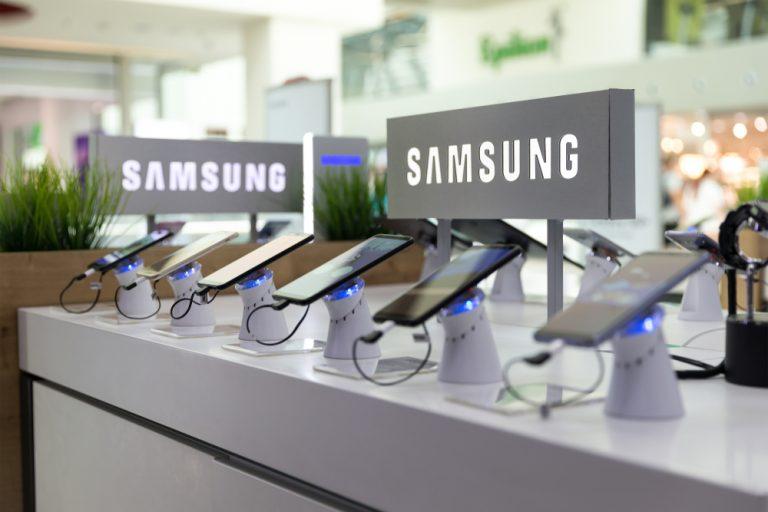
Technology giant Samsung Electronics (KRX:005930) posted an enticing 23% year-on-year operating profit bounce, in its projections for the three months of trading ended in June. However, the substance of the projections were soon broken down, and some grey clouds begin to form over Samsung’s outlook.
Firstly, while profits may have risen far ahead of analysts’ estimates, consolidated sales fell over 7% year-on-year to 52 trillion South Korean won.
Secondly, while Bernstein analyst, Mark Newman, said that in: “The last few days Samsung’s been doing quite well as more and more expectations were that the numbers were going to be pretty good,” he added that a ‘large reason’ for its quarterly successes was a one-off payment to its display business made by Apple (NASDAQ:AAPL).
Newman said that the payment was Apple “making up for […] not buying enough displays last year,” and that it was a “[…] a one-time benefit that doesn’t really help the fundamental story so much.”
Not an entirely rosy outlook
Looking ahead, though, the outlook may not be as optimistic as the previous quarter’s trading might suggest. According to CSLA Senior Analyst Sanjeev Rana, Samsung’s second quarter trading was “very strong” with smartphones, consumer electronics and memory unit performing well. He added that he imagined activity would remain strong through until September, with high memory-related earnings and an increasing pace of smartphone shipments during the second half, as well as its display unit benefiting from the upcoming iPhone 12. However, Rana then predicted that there would be some difficulty in its memory-focused unit going forwards. Speaking on the sale prices of memory chips, he said that, “In the second half, we are expecting some mild correction”. He added that there would also likely be some reduction in the demand for memory components during the second half. Should this come to fruition, this would prove costly for Samsung, as its main profit-making business is its memory component division, whose products are used in data centres and smartphones. Rana noted that any correction would last for two quarters at most, and a recovery could be expected by 2021. After a positive start, the true mixed nature of the earnings projection (with full figures set to be published on 30 July) saw Samsung shares dip 2.91% on the Korean Exchange, down to 53,400 Korean Won, equivalent to around £35.68 07/07/20 15:30 GMT+9. The company’s dividend yield currently stands at 1.29%.Whitbread looks to bounce back with reopenings and £1bn rights issue
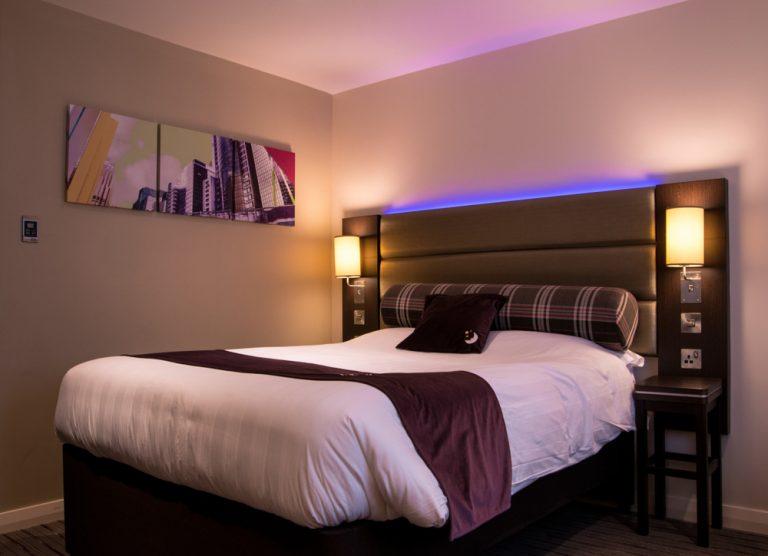
FTSE 100 listed hotel and restaurant franchise and operator of Premier Inn, Whitbread plc (LON:WTB), announced on Tuesday that it planned to bounce back in style, after the lockdown period which perhaps hit hospitality and hotel sectors the hardest.
The company said that it had already reopened 270 of its UK hotels and 24 of its restaurants, with the majority of its remaining outlets set to reopen during July. It added that all 19 of its hotels were now open in Germany, including the 13 that had been refurbished and rebranded as Premier Inn during the lockdown period.
The company added that it had successfully completed a £1 billion rights issue, which will provide the company with additional funds to weather the transition back to normality, and even expand its existing offerings.
On the rights issue, Chief Executive Alison Brittain stated that it will: “[…] enable us to maintain our competitive advantage and financial flexibility, as we have both strengthened our balance sheet and secured the business so it can withstand a long period of low revenues.” With these additional funds and ‘strong’ balance sheet, the company will, “take advantage of enhanced structural opportunities that we expect to become available in both the UK and Germany. This will mean that we are in a position of strength to continue to invest, increase market share, and over-time create significant value for shareholders”, Brittain stated.Premier Inn and the pandemic
The company saw quarterly like-for-like sales dip by over 79% year-on-year, which of course reflected the widespread closure of hotels, restaurants and bars across the UK and Germany since March. With that in mind, however, Whitbread operated 39 hotels for key workers throughout the crisis, and the company stated that these hotels were run in accordance with social distancing practices. This, the company stated, has positioned it well to abide by new social distancing and hygiene expectations once it returns operations to full scale. The company not only has the experience to execute these procedures during a return to normal life but its new ‘flexible’ booking scheme and ‘unique ownership model’ will also help in the enforcement of safe practices.Speaking on the reopening of Whitbread destinations, Alison Brittain stated:
“It is still very early days and therefore too early to draw any conclusions from our booking trajectory, especially as there has been volatility in hotel performance in other countries that relaxed controls before the UK. However, in traditional regional tourist destinations, we are seeing good demand for the summer months, whilst the rest of the regions and metropolitan areas, including London, remain subdued.”Despite a largely optimistic update, the company’s shares dipped 4.59% or 112.00p, to 2,328.00p per share 07/07/20 13:14 BST. This is below the company’s median target price of 2,800.00p per share. Also, it is 43% year-on-year, and far from its level of 4,786.00p towards the latter stages of February.
Whitbread’s p/e ratio is currently 14.64, its dividend yield stands at 1.20%.H&M share price slips amid plans to axe 170 stores
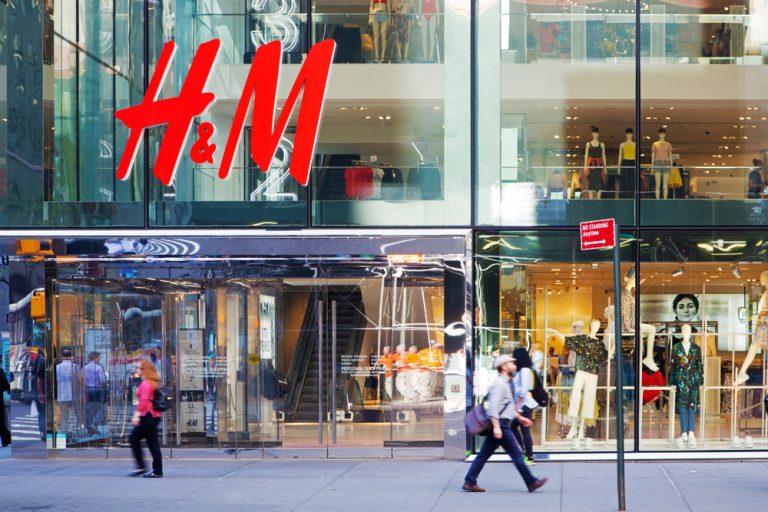
Swedish fashion tycoon Hennes & Mauritz AB (STO:HM-B) – popularly known as H&M – has announced its plans to permanently close 170 stores across Europe, knocking its share price down 1.40%.
The move is said to be a response to plummeting sales during the coronavirus crisis, which caused the retail sector to grind to a halt in March when governments worldwide implemented strict lockdown measures to contain the spread of the virus. H&M recorded an eye-watering 50% fall in sales during the peak of the crisis.
As well as shutting 170 sites across Europe, the closures are expected to put thousands of jobs at risk, adding to the record levels of UK unemployment. Last month, Chancellor Rishi Sunak warned of “tragic projections” for the jobs market in the months ahead as the government’s furlough scheme begins to wrap up by October.
It is not yet clear how many of H&M’s 300 UK stores will be affected by the brand’s decision, but the move follows the chain’s ongoing pledge to focus more on its online potential. The company already offers online shopping to 33 countries around the world. However, the widespread “stay at home” initiative during the pandemic caused a record surge in online sales, and H&M joins a long list of chains keen to capitalise on the shift towards remote shopping.
Since non-essential stores were given the go-ahead to reopen in England last month, hundreds of H&M sites have opened their doors to customers once again for the first time since March. High street footfall is still much lower than expected for this time of year however – down 53.4% on July 2019 – and the retail sector faces a steep uphill battle before it can recover to pre-crisis levels.
H&M chief executive Helena Helmersson remained optimistic despite the store closures, citing the brand’s resilience in the face of the pandemic and its historic commitment to online and sustainable fashion:
“I am full of admiration for our employees’ commitment, drive and perseverance during this very challenging time. As we have reopened our stores, sales have begun to recover at a faster rate than expected.
“Before the pandemic hit, we performed strongly – a result of many years of long-term investments to create the best offering for our customers and to meet the digital shift in the industry. This, combined with the fact that we have acted quickly to counter the negative effects of Covid-19 and that we are speeding up the transformation of the H&M Group, makes me convinced that we will come out of the current crisis stronger.
“To meet the rapid changes in customer behaviour caused by Covid-19 we are accelerating our digital development, optimising the store portfolio and further integrating the channels. With our ambitious sustainability work we want to continue to lead fashion retail towards a more sustainable future”.
Investor insight
H&M’s share price slipped 1.40% on the company’s news, down to SEK 140.55 at CEST 13:57 07/07/20, still decidedly better than the 24% free-fall on last year’s figures recorded in June. The chain’s dividend yield sits firmly at 6.94% and its P/E ratio at 46.45.JD Sports saw yearly revenues spike 30% before lockdown
Sports and fashion brand JD Sports (LON:JD) booked robust financial performance for the full-year ended February 1 2020, with Coronavirus lockdown since ‘constraining’ the company’s progress.
In its full-year results, though, the company were pleased to book a 30% year-on-year revenue bounce, up from £4.7 billion to £6.1 billion, while like-for-like sales in Sports Fashion were up by 12%.
This progress translated into similar success across its balance sheet, with the Group’s earnings (EBITDA) up 28%, from £488.4 million, to £623.6 million, while reported profit before tax increased by 3% to £348.5 million.
The company also lauded the development of its JD Sports brand, with 52 new stores opening across mainland Europe, 18 across the Asia-Pacific territories and 11 new outlets across the US, including a new flagship store in Times Square.
Speaking on the results, company Executive Chairman Peter Cowgill stated: “We were encouraged by the continued positive trading in the early weeks of the year prior to the emergence of COVID-19 and we firmly believe that we are well placed to regain our previous momentum. Looking longer term, there is inevitably considerable uncertainty as to what the effect of COVID-19 will be on consumer behaviour and footfall with future store investments highly dependent on rental realism and lease flexibility. Ultimately, however, we remain confident that we have a market leading multi-channel proposition which has the necessary flexibility and agility to prosper within a retail environment that may see profound and permanent structural change.” On the pandemic and what it might mean for the company going forwards, he added that: “Whilst COVID-19 has constrained our short term progress, it is important that we do not lose sight of the core retail standards and commercial disciplines which have underpinned our longer term growth to date. JD has a market leading multi-channel proposition which maximises its consumer relevance and reach by creating, and then maintaining, a deep emotional connection with its consumers who see JD as an authoritative and trustworthy source of style and fashion inspiration with influences drawn from both sport and music.” Following the news, and after dipping initially, JD Sports shares rallied 0.62% or 4.20p, to 678.80p per share 07/07/20 12:30 BST. This price is up over 8% year-on-year, with the consensus target price sitting at 730.00p per share. The company’s p/e ratio currently stands at 23.72, while its dividend yield sits at a modest 0.04%.