Can the car industry survive Brexit?

The car industry was dealt another blow on Thursday after it was announced that Ford is set to close its Bridgend plant in 2020. Ford is just one of many car manufacturers to close it doors, amid falling sales and Brexit-related uncertainty. The American automaker employs 1,700 people in the UK. In February, Honda announced it was shutting down its Swindon plant in 2021. Similarly, Nissan announced it was reversing plans to manufacturer its new X-trail vehicle in Sunderland. And in May, one of the UK’s largest car manufacturers, Jaguar Land Rover, reported a record £3.6 billion loss. Overall, UK manufacturing figures in the last few years have proved disappointing, with production slumping 45% in April, compared to a year ago. Slightly less than 71,000 cars were produced in April, according to the Society of Motor Manufacturers and Traders (SMMT) figures. The SMMT indeed slighted the shifting Brexit deadline and resulting uncertainty as a key problem for car makers, as they struggle to make effective contingency plans. However, the troubles of the car industry are not exclusive to the UK, suggesting perhaps it is not just Brexit to blame. The global car industry is suffering from a host of issues including falling demand for diesel as well as the economic slowdown in China, the world’s largest car market. Earlier this month Fiat Chrysler proposed a €33 billion merger with French car giant Renault, in a bid to secure its dominance amid a general decline in the industry. Nevertheless, the deal collapsed, after the French government, which is Renault’s biggest shareholder, requesting a postponement of a vote on the merger. Amid falling sales globally, car manufacturers are looking to offset a decline in demand by investing in electric vehicles. If the Fiat Chrysler Renault merger had gone ahead, it would have seen the creation of the world’s third largest car manufacturer. The merger was proposed as a means of saving costs through research sharing and collaborating on developing autonomous vehicles. If global automakers are to withstand these unrelenting industry headwinds, manufacturers will have to continue to fight to stay ahead of the curve regarding car electrification, meaning consolidation may be the only way to survive. However, if the failed Fiat Chrysler Renault merger is anything to go by, it’s easier said than done.

California’s Top Five Investment Wines

3
California might be relatively new to the fine wine investment scene, but the Golden State is quickly making up for a late start with some seriously impressive wines. Last year the London International Vintners Exchange, or Liv-ex as it is better known, gave a clear indication of the growing importance of Californian wines when it created a dedicated California sub-index. The California 50 tracks the performance of the previous 10 vintages of the five most-traded Californian wines on the Liv-ex platform. Over the course of 2018 the newly-introduced Liv-Ex California has performed well, closing up 21% which put it well ahead of the Bordeaux Legends 50 and Bordeaux 500 indices which rose just 8.3% and 0.62% respectively. Most serious investors and collectors now have little doubt that California’s top fine wines represent an excellent investment opportunity. Here are California’s most exciting investment-grade wines which ought to be on every investor’s radar. 1. Opus One It’s no exaggeration to describe Opus One as one of the world’s most sought-after wines. This iconic wine was born of a meeting between Californian wine guru Robert Mondavi and Baron Philippe de Rothschild, the owner of the iconic Chateau Mouton Rothschild, in Hawaii in the 1970s. Their collaboration brought together the very best of Old World and New World winemaking to create an exquisite Bordeaux-style blend which has set a new standard for California’s youthful wine industry. Easily one of the most well-known New World fine wines, Opus One has become the darling of the Californian fine wine scene with average bottle prices almost tripling from £100 in 2007 to £285 in 2018. 2. Screaming Eagle Screaming Eagle is another of California’s cult investment wines, but its creation story couldn’t be more different from the noble Opus One. Winemaker Jean Philips had sold her grapes to other Napa Valley winemakers before she finally decided to make her own wine in a plastic trash can in 1992. Today the wine has attained legendary status thanks to rave wine critic reviews and only 500 cases of this stunning wine are produced every year, making it hot property amongst serious wine investors. This scarcity and the eternal popularity of the Screaming Eagle brand mean that bottles regularly sell for thousands of dollars and represent an extremely robust investment opportunity. 3. Verite The Vérité estate is based in Sonoma and produces three exquisite wines that each have their place in a wine lover’s heart and cellar. Named La Muse, La Desir and La Joie, these three wines are perennial favourites with wine critics and since 1998 seven have received 100 Parker point ratings. Designed to age and mature beautifully, the wines have enjoyed immense popularity amongst investors and the estate’s La Muse has even been nicknamed the “Petrus of California” thanks to the elegant use of Bordeaux varietals and Sonoma’s cool climate sloping vineyards. 4. Cardinale This sensational winery only creates one wine each vintage which is crafted predominantly from Cabernet Sauvignon along with other Bordeaux varietals. The proprietor of Kendall-Jackson Winery, Jess Jackson, made the first vintage of this wine in 1983 and since then it has developed a reputation as one of the most representative fine wines of California with fruit sourced from prime vineyards in both Sonoma and Napa. described by Robert Parker as “one of the flagship wines of the brilliant California visionary and vineyard owner Jess Jackson”, this inspired bottling is truly one to watch for serious wine investors. 5. Lakoya Last but not least is another Kendall-Jackson project, the sensational Lakoya wines which are single vineyard 100% Cabernet Sauvignon bottlings from some of California’s finest sites in Mount Veeder, Howell Mountain, Diamond Mountain District, and the Spring Mountain District. The stunning terroir in each of these sites offers the ideal cool climate and harsh growing conditions to create stunning wines which have excellent ageing potential. Currently not as well-known as some of the bigger names on this list, these wines offer an incredible investment opportunity and are expected to repay investor loyalty handsomely in years to come.

Biffa rallies after posting full-year profit

Waste management firm Biffa PLC (LON: BIFF) rallied on the posting of the company’s latest results, which showed that the company had posted a profit for the full-year. The Company announced that their industrial and commercial division had delivered a ‘very strong’ year of organic and acquisition growth alongside further reduction in customer churn, which led the company’s growth in underlying profit. The firm’s underlying organic revenue growth increased 3.2% in its industrial and commercial sector, which was brought about by new customer wins of Busy Bees, Kingspan Group and National Trust. For the year ending March 29th, Biffa’s underlying pre-tax profits jumped 7.4% to £74 million, while revenue rose 4.4% to £1.03 billion. However, on a statutory basis the Company’s pre-tax profits fell to £21.5 million from £38.3 million. This was caused by costs and expenditure weighing down performance, in areas related to acquisitions, amortisation and changes in landfill provisions totalling £42.5 million.

Biffa comments

“Our I&C Division performed particularly well. We’ve had another very strong year of organic and acquisition growth coupled with a further reduction in customer churn. When we combine this with our unrelenting focus on driving operational performance improvement, this feeds through to improved underlying I&C margins,” said Biffa Chief Executive, Michael Topham. “I&C completed seven acquisitions spread across a wide area of the country, demonstrating the strength of our platform into which we can consolidate acquisitions. We have now completed 17 acquisitions since our IPO in October 2016. The pipeline of potential targets remains strong, and we expect to make further acquisitions in the coming year.” “Our strategic priorities are clear – growing our I&C collections business and investing in recycling and energy from waste assets – and in view of this I have decided to reorganise the Group into two divisions – Collections and Resources & Energy. This will provide a more efficient, focused structure and position us for growth in the areas where we have advantaged positions.”

Trading update

Following the announcement, the Company’s shares have rallied 2p or 0.88% to 228p per share on Thursday morning 06/06/19 12:02 GMT. Analysts from Numis and Peel Hunt reached a consensus in their respective ‘Buy’ ratings on Biffa stock.  

Highlands Natural Resources raises £525K to develop cannabis business

2
Highlands Natural Resources announced it has raised £525,000 to further develop its cannabis venture, Zoetic. The company said that members of the Schrader family have subscribed for 1,000,000 new ordinary shares, priced at 10 pence each. The Schrader family own Schrader Oil Co., which is the operator of the convenience stores that will soon stock Zoetic’s retail cannabidiol products. In addition, Highlands Natural Resources also revealed the exercise of 5,000,000 warrants in the Company, which have been placed by Turner Pope Investments. The warrants are set to expire later this month on June 30. The total proceeds of the two transactions totals £525,000, and will be used to boost Zoetic business, a new venture that the company announced earlier this year. The firm confirmed that an application is set to be made for an additional 6,000,000 ordinary shares to be admitted to the London Stock Exchange. Admission is expected to go ahead on the 12 June 2019. Highlands Natural Resources is listed on the junior AIM market of the London Stock Exchange. It specialises in oil and gas technology. The firm has projects across the U.S states including Colorado, Kansas and Montana. Shares in Highlands Natural Resources (LON:HNR) are currently down -3.15% as of 11:21AM (GMT).

Kefi Minerals dips on announcement of annual loss

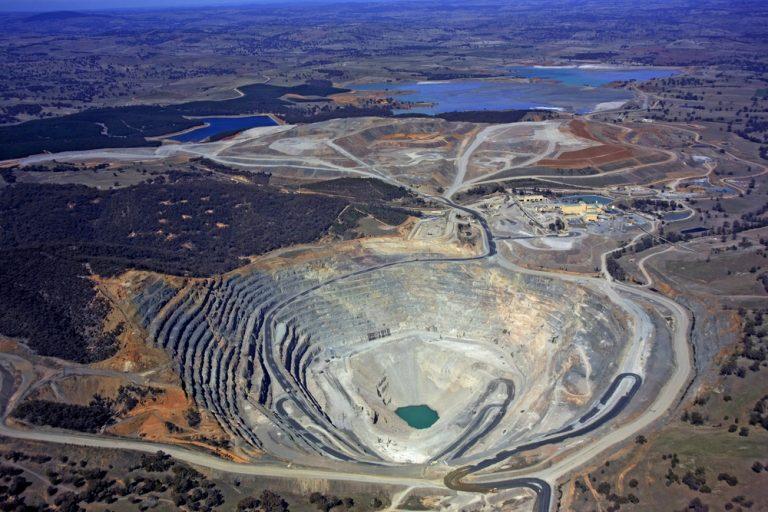
Cyprus-based copper ore mining company Kefi Minerals plc (LON: KEFI) saw its shares dip following its announcement on Wednesday morning that it had booked a loss for the full-year. The company, whose subsidiaries include KEFI Minerals Limited and Mediterranean Minerals Eood, attributed the loss to delays to its Tulu Kapi flagship project in Ethiopia, which it had attempted to make progress on. The last update on the project was posted back in March on the Company’s social media: https://platform.twitter.com/widgets.js The latest round of figures, however, state that losses for the full year through December 2018 came to £5 million, which narrowed from £6.3 million on-year.

Kefi Minerals’ statement

Attached to this latest update, the Company’s chairman, Harry Anagnostaras-Adams, stated.
“2018 was a year of two halves for Kefi,”
“Whilst the first half was orientated around consolidation as Ethiopia exited its states of emergency, the second half was one of significant development and progress as the company formalised its strategic partnerships with the government of Ethiopia and Ethiopian investors at the asset level of its flagship Tulu Kapi project.” “Accordingly, Kefi now finds itself in the enviable position that, subject to receiving a confirmatory letter from the Ethiopian central bank as regards already-agreed project finance terms, we will have received all regulatory consents and financial commitments to trigger the development program at Tulu Kapi with our project contractors Lycopodium and Ausdrill.” “This may have taken longer than we had hoped, but the management team of Kefi remain resolute in their belief that, despite the historic delays, our Tulu Kapi project continues to be a very attractive near term production project, with significant additional upside.”

Trading update

Following the announcement, the Company’s shares dipped from 1.6p to 1/37p per share. However, by the end of trading on Wednesday this stabilised to a drop of 3.06% or 0.045p, down to 1.47p per share as markets closed on Wednesday. So far on Thursday, the Company’s shares are up 4.02% to 1.48p per share 06/06/19 10:06 GMT. Cantor Fitzgerald analysts have ‘Reiterated’ their ‘Buy’ stance on Kefi stock.

Entertainment One president will not be leaving, shares rise

2
The Canadian multinational mass media and entertainment company, Entertainment One, has denied the departure of president and chief content officer of film, television and digital, Mark Gordon. Shares in the company were just over 15% higher during early trading On Thursday morning. Entertainment One is a global independent studio that specialises in the development, acquisition, production, financing, distribution and sales of entertainment content. Its expertise spreads across film, television and music production and sales. The company released a statement in response to recent press speculation, confirming that Mark Gordon will continue to be part of the company both now an into the future. News was published on Wednesday that Mark Gordon was supposedly in talks to leave his position at Entertainment One as president and chief content officer of film, television and digital as a result of a conflict. According to the press, a source close to the situation claimed that “they were unhappy together” and the company was supposedly driving Mark Gordon out of his role after it apparently emerged that he was not fit for the task of managing the organization. The was news was confirmed to be false on Thursday by the company in a statement. Entertainment One has produced several world-famous shows such as one of the top performing children’s show, Peppa Pig. Peppa Pig has been translated into over 40 languages and broadcasted in over 180 territories, winning 3 BAFTA Awards. Despite its popularity, Peppa Pig was recently named one of the worst cartoon characters for promoting unhealthy food aimed at children, according to the Telegraph. News last year emerged that the entertainment company faced shareholder revolt over the pay of its CEO. As of 10:39 BST Thursday, shares in Entertainment One Ltd (LON:ETO) were trading at +15.31%.

Joules full-year revenue up 17%

0
Joules published a trading update on the 52-week period until 26 May, sending shares up during Thursday morning trading. The retailer said that group revenue rose 17.2% to £218 million during the course of the year. Specifically, the company said that wholesale revenue, which was up by 2.9%, was boosted by strong growth in international markets such as the US and Germany, as well as the UK. Meanwhile, retail was up 22.7%, with online performing particularly strongly. Joules said that online sales now accounts for half of its group retail revenue. This was despite the context of a challenging trading environment for retail, with many high street brands struggling to grow profits. As a result, the board said it now expects underlying profit before tax to be at the top end range of previous guidance. Colin Porter, the company’s chief Executive, commented on the results: “As Joules celebrates its 30(th) anniversary, this strong performance, particularly in our international markets and across our E-commerce and Licensing channels, reflects the strength of our distinctive brand as well as the appeal of our products across an ever-increasing range of lifestyle categories. The Group’s flexible and integrated ‘total retail’ model is well suited to meet rapidly evolving consumer shopping behaviours. Supported by this strong momentum and our outstanding brand, growing customer base and skilled colleagues across the world, we continue to look forward with confidence despite well-documented sector headwinds.” Shares in Joules (LON:JOUL) are currently trading up +5.82% as of 10:30AM (GMT).

Aviva to cut 1,800 jobs in attempt to reduce costs

2
Aviva announced on Thursday that it was set to cut roughly 1,800 jobs across the group over the next three years. Out of the 30,000 staff that the company currently employs, 1,800 jobs will be slashed in an attempt to reduce costs. The insurance company said that it intends to reduce expenses by £300 million per annum by 2022. Cost savings will be achieved through lower central costs, savings in contractor and consultant spend, reduction in project expenditure and other efficiencies, Aviva announced in a statement. The company, who warned of the impacts Brexit could have on its business earlier this year, insists that it will keep redundancies to a minimum where possible, such as through natural turnover. “Today is the first step in our plan to make Aviva simpler, more competitive and more commercial. We have strong foundations: excellent distribution, world class insurance expertise, and our balance sheet is robust,” Maurice Tulloch, Chief Executive Officer, commented on the announcement. “But there are also clear opportunities to improve. Reducing Aviva’s costs is essential to remain competitive and this means tough decisions and job losses which I do not take lightly. We will do all we can to minimise redundancies and support our people through this.,” the Chief Executive Officer continued. Aviva’s ex-Chief Executive Mark Wilson left Britain’s biggest insurance company just last year after joining the group in 2013. The company also added that its year-to-date trading remains broadly consistent with that of the year prior. Its weaker performance in savings and asset management arising from lower investment markets have been partly offset by growth in its international markets. Aviva provides life insurance, general insurance, health insurance and asset management to 33 million customers. It is the leading insurer in the UK as it serves on in every four households. The company is listed on the London Stock Exchange and it also a member of the FTSE 100 index. As of 16:00 GMT -4 Wednesday, shares in Aviva plc/adr (OTCMKTS:AVVIY) were trading at -1.77%.

Sir Philip Green’s Arcadia hangs in the balance as landlords vote on restructuring

0
Sir Philip Green’s Arcadia empire has been thrown into doubt today, as it awaits a vote on a proposed restructuring deal. The retail group was dealt a blow after sources revealed that Intu, the owner of various shopping centres, would oppose the plan. Intu is expected to vote against a proposed company voluntary arrangement (CVA) at a meeting with creditors later today. The CVA would see landlords such as Intu (LON:INTU) agreeing to lower rents and store closures. However, it has been reported that other landlords are likely to support the arrangement. If creditors do not agree to the restructuring, Green’s Arcadia group could enter administration as early as this evening. So far, Sir Green has agreed to pay another £25 million into the group’s pension fund in a bid to ensure this would secure the backing of regulators. The figure is half the £50 million initially proposed. The Pensions Regulator commented on the additional funding: “We recognise that the best support for any pension scheme is a trading employer and we feel the CVA [company voluntary arrangement] proposals now provide the right balance between security for the pension schemes and the chance of sustainability for the company.” Arcadia owns the Topshop and Topman brands, as well as Miss Selfridge, Wallis, Evans, Burtons and Dorothy Perkins. As a result, chairman Philip Green has often been dubbed ‘the King of the High Street’. Nevertheless, the businessman’s crown has lost its shine in recent years, amid a series of controversies such as the handling of the demise of the BHS chain    

Card Factory quarterly sales rise 6.4%

1
Card Factory reported a rise in sales for the first quarter of 2019, despite a challenging trading environment for UK retailers. According to the trading update, the first quarter saw total Group sales growth of 6.4%. Like-for-like sales were up 2.3% during the quarter, boosted by the opening of 14 net new stores. Card Factory also said that there was strong cash generation across the period, and expectations for the year remain unchanged.

Karen Hubbard, Card Factory’s Chief Executive Officer, commented on the quarter:

“We have had a positive start to the year with like-for-like sales growth despite challenging consumer sentiment and negative footfall on the High Street. We have seen a good customer reaction to our seasonal card ranges over the quarter, with yet again record card sales in volumes and value for both Valentine’s Day and Mother’s Day. We continue to improve the range and quality of card and non-card options. Our store opening programme remains on track and we are pleased with the performance of recent openings.

“Overall, Card Factory remains in a strong position, continuing to grow market share, with lessening cost headwinds and a platform for medium term growth.”

The results prove encouraging against a backdrop of a record number of retailers closing their doors. Just today, it was reported that Sir Philip Green’s Arcadia empire is hanging in the balance, as it looks to get lenders to agree to a rescue deal.

Card Factory was founded by Dean Hoyle and his wife, Janet back in 1997. It is listed not the London Stock Exchange and is a constituent of the FTSE 250 Index.

Shares in the company (LON:CARD) are up +0.62% as of 12:58PM (GMT).