
Greene King’s profits grow 3%, shares rise
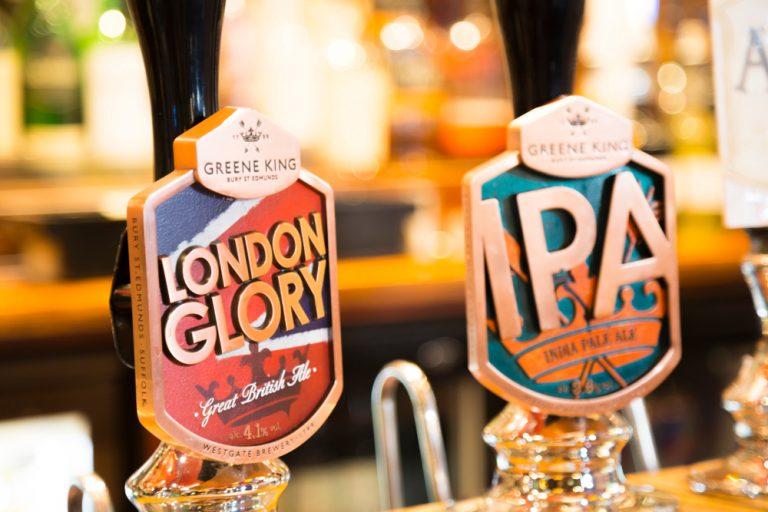
Greene King has announced on Thursday its interim results for the 24 weeks to 14 October 2018. The pub group has revealed that Christmas bookings are well ahead of last year and it is performing well in line with expectations. Shares in the company (LON:GNK) edged up just over 4% as a result of the news.
During the period, pre-tax profit increased 3.2% to £127.7 million, with group revenue totalling £1.1 billion. Group revenue is 1.9% higher than it was during the same period a year earlier.
The Pub Company’s like-for-like sales were up 2.7% which is ahead of the market up 1.1%. This strong performance was driven by the ongoing benefits of Greene King’s investment value and the UK’s hot summer and World Cup success.
Mortgage approvals hit 9-month high

New data from the Bank of England has shown mortgage approvals in the UK to jump to a nine-year high last month.
In October, the number of mortgages approved increased to 67,086. In the same month, consumer borrowing fell to 7.5% – the slowest level since March 2015.
EY Item Club analyst Howard Archer said: “Mortgage approvals for house purchases have essentially been locked in a 63,000-68,000 range for the past two years.”
“Consequently, October’s rise does not materially change our perception that the housing market is still finding life tough in the face of still limited consumer purchasing power, fragile consumer confidence and wariness over higher interest rates.”
In the most recent month, households borrowed an extra £4.1 billion against thier homes.
Jeremy Leaf, the Former Royal Institute of Chartered Surveyor (RICS) residential chairman and estate agent, said: “Surprisingly perhaps, we have seen a pick up in enquiries over the past few weeks and sense that there is a feeling among buyers and sellers that they are fed up with sitting on the sidelines and not prepared to put off their moving decisions for much longer.”
Earlier this week, UK Investor Magazine reported on the signs of recovery in the Aberdeen housing market, where house prices have increased for the first time in two years.
“The upturn in Aberdeen is great news after a prolonged difficult period, and is hopefully an indicator that we are beginning to see the northeast emerge from one of its most testing downturns,” said Jacqueline Law, the managing partner at Aberdein Considine.
The Bank of England also reported the consequences of a no-deal Brexit scenario on Thursday. Read more here.
Daily Mail shares slide as group reveals fall in profit
The Daily Mail and General Trust (DMGT) has reported a 16% slide in pre-tax profits.
The newspaper group revealed that for the first time, advertising revenue from online advertising had surpassed print advertising.
For the 12 months to the end of September, revenue fell 5% whilst pre-tax profit sumped 16% to £182 million.
Revenue for the Mail Online grew 5% to to £122 million.
Chief executive Paul Zwillenberg said: “DMGT’s performance during the year was in line with our expectations despite some challenging trading conditions.”
“Our B2B businesses delivered broad-based underlying growth and consumer media continued to outperform its markets. MailOnline continues to perform well and has reached an important milestone with digital advertising revenue now exceeding the Mail’s print advertising revenues.”
He added: “The Daily Mail is an incredible franchise, it outperforms the market year in and year out,” he said. “It did so under the editorship of Mr Dacre and it continues to do so under Mr Greig.”
Citi analysts said: “The outlook, in particular for consumer media, where growth is expected to be down and margins contract, will put pressure on consensus EPS (earnings per share).”
Shares in the group (LON: DMGT) are trading down to a ten year low. Shares are -9.41% at 626,00 (1106GMT).
The group said on the future in 2019: “Digital advertising revenues are expected to grow, helping to offset anticipated print advertising declines, with advertising market conditions likely to remain volatile.”
Frankfurt to gain €800m as banks leave London

As London banks prepare to move operations before Brexit, lobby group Frankfurt Main Finance has revealed that the UK could lose up to €800 billion (£700 billion) in assets to Frankfurt.
Whilst a number of banks are moving operations to cities including Paris and Dublin, Frankfurt Main Finance confirmed that the German city would be the new home to the headquarters of 30 banks and financial firms.
The managing director, Hubertus Vaeth, said in a statement that most relocations will occur in the first quarter of 2019 with many to follow.
“All in all, we expect a transfer of €750 billion to €800 billion in assets from London to Frankfurt, the majority of which will be transferred in the first quarter of 2019,” he said.
“Banks are faced with the choice of either relocating only what is absolutely necessary or preparing for the relocation of the entire business.”
“In any case, it is clear that considerable second-round effects will follow,” he added
The managing director as said that an estimated 10,000 over 10 years will be created in Frankfurt due to Brexit. This is a contrast to the City of London, which is expected to lose 5,000 jobs before the UK leaves the EU in March.
Among the banks moving to Germany are Standard Chartered (LON: STAN), Credit Suisse (NASDAQ: TVIX), Citigroup (NYSE: C) and Lloyds (LON: LLOY).
In other Brexit-related news, this morning the latest Bank of England analysis warned that a no-deal scenario could lead to a recession worse than the 2008 financial crisis.
The news came after Philip Hammond’s Brexit analysis, where the Chancellor admitted that the UK would be worse off in all Brexit scenarios
CMA announces investigation into funeral sector, Dignity shares slide

The Competition and Markets Authority could launch an investigation into the UK funeral market.
Following a study starting six months ago, the watchdog said that it has “serious concerns” with the sector over the high price hikes.
Over the past ten years, prices have increased by as much as 66% and “problems with the market that have led to above-inflation price rises for well over a decade”.
The CMA said: “The scale of these price rises does not currently appear to be justified by cost increases or quality improvements.”
Whilst customers are able to save a significant amount of money if they shop around, the CMA was aware that “people organising a funeral are usually distressed and often not in a position to do this – making it easier for some funeral directors to charge higher prices. Prices are also often not available online, making it difficult to compare options.”
Ian Strang, the founder of funeral comparison site Beyond, has said that the investigation cannot come soon as funeral prices have allowed to go unchecked.
The cost of organising a funeral has increased to between £3,000 – £5,000.
Andrea Coscelli, chief executive of the CMA, said:” People mourning the loss of a loved one are extremely vulnerable and at risk of being exploited.”
“We need to make sure that they are protected at such an emotional time, and we’re very concerned about the substantial increases in funeral prices over the past decade.”
“We now feel that the full powers of a market investigation are required to address the issues we have found. We also want to hear from people who have experienced poor practices in the sector, so that we can take any action needed to fix these problems.”
The biggest providers in the market are currently Dignity (LON: DTY) and Co-op funerals.
Shares in Dignity have tumbled 15.74% on news of the CMA investigation (0943GMT).
Dignity chief executive, Mike McCollum, said: “We look forward to our continued work with the CMA and other industry bodies to ensure we take the necessary steps to protect consumers and improve quality and standards across the industry.”
Unilever announces departure of CEO
Unilever has announced the departure of CEO Paul Polman. He will be replaced by Alan Jope, leader of the company’s Beauty & Personal Care division.
Paul Polman has been with the company for over 10 years, working in the consumer goods industry for almost four decades. Whilst in the position of CEO, the company was able to deliver consistent top and bottom line growth ahead of its markets. Moreover, the company was able to give strong returns for its shareholders. Indeed, over the period, there was a Total Shareholder Return of 290%.
Unilever is one of the biggest firms on the FTSE 100.
Paul Polman will be replaced by Jope, who led the company’s largest division since 2014. Moreover, he has been on the company’s Leadership Executive since 2011. Chairman Marijn Dekkers, commented: “Paul is an exceptional business leader who has transformed Unilever, making it one of the best-performing companies in its sector, and one of the most admired businesses in the world. His role in helping to define a new era of responsible capitalism, embodied in the Unilever Sustainable Living Plan, marks him out as one of the most far-sighted business leaders of his generation.” “Paul’s vision, drive and performance focus, combined with his commitment to serving the best long-term interests of the company, have materially strengthened Unilever. He leaves a more agile and resilient company, well placed to win in this fast-changing, dynamic industry. I’d like to thank him personally, and on behalf of the Board, for his contribution to Unilever.” “After a rigorous and wide-ranging selection process, the Board is delighted to appoint Alan to the role. Having worked for Unilever in a variety of senior management roles, Alan has a deep understanding and experience of our business, the industry, and the markets in which we operate. He is a strong, dynamic and values-driven leader with an impressive track record of delivering consistent high-quality performance. The Board warmly welcomes Alan to the role and wishes him every success.” In October, we reported that Unilever had scrapped plans for a Rotterdam HQ. This was as a result of shareholder backlash over the announcement of a potential HQ move. The revolt of its influential investors put the jobs of Unilever’s bosses at risk. At 08:59 GMT today, shares in Unilever (LON:ULVR) were trading at +0.68%.Rio Tinto develops most “technologically advanced” mine yet

Rio Tinto announced on Thursday that it will develop its most technologically advanced mine yet. Indeed, the company has approved a $2.6 billion investment in the Koodaideri mine in Western Australia.
Construction is set to begin next year, with first production expected in 2021. Once complete, the iron ore mine will have an annual capacity of 43 million tonnes.
The mine is expected to underpin Rio Tinto’s production of the Pilbara Blend, its primary iron ore product.
The new production hub will incorporate a processing plant and infrastructure including a 166-kilometer rail line connecting the mine to the rest of the network. Rio Tinto’s chief executive J-S Jacques commented on the announcement: “Koodaideri is a game-changer for Rio Tinto. It will be the most technologically advanced mine we have ever built and sets a new benchmark for the industry in terms of the adoption of automation and the use of data to enhance safety and productivity.” “As we pursue our value over volume approach, targeted high quality investments such as Koodaideri will ensure we continue to deliver value for our shareholders and Australians.” “This further investment in our iron ore business is also a multi-billion dollar vote of confidence in Western Australia. The project will also deliver significant opportunities for local companies and we expect more than A$3 billion will be spent with Australian-based businesses, with opportunities for about A$2.5 billion of spending for Western Australian-based businesses during its development.” The new iron ore mine is expected to deliver an internal rate of return of 20% and capital intensity of roughly $60 per tonne of annual capacity. In addition to the new mine infrastructure, Rio Tinto has announced the construction of an airport, mine support facilities and employee accommodation. This is to accommodate the employees working onsite of the construction and once the mine is operational. The company expected to employ over 2,000 people with 600 permanent roles created once the mine begins to operate. At the end of September, Rio Tinto announced a new share buy-back programme. Equally, earlier in July, we reported that the company was ahead of targets for iron ore exports. At 08:41 GMT today, shares in Rio Tinto plc (LON:RIO) were trading at +1.44%.Bank of England: no-deal Brexit could lead to recession
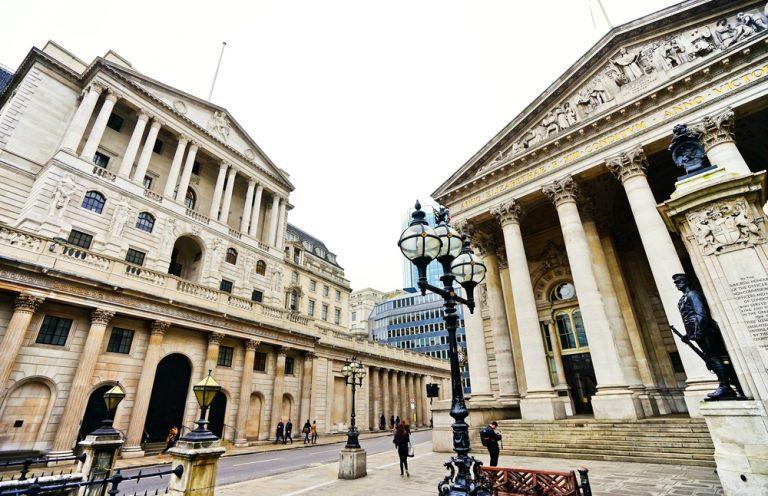
The Bank of England has warned that leaving the EU in a no-deal scenario could lead to a recession worse than the 2008 financial crisis.
In the bank’s Brexit analysis, it has found that a disorderly departure from the EU would send the pound plunging by a quarter and immediately shrink the economy by 8%.
The latest figures are not what the Bank of England necessarily expects but is the worst-case scenario if the UK crashes out without a deal.
The news comes after Philip Hammond’s Brexit analysis, where the Chancellor admitted that the UK would be worse off in all Brexit scenarios, however, Theresa May’s option is the best bet.
Following a no-deal Brexit, house prices are expected to crash 30%, inflation could rise to 6.5% and unemployment in the UK could increase from 4.1% to about 7.5%.
The bank has come under fire for creating hysteria but Carney insists that there is a difference between a forecast and scenario.
Bank of England governor Mark Carney said: “These are scenarios not forecasts. They illustrate what could happen not necessarily what is most likely to happen.”
“Taken together the scenarios highlight that the impact of Brexit will depend on the direction, magnitude and speed of the effect of reduced openness of the UK economy.”
The latest analysis has also been seen as a final attempt to scare MPs voting in support of the prime minister’s Brexit deal. May will no doubt welcome Carney’s worst-case scenario to garner support for her deal.
Andrew Sentance, who is a former BoE interest rate setter, challenged the bank over the analysis.
“Does anyone really believe any of this as a real-world scenario? The Bank of England is undermining its credibility and independence by giving such prominence to these extreme scenarios and forecasts,” he said.
As well as a disorderly departure from the EU, the bank also considered a “close” relationship between the UK and EU, and scenario of a “less close” relationship.
UK Banks
The Bank of England also conducted stress tests on 7 major UK lending institutions. The banks were put through a series of scenarios that were 2.5 times worse than the BoE’s most negative Brexit outcome. All banks passed including RBS, Barclays (LON: BARC) and HSBC (LON: HSBA).
Marc Kimsey, Equity Trader at Frederick & Oliver, said on the latest Brexit analysis: “The takeaway is somewhat bitter-sweet. The banking sector’s efforts to get Brexit-fit are admirable but the thought of it being tested so rigorously 10 years on from the last disaster draws a wince.”
FTSE 100 hangs in the red following Brexit analysis

The FTSE 100 has been largely in the red today, currently trading -10.87 points (1615GMT) .
Post-Brexit economy
Stocks opened up 0.29% to 7,037.2 in opening trade but the UK blue-chips fell in afternoon trade after government analysis found that that UK economy would be worse off in every Brexit scenario. Phillip Hammond revealed today that Theresa May’s suggested deal, which was supported by EU leaders over the weekend, will leave the UK economy “slightly smaller”. The Chancellor went on to say that the proposed deal was the least harmful of all scenarios. “If you look at this purely from an economic point of view, yes there will be a cost to leaving the European Union because there will be impediments to our trade,” he said. Following the news, the FTSE 100 lost nine points to 7,008. Rain Newton-Smith, the CBI chief economist, said: “Politicians of all parties should speak to businesses in their constituency to hear about the impact a bad Brexit will have on them and their workforce. And the longer a ‘no deal’ scenario remains possible, the more corrosive the impact on jobs and investment plans.”Telford Homes (LON: TEF)
Shares in housebuilder Telford Homes increased 3.2% to 309.00 in trading today after revealing positive interim results. The company reported first-half profits to increase to £10.1 million, an increase of 16%. Total revenue grew by 31% to £129.6 million. Jon Di-Stefano, the chief executive, said: “Telford Homes made pleasing progress during the first half of the financial year, despite an increasingly uncertain economic and political backdrop.” “Our strategic shift towards purpose-built rental homes sold to institutional investors continues to be beneficial to our risk profile and growth potential whilst also being well timed in terms of the changing requirements of our typical customers in London.”Amedeo Resources (LON: AMED)
Amedeo Resources was the biggest faller of the day, with shares crashing 77.78% to 2.62p on Wednesday. Shares plunged after firm proposed cancelling its shares. “The Directors consider the Cancellation to be in the best interest of Shareholders, after considering, amongst other things, the costs of maintaining trading in the Ordinary Shares on AIM and the limited liquidity in the Ordinary Shares,” said Amedeo in a statement.Brexit: Nestle struggles to stockpile as warehouses “almost full”
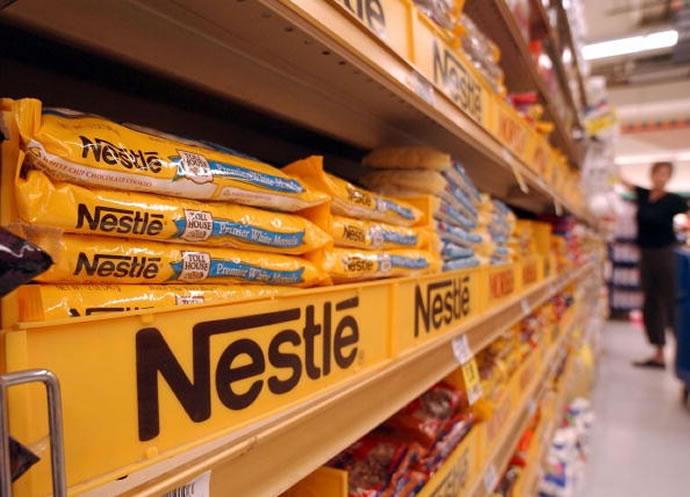
Nestle (SWX: NESN) has warned that the consequences of a no-deal Brexit will be “very severe”.
The owner of brands including Nescafe revealed that whilst it was stockpiling ingredients in the event of a no-deal scenario, warehouses for frozen and chilled food are almost full.
According to Ian Wright, the chief executive of the Food and Drink Federation, warehouses for storing ingredients were “for all practical purposes booked out at the moment”.
“We don’t know if there are products in those places or people have booked the space to be careful or for production,” he said to theBusiness, Energy and Industrial Strategy Committee on Wednesday.
“Some innovative providers are doing the Airbnb of warehousing which is very interesting, but for big and medium-sized businesses, that just won’t work.”
The news comes as new analysis has revealed that the UK will be worse off in every Brexit-related scenario. The worst outcome, however, will be a no-deal.
It is for this reason that Wright is in favour of Theresa May’s agreement, which has been declared by Philip Hammond as the best option.
“The political declaration is excellent, but it is a list of new year’s resolutions. We don’t know if what we see now will remain intact.”
“We like what we have now. No deal is infinitely worse than anything we could imagine, therefore the deal on the table is better than no deal, but is not as good as the status quo,” he added.
“If you look at this purely from an economic point of view, yes there will be a cost to leaving the European Union because there will be impediments to our trade,” said Hammond on Wednesday.
The deal that will be put to the vote in December will “absolutely minimise those costs,” he added.
To persuade MPs and the public to support the Brexit deal, May has travelled to Scotland.