
Jaguar Land Rover sales fall 13%
Jaguar Land Rover (JLR) reported a loss for the three months to September, with sales falling 13.2%.
The UK car-maker posted pre-tax losses of £90 million as a result of the fall in sales during the third quarter.
The company reported revenues of £5.6 billion, down 10.9% year-on-year, alongside EBITDA of £511 million.
Pre-tax losses stood at £90 million for the period, which it attributed to weaker sales in China, alongside continued uncertainty regarding diesel and Brexit in Europe.
Jaguar Land Rover, which is owned by Tata Steel, said it was imitating plans to improve profitability.
Prof. Dr. Ralf Speth, Jaguar Land Rover Chief Executive, said:
“In the latest quarterly period, we continued to see more challenging market conditions. Our results were undermined by slowing demand in China, along with continued uncertainty in Europe over diesel, Brexit and the WLTP changeover.
“Given these challenges, Jaguar Land Rover has launched far-reaching programmes to deliver cost and cashflow improvements. Together with our ongoing product offensive and calibrated investment plans, these efforts will lay the foundations for long-term sustainable, profitable growth.”
Back in September, JLR warned that “tens of thousands” of jobs may be at risk if the government fails to reach a Brexit deal.
Shares in Tata Steel (NSE:TATASTEEL) are currently trading -11.50AM (GMT).
Next shares fall as Q3 growth slows
Next (LON:NXT) shares fell on Wednesday morning after the company reported a slowdown in sales growth for the quarter.
Sales for the third quarter were down 8% year on year, and 6.3% compared with the previous year.
However, online sales lifted profits, up 12.7% in the three months to October end.
Despite the somewhat disappointing results, the high-street retailer maintained its full-year guidance.
Back in September, Next reported a rise in sales after a better-than-expected summer trading period.
However, the latest figures suggest the business is still grappling to cope with the shift from in-store to online shopping, with many consumers taking to the ease of the Internet to buy their clothing.
Indeed, Next is one of many retailers that have been struggling as of late.
At the beginning of the year, both Maplins and Toys R Us fell into administration after racking up substantial debts.
Over the course of the year, various other brands have announced store closures as they look to adapt to increasingly tough trading conditions.
Store chains such as Marks and Spencers (LON:MKS), New Look and Waitrose all announced closures in a bid to streamline costs.
Laith Khalaf, senior analyst at Hargreaves Lansdown, commented on the latest figures: “‘Another trading statement from a high street retailer, another clear example of clicks hammering bricks. Like much of the sector, Next is doing the splits as digital and physical sales head in opposite directions.
“As Next rightly points out, clicks and bricks can be complementary, as physical outlets give customers a convenient place to collect and return items. The scale of Next’s finance division business is significant, with £1.1bn of outstanding consumer debt, which is expected to contribute 17 per cent of Next’s profits this year.”
Retailers may be in for some relief in the upcoming months however, after the government announced a £1.5 billion high-street regeneration plan on Monday.
During his highly anticipated budget speech, the Chancellor Philip Hammond announced the initiative, which will fund the creation of board of experts to help local officials develop “innovative strategies to help high streets evolve”.
Shares in Next are currently down -3.24% as of 10.42AM (GMT).
Facebook reports missed revenues & slowing user growth

The latest Facebook (NASDAQ: FB) results have revealed the group to have missed revenues and reveal slowed user growth.
According to the latest results, the number of people who use Facebook on a daily basis was 1.49 billion, less than the expected 1.51 billion.
Sales also fell short of expectations and totalled $13.7 billion (£10.7 billion), a rise of 33%. This is short of last year’s 42% rise.
Mark Zuckerberg said that Facebook “may be close to saturated in developed countries.”
“Our community and business continue to grow quickly, and now more than 2 billion people use at least one of our services every day,” said the Facebook CEO in a statement.
“We’re building the best services for private messaging and stories, and there are huge opportunities ahead in video and commerce as well.”
The social media giant had the strongest user growth in India, Indonesia and the Philippines.
Following the Cambridge Analytica scandal, the group has said there will be big changes to the platform.
“We have a responsibility to protect your data, and if we can’t then we don’t deserve to serve you,” said Zuckerburg.
“We also made mistakes, there’s more to do, and we need to step up and do it.”
Earlier this month, Fthe tech group also announced the launch of a new “war room,” designed to mitigate the spread of misinformation.
“We work closely with the US government, and we have been in contact with law enforcement, both with the foreign influence taskforce at the FBI and the Department of Homeland Security.”
The new team had detected and deleted 82 pages, groups, and accounts last week.
General Electric reveals loss, shares plunge 8%
Shares in General Electric plunged 8% after the group reported worse than expected third-quarter results.
As well as poor results, the conglomerate revealed that it’s accounting was being investigated by the US civil and criminal authorities.
Larry Culp, GE’s new chief executive, was confident in the group and said that the aviation and healthcare divisions remained strong.
“We know what we need to do. Now is the time to execute,” he said.
“It’s going to take some time, but I’m hopeful that we can build that credibility, deliver that performance over time.”
“My priorities in my first 100 days are positioning our businesses to win, starting with Power, and accelerating deleveraging,” he said in a statement.
Culp replaced former chief executive, John Flannery, earlier this month. Flannery had been in the role less than two years but had been ousted after he failed to rebuild investor confidence.
After the group was forced to take a $22 billion write-down on its power division, it missed forecasts and posted a loss of $22.8 billion in the third quarter.
Shares fell to their lowest since 2009.
On the investigation, chief financial officer Jamie Miller said: “We are cooperating with the SEC and DoJ as they continue their work on these matters.”
General Electric was founded in 1892.
In June, France threatened to fine the group if it failed to create the number of jobs it promised.
“Sanctions must set an example. €50,000 should be applied by the end of the year if GE does not stick to its commitments,” said government spokesperson, Benjamin Griveaux.
Shares in the group (NYSE: GE) are trading down 8.29% in pre-market trading.
No-deal Brexit will trigger recession, warns S&P

A new analysis by Standard & Poor’s has said that a no-deal Brexit will tip the UK into recession.
The credit rating agency has warned that falling employment and lower incomes will trigger a recession and a deal must be reached before March.
Although Brexit negotiations have stalled over arrangements for the Irish border, the S&P has said it expects an agreement to be reached before the UK is due to leave the EU.
However, the chance of a no-deal was on the rise and this is something that cannot be ignored by investors.
In the event of a no-deal Brexit, the report has warned of rising unemployment, a 10% fall in house prices, lower incomes and higher inflation.
“Our base-case scenario is that the UK and the EU will agree and ratify a Brexit deal, leading to a transition phase lasting through 2020, followed by a free trade agreement,” said S&P Global Ratings credit analyst Paul Watters.
“But we believe the risk of no deal has increased sufficiently to become a relevant rating consideration. This reflects the inability thus far of the UK and EU to reach agreement on the Northern Irish border issue, the critical outstanding component of the proposed withdrawal treaty.”
“By 2021, economic output would still be 5.5% less than what would have been achieved in a scenario with an orderly exit and transition period for the UK,” the report added.
Whilst Theresa May has ensured that Bexit negotiations are 95% complete, crucial talking points such as the Irish border remain unresolved.
Michel Barnier from the EU has called for a backstop that would keep the Irish border open to trade, creating a border in the Irish sea. This has been rejected by May.
AstraZeneca sells rights to Grunenthal
AstraZeneca has announced that it will sell the European rights to acid-reflux medicine Nexium to Grunenthal. The sale will be made for an upfront $700 million. Future sales-related payments are said to reach up to $90 million. This is as a result of it not being in the company’s targeted therapy areas.
In addition to the sale, AstraZeneca has said that the German company Grunenthal will purchase the worldwide rights to Vimovo.
The worldwide rights to the pain-relief drug excludes the US and Japan. They will be purchased by Grunenthal for $115 million and additional payments have the potential to reach $17 million. Executive Vice President of the Global Product and Portfolio Strategy, Mark Mallon, commented: “The divestment agreements allow us to realise value from our successful medicines while redeploying our resources on developing innovative medicines for patients across our three main therapy areas, which we expect to drive growth for AstraZeneca. Grunenthal is a science-based pharmaceutical company specialised in innovative pain management and related therapies. Its expertise and distribution networks will help expand the commercial potential of both Nexium and Vimovo, helping to reach many patients who could benefit.” Nexium is a proton pump inhibitor developed by AstraZeneca. But, it has lost patent protection in the majority of global markets. Vimovo, on the other hand, remains protected in the majority of European markets until 2025. The rights to Nexium were sold to Pfizer in 2012. Moreover, AstraZeneca has said it will continue to manufacture and supply Nexium. This is set under a long-term supply agreement. Equally, it will continue to commercialise the medicine in all markets outside of Europe. The biopharmaceutical company is a global, science-led business that focuses on the discovery, development and commercialisation of prescription medicines. This is primarily for the treatment of diseases in three therapy areas; oncology, cardiovascular, renal and metabolism and respiratory. Earlier this year, the European Commission approved AstraZeneca’s Bydureon BCise devise. Equally, its hairy cell leukaemia treatment was approved by the FDA. At 10:34 today, shares in AstraZeneca plc (LON:AZN) were trading at +1.06%. At 06:17 GMT -4 today, shares in Pfizer Inc. (NYSE:PFE) were trading at +1.48%.Italy’s economy halts, EU clash prevails

Data has revealed that Italy’s economy has stagnated in the third quarter. Domestic demand and trade flows were unable to drive any growth.
Between July and September, Italy’s gross domestic product has remained unchanged. This follows a 0.2% increase in the second quarter.
Since the beginning of 2017, Italy’s economy has been slowing down at a steady rate.
The flat quarterly reading in the third quarter was the weakest figure since the fourth quarter of 2014. In October, Italy’s coalition government slashed the official full-year 2018 forecast to 1.2% from a 1.5% prediction made in April. Earlier this year, the anti-establishment 5-Star Movement and the right-wing League stablished a coalition government. They presented a 2019 budget that claims to boost growth and prevent the Italian economy from suffering a recession. Since the budget was announced, we tracked its development process. The controversial budget, which sees deficit to rise to 2.4%, caused backlash from the EU. Indeed, earlier last week the European Commission outright rejected the plans amid fears of Italy’s government debt. Deputy Prime Minister Luigi Di Maio took to Facebook to comment: “This is the first Italian budget that the EU doesn’t like,” “No surprise: this is the first Italian budget written in Rome and not in Brussels!” Co-deputy Prime Minister Matter Salvini added: “This doesn’t change anything.” “They’re not attacking a government but a people. These are things that will anger Italians even more.” The coalition government has insisted it will “end poverty” with a minimum income for the unemployed. The European Commission’s rejection of the budget is an unprecedented move to an EU member state. An EU executive said that the Italian government was disregarding a previous promise to lower the deficit towards a balanced budget. The government has been given three weeks to change the budget but it has no intentions to make any changes.Budget 2018: Income tax cuts will “overwhelmingly benefit richer households”
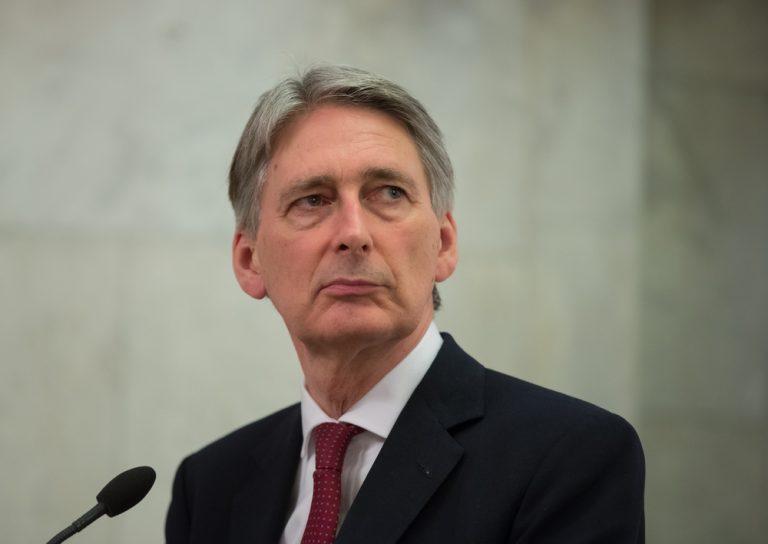
The analysis by the Resolution Foundation has found that the income tax cuts in Philip Hammond’s Budget will “overwhelmingly benefit richer households”.
One of the first independent analyses of the Budget has highlighted that the previous cuts to welfare will continue and poorer households will not feel the positive benefits of the tax cuts.
The top 10% of households are to gain most from the new Budget proposals, gaining £410 a year. Poorer households will gain around £30 a year.
There are still £12 billion in welfare cuts, which were announced after the 2015 election, that remain in government policy.
Torsten Bell, who is the director of the Resolution Foundation, said: “The chancellor was able to navigate the near impossible task in his Budget of easing austerity, seeing debt fall and avoiding big tax rises, thanks to a £74 billion fiscal windfall.”
“He chose to spend the vast majority of this on the NHS, income tax cuts and a welcome boost to Universal Credit.”
“But while yesterday’s Budget represented a seismic shift in the government’s approach to the public finances, it spelt an easing rather than an end to austerity – particularly for low and middle-income families.”
“Income tax cuts announced yesterday will overwhelmingly benefit richer households, with almost half of the long-term gains going to the top 10% of households,” Bell added.
“On public services the NHS saw a big spending boost – but unprotected departments still have further cuts pencilled in.”
The income tax cuts will cost the government £2.7 billion next year.
The 20% tax band will rise to £12,500 next year from the £11,850 it currently starts at. The 40% tax band will begin at £50,000 from April from the current £46,350 earnings.
Reckitt Benckiser sales suffer, shares drop
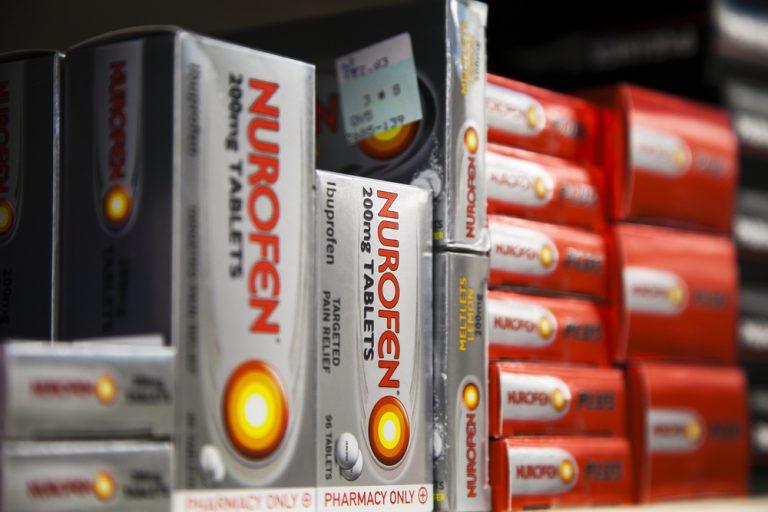
Reckitt Benckiser Group has reported a smaller-than-expected increase in underlying quarterly sales. The British consumer goods maker suffered as a result of a manufacturing disruption at a European baby formula factory. Shares were trading over 4% lower on Tuesday morning.
Reckitt Benckiser Group owns brands such as Dettol, Durex, Air Wick, Nurofen and Scholl, to name a few.
The group has seen a number of setbacks in the past two years, including various one-off issues. A cyber attack last year and a safety scandal in South Korea are among these. RBC Capital Markets analyst, James Edwards Jones, commented: “Reckitt has been unfortunately prone to one-offs in the recent years… that mean we are less inclined than we would otherwise be to dismiss this as a one-off that should be ignored.” The company’s like-for-like sales increased by 2% in the third quarter. Reported sales for the third quarter dropped by 2% to £3.12 billion. Moreover, Reckitt has blamed the disappointing sales figures on the disruption at its European baby formula plant. As a result of the disruption, the baby formula unit’s quarterly like-for-like sales dropped by 6%. Analysts had predicted a growth of 5.3%. The company delved into the child nutrition market last year after it acquired Mead Johnson for $17 billion. Commenting on the results, Chief Executive Officer Rakesh Kapoor commented: “The quarter was impacted by a temporary manufacturing disruption at our European IFCN plant. This affected sales to a number of markets, occurred during a period of unusually high market growth and before our new facilities in Australia were operational and able to diversify our supply chain. The disruption was resolved and supply restored before the end of the quarter, although we do expect some residual impact in Q4 and into 2019.” “We have sufficient momentum and progress in our business to absorb this temporary manufacturing disruption. We therefore reiterate our 2018 target of +14-15% total net revenue growth at constant rates.” At 09:07 GMT today, shares in Reckitt Benckiser Group plc (LON:RB) were trading at -4.72%.Disruption to post-Brexit flights is possible, warns Chris Grayling
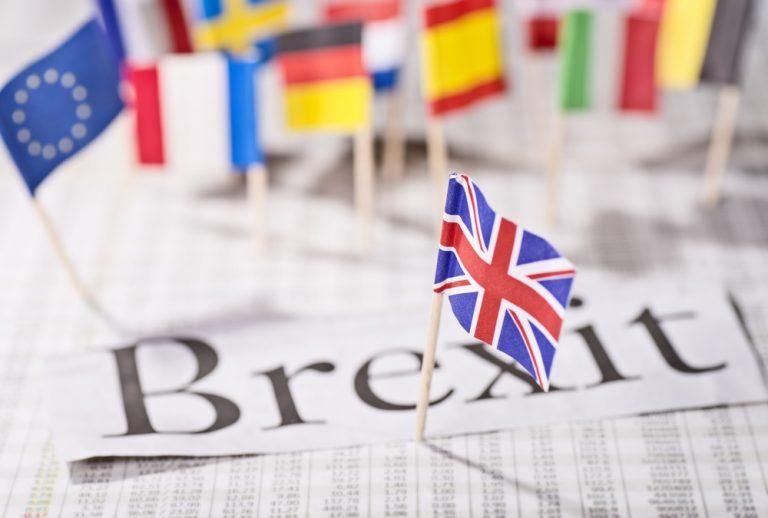
The transport secretary has admitted that disruption to flights post-Brexit is possible.
Speaking at an aviation conference, Chris Grayling said that although disruption to flights would be “unlikely”, the relevant talks had not yet started.
“It is theoretically possible that EASA [the European Aviation Safety Agency] could refuse or delay the certification of UK-certified planes. I think it is highly unlikely,” said Grayling at the Airport Operators Association annual conference in London.
“I’ve offered the commission to prepare a barebones deal if there is no broader agreement. They are not yet ready to begin but the commission has said very clearly it expects there to be an agreement.”
Despite there only being five months until the UK’s departure from the EU, Grayling pointed to Ryanair who was “selling tickets for next summer and expanding the number of routes between the UK and the European Union”.
Ryanair (LON: RYA) has repeatedly warned that it may have to suspend flights for “weeks or months” if no deal is reached.
“In the worst-case scenario there will be no flights in or out of the UK to Europe for a period, for all carriers,” said the company’s chief financial officer, Neil Sorahan.
“There could be a situation where you’re going to have get comfortable with staycations for the summer of 2019: those trips down to Portugal and Spain, unless you can swim, aren’t really going to happen.”
On Monday, Heathrow revealed it had raised £1.6 billion from investors as a buffer in the event of a no-deal Brexit.
“We have taken an extremely responsible approach to both operational and financial planning,” said the airport in a statement.
“Extensive contingency plans have been developed, which will help to minimise any potential impact on passengers. [The debt-raising] ensures the airport has sufficient financial firepower to cope with a no-deal Brexit.”
“This extends our liquidity horizon until the end of 2020 and ensures the airport has sufficient financial firepower to cope with a no-deal Brexit and still meet its obligations – including progressing our expansion plans,” it added.