
Rio Tinto rallies with 56% spike in profits
Anglo-Australian mining multinational Rio Tinto plc (LON:RIO) have seen their share price rally during Wednesday trading, owing largely to its latest performance figures.
ITV and BBC take on Netflix with launch of ‘BritBox’
ITV and BBC are set to launch a joint video streaming service named BritBox.
In a statement, ITV said that the new venture will offer “an unrivalled collection of British boxsets and original series”, as the broadcasters look to take on the likes of Netflix (NASDAQ:NFLX) and Amazon Prime (NASDAQ:AMZN).
BBC director general, Tony Hall, said: “The service will have everything from old favourites to recent shows and brand new commissions.”
The service is scheduled to be in operation towards the latter half of 2019, with other partners expected to also collaborate.
The announcement came alongside ITV’s full-year results for 2018, reporting a 13% rise in pre-tax profits.
Despite growth, the broadcaster warned on a challenging advertising market amid “economic and political headwinds”.
Both company’s enjoyed a successful year, with the launch successful programmes such as Love Island and Golden Globe winning series The Bodyguard, whilst it remains to be seen whether BritBox will indeed attract Netflix’s loyal viewer base.
Netflix said it added 6.96 million new members in the three months to November 2018, taking its user base to 148 million worldwide.
ITV shares (LON:ITV) are currently -2.63% as of 14:49PM (GMT).
Nosta Terra & Oil raises £1.15 million to further Mesquite asset

Nostra Terra & Oil (LON:NTOG) announced on Wednesday it has raised £1.15 million to further develop operations at its Mesquite asset.
The oil and gas exploration company had raised the funds to ‘strengthen its position’ in the Mesquite asset in the Permian Basin, ahead of also locating a potential farm-in partner.
Matt Lofgran, Chief Executive Officer of Nostra Terra, commented on the announcement:
“Our goal with Mesquite is to find the right industry partner to work with on developing the asset. By significantly strengthening our balance sheet and welcoming institutional investment into the Company at this time, we are positioned to retain more interest in the asset going forward.
“The Board believes the Permian Basin remains one of the most attractive oil provinces globally, attracting billions of dollars in investment each year. In the Mesquite target area Nostra Terra still has first mover advantage, so it is important for a company of our size to move as quickly as it can in securing its position. We are on course to deliver substantial value to shareholders over the coming years.”
Earlier this month shares in the company rose after it announced a threefold increase in oil reserves at its assets at Pine Mills in East Texas and its Permian Basin assets in West Texas, including Mesquite. Nostra Terra Oil & Gas is an AIM-listed company. It was founded back in 2005. as well as interests US, it also operates in Egypt. Shares in the London-listed firm are currently +1.53% as of 11:43AM (GMT), as investors react to the announcement.Taylor Wimpey hails ‘positive start’ to 2019

Taylor Wimpey said it has enjoyed a ‘positive start’ to 2019, after announcing itsfull-year results for 2018.
The housebuilder reported growth in pre-tax profit of 5.5% up to £856.8 million, compared to £812.0 million posted back in 2017.
Overall profit for the year totalling also rose to£656.6 million, compared to £555.3 million reported in 2017.
Meanwhile, £499.5 million was paid in total dividends for the year, up from £450.5 million a year ago.
Pete Redfern, Chief Executive, commented on the company’s full-year results:
“2018 was another strong year for Taylor Wimpey with good progress against our strategic priorities. We delivered in line with our expectations, achieving a strong sales rate and record revenues. Despite ongoing macroeconomic and political uncertainty, we have made a very positive start to 2019 and are encouraged to see continued strong demand for our homes. We enter the year with a strong order book and a clear strategy in place to deliver long term value for shareholders.”
Ed Monk, associate director from Fidelity Personal Investing’s share dealing service also commented on the figures:
“It was an upbeat message from Taylor Wimpey as the housebuilder reported rising profits and margins on forecast.
“All important was the builder’s outlook for the coming year and here the news was good, albeit with a the usual provisions about Brexit.
“The order book metrics improved slightly and Taylor Wimpey also managed to reduce its reliance on Help-to-Buy, which is scheduled to end in 2023. Homes sold under the scheme reduced from 43% to 36%.”
On Tuesday, rival housebuilder Persimmon (LON:PSN) reported its latest results, with annual profits surpassing £1 billion for the first time, largely as a result of the government help-to-buy scheme.
Taylor Wimpey is listed on the London Stock Exchange and is a constituent of the FTSE 100 Index. It was formed after merger between Taylor Woodrow and George Wimpey back in 2007.
Shares in Taylor Wimpey (LON:TW) are currently +1.23% as of 11:22AM (GMT).
Less taxing high risk/reward investing with VCT funds

Part 1 : An Investment Series by Jon Levinson
Is there a Tax Payer not seeking to pay less tax ? Is there an Investor not looking for a 10 bagger?…..
Even if there are such people this could be a chance to reconsider and why we are initiating an Investment Series on EIS (Enterprise Invest Scheme) and VCT (Venture Capital Trust).
As the series progress you will become more familiar with the terms. There have been a lot of rule changes for both schemes over the last three years, all with a similar theme of pushing the qualifying investments towards smaller, higher risk businesses.
Here we start with a brief background to VCT and a recommendation.
VCTs are fully listed funds with attractive Tax incentives to invest and you get to follow the price on the screen. Investing in a VCT new issue, is a straight forward and low hazzle, which gives income tax relief of 30% on up to £200,000.
This is given as a tax credit against total income tax liability, though the shares need to be held for at least five years to keep the relief. Any dividends from the VCTs are paid out tax free and no capital gains tax is paid on disposal.
In the last Tax year to April 2018, the VCTs market raised £745m, since then to January 2019, the amount raised was 23% lower on the compatible period.
As the increased risk of the qualifying investments, coupled with Brexit uncertainty may be putting investors off. In this background Companies seeking investment will accept lower valuations.
Just as Fund managers are being pushed to look for growth in companies perhaps at the expense of a dividend therefore fund managers and investors should get better bang per buck invested.
We think Calculas VCT is worthwhile. It is a relatively small fund raising £15m with no Initial fee. The strong established and prize winning Venture Capital team have delivered well in the past.
The Fund aims to generate sufficient returns to maximise tax-free dividends while growing the capital over the medium to long term. The current fund raising is for Ordinary shares, which will have an income target of 4.5% of NAV.
Returns will be generated by investing in a portfolio of mainly unquoted companies across different industries. Since being founded an average realised 9% IRR is still credible but with the current wind behind them could do better.
VCTs are at the lowest risk end of this investment spectrum while investing in a single EIS qualifying company is at the highest end. To be continued ……
Marks & Spencer and Ocado agree £750m delivery deal
Marks & Spencer and Ocado have agreed on a joint food delivery venture.
Under the deal, Marks & Spencer is set to pay £750 million to acquire a 50% share of Ocado’s retail business.
The venture is set to be in operation by the September 2020 at the latest, after Ocado terminates its current agreement with Waitrose.
Steve Rowe, Marks & Spencer’s chief executive, said he had “always believed that M&S Food could and should be online” and combining M&S’s food with Ocado’s technology and delivery network was a “win-win” and “compelling proposition to drive long-term growth”.
He added: “Our investment in a fully aligned joint venture with Ocado accelerates our food strategy as it enables us to take our food online in an immediately profitable, scalable and sustainable way.”
Tim Steiner, the chief executive of Ocado, described the deal as a “transformative moment in the UK retail sector” that would combine “two iconic and much-loved retail brands set to provide an unrivalled online grocery offer”.
Almost two years ago Marks & Spencer announced its intention to enter the food delivery service market, in a bid to attract online consumers.
In recent years, the retailer has been struggling amid weaker Christmas sales and slower sales for its clothing ranges.
As a result, M&S announced plans to limit the amount of store space dedicated to clothing, in a bid to streamline costs.
Shares in Marks & Spencer (LON:MKS) are currently -9.70% as of 10:35AM (GMT).
Meanwhile, Ocado shares (LON:OCDO) are +3.64%.
Brexit: UK and US agree derivatives trading deal

The UK and US have agreed a major derivatives trading deal to ensure “bridge over Brexit”.
The Bank of England, Financial Conduct Authority (FCA) and the US Commodities and Futures Trading Commission made a joint announcement on Tuesday, unveiling the agreement.
In a boost to the city, the deal will mean that derivatives trading between New York and London will continue, regardless of the outcome of Brexit.
Governor of the Bank of England, Mark Carney, said:
“Derivatives can seem far removed from the everyday concerns of households and businesses, but they are essential for everyone to save and invest with confidence.
As host of the world’s largest and most sophisticated derivative markets, the US and UK have special responsibilities to keep their markets resilient, efficient and open. The measures we are announcing today will do that. Market participants can be confident that the clearing and trading of derivatives between the UK and US will maintain the high standards of today when the UK leaves the EU”
J. Christopher Giancarlo, Chairman of the CFTC, said:
“London is, and will remain, a global center for derivatives trading and clearing.” He added that the measures would “provide a bridge over Brexit through a durable regulatory framework upon which the thriving derivatives market between the United Kingdom and the United States may continue and endure.”
Meanwhile, the Chancellor of the Exchequer, Philip Hammond said:
“The US and UK are fundamental to the smooth functioning of the world’s multi-trillion pound derivatives markets, with around 97% of the centrally cleared interest rate derivatives market located in London. The action we have taken today with our partners in the US will ensure that markets can continue to thrive without disruption, and is yet another example of the special relationship between our two countries.”
The Chancellor is set to present his Spring Statement Speech on the 13th of March.
The Chancellor’s speech will come just ahead of the government’s official Brexit deadline the 29th of March.
Shefa Yamim announces completition of jewellery collection with Yossi Harari

Shefa Yamim has announced the completion of a collection with jewellery designer Yossi Harari using the exploration company’s gemstones.
In a statement, Shefa Yamim said that the collection, which has been named “Heaven on Earth” is comprised of 13 pieces of jewellery.
The Israel-based explorer said that the jewellery was created from gemstones found in the Kishon Mid-Reach area.Yossi Harari commented on the new collection:
“This collection is inspired by the dream and realisation of finding such rare and stunning precious gems in the soil of the Holy Land. Combining these gems with timeless materials with a modern aesthetic, the jewellery uses a blend of different metal and texture combinations, glass shaker beads, and innovative stone settings in my signature style to create an unforgettable design. I am honoured to have been chosen by Shefa Yamim to create this collection and I look forward to continued collaborations with Shefa Yamim in this amazing enterprise.”
Earlier this month, Shefa Yamim shares soared after the company announced it had received a technical evaluation for Zone 1 of its Kishon Mid-Reach project.
The evaluation’s findings revealed that the mine has the potential to process a total of 1.5 million tonnes of gravel over an 11-year mine life.
Shefa Yamim is a multi-commodity gemstone mining exploration company, focused in Northern Israel.
Shares in the company (LON:SEFA) are currently -4.35% as of 10:34AM (GMT).
Hotel Chocolat first-half profits up, shares rise

Hotel Chocolat (LON:HOTC) posted a jump in first-half profits on Tuesday, sending shares up.
Pre-tax profit climbed 7% to £13.8 million in the six months to December 30, with revenue of £80.7 million, an increase of 13% on a year ago.
The company attributed growth to a strong performance over the Christmas period, as well as the launch of two new stores in New York and Tokyo.
The retailer also opened an additional 14 new stores across the UK and Ireland, which led to a 4% rise in sales.
In addition, the company saw around 500,000 customers join its new VIP Me Rewards scheme.
Chief executive Angus Thirlwell commented:
“Growth in the UK continued to deliver improvements in profitability which have enabled us to invest in the launch of two new start-ups in New York and Tokyo, both of which are showing encouraging early signs, in terms of customer response and the initial store sales performance,”
He added:v“Recent trading, including the Valentine’s period, is in line with the Board’s expectations and we continue to make good progress against our key strategic objectives of opening more stores, improving our digital capability and increasing our production capacity whilst testing and learning in two large new territories.”
Hotel Chocolat was founded back in 1988 and is headquartered in Hertfordshire. It is the only UK company to grow its own cocoa on its own plantation.
Hotel Chocolat shares (LON:HOTC) are currently +1.63% as of 12:04PM (GMT).
Persimmon annual profits surpass £1bn
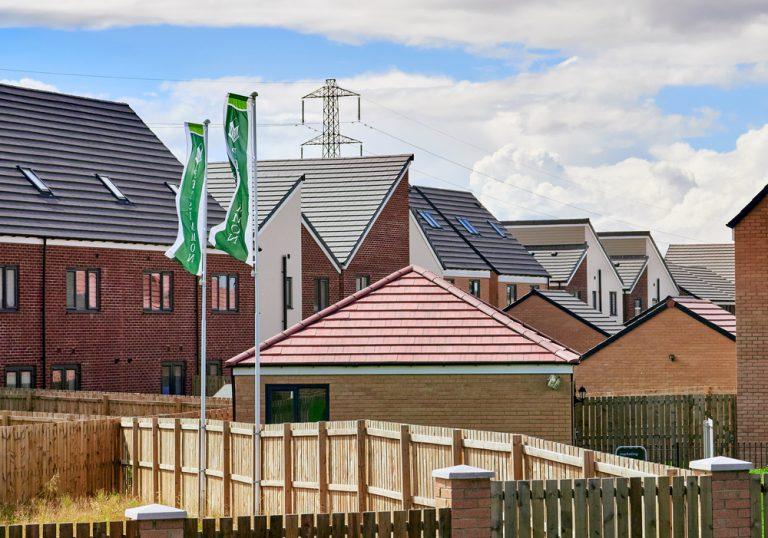
Persimmon pre-tax profits for 2018 surpassed £1.1 billion, with the company benefiting in particular from the government help-to-buy scheme.
Persimmon reported annual profits of £1.091 billion, up 13% from £966 million in 2017. This was largely as a result of help-to-buy, which accounted for almost half of all homes sold.
However, the housing minister has now launched a review on the scheme, particularly in light of Persimmon’s soaring profits.
The housebuilder also announced that interim chief executive Dave Jenkinson would remain in his role heading the company.
Last year, its previous chief executive Jeff Fairbun left the firm after a shareholder backlash against a £75 million pay-out.
Tom Brown, Managing Director of Real Estate at Ingenious, commented on the results: “Persimmon’s 2018’s pre-tax profits were broadly in line with forecasts however recent sharp falls in its share price and those of other housebuilders in the UK betray a sector which has a lot to lose from a disorderly Brexit and an economic downturn. The company has been in the firing line since the scandal broke of the bonus awarded to its now ex CEO.
“The government is right to put housebuilders under the spotlight as a condition of their inclusion in the key Help to Buy scheme which has underpinned pricing in the sector since being announced in 2013. Alongside good financial governance, the government should drive best practice across the industry in relation to build quality and after sales service. This coupled with local councils demanding funding infrastructure, can ensure that everyone shares in the benefits that new development can bring to communities.”
Persimmon shares (LON:PSN) are currently trading +1.54% as of 9:50AM (GMT).