
“That a storied retailer, once at the pinnacle of the industry, should collapse in such a shabby state of disarray is both terrible and scandalous.”
“The brand is now tarnished just as the economics of its model are firmly stacked against its future success,” he added.
How to make an investment on Crowdcube

Crowdcube is the UK’s leading equity crowdfunding platform with 600,000 registered members and over £500,000,000 invested in pitches through their platform.
To help our readers understand the process of registering with Crowdcube, we have compiled a 5-step guide to using the platform.
1. Register for an account to become a member
You can also use your email or an existing Facebook or Linkedin profile to create an account. This will give you access to the full details of the opportunities on Crowdcube and allow you to request restricted documents such as business plans.
2. Request restricted documents
Once registered, you’re able to request documents relating to a pitch including full business plans and executive summaries. These documents are key to understanding a business and outline the firm’s value proposition. At the top of the pitch you will be able to see if the company has advanced assurance from HMRC for any tax benefits for investors in the form of The Seed Enterprise Investment Scheme (SEIS) or Enterprise Investment Scheme (EIS).
3. Review rewards and share classes
Many companies conducting a fund raising round will offer rewards for making different levels of investment, these are accessible at the bottom the page. Also in this area, you will find the different share classes available to investors. Companies will set a certain level for which investors will receive ‘Investment’ shares. Investment shares give investors the same rights for dividends and capital distribution as ordinary share holders, but do not have voting rights or pre-emptive rights. ‘Ordinary’ shares will give investors voting rights and pre-emptive rights.
4. Make an investment via the ‘Invest Now’ function
When you have decided to make an investment, you can simply enter the amount you would like to invest and click ‘Invest now’ to complete your investment. There is a minimum of just £10.
5. Confirm you investment
Funds are not taken from your account until the raise hits the target. The money will be taken from your account once the pitch has fulfilled its target, however, you still have 7 days to review your investment. If the pitch does not secure its target amount, the funds will not be taken from your account.
Remember as with all investment, investing in company shares through Crowdcube means your capital is at risk.
The publisher of UK Investor Magazine, Investment Superstore, is now crowdfunding on Crowdcube, please click here to view our pitch.
ConvaTec shares plunge after profit warning and CEO departure

ConvaTec shares (LON:CTEC) plunged on Monday, after the company warned on profits and announced the departure of its chief executive.
The international medical and technologies company announced the retirement of Chief Executive Paul Moraviec, with immediate effect.
Moraviec is set to be replaced by Rick Anderson, who will assume the role of interim chief executive officer.
The company said that the board has asked Rick Anderson, who was a Non-Executive Director of ConvaTec and previously Group Chairman of Johnson & Johnson, to assume the position on a full-time basis until a permanent replacement is found.
Sir Christopher Gent, Chairman of the firm, said:
“I would like to thank Paul for leading ConvaTec through an important phase of the Company’s development and the first period of being a public company. Paul leaves with the Board’s best wishes for his retirement. I am grateful to Rick for agreeing to take on executive responsibility as Interim Chief Executive Officer and I am sure the Company will be in very good hands until Paul’s replacement has been appointed.”
Paul Moraviec said:
“We have made significant progress during my time as Chief Executive Officer and I am confident that ConvaTec now has the strong platform, infrastructure and leadership to enable the business to flourish. I would like to thank all my colleagues across ConvaTec for their hard work and dedication, they have taken ConvaTec to a leading position in the MedTech industry and I look forward to watching the Company’s future success.”
ConvaTec was founded back in 1978 and is listed on the London Stock Exchange. The firm is a constituent of the FTSE-250 Index.
Its products include products and services relating to wound care, ostomy as well as infusion devices.
The company has 9,000 employees, with operations in over 100 countries.
Shares are currently trading -30.55% as of 11.47AM (GMT).
Velocys shares rally amid trading update

Shares in Velocys (LON:VLS) continued to rally on Monday after the company issued a trading update to investors.
The company, which specialises in renewable fuels, acknowledged the recent share price movement in the statement, updating investors on progress.
Specifically, Velocys said that it continues to drive ‘strong progress’ with its Bayou Fuels biorefinery project in Mississippi.
In addition, the firm said that discussions had been progressing with various strategic investors to invest in the project to fund further development.
Furthermore, the company said it was continuing to collaborate with the ENVIA board to develop options at the project.
The company also continued to talk with insurers, should a resolution be found with ENVIA.
Velocys also said it remained optimistic for future growth, particularly in light of growing demand for renewables.
In recent years, countries have stepped up global efforts to tackle climate change, driving up demand for renewable fuels.
The firm confirmed it is currently partnered with British Airways and Shell in their UK waste to jet fuel project.
The statement also stated that Velocys has cash resources of over £10 million, after the implementation of various cost-saving initiatives.
Due to the ENVIA decision to suspend operations, the company successfully slimmed down costs by £5 million to ensure that its projects remain on budget.
Back in September, the company updated the market on its interim results for six months until 30 June 2018.
Ultimately, company losses deepened during the period, with pre-tax losses rising from £25 million compared to £10.6 million a year previously.
Profits were hit by £15.1 million in exceptional costs during the period, up from £701,000 during the same period a year previously.
Underlying loss, excluding exceptional costs, remained at £9.9 million.
At the time of the interim results announcement back in September, shares were down over 4%.
Shares in the renewables company are currently trading +26.32% as of 10:50AM (GMT), following the most recent company update.
Superdry shares fall after profit warning
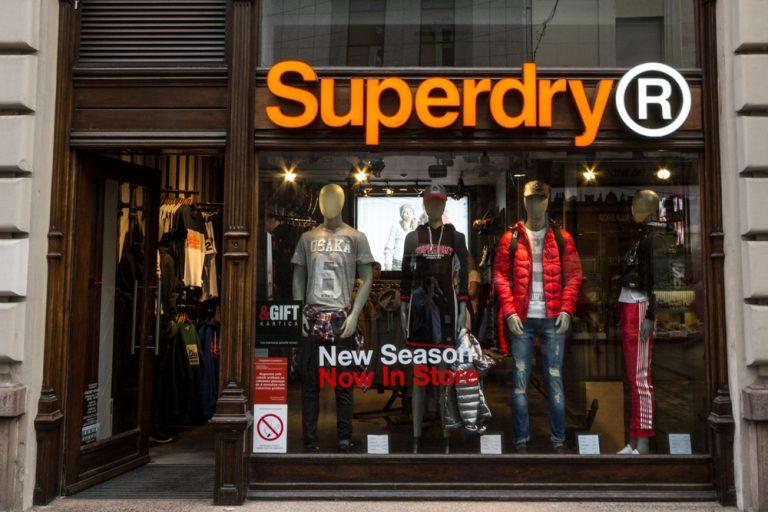
Superdry shares (LON:SDRY) fell almost 30% on Monday, after the company issued a profit warning.
The clothing retailer blamed ‘unseasonably hot weather conditions in the UK, continental Europe and the USA’ for the disappointing sales.
Moreover, an additional bout of warmer weather in October has also affected sales of jumpers and jackets.
Superdry also said that it would be also affected by £8 million in additional foreign exchange costs.
Superdry chief executive officer Euan Sutherland said: “Superdry is a strong brand with significant growth opportunities, backed by robust operational capabilities, but we are not immune to the challenges presented by this extraordinary period of unseasonably hot weather. We are well prepared for peak trading, but the second half of financial year 2019 presents both risks and opportunities.
“We continue to focus on delivering efficiencies and cost savings to meet the current challenges and have confidence in our strategy for growth and so are accelerating investments in our future.
“There are significant opportunities ahead for Superdry in terms of geographical market expansion, category extensions and growth and the ability to leverage its multi-channel operating model in a digital world to deliver to customers in whichever way suits them best.”
Superdry’s profit warning follow news that another high street retailer has collapsed.
Last Thursday, Coast announced the closure of its stores amid persistently difficult trading conditions.
However, in a last-minute deal, Karen Millen partially rescued the retailer to allow trading to continue.
PriceWaterhouseCoopers is set to handle the administration process.
Superdry is a branded clothing company that started in Cheltenham.
It is listed on the London Stock Exchange and is part of the FTSE-250 Index.
Shares in the company are currently trading -20.49% as of 10:22AM (GMT).
Sears files for bankruptcy

The US retailer Sears has filed for bankruptcy.
Sears Holdings (NASDAQ: SHLD) suffered from the competition of growing online retailers and on Monday filed for Chapter 11 bankruptcy protection.
“Over the last several years, we have worked hard to transform our business and unlock the value of our assets,” said the chairman of Sears Holdings Edward Lampert in a statement.
“While we have made progress, the plan has yet to deliver the results we have desired.”
“As we look toward the holiday season, Sears and Kmart stores remain open for business and our dedicated associates look forward to serving our members and customers. We thank our vendors for their continuing support through the upcoming season and beyond. We also thank our associates for their hard work and commitment to providing millions of Americans with value and convenience,” he added.
The group has a debt of over $5 billion and has closed stores and sold properties to try and keep afloat.
The company has 90,000 employees and for a long time, was the US’s biggest retailer. It was overtaken by Walmart (NYSE: WMT) in the 1980s.
Neil Saunders, the managing director of GlobalData Retail, said the group’s problems stretched back to the 80s when it became “too diversified and lost the deftness that had once made it the world’s largest and most innovative retailer”.
Patisserie Valerie boss describes past week as “nightmare”

The Patisserie Valerie (LON: CAKE) boss has spoken out after lending the near-collapsed bakery chain £20 million of his own money.
Luke Johnson called the past week the “most harrowing week of my life”, adding that it felt like a “nightmare that I’d wake up from”.
In an interview with the Sunday Times, Johnson spoke about the £10 million in secret overdrafts that the company had built up.
“There were 2,800 jobs at stake, there was 12 years of effort that I and colleagues had put into the business and the board were determined not to allow the business to go into administration,” he said.
The group’s finance director, Chris Marsh, was arrested last week.
“The company has been made aware that Chris Marsh, who is currently suspended from his role as company finance director, was arrested by the police last night and has been released on bail. Further updates will be released in due course as appropriate,” said the company to the stock market on Friday.
Johnson has predicted that the rescue package will be sufficient in order to save the bakery chain.
“At certain points in the week I was thinking, ‘I can’t carry on with this’, but I don’t feel like that this evening. I think we are coming out the other side,” he said.
Johnson will lend £10 million for three years to owners Patisserie Holdings plc, which the company said would provide “immediate liquidity”.
The boss also provided a further bridging loan facility of up to £10 million.
Half of the loan will be interest-free and should be paid back in three years. The Second half will be repaid when the share placings have been completed.
Johnson is known for taking control of many companies. He bought Pizza Express in 1993 before selling out in 1999.
May faces Commons revolt after McVey comments
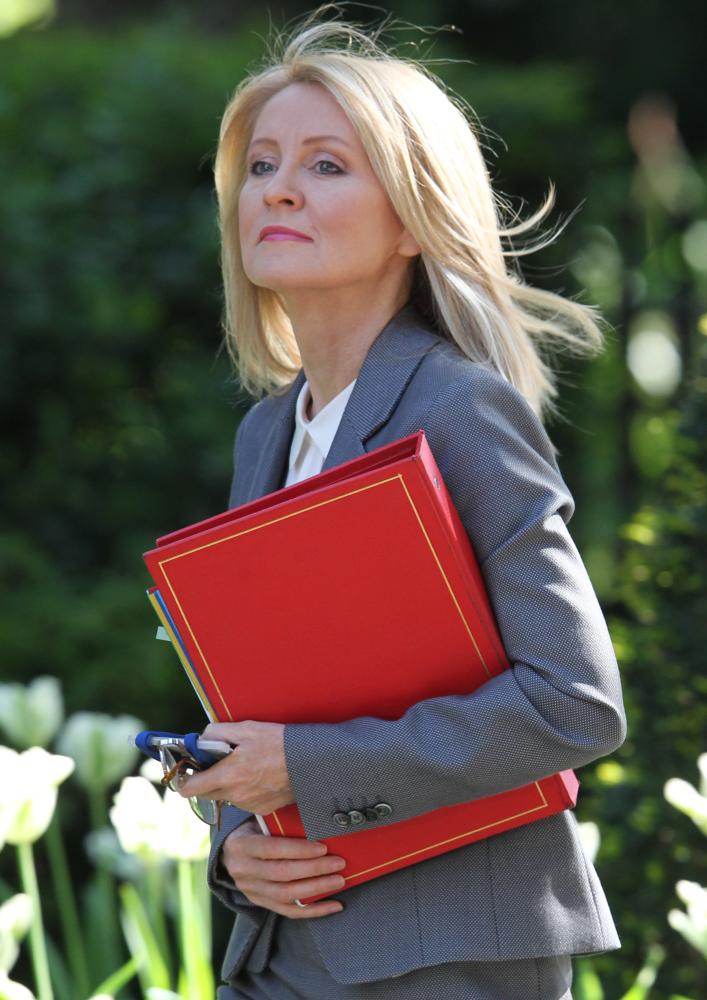
Theresa May is facing backlash and a potential House of Commons revolt after the Work and Pensions Secretary admitted her universal credit policy would disadvantage some families.
Esther McVey commented yesterday that some people will be made poorer under the new benefits system, directly contradicting the government’s line on the policy.
The Resolution Foundation think-tank predicts that three million people would be about £1,800 a year worse-off.
Ms McVey told the BBC: “I have said we made tough decisions and some people will be worse off”.
Major intervention with poll-tax comparison
Yesterday, Sir John Major, Margaret Thatcher’s successor as Prime Minister, intervened in the row over the policy, asserting that it was being rushed, and it could be as damaging as poll-tax, the policy which ended Thatcher’s premiership. With McVey’s admission contradicting the Prime Minister’s rhetoric, Mrs May’s spokeswoman said: “The PM made it really clear that when people move across on to UC as part of managed migration there is not going to be a reduction in their benefits. “At the same time, there are people who are making a new claim or who have had a change in their circumstances and their payment will reflect their new circumstances as you would expect.”Conservative divisions
Party divisions over universal credit spilled onto Twitter, as Conservative MP for Plymouth Johnny Mercer declared: “Stop the tax-free allowance rise and reinvest into UC, or I can’t support it. Not politically deliverable in Plymouth I’m afraid.” In the way of Sir Major’s comparisons, Mr Mercer also criticised the policy on Twitter for the “bad press” it will garner for the party.Labour have announced that if elected they will scrap the policy altogether. Speaking in Bristol on Thursday, Jeremy Corbyn said: “The experience of universal credit has been that the majority of people are considerably worse off”. Universal credit describes a newly introduced benefit for working-age people representing one monthy payment of six separate benefits, including income support, jobseeker’s allowance, housing benefit, child tax credit, working tax credit, and employment allowance. The new system has been criticised for overspending, for cuts to the amount of benefits handed out, and for a failure to hand out benefits on time.Why is this so unhelpful? Biggest challenge with UC is the bad press it gets, (some self inflicted obvs) and therefore some of our hardest to reach communities (eg disabled) don’t come forward, and go for longer on less money than they are entitled to. https://t.co/nMsdV3tIx4
— Johnny Mercer MP (@JohnnyMercerUK) 11 October 2018
Coast collapses, 300 jobs at risk
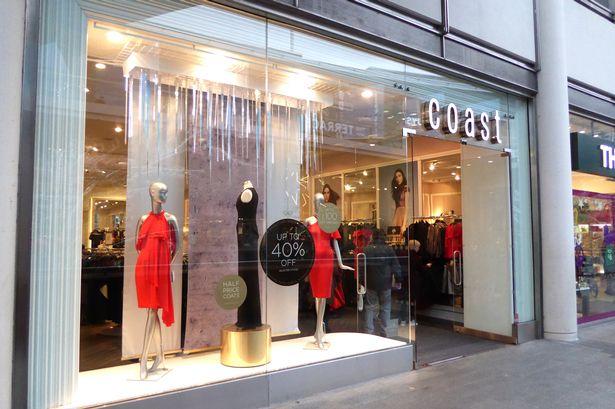
The fashion retailer Coast has collapsed into administration, risking 300 jobs.
Karen Millen owns parts of Coast, protecting the website and department store concessions, however, the 24 stand-alone stores will close immediately.
An estimated 300 employees are at risk of unemployment, whilst 600 will be transferred to Karen Millen.
The retailer was hit badly by the collapse of House of Fraser, which fell into administration owing Coast millions in debt.
“The businesses had been facing financial difficulties due to structural challenges in the retail space and specifically the concession partner market, as well as a softening of demand for occasion wear,” said Mike Denny, joint administrator and PwC director.
“This sale puts the ongoing business on a firmer financial footing. Karen Millen will be working with the existing management team to continue to grow and develop the new business.”
“Regrettably, other parts of the business including 24 retail stores were not included in the transaction. We will make every effort to help those employees in parts of the business that were not included in the sale and will support those affected at this difficult time by liaising with the Redundancy Payments Service and Job Centre Plus.”
Karen Millen’s chief executive, Beth Butterwick, said she was confident she would be able to boost sales in Coast items.
“With its beautiful fabrics, stunning colours and signature designs, Coast is a much-loved fashion brand that has dressed women for all occasions since 1996,” she said.
“Our expertise and infrastructure puts us in a unique position to create a lean and profitable business, ensuring it remains a thriving destination in department stores and online.”
A string of retailers have collapsed in that past year including Toys R Us, Maplins. Many other retailers including Homebase and Carpetright (LON: CPR) have had to close dozens of outlets to remain profitable amid the difficult trading conditions.
Financial Times pulls out of Saudi investment conference

The Financial Times declared today that it will pull out of Saudi Arabia’s Future Investment Initiative amid pressure after a Saudi journalist went missing this week.
The newspaper followed CNN’s move to withdraw its participation from the FII, along with Viacom CEO Bob Bakish and Uber CEO Dara Khosrowshahi, after journalist Jamal Khashoggi went missing after visiting the Saudi consulate in Istanbul.
The event, scheduled to take place in Riyadh between 23rd and 25th October and dubbed ‘Davos in the Desert’, had named CNBC, Bloomberg, and Fox Business Network as partners.
In a statement today, Lionel Barber, editor of the FT, said: “The Financial Times will not be partnering with the FII conference in Riyadh while the disappearance of journalist Jamal Khashoggi remains unexplained.”
Alleged murder
Khashoggi has been missing since 2nd October after entering Turkey’s Saudi consulate, with Turkish authorities alleging that the journalist was assassinated inside its walls by a Saudi hit-squad. The FT’s decision follows the New York Times’ withdrawal as media partner on Wednesday, with columnist Andrew Ross Sorkin, who was to moderate a panel at the conference, declaring on Twitter that he was “terribly distressed” by the journalist’s disappearance.Official statement: The Financial Times will not be partnering with the FII conference in Riyadh while the disappearance of journalist Jamal Khashoggi remains unexplained
— Lionel Barber (@lionelbarber) 12 October 2018
Uber Boycott
On Friday, Khosrowshahi announced in a statement: “I’m very troubled by the reports to date about Jamal Khashoggi. We are following the situation closely, and unless a substantially different set of facts emerges, I won’t be attending the FII conference in Riyadh.” The Uber CEO’s concerns are striking, since the kingdom’s sovereign wealth fund, the Saudi Arabian Public Investment Fund, invested $3.5 billion in the company in 2016, while Uber’s largest shareholder Softbank gains much of its investment capital from Saudi Arabia. Concerns about Khashoggi’s welfare escalated after Turkish authorities revealed today that audio recordings exist documenting the journalist’s murder and dismemberment.Tweet of the Week: 12th October 2018

A week on from Theresa May’s ABBA-themed riposte to those who mocked her dancing, tensions surrounding Brexit negotiations have spiralled into a bizarre dance-off between the Prime Minister and her opponent in the exit talks, President of the European Commission, Jean-Claude Juncker.
After a Daily Telegraph journalist accused Juncker of mocking the Prime Minister by doing his own jig on stage before a speech in Brussels on Monday, a commission spokesperson tweeted the reporter to “relax”, and reminded him that “Without a song or a dance what would our life be?” echoing ABBA’s ‘Thank You For the Music’.
If Juncker’s ‘Maybot’ was a sly attack at May’s performance last week or simply a harmless bit of fun, it was probably not what the PM had in mind when she demanded “respect” from the EU last month after her humiliation at Salzburg. Moreover, as the Article 50 deadline fast approaches, what might Juncker’s moves mean for a successful Brexit? As the tweet exchange between the Telegraph writer and the EU spokesperson came to head, here is how Twitter reacted:Relax James. Without a song or a dance what would our life be ? Not directed at anyone, improvisation on the moment as the music kept playing before he could start his speech. Great respect for @theresa_may repeatedly stated in public and demonstrated in practice. https://t.co/Jr9hzS9dQu
— Margaritis Schinas (@MargSchinas) 8 October 2018
*Boris compares EU to Nazis* “Anyone who is offended is a virtue-signaling fucking snowflake”
*Juncker does a little dance* “I am sad because the bad man mock Theresa dance. Anyone who isn’t offended is a traitor.” pic.twitter.com/JS3DjFRmmF — James Felton (@JimMFelton) 9 October 2018
May vs Juncker [Shooting Stars Dance off remix] pic.twitter.com/0gUlXlx3Ih
— RT (@RT_com) 10 October 2018