
Marcus: Goldman Sachs launches online saver
Goldman Sachs (NYSE: GS) has launched its very own online savings account.
Named Marcus by Goldman Sachs, after the bank’s owner Marcus Goldman, it will offer customers 1.5 percent a year, which is currently the best rate on the market.
Having previously trialled the new bank with members of staff, the bank was officially opened to the public on Thursday.
Des McDaid, Marcus’s managing director, said: “Over the last decade savers have been on the wrong end of low-interest rates.”
“We’ve spoken in depth to people across the country and there is a real disillusionment about savings – while most UK adults are diligently trying to save every month, some do not even have a savings account, with low interest rates and complexity being put to blame.”
“We want to reverse the trend – literally putting the interest back into savings and make saving worthwhile again.”
Experts predict the opening of the bank will force competitors to also offer better return rates. Next best on the market is the Yorkshire Building Society, offering 1.41 percent.
Charlotte Nelson of Moneyfacts said: “I definitely think that it will mean other providers will think about upping their rates, but only time will tell.”
“With them launching at such a high rate it’s likely to make the challenger banks sit up and take notice.”
Anna Bowes, co-founder of Savings Champion, said: “Savers who fail to move their money from the shockingly low-paying easy access accounts on the high street are allowing themselves to be robbed.”
“By moving from some of the lowest paying accounts with the likes of HSBC, to a top-paying account such as the new account from Marcus, you can get up to 10 times more interest in a year.”
For the launch of Marcus, Goldman Sachs hired an extra 150 staff in London.
Sainsbury’s & Asda may have to axe 463 stores for merger
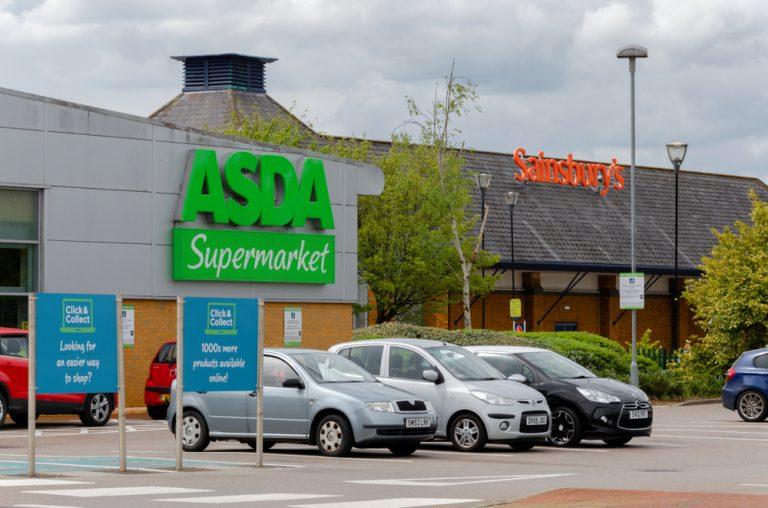
Sainsbury’s (LON: SBRY) and Asda may have to axe over 450 stores in order to complete the merger.
The Competition and Markets Authority (CMA) have said the merging of the supermarkets could damage the competition in 463 UK places.
“At a local level, the parties’ stores overlap in several hundred local areas across the UK,” said the CMA.
The findings come following the first phase of the investigation into the proposed £12 billion merger, where the CMA released a 21-page ruling published on Thursday revealing the results.
The watchdog announced last week of plans to carry out a more in-depth “phase two” investigation.
A spokesperson for Sainsbury’s and Asda said: “We welcome the start of the phase two process. The grocery market has changed significantly in the last decade and is more competitive than ever, with the rise of discount formats, online grocery and food delivery businesses.”
“We look forward to working with the CMA on the phase two inquiry, where we expect it to conduct a full review of the market and take these changed market dynamics into consideration.”
“Customers will be the big winners from this combination. By bringing the two businesses together, we will be able to invest further in more convenient ways of shopping while lowering prices and reducing the cost of living for millions of UK households.”
The first phase of the investigation for the Sainsbury’s and Asda merger only looked at the effect on the two chains’ medium-sized and largest stores and those of their four traditional rivals. Discount supermarkets Aldi and Lidl were not considered.
If the deal is agreed upon it will create a chain with revenues of £51 billion and there would be a network of 2,800 Sainsbury’s, Asda and Argos stores across the UK.
Boohoo reports 50pc rise in sales and surge in profits

Boohoo (LON: BOO) has reported a surge in profits thanks to the continued shift to internet shopping.
The online fashion retailer saw profits increase by 22 percent in the past six months following strong sales of cycling shorts and playsuits.
PrettyLittleThing and Nastygal owner saw sales increase by 50 percent to £395 million in the six months to 31 August.
“All our brands are taking market share,” said Neil Catto, Boohoo’s chief financial officer. “The signs are that the market is tough generally but we are in the right place.”
The group has said it now expects full-year sales to rise by up to 43 percent – three percent more than previously expected.
Sales for PrettyLittleThing also rose by 132 percent to £168.6 million, while NastyGal grew by 111 percent in £17.7 million.
It was announced last week that Primark’s chief operating officer John Lyttle would be Boohoo’s new chief executive.
Current executives Mahmud Kamani and Carol Kane will take on new roles and have said they will work closely with Lyttle.
“Our group results for the first half year show yet another strong performance, delivering record sales and profits. All of our brands performed extremely well across all territories as we continue to gain market share,” said Kamani and Kane in a statement.
Boohoo boasts a popular presence on social media. The retailer has 6.3 million followers on Instagram, which is a 200 percent rise in the last 12 months.
The group also has a series of celebrity ambassadors including body positivity model Ashley Graham.
“It was a really good fit for us,” said Kane. “This performance has been the strongest in the group’s history, I’m very proud to say this.”
Shares jumped nine percent on the news.
UK Oil & Gas continues rebound following acquisition

Shares in UK Oil & Gas plc (LON:UKOG) continued their rebound on Thursday morning following the confirmation of the company’s acquistion of a further interest in Horsehill.
UK Oil & Gas confirmed on Wednesday they had secured a further 22% stake in Horse Hill Developments Ltd for a total consideration of £6.6m.
Horse Hill Developments Ltd has the largest working interest in the Horse Hill block, home to one of the UK’s largest onshore oil finds in years, know as the ‘Gatwick Gusher’.
UK Oil & Gas now has a 71.9% stake in Horse Hill Developments equaling a 46.7% working interest in the licence to explore the prospect.
The remaining working interest is owned Magellan Petroleum after a consolidation of stakes held by a consortium of oil companies and investment vehicles including Solo Oil and Regency Mines.
As part of the deal between Solo Oil and UKOG, Solo Oil obtained a 4.2% stake in UKOG.
Following the completion of the deal, UKOG shares have rebounded back above 2p having suffered a 25% retreat in the share price from recent highs.
UKOG now awaits further results from ongoing flow tests to judge the viability of the prospect.
The Horse Hill discovery is one of few recent oil discoveries that are dispelling the notion that the British oil and gas industry was in its twilight years.
One such project is the West of Shetland Block operated by Hurricane Energy who are exploring a prospect in the North Sea thought to hold as much as 5,274 million barrels of oil equivalent.
Bonmarche issues profit warning, shares plunge 16pc
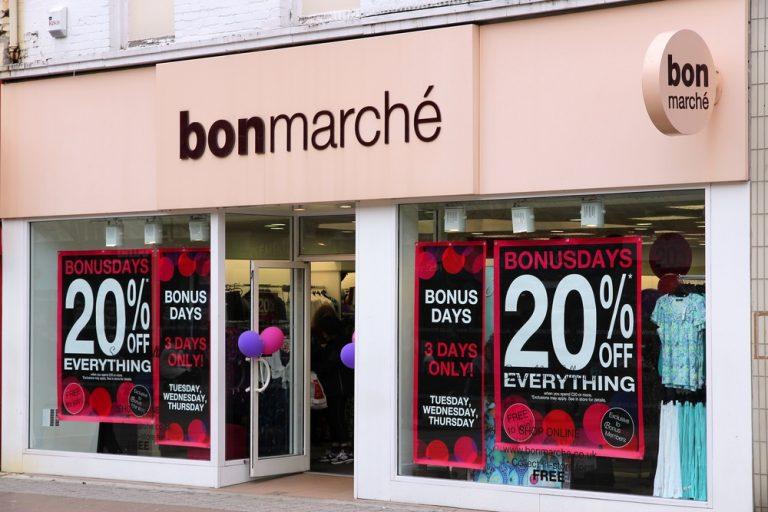
Retailer Bonmarche (LON: BON) has issued a profit warning, blaming the difficult high street conditions.
The group now expects pre-tax profit to reach £5.5 million compared to a previous £8 million.
Bonmarche said that whilst high street stores were experiencing a tougher time, online stores continued to perform well.
Online sales grew by 34.5 percent whilst instore sales fell 4.5 percent.
After a strong first quarter, the retailer said a lower footfall and the warmer summer had led to a decrease in sales.
“The continuation of warm weather for an extended period may have delayed demand for early autumn stock, but we believe that the more dominant factor is that underlying consumer demand for the UK high street is weaker which is impacting footfall,” it said.
The high street has faced a tough year with names including House of Fraser, Maplins and Toys R Us to collapse.
House of Fraser was rescued by Sports Direct’s (LON: SPD) Mike Ashley in a £90 million deal.
Bonmarche chief executive, Helen Connolly, said: “These are undoubtedly challenging times in the retail industry and, in common with many other businesses, Bonmarche’s store trading has been impacted by weaker consumer sentiment and footfall.”
“We have continued to improve our proposition, particularly our digital capabilities, reflected in the strong online sales.”
“We remain focussed on exploiting the opportunity afforded by the increasing demand for online shopping, whilst modernising the store offer and customer experience.”
“Whilst it is disappointing that FY19’s (full year 2019’s) result is expected to be lower than originally planned, despite the challenging market, the health of the business remains strong.”
Shares in the group have plunged over 16 percent on the news.
Average salary required for first time buyers increases 18pc

The average salary required for a first-time buyer has risen by 18 percent in the past three years.
Figures from the research company Hometrack have shown that only three out of 20 major cities have become more affordable since 2015.
Home ownership is becoming a distant dream for many young people, where a first-time buyer needs to earn £58,826 a year to afford the average property in Bristol.
With higher salaries required to buy homes, millennials are likely to live in and raise families in rented homes. Research from the Resolution Foundation thinktank suggested that one in three millennials are unlikely to own their own home.
According to the Hometrack figures, the average salary required to buy a house across all 20 cities included in the study is more than double the median annual wage, £28,677, for a full-time employee in the country.
Whilst affordability has slightly improved in London, the income required to buy an average property is £84,250.
The average wage needed to buy a home has also fallen in Cambridge, Oxford and Aberdeen as wages have increased and house prices stagnated or dropped.
The average salary to buy an average home in Manchester has jumped by over £6,500 to £34,770.
Cities with the highest salaries required to buy properties are London, Cambridge, Oxford, Bournemouth, Bristol, Portsmouth and Bristol.
Richard Donnell, Hometrack’s insight director, said that higher interest rates from the Bank of England could also make it harder for more people to buy a home.
“Higher prices and a further drift upwards in mortgage rates means that these affordability pressures will continue to steadily build,” he said.
Murdoch to sell stake in Sky following Comcast bid
Rupert Murdoch’s 21st Century Fox (NASDAQ: FOXA) has announced plans to sell its 39 percent stake in Sky (LON: SKY).
After Comcast (NASDAQ: CMCSA) won the bidding war for Sky in a £30 billion deal on Saturday, it was unclear if Fox would retain its shares in the broadcaster.
Fox will accept Comcast’s £17.28 a share offer, valuing the Sky stake at £11.6 billion.
21st Century Fox said in a statement: “When we launched Sky in 1989 it was four channels produced from a prefab structure in an industrial park on the fringes of west London.”
“We bet – and almost lost – the farm on launching a business that many didn’t think was such a good idea. Today, Sky is Europe’s leading entertainment company and a world-class example of a customer-driven enterprise.”
“This achievement would not have been possible without decades of entrepreneurial risk-taking and the commitment of thousands of colleagues, creators and dreamers. For nearly 30 years we have invested to create a dynamic and exciting business that has produced excellent returns for shareholders and has become one of the most admired companies in Europe.”
Sky’s Chief Executive Jeremy Darroch said: “Nearly 30 years ago Rupert Murdoch took a risk to launch Sky and in the process changed the way we watch television forever.”
“With [21st Century Fox] announcing its intention to sell its shares to Comcast, we close one chapter while simultaneously opening another.”
James Murdoch, who is the current chairman for Sky, is likely to leave the company when the deal is finalised.
Comcast controls various US news and media businesses including NBC and Universal Studios.
Shares in Fox are trading up 1,26 percent at 45,78 (1735GMT).
Trump accuses China of meddling in midterms
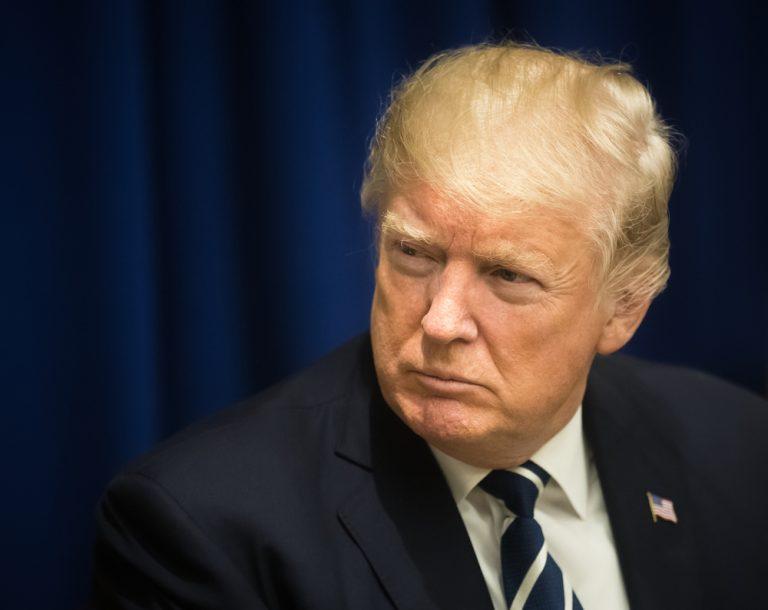
During a UN meeting, Donald Trump has accused China of attempting to “meddle” in the upcoming US midterm elections.
The US President told world leaders on Wednesday: “China has been attempting to interfere in our upcoming 2018 election, coming up in November. Against my administration.”
“They don’t want me or us to win because I am the first president to ever challenge China on trade,” he added.
The comments come amid the ongoing trade war with Beijing, where this week saw the US introduce $200 billion worth of new tariffs on Chinese goods entering the US.
China said it would retaliate with tariffs on another $60 billion of US goods.
Trump chaired the UN meeting, which was held to discuss countering nuclear, chemical and biological weapons.
The US President did not provide any evidence for the allegation and China has not yet responded to the comment.
This is not the first time that Trump has made a similar accusation. In September, he tweeted that China was “actively trying to impact and change our election by attacking our farmers, ranchers and industrial workers because of their loyalty to me”.
Trump is not up for re-election until 2020 but the voting held in November will decide whether the Republican party can keep control of the US House of Representatives and the Senate.
Voting will take place on November 6.
Crowdcube celebrates 100 pitches fundraising over £1m

Crowdfunding platform Crowdcube has announced that over 100 fundraisings have raised over £1 million each.
As the world’s largest investment crowdfunding platform, Crowdcube allows entrepreneurs to raise funds whilst being supported by a crowd of investors.
A significant portion of Crowdcube’s successful campaigns are from the fintech industry. This includes Monzo and Revolut, which raised £4.3 million and £1 million via crowdfunding respectively.
Luke Lang, the co-founder of Crowdcube, said: “Having seen the 100th company raise over £1 million on Crowdcube since we started in 2011, the impact equity crowdfunding is having on the investment landscape is clear.”
“These 100 raises, as well as the move to raise the prospectus limit to €8 million, demonstrates a change in the nature of equity finance. Businesses beyond the start-up stage, the likes of Revolut, Monzo and Mindful Chef, now recognise the benefits of continuing to allow your customers to become your investors. It all points towards the democratisation of finance.”
Fintech remains a popular investment in the UK where according to KPMG, investors pumped over £12.2 billion in the first half of 2018.
Despite concerns surrounding Brexit, London remains a top fintech hub. Research by Early Metrics, a global rating agency for start-ups and small to medium-sized enterprises (SMEs), found that London’s leadership in the fintech arena would continue to outpace its European rivals after Brexit.
Four of Europe’s top 10 deals took place in the UK, highlighting the UK’s strength in the sector.
KPMG Fintech’s global co-lead, Anton Ruddenklau, said: “The year has got off to an exceptionally strong start for the fintech sector.”
“In addition to the bullish levels of investment the UK has attracted, our fintech sector has also benefitted from the government’s continued support with the launch of the Fintech Sector Strategy.”
“Fintech investment is always fairly volatile but the UK tends to enjoy higher highs and lower lows than most, the blockbuster acquisition of WorldPay by Vantiv certainly means H1 2018 was a real high for UK fintech investment. Whilst the rest of the year will struggle to replicate the first half, I’m optimistic that we will remain in robust shape.”
A total of 13 fintech companies have raised over £1 million on Crowdcube. Over £500 million has been raised via the platform to date.
Barclays apologises for PPI compensation error
Barclays (LON:BARC) has apologised for giving thousands of customers wrong information regarding payment protection insurance (PPI) claims.
The bank admitted that some customers had been told they had not taken out PPI despite this not being the case.
However, the bank said it was taking the necessary steps to contact the “very small percentage of customers” who were affected.
Specifically, Barclays stated that in “less than 1.1%” of those cases where requests came via claims management companies, customers were wrongly told that they did not have PPI.”
Earlier this month Barclays chairman John McFarlane came under fire after comments he made suggesting that many PPI claims had been fraudulent.
“The percentage of fraudulent claims is enormous,” McFarlane told the Mail on Sunday.
“We have turned portions of Britain into fraudsters.
“It was in the government’s interests [for customers to receive PPI compensation]: consumer spending rose and it weakened the banks, so the government is complicit here in the decline of the City. This is stimulation of the economy by buying flat-screen televisions.”
Various banks have been investigated by The Financial Conduct Authority (FCA) over mis-sold mortgage insurance.
Barclays has been particularly affected by penalties relating to PPI charges.
Profits at the bank fell by 29 percent to £1.7 billion in the first half of the year, in part due to a £400 million PPI charge as well as a £1.4 billion settlement with US authorities over its selling of mortgage-backed securities.
Alongside Barclays, HSBC, Lloyds and RBS have faced numerous penalties relating to PPI and litigation issues.
According to Standard’s & Poor’s, in the five year period up to 2015, Barclays, HSBC, Lloyds and RBS have collectively incurred costs of £55.8 billion relating to compensation and legal expenses.
The FCA has said that a total of £32.2 billion has been paid to PPI claimants since 2011.
Claimants still have until 29 August 2019 to submit a claim.
Shares in Barclays are trading +0.27 percent as of 14.28PM (GMT).