
Tesla shares fall 6pc as DoJ opens criminal investigation
Shares in Tesla plummeted six percent after the US government launched an investigation into the group.
The Department of Justice is investigating Elon Musk’s tweet that said he had “funding secured” to take his company private once shares hit $420.
A Tesla spokesperson said in a statement: “Last month, following Elon’s announcement that he was considering taking the company private, Tesla received a voluntary request for documents from the DOJ and has been cooperative in responding to it.”
“We have not received a subpoena, a request for testimony, or any other formal process. We respect the DOJ’s desire to get information about this and believe that the matter should be quickly resolved as they review the information they have received.”
Following Musk’s tweet about taking Tesla private, shares in the electric car maker as much as 11 percent and the company’s value surged $1.2 billion.
The carmaker later backtracked and released a statement saying that a decision had not yet been made.
Musk’s comments also led to shareholder lawsuits, claiming that Musk was attempting to manipulate the stock price of Tesla.
Soon after Bloomberg reported the news of the Department of Justice’s investigation, shares in Tesla fell six percent before rebounding later in the afternoon.
This is the latest scandal for Musk. He was recently sued by the British diver who led the rescue of 12 Thai boys from a flooded cave after Musk repeatedly called him a paedophile.
Lin Wood, a US lawyer acting for the British diver, said: “Elon Musk falsely accused Vern Unsworth of being guilty of heinous crimes. Musk’s influence and wealth cannot convert his lies into truth or protect him from accountability for his wrongdoing in a court of law.”
Shares in Tesla (NASDAQ: TSLA) are currently trading down 3.35 percent at 284,96 (0808GMT).
Former HSBC analyst will not receive an extradition for data leak
Former HSBC analyst, Hervé Falciani, will not receive an extradition for leaking the details of thousands of HSBC clients. The Guardian has reported that Spain’s high court rejected Switzerland’s second request for an extradition.
Whilst working for HSBC back in 2008, Falciani leaked the private details of roughly 130,000 holders of secret Swiss accounts. After being handed to French investigators, other European Governments also received the private information.
Falciani is a French citizen and former HSBC worker and has divided public opinion. Some consider him a “hero” for igniting investigations in certain countries. Whereas Swiss courts have sentenced him to five years in jail for the data leak. But, several of these clients were suspected of tax evasion. Indeed, France, Austria, Belgium, Spain and Argentina launched investigations because of the information leaked. Despite this, Switzerland remains certain that the data was stolen and thus legally invalid.
Additionally, the Guardian have said that Falciani is currently seeking refuge in France from his Swiss jail sentence.
This is the second extradition request that Spanish courts have denied. This is because the charges Switzerland has made are not criminalised in Spain.
The Spanish court said:
“The Spanish criminal code does not include any charge similar to the crime of ‘aggravated financial espionage’ for which the Swiss justice had sentenced Falciani to a five-year prison sentence”.
China retaliates to recent US tariffs, trade war escalates
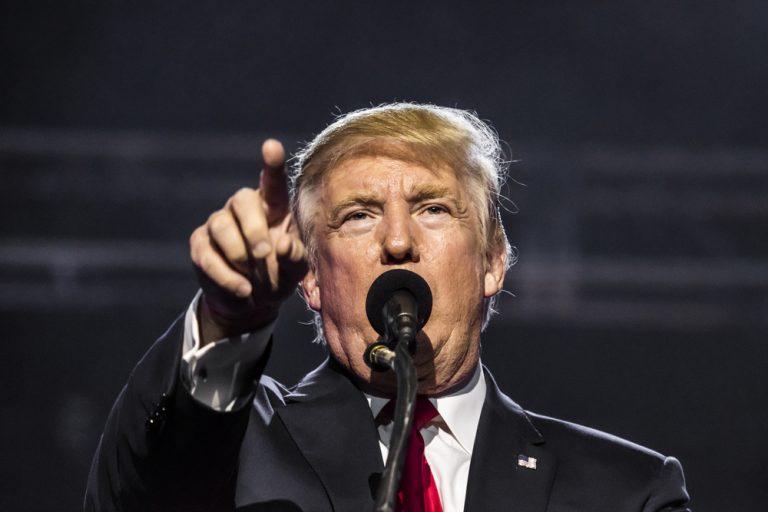
China has retaliated to Donald Trump’s recent wave of tariffs by imposing an additional $60 billion (£56 billion) of imports from the US.
Following the US’s decision to introduce $200 billion worth of tariffs on Chinese goods that will be implemented next week, China announced the tariffs that will affect imports including aircraft and coffee.
Trump announced the latest retaliation on Monday that will apply to almost 6,000 items. The US President warned of a further $276 billion of tariffs if China retaliated.
Trump used Twitter to accuse China of “actively trying to impact and change our election by attacking our farmers, ranchers and industrial workers because of their loyalty to me”.
“What China does not understand is that these people are great patriots and fully understand that China has been taking advantage of the United States on trade for many years.”
“They also know that I am the one that knows how to stop it. There will be great and fast economic retaliation against China if our farmers, ranchers and/or industrial workers are targeted!”
Investors were expecting Trump’s latest tariffs and therefore there was minimal impact on the market.
Chang Wei Liang of Mizuho Bank said: “Given that markets have been bracing for this tariff announcement, we expect a muted rather than dramatic sell-off in Asian equities and currencies today.”
Keith Wade, the chief economist at Schroders, said the tariffs are likely to impact the many US companies that operate in China. Companies include Nike (NYSE: NKE) and Apple (NASDAQ: AAPL).
“Very zealous enforcement of regulations could make life quite difficult for companies. America is also probably more dependent on China than the official trade figures suggest,” he said.
Spire Healthcare shares drop 7pc on disappointing results

Shares in Spire Healthcare tumbled on Tuesday morning after the group reported disappointing first-half results.
Pre-tax profit for the healthcare firm 7.9 percent to £8.2 million, whilst revenue fell 1.1 percent to £475.6 million.
Britain’s second-largest healthcare firm said that a “prolonged decline” in NHS volumes affected the group’s margins.
Spiral issued a profit warning last week and the FTSE 250 group has attempted to cut costs by reducing its capital spending.
The chief executive Justin Ash said: “The unprecedented decline (both in scale and speed) in NHS admissions has led to Spire having to announce disappointing H1 2018 results and a revised outlook for the financial year as a whole.”
“More broadly, the headwinds that Spire is facing, as the largest company in the sector by revenues and EBITDA, appear to be translating into significant business challenges for many sector participants, which in turn may lead to opportunities for Spire,” he added.
The group’s outlook has been affected and instead of the full-year underlying earnings to be £150 million, which was expected in 2017, the adjusted earnings are between £120-125 million.
Liberum analyst, Graham Doyle, said: “Spire released its H1 2018 results this morning but following its profit warning last month there are no surprises for the first half.”
“However, management provided a more granular guidance today than it did a month ago, now expecting FY2018 EBITDA of £120-125 million. We believe that this will disappoint versus consensus at c.£135 million implying a downgrade of nine percent at the mid-point.”
In a separate statement, the health group named John Forrest as its new COO.
Shares in Spire (LON: SPI) fell seven percent in early trading to 157.5p.
Shares are currently trading down 4.20 percent at 162,10 (1421GMT).
Haydale wins contract to develop wearable tech for elite athletes
Haydale (LON:HAYD) and the Welsh Centre for Printing and Coating are now contracted to develop wearable advanced technology. Indeed, the English Institute of Sport (EIS) awarded the contract, which will develop wearable technology for 2020 Olympic and Paralympic athletes.
The apparel range for elite athletes will incorporate flexible, printable coatings and Haydale’s advanced materials. In fact, during the run up to 2020, athletes will wear the clothing during training and competitions.
Director of Performance and Innovation for the English Institute of Sport, Dr Matt Parker, said:
“The EIS performance innovation team is continually looking for external expertise that can help us optimise athlete performance,”
“We believe the partnership with Haydale and WCPC will allow us at the EIS to make significant advances in our use of wearable technologies.”
Additionally, the EIS is “delighted” to be working with Haydale and the Welsh Centre for Printing and Coating.
At 12:35 BST Haydale shares were trading at -1.65%.
BMW to close UK factory for a month following Brexit

BMW has announced plans to shut its UK factory for one month on the same day Britain plans to leave the EU.
The car manufacturer said on Tuesday that it will stop making cars from 29 March 2019 in order to minimise the potential disruption a no-deal Brexit.
A BMW spokesperson said on Tuesday: “Planned annual maintenance periods at BMW Group production sites allow essential updating and equipment replacement to be completed over several weeks, while there is no production taking place.”
“As a responsible organisation, we have scheduled next year’s annual maintenance period at Mini Plant Oxford to start on 1 April, when the UK exits the EU, to minimise the risk of any possible short-term parts-supply disruption in the event of a no-deal Brexit.”
“While we believe this worst-case scenario is an unlikely outcome, we have to plan for it.”
The news from BMW comes amid several warnings from car manufacturers with factories in the UK.
On Monday, Jaguar Land Rover announced that it was introducing a three-day week at its Castle Bromwich plant due to “continuing headwinds impacting the car industry”.
The reduction of worker hours will impact the 2,000 employees based at the factory. Jaguar has said the reduction in hours will preserve the jobs of its employees rather than axing the roles.
On Tuesday, Honda (TYO: 7267) warned that a no-deal Brexit would cost tens of millions of pounds.
Last week Jaguar boss Ralf Speth warned that tens of thousands of jobs in the motor industry will be at risk if a no-deal Brexit goes ahead.
The BMW spokesperson said that the car manufacturer would remain committed to the UK, adding: “We remain committed to our operations in Britain, which is the only country in the world where we manufacture for all three of our automotive brands.”
Shares in BMW (ETR: BMW) are trading at 82,50 (1343GMT).
Phoenix Global Mining announces “game changing” test results
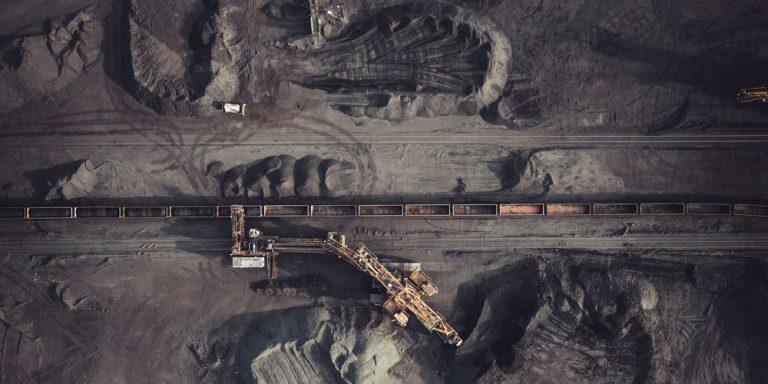
Phoenix Global Mining Ltd (LON:PGM) has produced results for its ongoing drill programme at the Empire Copper Mine in Idaho.
Phoenix Global Mining is a metal explorer and developer, and is US-focused. Its main focus is the advancement of the Empire mine into an open pit copper oxide production.
The results include several highlights. First, they outline extensive evidence that copper sulphides lie below the Empire mine. Likewise, just north-west of the Empire pit lies a new zone of mineralisation. This “Red Star” outcrop holds heavy oxide/sulphide mineralisation. Furthermore, the results show that five drill hole intercepts contain predominantly chalcopyrite and bornite copper sulphide mineralisation.
CEO Dennis Thomas commented:
“These results are “game changing” for the Company given they provide extensive evidence that a high-grade feeder system exists below the Empire oxide resource and demonstrate the existence of such a sulphide system within the Empire Mine.”
Moreover, Thomas added:
“To date, we have focused on the oxides at surface but these results will inevitably require following up with further exploration of the sulphide system. We now have five drill holes that have intercepted predominantly chalcopyrite and bornite copper sulphide mineralisation in high-grade vein structures. This batch of results has given us renewed confidence to explore the sulphides in more detail. Also, quite significantly we have reported material gold and silver grades that would boost project economics.
In addition, the CEO explained:
“We are pleased to report the discovery of a new zone of surface mineralisation in the Empire block, now referred to as Red Star. Red Star is located approximately 330 metres north-west of the northern end of the Empire resource area and is a 20-meter-wide surface outcrop across the structure.”
At 12.23 BST today, Phoenix Global Mining shares were trading at +12.79%.
Aviva successfully completes its share buy-back programme
Aviva PLC (LON:AV) has announced that it has successfully completed its share buy-back programme. As a result, Aviva has acquired 119,491,188 shares at an average price of £5.02 per share.
Aviva announced the share buyback programme earlier this year in May. This was as a result of its 2017 results which highlighted a significant excess of capital. Aviva had committed to deploy £2 billion of the excess capital in 2018. The deployment includes three parts. First, £900 million for debt reduction. Next, £500 million for bolt-on acquisitions. Finally, a £600 million ordinary share buy-back.
Additionally, Aviva had entered into an agreement with Citigroup Global Markets LTD to conduct the buy-back programme on its behalf. Under the agreement, Citigroup conducted the share buy-back programme on Aviva’s behalf, making trade decisions independently of Aviva.
The programme was expected to last from 1 May 2018 to 31 December 2018, but it has been completed ahead of schedule.
At 11:59 BST today, shares in Aviva were trading at -0.23%.
Union Jack Oil PLC reports loss increase

Union Jack Oil PLC (LON:UJO) has released its Unaudited Results for the six months ended 30 June 2018.
Union Jack Oil specialises in onshore oil and gas production, development and exploration, focusing on the UK. Additionally, its investment strategy emphasises the acquisition of late stage exploration projects with approved planning consent for drilling wells.
Notably, the results highlight an increase in the company’s losses. For the six months through June, losses reached £419k. In comparison to the £316k loss for the six months ended in June 2017, this is a considerable increase.
That said, the results highlight a successful workover programme on production wells at Fiskerton Airfield Oilfield. Additionally, it notes the commercial partnership entered into with Humber Oil & Gas Limited.
Executive Chairman, David Bramhill, said:
“The addition of material interests in the Biscathorpe and Wressle projects during the period under review both materially enhance Union Jack’s oil reserves and resources”.
As a result, this significantly increases “risk value potential in the fully funded prospective high impact conventional well at Biscathorpe-2”.
“The Company will benefit materially if either of these key projects is successful given the considerable upside value potential in each to Union Jack.”
“I look forward to commenting further on each of these drilling and development projects during the coming months.”
“The future of Union Jack remains bright.”
At 08:09 BST today, shares in Union Jack Oil were trading at +0.82%.
Jaguar Land Rover will introduce a three-day working week
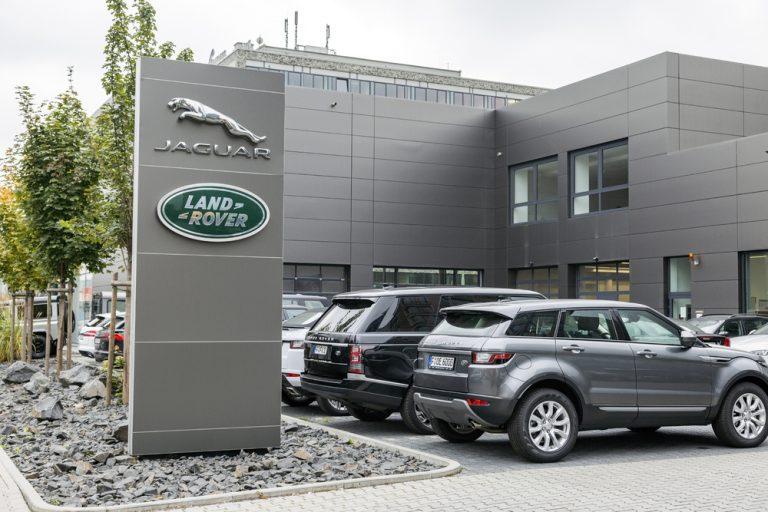
Jaguar Land Rover will move to a three-day working week at its Castle Bromwich factory, the Telegraph has reported.
This decision has been made amid its decreasing sales and Brexit fears. Indeed, the move to a three-day week is set to last until Christmas.
The reduction of worker hours will impact 2,000 staff working at the factory. By reducing their hours, Jaguar aims to preserve the jobs of its employees rather than scrapping roles completely.
The company sad it will be making “temporary adjustments to our production schedules” at the factory. Additionally, the company added that it was normal to “regularly review its production schedules to ensure market demand is balanced globally”.
Several have blamed Brexit uncertainty for the move, the BBC reports.
Notably, Assistant general secretary of the Unite union, Tony Burke, said:
“This is the continuing effect of the chaotic mismanagement of the Brexit negotiations by the government”
Moreover, Theresa May’s handling of the situation “has created uncertainty across the UK’s automotive industry and the manufacturing sector generally”.
Jaguar Land Rover directly employs 40,000 in addition to the 260,000 working in its supply chain. In 2017, the company produced over 600,000 cars. Mainland Europe purchased a fifth of these.