
Sainsbury’s-Asda merger set to be investigated further
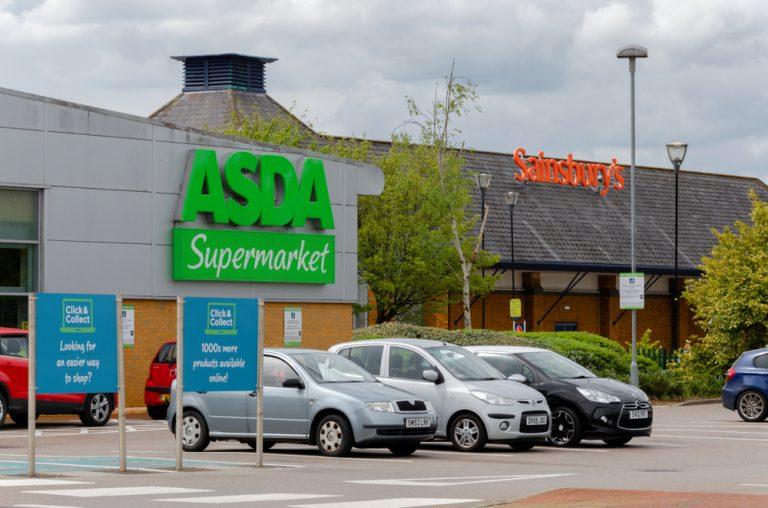
Sainsbury’s-Asda merger is set to be subject to an in depth investigation by the competition authority.
The Competitions and Markets Authority (CMA) said that the merger “raises sufficient concerns to be referred for a more in-depth review”.
The CMA has launched the second part of an investigation into the £12 billion merger amid concerns that the deal will lead to less choice and higher prices for customers.
“The companies are two of the largest grocery retailers in the UK and their stores overlap in hundreds of local areas, where shoppers could face higher prices or a worse quality of service,” the CMA stated.
The deal, announced back in April, is set to merge the UK’s second and third-largest supermarkets.
It will create the UK’s biggest retail chain with a 31.4 percent market share and some 2,800 stores across the country.
The merger will see the Sainsbury’s-Asda chain surpass Tesco, which is currently the UK’s biggest supermarket.
In a joint statement, Sainsbury’s executive Mike Coupe and Roger Burnley, Asda’s president and chief executive commented: “We expected the CMA would want to undertake an in-depth review and look forward to engaging with the CMA and Panel on this next phase of the process.”
Supermarket chains have been under increased pressure in recent years, amid competition from budget retailers such as Lidl and Aldi, which have continued to grow their market share.
This week, Tesco announced the opening of its new discount store, Jack’s, as it looks to take on the Lidl and Aldi chains.
Jack’s, which is named after Tesco’s founder Jack Cohen, is set to open its first store in Chatteris in Cambridgeshire.
Tesco Chief Executive Dave Lewis has said that following the initial opening, 10-15 Jack’s stores are set to open in the following six months.
Shares in Sansbury’s (LON:SBRY) are currently -0.65 percent.
Asda owner Walmart (NYSE:WMT) shares are currently +0.64 percent as of 11.48AM (GMT).
Theresa May will invest £2bn in new homes across England to end social housing “stigma”
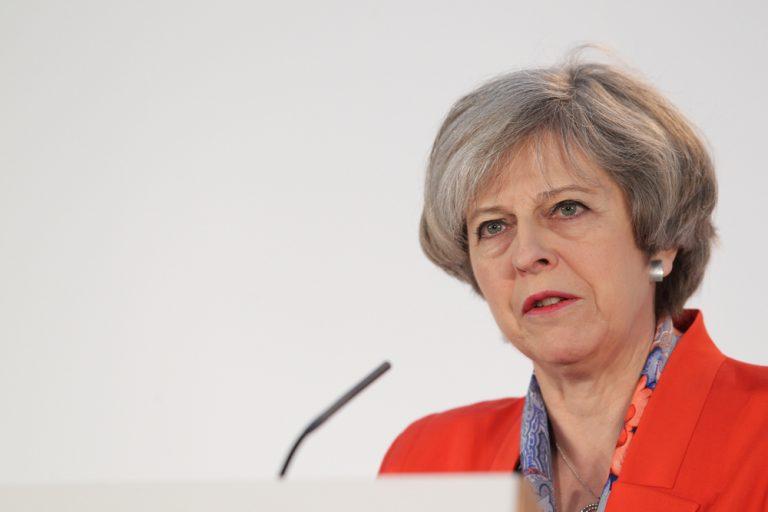
Theresa May will invest £2bn in housing associations to build tens of thousands of affordable homes in England.
In 2022, the £2bn programme will become available to housing associations.
In her address at a National Housing Federation summit, May underlined the “stigma” that still “clings” to social homes. Rather, the PM hopes to see citizens that are “proud” of their council housing.
In her speech, Theresa May said:
“And today, I can announce that new longer-term partnerships will be opened up … through a ground-breaking £2bn initiative.”
“Under the scheme, associations will be able to apply for funding stretching as far ahead as 2028/29”
She cotinued to add that this was “the first time any government has offered housing associations such long-term certainty.”
“Doing so will give you the stability you need to get tens of thousands of affordable and social homes built where they are needed most, and make it easier for you to leverage the private finance you need to build many more.”
Furthermore, Theresa May addressed the social attitudes towards council housing:
“For many people, a certain stigma still clings to social housing.”
“Some residents feel marginalised and overlooked, and are ashamed to share the fact that their home belongs to a housing association or local authority.”
“And on the outside, many people in society – including too many politicians – continue to look down on social housing and, by extension, the people who call it their home.”
“I want to see social housing that is so good people are proud to call it their home… Our friends and neighbours who live in social housing are not second-rate citizens.”
UK inflation hits six-month high in August
UK inflation unexpectedly hit a six-month high of 2.7 percent in August, according to the latest Office of National Statistics (ONS) figures.
This proved above Economist expectations of UK inflation coming in at 2.4 percent.
Despite the rise, wages are still outpacing inflation, with wages excluding bonuses up 2.9 percent in the three months to July.
The rise was attributed to higher prices in transport, clothing and goods.
Moreover, the ONS said that UK house prices rose at the slowest pace in nearly five years, with the stagnating property market in the capital dragging down growth.
House prices in London fell 0.7 percent year-on-year in July, marking the biggest drop since September 2009.
Mike Hardie, head of inflation at the ONS, said: “Consumers paid more for theatre shows, sea fares and new season autumn clothing last month.
“However, mobile phone charges, and furniture and household goods had a downward effect on inflation.”
The figures sent the pound sterling to an eight-week high against the greenback, with traders expecting an interest hike to be more likely.
Last month the Bank of England said it expected UK inflation to hit 2.4 percent in August, down from 2.5 percent in July.
The monetary policy committee are set to meet on the 1st of November later this year.
BMW will shut its Oxford Mini factory immediately after the official Brexit date
BMW (ETR:BMW) will shut its Mini factory in Oxford for a month immediately after the official Brexit date, Sky reports.
The Oxford Mini plant is the company’s main British manufacturing factory. The plant on the outskirts of Oxford employs 4,500 people and usually produces 5,000 cars per week.
However, it will not produce cars for a month from 1 April 2019, at the very least. This is to allow the company to enter into the next stages of its Brexit contingency plans.
As a result, the annual summer maintenance shutdown will not take place later in the year. The period immediately after Brexit will now host the shutdown in order to avoid further disruption.
But, this demonstrates just how disruptive a no-deal Brexit may be. Furthermore, it exemplifies the lack of confidence big businesses have in Theresa May’s ability to secure an exit deal.
Maintenance, management and catering staff will continue to work despite no cars being produced.
Back in February 2016, David Davis claimed that the UK is “too valuable a market for Europe to shut off”, Sky reports.
BMW said:
“While we believe this worst case scenario is an unlikely outcome, we have to plan for it”.
Danske Bank CEO resigns amid money-laundering scandal, shares fall
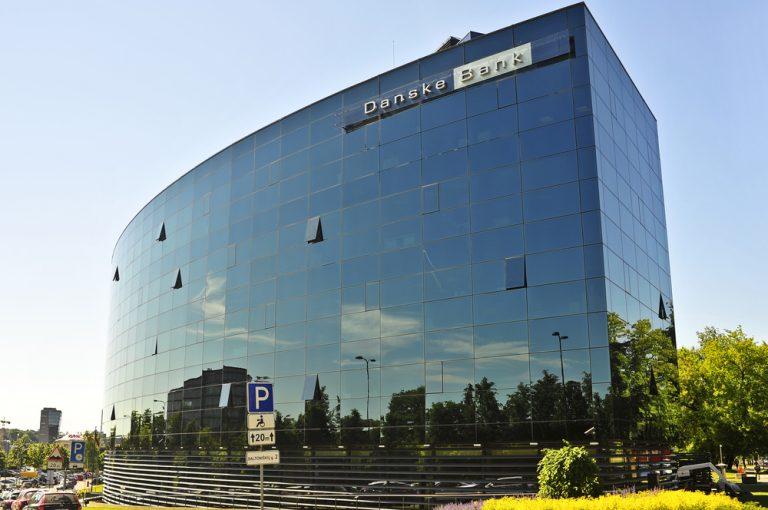
The chief executive of Danske Bank has resigned amid allegations of a major money-laundering scandal.
Thomas Borgen will continue in his role until a replacement is found, said the bank on Wednesday.
“Even though the investigation conducted by the external law firm concludes that I have lived up to my legal obligations, I believe that it is best for all parties that I resign,” he said.
“It is clear that Danske Bank has failed to live up to its responsibility in the case of possible money laundering in Estonia.”
“I deeply regret this,” he added in a statement.
The Copenhagen-based bank has been at the centre of a money laundering scandal where the bank’s Estonian operations were used to launder as much as $9.1 billion between 2007 and 2015.
“As the CEO, I have the management responsibility for the things that take place in the bank, and, of course, I take on this responsibility,” said the bank’s chief.
“It has been clear to me for some time that resigning would be the right thing to do, but I have held off the decision, because I have felt a responsibility for seeing the bank through this difficult period towards presentation of the investigations,” he added.
Shares in Danske fell over four percent in Copenhagen following Borgen’s resignation, lowering the group’s full-year outlook.
Earlier this year, the bank reported a 45 percent fall in profits.
Danske Bank is the latest bank involved in money laundering scandals. Last year, Deutsche Bank AG (ETR: DBK) was fined almost $700 million for helping Russians move $10 billion.
Earlier this month, ING Group NV (NYSE: ING) earlier this month paid $900 million to settle a laundering case.
Shares in Danske Bank (CPH: DANSKE) are currently trading down 6.29 percent at 163,85 (0922GMT).
Apple pays Ireland €14bn owed in taxes and interest
The Irish government has been paid the €14.3 billion (£12.7 billion) it was owed in taxes from Apple (NASDAQ: AAPL).
In 2016, the European Commission ruled that Apple was receiving unfair tax incentives. Apple and Dublin are appealing against this ruling.
Irish finance minister, Paschal Donohoe, said in a statement: “While the government fundamentally disagrees with the commission’s analysis and is seeking an annulment of that decision, as committed members of the European Union, we have always confirmed that we would recover the alleged state aid.”
The Irish government has maintained that it has never given Apple any special deal and the taxes collected were in line with the law.
Dublin began recovering the money in May and has now recovered the €13.1 billion in disputed taxes plus interest of €1.2 billion.
The total amount collected equates to Ireland’s health budget for the year.
The money collected will be held in an escrow fund while the appeal takes place. The appeal is expected to last several years before being resolved.
The Irish Finance Ministry said: “These sums will be placed into an escrow fund with the proceeds being released only when there has been a final determination in the European Courts over the validity of the Commission’s Decision.”
An Apple spokesperson said the company was confident over the appeal.
“The Commission’s case against Ireland has never been about how much Apple pays in taxes, it’s about which government gets the money. The United States government and the Irish government both agree we’ve paid our taxes according to the law.”
Ireland’s low tax rate has attracted several tech giants to locate European operations in the country. Groups based in Ireland include Facebook (NASDAQ: FB), Twitter (NYSE: TWTR) and Google (NASDAQ: GOOGL).
Tesla shares fall 6pc as DoJ opens criminal investigation
Shares in Tesla plummeted six percent after the US government launched an investigation into the group.
The Department of Justice is investigating Elon Musk’s tweet that said he had “funding secured” to take his company private once shares hit $420.
A Tesla spokesperson said in a statement: “Last month, following Elon’s announcement that he was considering taking the company private, Tesla received a voluntary request for documents from the DOJ and has been cooperative in responding to it.”
“We have not received a subpoena, a request for testimony, or any other formal process. We respect the DOJ’s desire to get information about this and believe that the matter should be quickly resolved as they review the information they have received.”
Following Musk’s tweet about taking Tesla private, shares in the electric car maker as much as 11 percent and the company’s value surged $1.2 billion.
The carmaker later backtracked and released a statement saying that a decision had not yet been made.
Musk’s comments also led to shareholder lawsuits, claiming that Musk was attempting to manipulate the stock price of Tesla.
Soon after Bloomberg reported the news of the Department of Justice’s investigation, shares in Tesla fell six percent before rebounding later in the afternoon.
This is the latest scandal for Musk. He was recently sued by the British diver who led the rescue of 12 Thai boys from a flooded cave after Musk repeatedly called him a paedophile.
Lin Wood, a US lawyer acting for the British diver, said: “Elon Musk falsely accused Vern Unsworth of being guilty of heinous crimes. Musk’s influence and wealth cannot convert his lies into truth or protect him from accountability for his wrongdoing in a court of law.”
Shares in Tesla (NASDAQ: TSLA) are currently trading down 3.35 percent at 284,96 (0808GMT).
Former HSBC analyst will not receive an extradition for data leak
Former HSBC analyst, Hervé Falciani, will not receive an extradition for leaking the details of thousands of HSBC clients. The Guardian has reported that Spain’s high court rejected Switzerland’s second request for an extradition.
Whilst working for HSBC back in 2008, Falciani leaked the private details of roughly 130,000 holders of secret Swiss accounts. After being handed to French investigators, other European Governments also received the private information.
Falciani is a French citizen and former HSBC worker and has divided public opinion. Some consider him a “hero” for igniting investigations in certain countries. Whereas Swiss courts have sentenced him to five years in jail for the data leak. But, several of these clients were suspected of tax evasion. Indeed, France, Austria, Belgium, Spain and Argentina launched investigations because of the information leaked. Despite this, Switzerland remains certain that the data was stolen and thus legally invalid.
Additionally, the Guardian have said that Falciani is currently seeking refuge in France from his Swiss jail sentence.
This is the second extradition request that Spanish courts have denied. This is because the charges Switzerland has made are not criminalised in Spain.
The Spanish court said:
“The Spanish criminal code does not include any charge similar to the crime of ‘aggravated financial espionage’ for which the Swiss justice had sentenced Falciani to a five-year prison sentence”.
China retaliates to recent US tariffs, trade war escalates
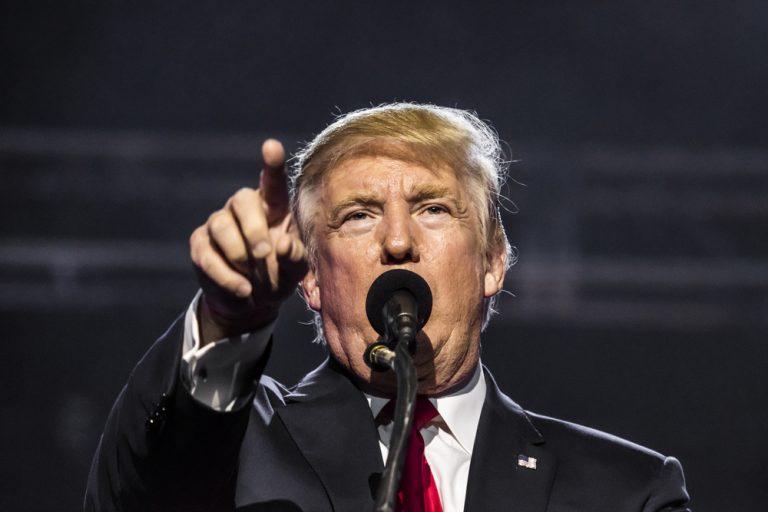
China has retaliated to Donald Trump’s recent wave of tariffs by imposing an additional $60 billion (£56 billion) of imports from the US.
Following the US’s decision to introduce $200 billion worth of tariffs on Chinese goods that will be implemented next week, China announced the tariffs that will affect imports including aircraft and coffee.
Trump announced the latest retaliation on Monday that will apply to almost 6,000 items. The US President warned of a further $276 billion of tariffs if China retaliated.
Trump used Twitter to accuse China of “actively trying to impact and change our election by attacking our farmers, ranchers and industrial workers because of their loyalty to me”.
“What China does not understand is that these people are great patriots and fully understand that China has been taking advantage of the United States on trade for many years.”
“They also know that I am the one that knows how to stop it. There will be great and fast economic retaliation against China if our farmers, ranchers and/or industrial workers are targeted!”
Investors were expecting Trump’s latest tariffs and therefore there was minimal impact on the market.
Chang Wei Liang of Mizuho Bank said: “Given that markets have been bracing for this tariff announcement, we expect a muted rather than dramatic sell-off in Asian equities and currencies today.”
Keith Wade, the chief economist at Schroders, said the tariffs are likely to impact the many US companies that operate in China. Companies include Nike (NYSE: NKE) and Apple (NASDAQ: AAPL).
“Very zealous enforcement of regulations could make life quite difficult for companies. America is also probably more dependent on China than the official trade figures suggest,” he said.
Spire Healthcare shares drop 7pc on disappointing results
Shares in Spire Healthcare tumbled on Tuesday morning after the group reported disappointing first-half results.
Pre-tax profit for the healthcare firm 7.9 percent to £8.2 million, whilst revenue fell 1.1 percent to £475.6 million.
Britain’s second-largest healthcare firm said that a “prolonged decline” in NHS volumes affected the group’s margins.
Spiral issued a profit warning last week and the FTSE 250 group has attempted to cut costs by reducing its capital spending.
The chief executive Justin Ash said: “The unprecedented decline (both in scale and speed) in NHS admissions has led to Spire having to announce disappointing H1 2018 results and a revised outlook for the financial year as a whole.”
“More broadly, the headwinds that Spire is facing, as the largest company in the sector by revenues and EBITDA, appear to be translating into significant business challenges for many sector participants, which in turn may lead to opportunities for Spire,” he added.
The group’s outlook has been affected and instead of the full-year underlying earnings to be £150 million, which was expected in 2017, the adjusted earnings are between £120-125 million.
Liberum analyst, Graham Doyle, said: “Spire released its H1 2018 results this morning but following its profit warning last month there are no surprises for the first half.”
“However, management provided a more granular guidance today than it did a month ago, now expecting FY2018 EBITDA of £120-125 million. We believe that this will disappoint versus consensus at c.£135 million implying a downgrade of nine percent at the mid-point.”
In a separate statement, the health group named John Forrest as its new COO.
Shares in Spire (LON: SPI) fell seven percent in early trading to 157.5p.
Shares are currently trading down 4.20 percent at 162,10 (1421GMT).