
Bunzl post 11pc revenue rise after significant acquisitions

Distribution and outsourcing group Bunzl (LON:BNZL) reported an 11pc rise in first half revenue on Wednesday, after a period of expansion and acquisitions.
The group benefitted from a boost to revenue over the period, but added that underlying revenue growth had returned to more normal levels during the second quarter of 2018 as the group absorbed its new North American grocery business.
Going forward, Bunzl said it expected exchange rate movements to decrease constant exchange revenue growth for the first half by 6 percent, but said that so far trading was in line with expectations.
The group confirmed that its spend on acquisitions so far this year totalled £105 million, with acquisitions remaining a key part of business strategy.
“The pipeline for acquisitions remains active and, with ongoing discussions taking place, the company expects to complete further transactions during the remainder of the year,” the company said.
Bunzl also sold its marketing services business in the UK during the period, which had generated annual revenue of £46 million for the firm.
“The business was considered to be non-core as the opportunities to expand overseas in the short to medium term were limited and the company therefore decided that it was an appropriate time to sell the business,” Bunzl said.
Shares in Bunzl (LON:BNZL) are currently trading down 2.53 percent at 2,234.00 (1012GMT).
John Lewis warns on profit as high street continues to bite
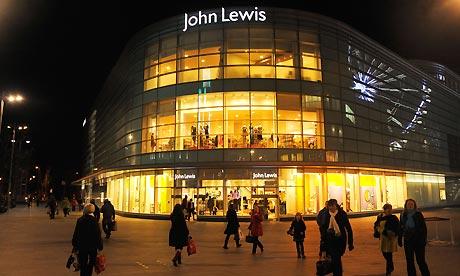
High street giant John Lewis became the latest victim of the high street crisis on Wednesday, warning that first half profits will likely to be substantially lower than a year ago.
The department store chain, which also owns upmarket supermarket Waitrose, admitted in a statement that profits could be close to zero.
Sales at the group fell 0.8 per cent year-on-year to £226.77 million for the week ending June 23. Waitrose recorded a 0.2 per cent year-on-year sales growth, however, but John Lewis reported a drop of 2.2 per cent year-on-year.
Waitrose had a far better performance than John Lewis for the period, proving the relative strength of the grocery market in comparison to high street stores.
“Despite the mixed bag of weather, horticulture performed strongly, seeing sales rise by eight per cent. Houseplants were popular up 28 per cent and outdoor plant sales boosted 15 per cent,” Waitrose commercial director Rupert Thomas said.
“Beers, wines, spirits and tobacco had a good week with sales up 2.4 per cent. Wine performed particularly well up seven per cent with sparkling wine saw an uplift of 28 per cent.
However, home sales were down 3.7 per cent, fashion sales were down 0.1 per cent and electrical and home technology sales fell by 3.4 per cent.
The group said it was also planning to close several small Waitrose stores, including one in Camden, two Little Waitrose outlets in Manchester and one in Birmingham.
FCA to halt investigation into Mitie Group

Mitie Group (LON:MTO) shares had a volatile start to the day on Wednesday, after the UK authorities said they were ceasing their investigation into the group.
Shares rose at market open, before sinking right down below their opening level in the news that the Financial Conduct Authority would no longer be investigating the company’s disclosure practices.
The investigation began last August, when it announced it would be looking into the company’s manner of preparation and content of their financial results. This was alongside the ‘timeliness’ of a profit warning announced in September, 2016.
However, in a statement on Wednesday Mitie said:
“On 26 June 2018, the FCA advised the company that it was discontinuing its investigation into the company”.,
Shares are currently trading down 0.28 percent at 158.56 (0936GMT).
AssetCo shares down 4pc as profit tumbles

Shares in Middle East fire and emergency services provider AssetCo (LON:ASTO) dropped nearly 4 percent in early morning trading on Wednesday, after operating profit tumbled in the six months to March.
Operating profit fell 70.5 percent to £0.5 million, from £1.7 million in the correlating period last year, with adverse currency movements having a £0.7 million adverse effect on figures. The group also took a £0.5 million hit from a fall in training and logistics revenues.
The company also commented on the progress of its lawsuit against Grant Thornton, which with interest amounts to approximately £40 million. It said it was in the process of being heard in the High Court with a decision expected later in this year.
The claim was filed in December 2015 after AssetCo claimed the group had missed a series of “risk factors” and “trigger factors”, including potentially fraudulent payments and statements made by former directors John Shannon and Raymond Flynn.
Shares in AssetCo are currently trading down 3.80 percent at 380.00 (0916GMT).
IWG profit likely to fall short after rapid expansion
Office space provider IWG said its profit was likely to fall short for the full year 2018, after rapid expansion threatened to affect annual figures.
The group said its UK business was performing below expectations, and that expansion plans had increased costs throughout the period. The push to accelerate its growth is now expected to lead to short-term opening losses, and increased costs.
“Group operating profit for 2018 is now expected to be below management’s previous expectations by approximately £15 million to £20 million”, IWG warned.
“We now expect to add approximately 6.7m sq. ft. of new space, which represents an annual organic increase of approximately 45 percent and is over 17 percent higher than our previous guidance”.
The company said it anticipated adding 275 new locations to its network with an associated net growth investment of approximately £230 million, higher than previously expected.
The weaker-than-expected forecasts may have an impact on potential bids for the group. IWG has been at the centre of several takeover bids, the most recent from private equity firm Terra Firma.
Whitbread shares up on strong quarterly sales
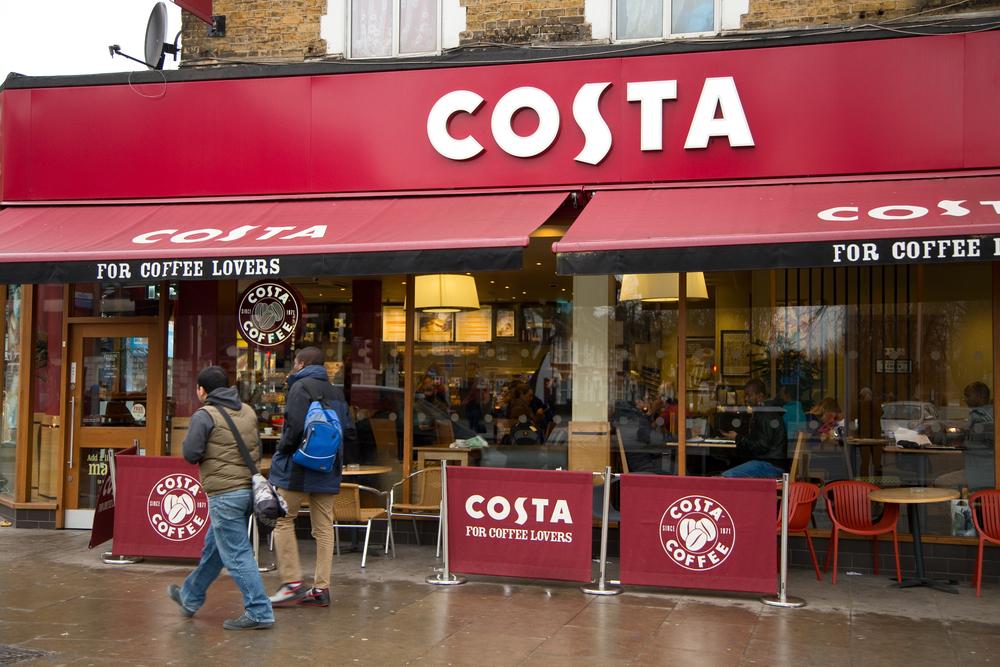
Whitbread (LON:WTB) shares rose in early morning trading, after reporting a 3.2 percent rise in quarterly sales.
The group, which owns both the Premier Inn hotel and Costa coffee chains, said expanded hotel capacity and Costa store openings led to a boost in sales.
However, on a like-for-like basis the picture was less rosy, with company sales in the UK falling by 1.3 percent. This was driven by a 2 percent fall at Costa and a 0.9 percent fall at Premier Inn.
However, chief executive Alison Brittain remained positive.
“We expect to deliver in-line with expectations for the full year and we continue to make strong progress on our efficiency programme,” chief executive Alison Brittain said.
“Our new capacity has a short-term impact on like-for-likes but delivers good long-term sales growth,” she said.
Whitbread also confirmed that early steps had been taken to demerge Costa from the group, a move which had been announced in April.
Shares in Whitbread (LON:WTB) are currently up 1.31 percent at 3,944/00 (0850GMT).
Intel shares dip amidst leadership and software scrutiny
Intel (INTC) shares have fallen in the wake of a leadership reshuffle and mounting pressure from rivals and consumers.
The company’s shares fell 3.5 percent from 54.43-49.81 USD between the end of last week and Monday’s opening, a seven-week low which followed status downgrades by bearish analysts from Nomura and Bernstein.
Much of the turbulence surrounding the firm has been attributed to the resignation of CEO Brian Kzanich, and his alleged infraction of the company’s non-fraternization policy. While the company has appointed CFO Robert Swan as their interim leader, analysts forecast under-performance, with Knzanich’s short four years in office putting their structural issues in the spotlight.
Another issue that has been brought to light in recent days is Intel’s failure to quell pressure from rivals. In particular, the firm are in a race to develop a 10 nanometre chip for the next generation of WIndows laptops. The DOW Jones member is already at risk of missing the opportunity to provide the chip for Asus’ next model, which will be built to accommodate the Snapdragon 1000 from Qualcomm. The Snapdragon not only runs on a lower wattage but offers a 7nm fabrication – while Intel are struggling with 10nm.
Further, nothing has been done to address the elephant in the room – the TLBleed vulnerability and Intel’s seeming unwillingness to patch the issue. Put simply, a TLBleed is a security phenomenon that occurs when two programs are running at the same time, and one program is able to extrapolate data from the other – this can include the ability to detect when a sensitive operation is taking place.
Going forwards, Intel is seeking to mitigate some of these uncertainties with the appointment of Window Snyder as security executive. However, analysts remain bearish while predicting the success of Intel shares. Recent trade tensions in the global market have adversely affected technological firms – the curtailment of Chinese investment has hit US firms Micron Technology (MU) and Skyworks Solutions (SKWS) hard – which does not bode well for Intel shares in the coming weeks.
American Express wins legal battle and shares rally
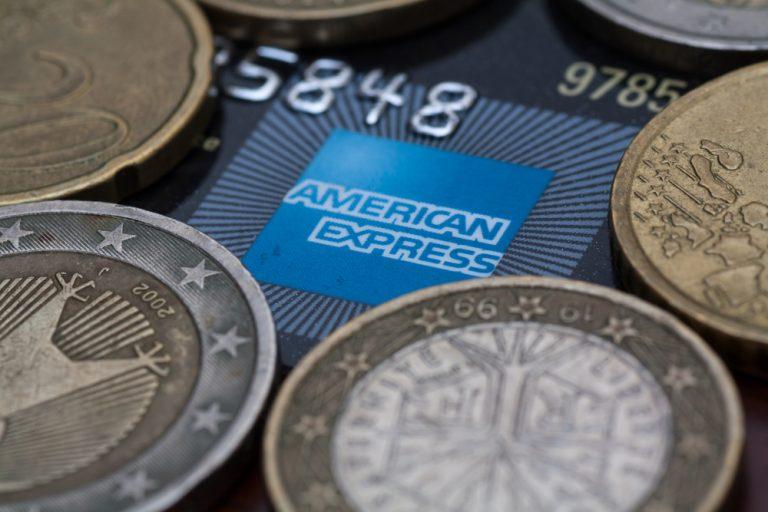
On Monday, American Express won an eight year legal battle, which saw its shares rally 2.2 percent.
A Supreme Court ruling of 5-4 concluded that Amex’s merchant restrictions did not violate federal antitrust laws, which is a significant victory not only for the credit card company but other companies such as Google, Amazon and Uber, who use a similar two-sided model.
The US Department of Justice – with the backing of 17 states – first brought the case against Amex, Mastercard and Visa in 2010, on the basis that merchants have no bargaining power when using their services. While Mastercard and Visa both settled with the government before the start of the trial, Amex chose to fight their case. As well as criticism of their two-sided model which charges both merchants and consumers for their payment services, a case was made against their efforts to stifle competition, by placing restrictions on merchants which prevented them from promoting other payment services, which charged them lower fees.
“Both sides of the two-sided credit-card market — cardholders and merchants — must be considered,” wrote Justice Clarence Thomas, delivering the majority verdict.
Amex’s services were deemed to display legitimate practice on the basis that there was quid quo pro between the burden felt by merchants and the rewards enjoyed by consumers who use Amex payment services. It was ruled that for the government’s case to stand, they would have to prove that price increases for merchants also harmed card-users.
Against allegations of constraining free competition, Amex representatives claimed that merchant restraint played a crucial role in its ability to offer its customers rewards, prevented merchants from undermining its two-sided platform and ensured its customers a ‘frictionless’ experience.
Upon receiving the verdict, an Amex spokesperson said, “The Supreme Court’s decision is a major victory for consumers and for American Express. It will help to promote competition and innovation in the payments industry.”
While this is a significant result for two-sided platforms – with Amazon connecting buyers and sellers and Google connecting advertisers and search engines – it should be noted that the Supreme Court said the need to look at both sides of a market may not be a universal rule. This approach was deemed necessary in the trial in question, as credit card sales unavoidably intimate a link between the merchant and consumer at the moment of a transaction.
China enters bear market as trade war prevails
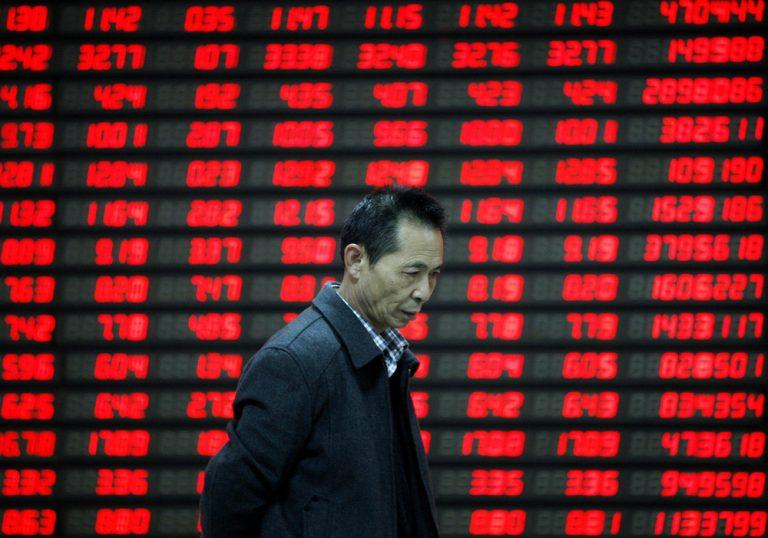
For the first time since the 2015 slump, the Chinese economy displays a direction of downward travel, as the Shanghai Composite (SHCOMP) enters the bear market and drops 20 percent from its January high.
Since January, Chinese stocks have dropped 1.6 trillion USD in value, with a recent amalgamation of a devalued yuan and heated tariff disputes with the US, fueling a downward spiral. Last week, Chinese stocks plunged nearly 4% in one day with Trump’s announcement of further tariffs on 34 billion USD of Chinese goods, to be implemented on the 6th of July.
The significance of yesterday’s figures though, was that the 0.5% dip in the Shanghai Composite signified that the Chinese economy was – bucking its usual trend – entering the bear market. Yesterday’s dip was sparked by the continued sell-off of US stocks, which was intensified by new restrictions put in place by the US treasury. New measures mean that a block has been placed on companies with more than 25 percent Chinese ownership, from buying US firms which provide ‘industrially significant technology’, such as electric vehicles, aerospace technology and robotics.
Despite the best efforts of the Chinese government and banks to spark market liquidity – by lowering bank reserve limits and freeing up 108 billion USD into the market – technology firms across the world have and will continue to suffer as a result of protectionist policies. These tensions and their ramifications are set to continue into the second half of the year.
“Partly due to Xi’s aggressive rhetoric, Trump probably won’t be able to back down, or else he will look weak. Note his tactics are almost always to raise the ante, not to back off,” said Michael Every, Senior Asia-Pacific strategist at Rabobank.
Analysts at investment bank, Nomura, commented, “We believe the Chinese economy has yet to bottom out, and the situation could worsen before getting better”.
The difficult reality to contend with is that China is a major player, like the US. Coining the anecdote from the 2008 crash, ‘when America sneezes, the whole world catches a cold’, whether China or the US fairs worse from these trade tensions is almost inconsequential; the burden of their ill fortune will be shared by their vast trade networks. It has been said that the US expects President Xinping to retaliate to the next round of US tariffs, and President Trump has earmarked a further 450 billion USD of Chinese goods for tariffs.
Car industry warns of 860,000 job losses surrounding Brexit uncertainty
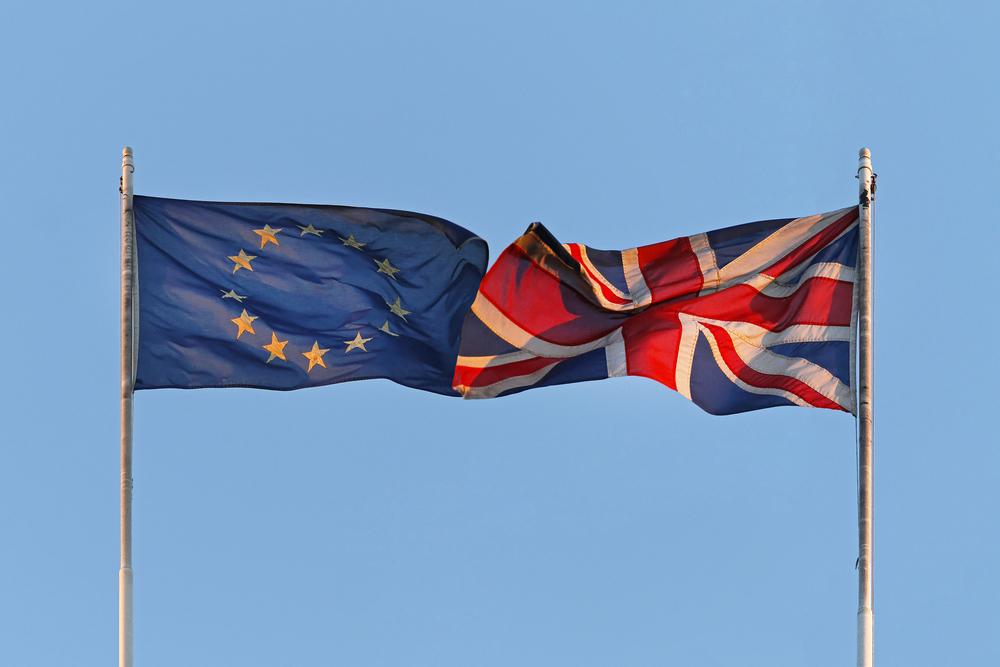
The Society of Motor Manufacturers and Traders (SMMT) has warned Theresa May 860,000 job losses unless the government “rethinks” Brexit negotiations.
Car manufacturers released a lengthy statement for the prime minister and warned that manufacturers including BMW, Honda (NYSE: HMC) and Nissan (TYO: 7201) would move production out of the UK.
“With decisions on new vehicle models in the UK due soon, the government must take steps to boost investor confidence and safeguard the thousands of jobs that depend on the sector,” the statement said.
The UK’s car industry employs 856,000 people in Britain, which could be at risk if the government does not remain in the customs union.
Michael Hawes, chief executive of SMMT, said: “The current position, with conflicting messages and red lines goes directly against the interests of the UK automotive sector which has thrived on single market and customs union membership.”
“There is no credible ‘plan B’ for frictionless customs arrangements, nor is it realistic to expect that new trade deals can be agreed with the rest of the world that will replicate the immense value of trade with the EU. Government must rethink its position on the customs union.”
“There is no Brexit dividend for our industry, particularly in what is an increasingly hostile and protectionist global trading environment. Our message to government is that until it can demonstrate exactly how a new model for customs and trade with the EU can replicate the benefits we currently enjoy, don’t change it,” he added.
Car manufacturer BMW (ETR: BMW) has warned the government that it will close its UK production sites if components are caught up in customs delays following Brexit. BMW employs 8,000 people in the UK.
Health Secretary Jeremy Hunt said over the weekend that threats from businesses surrounding Brexit were “completely inappropriate” and affected Brexit negotiations at a critical time.