
Sainsbury’s growth lags ahead of big Asda merger
The supermarket sector continued to show growth in the last three months, with Tesco (LON:TSCO) and Morrisons (LON:MRW) leading the way and Sainsbury’s lagging behind.
The latest grocery market share figures out today from Kantar Worldpanel showed Tesco grow by more than 2 percent for the 12th consecutive period, in its best set of performances since 2011. CEO Dave Lewis’s turnaround strategy seems to be coming into its own, with overall market share at 27.6 per cent for the 12 weeks to 22 April 2018.
Sainsbury’s however, the subject of much discussion over the weekend due to its confirmed merger with Asda, saw sales rise just 0.2 percent over the same period. It currently holds a market share of 15.9 percent, with Asda taking a further 15.5 percent. Should the merger come to fruition, the combined group looks set to overtake Tesco as the UK’s biggest supermarket by market share.
Fraser McKevitt, head of retail and consumer insight at Kantar Worldpanel, said:
“This is a pivotal moment for the British grocery market. A merger between Sainsbury’s and Asda would transform the traditional landscape placing nearly a third of market share in the hands of the joint supermarket giant, though the march of the discounters – and any enforced store closures – could impact this figure.”
Over the period the British grocery market actually grew at its slowest rate since March last year, with Lidl recording the best results of the quarter. It saw sales rise 9.1 percent, with market share up 5.4 percent.
Aviva shares up on £600m share buyback announcement
Aviva (LON:AV) shares edged up on Tuesday morning, after the insurance group announced it would begin a £600 million share buyback of its ordinary shares.
The group has already pledged to deploy £2 billion of excess of capital in 2018, including debt reduction and acquisitions. The share buyback programme will begin today, Tuesday 1st May, and will likely run until the end of this year.
“The deployment includes £900 million of debt reduction, £500 million for bolt-on acquisitions (close to £100 million has already been committed to the acquisition of Friends First in Ireland) and a £600 million ordinary share buy-back,” Aviva said.
The announcement comes just after the firm said over the weekend that it would make about £14 million of ‘goodwill’ payments to investors who lost money selling preference shares in March. Aviva had proposed to cancel the high-yielding stocks, sending the price down sharply. 2,000 private and institutional investors are set to get a payout of around £7,000 each.
“We recognise that whilst we were considering our options for the preference shares this caused uncertainty and led some investors to sell their shares,” said Mark Wilson, Aviva chief executive.
“The board and I want to do the right thing and make this goodwill payment.”
Aviva shares are currently trading up 1.17 percent at 535.20 (0826GMT).
BP reports 71pc profit hike, boosted by rising gas and oil prices
Higher gas and oil prices lent a boost to BP (LON:BP) profits in the first quarter of the year, sending shares up at market open on Tuesday.
Profits at the firm rose 71 percent on an underlying replacement cost basis, hitting $2.6 billion for the three months to the end of March. BP production rose 5.7 percent in the quarter to 3.7 million barrels per day, with operating cash flow up to $5.4 billion.
BP’s upstream earnings from exploration and production totalled $3.16 billion on an underlying replacement cost basis in the first quarter, their strongest quarterly figures since 2014. However the group doesn’t expect the same performance in the second quarter, with upstream production set to be lower than the first quarter due to the expiration of the Abu Dhabi offshore concession.
“Our safe and reliable operations and strong financial delivery have continued into 2018. Underlying profit was up 23 percent on the previous quarter and was our best quarterly result in three years. With rising output from our new major projects and excellent reliability, Upstream production was 9 percent higher than a year earlier,’ Bob Dudley, the group’s chief executive, commented.
Shares in BP are currently trading up 1.36 percent at 545.30 (0813GMT).
Just Eat shares jump as orders grow both in the UK and abroad
Takeaway delivery chain Just Eat (LON:JE) reiterated its full-year guidance on Tuesday, as orders continued to rise across the UK and internationally.
Group orders rose 32 percent in the first three months of the year, sending revenues up 49 percent to £177.4 million. The figures were boosted driven by strong order growth and an increase in higher value delivery orders.
In the UK orders increased by 24 percent to 29.7 million, up from 24 million last year, with international orders up 46 percent. the UK benefitted from the performance of Hungry House, its latest acquisition, and international growth was boosted by strong performances from both Italy and Spain.
“Just Eat has had a strong start to the year. We delivered our 400 millionth order in the UK, grew well in Italy and Spain, whilst powering continued momentum in our Canadian delivery service SkipTheDishes,” said Peter Plumb, CEO. He added that the revenue growth would be used to increase it customer base, citing competition from Deliveroo and UberEats.
The firm reiterated full year guidance given in March, of group revenue of between £660 million and £700 million and earnings (uEBITDA) of £165 million to £185 million in 2018.
Shares in Just Eat soared at market open to trade up 3.64 percent (0804GMT).
Carpetright issues fourth profit warning in five months, shares fall
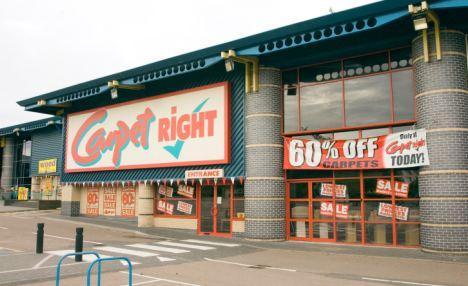
Carpetright (LON: CPR) has warned that it expects this year’s full years losses to be double that previously expected.
Britain’s biggest carpet retailer has estimated losses of between £7 million – £9 million, compared with a profit of £14.4 million last year.
The struggling floor covering chain has issued four profit warnings in the past five months as the retailer has been hit by the weaker consumer confidence and slowing down of the housing market.
Whilst the firm expected £13 million in profits at the start of the year, one month ago Carpetright forecasted a “small loss”, estimated by house broker Peel Hunt at £4.3 million.
Under a company voluntary arrangement, the group plans to shut 92 stores which could result in the loss of 300 jobs.
“The CVA proposal will enable us to take the tough but necessary actions needed to restore our profitability. Having now received approval from both shareholders and creditors we will press ahead with our plans for the proposed equity financing to recapitalise the business and enable Carpetright to address the competitive threat from a position of strength,” said Wilf Walsh, the Carpetright chief executive.
Walsh maintained that he is “committed to the project”. “I don’t think now would be the time to bail,” he added.
Carpetright is not the only retailer struggling in the current climate. The group’s latest profit warning comes just weeks after fashion retailer New Look won approval for a CVA that will lead to the closure of up to 60 stores and rent reductions on many more.
Carpetright shares were down four percent in afternoon trading.
Sajid Javid to replace Rudd as home secretary
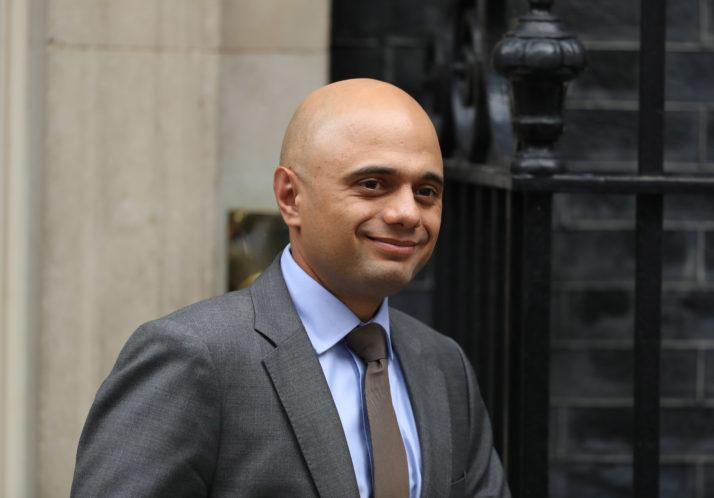
Following Amber Rudd’s surprise resignation, Sajid Javid has been named the UK’s new home secretary.
Announced on Monday morning, Javid is the first home UK secretary that has come from an ethnic minority background.
After Theresa May’s announcement, Javid said that the most pressing task at hand was to get ahold of the Windrush crisis and ensure those affected “are all treated with the decency and the fairness they deserve”.
“We’re going to have a strategy in place that does something the previous home secretary set out last week when she made a statement to parliament – to ensure that we have an immigration policy that is fair, it treats people with respect, and with decency,” he told BBC News.
“That will be one of my most urgent tasks, to make sure that we look carefully at the policy and make sure it achieves just that – fairness.”
Javid is replacing Rudd who resigned after she said she “inadvertently” misled MPs over deportation targets.
The new home secretary has previously expressed anger over Windrush scandal and how it has been handled by the government.
He told the Sunday Telegraph that the Windrush scandal felt “very personal” to him with Pakistani immigrant parents. “It could have been me, my mum or my dad”.
Dianne Abbott said of Javid’s new role: “The new home secretary cannot form another human shield for Theresa May. The prime minister still has serious questions to answer about how this scandal was allowed to happen, and whether she knew Amber Rudd was misleading parliament and the public last week. It’s time Theresa May finally takes responsibility for the crisis she created.”
This was not the only re-shuffle announced by Theresa May this morning. The former Northern Ireland secretary James Brokenshire is returning as the housing, communities and local government secretary. Penny Mordaunt, the International Development Secretary will take Rudd’s other role as the women’s and equalities minister.
Randgold shares edge down as strike affects gold output

Randgold Resources (LON:RRS) saw shares edge down in early trading, after production at its Ivory Coast mine was hit by strikes.
Ongoing strikes at the Tongon gold mine started with employees but then spread to other operations. Operations have now returned to full capacity, but the group said on Monday that disruption would likely impact the mine’s production guidance of 290k ounces for 2018.
Despite this, Rangold said it was “determined” to recover most of the lost output.
“To mitigate the downtime effect and lost plant throughput, Tongon processed ore from the run-of-mine and scats stockpiles during the stoppages and also used the opportunity to upgrade parts of the plant to achieve a higher and more consistent throughput going forward”, it said.
Shares in Randgold are currently trading down 0.30 percent at 5,896.00 (0852GMT).
Old Mutual trading on track for Q1, shares rise

South African wealth management group Old Mutual (LON:OML) reported earnings in line with expectations in March, sending shares up 2 percent at market open.
The dual-listed Old Mutual said continuing operations started the year on a “positive note”, and so far this year trading has continued in line with management expectations.
“Since the year end, shareholder investment returns reflect the impact of lower equity markets in South Africa and particularly in Zimbabwe. Management remains focused on managing the cost base tightly and delivering on its communicated strategy,” Old Mutual said.
Its UK wealth and insurance division, Quilter, saw first-quarter net cash flow rise by 14 percent to £1.6 billion. Its assets under administration fell 2 percent, with Old Mutual are planning to spin off the company later this year.
Shares in Old Mutual are currently trading up 1.77 percent at 259.60 (0834GMT).
WPP shares rise despite revenue fall in Q1
Shares in advertising firm WPP (LON:WPP) rose nearly 7 percent at market open on Monday, despite reporting a fall in revenue for the first quarter.
First-quarter revenue fell 4 percent due to foreign exchange headwinds, seeing an overall decline to £3.56 billion. Howeverm on a constant currency basis the figure rose by 2 percent, and saw a 0.8 percent boost like-for-like.
The advertising firm has been under increasing pressure over the last couple of weeks, suffering a management crisis after long-serving chief executive and founder Martin Sorrell resigned over a misconduct investigation. Mark Read and Andrew Scott have been appointed as joint chief operating officers.
The results come just after the news that CVC Capital Partners are interested in buying Kantar, WPP’s market research arm.
CVC declined to comment on its interest in Kantar but according to the Financial Times, a “person with knowledge of the talks” cautioned that they were at a very early stage.
Shares in WPP (LON:WPP) are currently trading up 6.84 percent at 1,227.00 (0818GMT).
Asda and Sainsbury’s agree to merge in £7.3bn deal
Sainsbury’s has agreed to buy Asda from US-based Walmart for £7.3 billion in cash and shares, in a landmark deal for the supermarket sector.
Walmart would gain 42 percent of the combined group’s shares under the terms of the deal, plus £2.975 billion in cash. It will not, however, hold more than 29.9 percent of the merged entity’s total voting rights.
Both Sainsbury’s and Asda will still be seen on the high street, with the brands to be kept the way they are now, while Ebitda synergies of at least £500 million would be targeted.
The combined company will own more than 2,800 stores, between Sainsbury’s, Asda and Argos, and some of the UK’s biggest websites. No store closures are planned.
Asda’s CEO, Roger Burnley, said the deal may well bring further price cuts.
“The combination of Asda and Sainsbury’s into a single retailing group will be great news for Asda customers, allowing us to deliver even lower prices in store and even greater choice.
“Asda will continue to be Asda, but by coming together with Sainsbury’s, supported by Walmart, we can further accelerate our existing strategy and make our offer even more compelling and competitive.”
The deal between the two rivals will create the biggest supermarket chain in the UK, with combined revenues of around £51 billion.
However, the deal is not yet completely concluded – Sainsbury’s shareholders still need to give their approval, as well as the regulators, who may have concerns over increased pressure on the chains’ suppliers.