
22/04/2016
Barack Obama causes controversy after urging Britain to stay in the EU
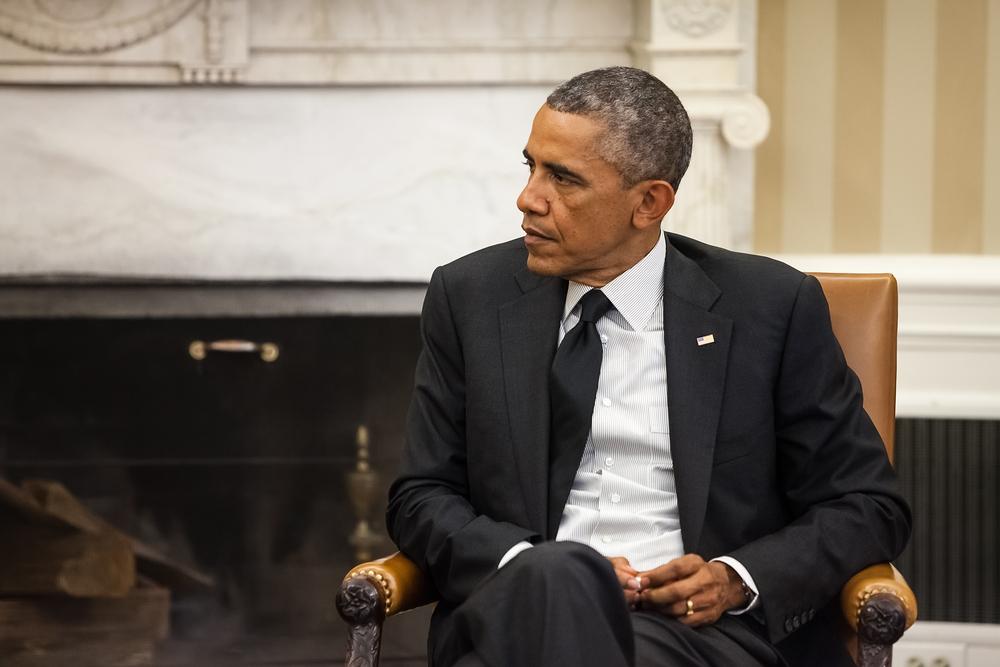
US President Barack Obama landed at London Stansted yesterday for a three day visit, with plans to meet with politicians as well as lunching with the Queen on her 90th birthday. However, the most controversial talking point of his visit is his stance on Brexit.
In an article published by the Telegraph yesterday evening, Obama weighed in on the Brexit debate and encouraged Britons to vote to stay within the European Union:
“You should be proud that the EU has helped spread British values and practices – democracy, the rule of law, open markets – across the continent and to its periphery. The European Union doesn’t moderate British influence – it magnifies it. A strong Europe is not a threat to Britain’s global leadership; it enhances Britain’s global leadership.”
Many have criticised Obama for choosing to enter the fray on the subject. Liam Fox, the UK’s former defence secretary, commented:
“While the President will be heard respectfully, many of us will be raising an eyebrow at the fact that he thinks that we should accept a diminution of sovereignty that he would never accept.”
Most world leaders outside of the European Union have chosen to stay out of the debate, marking Obama’s comments as a departure from the norm.
BrewDog ‘Equity for Punks’ falls short of £26m target
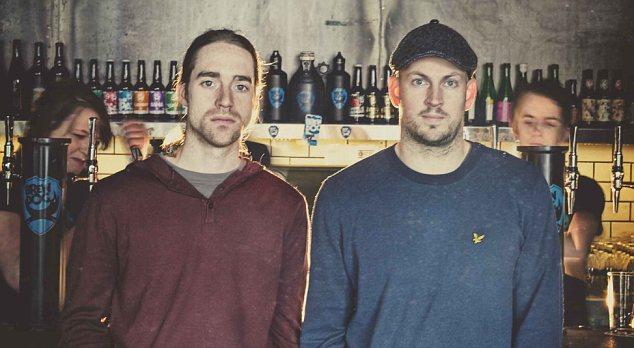
Scottish craft brewer BrewDog has failed to reach their £25 million target in its latest crowdfunding round, which closed on the 20th April.
The brewers are veteran crowdfunders, having launched four “Equity for Punks” crowdfunding rounds since 2009. This time, the company obtained £19 million – £6 million short of their target. On their website, BrewDog remained upbeat about the outcome:
“With more than 42,000 Equity Punks now drafted in to our ranks, we have accrued a global gathering of craft beer crusaders to help us on our explosive mission to make other people as passionate about great beer as we are.”
It is hard to say what effect the shortfall will have on plans for expansion, which includes building a bigger brewery, launching a new canned beer range and opening more UK bars. The company are aiming to expand into America, launching a crowdfunding round for US residents and planning to open a brewery in Ohio.
Whilst applications on Crowdcube may have closed, BrewDog are still accepting paper applications until April 29th. For more information, visit their website.
Miranda Wadham on 21/04/2016
Sky shares sink on new customer drop
Broadcasting company Sky saw shares fall nearly 5 percent this morning, after attracting significantly fewer customers in the third quarter.
Sky added 177,000 new customers in its third quarter, including 46,000 broadband additions in Britain and Ireland – 160,000 fewer than the quarter before.
However, the group reported a 5 percent rise in revenue for the first nine months, as well as a 12 percent rise in operating profit to £1.14 billion.
Sky (LON:SKY) are currently trading down 5.11 percent at 975 (1138GMT).
21/04/2016
Osborne misses borrowing target after just one month
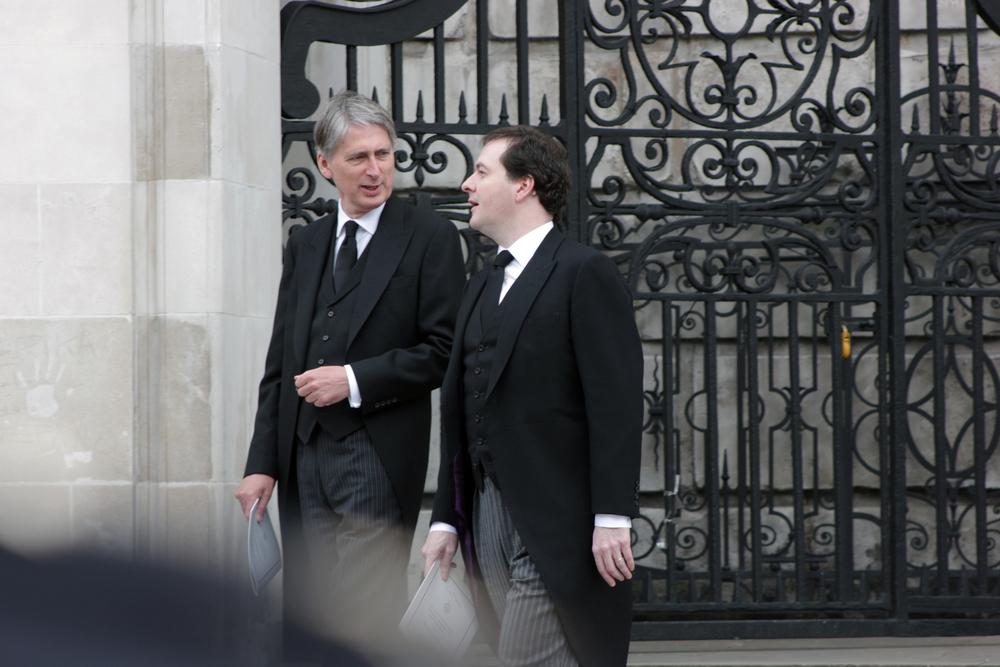
UK public borrowing has gone over the target set by George Osborne just over a month ago, according to figure released today.
Public borrowing has fallen to £74.0 billion in the 2015/16 tax year, a massive drop from £91.7 billion the year before. However, it remains above the £72.2 billion target released by Osborne in his annual budget statement on March 16.
The disappointing figures were accompanied by further bad news in the form of a drop in retail sales, an warning for those watching for signs of a slowdown in the economy. Retail sales volumes dropped 1.3 percent on the month in March, a far bigger fall than was forecast by analysts.
George Osborne remains committed to returning the country to a surplus by 2020 – universally acknowledged as a tall order considering the current deficit. Critics may well be offset by the latest figures however, which sees public borrowing fall to 3.9 percent of GDP – a considerable improvement on the 10 percent of GDP that it amounted to when Osborne took office.
21/04/2016
EU accuses Google of anti-trust violations

The EU has charged Google with abusing the dominance of its Android operating system, limiting competition and “stifling innovation”.
In a statement released today, the European Commission accused Google of implementing a strategy across its mobile devices that would advance in dominance in internet search. It said:
“First, the practices mean that Google Search is pre-installed and set as the default, or exclusive, search service on most Android devices sold in Europe. Second, the practices appear to close off ways for rival search engines to access the market, via competing mobile browsers and operating systems. In addition, they also seem to harm consumers by stifling competition and restricting innovation in the wider mobile space.”
80 percent of smart mobile devices in Europe and the world run on Android, Google’s own operating system. By pre-installing Google apps such as Maps and Gmail, competition from other internet companies is inherently limited.
Commissioner Margrethe Vestager commented:
“A competitive mobile internet sector is increasingly important for consumers and businesses in Europe. Based on our investigation thus far, we believe that Google’s behaviour denies consumers a wider choice of mobile apps and services and stands in the way of innovation by other players, in breach of EU antitrust rules”.
Google have swiftly responded to the EU’s accusations with a statement from general counsel Kent Walker, who made it clear that Google will work “with the European Commission to demonstrate the careful way we’ve designed the Android model in a way that’s good for competition and for consumers.”
This is not the first case made against Google, who have previously been subject to EU charges over its shopping service in Internet searches.
20/04/2016
Morning Round-Up: Mitsubishi hit by emissions scandal, FTSE hits heights, UK unemployment up

Mitsubishi front new emissions scandal
Mitsubishi have become the latest car maker to be hit by an emissions scandal, after the company admitted to falsifying fuel economy test data for 600,000 cars.
Mitsubishi Motors president Tetsuro Aikawa said the misconduct had been reported to Japan’s transportation ministry, and involved 157,000 own brand cards and 468,000 made for Nissan.
Shares in the company closed down over 15 percent last night, their biggest drop in 12 years.
FTSE falls from heights of Tuesday
The FTSE fell this morning, dropping down from its highest close of the year on Tuesday evening.
The index, which got off to a rocky start in January, is now up almost 16 percent from three and a half year lows reached earlier this year.
Energy shares pushed the market down, after a renewed drop in the price of oil and weakening of investor sentiment.
UK unemployment rises by 21,000
UK unemployment rose by 21,000 in the three months to February, its first increase in nearly a year, according to the Office for National Statistics.
Earnings, rose by 1.8 percent in the three months to February, down from the 2.1 percent rate seen in the last quarter.
“It’s too soon to be certain, but with unemployment up for the first time since mid-2015 – and employment seeing its slowest rise since that period – it’s possible that recent improvements in the labour market may be easing off,” ONS statistician Nick Palmer said.
The surprise rise in unemployment can be largely put down to employers caution ahead fo the European referendum, as well as this month’s introduction of a higher minimum wage.
20/04/2016
Brussels steel meeting unproductive, leads to US-China rift

Ministers from 34 of the largest steel-producing countries have failed to agree measures to tackle the industry’s oversupply problem, leading to a dispute between the US and China.
The meeting took place in Brussels yesterday involving countries representing 93 percent of global steel production, but had little productive outcome. Furthermore, the US blamed Bejing for their handling of the situation, with the US Secretary of Commerce Penny Pritzker saying a statement:
“Unless China starts to take timely and concrete actions to reduce its excess production and capacity in industries including steel … the fundamental structural problems in the industry will remain and affected governments – including the United States – will have no alternatives other than trade action to avoid harm to their domestic industries and workers.”
China’s assistant trade minister, Zhang Ji, responded that the excess capacity was the result of the 2008 economic downturn, with falling demand being “the fundamental reason” for the problem. China’s official state news agency Xinhua called Washington’s comments a “a lame and lazy excuse for protectionism”.
The UK business secretary Sajid Javid also attended the meeting, which took place just days after Tata Steel announced plans to sell its UK plants, risking 15,000 jobs. The lack of outcome in countering the problem of excess supply in the steel industry is likely to hinder the UK’s attempts to find a buyer for the plants, which were reported to have been losing over £1 million per day.
19/04/2016
Morning Round-Up: AB InBev to sell Peroni, Netflix shares down, AB Foods sees growth

AB InBev to sell Peroni brand to Asahi upon takeover
Anheuser-Busch InBev has accepted an offer from Japanese brewing group Asahi for the Peroni brand, should its takeover of SABMiller go through.
AB InBev have been clear about their desire to sell a couple of SABMiller’s brands from the outset, and the sale to Asahi is part of their plan to acquire antitrust approval for its ¢100 billion takeover of SAB.
Asahi Group have confirmed that they are in talks to buy SABMiller’s Peroni, Grolsch and Meantime beer brands for 2.55 billion euros.
Netflix fall on slower growth
Online streaming service Netflix announced a surprising drop in subscriber growth, causing shares to fall nearly 10 percent in after-hours trading on Wall Street.
The company said it expected to add about 500,000 customers in the US and two million internationally during the current trading quarter ending in June. These figures are significantly lower than those forecast by analysts, which were 586,000 users in the US and 3.5 million globally. However, the company posted a profit rise of $4 million on the year before, at $28 million. The share price has now eased, standing down 2.79 percent at 108.40 (0813GMT). Primark owner Associated British Foods saw shares rise this morning after a 3 percent rise in first-half profit. The company, which also owns a slew of major sugar, grocery and agriculture businesses, surprised analysts with an underlying profit of £486 million in the six months to February, above the £480 million forecast. AB Foods confirmed that their underlying trading outlook for the group for the full 2015-16 year was unchanged. The group (LON:ABF) are trading up 1.82 percent at 3,406 (0818GMT).19/04/2016
Qantas shares drop over ten percent on weak demand
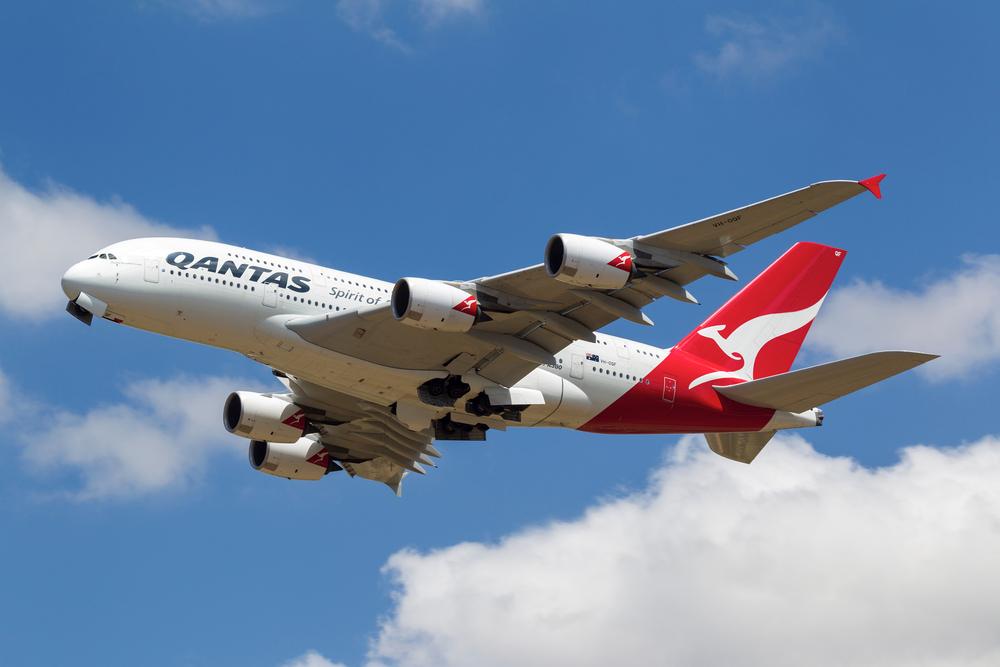
Shares in Australian airline Qantas have dropped over 10 percent this morning after announcing that it had been hit by “softness in demand”.
The group cited the “upcoming federal election and recent drop in consumer confidence in Australia” as reasons for the fall in passengers, and have axed plans to increase flight routes and capacity.
Domestic capacity growth in the fourth quarter will now be negative compared to the same period a year earlier, and the airline has cut its domestic capacity increase from 2 percent to between 0.5 percent and 1 percent.
Shares in Qantas (ASX:QAN) are currently down 10.84 percent at 3.62 (1007GMT).
18/04/2016
Morning Round-Up: Treasury report on Brexit, Asian shares slip, Business secretary at world steel summit
Brexit will “leave UK poorer”, says Treasury
The Treasury is due to release a 200-page report today with the conclusion that a Brexit would be dismal for Britain’s future.
It warn that Britain’s national income could be 6 percent smaller by 2030 if the UK leaves the European Union, with the size of the cut in GDP being the equivalent of about £4,300 a year for every household.
In an article for the Times on Monday the chancellor wrote: “The conclusion is clear for Britain’s economy and for families – leaving the EU would be the most extraordinary self-inflicted wound.” Asian shares slip on OPEC deal failure Asian shares were down across the board on Monday, with Tokyo’s Nikkei leading the way down 3.40 percent. All Asian markets closed in the red, with Shanghai Composite down 1.44 percent and 0.73 percent. The poor sentiment spread to European markets upon open this morning, with the FTSE currently down 0.54 percent, the CAC40 down 0.49 percent and the DAX down 0.27 percent (0921GMT). Business secretary attends world steel summit in Brussels In the wake of the sale of Tata Steel’s UK plants, business secretary Sajid Javid will hold talks in Brussels with 27 nations to “seek solutions to the overcapacity crisis”. The sale of Tata Steel’s plants, which were reportedly losing over £1 million per day, may result in the loss of thousands of jobs and has led to the government being urged to partly privatise Britain’s waning steel industry. The talks will seek to work out how governments can “facilitate market-driven industry restructuring” and aims to “agree on steps to reduce competition-distorting policies”.18/04/2016