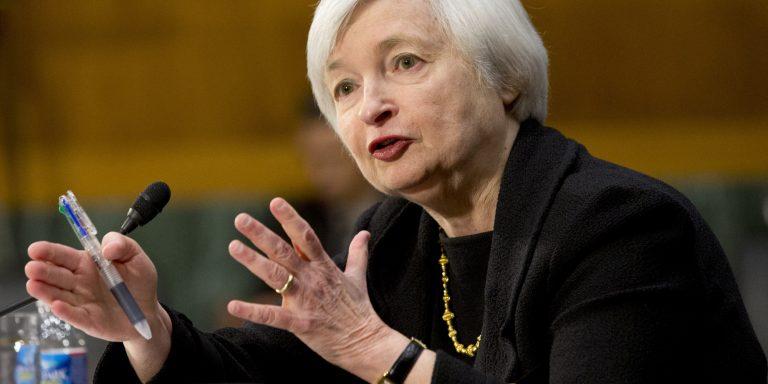
Global markets have been quiet this week ahead of Janet Yellen’s keynote speech at Jackson Hole on Friday, which is expected to shed some light on the Federal Reserve’s plans to raise interest rates.
Anticipation was heightened by comments from senior Fed members earlier this week suggesting a rate rise may be on the cards before the end of the year. However, Yellen has remained tight-lipped and is more than likely to stick with her current dove-ish strategy, perhaps preparing the markets for a move sometime next year.
Upbeat economic data from the US has fuelled expectations that the time to raise rates is growing closer, with a better than expected jobs report in July. However, inflation remains low and the threat of global uncertainty in the wake of Brexit may encourage the Fed to stick with current rates well into next year.
“The Fed could be viewed as being between a rock and a hard place because with the US economy looking like its firing on all cylinders,” says Dafydd Davies, partner at Charles Hanover Investments.
“The concern is that is those in emerging markets with international debt could find themselves in deep water if their borrowing costs increase. Yellen may need to use prose, rather then policy, to encourage strength in the dollar.”
Restaurant Group shares rise but Frankie & Benny’s falters
Restaurant Group shares pushed up this morning, despite disclosing a profit loss and intentions to close 33 outlets.
The business, who own chains such as Frankie & Benny’s and Chiquito, made a half-year loss of £22.5 million in the first half of the year, with like-for-like sales dropping 3.9 percent. The Group called it a “challenging” period, with its Frankie & Benny’s chain in particular taking a hit.
The Group plans to close 33 of their 500 outlets, taking a £59.1 million charge. However, revenue across the Group as a whole rose 3.4 percent to £358.7 million.
Shares are currently up 6.44 percent at 433.65 (1036GMT).
Markets falter ahead of Yellen’s speech
Global markets edged down on Friday morning ahead of a keynote speech by Federal Reserve Chair Janet Yellen.
The dollar fell 0.14 percent on the dollar index just after open this morning, with global indexes remaining week.
Markets have been quiet all week ahead of Yellen’s speech at Jackson Hole on Friday afternoon. There are expectations of a rate hike in the near future following recent hawkish comments from prominent Fed officials.
The FTSE 250 index is down 0.01 percent to 17,880.97, with the DAX down 0.18 percent (1054GMT).
Consumer confidence back up post-Brexit
Consumer confidence rose slightly in August, suggesting post-Brexit blues may be shortlived and spending may be getting back on track.
The YouGov/CEBR Consumer Confidence Index rose by 3.2 points in August, its biggest jump since February 2013 after it plunged in the wake of the European referendum.
CEBR director Scott Corfe said: “This month’s improvement in consumer confidence follows positive news from other areas of the economy and slightly punctures the arguments of those who predicted immediate economic Armageddon following a Brexit vote.”
The index now stands at 109.8, up 3.2 points from July.
UK FinTech start-up RiskSave has raised £127,440, from 17 investors, in the first days of their crowdfunding campaign on CrowdCube.
The figure is only £22,560 shy of their funding target of £150,000, with which they offer 2.44% equity in the company, valued at £6 million.
The campaign launched this week and will be running for another 28 days.
RiskSave hopes to offer “the future of asset management”
The Oxford based start-up aims to develop a new investment platform “suiting lower-cost transparent investing”. This will allow even small account holders to profit from similar front-line risk management, than the biggest financial institutions.
In their pitch on equity crowdfunding platform CrowdCube the company states:
“For many individuals, account minimums and transaction fees have made advice either unaffordable or unobtainable. The financial industry generally does not have a great solution for smaller accounts. Traditional financial advisors have a limited amount of time, and it is hard to scale a business model serving a few low-asset clients. Our solution avoids this while incorporating more advanced risk management.”
The company was founded in December 2015 and has since joined Level 39, Europe’s largest FinTech start-up accelerator. The team of two has since expanded by hiring Dmitri Grabov, an ecosystem hiring experienced technologist.
With the funding raised through the CrowdCube Campaign the business hopes to further develop its IT system and hire senior staff.
IFO indicators capturing business assessments of current German economic conditions fell in August.
The new data, which came in below analysts’ expectations, is the latest in a string of data to suggest a slowdown in German economic growth. Markit’s PMI figure, published on Tuesday, showed a decrease in August, alongside Wednesday’s lower GDP growth rate.
IFO indicators for German economic conditions miss estimates
The IFO Current Assessment indicator, published by CESifoGroup Thursday morning, came in at 112.8. The figure is 2 points lower than July’s measure and missed estimates by 2.1 points.
Similarly, the IFO assessment of business climate in August fell by 2.1 points, to 106.2, 2.3 points than the consensus prediction.
The indicator of future expectations fell to 100.1, also down 2 points from the previous month and missing estimates by 2.4 points.
While the data deviates greatly from analysts’ predictions, with all indicators falling instead of rising to estimated higher levels, they are not yet critical. Similar figures were last seen at the start of the year and they are well above figures during the height of the global financial crisis in 2009, where IFO Current Assessment was as low as 89 in November.
German data releases this week show reduced growth
The Markit PMI Composite for August, published by Markit Economics on Tuesday, stood at 54.4, down 0.9 points from July’s figure. This measure was 0.6 points lower than analysts had estimated.
German GDP growth for the second quarter of the year was reported by DEstatis on Thursday.
The figure matched estimates at 0.4%, representing a 0.3% decrease from the first quarter.
The German Gfk Consumer Confidence Survey will be published on Friday and give further indication as to the perception of German economic conditions over the next month.
While Germany saw some unexpected reductions in growth indicators, Euro-Zone figures have been mixed this week.
The Euro-Zone Markit PMI came in at 53.3, up 0.1 points from July.
However, an indicator of consumer confidence, published by the European Commission, came in at -8.5. The figure was 0.6 points lower than July’s figure and 0.9 points lower than analysts’ estimates.
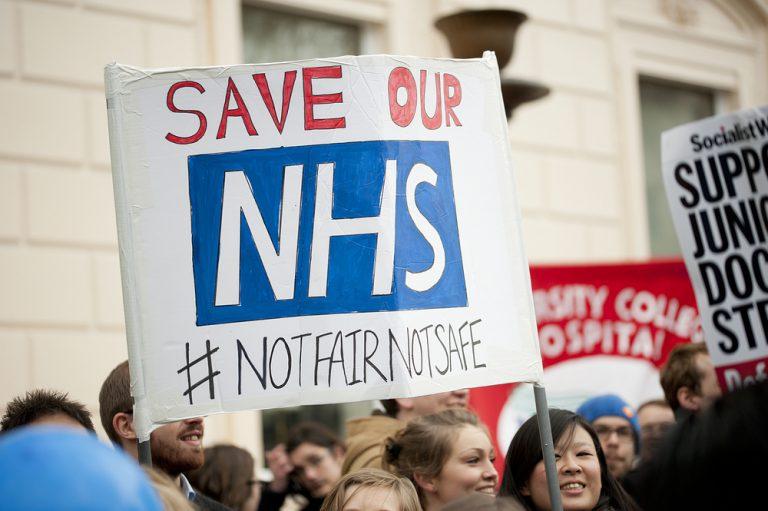
The NHS would collapse if its 57,000 EU workers were to leave in the wake of Brexit, according to a new report by The Institute of Public Policy Research (IPPR).
The research concluded that EU staff must be offered British citizenship in order to prevent them taking their skills elsewhere. Chris Murray, who headed the report, commented:
“It is critical to public health that these workers do not seek jobs elsewhere. All EU nationals who work for the NHS, or as locums in the NHS system, should be eligible to apply for British citizenship”.
The IPPR highlighted the need to reform the current system of British citizenship, which is seen as both expensive and complicated, in order to prevent a post-Brexit brain-drain.
According to jobsite Indeed.co.uk, the brain drain has already started; thousands of British workers have begun to look beyond the EU for work since the referendum. Others have looked towards Ireland, who will retain access to the Common Market and have English as a main language.
UK car production “booming” in 2016
UK car production rose again in July, up for the 12th consecutive month according to the Society of Motor Manufacturers and Traders.
Production rose 7.6 percent on a year ago, bringing year to date production up to 12.3 percent. Performance so far this year has been the best since 2000, with the total cars produced in the UK rising to over 1,000,000 in the seven months since January.
Looking ahead, SMMT chief executive Mike Hawes highlighted the importance of Britain demonstrating “it remains competitive and open for business.”
Spanish economy strong despite uncertainty
The Spanish economy remains strong despite months of political uncertainty, with GDP growing 0.8 percent in the second quarter.
Figures from the National Statistics Institute showed consumer spending grew by 3.6 percent year-on-year, despite uncertainty created by two elections in the past six months. The country is still without a functioning government, but the economy has grown at one of the fastest rates in the Euro Zone.
Demand for menswear boosts Jimmy Choo
Jimmy Choo shares rose on Thursday after strong demand for its men’s designs pushed revenues up nearly 10 percent.
Men’s shoes represented 8 percent of global revenue for the first half of the year, with revenues across the company up 9.2 percent to £173 million. Operating profit was up 42.6 percent to £25 million.
Asia remained the company’s strongest market, with both China and Hong Kong leading growth. Geopolitical events damaged demand in Europe, but the weakness of the pound served to boost the company’s half-year figures.
Jimmy Choo (LON:CHOO) is currently trading up 1.91 percent at 120.00 (1034GMT).
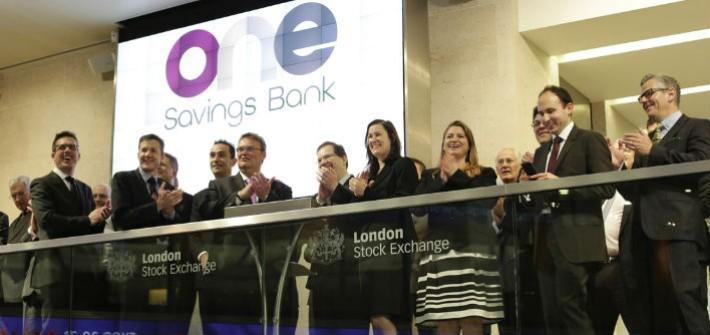
OneSavings Bank reported its first half-year earnings for 2016, causing stocks to jump on strong profit growth.
The bank reported an increase in underlying profits before taxation to £64.6 million in the first half of 2016. The figure is up 36 percent on the same period last year.
Gross new organic lending increased 25 percent to £973 million. This figure, alongside new acquisitions worth £131 million, drove loan book growth up 10 percent in the first half of 2016.
The net interest margin was up 2 bps from the first half of 2015 to 307bps at the 30. June 2016. While cost to income ratio rose one percent, it still remains low at 27 percent.
An interim dividend of 2.9 pence per share was proposed for the first half of 2016, payable on the 4. November. The amount is based on a third of the total dividend of 8.7 pence per share paid in 2015. The interim dividend is 0.9 pence larger than last year’s first-half figure.
Group CEO Andy Golding, commented on the results:
“I am delighted that OneSavings Bank has delivered another strong set of results for the first half of 2016.”
“We have achieved all of our financial objectives since IPO and the strength of our balance sheet, together with the high quality of our secured asset portfolio, positions us well in the current uncertain economic climate.”
“It is too soon to predict the medium to long-term impact of Brexit on the UK economy, but we will continue to concentrate on what we have proven we do best; using our broker relationships, manual underwriting expertise and secured lending strategy to lend responsibly to customers in underserved markets. We remain well placed to take advantage of opportunities that arise using these well proven capabilities.”
One Savings Bank plc (LON: OSB) started trading on the 1. February 2011, floating on the London Stock Exchange in June 2014.
The group’s stocks struggled after their IPO, seeing little upward movement throughout the first half of 2016 and falling to 179.8, its lowest since November 2014, after the European Referendum.
However, today’s earning release send share prices up to a new two month-high at 268.9 pence, up 13.9% from market open at 3.30pm.
Paddy Power Betfair Plc this morning reported their first half earnings results for 2016. Figures in revenue growth look encouraging and progression of the merger integration between Paddy Power and Betfair is ahead of schedule.
The company also revealed that Stewart Kenny will be stepping down from his role as Non-Executive Director on the company’s board.
Revenues up 18% in H1
The bookmaker reported that revenue in the first half of 2016 stood at £759 million, up 18% compared to the same period the previous year.
Revenue from online operations increased to £440 million, up 20%, with sportsbook stakes matching this growth rate.
Sportsbook stakes in Australia where up a full 30%, with revenue from operations in the country increasing 17%, to £129 million.
Retail revenue over the period grew by 12%, compared to H1 in 2015, to stand at £147 million.
Paddy Power Betfair Plc also stated that second quarter revenues grew by as much as 20% to £420 million, helped by a strong performance throughout the Euro Cup.
With an interim dividend of 40 pence per share, total dividends for the first half now stand at 52 pence per share.
Merger integration will be completed ahead of schedule
Further, the company was happy to report that the merger integration of Paddy Power and Betfair has been progressing ahead of its schedule. The bookmaker assumes £65 million in operating costs savings from the merger, achieving full benefit by 2017. This is a full year earlier than previously expected.
The £7 billion merger between Paddy Power, an Irish bookmaker and Betfair, the world’s largest online betting exchange, was concluded in February this year. The company first seemed to suffer under the cost of the merger and share prices dropped considerably in late February and the first half of March.
Breon Corcoran, Chief Executive, commented on the success in the integration of the two companies:
“Paddy Power Betfair has sustained good momentum through a period of considerable change […] We are creating a world-class operation by exploiting the unique assets and capabilities of each legacy business, particularly in the key functions of technology, marketing and trading.”
Steward Kenny announces he will be stepping down
The earnings report was joined by another announcement by the company, notifying that Stewart Kenny will be stepping down from his position as Non-Executive Director on the Board.
Steward was one of the co-founders of Paddy Power and the company’s CEO unitl 2002. After a period as chairman, he remained on the board as non-executive director for 13 years.
Gary McGann, Chairman of Paddy Power Betfair commented on Kenny’s decision to leave the board:
“After 40 years in bookmaking and 28 years’ involvement with this business, Stewart has an enviable record in the industry and leaves a great legacy. He was instrumental in creating a highly successful international business from a small domestically-focussed retail operation at inception. Stewart, more than anyone, positively influenced the culture of the business. He played a hugely supportive role in the merger of Paddy Power with Betfair. He is retiring after many years of enormous service to the Company and the industry. We wish him every success in the future and thank him for his incredible contribution to this business.”
Paddy Power Betfair Plc shares struggle
Paddy Power Betfair Plc (LON: PPB) shares gained greatly, to a new six-month high of 9,995 pence, in Tuesday afternoon trading.
However, today’s news has not helped this rally to continue.
After a short period of upwards movement just after market open, the share price began to drop, losing all of its gains from the previous day.
At 11:58 shares were trading at 9,775 pence (-1.76%).
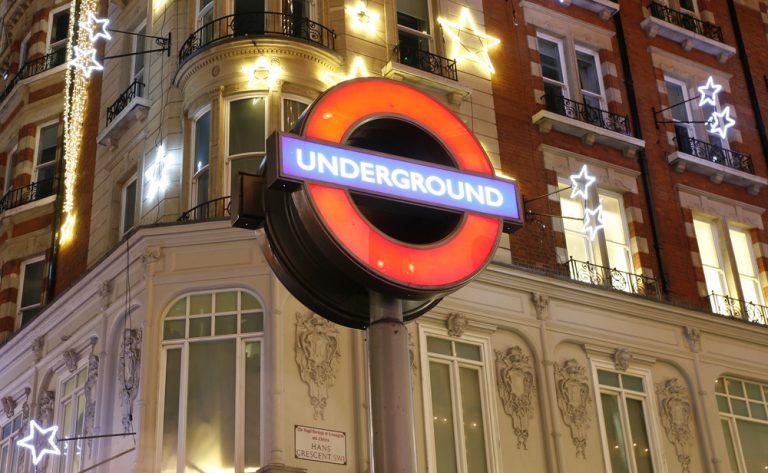
In case you hadn’t heard, Friday night ushered in a new era for London: the Night Tube. Bringing the British capital in line with other European cities who already have 24 hour metro systems, two main lines will now run continuously between Friday morning and Sunday night.
Championed by both Boris Johnson and Sadiq Kahn as vital to “help maintain London’s status as a vibrant and exciting place to live, work and visit,” Friday’s launch was the result of hard work by both mayors, as well as hours of discussion with unhappy trade unions.
Expensive as the project may be, both Kahn and his predecessor Johnson were agreed on the long term economic benefits. Research suggests that the net additional output produced as a result of the service will equate to an additional £360 million over 30 years, and for each £1 spent on delivering the Night Tube, the benefits will be worth £2.70.
Looking at the bigger picture, Sadiq Kahn hopes the Night Tube service will give London’s failing nightlife a much-needed boost. Recent months have seen London nightclubs close at an unprecedented rate, leading Kahn to seek the appointment of a ‘Night Minister’ to nurture and protect the city’s nightlife.
A 24-hour service gives clubs and bars the potential for longer operating hours, and obtain more staff – TfL predicts the Night Tube will lead to the creation of 1,965 permanent jobs, across a range of industries.
The Mayor of London, Sadiq Kahn, at Oxford Circus station
The demand for a 24 hour service, especially at weekends, is certainly there: around 560,000 people use the tube after 10pm on Fridays and Saturdays already, equivalent to 8 percent of all trips, according to a report by economic consultant Volterra.
For shift workers, it spells the end of long, tiresome night bus journeys home. Almost half of night bus passengers are commuting to and from work, and demand has risen 170 percent in the past 15 years – far in excess of TfL’s daytime services.
Indirectly, the service has other benefits; it provides a reduced demand for illegal minicabs and less time spent on the streets waiting for Night Buses, thus improving safety at night.
Whether the investment will be as good as it sounds is something only time will tell. For London, however, it represents a new era; for nightlife, for the economy and for everyone who considers themselves a Londoner.
Pfizer and AstraZeneca agree antibiotic deal
Pfizer has agreed to buy a small antibiotics arm of AstraZeneca’s pharmaceutical business, just days after confirming a $14 billion takeover of Medivation.
The deal, worth $1.5 billion, will widen its antibiotic medicine offering and give access to several others still in the development stage.
AstraZeneca said the deal is unlikely to have an effect on this years figures, but pushed shares down 0.30 percent to 5,046 (LON:AZN).
Glencore profits drop 66 percent
Glencore (LON:GLEN) disclosed a 66 percent drop in first half profits on Wednesday, sending shares down nearly 5 percent.
The company said volatile commodity prices had impacted on its performance, which saw first half adjusted EBITDA fall 13 percent.
Glencore also announced a new debt reduction target, raising it to between $16.5 million and $17.5 million.
CEO Ivan Glasenberg commented, “Going forward, we continue to focus on successfully completing the balance sheet repositioning, first announced in September of 2015 and delivering industry-leading shareholder returns into the future.”
Growth slows in Germany
The Germany economy has slowed in the second quarter, with GDP increasing by just 0.4 percent between April and June.
The figure represents a 0.3 percent slowdown from the 0.7 percent growth achieved in the first quarter. The annual growth rate stood at 3.1 percent.
Growth was driven by household and public sector spending, but held back by a fall in investment.