
BlackRock Income Strategies to revise investment strategy post-Brexit

London based BlackRock Investment Strategy Trust this week announced that it will review its’ investment objectives and policies on terms of sustainability amid the changing economic conditions following last month’s Brexit vote.
US wage growth beats estimates

Wage growth for July indicates better than expected state of US labour market
The data on earnings growth and job creation in July, published on Friday by the US Department of Labour, beat analysts’ estimates on both figures of average hourly earnings and indicators of job creation. This suggests that the US labour market is in a better current position than previously projected.Wages are growing faster than expected
Average hourly earnings grew by 0.3% between June and July, up 0.2% from earnings growth between May and June. The figure beats estimates by 0.1%. The year on year indicator for wage growth met analysts’ expectations at 2.6%, the same level seen the previous month, with the figure for average weekly work hours coming in at 34.5, up 0.1 per hour from last month and analysts’ estimates.255,00 new jobs created in non-agricultural business
Most surprisingly, the number of new jobs created in all non-agricultural business stood at 255,000 in July, down only 37,000 from June’s figure and 75,000 higher than previously predicted. Slight disappointment only came from the unemployment rate, which remained at 4.9% in July rather than seeing the 0.1% decrease predicted by analysts.USD rallies against major currencies
The USD rallied against other major currencies in anticipation of the data release and continued its hike after the positive results at1.30pm. The USD/JPY gained 0.84031 between 1.20pm and 2.47pm. At 2.57pm the pair was trading at 101.85954.US Stock markets rally
The Dow Jones Index gained 0.85% in early morning trading on the back of positive labour market data, standing at 18,507.85 at3.21pm. The S&P 500 Index was up 0.69%, to 2,179.23 and the NASDAQ composite index recorded a 1.03% jump.Traded commodity prices drop on positive US labour data
Silver and Gold prices were down as the positive data rallies interest in higher risk, interest earning assets. Gold dropped 1.54% between 1.20pm and 3.14pm, to trade at 1339.73USD/ounce.Impact on future Fed decisions
The better than expected data also refuelled the debate about the possibility of a Fed rate hike in the meeting next month. As expected, the Fed refrained from increasing the interest rate in its meeting in July, but indicated that an increase may still be on the cards later this year. The next Fed monetary policy meeting will take place from the 20th to the 21st September. Today CME Group’s Fed Watch Tool indicates a 20% possibility of a rate increase at the next meeting, up from 9% likelihood the previous day. Most analysts still believe that the Fed will hold off on a rate hike until its December meeting.Can Monti dei Paschi di Siena pull off a private rescue?

Whilst Italian banks may be having a rough time at the moment, one in particular is on the brink of collapse: the 500 year old Monte dei Paschi di Siena bank, currently caught in the throes of a possible private rescue.
Like most Italian banks, MPS is struggling under the weight of millions of Non-Performing Loans and recently received the worst score in the most recent European Banking Authority stress tests. Despite Prime Minister’s assertions that the Italian banks are “good”, the share price of MPS has plummeted, falling from €90 to 26 cents alongside slashing dividends. Renzi may still think that Monte dei Paschi “could be a very good bank for the future”, but it is in major need of a €5 billion recapitalisation for the third time in three years, as well as a clean-up of its €27 billion worth of non-performing loans.
Renzi has spoken out strongly against a bail-in, whereby banks existing shareholders would take the hit, on the grounds that this would hit thousands of family savers. Bailing out the bank with taxpayer money would be another unpopular option for the centre-left Prime Minister, whose leadership depends on winning a referendum on the constitution, to be held in October.
However last week, MPS came up with a third option: a private sector-backed bailout. Despite the bank being worth under 1 billion euros on the market, the rescue scheme hinges on raising 5 billion to prop up the bank before the end of year. So far, the plan has gained traction; the global coordinators for the cash call, JPMorgan and Mediobanca, have secured a pre-underwriting agreement from another six other banks, including Santander, Goldman Sachs and Credit Suisse. However, MPS still has to negotiate the sale of 9.2 billion euros of bad loans through an unprecedented securitization. Drawing on the size of the task ahead several other banks have, perhaps not unreasonably, chosen to opt out.
LC Macro Chief Economist Lorenzo Codogno, a former chief economist at the Italian treasury, told Reuters: “Italy is on a good course to solve its banking issues. However, leaving aside some near-term re-pricing of risk, this is not yet a turning point.”
Miranda Wadham on 05/08/2016
India passes long awaited bill on tax system revision
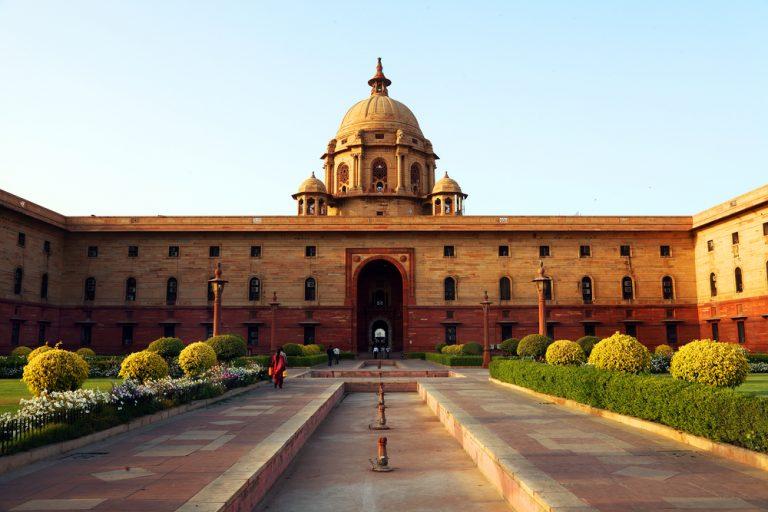
India’s upper house of parliament unanimously passed a long awaited bill this week, allowing the creation a unitary tax system and finally achieving a completely integrated single market within the country. Economists are confident that the revision of India’s fragmented taxing system can increase the economy’s efficiency and create up to a 2% increase in GDP growth per year.
Bill will bring country together under single tax system
The bill, over a decade in the making, will amend the Indian constitution to allow a replacement of the country’s mix of national, state level and local taxes by a unified value added tax system.
Finance Minister Arun Jaitley hailed the move as “the most significant tax reforms in Indian history.”
It will create a unified single market which brings together the vast amount of the country’s 1.25bn consumers and fully integrate its current £1.5tn economy. Under the new tax system consumers will pay the same taxes in every Indian state. Products such as electronics and motorbikes will become cheaper but prices may increase for goods such as tobacco and fizzy drinks as well as services.
Economists believe reforms will boost economic growth in India
While it took over a year to get the bill passed in the upper house, technocrats, economists and businessmen alike welcome the final decision to move forward with the reforms. Most economists believe that the creation of a single market will increase the efficiency of the country’s economy and may add as much as 2% to its yearly GDP growth. During the debate of the bill in the Upper House Arun Jaitley said: “It would certainly give a boost [to] the economy, which is required at this critical stage.”
India overtook China as the world’s fastest growing economy in 2015 when the country’s GDP rose by a total of 7.5%, compared to China’s increase of 6.9%. At the end of the first half of 2016, results pointed towards India staying in this position with growth levels indicated at 7.6%. But as the global economy faces challenges of low oil prices and economic uncertainty in Europe due to the Brexit-vote, ongoing terror threats and the looming threat of another banking crisis in Italy, countries all around the globe have to strive for increases in efficiency to achieve growth targets.
Business will profit from the simplified tax system
Under the new system businesses will be able to reclaim tax credits which were already paid by suppliers, giving businesses more investment incentives. Further, the creation of an integrated market throughout the country will make it easier to transport goods between different Indian states, removing much of the bureaucratic and logistical challenges as well as the great cost faced currently.
In an interview with indianexpress, Bhaskar Pramanik, Chairman of Microsoft India commented:
“I am pleased that the Goods and Services Tax (GST) Bill was passed in the Rajya Sabha today. It is a positive development and I hope the Government will implement this long pending reform by April 1, 2017. The Government’s idea of a single tax regime is crucial to improve ease of doing business in India and address the ambiguities of the current indirect tax landscape, proving beneficial for the economy, at large.”New tax bill will promote Modi’s “Make in India” – Mission
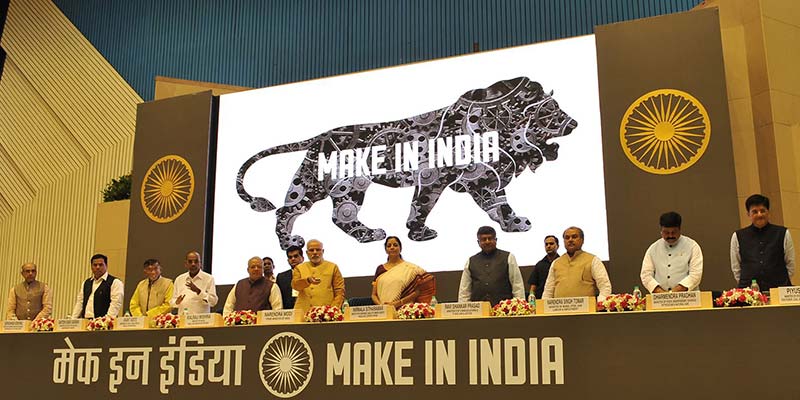
Foreign companies welcome revisions
The new unified tax system will also make it easier for multinational corporations to make full use of the potential of the Indian market. Companies such as IKEA, H&M, Gap, Zara and many of Japan’s and Western countries’ car makers will face simpler bureaucratic processes and lower charges when selling their products on the Indian market.Complications to enact bill still lie ahead
While the unanimous vote of the upper house this week has been celebrated as a huge success, it will be difficult to meet the April 1st deadline for enactment. The amendment of the constitution requires at least 15 of the 25 Indian states to approve the new piece of legislation, which may take several months. Some experts worry that individual states may not be inclined to approve the bill at all, as under the new unified tax system local governments will lose revenue from taxation for which they will not be compensated over the coming 5-year period. Further, as the new tax is to be electronic rather than a manually filled, an immense update in the government agencies IT infrastructure will be necessary to run the new system. Rajeev Dimri, partner at BMR Associates said: “It is not impossible but a lot of agencies will have to work double time to meet the April 1 deadline. Katharina Fleiner 05/08/2016US jobs data soars at 255k

The latest US jobs data has just been released, with the non farm payroll figure coming in at 255,000.
This is a steep rise from the 180,000 expected by analysts prior to the release. The USA’s unemployment rate came in at 4.9 percent.
The unexpectedly high figure suggests stronger wages and brings discussion of a Fed rate hike back into play, with a rate increase looking more likely in the not too distant future.
05/08/2016
What does a rate cut mean for you?

Yesterday’s big news was the announcement by the Bank of England that interest rates would be cut from 0.5 percent to 0.25 percent. But amongst all the financial jargon – what does that mean for you?
Essentially, a rate cut can be good or bad – or both. Lower interest rates mean less to pay back on a loan if you’re a borrower, but less interest accumulated on money in the bank if your’re a saver.
What is the impact on borrowers?
Those affected most will be mortgage holders. According to data from the Office for National Statistics, the Bank of England’s cut will mean an average £22 monthly reduction in the bill for a variable 25-year repayment mortgage on a typically priced home of £211,000, with the average monthly bill being around £779.
However, the rate cut will only affect borrowers who have a bank tracker rate mortgage – a mortgage whereby the interest rate varies in direct relation to that of the Bank of England’s announcement. Unfortunately only one in five mortgage holders have a loan of this type; nearly half of lenders have a fixed-rate mortgage, which will remain unaffected by the rate change.
And for savers?
In simple terms, a bank rate cut is bad news for savers; in fact, the rate cut is designed to create a bad saving environment and encourage the population to spend instead.
Whilst interest rates on savings accounts have been poor for years, they are likely to get steadily worse from now. At the moment, the average interest rate on an easy access savings account is 0.65 percent; this is now likely to drop to 0.4 percent. Many banks have already cut their rates in anticipation, including West Bromwich Building Society and Nationwide.
What about the possibility of negative interest rates?
A negative rate is designed to encourage savers to take their money out of savings accounts and spend it, thus stimulating the economy. Bank of England governor Mark Carney made it clear in his announcement yesterday that negative rates were not something being considered at the moment, but warned that rates may drop to 0 percent in the near future. From there, surely, negative rates are just one small step?
Several European countries already have negative rates, including Switzerland, Denmark and Sweden. If this happens, the chances are banks will adopt negative rates too, meaning that, essentially, the British population will be paying banks to hold their money. Just last week, the Royal Bank of Scotland wrote to its business customers to warn them that it might charge negative interest rates if the Bank Rate should fall below zero, and it is likely that many more would follow suit.
Miranda Wadham on 05/08/2016
Bellway shares up on “outstanding” trading forecast

Housebuilder Bellway saw shares soar 5 percent this morning after a trading update forecast an “outstanding trading performance” ahead of its preliminary results.
The group expects housing revenue to increase by around 27 percent to £2.2 billion, alongside a 12.5 percent increase in housing completions. Bellway expects to maintain a strong balance sheet, with net cash of £26 million and a strong forward order book.
Ted Ayres, Bellways’s CEO, commented, “the Group has delivered an outstanding trading performance, achieving new records for Bellway in respect of both volume and operating margin.”
With regards to the EU referendum result, Ayres said that is was “still too early to assess the effect”, but added that “Bellway, with its strong balance sheet and robust land bank, can be flexible and respond opportunistically to any changes in market conditions.”
Bellway is currently trading up 5.17 percent at 2,133.88 (1048GMT).
05/08/2016
Morning Round-Up: RBS shares fall, E-Sure hit, housing prices fall

RBS shares plunge on ‘legacy issues’
Shares in the Royal Bank of Scotland (LON:RBS) have fallen 5 percent this morning, after the banking giant reported a £2 billion loss for the first six months of the year.
Although the bank has not made a profit since 2007, the steep loss reported today is far larger than the £179 million loss for the six months previously. CEO Ross McEwan blamed the sharp fall on ‘legacy issues’, including PPI problems dating back to 1993 and ongoing restructuring.
At the same time, the bank announced that is would be splitting from its Williams & Glyn business, with Santander UK being the rumoured buyer for the 300-branch high street banking chain.
RBS is currently trading down 4.43 percent at 183.55 (1004GMT).
E-Sure shares down as claims rise
It has also been a bad morning for British insurer E-Sure, whose shares have fallen 4 percent after reporting a drop in first-half underlying profit.
Underlying pretax profit fell to £45.6 million for the six months to June, down 1.9 percent, with gross written premiums rising 16.3 percent.
The company blamed adverse weather conditions leading to a rise in claims, along with lower oil prices putting more cars on the road.
E-Sure is currently trading down 4.18 percent at 268.40 (1014GMT).
House prices fall in July, but effect of Brexit unknown
House prices in the UK are so far largely unaffected by Brexit, falling by 1 percent in July but still up 8.4 percent on one year ago according to mortgage lender Halifax.
However, the lender warned that there was evidence that the housing market may be slowing, but it was still too early to determine the long-term effects of Brexit.
05/08/2016
BoE cuts interest rates to combat post-Brexit recessionary pressures
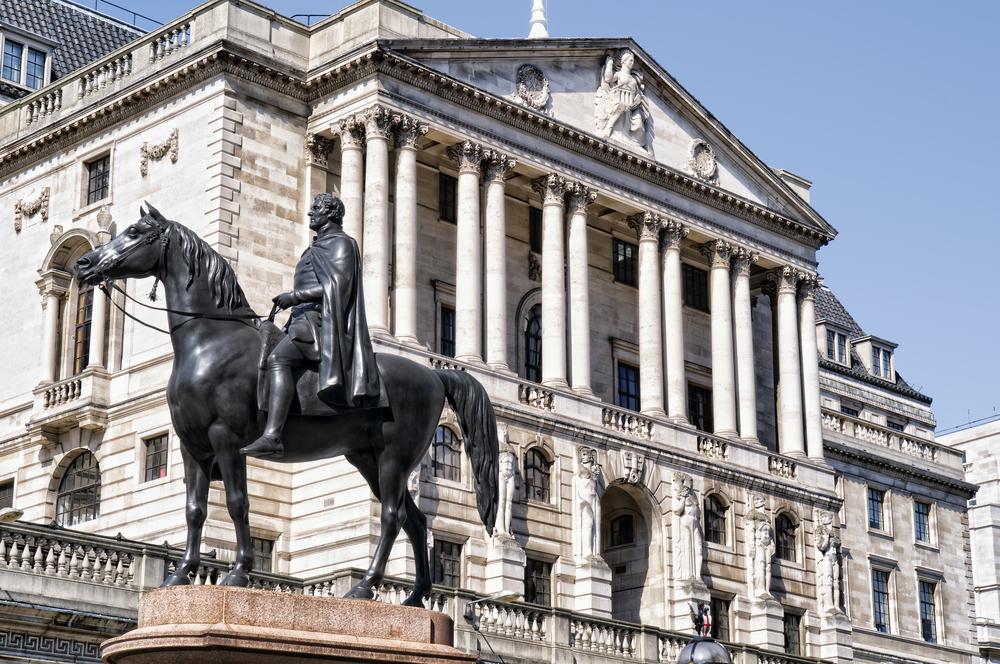
The Bank of England Monetary Policy Committee today announced interest rates will be lowered for the first time since 2009, in a move designed to support the economy amidst a flurry of data suggesting that the UK is heading for an economic downturn.
The BoE Monetary Policy Committee unanimously decided to cut interests rate from 0.5% to 0.25%, as had been predicted by many analysts since the vote to leave the European Union.
Although analysts did not expect a further expansion of the BoE’s quantitative easing (QE) program at this time, the committee also decided to expand its’ asset purchase facility from £375 billion to £435 billion.
A further expansion of the QE program signals that the committee is more worried about the possibility of prolonged recession in the UK than was widely expected.
The new policy package also included the purchase of up to £10 billion in UK corporate bonds and a new Term Funding Scheme.
The Term Funding Scheme will provide funding for banks at rates close to the newly established bank rate to ensure that new interest rate cuts can be translated from the BoE to the commercial banking level. The decision to add this complementary policy feature was made in the eye of already very low interest rates, which may make it impossible for some banks and building societies to lower their deposit rates further and therefore make the lower bank rates a less powerful tool to achieve lower commercial interest rates.
The BoE hopes that its new stimulus package will combat recessionary pressures in the economy which could drive down employment and consumer spending following economic uncertainty due to the UK’s decision to leave the European Union. The decision will, however, come at a price; lower interest rates and further QE are likely to deny the possibility of achieving the 2% inflation target set by theinstitution itself.
In its monetary policy summary published Thursday at 12pm the Committee voiced its opinion: “Given the extent of the likely weakness in demand relative to supply, the MPC judges it appropriate to provide additional stimulus to the economy, thereby reducing the amount of spare capacity at the cost of a temporary period of above-target inflation.”
In its August Inflation Report, which was published beside the monetary policy decision, the MPC stated its expectation of future developments: “…By the three-year forecast horizon unemployment will have begun to fall back and that much of the economy’s spare capacity will have been re-absorbed, while inflation will be a little above the 2% target.”
The growth forecast for 2017 has been slashed from 2.3% published in May, to only 0.8% and BoE signalled there may be a possibility for further rate cuts in upcoming policy meetings.
The Pound fell sharply against other major currencies in the aftermath of the decision. The GBP/USD rate fell from 1.33265 ten minutes before the publication of the decision at 12pm to 1.31300 at 12.30pm. At 2.22 the rate stood at 1.31434 USD per British Pound.
Design professionals side with Apple in iPhone row

More than a hundred design industry professionals have come out in favour of Apple, as Samsung appeals to the US Supreme Court over the $548 million it had to pay for copying Apple’s iPhone design.
The original payment was made in 2012, after a court case found Samsung had copied the rounded-corner front face, bezel and grid of icons iPhone design. Samsung are currently in the process of appealing this “excessive” cost, prompting a large group of design professionals, including those from Calvin Klein, the Parsons School of Design and Bentley, to sign a court brief supporting Apple.
In the note, they argued that the product’s distinctive look is what drives people to purchase the iPhone, with the “look of the product comes to represent the underlying features, functions, and total user experience.”
This is the latest in a long-standing rivalry between the two electronics companies, with Samsung bosses making a dig at the design of Apple’s new iPhone at the unveiling of the Samsung Note 7 launch this week in New York. Samsung’s SVP of product strategy, Justin Denison, made a reference to Apple’s rumoured lack of headphone jack, saying: “Do you know what else it comes with? An audio jack, just saying.”
04/08/2016