French bank Credit Agricole is expected to pay a fine of £516 million to settle charges of breaking US sanctions in the Middle East.
The settlement, which is due to be finalised later this week, follows an investigation by the US into European banks transactions with Iran and other countries under sanction. Rival bank BNP Paribas paid an $8.9 billion fine earlier this year for similar allegations.
Credit Agricole stands accused of transferring billions of dollars to accounts held by entities such as Iran, Sudan and Cuba between 2003 and 2008.
According to a source, most of the bankers involved in the wrongdoing have already been dismissed from the bank.
The fine will be part of a deferred prosecution agreement, meaning that it will not have to plead guilty to any charges as long as it meets the requirements of the agreement.
Indian steel company Tata Steel has announced restructuring plans that may lead to the loss of 1,200 jobs at its plants in Scunthorpe and Lanarkshire.
Nine hundred jobs will go at the firm’s plant in Scunthorpe, with the other 270 from Scottish plants.
This news comes as another serious blow to the UK steel sector, following on from yesterday’s news that Caparo Industries has gone into administration risking the loss of 1700 jobs.
In the 1970s, more than 200,000 people were employed in the UK steel sector; this has since dropped to 30,000. According to unions, one in six of those jobs is now under threat.
The industry blames cheap Chinese imports for a collapse in steel prices, a topic that Prime Minister David Cameron has vowed to discuss with Chinese premier Xi Jinping on his current state visit. According to Reuters, China’s steel exports rose drastically to 11.25 million tonnes last month, exacerbating the crisis further.
Gareth Stace, Director of UK Steel, told the BBC that “we must … see a commitment from all parts of government at the highest level to ensure the sector’s survival in the UK. The Prime Minister can demonstrate that he is prepared to lead this commitment by stepping in this week and pressing the Chinese Premier about the dumping of under-priced steel, which is one of the major factors killing our industry.”
The recent strength of sterling has also contributed to the current steel crisis, making products more expensive for export customers.
The price of steel has fallen significantly since 2010, prompting speculation that the steel crisis may be here for the long haul. Industry leaders are calling for government intervention in order to save thousands of jobs and prevent the steel industry collapsing in the UK.
Premier Inn and Holiday Inn owners lead FTSE100 higher in early trade
UK-listed hoteliers Whitbread (WTB:LON) and Intercontinental Hotels Group (IHG:LON) are trading up 2.2% and 3.7% respectively as profits rise. Whitbread, the owner of the Costa Coffee and Premier Inn brands has confirmed it’s on track to achieve growth targets after announcing a 5.4% rise in half-year pre-tax profit. Profits are up from £241.8 million (2014 comparable period) to £254.9 million in the six months to August, Chairman Richard Baker said “Whitbread has produced another good set of results, demonstrating the strength of the Premier Inn and Costa brands,” continuing on to say “We are on track to deliver our growth milestones and will continue to invest in our people, our customer propositions and our systems to deliver profitable growth for our shareholders,” In recent bank / broker views Canaccord Genuity reiterated their buy stance with a £60 price target, Soc Gen Reiterated their bullish stance with £53.43 price target and Nomura retains their Buy rating on the stock which trades at £48.28.
InterContinental Hotels Group (IHG:LON) the owner of the Crowne Plaza and Holiday Inn Hotels & Resorts brands also reported strong growth, third quarter comparable revenue per available room – a key metric for hoteliers – grew 4.8% on the year. “We…continued to sign hotels into our pipeline at the fastest rate since 2008,” Chief Executive Richard Solomons said. “Looking ahead to the remainder of this year, we are encouraged by current trading trends and remain confident in the outlook.” IHG leads the FTSE higher up 3.7% at £23.95 in early trade.
Shares in Asian markets largely fell on Tuesday, on the back of last week’s poor growth data from China.
Official Chinese GDP growth figures showed growth slowing to 6.9 percent in the third quarter, down from 7 percent in the first half of the year. Shanghai shares dropped 0.1 percent and Hong Kong’s Hang Seng fell 0.5 percent, with Australian stocks also losing 0.6 percent.
Spreadbetters are expecting a slightly lower open for the FTSE on the back of this news; however, several companies have posted positive results this morning.
Online fashion giant Asos has posted an 18 percent increase in sales and a pre-tax profit up 1 percent on the previous year to £47 million.
The company said in a statement that trading in its current financial year has “started well”, and has estimated a sales growth of 20% this year.
Whitbread (LON:WTB), owner of Costa coffee, has reported a 5.4 percent increase on its pre-tax profit for the first half of the year, at £254.9 million. However, it also warned that the minimum wage rise will cost the company around £15 million a year, which they hope to mitigate through “a combination of economies of scale as we grow, procurement benefits and investment in training and systems to deliver increases in productivity and efficiency”.
Whitbread are currently trading up 2.19 percent at 4828.55 pence per share. (0808GMT)
On Monday, oil prices fell by more than 2% due to concerns of China’s economic growth. China, the world’s largest energy consumer, grew at the slowest pace in six years in the third quarter making it increasingly likely for Beijing to cut the interest rates to stoke activity.
This data, which was released earlier today, ”suggests that the main global oil demand growth engine of the world is not going to be the solution to the oversupplied oil market… The solution is going to have to come from a significant cut in production.” according to the Energy Management Institute, Dominick Chirichella. However the oil minister of Iran has said that he expects Iran to boost oil production in the next two months by up to 500,000 barrels.
According to analysts, member countries of OPEC aren’t expected to cut the production of oil and the idea of an output cut “will remain just that, an idea, until Saudi Arabia expresses any interest in defending prices rather than market share,” according to the co-editor of The 7:00’s Report, Tyler Richey.
Despite production from OPEC countries reaching 30 million barrels, there are indications of slowing down in the U.S., wit US crude oil rigs falling for the seventh consecutive week to 595 for the week ending October 16, 2015.
Morgan Stanley’s profit has slumped for the second straight quarter with the net profit falling by 42% from $1.63bn to $939m.
The global markets have felt turbulence following uncertainty of a U.S. interest rate hike and concerns of China’s cooling economy, which has led to many U.S. banks to report drops in quarterly earnings, with rival Goldman Sachs reporting last week a sharp fall in profits as the trading activity stalled. Wells Fargo & Co (WFC.N) is the only of the US six major banks to achieve an increase in revenue.
Chief executive, James Gorman has said “The volatility in global markets in the third quarter led to a difficult environment, impacting in particular our fixed income business and our Asia merchant banking business,”
Shares of Morgan Stanley have fallen by more than 4 percent in premarket trading following the report and 12.5% this year.
Chris Kotowski, analyst at Oppenheimer has commented, “We don’t think this quarter says anything negative about Morgan Stanley’s safety and soundness, but it looks like one they’d like to forget ASAP,”
Since the cash ISA limit increased to £15,000 in June 2014, the government has confirmed of its plans to drastically change ISAs yet again to include peer-to-peer loans and increase the limit once again to £15,240.
From April 2016, peer-to-peer loans can be held in an “Innovative Finance Isa”, where firms such as Zopa, Rate Setter and Funding Circle allow savers to lend money to businesses and people at rates they choose. This peer-to-peer lending cuts out the middle man, therefore allowing higher returns.
The chair of the P2PFA, Christine Farnish, stated “the creation of the innovative finance Isa will encourage more people to benefit from the fair deal that P2P lenders offer without getting confused between stocks and shares, P2P lending or cash savings”.
For Rhydian Lewis, the founder borrowing and peer-to-peer saving website RateSetter has said that allowing peer-to-peer investments to be put into an Isa, will “offer a much needed middle ground between low-yield cash and high-risk stocks and shares investments.”
Hargreaves Lansdown has already confirmed that it plans to offer an Isa with peer-to-peer loans.
For more information on ISAs and the offers currently held at different brokers, click here.
First introduced in 1999, ISAs (Individual Savings Account) are a popular and tax-efficient way to invest for the future and add to personal investment portfolios. ISAs have become increasingly popular since the 2014 Budget when ISA regulations were changed to offer greater flexibility and bigger tax breaks.
So whilst ISAs can shelter savings and investments from tax, it is important to boost these savings through selecting the right account to minimise charges and commissions whilst ensuring the highest quality service.
With the dealing commission ranging from £5 to £20 per trade, there is plenty of room to save between different brokers. Priced at £20 per trade, Brewin Dolphin is one of the more expensive brokers, also charging 1.25% for the first £15,000 invested. Brewin Dolphin however does make all investment decisions on the clients’ behalf and offers regular valuation reports and an end of year tax schedule.
With a website less easy to navigate, The Share Centre might have a fairly inexpensive dealing commission at £7.50 for frequent traders, but the website spreads out additional charges making it difficult to total the annual charge at £128 plus VAT.
With similar dealing commissions, HSBC (£12.50 per trade) and TD Direct Invest (£12.95 per trade) offer very different annual charges, with HSBC charging 1.25%, with other expenses totalling approximately 0.8% and TD Direct Invest charging annual charges of 0.30% for funds up to £250,000 whilst also not charging to close accounts or transfer out investments.
For those who already larger portfolios, it might be more sensible to invest with Fidelity. Fidelity charges £9 per trade and a 0.35% but offers extra savings for those with larger portfolios.
Comparing several of the major brokers and offers regarding ISAs, Hargreaves Lansdown offers not only cheaper dealing admissions at £5.95 for frequent traders but has no dealing charges when buying and selling funds, no upfront charges and offer free share tips to clients.
With regulations around ISAs changing, they are proving to be more popular following the Chancellor’s announcement that after changes put into place in June 2014 now allowing savers to invest up to £15,000, over six million savers would benefit.
Foreign exchange company Eris FX have just won a landmark ASA ruling, banning the use of misleading and inaccurate currency converters on foreign exchange websites.
The converters are widely used by specialist currency providers on websites to overseas property buyers. They appear to show how much a potential cutover would be charged for the foreign currency, but in reality they only return the ‘interbank’ or market exchange rate; which is not an achievable rate for consumers.
In February Eris FX wrote to the FCA and then to the Advertising Standards Authority, who investigated one converter on World First Ltd’s website. They found that it contravened the CAP code on advertising on four counts, and the ruling will now be used as a precedent for the whole sector.
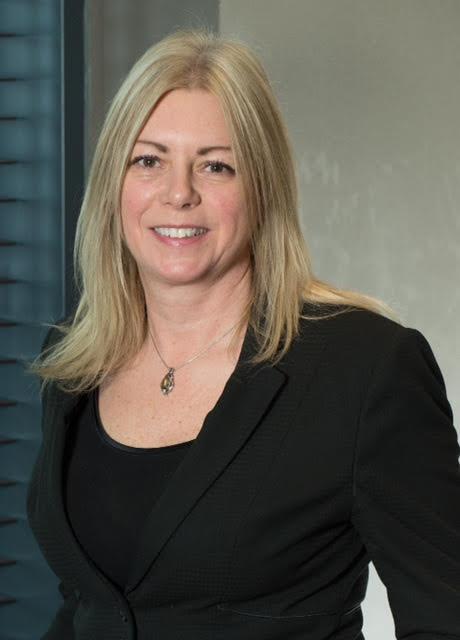
Ex-city trader and founder of Eris FX, Helen Scott, says:
“We are trying to operate an ethical and responsible currency exchange and payments business against a backdrop of industry-wide breaches of regulations and misleading advertising practices that the regulators are turning a blind eye to.
“This will end a misleading practice that has potentially cost British consumers millions of pounds over recent years because they don’t understand the difference between a customer rate which includes the brokers fee, and the market rate which doesn’t. On a substantial trade this difference could be thousands of pounds.”
Founder and MD of Eris FX, Helen Scott
Eris FX are a Yorkshire-based currency exchange company who use their own custom-made software to run a fair and ethical foreign exchange website. They are currently the first and only currency specialist to show live customer rates, updated every second, which include their fees.
Eris FX are currently seeking a round of investment on crowdfunding platform Seedrs. The company are looking for £750,000, in return for 10.35 percent equity. When asked why Eris FX chose crowdfunding, rather than more traditional methods of financing, Scott said:
“We believe it is a quicker route than VC funding, which can often take many months. We also fall between the cracks in the amount we are looking to raise – most fintech VC’s are looking to invest several million pounds but we are looking for less than that.
“Having said that, the crowdfunding experience is not proving an easy one – we think that the investors there are probably more geared towards understanding product offerings, rather than fintech services.”
Eris FX are another example of British start-up companies leading the way in the fintech sector, and choosing crowdfunding to do so. For more information on how to invest in Eris FX, visit their campaign page on Seedrs.
We offer our clients the opportunity to invest directly into a managed Forestry investment located in the UK or Ireland. Forestry pays an annual income through the Government grant scheme and regular selective thinnings.
The returns achieved range from 8.5% per year up to 18.5% depending on site and location. Under current tax legislation, all income from Forestry is tax free. There is no capital gains tax on the growth in the value of the timber and there is No Inheritance Tax, once the property is held for more than 2 years.
Investment Summary
Returns average 8.5% over the previous 21 years
Regular payment through government grant scheme
Capital growth through natural tree growth of 11% per year
Tax-free returns
Minimum entry level €14,000
Full land ownership during investment period
5,10 & 15 year terms available
Returns are paid annually as follows:
⇒Government Grant Scheme – €320 per acre
⇒Selective Thinnings – €780 per acre
All returns from Forestry in the UK and Ireland are currently TAX-FREE under current legislation
Annual Payments
Payments are made each year on the anniversary of the investment. Investors can choose their returns either by cheque or wire transfer.
We offer individual the opportunity to invest in a privately managed mature forestry investment.
Investment Dynamics
Demand for timber continues to grow due to improving economic conditions in Europe and further development of Biomass as a commercial energy supply. When you consider this fact along with recent EU legislation in 2013, requiring all companies in Europe who purchase timber to ensure that it comes from a sustainable source has meant that supply has been reduced by up to 20% annually, this will continue to drive timber prices higher, and ensure significant profits for timber growers in Europe.
Learn about Forestry Investments Now
Terms and Conditions
The content of this website and it’s promotions has not been approved by an authorized person within the meaning of the Financial Services and markets Act 2000. Reliance on the promotions on the website for the purpose of engaging in any investment activity may expose an individual to a significant risk of losing all of the property or other assets invested.
The content of this website does not constitute an offer, solicitation or recommendation to acquire or dispose of any investment or to engage in any other transaction. The website should not be construed as advice or a personal recommendation to any prospective investor.
The information provided on this website is solely for information purposes only. The website and its content are not and should not be deemed to be an offer of or invitation to engage in any investment activity.
Any person accessing the website and considering potential investment opportunities featured on the website should make their own commercial assessment of an investment opportunity after seeking the advice of an appropriately authorised or regulated financial advisor. The products available are provided by a range of investment companies and are offered for investors with some degree of investment knowledge and experience, who wish to take an active responsibility for their investment decisions rather than for investors who may prefer to leave those decisions to a Fund Manager
Neither UK Investor Magazine nor the products it displays are authorised or regulated by the Financial Conduct Authority. The products and service available do not therefore offer recourse to the Financial Ombudsman Service or the Financial Services Compensation Scheme.
By requesting this information you agree to be contacted by the UK Investor Magazine and the organisation operating the above offer.