IQGeo share price continues to hit new highs

0

Geospatial software provider IQGeo (LON: IQG) generated organic growth of 64% in 2023 as contract wins in recent years contribute to growing annualised recurring revenues. The share price has risen 785% over the past five years, since IQGeo refocused on its geospatial business.

The success of the business is indicated by net recurring revenue retention of 133%, helped by cross-selling of products. Annualised recurring revenues increased by 50% to £21.3m.

AIM-quoted IQGeo has a core customer base of utilities and telecoms. Its software enables collaboration between the various divisions of these large businesses so that the group’s information and geospatial data can be used to build up a visualisation of all the assets in the business and where they are sited.

In 2023, revenues increased from £26.6m to £44.5m, while IQGeo moved from a small loss to an underlying pre-tax profit of £3m. Cavendish believes that this could improve to £5.5m on revenues of £49.8m this year. That shows the operational gearing of the business.  

The share price moved to a new high of 407p. That is nearly 50 times prospective 2024 earnings, falling to 41 in 2025. That rating reflects the recurring nature of the core revenues and continued new contract wins.  

Prudential shares sink despite strong 2023 results

Prudential shares sank on Wednesday despite the group posting strong 2023 results boosted by reopening the border between Hong Kong and the Chinese mainland.

New business soared 45% to $3.1bn, and annual premium sales jumped 37%. There’s a lot to like in the group’s full-year results.

However, Prudential’s strong results did little to lift the mood among investors who are still clearly concerned about the risks to China’s economy and what they mean for the immediate outlook.

“The whole idea behind Prudential’s pivot east was to benefit from the growth opportunities in less mature insurance and savings markets in Asia and Africa,” said AJ Bell investment director Russ Mould.

“However, the recent sticky patch for the Chinese economy has undermined the business and, to an even greater degree, sentiment towards it.”

Prudential shares were down 6% at the time of writing and were trading at the lowest levels since the beginning of the pandemic. While 2023 results were robust, what happens next is less clear.

The company said they remain confident in meeting their 2027 targets of 15% – 20% new business compound annual growth from 2022 levels and double-digit compound annual growth in operating free surplus from insurance and asset management businesses.

However, the group’s outlook section of the results was brief and provided little insight into what happens next year. This may have put investors off, given the uncertainty around China.

“Despite analyst price forecasts being significantly higher than the current price, it would appear that The Pru still has some work to do in convincing investors that the prolonged downtrend is reversing,” said Mark Crouch, analyst at investment platform eToro.

“Prudential still has significant exposure to China and their share price dropped by a quarter in 2023, currently sitting at a key area of support that also marked the COVID lows.”

Prudential shares are attractive at these levels for those optimistic about China’s outlook, however difficult that may be. The forward earnings multiple is around 10x and offers value.

The company increased the full-year dividend by 9%. Prudential yields around 2%.

AIM movers: Roadside Real Estate non-core gain and Naked Wines cash improves

1

Roadside Real Estate (LON: ROAD) shares have soared 172.3% to 8.85p – the highest level for six months – after it sold part of its stake in Cambridge Sleep Sciences to CGV Ventures 1 for £6m. The total stake cost £2.7m and Roadside Real Estate still owns 65%, having sold a 10% stake, so it still has to be consolidated. Management is considering selling the rest or demerging the company so that it can concentrate on its core property interests.

Evgen Pharma (LON: EVG) is acquiring Chronos Therapeutics for £900,000 in shares at 1.44p each, which means that it will no longer be a single asset company. A share issue has raised £850,000 at 1p/share and a retail offer could raise up to £1m. The share price improved 13.5% to 1.05p. Chronos Therapeutics is a pre-clinical biotech spin-out from the University of Oxford. It is developing drugs to treat central nervous system and neuropsychiatric conditions. It acquired two potential treatments from Shire Pharmaceuticals. The cash could last until 2026. The company is changing its name to TheraCryf.

Naked Wines (LON: WINE) says fourth quarter revenues are in line with expectations. Net cash has improved to £17m and the year-end figure will be at the top end of forecasts. Naked Wines is exploring refinancing options, but the current facility does not end until April 2025. The share price recovered 11.2% to 56.6p.

Payments services provider Equals Group (LON: EQLS) says that it has received an indicative offer from a consortium comprising Embedded Finance and TowerBrook Capital Partners. The strategic review continues. Trading in the first quarter to 15 March has generated revenues of £22.2m, up from £17.4m in the same period last year. The 2024 figures will be published on 16 April. The share price rose 11.4% to 56.7p.

Abingdon Health (LON: ABDX) and its partner Crest Medical are launching Boots own brand rapid self-tests in the UK. The first two are iron and vitamin D deficiency tests. The share price increased 8.82% to 9.25p.

FALLERS

Versarien (LON: VRS) raised £615,000 at 0.125p/share and this will provide further working capital. The share price declined 16.6% to 0.14925p. Earlier this year, the graphene technology developer raised £400,000 at 0.08p/share.

Three rail clients delaying orders has hit prospects for LPA Group (LON: LPA) and it is unlikely to do any better than breakeven this year – a pre-tax profit of £800,000 was previously forecast. Cavendish has reduced revenue expectations by £1.5m to £24.7m. LPA Group is already trying to reduce dependence on the rail sector and aviation continues to recover. The share price dipped 13.75 to 66p.

Semiconductors designer EnSilica (LON: ENSI) has appointed Singer as joint broker with nominated adviser Allenby. The share price fell 4.69% to 61p.

Tekcapital’s Guident pursuing US private equity funding

Tekcapital’s portfolio company Guident is seeking to accelerate its growth strategy through a US funding round.

In a UK Investor Magazine interview released yesterday, Tekcapital’s CEO, Dr Clifford Gross, outlined plans for Guident to pursue a private equity funding round.

Guident has engaged a US investment bank to facilitate the capital raising which is expected to provide an uplift to Guident’s current valuation.

Tekcapital has historically provided Guident with growth capital from its own capital. Should Guident complete this round as a privately held completely, with Tekcapital as the controlling shareholder, it will alleviate the requirement for Tekcapital to provide Guident with growth capital.

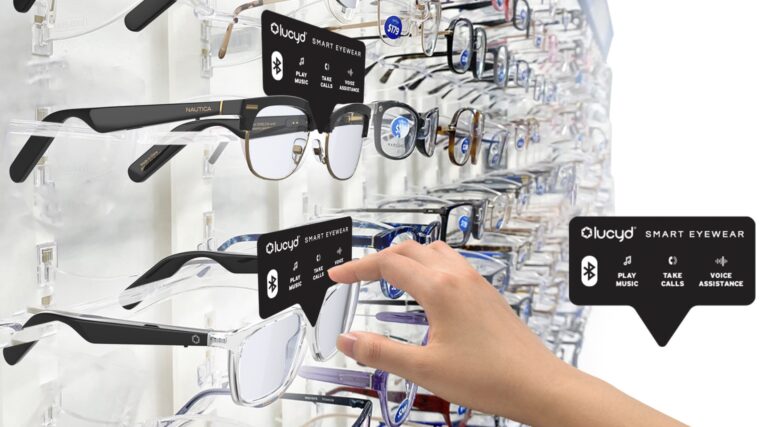
After MicroSalt was listed in February, Guident is the only current portfolio company privately held, with MicroSalt, Innovative Eyewear, and Belluscura, promising multi-million-pound revenue in 2024 to support their respective growth strategies.

Of the £2m recently raised by Tekcapital, £300,000 was allocated to Guident’s new headquarters, which will be launched in April. Should the US private equity round be successful, this may be the last cash injection from Tekcapital.

The funding round is expected to be completed in about three months and would mark a major milestone for the autonomous vehicle safety company.

Guident has developed a software-as-a-service (SaaS) model and secured its first contracts providing recurring revenues from its Remote Monitoring and Control Centre (RMCC) services. SaaS companies tend to attract higher valuations due to the visibility of future revenues.

Last year, Guident spun out its regenerative shock absorber technology into a new entity, ReVive Energy Solutions, with the aim of maximising the value of the technology and creating the opportunity to secure growth capital specifically for the progression of regenerative shock absorber IP.

Tekcapital said the Guident had conducted successful tests with a tier-one tyre company, yielding positive results. Further announcements are expected this year.

AppyWay: the UK digital kerbside company revolutionising parking and decarbonising cities

Sponsored by AppyWay

A decade ago, AppyWay Founder & CEO Dan Hubert had a bad parking experience shared by millions across the UK. After hurriedly trying to park outside The Royal Albert Hall he found that all the paid bays and residents bays were full. The only space he could find was on an ambiguous single yellow line painted on the road right outside the entrance. Not wanting to risk a parking ticket he was about to drive off when a nearby parking traffic warden said he could park there. Immediately gaining VIP parking treatment his frustration quickly turned to intrigue.

Dan’s brain began whirling with ideas of digital kerbsides and access to all the parking information you could need in your pocket, thus sparking his mission to Make Parking Forgettable™ via the market-leading driver app, AppyParking+.

With unwavering determination, he assembled a dynamic team of 40 passionate individuals dedicated to reshaping the parking landscape.

But AppyWay had one major roadblock (excuse the pun). Outdated government legislation from 1984 has been holding local governments back from embracing a digital kerbside, but things are about to change in a big way. Recent government legislation on digital roads mandates that all authorities must embrace the digital kerbside.

In late 2023 the government released the Plan for Drivers which was supported by two major digital roads announcements:

National Parking Platform, NPP

In October ‘23, The Transport Minister announced the launch of the NPP which will finally mean drivers can use one parking app across the UK, such as AppyParking+, rather than annoyingly having to install lots of separate apps. Our solution is the only one in the market that allows drivers to Plan, Park & Pay across the whole kerb, rather than just being a ‘till’ to a paid bay. This announcement finally scales our mission to Make Parking Forgettable™.

The Autonomous Vehicle Bill

In November ‘23 this bill announced legislation mandating that all English councils have to publish machine-readable restriction maps, known as Traffic Regulation Orders, or TROs, that cover such things as parking, loading, unloading, and speed restrictions. AppyWay currently works with over 10% of UK councils and counting, and since the announcement our pipeline has grown tenfold.

Fortunately, AppyWay has spent the past decade building their technology precisely for this moment. Today, this unique platform is strategically positioned to capitalise on this digital revolution and scale across the UK and beyond.

AppyWay now stands as the European leading digital kerbside management platform, helping cities and fleets to optimise their operations and transition to net zero by uniting parking and loading maps, occupancy data, and cashless payments. The platform is currently aiding local authorities and businesses across the UK and beyond digitally from Dublin and Edinburgh to Lambeth and Cornwall, insurance giants Direct Line, disabled motoring innovators Motability Operations, plus charge point operators Connected Kerb and Urban Fox.

Opportunities are coming in from across the pond and the business is primed and ready to scale its operations into a market with over 19,000 cities compared to the UK’s 400.

”With parking deeply affecting us all daily, now is the perfect opportunity for the crowd to invest in a parking revolution made by the people for the people.“ says Dan.

”Our Crowdcube campaign is an invitation to the public who share our vision of smarter, more sustainable cities through the digitisation of a much-undervalued council asset. Your support can help accelerate the development and expansion of our solutions, making a tangible impact on the way we live and move around our towns and cities.”

At this incredibly exciting juncture for AppyWay, readers are encouraged to act swiftly to take advantage of this shareholder opportunity, which closes on the 27th of March. The Crowdcube raise is part of a wider round that aims to scale AppyWay’s solutions in the UK and across the pond, so further investment is welcomed to this already overfunded campaign.

To learn more about the company or to become a shareholder in AppyWay, please visit their Crowdcube pitch page.

UK CPI inflation falls sending bond yields lower

UK CPI inflation fell to 3.4% in February, down sharply from January’s 4% reading and the lowest level for over two years. Economists had predicted inflation to fall to 3.5%.

Falling food prices were a large component of lower inflation everyday staples resulting in lower average grocery baskets. The drop in inflation is good news for consumers with signs the cost of living crisis is easing – but prices are still rising.

“The fall in food inflation, especially on staples like bread and cereals, to the lowest level since January 2022, is a big deal for households. Most Britons have felt inflation’s pinch the most through the amount they spend on food – which has disproportionately hit lower earners because they spend a greater portion of their income on food,” said Myron Jobson, Senior Personal Finance Analyst at interactive investor.

Rishi Sunak will claim credit for falling inflation, whilst in reality the shallow recession the UK entered at the end of last year was responsible for the drop in prices.

Today’s reading is unlikely to change expectations of what the Bank of England will do on Thursday when the voting committee are predicted to keep rates on hold.

It does, however, put pressure on the Bank of England to cut rates sooner rather than later given the poor state of the UK economy. UK 10-year bond yields fell to 4.12%.

“UK inflation continued to cool in February, leaving headline CPI on track to achieve the BoE’s 2% goal in the spring,” said Michael Brown Senior Research Strategist at Pepperstone.

“These effects, coupled with the upcoming fall in energy prices as the price cap is reduced, should see achievement of the MPC’s mandate around April, though policymakers will seek more data than just the headline inflation rate before being ready to pivot towards rate cuts.”

FTSE 100 trades in tight range ahead of central bank meetings, Unilever jumps

The FTSE 100 was range-bound on Tuesday as the index traded within a tight range ahead of major central bank meetings this week.

Investors held off making big bets opting to wait for the next instalments from the Federal Reserve and Bank of England meetings later this week. Neither is expected to cut rates and all eyes and ears will be on economic projections and hints of when the central banks’ will move to cut rates.

Markets are increasingly pricing June as the earliest date for the Federal Reserve to reduce borrowing costs, and it’s less clear when plotting the BoE’s course.

The Bank of England and Federal Reserve are moving in a different direction to the Bank of Japan who hiked rates last night sparking a rally in the Nikkei that helped European stocks to a stronger start.

“Just as the Bank of Japan finally gets around to raising interest rates, investors are still hoping that the US Federal Reserve will cut them, although the first reduction is now seen coming in June and not at the latest meeting in March, as markets had thought at the start of the year,” said AJ Bell investment director Russ Mould.

“Chair Jay Powell and his colleagues on the Federal Open Markets Committee are therefore moving more slowly than markets had expected and the consensus forecast now is the Fed will cut rates just three times to 4.75% by year end, rather than six times, and that is because US inflation is proving more resilient, and inflation stickier, than expected.”

The FTSE 100 was up just 3 points at the time of writing.

Unilever

Unilever was the FTSE 100’s top gainer, with a rise of 3%, following the release of an accelerated action plan that included disposing of its ice cream business and cutting 7,500 jobs. Unilever has been under pressure to boost performance, and slimming down its core business to four units with the ice cream operating as its own entity is the proposed course of action.

“Unilever says bye-bye to Ben & Jerry’s with its plans to ditch the Ice Cream unit. The company has hinted at a demerger, but all separation routes remain on the table at this stage as it looks to maximise shareholder value. At the same time, there’ll be a new cost-cutting programme over the next three years that aims to more than offset the impact of losing Ice Cream. All-in, these changes are expected to help drive mid-single-digit sales growth, an improvement from current targets of 3-5%, with margin expansion too,” said Matt Britzman, equity analyst, Hargreaves Lansdown.

“Action is what shareholders wanted to see from the new team at the top, and that’s what’s been delivered today. Ice Cream always looked like the odd one out when you compare it to other product lines, and performance has struggled of late. It’s not a huge shock to see this move, but it’s something prior management wasn’t able to deliver. Unilever’s not an overly expensive name at the minute so expect markets to react positively to the news, perhaps more due to the decisive action than anything else.”

AIM movers: Hope for Gfinity and Quadrise falls below placing price

0

Digital media network company Gfinity (LON: GFIN) has disposed of non-core businesses and cut monthly costs by 70% over the past year. The interim loss was sharply reduced, although it is flattered by a £260,000 disposal gain. Even excluding that, the loss was more than two-thirds lower. Cash outflow before working capital movements was £215,000 and there is £216,000 in the bank. The share price jumped 69.2% from its all-time low to 0.055p.

Health and safety consultancy services provider PHSC (LON: PHSC) intends to spend up to £200,000 buying back shares. PHSC has cash of £677,500. The shares are trading at a discount to pro forma net asset value of 32.2p/share at the end of September 2023. The share price moved ahead by 16.3% to 25p.

Promotional products and services provider Pebble Group (LON: PEBB) reported 2023 figures in line with downgraded expectations following a trading statement last November. There was weak demand from technology and consumer clients and revenues dropped 7% to £124.2m, while pre-tax profit fell from £9.7m to £7.4m. The dividend was doubled to 1.2p/share. Net cash is £15.9m and a £5m share buy back programme is proposed. Management expects a return to growth this year. The share price is 8% higher at 67.5p.

Personal Group Holdings (LON: PGH) reported slightly better 2023 figures than expected with revenues of £49.7m and pre-tax profit recovering to £5.9m. The dividend was raised from 10.6p/share to 11.7p/share. Management has reviewed the business and is seeking ways to broaden the insurance products it offers, while continuing to grow the employee benefits business. The insurance business is propelling the current growth. The share price improved 7.58% to 177.5p.

FALLERS

Quadrise (LON: QED) raised £1.5m from a placing at 1.25p/share and could raise up to £1m more from an open offer. The share price declined 17.5% to 1.23p. Interim results show a net loss of £1.7m. The focus is trials and commercialisation of the company’s fuel additives. Shipping is an area with significant potential.

Metallurgical coal miner Bens Creek (LON: BEN) has drawn down $7.5m of its working capital facility provided by shareholder Avani Resources, which has also advanced an additional $1.25m. The share price is down 15.4% to a new low of 2.75p.

Cap-XX (LON: CPX) shares fell back as Canaccord Genuity completed the sale of its shareholding in the cash strapped supercapacitors manufacturer. The share price lost some of its recent gains and fell 5.36% to 0.265p.

Financial services and software provider Fintel (LON: FNTL) revealed a dip in 2023 revenues from £66.5m to £64.9m, but that was all down to non-core businesses. Pre-tax profit improved from £15.9m to £16.4m – slightly below forecast. Fintech software revenues are growing, but housing-related income is under pressure although the mortgage market is recovering. Zeus has maintained its 2024 pre-tax profit forecast at £18.4m. The share price is 4.23% lower at 272p.

Unilever investors cheer ice cream demerger plans, 7,500 job cuts

Unilever shares jumped on Tuesday after the consumer staples company announced plans to emerge its Ice Cream business and cut 7,500 office-based roles globally.

Investors have long awaited a strategic action plan to boost the company’s profitability and that was delivered today in the form of the acceleration of its Growth Action Plan (GAP) announced last designed to streamline the business and reduce costs.

Unilever shares were 3% higher at the time of writing.

There are no concrete plans for the demerger which is expected to be completed by the end of 2025, however, a separate listing is a likley option.

After the demerging of the Ice Cream business, Unilver will operate four business units; Beauty & Wellbeing, Personal Care, Home Care and Nutrition.

“When the market was speculating about steps Unilever might take to revive its fortunes, a spin-off of its ice cream division had not been that widely discussed – even if political pronouncements from Ben & Jerry’s had provoked a meltdown among some investors,” said Russ Mould, investment director at AJ Bell.

“A side benefit of the brand exiting Unilever’s portfolio is it might quieten the ‘go woke and go broke’ noise but more widely the reasoning for the decision looks pretty sound. 

“It costs the company more to sustain the ice cream business, there is a different supply chain because it is dealing with frozen goods and it’s more seasonal than the company’s other roster of brands.

“A demerger and separate stock market listing for the ice cream arm is seen by Unilever as the most likely outcome with a fairly tight deadline of the end of next year set by the company. Less than a year into his tenure, CEO Hein Schumacher is certainly making his mark on the group.”

The slashing of the payroll to the tune of 7,500 will be completed over a three year period. The restructuring is thought to cost 1.2% of global turnover over the period.

Yü Group shares surge after bumper profit increase in 2023, contracted 2024 revenue jumps

Yü Group shares were firmly higher on Tuesday after the utilities company posted bumper 2023 results and provided an outlook that lays the foundations for further growth in the coming years.

Yü Group profits ballooned in 2023 as the business-focused utilities supplier’s revenue jumped 65%, and contracted revenue for 2024FY rose to £520m.

By all accounts, Yü Group’s 2023 results were nothing short of spectacular.

Increased customer numbers drove a whopping 439% increase in adjusted EBITDA to £42.6m, up from £7.9m in 2022. EBITDA margin exploded to 9.3% in 2023 from 2.8% in 2022.

Speaking with UK Investor Magazine shortly after the results were released on Tuesday, Yü Group CEO Bobby Kalar said EBITDA margins were expected to ease back next year but remain in the 7%—8% region—significantly higher than in 2022.

The company’s smart metering installations surged to 8,300 during the year, and the group said it is targeting 25,000 installations by the end of 2024. The company currently has a 1.4% market share of a £50 billion market, up from 1% in the prior year. Kalar said he expects market share to grow double digits each year in the medium term.

Although Yü Group shares have soared in recent years, the company is still undervalued compared to sector peers. Given the wave of takeovers of UK companies, we asked CEO Bobby Kalar if he was concerned the company may become a takeover target with earnings set for further growth in the future.

After today’s results, Yü Group trades at an EV/EBITDA multiple well below that of sector peers that have attracted suitors. In response, Kalar said that while a takeover approach is a concern for the ‘entrepreneurial’ company, as the founder and holder of 51.8% of the group’s shares, he remained committed to pushing forward with the company’s growth strategy as a publicly traded entity.

Yü Group shares were 5% higher at the time of writing on Tuesday.