
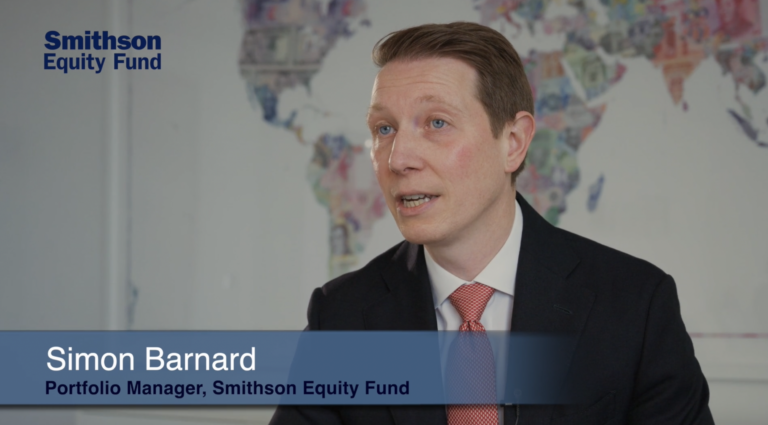
Simon Barnard, Lead Portfolio Manager of the Smithson Equity Fund, discusses the fund’s investment approach, portfolio positioning, key holdings, recent additions, and why he remains optimistic about opportunities in small and mid-cap companies.
FTSE 100 gains as US says Iran strikes ‘complete’

The FTSE 100 was higher on Thursday after the US said it had completed the latest strikes against Iran.
Investors will now be in a state of ‘wait and see’ whether this draws a line under a spate of attacks in the Middle East and sees the US and Iran return to the negotiating table.
The Strait of Hormuz remains closed, and the risk of an oil shock to the economy grows greater by the day.
But equities have displayed a remarkable degree of resilience, which was again on show on Thursday with the FTSE 100 rising 0.5% on hopes a lasting ceasefire could soon be struck.
“Volatility is reigning as the twists and turns of the Iran war collide with fervour and apprehension about tech valuations and the looming SpaceX listing launch,” said Susannah Streeter, Chief Investment Strategist, Wealth Club.
“The FTSE 100 has clawed back ground after yesterday’s losses, the oil prices have experienced another waltzer ride. They had spun upwards after President Trump promised to hit Iran hard and now have dropped back after the US military said it had completed the latest round of action.
“Hopes are rising that talks can resume, but these repeated strikes and skirmishes hardly provide the bedrock of trust which negotiations need before significant progress can be made.”
In a sign of mild wider relief, Brent oil prices fell 0.5% to $92.57.
In London, Asian leaning stocks were among the best performers with Prudential jumping 4% and heavyweight bank HSBC rising 2.5% and adding a large number of points to the index.
“As has often been the case during the Iran conflict, the UK’s flagship index has found support from its collection of energy companies and more traditionally defensive names. Miners and other China-linked stocks were lifted by data suggesting the country is investing heavily in AI and consuming raw materials at a healthy rate,” explained AJ Bell investment director Russ Mould.
Halma was the FTSE 100’s top faller, losing 12%, despite the group posting strong full-year results.
Beyond TSMC: Japan’s Hidden Chip Material Titans

Hidden Dominance: A seasoning company with a monopoly on CPU insulating film, and a fertiliser firm supplying 30% of the world’s silicon wafers. These are not isolated success stories, but a structural pattern of Japanese dominance across the semiconductor supply chain.
The Transferable Science of Consumer Purity: Semiconductor manufacturing is an applied materials science problem. Japanese firms spent 50 years perfecting quality on consumer/industrial products before leveraging these skills in the semiconductor space.
The Longevity Moat: These companies moved into the semiconductor industries between the 1970s and 1980s during the Japan DRAM memory boom and have maintained dedicated semiconductor materials operations since then. This longevity creates significant entry barriers.
The Invisible Empire
The industry narrative treats the semiconductor supply chain as a story of familiar giants: TSMC, ASML, Nvidia, etc. But there is a hidden supply chain among Japan’s low-tech consumer and industrial companies.
- Ajinomoto, the MSG seasoning company, holds approximately 100% of the insulating film market inside every high-performance CPU.
- Shin-Etsu Chemical, founded as a nitrogen fertiliser manufacturer in 1926, supplies roughly 30% of the world’s semiconductor silicon wafers.
- TOTO, famous for toilets, now generates more operating profit from electrostatic chucks than from bathroom fixtures.
These are not isolated success stories, but a structural pattern of Japanese dominance across the chip supply chain. From ABF substrate films and photoresists to EUV mask blanks and electrostatic chucks, Japanese firms hold indispensable positions over key manufacturing nodes.
While these components sound highly technical, they represent the manufacturing choke points of the global semiconductor industry. Without them, printing, carving, or packaging modern microchips is physically impossible.

The Transferable Science of Consumer Purity
Semiconductor manufacturing is an applied materials science problem. The industry requires extreme purity, nanometre precision, thermal stability, and chemical resistance across hundreds of process steps — the same capabilities Japanese manufacturers spent decades perfecting for consumer and industrial products, such as seasoning, textiles, rubber, and fertiliser.
Consequently, when silicon fabrication migrated to Taiwan and South Korea in the 1990s and 2000s, the underlying chemical recipes and purification patents remained inside Japan.
The Structural Enablers
Three features of Japanese corporate structure enabled this:
- Generational planning: Japanese companies operate on decade-long horizons. A 15-year semiconductor materials R&D programme before break-even is normal. Western corporations under quarterly pressure cannot sustain this.
- Core cash flow funds the runway: Unlike venture-backed startups, these companies had stable, profitable core businesses, such as seasoning, textiles, rubber, and fertiliser, that funded years of unprofitable materials research. The core business was the venture capital fund.
- Internal cross-pollination: Keiretsu structure allows knowledge transfer across unrelated divisions. Toray’s textile fiber technology informed its carbon fibre business and its semiconductor polyimide films. The same polymer chemistry group works across all three.
The 1970s/80s Domestic Boom
During the 1970s and 1980s electronics boom, Japanese technology giants, such as NEC, Toshiba, and Fujitsu, dominated global memory production. This massive domestic manufacturing footprint provided local material suppliers with a guaranteed, high-volume captive market and a tight, direct co-development loop with lithography pioneers like Nikon and Canon.
The strict, high-precision standards demanded by this domestic ecosystem forced consumer chemical and material firms to rapidly scale up and validate their laboratory research.
Decades of Incubation
Japanese companies have spent decades perfecting their industrial quality systems before moving into chip materials.
- The Fifty-Year Pre-Conditioning: On average, these companies operated for over five decades as consumer or industrial manufacturers before entering the semiconductor industry. This immense incubation period allowed them to completely optimize, scale, and cross-subsidize the heavy capital expenses of their basic furnace, polymerization, or kiln infrastructures.
- The Compounded Moat: These companies mainly moved into the semiconductor industries between the 1970s and 1980s during the Japan DRAM memory boom and have maintained dedicated semiconductor materials operations since then. This longevity creates significant entry barriers.

Ajinomoto (2802 TYO): Seasoning Byproduct Becomes a CPU Monopoly
In the 1970s, Ajinomoto researchers studying ways to recycle byproducts from MSG production discovered a material with exceptional electrical insulation properties.
The company spent 20 years developing it into ABF, a thin insulating layer for CPU substrates. In 1999, Intel adopted ABF for its Pentium processors. Today, nearly every high-performance CPU uses it.
Competitors exist on paper — Sekisui Chemical, Taiyo Ink — but none have matched ABF’s thermal stability, low dielectric loss, and processing precision.
Ajinomoto currently holds a monopoly of the CPU substrate insulation market.

HOYA (7741 TYO) and AGC (5201 TYO): The Glass Masters Guarding EUV Lithography
HOYA was founded in 1941 as an optical lens manufacturer focusing on eyeglasses and camera optics, while AGC (historically Asahi Glass) spent generations perfecting mass-market architectural, industrial, and display glass.
Over decades, they developed expertise in precision glass polishing and ultra-flat surface finishing — capabilities that proved directly transferable to photomask blanks, the ultra-flat quartz plate onto which chip circuit patterns are etched before being projected onto silicon wafers.
Today, they virtually control 100% global market for EUV mask blanks. It is a duopoly in a material that every advanced chipmaker depends on.

Shin-Etsu Chemical (4063 TYO): From Fertiliser to the Fab Floor
Founded in 1926, the company’s first products were calcium carbide and lime nitrogen for agriculture. Over five decades, it moved from fertiliser to PVC, then silicones and finally semiconductor-grade silicon wafers. Each step is an incremental refinement of the same core capability: purifying, processing, and polymerising silicon-based materials.
Today, Shin-Etsu holds the global #1 position in semiconductor silicon wafers (~30% share), PVC, and photomask substrates. In addition, its wafer transport cases hold roughly 70% of the global market.
Fertiliser chemistry and silicon wafer chemistry differ by grade, and Shin-Etsu spent 50 years climbing that purity ladder.

TOTO (5332 TYO): The Toilet Maker Powering AI Chips
TOTO leveraged a century of ceramic sanitaryware manufacturing expertise to pivot into the semiconductor value chain. Its advanced ceramics division now generates 54% of group operating profit, surpassing its legacy housing businesses on 43% operating margin.
TOTO is the global No. 2 player in the Electrostatic Chuck (ESC) market, a critical component in semiconductor manufacturing. Through a 35-year co-development relationship with Lam Research, it is the major ESC supplier for Lam’s cryogenic etching tools, used by Samsung, SK Hynix, Micron, and Kioxia to manufacture advanced 3D NAND for AI data centres.

Resonac (4004 TYO) and Kanto Denka (4046 TYO): From Refrigerator Gas to Wafer Purity
Resonac and Kanto Denka collectively control over 60% of the high-purity specialty fluorinated gases and hydrogen fluoride used to clean and etch wafer circuits.
These gases — nitrogen trifluoride, carbon tetrafluoride, chlorine trifluoride — must be delivered at 99.999% purity. Both companies built their gas chemistry expertise serving industrial applications — metal processing, refrigeration, automotive — before applying it to semiconductor-grade purity.
Toray (3402 TYO): From Kimono Silk to Carbon Fibre Dominance
Toray Industries was founded in 1926 as a textile manufacturer, producing rayon — one of Japan’s first synthetic fibres. Over a century, it leveraged polymer chemistry into plastics, chemicals, carbon fibre, and semiconductor materials. The same core science, polymerisation, spinning, film formation, applies across all these domains.
Toray is now the world’s largest carbon fibre producer (45-50% share), supplying Boeing, Airbus, and automotive. It also produces semiconductor polyimide films, display materials, photoresists, and circuit materials.
Asahi Kasei (3407 TYO) and Zeon (4205 TYO): The Pattern Continues
Asahi Kasei, founded in 1931 as a chemical and textile company, now produces photosensitive polyimides (PSPI) — critical insulating materials for semiconductor packaging.
In May 2026, it developed a novel PSPI film for panel-level packaging, combining its liquid PSPI expertise (PIMEL) with dry film photoresist technology (SUNFORT). It is doubling PSPI capacity by 2030 as the market grows from $1.8bn to $4.2bn.
Zeon Corporation, founded in 1950 as a synthetic rubber and PVC producer, is now a key supplier of semiconductor photoresists and specialty chemicals. Its core polymer expertise — developed for the automotive and construction industries — proved directly transferable to chip manufacturing precision demands.
Each followed the same arc: consumer chemistry → materials science → semiconductor bottleneck.
This article is a “periodical publication” for information only and is not investment advice or a solicitation to buy or sell securities. This article does not constitute a “personal recommendation” or “investment advice” under UK FCA regulations. Investing in equities involves significant risk. The author holds NO position in the securities mentioned. There is no warranty as to completeness or correctness. Please do your own due diligence or consult a licensed financial adviser. Please read the Full Disclaimer before acting on any information. Images created with the assistance of AI.
Article provided by .
Haydale shares rise after announcing Lloyds Bank customer base roll out

Haydale has broadened its partnership with Lloyds Banking Group, with the lender set to take the advanced materials group’s sustainability platform nationwide.
The AIM-listed clean-technology company said its SaveMoneyCutCarbon (SMCC) platform had passed a regional pilot launched last November, and that Lloyds now intends to roll the service out across its SME and mid-corporate customer base.
A national launch is being targeted for this month.
SMCC’s Impact Partner Programme strikes long-term agreements with banks and utilities, giving it embedded access to large, ready-made pools of customers. In this case, that means an opportunity to offer its end-to-end “Sustainability-as-a-Service” platform, covering services such as water technology and energy efficiency, to Lloyds’ business customers and commercial landlords nationwide.
The company expects the agreement to support growth in FY26 and beyond, helping shift the business towards recurring, multi-year relationships built on programme delivery rather than one-off sales.
This is a significant development for Haydale and shares were 11% higher on the news.
Wizz Air shares rise as EBITDA and passenger numbers increase

Wizz Air shares rose on Thursday after the airline announced encouraging final results showing the group was on an upward trajectory before the Middle East conflict.
Wizz Air carried a record number of passengers last year, yet still saw its bottom line virtually vanish, with net profit collapsing to just €1.3m from €213.9m the year before.
But investors are looking beyond net profit. The dramatic fall in profits was driven largely by tax. F25 had benefited from a hefty one-off €194.2m tax credit, whereas this year the airline took a €25.7m charge as that benefit unwound.
Strip out the tax noise, and the report is actually very encouraging. EBITDA rose 16.2% to €1,318.3m, which the company says shows the underlying resilience of the business.
Operationally, the airline kept growing. Wizz flew a record 69.7 million passengers, up 10%, and pushed total revenue 8% higher to €5.69bn. Capacity climbed too, with seats up 10.5%.
But Wizz Air couldn’t get away from rising costs. Operating profit slipped to €139.7m from €167.5m, squeezed by sharply higher depreciation and maintenance costs as older aircraft are wound out of the fleet. Maintenance alone jumped 40%, while depreciation rose 22%.
Garry White, Chief Investment Commentator at Charles Stanley, said: “Wizz Air’s full-year results show a business returning to growth but still suffering from significant cost pressures
Chief executive József Váradi framed F26 as a year of hard decisions to set the business up for the long haul.
Wizz pulled out of Abu Dhabi, wound down its Vienna base and redirected capacity towards Central and Eastern Europe, where it reckons it has stronger structural advantages. It now holds a 25.3% share of the CEE market, comfortably the largest operator there by seats.
The Middle East crisis impacted earnings through the cancellation of Tel Aviv and Cyprus routes, though fuel hedges put in place before the Iran conflict largely cushioned the impact of rising fuel prices.
Citing poor visibility and the ongoing situation around Iran and the Strait of Hormuz, Wizz declined to give full-year F27 guidance. Like all airlines, Wizz Air desperately needs a resolution to the conflict in the Middle East.
GPE off to a flying start with £8m of managed lettings

Great Portland Estates has opened its new financial year in style, signing up £8.0m of annual rent across its Fully Managed portfolio.
The London-focused landlord completed 12 new leasing deals covering more than 41,000 sq ft at an average of £195 per sq ft. Tellingly, the rents came in 3.7% ahead of the company’s March valuation estimates.
The company believes this is a sign that pricing power remains firmly intact and that demand for GPE’s flexible, fully serviced workspace shows no sign of cooling.
The latest flurry builds on the momentum already building for the group that manages sites across central London. The group has pre-let over 13,000 sq ft at Elsley House in the West End ahead of launch, while momentum at City Tower in the City has held up well.
There’s plenty more in the pipeline. GPE is pressing on with the next wave of Fully Managed space, including The Courtyard in Bloomsbury and The Howlett in the West End, both under construction and due to complete in 2027.
Anthony Osho, Head of Flex Customer Relationships at GPE, said: “Securing over 41,000 sq ft of lettings ahead of ERV since March, demonstrates both the strength of demand for our Fully Managed offer and the quality of our customer relationships. By consistently delivering for our customers, we’re driving repeat business, rental growth and sustained momentum across the portfolio.”
Concurrent Technologies wins biggest ever contract

Concurrent Technologies has bagged the biggest contract in its history, a four-year deal worth around £17m with a major European defence prime.
The new deal comfortably eclipses the $6.2m order that previously held the record.
The AIM-listed designer and manufacturer of high-performance computing products said the customer, a leading provider of Ground Based Air Defence systems, is ramping up production to meet rising demand.
The order covers more than 3,400 units across three variants of an established VME-based computer board, plus accessories, and is designed to meet existing demand, spares, and anticipated future needs through the next four years.
For a company of Concurrent’s size, a single order of this scale does wonders for revenue visibility, smoothing out the lumpiness that can dog the defence supply chain. Better still, the contract comes with an upfront milestone payment to fund the procurement of all the components the programme requires.
CEO Miles Adcock said: “This order represents our largest ever contract win and demonstrates the longevity of our product set and the strength of our long-standing customer relationships. It also reflects the confidence our customers place in our products, our people and our ability to support critical defence programmes over the long term.
“This contract secures several years of the customer’s expected requirements through a single commitment, providing us with enhanced multi-year revenue visibility.
“More broadly, demand across our defence markets remains encouraging. Prior to this award, we were already on track to achieve record first-half order intake, while order intake in our Systems business has already exceeded the level achieved during the whole of 2025.”
Concurrent Technologies shares were 7% higher in the early stage of trading on Thursday.
AIM movers: Diales profit improvement and H-Power hydrogen supply deal

Mindflair (LON: MFAI) says CameraMatics, an investee company of Sure Valley Ventures, is raising up to €49m and Sure Valley Ventures first fund is realising part of its investment. This means that Mindflair, which invests in the fund, will receive a share of €280,000 in cash and will have a €320,000 working capital facility repaid. It also owns 24.4% of Sure Ventures plc which will receive €880,000. The share price increased 15% to 0.575p.
Beeks Financial Cloud (LON: BKS) has upsold its AI-based trading analysis and monitoring tool Market Edge Intelligence software to an existing client in a deal worth £500,000. It has also secured two three-year deals for Proximity and Private Cloud. Earlier in the week it signed a five-year contract worth £3.6m with a Tier 1 global bank for the deployment of Market Edge Intelligence software in one part of its business. The share price rose 9.95% to 210p.
Professional project services provider Diales (LON: DIAL) management says the company’s turnaround is complete with legacy issues sorted out and selective hiring will help to maintain growth. Europe and North America were the main engine of growth in the first half. Interim revenues were 10% ahead at £23.7m and pre-tax profit improved from £700,000 to £1m, even after a £500,000 impairment charge. The gross profit margin rose from 26% to 29%. Utilisation levels dipped from 71.4% to 70.2%, although there was improved utilisation in Asia Pacific which moved back into profit on lower revenues. Revenues and profit were lower in the Middle East. Net cash was £3.9m at the end of March 2026. Full year pre-tax profit is expected to improve from £1.4m to £1.5m reflecting caution concerning global uncertainty. The share price gained 7.14% to 30p.
H-Power (LON: HPOW) has signed a deal to sell 5,000kg of fuel-cell-grade hydrogen from its ammonia cracker pilot plant to Protium. It has also agreed to sell two LC30 fuel cell generators to TAMGO and they will initially undertake trials in Saudi Arabia. In the six months to April 2026, revenues improved from £17,000 to £253,000. There was a £6m cash outflow in the period. Cash was £17.4m at the end of April 2026. The share price improved 3.36% to 13.23p.
Central Asia Metals (LON: CAML) increased copper, zinc and lead production in the first five months of 2026 and it is on track to achieve 2026 production guidance. There were 5,141 tonnes of copper produced, and the average price received jumped from $9,377/tonne to $13,076/tonne. The zinc price rose from $2,765/tonne to $3,299/tonne with 7,566 tonnes produced, while the lead price dipped from $1,952/tonne to $1,934/tonne with 11,142 tonnes produced – although lead treatment charges have turned negative boosting revenues. An option has been signed over an additional licence in the Tengiz Basin in Kazakhstan. The share price edged up 2.44% to 134.8p.
FALLERS
Gold explorer ECR Minerals (LON: ECR) says it is analysing the drone Lidar survey at the Raglan gold project in Queensland. Plant optimisation programme is in place to enhance gold recovery. The share price fell 8.33% to 0.22p.
Marketing services provider Silver Bullet Data Services (LON: SBDS) has fallen a further 4.76% to 10p following yesterday’s announcement that it is asking for shareholder approval for a departure from AIM. It argues that the weak financial markets mean that the company is undervalued and hampers its ability to raise money. This will also save £500,000 each year. A general meeting will be held on 25 June. A matched bargains facility operated by JP Jenkins will operate for at least 12 months. The company joined AIM on 28 June when it was valued at £34.5m at the placing price of 257p.
Premier African Minerals (LON: PREM) has confirmed that the concentrate made at the processing plant at the Zulu lithium and tantalum project contains spodumene. This is not independently verified. Optimisation work continues. The share price dropped 5.75% to 0.0205p.
FTSE 100 dips as Middle East tensions rise, US tech tumbles

The FTSE 100 fell on Wednesday as investors took stock of the latest developments in the Middle East.
The ceasefire in place since April is looking increasingly fragile after Iran reportedly downed a US helicopter over the Strait of Hormuz, and Donald Trump responded with a promise of retaliation.
London’s leading index reacted by giving up 0.6% to trade at its lowest point for nearly a month.
“Yesterday’s sell-off on Wall Street didn’t turn out to be too disastrous, with the Nasdaq clawing back much of its losses by the end of the session. That has helped to avoid contagion in the markets, albeit investors are slightly nervous about the heightened volatility this week,” says Dan Coatsworth, head of markets at AJ Bell.
“There are many reasons why markets are wobbly. The prospect of interest rates staying higher for longer, inflation fears, frustration that the conflict involving Iran is still ongoing, and potential liquidation events as investors trim holdings to raise cash to back some mega IPOs on the horizon.”
After a poor session yesterday caused by tension in the Middle East and rising oil prices, the FTSE 100 was performing slightly better than US stocks, which were again seeing weakness in tech shares.
US chip stocks are proving to be a real rollercoaster ride for investors of late, with the Nasdaq swinging wildly intraday yesterday and futures pointing to a lower open today.
In London, there was pronounced weakness in stocks that were caught up in AI fears earlier this year. RELX, Experian, London Stock Exchange Group and Sage Group were all down around 3% at the time of writing.
Investors rotated into the less exciting sectors in the hope of finding shelter from any further volatility, with FTSE 100 supermarkets and consumer staples higher on the day.
Tesco rose 1.3%, while DCC was the FTSE 100’s top riser, with gains of 2.2%.
Fulcrum moves towards commercialisation with Ontario pilot plant deal
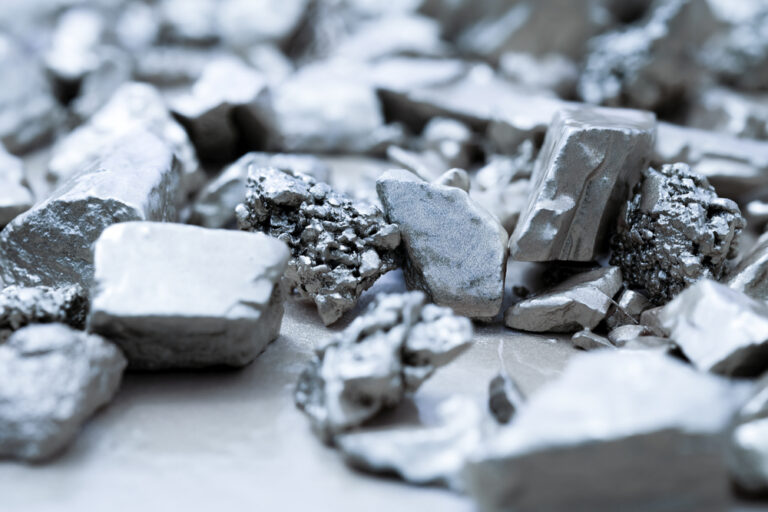
Fulcrum Metals has taken a meaningful step towards turning its cyanide-free metal recovery technology into a commercial reality, signing a contract to deploy a pilot plant in Ontario.
It’s been a long time coming, but they are nearly there.
The AIM-listed group, which uses technology developed by Extrakt Process Solutions to extract precious and critical metals from old mine waste, said its subsidiary, Fulcrum EnviroTech, has tapped Test Design Implement Solutions to build and operate the plant.
The facility will process material from Fulcrum’s Teck-Hughes project and, just as importantly, will be able to test third-party mine waste too. Engineering heavyweight Bechtel, which has a long-term alliance with Extrakt, is backing the programme.
The plant itself is modest in scale, with a capacity of just 2.4 tonnes a day. But this plant is about generating the operational, metallurgical and engineering data needed to support a full commercial development down the line.
Fulcrum has also kept the structure capital-light, accessing the technology and expertise it needs without investing in heavy infrastructure.
Ryan Mee, Chief Executive Officer of Fulcrum Metals, said: “This is a significant milestone for Fulcrum which creates a pathway to commercialising Teck-Hughes while establishing a platform that is able to support future mine waste recovery opportunities.”
“Fulcrum is excited to be working with TDI, Extrakt and Bechtel on this next phase of the project, which represents an important step towards unlocking significant value from historic mine waste assets through a scalable and capital-efficient business model.”