Best of the Best international tie-up

0

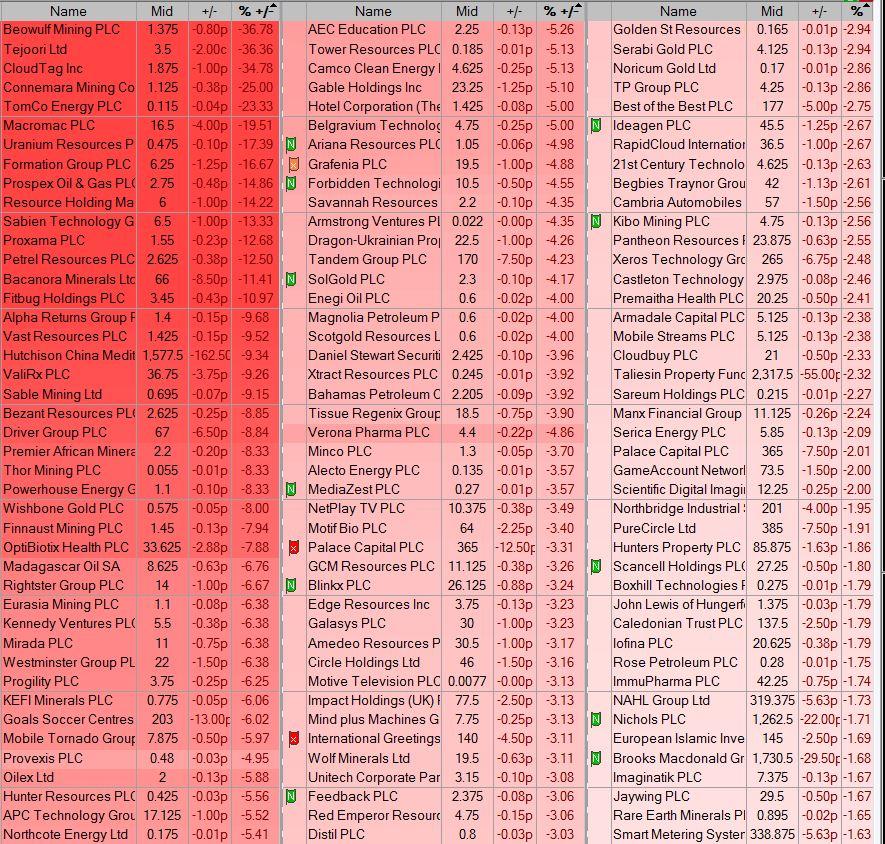
Online competitions organiser Best of the Best (LON: BOTB) is linking up with Globe Invest Ltd to grow international income. Globe Invest will also buy a 29.9% stake from the directors and related parties at 400p a share.

Globe Invest is the family office of Teddy Sagi the founder of gaming technology firm Playtech (LON: PTEC) and owner of Camden Market.

AIM-quoted Best of the Best, which organisers competitions for luxury cars and other prizes, intends to enter a licensing and distribution agreements and a marketing collaboration agreement with Globe Invest, which has affiliates involved in content, software and digital marketing. Globe Invest will licence the Best of the Best business model outside of the UK. Before it became an online business, Best of the Best did operate in airports outside of the UK, including Copenhagen and Dublin.

The marketing agreement will allow Globe Invest to promote Best of the Best content in the UK on a non-exclusive basis. There would be a revenue share or a cost per acquisition model.

Chief executive William Hindmarch will reduce his stake from 32.06% to 11.86% and commercial director Rupert Garton cut his from 9.06% to 3.35%.

Globe Invest will be able to appoint two directors to the board. The management team is likely to be expanded to broaden the expertise. The Best of the Best share price fell 5p to 440p before the announcement of the deal.

US markets open lower on Powell’s hawkish Cato Institute speech

0

US markets opened lower after US Federal Reserve chair Jerome Powell delivered a hawkish speech at the Cato Institute conference on Thursday.

The NASDAQ fell 0.2% to 11,757.7, the Dow Jones dropped 0.3% to 31,461.4 and the S&P 500 slid 0.2% to 3,968.8.

Powell confirmed the Fed was “strongly committed” to controlling inflation, however he noted belief it would be possible to wrestle inflation back to its 2% target without bringing the “very high social costs” emblematic of Paul Volcker’s fight against inflation in the early 1980s, which triggered a recession and saw unemployment soar above 10%.

US inflation currently stands at 8.5%, falling from 9.1% the previous month. Some analysts hoped the positive data would give the Fed cause to slow down its aggressive rate hikes.

However, Powell warned at the Jackson Hole convention last month that a single month of positive data was insufficient to dissuade the institution from its hawkish stance.

A “goldilocks” jobs report also served to encourage Powell’s conviction to hike rates, citing a tight labour market as a driver behind high inflation. The US nonfarm payroll report for August revealed 315,000 new jobs added to the economy against analyst expectations of 300,000.

ECB hikes interest rates 0.75% as economic outlook darkens

0

The European Central Bank (ECB) hiked interest rates a whopping 0.75% at its meeting on Thursday in a bid to dampen soaring inflation across Europe.

The ECB warned of higher interest rates to come in its next several meetings as it worked to reign in demand and prevent further persistent upward movement in inflation.

The Bank cited Eurostat’s flash estimate for inflation to hit 9.1% in August as a result of spiking energy and food costs, demand pressures across some sectors due to economic reopening and supply bottlenecks.

The ECB estimated significantly revised inflation expectations of 8.1% in 2022, 5.5% in 2023 and 2.3% in 2024.

Euro area economic growth is projected to stagnate later in 2022 and into Q1 2023, with energy prices and reduced purchasing power of consumer incomes driving the slowdown.

“The ECB has raised rates by an unprecedented 0.75% in response to the recent surge in inflation, ratcheting up the pace of policy tightening as both the Fed and BOE have done in recent months,” said Kingswood strategist Rupert Thompson.

“It is very much prioritising getting inflation back under control even as the economy looks headed into recession later this year.”

“This move can only add to the pressure on the Bank of England to follow suit with a 0.75% rise next week, particularly with the news today of the Government’s large scale intervention to cap household and business energy bills.”

Meanwhile, the ECB reported expected economic growth of 3.1% in 2022, 0.9% in 2023 and 1.9% in 2024.

The Bank also highlighted the lasting impact of the Covid-19 pandemic, which remained a risk to the smooth transition of ECB monetary policy.

European markets were trading down after the interest rates move. The German DAX was down 1.4% to 12,729.4, the French CAC fell 0.8% to 6,056.3 and the Italian FTSE MIB slid 1% to 21,268.1 in early afternoon trading on Thursday.

Liz Truss caps household energy prices at £2,500 per year

0

Liz Truss has promised to cap the average household energy bill at £2,500 per year until 2024 in her energy relief plan announced today.

The proposal will see the average household save £1,000 compared to the previously scheduled price cap rise of 80% to £3,548 this October.

Under the new plan, businesses will receive equivalent support for the coming six months, after which continued support will be provided with a focus on vulnerable industries.

Analysts expect the energy relief plan to reduce inflation by up to 5% from its previously estimated figure.

“HM Government is acting to protect British households from the spiralling costs of energy. The Energy Price Guarantee (EPG) which will give people certainty with their bills,” said business secretary Jacob Rees-Mogg in a written ministerial statement.

“The EPG will apply from 1 October and will discount the unit cost for gas and electricity use. This guarantee, which includes the temporary suspension of green levies, means that from the 1st October a typical household will pay no more than £2500 per year for each of the next two years.”

“This will save the typical household £1000 a year. It comes in addition to the £400 Energy Bill Support Scheme.”

Labour advocates for windfall tax

However, Truss was met with criticism by Labour leader Keir Starmer for her refusal to introduce a windfall tax on energy companies.

Starmer said borrowing would increase due to the decision, and cited the £170 billion in windfall profits set to be accumulated by energy firms over the next two years.

“Every pound the government refuses to raise in windfall taxes … is a pound of extra borrowing. It’s that simple,” said Starmer.

Hargreaves Lansdown senior personal finance analyst Sarah Coles added: “The decision not to add more windfall taxes for energy companies is a controversial one. There will be plenty of taxpayers who feel they will be shouldering the burden of paying for this help alone, when the energy companies have broader shoulders.”

“Truss believes that this tax would put companies off investing in the UK – and investing in renewable energy that will provide part of the long-term solution to the problem. If that investment isn’t forthcoming, it remains to be seen whether this belief will still hold sway.”

Household borrowing to rise

Analysts warned household borrowing would rise dramatically in the coming year without further intervention from the government, with winter still set to bring a storm of misery for many across the UK.

“[One] in five people are borrowing more than they did this time last year, and anyone who has coped with rising prices by going into debt will eventually hit the wall – where their repayments are unaffordable or they exhaust their credit limit. For these people, a freeze at this level isn’t enough to protect them from a looming crisis,” said Coles.

“When pushed on whether there would be additional help for those who need it most, Liz Truss referred back to the lump sum cost-of-living payments coming this autumn and winter. However, these helicopter payments won’t necessarily go as far as the government hopes.”

“Citizens Advice said that after the first payment in July, the demand for food bank vouchers fell for just three weeks before returning to previous levels. People have been running up debts and putting off vital purchases, so it’s not necessarily enough to offset the higher cost of energy.”

A lower price cap is welcome news, however the policy doesn’t go far enough to cover the most vulnerable in the country by a long shot.

“For those people at the sharpest end of price increase, today’s announcement will be a huge disappointment. They needed a broader package of measures, providing meaningful support for the most vulnerable. Without it, a freeze will simply slow the pace at which things get much, much worse,” said Coles.


AIM movers: Warpaint London surprises and AssetCo stake value increase

0

Cosmetics supplier Warpaint London (LON: W7L) says trading is ahead of market expectations with sales of at least £61m and underlying pre-tax profit of more than £9m. The share price jumped 18.6% to 131p. The previous pre-tax profit forecast was £8.23m. There could be additional gains from foreign exchange. The interims will be published on 21 September, but management felt that it needed to make the trading statement before this.

Investment manager AssetCo (LON: ASTO) has attracted attention due to its 30% stake in Parmenion Capital Partners, where shareholders are rumoured to want to sell a stake at a valuation of between £300m and £400m. That could value the stake at £90m to £120m. AssetCo acquired its 30% stake in October 2021 for up to £27.8m, plus £1.3m share of acquisition costs, and the final payment of up to £3.6m is due in March 2023. The AssetCo share price is 14.4% ahead at 71.5p.

Sylvania Platinum (LON: SLP) announced a doubled final dividend of 8p a share alongside its results for the year to June 2022. There has already been a special dividend of 2.25p a share and a $7.1m share buyback. The share price rose 4.5p to 85.5p. Production declined and selling prices for platinum group metals were lower in the year to June 2022. Even so, net profit was $56.2m and Sylvania Platinum has been able to finance the cash distributions and plough money back into development. The benefits of that investment will show through in 2023-24. There is still $121m of cash in the balance sheet, although the dividend will reduce that significantly.

Duke Royalty (LON: DUKE), which provides finance to businesses in return for royalty income, returned to growth in the year to March 2022, after a year of consolidation. Cash revenues increased from £12.1m to £18.4m and free cash flow was 3.5p a share. Duke Royalty is in the process of investing the cash it raised in the spring. The dividend is expected to increase to 2.9p a share this year. The share price rose 4.6% to 34.25p, which values the company at just above NAV. The forecast yield is 8.5%.

Nicholas Slater has increased his stake in gaming investment company Blue Star Capital (LON: BLU) from 10.2% to 11.1%. The share price rose 2.9% to 0.1775p.

Alien Metals (LON: UFO) has completed the £1.5m placing and subscription at 0.5p a share announced late last night. The share price slumped 16.9% to 0.54p. The cash will help to fund the development of the minerals explorer’s drilling and geological programmes. Alien Metals is negotiating a deal with Anglo American, which will provide up to $15m in funding and take 100% of iron ore production from the Hancock project in Australia. Alien Metals hopes to get Hancock in production in the first half of next year.

Broker Cenkos Securities (LON: CNKS) fell into loss in the first half of 2022, although there was an underlying profit of £1.9m, down from £2.9m. The share price dipped by 9% to 55.5p. Revenues fell by around 30% as market activity slowed. The interim dividend has been cut from 1.25p a share to 1p a share. Cash fell to £15.9m, which is around 50% of the market capitalisation.

Capital equipment manufacturer Mpac (LON: MPAC) had already issued a profit warning, so the slump in interim profit was expected. Even so, the share price fell 5.94% to 237.5p. Management remains cautious with supply issues continuing, but the order book is worth £62.6m. Full year pre-tax profit is expected to fall from £8.6m to £3.5m and there is a chance that it could bounce back in 2023. Net cash could be £5.3m at the end of 2022. There is long-term potential for supplying manufacturing lines for battery companies.

Ex-dividends

Alpha Financial Markets Consulting (LON: AFM) is paying a dividend of 7.5p a share and the share price is 4.5p lower at 397.5p.

Alpha FX (LON: AFX) is paying a dividend of 3.4p a share and the share price is unchanged at 1820p.

Camellia (LON: CAM) is paying a dividend of 44p a share although the share price rose 100p to 5500p.

Franchise Brands (LON: FRAN) is paying a dividend of 0.9p a share and the share price is unchanged at 152p.

GlobalData (LON: DATA) is paying a dividend of 7.7p a share and the share price is unchanged at 1090p.

Globalworth Real Estate Investments Ltd (LON: GWI) is paying a dividend of 14 cents a share and the share price is 2.5 cents lower at 419.5 cents.

H&T Group (LON: HAT) is paying a dividend of 5p a share and the share price has risen by 5p to 457p.

Holders Technology (LON: HDT) is paying a dividend of 0.5p a share and the share price is unchanged at 89p.

Manolete Partners (LON: MANO) is paying a dividend of 0.5p a share and the share price is unchanged at 252.5p.

Totally (LON: TLY) is paying a dividend of 0.5p a share and the share price rose 1.25p to 38.25p on the back of contract extensions worth £14m.

Uniphar (LON: UPR) is paying a dividend of 0.61 cents a share and the share price is unchanged at 290p. Wentworth Resources (LON: WEN) is paying a dividend of 0.69p a share and the share price is unchanged at 24.75p.

Markets brace for ECB interest rates decision, Associated British Foods issues profit warning

0

Markets responded positively to Prime Minister Liz Truss’ energy relief plan, which promised the average household would pay no more than £2,500 per year in energy costs for the next two years.

The FTSE 100 rose 0.2% to 7,254 as a long-awaited burst of optimism swept through the blue-chip index.

Meanwhile, analysts braced for aggressive interest rate hikes from the ECB today, as experts eyed the raging energy crisis across the continent and fears of recession.

“The current theme is not whether central banks will raise rates, but by how much. Investors are also hungry for forward guidance on future policy moves as central bankers try to regain the initiative in the fight against inflation, now that their narrative about the resurgence being transitory has proven – so far – to be wildly inaccurate,” said AJ Bell investment director Russ Mould.

“The European Central Bank is under the spotlight today and there is a feeling we could get a chunky rate hike, potentially as much as a percentage point increase.”

“The ECB was late to the party when it announced a first interest rate increase for the year, and now it has some catching up to do.”

European markets were relatively calm ahead of the decision, with the German DAX down 0.3% to 12,877, the French CAC gaining 0.3% to 6,125.8 and the Italian FTSE MIB falling 0.4% to 21,401.2.

Associated British Foods

Associated British Foods shares plummeted 9% to 1,324p after the company issued a profit warning in its pre-close trading update of a lower adjusted operating profit and EPS for FY 2023.

The Primark owner highlighted a strengthening dollar and spiking energy costs driving higher expenses, along with the cost of living crisis signalling lower sales over the coming year.

The firm said it would not be raising Primark prices due to the cost of living crunch on consumer budgets.

Associated British Foods reported strong adjusted operating profit and EPS for FY 2022, with operating profits for grocery, sugar and agriculture sectors in line with expectations.

“Against this current volatile backdrop and a context of likely much reduced disposable consumer income, we have decided not to implement further price increases next year beyond those already actioned and planned,” said Associated British Foods in a statement.

“We believe this decision is in the best interests of Primark and supports our core proposition of everyday affordability and price leadership.”

Melrose Industries

Melrose Industries shares slid 2.6% to 134p after the group announced a widened statutory operating loss to £317 million in HY1 2022 against £156 million the last year, along with an adjusted operating profit of £171 million compared to £196 million.

The engineering firm also announced the demerger of its GKN automotive division, with the company set to seek listing on the premium segment of the Official List and trading on the London Stock Exchange Main Market as an independent group located in London.

Melrose Industries confirmed retention of GKN Aerospace in its report.

“Since acquiring GKN in 2018 we have reinvigorated each business to achieve its potential,” said Melrose Industries chair Justin Dowley.

“The proposed demerger now gives each an exciting opportunity to individually grow shareholder value through organic growth and acquisition in both platforms.”

“The demerger is expected to unlock value for shareholders and will allow both Melrose Industries and DemergerCo to fulfil their potential independently in their respective markets with clear organic growth and strategic acquisition rationale.”

Chengdu extends lockdown indefinitely

0

Chinese city Chengdu has extended its lockdown indefinitely, after the city reported 116 new local cases on Thursday, falling from 121 the previous day.

The lockdown was supposed to end on Wednesday, however the Sichuan Province capital entered a long-term shutdown across most of its districts as it moved to eradicate all cases in line with its zero-Covid policy.

The country’s radical zero-tolerance approach to the virus has seen China shut down major production hubs from Shanghai to Shenzhen, sparking market volatility in commodities prices from oil to copper on demand fears.

The 21 million population were informed of the extended lockdown as local government officials said “there are still risks of social spread in some areas.”

Currently, 16 out of Chengdu’s 23 districts remain under lockdown. Residents will be tested daily until the city has been cleared as Covid-free, with no estimated date for a return to regular routines.

Production fears extended to the tech sector, as Chengdu hosts a large factory for Apple suppliers Foxconn, which produces MacBooks and Ipads, alongside supplier Jabil, which produces MacBook components.

Chengdu locked down last week after an outbreak of Covid cases hit the region. The shutdown marks the most significant wave of restrictions since Shanghai entered lockdown earlier this year.

Cineworld commences chapter 11 US bankruptcy cases

0

Cineworld filed for chapter 11 bankruptcy cases in the US on Wednesday with approximately $1.94 billion in debtor-in-possession financing commitments to “facilitate a significant de-leveraging transaction and position [the] company for long-term growth.”

The announcement follows a difficult couple of years for the company, after two years of Covid lockdowns along with a failure to draw audiences back to cinemas atrophied its financial assets to breaking point.

“As a household name, Cineworld filing for bankruptcy in the US will put the whole UK entertainment industry on edge,” said Shakespeare Martineau partner and restructuring specialist Sean Moran.

“While not entirely surprising, given the challenges the business faces in the US, it certainly reflects the ongoing global aftermath of the Covid-19 pandemic across the globe.”

“The company’s operations are likely to be exacerbated by the magnitude of the cost of living crisis in the UK.”

The cinema franchise commenced chapter 11 proceedings in the United States Bankruptcy Court for the Southern District of Texas, and said it expected the restructuring process to “significantly” reduce its debt, as well as strengthen its balance sheet and liquidity position.

Cineworld confirmed the restructuring process would involve its UK, US and Jersey sectors, with other territories remaining unaffected.

The business said it expected to pursue a real estate optimisation strategy in the US, and plans to engage in discussions with US landlords to improve cinema lease terms in a move to further position Cineworld for long-term expansion.

“With the US business in Chapter 11, there is a risk that the UK business could enter a formal process in this country,” said Moran.

“Cineworld has a significant property portfolio across the UK and landlords will no doubt be concerned that they are about to lose a key tenant.”

 “As a global business it is vital that any restructuring process is carefully synchronised to minimise losses to creditors and key stakeholders. Importantly, consideration must be given to the future of the UK staff, whose job roles could be at risk.”

The company added all cinemas would remain open to audiences, with operations to carry on uninterrupted.

“We have an incredible team across Cineworld laser focused on evolving our business to thrive during the comeback of the cinema industry,” said Cineworld CEO Mooky Greidinger.

“The pandemic was an incredibly difficult time for our business, with the enforced closure of cinemas and huge disruption to film schedules that has led us to this point.”

“This latest process is part of our ongoing efforts to strengthen our financial position and is in pursuit of a de-leveraging that will create a more resilient capital structure and effective business.”

Moran concluded: “As sad as it is to see any business struggle in this way, there are lessons to be learned, including the importance of debt restructuring and efficiently managing liabilities from previous transactions, especially in volatile economic times.”

Cineworld shares were up 4.4% to 4.4p in late morning trading on Thursday.

Pound remains below $1.15 ahead of Truss’ energy plan announcement

The Pound remained below the $1.15 mark on Thursday morning, hovering at $1.1494 ahead of new Prime Minister Liz Truss’ energy relief plan.

Truss is scheduled to reveal a £130 billion proposition to freeze or reduce the energy price cap ahead of its 80% rise to £3,548 in October this year.

The Pound hit a 37-year low of $1.1407 earlier this week on a combination of a strengthening dollar and the UK’s pessimistic economic outlook.

Bank of England governor Andrew Bailey pointed out the impact of the strengthened dollar on the Sterling’s fall to Members of Parliament at a Treasury Select Committee on Wednesday.

However, the Pound has taken a beating following projections of five consecutive quarters of recession, which Bailey labelled essentially inevitable, and said the crippling cost of living crisis would “overwhelmingly be caused by the actions of Russia and the impact on energy prices.”

Melrose widens operating loss to £317m, announces GKN demerger

0

Melrose Industries shares fell 2.1% to 134.6p in early morning trading on Thursday, after the company widened its statutory operating loss to £317 million in HY1 2022 compared to £156 million in HY1 2021.

Melrose Industries noted an adjusted operating profit of £171 million against £196 million the last year.

The firm widened its statutory pre-tax loss to £358 million from £275 million, along with an adjusted operating profit of £128 million compared to £114 million.

Melrose Industries confirmed a revenue uptick to £3.5 billion from £3.4 billion the last year.

The company reported a statutory diluted loss per share of 6.3p against 3.4p the year before and an adjusted EPS of 2.2p from 1.8p.

The firm announced a group net debt of £1.2 billion at 30 June 2022 compared to £1 billion at 31 December 2021 at like-for-like exchange rates.

Melrose Industries also noted the completed disposal of Ergotron on 6 July 2022 for proceeds of £519 million.

The company added it was on track to meet its FY 2022 expectations, with HY1 results ahead of expectations, helping to de-risk HY2.

GKN Demerger

Melrose Industries announced its intention to separate the GKN Automotive and GKN Powder Metallurgy businesses from the Melrose Group via a demerger of shares in a new holding company to Melrose shareholders.

The move is set to result in two independent and separately-listed companies, DemergerCo and Melrose Industries.

DemergerCo will reportedly seek admission to listing on the premium segment of the Official List and trading on the London Stock Exchange Main Market as an independent, London-headquartered group.

Melrose Industries said it would retain ownership of GKN Aerospace.

The company is scheduled to seek shareholder approval for the demerger in HY1 2023.

“Since acquiring GKN in 2018 we have reinvigorated each business to achieve its potential,” said Melrose Industries chairman Justin Dowley.

“The proposed Demerger now gives each an exciting opportunity to individually grow shareholder value through organic growth and acquisition in both platforms.”

“Meanwhile, we remain on track to meet our full year 2022 expectations with full inflation recovery and providing good momentum for the intended Demerger in the new year.”

Dividend and share buybacks

Melrose Industries reported £119 million of its £500 million share buyback programme had completed by HY1 2022 close.

The firm declared an interim dividend of 0.82p per share from 0.75p the last year.