Alan Green joins the Podcast for an in-depth discussion around the current market conditions and a selection of UK equities.
We break down the current market dynamics and question whether we have seen a bottom in markets as investor sentiment improves.
Royal Mail has changed their name after a torrid period of trading and a rather challenging outlook. Pressures from unions and falling volumes create a potentially toxic cocktail for the company and this has been reflected in the share price.
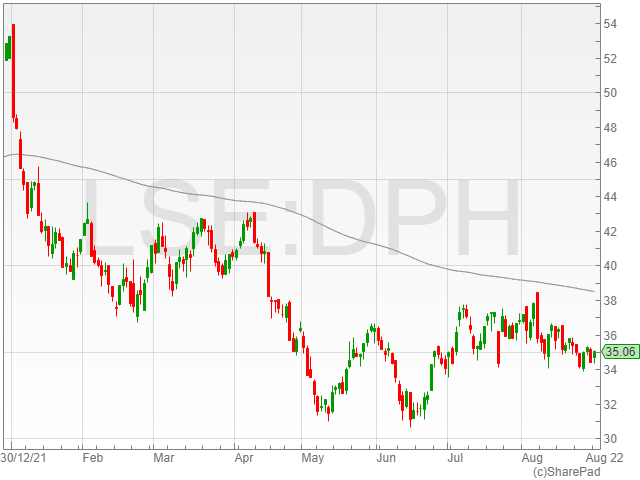
Poolbeg Pharma have announced a bug step forward in their flagship project in the commencement of a trial for POLB 001, a strain agnostic, small molecule immunomodulator.
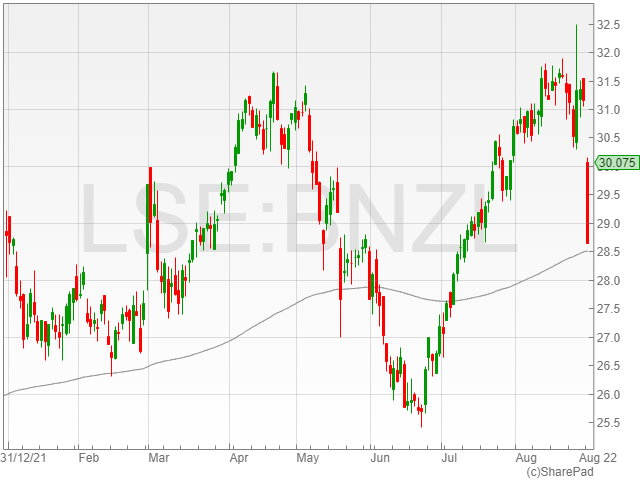
GreenX Metals is creating a portfolio of metals with applications in clean technology. Their shares popped higher today as they begin a field program at their copper project in Greenland.
Antofagasta shares gained 0.3% to 1,050p in late morning trading on Wednesday following a reported 6.5% fall in copper production to 129,800 tonnes.
The decline was linked to the Antofagasta’s previously announced concentrate pipeline incident at Los Pelambres, which reduced reported production by approximately 23,000 tonnes.
The pipeline resumed operation by the end of Q2, with 12,000 tonnes of copper concentrates stockpiled at the concentrator plant scheduled to by moved to the port by October.
Antofagasta confirmed a HY1 copper production fall of 25.7% to 268,000 tonnes as a result of the Los Pelambres incident and drought in the region, and expected lower grades at Centinela concentrates.
The firm reported a 7.8% slide in gold production to 35,4000 ounces in Q2 against Q1, and a HY1 decline of 38.8% to 73,800 ounces on the back of expected lower grades at Centinela.
The mining group also highlighted a Q2 Molybdenum production of 2,000 tonnes, remaining flat compared to Q1, with a year-to-date production drop of 31% due to lower throughput and grades at Los Pelambres.
Meanwhile, net cash costs were reported at $1.90 per pound in Q2 and $1.82 per pound for HY1, against $1.75 per pound in the previous quarter and $1.14 in HY1 2021.
Antofagasta attributed the growth to a rise in cash costs before by-product credits and slightly lower by-product credits on the back of lower by-product production, partially offset by a climb in realised prices.
The company noted its Los Pelambres project was 82% complete at the close of Q2, and its desalination plant is currently scheduled for completion in Q4 2022, with its concentrator plant expansion set to finish in early 2023.
“In the first half of 2022 we produced 268,600 tonnes of copper at a net cash cost of $1.82/lb,” said Antofagasta CEO Iván Arriagada.
“Reduced production levels and higher costs compared to last year reflect the expected impact of the drought and the temporary closure of the concentrate pipeline at Los Pelambres in June, as well as lower grades at Centinela Concentrates.”
FY 2022 outlook
Antofagasta revised its FY copper guidance downwards to 640,000 to 660,000 tonnes, reflecting the Los Pelambres pipeline incident and uncertainty linked to water shortages at the project.
The firm said it expected a net cash cost guidance increase to $1.65 per pound due to increases in diesel and other output prices.
“Following the pipeline incident at Los Pelambres, and the continued uncertainty about water availability, full year copper production is now expected to be 640-660,000 tonnes,” said Arriagada .
“The impact of this and the high current levels of inflation are partially offset by the weakening of the Chilean peso and we now estimate full year net cash cost guidance at $1.65/lb.”
Antofagasta confirmed an anticipated capital expenditure for the FY period of $1.9 billion.
UK inflation hit another 40-year high in June with a rise to 9.4% as crushing fuel and food prices pushed the cost of living higher, according to the latest figures from the Office of National Statistics (ONS).
“Rising food and fuel costs have kept inflation red hot this month. This is intensifying the pressure on already stretched pockets and making it increasingly challenging for many households to afford the essentials,” said Wesleyan director of investments Martin Lawrence.
Non-alcoholic drinks and food saw a 9.8% surge in prices over the last year, climbing from 8.7% in May as milk, cheese and eggs acted as the largest contributors to inflation, along with upward effects from vegetables, meat and other food products.
“Everyone will have felt inflation in their food shop, with this month’s figures laying bare just how pricey everything has become. They put grocery inflation at almost 10%, meaning that a £100 food shop a year ago will now set you back £110 for the same items,” said AJ Bell head of personal finance Laura Suter.
“The largest culprits for food inflation will have many people turning vegan, with eggs, cheese, milk and meat all seeing the biggest rises in prices. However, vegetables also saw some substantial price rises, meaning there is nowhere to hide.”
Meanwhile, record petrol prices drove transport inflation higher with a 42.3% rise in motor fuels year-on-year, marking the highest rate since before the constructed series of records began in 1989.
The average price of petrol hit 184p per litre in June against 129.7p last year, representing the highest price since records began in 1990.
Diesel also reached a new record price rise of 12.7p per litre compared to 2.4p the year before.
“Filling up your car is now an eye-watering experience. Between May and June we saw the largest increase in the price of petrol on record, with the price per litre jumping 18.1p,” said Suter.
“It means that in the space of just one month it became £9 more expensive to fill up an average family car.”
Clothing and footwear saw a slight fall in inflation, with an increase of 6.1% in the year from 6.9% in May.
— Holger Zschaepitz (@Schuldensuehner) July 20, 2022
Bank of England to take stronger action
The Bank of England commented it would be at least two years before inflation returned to its target of 2%, with inflation currently expected to hit 11% in October this year and the cost of living crisis set to intensify as household finances struggle.
“Amid rising inflation, the amount of spare cash people have left over at the end of each month is likely shrinking at some rate,” said abrdn client director Colin Dyer.
“With the Bank of England expecting it to be two years or more before inflation returns to the Government’s 2% target, the nation’s finances could be strained for the sometime.”
The Bank of England set its last rate hike to 1.25%, however with inflation hitting record highs each month, the institution looks increasingly likely to raise interest rates by 0.5% at its next meeting after Governor Andrew Bailey signalled stronger action.
“It could … be the signal for the Bank of England to hike rates by 0.5% next month, less than 24 hours after the Governor, Andrew Bailey, said he was prepared to take stronger action,” said Suter.
Royal Mail shares were down 4.4% in early morning trading on Wednesday following a reported 11.5% slide in Q1 revenue.
The firm highlighted weakening retail trends, lower test kit volumes and a return to structural decline in letters as reasons for its fall in revenue over the term.
Royal Mail confirmed an adjusted operating loss of £92 million, which it attributed to inflexibility in its cost base to adjusted to lower volumes, alongside disappointing performance on delivery of further efficiencies.
Meanwhile, the company mentioned its Progress on Pathway to Change had stalled, resulting in £100 million in risk to £350 million in benefits identified for FY 2022-2023.
However, the group said its other cost saving programmes remained on track, albeit with some headwinds due to higher staff absences on the back of a resurgence in Covid-19 cases.
Employees represented by the Communication Workers Union (CWU) voted to take industrial action on Tuesday this week, after 97.6% of the 77% member turnout voted in favour a strike ballot.
The company failed to reach an agreement with its workers over Q1, however the firm said it would continue to discuss options with its staff to negotiate salary and employment terms.
“We have made progress building the infrastructure we need for Royal Mail to compete, especially given the growing demand for more larger parcels, delivering the next day – including Sundays – and in a more environmentally friendly way,” said Royal Mail CEO Simon Thompson.
“But building the infrastructure is not enough. We have to transform the way we work too. We need to change – and change now.”
“This is how we can give our team the job security that they deserve for tomorrow and not just for today. I am ready to talk about pay and change at any time. But it has to be both.”
FY 2022-2023
Royal Mail commented its outlook for FY 2022-2023 included a weaker parcels market and lower than expected efficiency savings in-year, and noted it was likely to breakeven at adjusted operating profit level if progress could be made on its disruptive issues in the last financial period.
General Logistics Systems
General Logistics Systems (GLS) announced an 3% decline in volume year-on-year, with a revenue growth of 7.8% linked to better pricing and higher freight revenues.
The group noted some margin compression on the back of inflation and Covid-19 restrictions, in line with management expectations, and confirmed an operating profit broadly in line with last year of £94 million.
GLS maintained its FY 2022-2023 outlook, including a revenue growth in the high-single digits in Euros year-on-year and an operating profit between €370 to €410 million.
“Whilst GLS delivered a solid performance in the first quarter, the performance of Royal Mail was disappointing with an adjusted operating loss of £92 million resulting from of a decline in parcel volumes post the pandemic and a lack of progress in delivering efficiencies,” said Royal Mail chairman Keith Williams.
“The pandemic boom in parcel volumes bolstered by the delivery of test kits and parcels is over. Royal Mail is currently losing one million pounds per day and the efficiency improvements which are needed for long term success have stalled.”
‘We can however be a long-term success story. We have advantages in scale and reach and a strong balance sheet and asset base which are the foundations for a successful future. We need to act now in moving to that future in the interests of all stakeholders, employing those advantages to the maximum.”
In The Style Group shares tumbled 34.9% to 48.5p in late afternoon trading on Tuesday after the fashion group announced an 85% drop in adjusted EBITDA to £551,000 in FY 2022 against £3.7 million in FY 2021.
In The Style confirmed a 28% revenue climb to £57 million compared to £44.7 million, with a direct-to-consumer revenue growth of 23% to £44.7 million from £36.4 million and a wholesale revenue increase of 52% to £12.6 million against £8.3 million.
The group highlighted its revenue growth was driven by ongoing expansion and optimisation of the influencer-based business model.
The firm also mentioned a gross profit increase of 22% to £25.1 million from £20.5 million, and a gross profit margin slide of 2.2% to 42.9% against 46.1%.
In The Style said its product cost increases were managed through direct-to-consumer, but reduced wholesale gross margin, and cost pressures remained as the group moved into the current year.
The company reported a 51% fall in net cash to £5.8 million compared to £11.9 million year-on-year.
FY 2023 guidance
In The Style commented it expected FY 2023 to remain flat, with a mid-to-single digit growth in direct-to-consumer revenue and a projected decline in wholesale channel revenue at a double-digit rate as the company focuses on its digital partners.
The fashion firm highlighted an expected adjusted EBITDA loss for the financial year of £2 million, with £500,000 in expenses used to move to its new warehouse by the end of September 2022 to improve fulfilment efficiency.
“I am pleased to report that in our first full year as a public company In The Style has delivered further strong revenue growth, representing almost +200% on a two-year basis. This has been supported by encouraging improvements across all our key customer and brand metrics,” said In The Style Group CEO Sam Perkins.
“We have a strong, inclusive brand and differentiated influencer collaboration model which gives us fantastic reach, highly effective marketing, and broad customer appeal. This underpins our long-term confidence to create one of the UK’s most exciting fashion brands.”
“This year is expected to be a challenging one for consumers and retailers. We are taking actions to respond including prudent cost control, cash management and executing against our refined growth strategy.”
Tissue Regenix Group shares were up 2.4% to 0.5p in late afternoon trading on Tuesday following confirmation of strong trading in line with management expectations in HY1 2022, with a revenue climb of 25% to $11.8 million against HY1 2021.
The company announced its board was confident of meeting its FY 2022 expectations.
Tissue Regenix Group commented its BioRinse sector had continued to grow over the financial term.
The firm also mentioned the commercial reorganisation of its dCELL segment had started to display benefits as it returned to growth over the period.
The group reported its cash position remained sufficient to support its current business growth plans.
“The focus on executing our 4S strategy has resulted in a continued positive trajectory for the Group, despite the lingering impacts of COVID-19 during the first half of 2022,” said Tissue Regenix CEO Daniel Lee.
“We are pleased with the continued growth of our BioRinse business and how our dCELL business has responded to the commercial reorganization.”
“We continue to be optimistic in delivering the financial performance anticipated by our Board for the second half of 2022.”
Kodal Minerals shares rose 1.1% to 0.2p in late afternoon trading on Tuesday after the company announced a widened group loss before other comprehensive income of £903,000 in FY 2022 against £623,000 the last year.
The West Africa-focused gold and lithium mining group reported a 370% climb in exploration and evaluation expenditure of £2.5 million compared to £542,000 year-on-year.
Kodal Minerals confirmed a 63% growth in the value of its gold projects in Mali and Cote d’Ivoire to £2.4 million from £1.4 million.
The company also noted a 20% increase in the value of its Bougouni lithium project in Mali to £9 million compared to £7.4 million in the previous year.
The mining firm highlighted a cash balance of £1 million at 31 March 2022 against £2.4 million in FY 2021, rising to a balance of £3.3 million on 8 July after a successful £3 million fundraise, before expenses.
Meanwhile, Kodal Minerals reported positive results from its exploration programmes at its Fatou and Nielle gold projects, with identified wide gold intersections and high-grade gold mineralised areas.
In addition, infill geochemical sampling at its Dakabala project resulted in high-grade surface samples at new discovery zones.
Kodal Minerals also confirmed it had been granted the mining licence for its 100% owned Bougouni lithium project, which the group reported was fully permitted for development and construction.
“We are in the enviable position of owning 100% of the concessions of what I believe will become one of the most significant lithium spodumene producing projects in West Africa, and the first in Mali,” said Kodal Minerals CEO Bernard Aylward.
“The prices of lithium spodumene have risen exponentially as global demand for this critical mineral shows no sign of abating driven by the green agenda and the EV (electric vehicle) revolution.”
“Looking ahead, we will continue to invest in exploration at our gold projects following the excellent results from our reverse core drilling campaign. However, our priority is to de-risk the Bougouni Project, by further reducing expected operating costs whilst advancing discussions with potential partners on funding for construction with the view of bringing the Project into production.”
Capital.com Group CEO Peter Hetherington said today his company’s strategy of focusing on mature, regulated markets is paying off, with the popular trading platform adding just over one million new user accounts during Q2.
The new sign ups mean that Capital.com now boasts just over 6.4 million users on its trading platform, which covers markets ranging from commodities and equities to indices and crypto.
The company’s strategy has led to an acceleration of its growth, with new users being added at a 19% faster rate than in the first quarter of the year.
Hetherington hailed his company’s “spectacular growth trajectory”, saying that the company has been focused on establishing a “greater and bolder” presence in Western Europe and especially the U.K.
The results of Capital.com’s efforts speak for themselves, with European users accounting for 31% of all trade volume on its platform in the last three months. Growth in the U.K. was clearly evident, with transaction volume in that country rising by 18% from the previous quarter.
“This is in line with our goal to expand our global footprint in step with the highest regulatory standards,” Hetherington said in a statement.
Capital.com certainly deserves some credit for its growth rate, which comes at a time when many traders have become wary of an extremely negative bearish sentiment that’s affecting all markets. While the tendency among many investors has been to look towards safer assets, including safe havens such as gold, Capital.com said its platform was a hive of trading activity. Altogether in the quarter, its trading volume reached $255 billion, down just three percent from the first three months of the year.
Although enthusiasm for Capital.com’s platform remains strong, Hetherington said the company is taking steps to protect its users amid the “choppy” market conditions. To that end, it has prioritized the delivery of first class insights, data and analytics to help investors adjust their trading strategies to the current bearish conditions.
“The self-directed investor will be seeking assistance and greater support through education and risk management tools,” Hetherington noted.
That said, Capital.com’s users demonstrated their adaptability in the quarter just gone, with indices and commodities emerging as the most traded assets on its platform, surpassing the once-dominant crypto markets. On indices, a majority of users shifted towards short positions, Capital.com said, indicating a willingness to eke out profits despite the current market downturn.
The FTSE 100 jumped on Tuesday and traded at the highest level since the start of July as investors reacted to mixed corporate news and prepared for earnings from US stocks.
The FTSE 100 bounced back from overnight jitters in US markets as earnings season begins the heat up.
“Speculation that Apple may slow hiring and spending took a bite out of any market momentum overnight and set the tone for a weak start in London on a scorching Tuesday,” said AJ Bell financial analyst Danni Hewson.
“The current second quarter earnings season in the US was always likely to be crunch time for markets as investors looked for signs that the weaker economic outlook was weighing on earnings, which until now have held up reasonably well.”
However, the US markets appeared unperturbed, with the Dow Jones pre-open trading 0.6% higher to 31,243, the S&P 500 up 0.8% to 3,866.7 and the NASDAQ gaining 0.9% to 12,016.2.
UK Real Term Pay Falls
Meanwhile, real term total pay (including bonuses) fell 0.9% and real term regular pay (without bonuses) fell by a record 2.8%.
“Wages are rising, but prices are rising much faster, resulting in a record 2.8% fall in regular pay in real terms,” said AJ Bell head of investment analysis Laith Khalaf.
“With inflation set to rise even further from here, there looks to be little prospect of the salary squeeze abating any time soon, leaving household finances firmly under the cosh.”
Real term wages see record fall as gap between public and private sector pay widenshttps://t.co/YaKiYYDBa8
— UK Investor Magazine (@UKInvestorMAG) July 19, 2022
BHP followed mining giant Rio Tinto in its warning on a lowered demand outlook going forward over the next year.
Anglo American shares dipped 0.8% to 2,614.7p, Antofagasta fell 0.2% to 1,034.5p, Croda slid 0.2% to 6,818, Endeavor dropped 0.3% to 1,625, Glencore decreased 0.6% to 417p and Glencore declined 0.6% to 416.9p.
“After last week’s disappointing Chinese growth figures, signs of a continuing rise in Covid cases were the last thing markets wanted to hear,” said Hewson.
“Given China is such a big consumer of commodities, this created a negative backdrop for mining outfit BHP. It has followed peer Rio Tinto in warning of a bleaker outlook for demand, as well as rising costs and struggles with availability of labour.”
“After a strong start to 2022, it seems the miners are starting to find life much, much tougher.”
IHP Group shares were down 3.4% to 240.4p in late morning trading on Tuesday following a reported £1.7 billion in gross inflows and £1 billion in net inflows over Q3 2022.
The firm highlighted its gross and net inflows for the financial year remained ahead of the previous year comparative.
IHP Group confirmed an average daily funds under direction of £51.9 billion, which came in lower than Q1 and Q2 due to the negative impact of market movements.
The company mentioned 17,949 clients added to its base in the year-to-date, against 17,942 across the same term in 2021, and 546 newly registered advisors compared to 522 year-on-year.
“I am pleased to report a robust quarter of inflows on to our platform. Net inflows were £1.0bn in spite of a difficult economic and market environment. Outflows remained broadly in line with previous quarters,” said IHP Group CEO Alex Scott.
“The net inflows on to the platform, together with strong and consistent rates of new clients joining the platform (17,949 added to date in FY22, compared to 17,942 for the comparative period in FY21), and newly registered advisers (546 added to date in FY22, compared to 522 for the comparative period in FY21), is testament to the strength of the investment platform offering.”
The group also noted guidance for its previously announced IT and software investment, with 50 development staff set to be recruited in FY 2022 and FY 2023 in a move to enhance its investment platform and back office software.
IHP Group commented its investment would improve its operational efficiencies and cost effective scalability of its investment platform, reducing the number of additional operational staff necessary to serve extra clients and advisers from FY 2025.