AIM movers: MJ Hudson falls below placing price and ex-dividends

3

MJ Hudson (LON: MJH) announced a £9.22m placing and PrimaryBid offer at 30p a share as the market was closing on Wednesday afternoon. The share price of the asset management services provider declined 8% to 28.75p today. The cash will be invested in the ESG division, help to pay deferred consideration and provide additional regulatory capital for the growing operations. The company wants to change the terms of its LTIP so that there is a 30p floor on the issue price of shares. Cenkos has adjusted its 2022-23 pre-tax profit forecast from £5.7m to £6m, although earnings have been cut from 3.1p a share to 2.8p a share.

Performance optimisation software provider Checkit (LON: CKT) grew annual recurring revenues by 48% to £10.2m. Interim recurring revenues were £4.4m out of total revenues of £5.4m. Non-recurring revenues continue to decline. Net cash is £19.5m and it could fall to £15m by January 2023. Securing deals is taking more time and this is worrying investors. The shares fell 5.17% to 27.5p.

Shares in rail infrastructure monitoring technology provider Cordel (LON: CRDL) rose a further 34.6% to 8.75p following the announcement earlier this week of a five-year contract with Angel Trains to install fully automated monitoring hardware and software on in-service passenger trains. The share price started the week at 5.25p.

Artemis Resources Ltd (LON: ARV) has returned from suspension after reporting additional results for drilling at the Greater Carlow Castle copper gold cobalt project in Australia. A review of the results has been completed. Crosscut zone results have identified an offset mineralised load to the west, while mineralisation is open to the north. Carlow West zone drilling has intersected two areas of mineralisation. A mineral resource calculation is planned. There will be a further announcement of assay results of ARC395 and ARC396 drill holes, but they are not considered material. The share price rose 11.9% to 3.3p having started the week at 1.5632p.

Buying by directors has pushed up the share price of recruitment and training provider Staffline Group (LON: STAF). There have been five director and management purchases since the interims on 2 August, including two today. Finance director Daniel Quint acquired 50,000 shares at 39.7p each, while Martina McKenzie, the managing director of the subsidiary in Ireland, bought 215,543 shares at 41.132p each. Interim revenues and pre-tax profit declined, although full year pre-tax profit is forecast to improve from £7.9m to £8.8m. The share price fell after the interims, but a 15.5% increase to 47.95p has more than recovered that loss.

Cell engineering company MaxCyte (LON: MXCT) increased interim revenues by 56% to $21.2m. The loss rose from $11.5m to $12.3m due to higher staff costs. There is cash of $240.9m. In July, LG Chem licensed the use of MaxCyte’s Flow Electroporation ExPERT platform to advance development of engineered cell-based therapies. Guidance is for a 30% increase in full year revenues. The shares rose 6.74% to 475p.

Electrical retailer Marks Electrical (LON: MRK) increased revenues in the first four months of the financial year by 14% to £27.7m. Marks is growing market share for major domestic appliances and consumer electronics. Televisions, vacuum cleaners, washers and air conditioning were strong categories. Rivals have been discounting prices and marketing costs are increasing, but management believes it can achieve profitable growth. The share price recovered 5.88% to 72p, which is still below the November 2021 placing price of 110p.

Ex-dividends

i3 Energy (LON: I3E) is paying a monthly dividend of 0.14p and the share price has declined by 0.125p to 29.175p.

Iomart Group (LON: IOM) is paying a final dividend of 3.6p a share and the share price has fallen 2p to 192.4p.

Quartix Holdings (LON: QTX) is paying an interim dividend of 1.5p a share and the share price is unchanged at 340p.

Riverfort Global Opportunities (LON: RGO) is paying a final dividend of 0.04p a share and the share price is unchanged at 0.875p.

M&G widens loss to £1bn on volatile market conditions

0

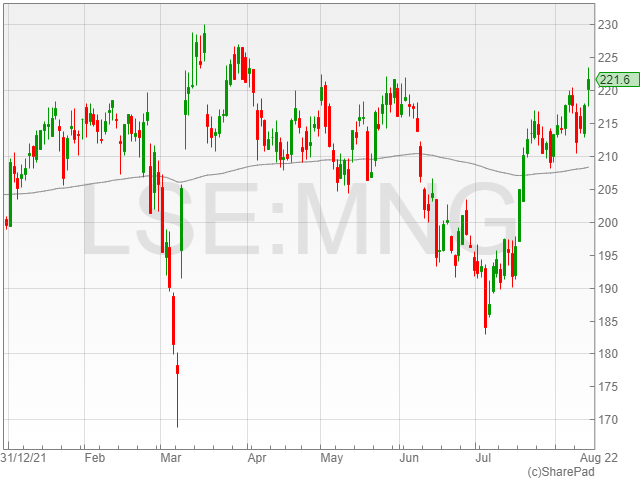
M&G shares climbed 1.8% to 221.6p in late morning trading on Thursday, despite a widened IFRS post-tax loss to £1 billion in HY1 2022 compared to £248 million the last year.

The company announced an adjusted operating profit drop to £182 million from £327 million as a result of current market conditions.

M&G reported an assets under administration fall to £348.9 million against £370 million, linked to adverse market movements, with net client inflows of £1.2 billion from £2 billion in outflows the year before.

Meanwhile, the group confirmed a total capital generation slide to £24 million from £869 million, alongside a Shareholder Solvency II coverage ration increase to 214% compared to 198% year-on-year on the back of increasing yields and falling equity markets.

“This is an encouraging set of results and provides evidence that M&G is continuing to build momentum. Improved client flows underpinned a resilient operational and financial performance despite a period of volatility when many investors reduced their exposure to markets,” said M&G CEO John Foley.

“The current macro-economic environment is creating uncertainty in the markets in which we operate.”

“However, our diversified sources of earnings and strong shareholder Solvency II coverage ratio protects our ability to invest in the business and, as today’s interim dividend of 6.2 pence per share shows, deliver attractive shareholder returns.”

M&G recommended a 2% dividend hike to 6.2p per share for the financial period.

Spirax-Sarco Engineering revenue grows 17% on volume growth and price increases

0

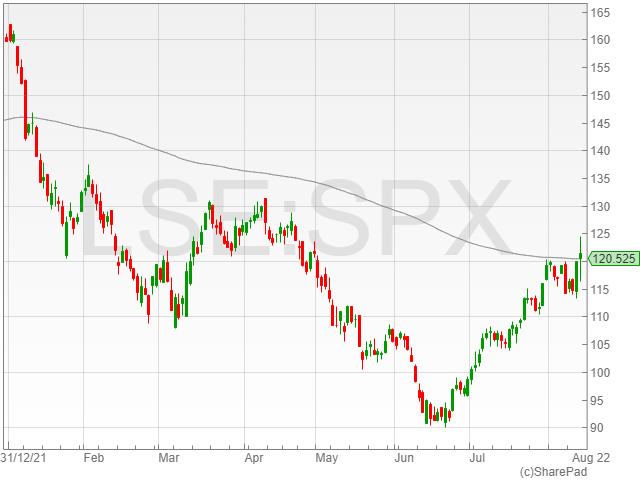
Spirax-Sarco Engineering shares gained 0.4% to 12,055p in late morning trading on Thursday following a 17% revenue growth to £750.1 million in HY1 2022 against £643.7 million the last year.

Spirax-Sarco Engineering linked its revenue increase to volume growth and price increases.

However, the firm reported a 7% operating profit drop to £142.1 million compared to £153.6 million and a 5% operating margin fall to 18.9% from 23.9%.

Spirax-Sarco Engineering highlighted an 8% pre-tax profit fall to £138.5 million against £150 million, as a result of restructuring its Electric Thermal Solution (ETS) business.

Meanwhile, the company announced an 11% basic EPS decrease to 131.8p from 147.6p in the previous year.

The engineering firm noted a £202.7 million net debt against £192.8 million year-on-year.

“These strong first half results were achieved against the backdrop of a weakening IP, supply chain and COVID-19 related disruption, as well as rising inflation,” said Spirax-Sarco Engineering CEO Nicholas Anderson.

“I am grateful to all colleagues for their tireless efforts to support our customers in a challenging first half. It is this excellent execution and resilience that underpins our improved full year outlook.”

“Our strong profitability and robust balance sheet support our continued investment in growth, including our sustainability, digital and manufacturing initiatives.”

Spirax-Sarco Engineering hiked its dividend 10% to 42.5p per share compared to 38.5p for HY1 2022.

Entain retail recovery offsets decline in online sales, new dividend policy

0

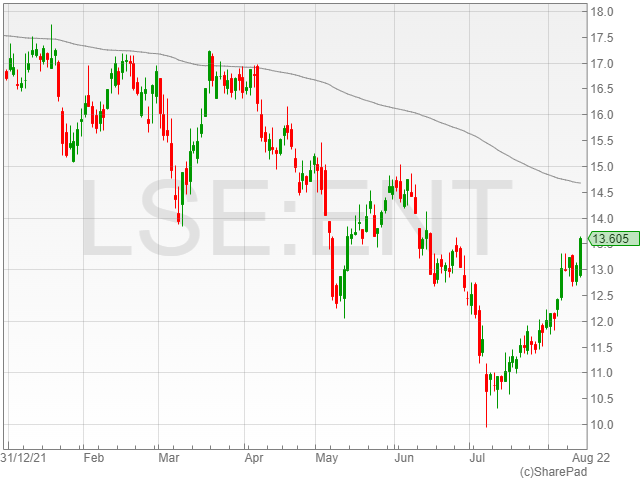
Entain shares gained 5.1% to 1,375.8p in early morning trading on Thursday, after the gambling company reported a 19% revenue climb to £2.1 billion in HY1 2022, alongside an 18% growth in net gaming revenue.

The gaming firm said its revenue increase was driven by a strong rebound in retail performance after Covid-19 lockdowns last year, which sufficiently offset its fall in online revenue.

“The resurgence of in person betting continued over the first half as a cost-of-living crisis and broader economic uncertainty don’t seem to be deterring players from heading out for a rush of in person gaming,” said Hargreaves Lansdown equity analyst Matt Britzman.

“The flip side of that trend is a drop in online gaming, though importantly activity’s stabilising well ahead of pre-pandemic levels.”

Entain confirmed a 31% growth in operating costs on retail reopening and new acquisitions, which fed into the cost base.

However, the betting group confirmed a 17% EBITDA climb to £471 million.

Entain commented it was on track to deliver on its FY 2022 profit guidance of £925 million to £975 million.

The company also noted its new dividend policy, including a total dividend of £100 million to be paid in FY 2022. The dividend will be split in half, representing an 8.5p per share payout in HY1 2022.

“Positive performance and the rebound of retail has paved the way for a fresh and revitalised dividend policy. Starting at £100m over the current year, split between the first and second half, that’s expected to grow from here,” said Britzman.

“Good news for investors, though that will put added strain of cash that’s already being snapped up in BetMGM and the acquisition led growth strategy.”

“Speaking of BetMGM, the group’s joint venture over the pond, performance remains strong. Profits should start to flow at some point next year and BetMGM management have recently upped their forecast addressable market to around $37bn, there’s a big slice of pie up for grabs.”

Entain partners with EMMA Capital and SuperSport, expands Central and Eastern Europe reach

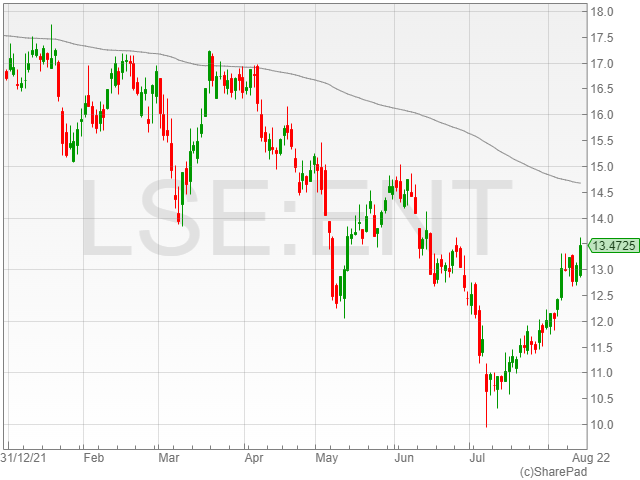
Entain shares rose 2.9% to 1,346.5p in early morning trading on Thursday after the betting group announced the formation of Entain CEE with Czech Republic investment firm EMMA Capital.

The gambling firm is set to use the new venture to expand its reach across Central and Eastern Europe.

Entain will reportedly own 75% of Entain CEE’s economic rights, and will also acquire 75% of the economic rights to Croatian gaming and sportsbook operating SuperSport from EMMA.

The gaming company said the CEE region represented an attractive opportunity to widen its customer income, with the €5 billion betting and gaming market expected to grow at least 10% each year until 2025.

Meanwhile, SuperSport is set to provide access to Croatia with a 54% market share in the region and 70% brand awareness driven by sponsorship agreements, with 85% of FY 2021 revenue delivered by online sales.

“We are excited to create Entain CEE with EMMA to underpin our strategy across the CEE region, and to be acquiring the leading betting and gaming operator in the highly attractive, fully regulated Croatian market,” said Entain CEO Jette Nygaard-Anderson.

“We see Croatia as an exciting, dynamic country which Entain CEE is perfectly positioned to expand from – we are very much looking forward to growing our business responsibly within the country and the region.”

“By bringing together Entain’s global expertise and EMMA’s regional investment track record, we are creating a growth platform with considerable opportunity.” 

Entain confirmed a payment of €600 million in cash at completion and an additional contingent payment to EMMA in early 2023 based on SuperSport’s EBITDA for FY 2022, expected to be in the range of €90 million.

EMMA will contribute its 25% stake in the Croatian firm to Entain CEE at an initial implied valuation of €200 million, with the contingent payment implying a further €30 million in value contributed by EMMA.

The total acquisition is expected to value SuperSport at €920.

The transaction will be financed via a €700 million bridge loan from Deutsche Bank, Lloyds, Mediobanca, NatWest and Santander.

The agreement is scheduled to close in Q4 2022, conditional on regulatory approvals.

“I am looking forward to joining with Entain and further building on the significant opportunity presented in this region,” said SuperSport CEO Radim Haluza.

“The prospect of leading Entain CEE to drive expansion in fully regulated markets is an exciting opportunity, and EMMA’s investment expertise combined with Entain’s world-class platform will give us the competitive edge in delivering on the CEE opportunity.”

Antofagasta revenue and profits fall on low copper prices and operational chaos

0

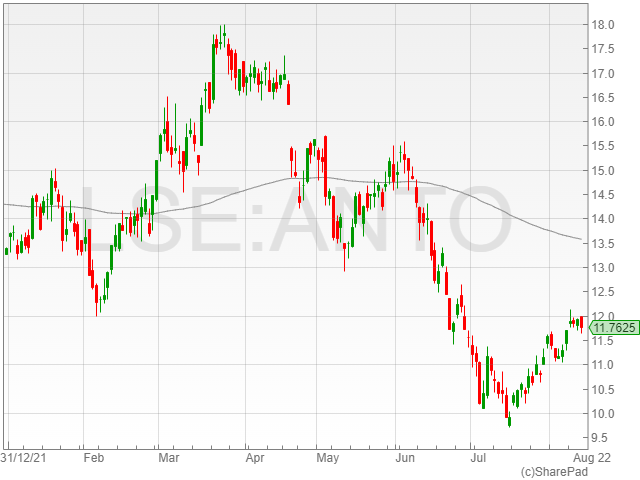
Antofagasta shares slid 0.5% to 1,186.5p in early morning trading on Thursday following a 29.6% revenue fall to $2.5 billion in HY1 2022.

The mining company announced a 47.5% EBITDA drop to $1.2 billion, as a result of lower revenue and a 6.9% climb in operating costs.

Antofagasta mentioned a pre-tax profit slide of 61.9%, with a HY1 profit of $680 million.

The FTSE 100 giant attributed its lacklustre report to a volatile copper price linked to the volatile market environment, continued drought at its Chile operations, and an incident at its Los Pelambres concentrate pipeline.

Antofagasta reported its cash costs were higher, with its fall in production and higher input prices. However, cost inflation was offset by the weak Chilean peso.

The commodities group said it was confident in delivering its revised guidance of 640,000-660,000 tonnes of copper for FY 2022.

“Copper’s critical role in the development of low-carbon technologies is essential for the energy transition and the long-term fundamentals for copper remain favourable,” said Antofagasta CEO Iván Arriagada. 

“I am confident that Antofagasta’s strategy of developing mining for a better future is the right one and will deliver long-term value for all our stakeholders.”

Antofagasta cut its dividend by 61% to 9.2c per share in HY1 2022.

S&U beating expectations

Used car finance and property bridging loans provider S&U (LON: SUS) says group receivables increased from £340m to £370m and first half profit is greater than last year. The share price jumped 11.5% to 2320p, which is still 14% lower than at the start of 2022.
Motor finance provider Advantage Finance receivables are £280m and Aspen property bridging loans have reached £90m with an average size of around £875,000 for loans this year. The greater proportion of Aspen loans will lead to lower revenue margins.
Net debt increased to £154m by the end of July, but this is well within the borrowin...

4imprint Group shares soar as dividend hiked 167%

0

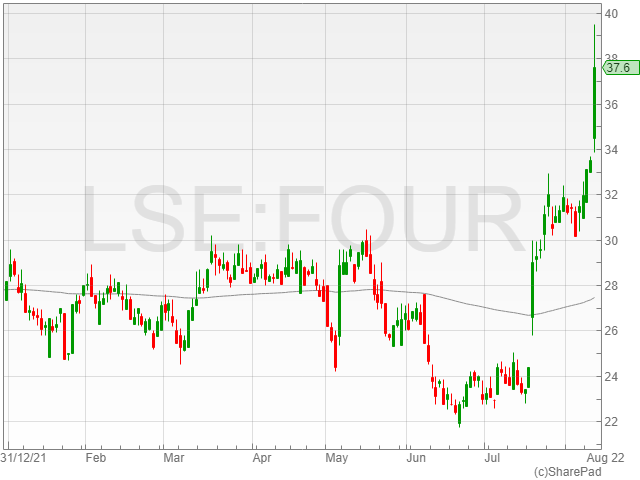
4imprint Group shares soared 11.9% to 3,750p in late afternoon trading on Wednesday, after the promotional products company announced a 58% surge in revenue to $515.5 million in HY1 2022 against $326.8 million the year before.

The Group reported an operating profit spike of 1,122% to $43.9 million compared to $3.6 million, along with a pre-tax profit growth of 1,122% to $43.9 million from $3.3 million.

4imprint Group enjoyed record customer demand over the period, with 886,000 total orders processed, 146,000 new customers acquired, and strong continued momentum in July 2022.

4imprint Group confirmed a 27% climb in cash to $67.1 million against $52.8 million.

The company noted a basic EPS rise of 1,204% to 118.9c from 9.1c.

“The Board remains very confident in the Group’s strategy, the strength and resilience of its business model and its competitive position. This confidence is expressed in our expectation of reaching our long-held revenue target of $1bn during the 2022 financial year,” said 4imprint Group chairman Paul Moody.

“At the same time, the Board is cognisant of continuing uncertainty in the form of geo-political and broad economic factors that could potentially slow down the Group’s performance during the remainder of 2022.”

“Trading momentum in the first few weeks of the second half of 2022 has remained encouraging.”

4imprint Group recommended a 167% dividend hike to 40c per share compared to 15c the last year.

Beyond the noise: dealing with complex markets

Bruce Stout, Martin Connaghan and Samantha Fitzpatrick, Investment Managers, Murray International Trust PLC

  • The unpredictable markets since the start of the year have forced a reappraisal of some recent investment themes
  • Labels such as value, growth or quality are inadequate for investment decision-making
  • Diversification and a focus on real assets are likely to be important in an environment of high inflation and rising interest rates. 

Markets have been unpredictable since the start of the year. For investors, it has forced a harsh reappraisal of some of the investment themes of the past few years: extended valuations of technology stocks being a prime example. It has also forced investors to look again at previously unfashionable metrics such as cash flow, balance sheet strength and dividends. We believe that it should remind investors of some neglected investment disciplines.

The Ronseal test

Amongst the general market turbulence since the start of the year, investors have discerned three main themes: a weakness for ‘quality’ companies, the strength of ‘value’ and the difficulty of investing in emerging markets. As a quality-focused trust, focused on dividend growth and with almost half of our portfolio directly invested in emerging markets, this should not have been an ideal market. However, the performance of Murray International Trust has held up very well year to date, relative to the broader Investment Trust Sector and most importantly, in absolute terms. 

We say this not to blow our own trumpet, but to point out the inadequacy of assigning labels when making investment decisions. Too many funds have seen mission creep as growth stocks have prevailed. We would suggest that the only real metric for shareholders is whether an investment trust manager delivers on their promises – the Ronseal test. Our commitment is to grow income and capital above the rate of inflation from a portfolio of fifty stocks. Our investors should judge us on that objective alone. 

Dividends: helpful but not a panacea

An allocation to dividend stocks can look like the right approach when the economic environment gets tougher. The association between dividend stocks and ‘safety’ is strong. If companies have the cash flow to pay dividends, it often suggests capital discipline and economic strength. Equally, in an environment of high inflation, tangible income today is better than hoped-for earnings tomorrow. 

However, it is not a panacea.  In a recession, earnings go down. Where earnings go, dividends will sometimes follow. Sheltering in income trusts is not a solution in itself. Investors need to be sure their fund manager is paying attention to the sustainability of dividends in the long-term. 

Interest rates are not rising universally

Investors are right to be concerned about the impact of rising interest rates. However, it is worth noting that rates are not rising across the world. They may be going up in the US and Europe, but Asian and emerging market central banks have already moved. Brazilian rates, for example, are at 13.2%, which is almost certainly at or near their peak. They are already through the most painful stage in the cycle and there are signs that central banks may now start to reverse direction. 

There has been a prevailing view that if US rates go up, emerging markets suffer. This is not necessarily true. Emerging markets are only just emerging from the pandemic and have plenty of recovery ahead of them. We see a lot of pent-up demand, particularly in the relatively unleveraged consumer sector 

Murray International continues to have around 40-45% exposure directly in emerging markets. We see stronger and more resilient consumption demand there than in the developed world, where household formation is static and household budgets are more sensitive to rising interest rates. Equally, emerging markets have seen valuations fall significantly, creating opportunities. 

The importance of diversification

This particular investment cycle has seen passive funds become concentrated in a handful of technology stocks. This means any selling pressure is exaggerated. A strongly diversified strategy is vitally important in an environment where there are lot of intangibles. This is a difficult environment and the problems could grind on longer than many currently expect. For the 50 stocks in our portfolio, we strive to ensure that their economic fortunes are relatively uncorrelated with each other. They are being driven by their own business and their destiny is in their own hands. 

Focus on real assets

A notable theme running through Murray International is real assets. This is not property in London and New York, but tangible areas such as a pipelines in Canada, an airport in Mexico or a telecoms network in Indonesia. In many cases this installed capacity is increasingly valuable because planning restrictions mean it is very difficult to build more. 

Our telecoms holding in Indonesia, for example, has spent the last five to ten years putting money in the ground, building a high-quality digital network that can deliver data across the country. In the developing world, penetration of digital services is far lower and consumers don’t have the same debt levels. This gives a stronger runway of growth. 

Be wary of concept stocks 

The current environment of rising rates and high inflation is precarious for some of the technology stocks in developed markets. They may be great companies, but margins could be squeezed because they are operating in very competitive industries. The food delivery business is a good example: with wages and fuel costs rising, its margins are weakening. Some companies have negative cash flow because they are investing for growth. If the banks get twitchy and cut off financing, these companies could go wrong quite quickly. 

This environment should revive some investment disciplines that have been lost in the loose money era following the global financial crisis. Investors haven’t been analysing cash flow because they haven’t had to, inflation has been low and credit readily available. However, this is a luxury they can no longer afford. 

Important information:

Risk factors you should consider prior to investing:

  • The value of investments, and the income from them, can go down as well as up and investors may get back less than the amount invested. 
  • Past performance is not a guide to future results. 
  • Investment in the Company may not be appropriate for investors who plan to withdraw their money within 5 years. 
  • The Company may borrow to finance further investment (gearing). The use of gearing is likely to lead to volatility in the Net Asset Value (NAV) meaning that any movement in the value of the company’s assets will result in a magnified movement in the NAV. 
  • The Company may accumulate investment positions which represent more than normal trading volumes which may make it difficult to realise investments and may lead to volatility in the market price of the Company’s shares. 
  • The Company may charge expenses to capital which may erode the capital value of the investment. 
  • Movements in exchange rates will impact on both the level of income received and the capital value of your investment. 
  • There is no guarantee that the market price of the Company’s shares will fully reflect their underlying Net Asset Value. 
  • As with all stock exchange investments the value of the Company’s shares purchased will immediately fall by the difference between the buying and selling prices, the bid-offer spread. If trading volumes fall, the bid-offer spread can widen. 
  • With funds investing in bonds there is a risk that interest rate fluctuations could affect the capital value of investments. Where long term interest rates rise, the capital value of shares is likely to fall, and vice versa. In addition to the interest rate risk, bond investments are also exposed to credit risk reflecting the ability of the borrower (i.e. bond issuer) to meet its obligations (i.e. pay the interest on a bond and return the capital on the redemption date). The risk of this happening is usually higher with bonds classified as ‘subinvestment grade’. These may produce a higher level of income but at a higher risk than investments in ‘investment grade’ bonds. In turn, this may have an adverse impact on funds that invest in such bonds. 
  • Yields are estimated figures and may fluctuate, there are no guarantees that future dividends will match or exceed historic dividends and certain investors may be subject to further tax on dividends. 
  • The Company invests in emerging markets which tend to be more volatile than mature markets and the value of your investment could move sharply up or down.

 Other important information:

Issued by Aberdeen Asset Managers Limited which is authorised and regulated by the Financial Conduct Authority in the United Kingdom. Registered Office: 10 Queen’s Terrace, Aberdeen AB10 1XL. Registered in Scotland No. 108419. 

Find out more at www.murray-intl.co.uk or by registering for updates. You can also follow us on social media: Twitter and LinkedIn

Aviva shares fly on sparkling results, dividend hiked 40% & share buyback proposed

0

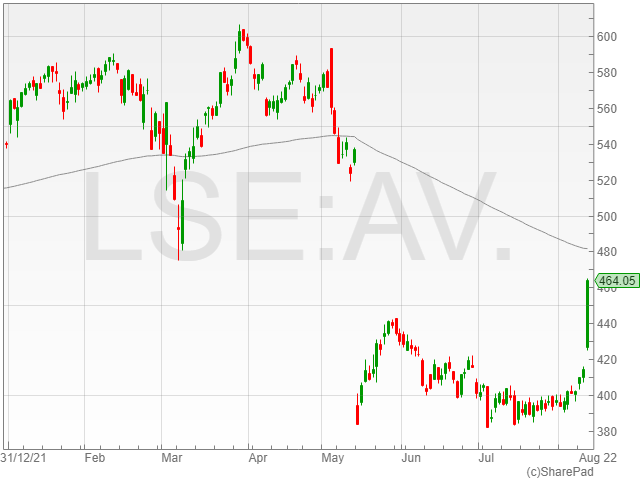
Aviva shares flew 11.8% to 463.5p in late afternoon trading on Wednesday, after the insurance company reported a 14% growth in operating profit to £829 million in HY1 2022 compared to £725 million the year before.

The group announced a 46% rise in solvency II OFG to £538 million from £369 million, along with a 27% Solvency II pro forma cover ratio climb to 213% against 186% year-on-year.

Aviva noted a 2.4% increase in general insurance COR to 94% from 91.6%.

“Sales are up, operating profit is higher, our financial position is stronger. This has been an excellent six months for Aviva,” said Aviva CEO Amanda Blanc.

“Trading has been encouraging across all our major businesses in insurance, wealth and retirement. Even so, we are very conscious of the pressures currently facing many of our customers, especially the more vulnerable.”

“In response we have launched new, low cost, insurance products, and we are increasing the range and amount of support we provide to communities, businesses and our own people during this challenging time.”

Dividend and proposed share buyback

The firm hiked its dividend 40% to 10.3p compared to 7.3p the last year, and announced a proposed share buyback programme in its FY 2022 results, pending market and regulatory approval.

“Delivering for our shareholders is at the core of our strategy. Our liquidity and capital position is extremely healthy and we are declaring an interim dividend of 10.3p, in line with our full year 2022 dividend guidance of c.31.0p,” said Blanc.

“We are increasingly confident in Aviva’s prospects and anticipate commencing additional returns of capital to shareholders with our 2022 full year results.”