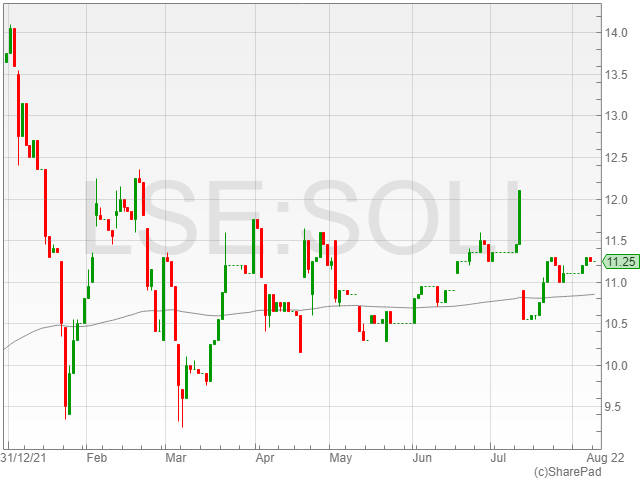
There was yet another forecast upgrade after self-storage sites operator Lok’nStore (LON: LOK) published its full year trading statement. The property revaluation for the end of July 2022 will be reported with the results on 31 October and that could spark another upgrade.
Self-storage revenues were 17.3% higher. Stripping out new stores and the four stores sold in the period, the increase was 24.9%. There were increased occupancy levels and prices were raised by 13% over the year. There are 40 freehold and managed sites.
Three new sites were opened during the year. Basildon, Bedford, Peterbor...
Solid State announced its completed acquisition of battery systems and energy solutions provider Custom Power LLC on Monday.
The company acquired the Los Angeles based firm for a maximum consideration of £36 million on a debt-free, cash-free and normalised working capital basis.
“We are delighted to have completed the transformational acquisition of Custom Power, which represents a step-change in our power business,” said Solid State CEO Gary Marsh.
“The newfound scale and increasingly international offering open up opportunities in specialist and growth markets driven by decarbonisation and the drive for cordless power.”
“We look forward to integrating Custom Power and welcoming our new colleagues to the Solid State Group.”
Solid State shares dipped 0.2% to 1,122.6p in early morning trading on Monday.
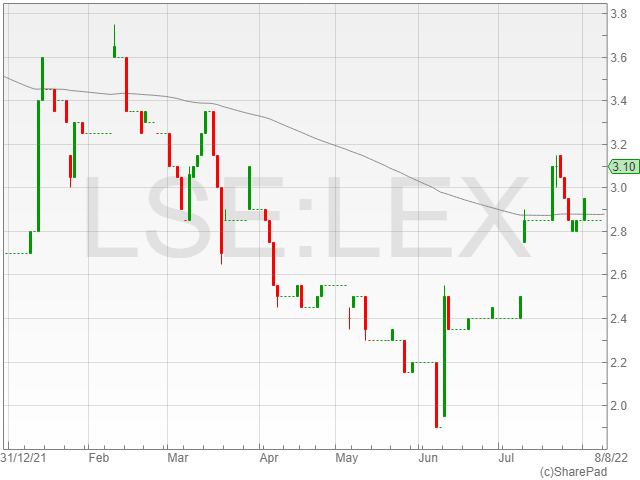
Lexington Gold shares gained 5.3% to 3p in early afternoon trading on Monday after the mining group reported an updated independent JORC Mineral Resource Estimate (MRE) for the Loflin side of the Jones-Keystone-Loflin (JKL) project.
The updated JORC MRE confirmed a total inferred resource of 2,596,000 tonnes at 0.99 g/t Au for 82,700 oz of contained gold.
Lexington Gold also highlighted a 27% rise in contained gold achieved for the Loflin deposit that forms part of the JKL project, increased from 65,000 oz estimated in September 2021.
The firm noted the potential for mineralisation at Loflin to remain open down-dip, to the north-east along the plunge of the syncline.
The company added there was potential for a significant further increase in resources for Loflin and Loflin South through additional drilling.
Lexington Gold reported 3D modelling and drilling delineated a north-east to south-east shallow plunging synclinal fold structure with shallow gold mineralisation in the core of the structure.
In addition, the group said the maiden JORC Resource for the Jones-Keystone side of the JKL side of the project was expected shortly after the 1m assay results were received.
“We are very pleased by this 27% upgrade to our initial maiden JORC resource at Loflin, which forms part of the JKL Project, following the extremely successful 2021/2022 reverese circulation drilling campaign,” said Lexington Gold CEO Bernard Olivier.
“The updated JORC resource for Loflin also includes over 9,000 gold ounces from the newly discovered Loflin South. The resource is located at shallow depths, with the entire upgraded JORC resource located between surface and a maximum depth of 125m. Mineralisation at Loflin remains open along strike to the north-east and down-dip, while Loflin South remains open in all directions.”
“We continue to believe that the recent drilling results will also enable the establishment of a significant maiden JORC Resource estimate for the nearby Jones-Keystone of potentially up to 100,000 ounces.”
“The updated resource for Loflin and the anticipated maiden resource for Jones-Keystone will result in a substantial combined JORC resource for the JKL Project, and there is also significant potential for further expansion through additional drilling.”
TheWorks.co.uk (LON: WRKS) is the latest retailer to warn that weak consumer confidence and demand will hit trading this year. Increased freight and wage costs and the aftermath of a cyber security incident are creating additional problems for the fully listed arts, books, toys and stationery retailer.
The share price has fallen by more than one-fifth to 36.8p. This is the lowest the share price has been for 18 months, although it is more than double the all-time low in November 2020.
Underlying EBITDA for the year to April 2002, will be around £16.5m, rather than the previous guidance of £15m, because of lower stock provisions. However, in the first quarter of this financial year, like-for-like sales are 2.5% lower, with higher store sales offset by a sharp decline in online sales. The online sales are still 40% ahead of pre-Covid levels and they are less than 10% of the total sales.
The outlook remains uncertain and Christmas trading is important. Sales are expected to grow but not as much as previously expected and they will not provide the additional profit to cover higher costs. Expectations have been “materially lowered”. Revenues of £259.8m and EBITDA of £14.7m was the previous consensus.
Despite the problems, a full year dividend of 2.4p a share is promised.
The FTSE 100 kicked off a quiet day of trading in the second week of August, with the blue-chip index gaining 0.6% to 7,487.6 in early afternoon trading as the market defied the cost of living crunch and gained closer to the breakeven mark.
“The summer is supposed to be a quiet time for markets as many people are sitting on the beach, rather than glued to a screen trading stocks and shares. So far, this summer is proving to be a decent session, and one that will provide a nice surprise when people get back to their desks after a bit of sun, sand and sea,” said AJ Bell financial analyst Danni Hewson.
“The FTSE 100 managed to press ahead … at the start of the new trading week, meaning it has been on a positive run since mid-July. The 6% gain for the current rally to date means the UK blue chip index is less than 1% away from hitting breakeven for the year so far.”
“That’s considerably better than the S&P 500 index in the US which is down nearly 14% year to date.”
The Dow Jones rose 0.4% to 32,889 in pre-open trading, with the S&P 500 gaining 0.4% to 4,166.7 and the NASDAQ increasing 0.6% to 13,315.7.
Meanwhile, Brent crude oil tumbled to $93 per barrel, diving to levels unseen since before Russia’s invasion of Ukraine in February.
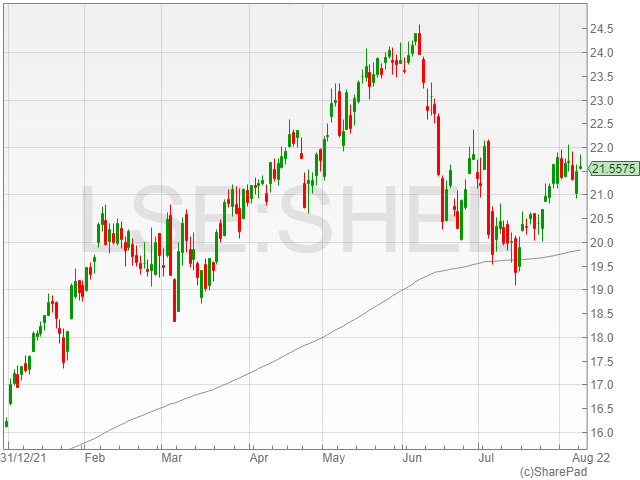
Shares in Shell and BP appeared unshaken, however, gaining 0.2% to 2,155p and 0.4% to 412.9p, respectively.
Next
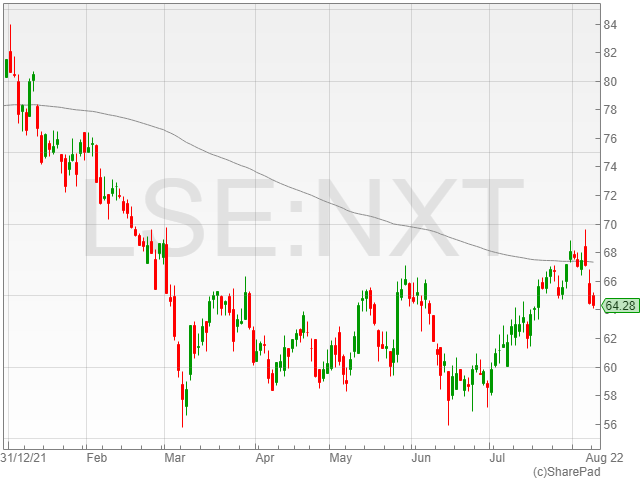
Next shares fell 0.3% to 6,420p following reports that the FTSE 100 fashion company was eyeing an equity investment in AIM-listed retailer Joules.
The investment would amount to approximately £15 million, with Joules noting the injection would be “no less than Joules’ current market price.”
“Posh wellies seller Joules has found a new lease of life on the stock market following news of a potential investment in the business by retail giant Next,” said Hewson.
“Joules has been struggling this year, with disappointing sales, supply chain problems and rising costs. Once a shining star in the retail sector, Joules saw its share price collapse after a string of profit warnings.”
“Next doesn’t typically buy companies outright so it seems unlikely that an initial investment in Joules will lead to a full takeover. Instead, expect to see it become an influential shareholder and for more of Joules’ products to appear on Next’s website.”
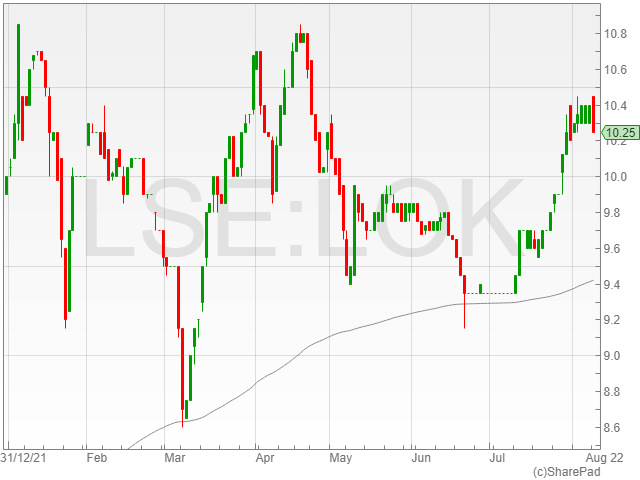
Lok’nStore shares increased 0.2% to 1,033p in late morning trading on Monday after the company reported a 17.3% climb in self-storage revenue and a 24.9% rise same-storage revenue in its HY1 2022 trading update.
The storage firm announced a 13% growth in pricing, with occupancy driven by strong demand for self-storage.
Lok’nStore confirmed its new store pipeline added 44.1% to owned trading space, with four new stores scheduled to open in FY 2023.
The company added three new Landmark stores in Warrington, Wolverhampton and Stevenage, taking its total number of portfolio trading stores to 40, with strong early trading in all new store units.
“Trading in the year to 31 July 2022 has been excellent with same-store self-storage revenue up 24.9% against last year driven by continued strong demand for self-storage across the UK,” said Lok’nStore executive chairman Andrew Jacobs.
“We have made significant progress on our new store pipeline, whilst remaining conservatively geared, including adding a new Landmark Store site in Bolton, Greater Manchester, in recent weeks. We are onsite at four new stores, all of which will open in 2023, accelerating our earnings growth in the future.”
“We will report on the updated valuation of our stores in our Preliminary Results and with our strong revenue growth and new stores opened during the year we expect our store values will rise to reflect this continued progress.”
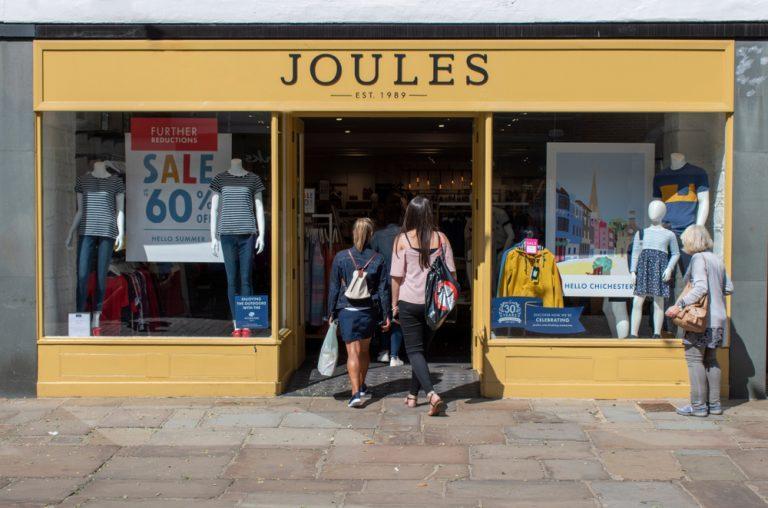
Fashion brand Joules (LON: JOUL) has confirmed media speculation that it is in talks with NEXT (LON: NEXT). The retailer is considering a £15m investment in Joules. This would be at the market price of 33p at the end of last week or higher. The price has jumped 46% to 48.175p. At the previous closing price, a £15m investment in shares would have been equivalent to a more than 30% stake, so it may not be a pure share purchase there could be a convertible loan element. Shareholder approval will be required, so they could be asked to agree to a 30% plus stake without NEXT having to make a mandatory bid. However, a 25% stake has been mentioned in the press, which suggests an investment higher than the current price. Joules also wants to use NEXT’s total platform services. That could improve efficiency and might save money.
Trinidad-focused oil and gas company Touchstone Exploration (LON: TXP) shares are continuing their recent recovery. The price has risen a further 19.8% to 84p. The authorities have accepted the Environmental Impact Assessment for the Cascadura project, where Touchstone Exploration has an 80% stake. A final determination will be made by 15 September. This follows news that the Coho gas facility will start pre-commissioning. Production at Coho is expected to eventually increase to 1,667 barrels of oil equivalent per day. Coho and Cascadura would add total net production of more than 10,000 barrels of oil equivalent per day. finnCap estimates a core value of 110.8p a share with further potential value from contingent and prospective resources.
Lexington Gold (LON: LEX) says that the updated JORC mineral resource estimate for the Loflin side of the Jones-Keystone-Loflin project in the US has increased by 27% to 82,700 ounces of contained gold at 0.99 g/t. There is potential for a further significant increase in resources through additional drilling. A maiden resource for the Jones-Keystone side is expected shortly and this could be up to 100,000 ounces of gold. The share price is 8.77% ahead at 3.1p.
There were two pieces of news from Hutchmed (China) Ltd (LON: HCM) this morning. A phase 3 FRESCO-2 study for fruquintinib met its primary endpoint of overall survival in metastatic colorectal cancer patients. There are plans for regulatory submissions in the US, Europe and Japan. Preliminary results for the SAVANNAH phase 2 trial show that TAGRISSO plus Savolitinib demonstrated a 49% objective response rate in lung cancer patients. Savolitinib is being jointly developed by Hutchmed and AstraZeneca. The shares roe 5.8% to 232.75p, although the share price has still more than halved this year.
A tax issue and a slow start to the current financial year has hit the ECO Animal Health (LON: EAH) share price, which fell 20.4% to 101.5p. Trading and profit for the year to March 2022 was in line with expectations. The profit includes a £1m foreign exchange gain that helped to offset a similar provision for sales tax on imported products – this has not been previously expensed. This tax liability is still uncertain, and it is going through the courts, but the total provision is likely to be £2.5m. There is also an additional R&D charge of £300,000 for work that did not meet the criteria for capitalisation. Low Chinese hog prices have hampered demand for antibiotics in the first quarter and the subsequent rise in prices will take time to affect demand. Elsewhere, trading has been strong, but revenues are likely to be flat in 2022-23.
Tungsten West (LON: TUN), the operator of the Hemerdon tin mine in south west England, announced a loss of £13m for the year to March 2022. There was still net cash of £28.8m at the end of March 2022, but this has fallen to £22.9m. The project is being redesigned, which has led to delays. Power and materials costs are rising. Financing is being negotiated and production could start in 2023. The share price has fallen 8.2% to 28p.
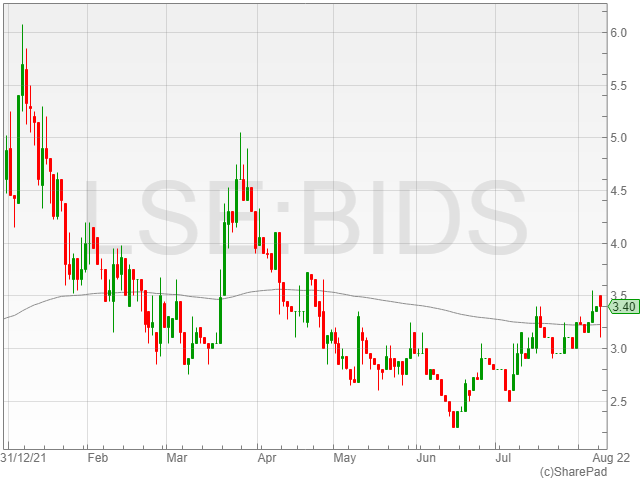
Bidstack shares dipped 1.1% to 3.3p in late morning trading on Monday, after the firm reported a surge in revenue to £2 million in HY1 2022 against £820,000 in HY1 the last year.
The in-game brand activation platform announced a gross margin improvement to 39.9% from 34.5% in the previous year.
Bidstack confirmed a period-end cash balance of £3.6 million compared to £695,000 year-on-year.
However, the gaming advertiser reported a pre-tax loss of £3.6 million, remaining essentially flat year-on-year.
The company also mentioned a selection of operational highlights, including an inventory of games with 110 titles against 30 in HY1 2021, with over 100 million monthly active users.
The group highlighted its ad-quality platform PubGuard had secured a minimum two-year licence agreement with Azerion, providing exclusive representation in reselling the platform’s brand safety technology while using the software across its series of companies.
Meanwhile, Bidstack announced its new ad-format “reward video” launched over the financial term, which grew the breadth of monetisation solutions available to developers and publishers, alongside “in-game” and “in-menu.”
Bidstack reported a strong outlook for HY2 2022, including accelerated revenues from its Azerion media sales partnership, a robust product pipeline and a slate of new products scheduled for launch in the coming term.
“As I mentioned in our trading update on 6 July 2022, the first six months of FY22 has seen the Company put in place further foundations for longer term growth, as our Group revenues begin to accelerate,” said Bidstack CEO James Draper.
“Our two-year agreement with Azerion began in March and, after an initial integration and on-boarding phase, is now progressing in line with management’s expectations. As previously mentioned, Azerion is giving Bidstack’s media segment and gaming advertising network a greatly increased representation across markets new to the Group.”
“We are all very aware of the uncertainty caused by the challenging global economic climate. However, we remain confident that the video game sector will remain strong and that demand for monetisation through advertising-spend will continue to increase, from game developers and publishers.”
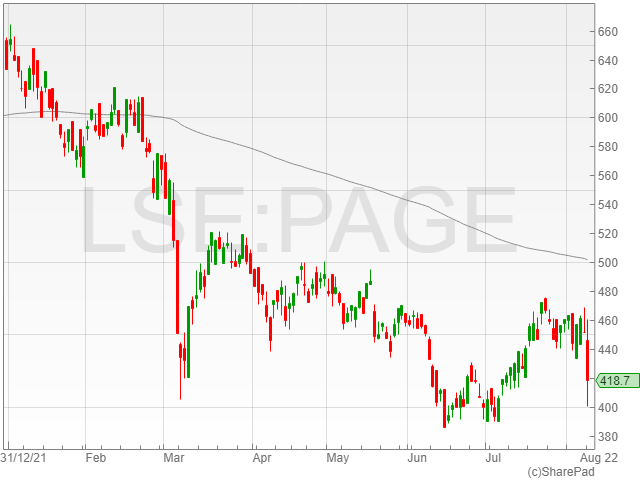
PageGroup shares fell 6.2% to 424p in late morning trading on Monday following a reported slowing in time to hire across several of the company’s markets in July 2022.
However, PageGroup announced a strong slate of results across the board, including a 27.5% revenue growth to £977.3 million in HY1 2022 against £766.4 million the last year.
The recruitment firm mentioned a 33.3% gross profit climb to £538.9 million from £404.2 million, alongside an operating profit rise of 79.3% to £115.3 million compared to £64.3 million the year before.
PageGroup also noted a pre-tax profit spike of 79.3% to £114.5 million against £63.7 million.
The firm reported a 10.6% total headcount growth to 8,668 at the end of June 2022.
PageGroup noted net cash of £136.2 million compared to £163.8 million the last year.
“We achieved a strong H1 performance across our geographies, disciplines and brands, and delivered Group operating profit up nearly 80%. This was particularly pleasing given that 2021 had been a record year for gross profit and operating profit,” said PageGroup CEO Steve Ingham.
“This performance was achieved despite the backdrop of macro-economic and geo-political uncertainty as well as continued COVID-19 restrictions in certain markets. We believe that our strategy of maintaining and investing in our platform throughout the pandemic by investing in experienced hires and focusing on technology and innovation, has been key to us achieving these outstanding results.”
“Looking forward, we recognise the heightened degree of global macro-economic and geo-political uncertainty, particularly with regards to increasing inflation around the world. In July, we noted a slight slowing in time to hire in some of our markets, and we continue to closely monitor our forward-looking KPIs. However, at this point, our expectations for 2022 full year operating profit remain in line with the company compiled consensus of £206m.”
The company highlighted an EPS growth to 25.6p from 12.2p, along with a diluted EPS of 25.5p compared to 12.1p year-on-year.
PageGroup confirmed an interim dividend per share of 4.9p per share against 4.7p, and a special dividend of 26.7p per share compared to 26.7p the previous year.
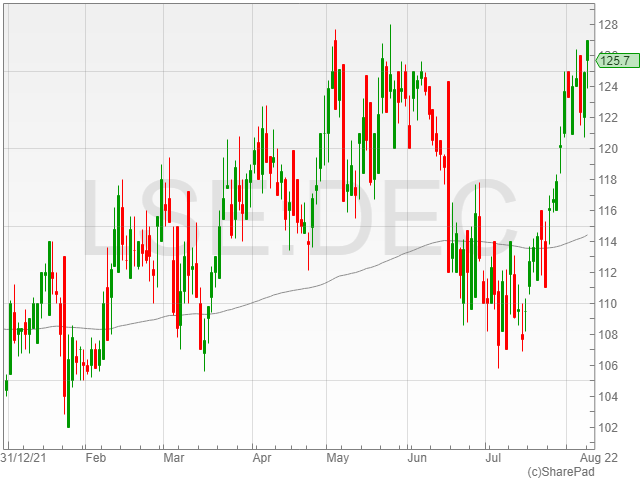
Diversified Energy shares rose 0.7% to 125.7p in early morning trading on Monday after the group reported an adjusted EBITDA growth of 48% to $224 million in HY1 2022 compared to $151 million in HY1 2021.
Diversified Energy also confirmed a cash margin of 48% across the HY1 financial period.
The firm highlighted a net loss of $935 million, including $1.2 billion pre-tax in non-cash hedge valuation losses.
The energy group confirmed a free cash flow yield of 22%, alongside a leverage ratio of 2.2x with an adjusted net debt of $1.1 billion and $469 million in liquidity.
The company further mentioned a completed $970 million in Asset Backed Securities at a blended fixed rate of 5.3%.
Operations in HY1 2022
Diversified Energy announced a selection of operational highlights, including a record average net daily production of 136 MBoepd, representing a 29% climb against 106 MBoepd the last year.
The energy producer also confirmed a closed $60 million in complementary Central Region upstream and midstream acquisitions, and a recently announced $240 million upstream acquisition from ConocoPhillips in the Central Region.
“During first half of 2022, we continued to expand our successes by delivering on a number of key strategic initiatives in line with our long-term growth strategy,” said Diversified Energy CEO Rusty Hutson Jr.
“Our recent accretive acquisition of low decline, high margin upstream assets complements our existing Central Region operations, allowing us to build scale, improve margins and harvest synergies.”
“In Appalachia, our acquisition and vertical integration of multiple plugging companies expands our asset retirement programme to 15 plugging rigs and enables us to achieve our target of plugging 200 wells per year, while also reducing our effective retirement costs as we earn revenue by retiring wells for others.”
Dividend
Diversified Energy confirmed a $72 million dividend, amounting to a HY1 2022 dividend of 4.2c per share compared to 4c per share the last year.
“We remain committed to tangible shareholder returns, and are delighted to once again declare an additional $0.0425 dividend of the second quarter, which will add $36 million to the more than $72 million we already have paid so far this year,” said Hutson Jr.
“Our balance sheet remains healthy as we continue into the second half of 2022 with ample Liquidity, cash generation and financing capacity to fund further complementary growth opportunities.”