Airtel Africa reports 20.6% revenue surge, strong growth across all regions

0

Airtel Africa shares were up 0.6% to 141.1p in early morning trading on Wednesday, after the company reported a 20.6% growth in revenue to $4.7 billion compared to $3.9 billion in its FY2022 results.

Airtel Africa saw a 15.4% uptick in voice revenue, alongside a 34.6% increase in data and 34.9% surge in mobile money.

The company noted positive growth in all regions, with a 27.7% increase in Nigeria, 22.7% rise in East Africa and 17.2% growth in Francophone Africa.

The company’s customer base saw an increase of 8.7% to 128.4 million, with notable growth of 15.2% across mobile data and 20.7% in mobile monetary services.

The telecommunications group confirmed an underlying EBITDA rise of 29% to $2.3 billion against $1.7 billion and an underlying EBITDA margin increase of 294 basis points to 49%.

Airtel Africa’s operating profit rose 37.2% to $1.5 billion compared to $1.1 billion in reported currency, with a post-tax profit surge of 82% to $755 million as a result of strong revenue growth across all categories.

The firm highlighted an EPS increase 0f 86.5% to 16.8c from 9c, due to higher operating profits, which served to sufficiently offset increased tax charged and higher non-controlling interests.

The firm noted an EPS before exceptional items of 16c against 8.2c in 2021.

Airtel Africa further reported an operating free cash flow increase of 40.5% to $1.6 billion from $1.1 billion, with net cash from operating activities up 20.7% to $2 billion compared to $1.6 billion.

The firm commented that it repaid almost $1.4 billion in debt at HoldCo due to strong cash upstreaming throughout its OpCos and income from minority investments in mobile cash and tower sales.

The group added that its leverage ratio improved to 1.3x from 2x in 2021, with $1 billion in debt at HoldCo compared to $2.4 billion the previous year.

The company said its outlook was positive for the next year, with target revenues ahead of the market, despite rising inflationary pressure.

Airtel Africa announced a final dividend of 3c per share, bringing the total dividend for 2022 to 5c per share from 4c in 2021.

“We have delivered strong double-digit growth in revenues across all our regions and all our key services, with improving margins driven by strong cost control, and expanding cash generation which is enabling us to continue to invest in our network and services and expand our distribution, as well as strengthening our balance sheet and increasing our returns to shareholders. We are connecting more customers in new and existing coverage areas and driving usage levels and ARPUs to new highs,” said Airtel Africa CEO Segun Ogunsanya.

“We have successfully executed on a number of strategic initiatives in the year, with tower sales completed in four countries, $550m of minority investments secured for our mobile money business and a successful buyout of minorities in our Nigerian operation. Our receipt last month of a full PSB licence in Nigeria will help us to accelerate financial inclusion in the territory and drive our mobile money business even faster.”

“While the fundamentals of our six-pillar growth strategy remain unchanged, we are looking to accelerate our performance through a greater focus on digitalisation and we have underpinned our strategic pillars with our sustainability ambition.”

Spirax-Sarco: FY forecast is unchanged

0

Spirax-Sarco said in its latest trading update that its organic sale growth is in line with expectations, its strong order book and that the group’s industrial production growth (IP) remains unchanged for the full year, despite strong headwinds on Wednesday.

Spirax-Sarco Engineering is a thermal energy and pumping specialist and in its Q1 trading update, it said IP for the quarter is 3.2% compared to 2021 as the economy recovers from the pandemic.

The group also reiterated that the full-year IP growth was lowed to 3.9% from 4.2% due to the impact of the geopolitical tensions in Ukraine and lockdowns in China.

The group handled the impact of rising War tensions and lockdowns resulting in inflationary pressure on the cost of its raw materials through active price management.

Spirax-Sarco has its Steam Specialties manufacturing facility in Shanghai which is currently operating at a “reduced capacity” due to lockdowns imposed in China since March 28, which has hurt its sales in China. The group expects sales to recover this year if China ceases its restrictions in the near future.

However, Spirax-Sarco reported organic sales growth in line with its expectations as a result of increased manufacturing capability and good handling of supply chain problems in all three of its businesses, where the order books record “all-time highs” as demand outnumbers sales.

Watson-Marlow’s sales to the Pharmaceutical & Biotechnology sector rose more than 20% which was in line with the group’s expectations.

In an attempt to quicken the delivery of its Digital Strategy, Spirax-Sarco acquired Cotopaxi and expects it to generate sales amount to £5m which is close to pre-pandemic levels.

However, the group assumed that it will have no contribution to operating profit as the revenue investments in digital capabilities will more than offset Cotopaxi’s operating profit, which was also the cause behind lower group operating profit margins in the first quarter.

Spirax-Sarco addressed its strong balance sheet due to a continued strong financial performance and cash generation. The group recorded a £10m increase from December 2021 to £141m in April 2022.

The final dividend of 97.5p will be paid on May 20 subject to shareholder approval, with a cash impact of £72m.

Outlook

As expected, the latest global IP growth forecast was reduced to 3.9% from 4.2% in its FY results in March as a result of growing geopolitical tensions hampering the company’s operations.

However, the revised IP growth forecast remains unchanged in the Q1 trading update due to a strong order book and the endurance the company has to face the supply chain constraints.

Spirax-Sarco Engineering expects to report its 2022 half-year results in August 2022. 

Spirax-Sarco shares were trading up 0.5% to 10,890p after the group announced that global IP growth forecast remains unchanged for the year.

Is it time to buy Eurasia Mining?

0

Eurasia Mining is a London-listed Russian-focused company that mines palladium, platinum, rhodium, iridium and gold. Although the company has said they have not been impacted by the different sanctions imposed since the start of 2022, Eurasia shares have cratered 68% to 7.7p.

The company has a number of projects in Russia including the Kola Battery Metals asset, the West Kytlim Platinum Group Minerals and the Nittis-Kumuzhya-Travyanaya nickel deposit.

After the West issued sanctions on Russia, London-listed shares with exposure to Russia, including Eurasia, suffered dramatic volatility in their shares. However, Eurasia Mining’s board said that the company’s operations and strategy remain untouched by sanctions.

Increasing commodity prices provided a brief reprieve for the Eurasia share price as sanctions applied pressure on metal prices, but the concerns around potential sanctions has dragged on Eurasia shares.

Gold, PGMs and Battery Metals

Eurasia has diversified exposure to palladium, platinum, rhodium, iridium and gold through a range of producing assets, and those currently undergoing evaluation.

Eurasia’s portfolio has a distinct focus on battery metals and hydrogen and is well placed to benefit from the EV and clean energy revolution.

Looking at the trend in the price of metals mined by Eurasia, the company may have the potential for higher revenue in the coming year compared to the previous year, if it manages to mine, and sell, the same amount of metal.

In addition, potential M&A activity could unlock value in the underlying portfolio.

Eurasia Mining Shares

Eurasia Mining shares have dropped 68% in 2022 as investors fled from the Russia-focused miners’ stock in the wake of the Russia-Ukraine war. However, this may provide a buying opportunity for brave investors who can look through the geopolitical tensions to the underlying value in Eurasia’s assets.

Current the shares have a negative ROCE of 44.9 due to generating losses in its interim results, and a price to NAV of 18.

Despite the Board explaining to investors that sanctions have no impact on Eurasia’s Mining operations and strategy, investors should remain cautious of potential threats imposed by sanctions in the future, and closely examine the upcoming full-year results for any hint of disruption since February 24th.

Will the Synairgen share price ever recover?

0

Synairgen shares have suffered a devastating year after the stock plummeted from 177p to 28p in just a few days in late February this year.

The nasty disappointment followed the results of Synairgen’s SNG001 Covid-19 treatment, which failed to meet its primary and secondary efficacy endpoints in its Phase three SPRINTER late stage trial.

The SNG001 trial revealed that patients taking the treatment were not more likely to be discharged from hospital than patients on a placebo in a study of 623 participants.

Synairgen shares have languished below the 30p line since its initial tumble, with the shares currently trading at 24p.

Financial Results

Synairgen pinned its potential and its future ambitions on the success of its lead programme, SNG001.

The biotechnology firm emphasised the value of the treatment for Covid-19 patients, government stockpiles for pandemics in the future, and treatment for basic respiratory viruses such as the cold and flu.

Synairgen invested its financial assets into the development of SNG001, reporting a pre-tax loss of £38.8 million in its interim results on 30 June 2021, against a loss of £5 million year-on-year.

The company said its research and development expenditure was scaled up to £36.9 million from £4.4 million as a result of investment in its Phase three clinical trial for SNG001.

The group’s outlook in its 2020 results pinned Synairgen’s future on the successful outcome of the SNG001 results, with the second half of 2021 focused on the commercialisation and manufacturing of the treatment in order to make the drug readily available across the international market.

Synairgen intended for all cylinders to fire on the approval of SNG001, and when it failed, the stock tumbled dramatically, leaving little else behind for investors to get excited about.

Where are Synairgen shares going?

Synairgen shares saw an uptick of 43% to 26p on 3 March 2022, after studies conducted in the Netherlands suggested that SNG001 had potential antiviral effects against the Delta and Omicron variants at readily achievable concentrations.

However, the Synairgen share price took an 18% hit to 21p on 17 March, following a report that the US National Institute of Allergy and Infectious Diseases suspended patient recruitment in its phase 2/3 trial for SNG001, due to the requirement of an altered format of study in light of the pandemic’s changing nature.

The stop-and-start nature of Synairgen’s development for SNG001 has substantially beaten up the stock, with the failure of its late stage trial breaking all the eggs in its basket.

The company does not have any other significant projects in its pipeline, with its ambitions pinned on SNG001 since 2020, which has so far collapsed in on itself in 2022. All hopes will be on the results of ACTIV-2 Phase 2 data in H2 2022 and the full data from the SPRINTER trial.

The Synairgen share price is definitely cheap compared to its 52-week high, however it appears it might be staying that way for quite a long time.

SulNOx deepens cleaner fuels relationship with LocoSoco

SulNOx has announced it has deepened it’s ties with LocoSoco, the Vienna-listed provider of eco-friendly, sustainable and ethically sourced products & services.

LocoSoco had previously been working in partnership with SulNOx to distribute SulNOx biodegradable fuel and emulsification technologies.

This relationship will now expand to cover LocoSoco’s conversion projects to convert tyres and plastic waste into high value oils. SulNOx will now assist with increasing the yields from these fuels.

SulNOx technology

This is another significant demonstration of the broad range of applications for SulNOx technologies that were recently endorsed by the UK and Ireland Fuel Distribution Association and their award to ElimiNOX. ElimiNOX provides fuel conditioners developed by SulNOx.

“The core technologies of SulNOx have diverse potential applications including converting waste, which is often problematic to the environment and ecosystems, into useful products,” said Ben Richardson the CEO of the SulNOx Group

“Over 350m tonnes of plastic a year are produced globally which is due to triple by 2050 and billions of tyres are scrapped each year, which will still likely remain a problem even with the uptake of cleaner transportation. We are excited to play a part in the growing waste conversion sector and expand on the ability of SulNOx technologies to help solve global problems.”

Capturing deep discounts with the MIGO Opportunities ‘trust of trusts’

Managers of MIGO Opportunities Trust, Nick Greenwood and Charlotte Cuthbertson presented the MIGO Opportunities Trust at the UK Investor Magazine Investment Trust Conference in early May.

MIGO is a ‘trust of trusts’ investing in Investment Trusts they feel are unfairly discounted to the NAV. During the presentation, Charlotte and Nick discuss the trust’s investment strategy and how it selects trusts.

According to Bloomberg on 31 March 2022, there are 428 London listed funds with an aggregate market value of £199bn. Out of the 428 funds, 267 have a market cap of less than £400m. This is the universe of trusts available to MIGO’s portfolio.

Overview of MIGO

MIGO looks for investment trusts trading at a discount with the aim of their discount to NAV reducing over time.

The close-ended trust aims for diversification to achieve maximum global exposure and invests in trusts of mixed asset classes such as equity, private equity, commodities and property.

Greenwood said that the trust thrived in the volatile markets over the last couple of years, when compared to 2019 when tech stocks were high in demand.

MIGO has a total net asset of £95.2m and a NAV of 362.55p with a discount of 4.98% as of 31 March 2022.

MIGO Holdings

Over the last 1,3, and 5 years, the trust has outperformed both the benchmark and the sector based on NAV and Share Price.

MIGO has many holdings in equity trusts, however, the portfolio is deeply diversified with investments in sectors such as forestry, shipping, India, and Berlin residential.

Trust Returns

MIGO Opportunities Trust’s top holdings included the VinaCapital Vietnam Opportunity Fund with a weightage of 5.7% and a discount of -21.6%.

Nick explained that Vietnam became a popular location in 2005 for investments and stated that investors wanted to diversify from China during the Covid era which impacted the manufacturing industry due to coronavirus restrictions.

MIGO holds the Baker Steel Resources Trust with a weight of 5.4% and a discount of -20.3%, along with Dunedin Enterprise having a weight of 5.3% and a discount of -11.4%, followed by Georgia Capital with a weight of 3.3% and discount of -56.3%.

The average discount of the holdings of MIGO Opportunities Trust was -23.7%, across the top 12 holdings.

The trust notes positive contributions to returns from CQS Natural Rescourses Growth and Income, Geiger Counter, Georgia Capital and Yellow Cake.

On the other hand, the trust generated the worst returns from EPE Special Opportunities and Schrodger UK Public Private, both with a return of -0.3%.

MIGO Investment Themes

The MIGO team outlined how they seek out investment themes for the portfolio and target trusts in that sector. For example, MIGO recently sold its exposure in shipping and began investing in biotechnology, which is one of its core themes.

Uranium

Uranium is increasingly being accessed as nuclear power and COP26 highlighted that though wind and solar are important contributors to power generation, nuclear power will have an important role in the expansion of nuclear power.

The COP26 conference highlighted that whilst wind and solar are important contributors to power generation, nuclear power will have to assume an ever-increasing role.

Greenwood said that “nobody is looking for uranium” and after the price languishing at $25 per 250 Pfund U308, Uranium is now trading above $50.

He added this was an opportunity for the trust because if demand for nuclear power spikes in the future, MIGO are well placed to benefit from a scramble to bring Uranium production online as prices jump.

Biotechnology

s Covid emerged, focus on developments in Biotechnology were hindered when medical firms began streamlining their resources to develop a cure for the pandemic.

However, the profits anticipated from the Biotechnology sector are expected to rise again as the focus shifts back to research in Biotechnology after the temporary detour towards Covid projects.

Investment Process

Core to the MIGO investment strategy is the identification of discounted trusts that sit within favourable sectors. There is then an assessment of the trust’s leverage.

In terms of leverage, Charlotte describes assets with leverage as “very risky” and stated that the trust behaves as if it’s “allergic to leverage” and steers clear. Should a trust pass the leverage test, the MIGO team will then look for catalyst to spur investment.

MIGO also seeks out arbitrage opportunities in the case of a trust wind-up.

A good arbitrage opportunity described by Charlotte is where at the end of the trust, the share price is equal to NAV due to a takeover or a windup.

Move to Alternative Investment

Paul Simon, American Economist, said, “Investing should be more like watching paint dry or watching grass grow. If you want excitement, take $800 and go to Las Vegas,” which Nick Greenwood says he agrees with.

This is particular fitting for the alternative instrument trusts MIGO seeks out that do indeed provide exposure to assets such as forestry.

Over the past ten years, new issues have shifted from equity to alternative assets, as the close-ended nature of Investment Trusts are more suited for less liquid asset classes.

Small & Mid-Cap Roundup: Centrica, Spectris, Renishaw, DSW

0

The FTSE 250 was up 0.8% to 19,477.4 and the AIM was up 0.1% to 947.6 in midday trading on Tuesday, after the market clawed back some ground from its miserable drop on Monday.

The small and mid cap market were led higher by strong corporate results as investors shifted their attention to companies reporting shored-up revenues and positive outlooks for the year ahead.

“Stocks in general have struggled this year, with investors worrying about inflation, rising interest rates, a slowdown in the world economy, war in Ukraine, new Covid flare-ups in China, weakness in consumer spending and concerns that business investment might take a back seat,” said investment director Russ Mould.

“The narrative has gone from ‘how can I make money?’ to ‘how can I protect my money?”

Centrica shares were up 4.8% to 75.4p following an estimated annual earnings at the top end of analyst expectations, despite supply chain and inflationary challenges.

Spectris shares were up 3.7% to 2,949p following the company’s acquisition of California accelerometers maker Dytran Instruments for £66 million.

“Dytran will be integrated into Hottinger Breel & Kjaer, which has a long-established brand in accelerometers and where it will benefit from leveraging HBK’s global sales and service network,” said Spectris.

“The acquisition strengthens HBK’s piezo-electric offering, adds new Microelectromechanical systems capability and expands sales into North America.”

Coats shares were up 3.2% to 67.3p in light of the group’s update that its profit margin would receive a boost from its Brazil and Argentina business sales.

The company reported an expected 0.5% increase to its annual adjusted operating margins due to the agreement.

“An exit from the Brazil and Argentina business is in line with Coats’ strategic initiatives, announced in March, to accelerate profitable sales growth and transform the company,” said Coats.

Renishaw shares dropped 1.3% to 4,132p after the group announced a lowered profit guidance for FY 2022 to £155-£170 million from £157-£181 million on the back of uncertainty in its operations due to Covid-19 lockdowns in China.

DSW Capital shares increased 15% to 122.5p following confirmation that its annual results were projected to come “significantly ahead” of market expectations, with expected network revenues of £18.3 million against £15.3 million in 2021, representing a 19.6% rise year-on-year.  

“I am delighted to announce a strong performance for FY22 with the Group expected to report results ahead of expectations both in terms of revenue and adjusted profits,” said DSW CEO James Dow.

“These results are underpinned by the significant market demand for DSW’s expert service lines and our performance illustrates the considerable benefits of our platform model.”

Eden Research shares were up 10.5% to 5.2p after the group passed a regulatory milestone in the US for the use of its Mevalone biofungicide and CedrozÔ products.

The firm also announced the approved rollout of Mevalone for use on crops in Italy to control the Botrytis Cinerea destructive fungal pathogen, which damages a wide selection of plant species, alongside the approval of its use against fungal pathogens Powdery Mildew and Sclerotinia.

FD Technologies shares increased 9.6% to 2,462p on the back of increased revenue of 11% to £263.5 million compared to £237.9 million, ahead of management expectations.

Mosman Oil & Gas shares fell 26.6% to 0.08p following its discounted fundraise of 1.38 billion shares at 0.08p per share to raise £1.1 million in funds for the drilling of its first re-development well at the Challenger project in Texas.

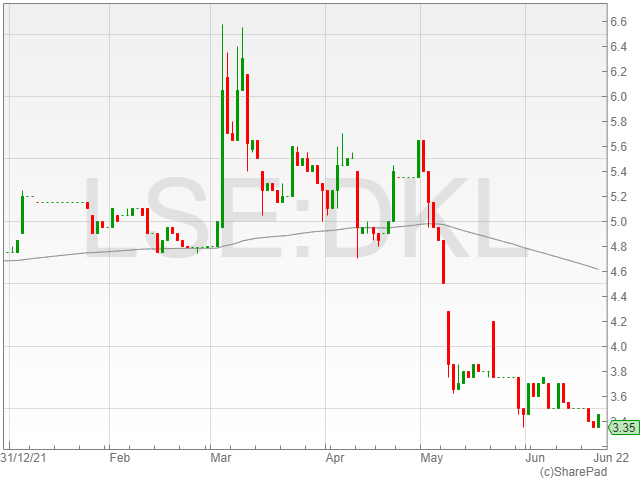
Dekel Agri-Vision shares dropped 14.4% to 3.8p on the back of the group’s weak palm oil output, due to low recent rainfall delaying the ripening on fresh fruit bunches.

April CPO production fell 42% year-on-year to 2,965 tonnes compared to 5,147 tonnes, with processed fresh fruit bunches down 45% to 13,168 tonnes from 24,010 tonnes.

CPO sales across April declines 64% to 1,788 tonnes compared to 4,971 since April 2021.

Xtract Resources shares dropped 11.5% to 5p after the firm noted an “eclectic” set of drill results from its Bushranger copper-gold exploration project in Australia.

The company said the results required follow-up drilling, with several holes revealing “some degree of mineralisation and some meaningful gold values.”

“Whilst these outlying holes do not in themselves indicate significant extensions, we continue to drill and model to better understand both Ascot and the area between Ascot and Racecourse. The modelling for the primary Racecourse open pit is advancing satisfactorily,” said Xtract Resources executive chair Colin Bird.

FTSE 100 rebounds on strong energy and banking stocks

0

The FTSE 100 rebounded on Tuesday after sharp sell-offs on Monday sparked by recession fears as the prospect of additional interest rates hurt sentiment, along with lockdown hindering China’s economy and hampering the manufacturing sector.

Energy, banking, mining, and consumer staple stocks helped lift the FTSE 100 on Tuesday as retailers continued to suffer following dismal UK retail sales data.

On Tuesday, BRC announced a report in which it noted a 0.3% decline in retail sales during the month of April due to the rising cost of living and inflation hurting consumer spending.

The report said that consumer essentials are performing okay, however, big-ticket items such as electronics and furniture took the hit. However, according to data from Barclaycard, travel and holiday spending were on the rise.

Consumer Staple Stocks

Consumer staples stocks gained in a defensive trade on the FTSE 100 with the latest data from the BRC.

Unilever shares rose 2% to 3,711p, followed by grocers Tesco, Sainsbury, and Ocado’s shares trading up 0.6%, 2% and 0.4% to 277p, 237p and 786p respectively.

British American Tobacco and Imperial Brands also saw their shares rise 1.4% and 3.1% to 3,349p and 1,703p, respectively.

Coca-Cola and Diageo shares were trading up 1.5% to 1,590p and 0.6% to 3,748p, respectively.

Travel and Leisure Stocks

Travel and leisure stocks rose with Barclaycard reporting data which illustrated gains for travel and hotel companies on the FTSE 100 as UK consumers return to holidaying with the ease of Coronavirus restrictions.

Heathrow increased its passenger 2022 forecast by 16% to nearly 53m, driven by holidaymakers which also aided travel and leisure stocks.

Whitbread, InterContinental Hotels, and Flutter Entertainment shares rose 0.1% to 2,564p, 0.9% to 4,783p and 2.2% to 8,171p.

International Consolidated Airlines shares gained 0.02% to 127p despite JPMorgan cutting its price target to EUR1.95 from EUR2.20 and giving it a ‘neutral’ rating.

FTSE 100 Retail Stocks

Despite disappointing reports on retail spending during April, retail stocks seem to be performing well on the FTSE 100 in early morning trade on Tuesday.

JD Sports shares rose 0.7% to 118p, Next shares gained 2.2% to 6,035p, Kingfisher shares were trading up 1.6% to 245p and Howden Joinery shares were up 2% to 675p.

Energy Stocks

Brent Crude was up 0.5% to $106 a barrel continuing the momentum from when the EU planned to ban Russian oil. Due to the rise in the price of oil, Shell and BP benefitted.

Shell shares rose 0.4% to 2,234p and BP shares rose 0.88% to 408p, on the back of rising oil prices.

FTSE 100 Banking Stocks

Banking stocks rebounded after large Wall Street sell-offs on Monday, with HSBC shares up 1.7% to 501p and Natwest shares trading up 1.5% to 207p.

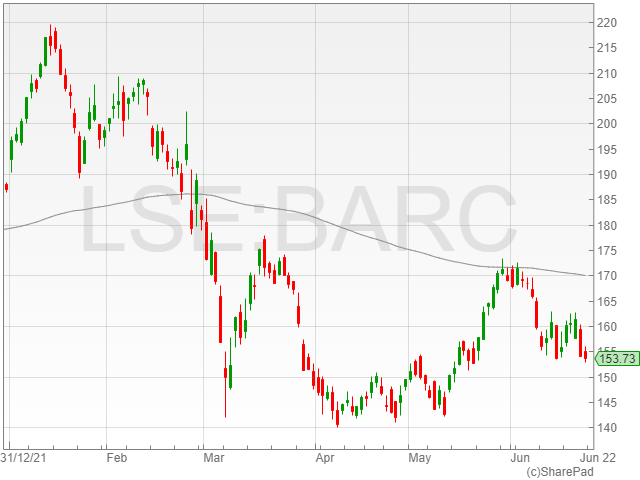
Barclays shares gained 1.3% to 147p despite Bank of America cutting its price target to 180p from 220p and giving it a ‘neutral’ rating.

Standard Chartered shares rose 2.5% to 560p as HSBC raised it to a ‘buy’ rating and increased its price target to 900p from 760p.

Lloyds Banking Group shares also increased 2.1% to 43.2p following the company’s announcement of the banking group issuing a notice of redemption for the entire outstanding amount of a notes issue. 

The redemption notice concerns its $1bn 1.326% senior callable fixed-to-fixed rate notes, which are due in 2023 and they will be redeemed on June 15, 2022, at an amount equal to the principal amount, plus any unpaid interest.

Mining Stocks

Antofagasta shares rose 1% to 1,376p, Anglo American shares gained 0.2% to 3,305p and Glencore shares fell 0.4% to 456p as Goldman Sachs cut the price target of Antofagasta to 1,820p, Anglo American to 4,800p and Glencore to 710p on Tuesday.

Rio Tinto shares gained 0.2% to 5,191p.

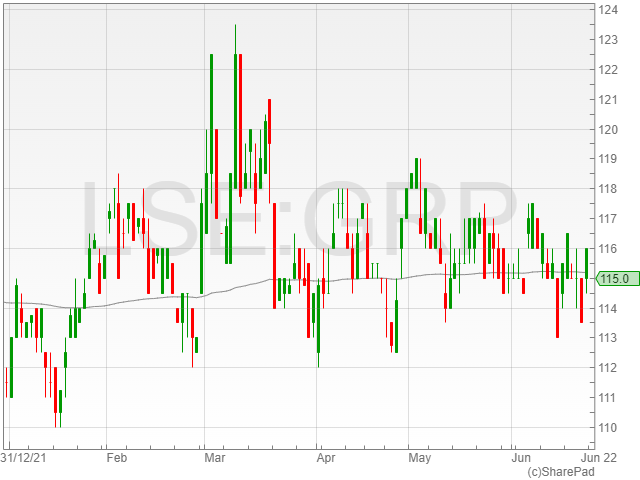
Melrose Industries shares rose 4.7% to 112.7p after the company reported that trading is in line with expectations for the year. The group said that the Aerospace division is seeing continued growth and LFL sales were up 6%, however, Automotive and Powder Metallurgy were being hurt by constrained supply leading to LFL sales down 4%.

AJ Bell investment director Russ Mould said it appeared that fearful investors were increasingly seeking stocks with generous dividends, with mid-to-high yielding stocks such as Imperial Brands and Barratt Developments among those doing well today.

Hardide set for further recovery

Forecasts have been upgraded following the interims from Hardide (LON:HDD), but the AIM-quoted advanced surface coatings provider is still some way from making a profit. The outcome for this year will depend on the timing of orders and new contract wins.
The share price dipped 0.5p to 30p on the release of the interim results.
Interim revenues were 50% ahead at £2.7m and while the loss was nearly halved it was still £771,000. Revenues could double in the year to September 2022, but so could the loss.
Overheads have fallen following the completion of the move to a new factory in the UK. Variabl...

Retail sales drop 0.3% in April

0

Consumer spending has been slowed by the UK’s rising cost of living and last month’s record spike in household energy bills. In April, total retail sales in the UK decreased by 0.3% as economic conditions worsened for consumers.

The British Retail Consortium pointed to reduction in the sales of items such as electronics, furniture, and homewares as one of the main reasons for the decline in the retail spending headline figure.

Russ Mould, Investment Director, AJ Bell said, “The latest BRC-KPMG Retail Sales Monitor shows what everyone has been thinking – that the rising cost of living would force people to cut back on their spending. Big ticket items like furniture and electrical goods have been the first place to suffer as it’s pretty easy to decide not to spend £1,000 on a new sofa when money is tight.”

The reduction in total sales in the month of April reflected the overall slump in expenditure, compared to a three-month average growth rate of 3.2% and a 12-month rate of 6.4%, according British Retail Consortium.

“The rising cost of living has crushed consumer confidence and put the brakes on consumer spending. Sales growth has been slowing since January, though the real extent of this decline has been masked by rising inflation. Big-ticket items have been hit hardest, as consumers reigned in spending on furniture, electricals and other homeware; compounded by delays on goods coming from China,” said BRC Chief Executive Helen Dickinson.

However, due to a tiny fall in gas usage, expenditure on basics climbed by a fraction less than in March, indicating that UK consumers are looking for ways to save money on fuel and groceries according to Barclaycard.

In April, average utility spending per customer increased 28.8%, while Barclaycard reported that 9 out of 10 customers were concerned about the impact of growing home costs on their finances.

Food sales declined 1.3% in the three months to April, according to the BRC, compared to a 12-month average growth rate of 0.7%.

“With interest rates and inflation rising and the Bank of England warning of a possible recession, the squeeze on disposable household income is starting to have an impact on the high street,” said Paul Martin, UK Head of Retail, KPMG.

BRC also added that the April heatwave boosted sales of fashion and garden goods, as well as clothing for special occasions like weddings.

However, even though clothing and footwear sales increased, consumers cut back on non-essential purchases, with technology and home goods bearing the brunt of the reduction.

The Bank of England has warned of mounting danger of a recession, with inflation on course to peak above 10% later this year.

“A decent bout of weather in April helped to keep some sales ticking over, such as garden goods and new clothes to wear out in the sun. But even these treats could fall foul of the cost-of-living squeeze in time.”

“The outlook for retailers is bleak and they either have to cut prices to keep volumes ticking over, which will hurt profit margins; or they hunker down and accept that life will be hard near-term and so it’s all about keeping a lid on costs.”