FTSE 100 slows in advance of US inflation figures

0

The FTSE 100 rose tepidly on Wednesday as the market slowed in advance of US inflationary figures on Friday and bought into defensive sectors.

The US markets seemed unworried, with the NADAQ up 0.9% to 12,175.2, the NYSE up 1% to 16,019.5 and the S&P 500 gaining 0.9% to 4,160.6.

“The UK market appears to have stalled, just as many rail travellers will if the nationwide strike planned for later this month goes ahead,” said AJ Bell investment director Russ Mould.

“Investors are nervously eyeing US inflation figures due on Friday, with India’s central bank having just raised rates by more than expected as it looks to curb the inflationary threat.”

However, the housing market hit its first bump in the road, after months of climbing out of reach of the rising cost of living impacts.

House prices increased 1% in May, according to Halifax, with the average house price record set again, at £289,099. However, the overall pace of growth slowed down over the latest term.

“There were signs that the UK housing market, which has been defying gravity ever since coming out of a deep freeze necessitated by the pandemic, might finally be coming back to earth as prices went up at the slowest rate since the start of 2022,” said Mould.

Housing stocks shook the reports off, as Taylor Wimpey shares remained flat at 130.4p, Barratt Developments shares rose 0.1% to 506.9p, while Persimmon shares fell 0.6% to 2,216p.

Berkeley shares dropped 0.7% to 4,238p after news that former Schroders chair Michael Dobson had been hired to replace Glyn Barker, and is scheduled to start at the company on 6 September 2022.

“Glyn was appointed chair in July 2020 for a period of two years to oversee the transition of the board on the passing of the company’s founder and previous chair, Tony Pidgley,” said a Barkeley spokesperson.

Melrose shareholders enjoyed a pleasant day, as shares rose 8% to 153.5p following an announcement that the company would be launching a £500 million share buyback scheme hot on the heels of its $650 million sale of Ergotron this week.

“Industrial outfit Melrose – which operates a buy, repair and sell strategy – got a big thumbs up from investors as the model delivered again,” said Mould.

“The company wasted no time off the back of the recently announced sale of its US Ergotron business, as it unveiled plans to buy back £500 million worth of shares.”

Aveva shares climbed 5.1% to 2,344p after the group reported a 45% revenue spike to £1.1 billion in FY 2022 compared to £820.4 million in FY 2021, however it also noted a pre-tax loss of £18.6 million against a profit of £34.2 million the last year, as a result of its acquisition of data management software group OSLsoft.


ECR Minerals report multiple high-grade gold intercepts at Victoria project

0

ECR Minerals shares climbed 16.1% to 1.2p in late morning trading on Wednesday after the company reported multiple high-grade gold intercepts at its BH3DD034 hole in Bailieston, Victoria.

The Australia-focused mining firm announced that its BH3DD034 drillhole returned four high-grade gold intercepts at drilled depths of 0.3 metres at 20.3 grams per tonne of gold from 18.2 metres, 0.6 metres at 13 grams per tonne of gold from 54.2 metres, 0.3 metres at 10.5 grams per tonne of gold from 97.7 metres and 0.2 metres at 45 grams per tonnes of gold from 149.2 metres.

The BH3DD034 hole was one of four drillholes completed as follow-up to the mining group’s previously announced hole BH3DD019, at which four mineralised zones were identified.

ECR Minerals commented that BH3DD034 was drilled between 4 and 11 April, and completed at a total drilled depth of 167.5 metres, over six working days at an average of 28 metres per day.

ECR Minerals currently owns 100% of the Bailieston project, which holds gold prospects HR3, Cherry Tree, Blue Moon and Black Cat.

The projects are operated by ECR’s wholly-owned subsidiary, Mercator Gold Australia.

“This is an outstanding result, capably executed and delivered by Adam and the drill team,” said ECR Minerals CEO Andrew Haythorpe.

“As a geologist myself, along with the team, I am excited by the continuity of grade and the manner in which the Maori Anticline is further revealing itself through each assay result. There is clearly much more to come.”

Chemring Group HY1 revenues climb to £220.4m, FY 2022 expectations remain unchanged

0

Chemring Group shares were down 7.1% to 340p in late morning trading on Wednesday, despite a climb in revenue to £220.4 million in HY1 2022 from £198.5 million in HY1 2021.

The firm’s EBITDA rose to £43.8 million compared to £37.6 million, alongside an growth in operating profit to £33.5 million against £28.1 million.

Chemring Group added an underlying pre-tax profit of £33.1 million from £27.2 million and a narrowed net debt of £18.5 million compared to £38.7 million.

The company highlighted that its HY1 2022 performance was in line with management expectations, with strong performance in both segments, and a continued trend of double-digit growth in orders, revenue and operating profit.

The firm added that its Sensors and Information underlying operating margin increased from 20.6% to 21.5%, driven by growth in the higher margin Roke business.

Meanwhile, its Countermeasures and Energetics underlying operating margin grew from 15.6% to 16.4% on improved operational execution across the sector.

Chemring mentioned its expectations for FY 2022 remained unaltered, with an estimated 85% of HY2 2022 revenue already in its order book or delivered to date.

“This has been a further period of strong operational and financial performance across the Group, with both sectors performing in line with our expectations,” said Chemring CEO Michael Ord.

“Our focus on building a stronger, higher quality and more resilient business has enabled us to negotiate numerous challenges including delays to customer procurement cycles, supply chain interruption, increased utility expenses and labour availability.”

“Despite these challenges and the choice to invest in Roke in the second half ahead of the revenue curve, the Group remains on course to maintain its delivery of sustainable performance and growth. With strong order cover for the full year, the Board’s expectations remain unchanged.”

Chemring Group announced a dividend hike of 19% year-on-year to 1.9p per share against 1.6p per share.

Wizz Air widens loss to €642.5m, shares fall on gloomy outlook

0

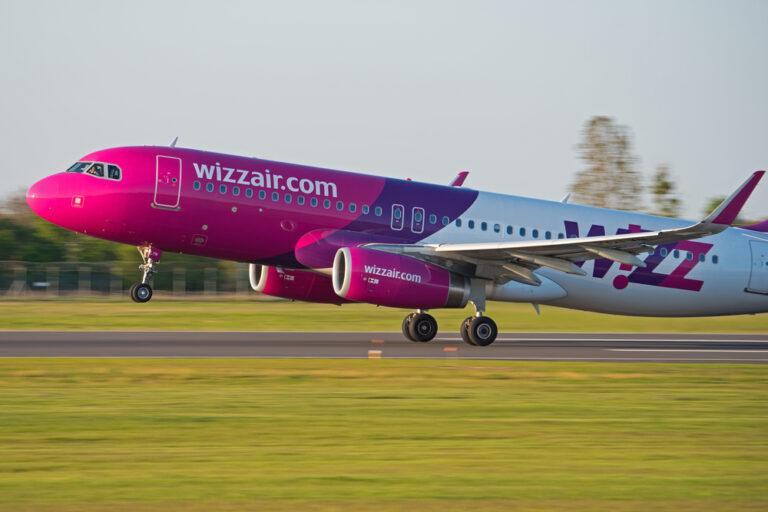
Wizz Air shares were down 5.7% to 2,601p in early morning trading on Wednesday, after the travel firm reported a widened loss of 11.5% to €642.5 million in FY 2022 compared to €576 million in FY 2021.

Wizz Air narrowed its operating loss by 11.9% to €465.3 million against €528.1 million, alongside a narrowed EBITDA loss of 89.6% to €19 million from €182.8 million in the year before.

The airline experienced a revenue climb of 125.1% to €1.6 billion compared to €739 million, and the number of passengers carried soared 166.3% year-on-year to 27.1 million against 10.2 million.

The company further mentioned a fall in total cash of 14.7% to €1.3 billion from €1.6 billion in the previous year.

Wizz Air also noted a load factor increase of 14.1% to 78.1% in FY 2022 from 64% in FY 2021.

“Our investments in staffing, our fleet and diversifying the network enabled us to recover capacity faster and we operated more than twice as many ASKs compared to F21, while carrying 27.1 million passengers, compared to 10.2m in F21,” said Wizz Air CEO József Váradi.

“The load factor improved to 78 per cent, significantly ahead of the 64 per cent seen in F21.”

Outlook FY 2023

Wizz Air highlighted an expected capacity growth over FY 2023 Q1 and Q2 of over 30% and 40%, respectively, along with a stronger FY growth against FY 2020.

However, analysts do not share the company’s sunny skies outlook, and warned that hard times were encroaching on the horizon for the group.

“Despite saying the business is on track for a record summer, Varadi can’t escape the fact the airline industry is on the verge of a meltdown thanks to a lack of staff in airports,” said AJ Bell investment director Russ Mould.

“There is no way of glossing over the issue that a growing number of people are likely to be ditching plans to fly this summer as they don’t want the hassle of flight delays, cancellations and long queues.”

The travel group said it intended to facilitate its aims with its fleet of 182 aircraft by the end of the financial year, with more than 50% neo aircraft, an average fleet age of 4.1 years and an approximate seat count of 221 to drive its competitive cost and environmental advantage.

“Despite this negative situation, Wizz Air continues to expand as a business, adding more aircraft, new bases and new routes. It’s giving Ryanair a run for its money in terms of finding new ways to get customers to pay for things beyond a ticket. This so-called ‘ancillary revenue’ now accounts for more than half of group revenue,” said Mould.

Wizz Air mentioned it would be relying on higher costs linked to inflation to drive customers to budget airlines, and added that it was partially hedged over summer to provide some protection against fuel prices hikes.

The travel company highlighted an expected operating loss for Q1 2023, despite strong consumer demand, as a result of air traffic control disruption, continuing operation issues and a volatile macroeconomic environment.

Wizz Air commented that it could provide no further guidance for the coming year in light of poor visibility and a turbulent geopolitical environment.

AVEVA swings to £6.5m loss on OSLsoft acquisition

0

AVEVA shares were down 0.3% to 2,222p in early morning trading on Wednesday after the company swung to an operating loss of £6.5 million in FY 2022 against an operating profit of £36.6 million in FY 2021.

AVEVA mentioned its loss was primarily on the back of the amortisation of intangible assets of £226.1 million related to its acquisition of OSLsoft, an international real-time industrial operational data software and services group, from expenses of £95.7 million the last year.

The firm announced a revenue climb of 44% to £1.1 billion compared to £820.4 million, and confirmed a “deferred revenue haircut” of £50.3 million linked to its OSlsoft acquisition.

OSLsoft’s main product is its PI System, a data-management software which reportedly enables customers to curate, analyse and share real-time industrial sensor-based data across business systems throughout company operations.

The company highlighted an annualised recurring revenue growth of 10.2% to £768.7 million against £697.8 million, alongside an adjusted EBIT climb of 7.7% to £365.1 million compared to £354.7 million year-on-year.

AVEVA noted that its integration of OSLsoft had progressed in line with management expectations, with strong advancement made in product integration which is set to drive substantial longer-term synergies.

Outlook FY 2023

The firm commented that its outlook anticipated an annualised recurring revenue growth in FY 2023 to a rate between 15% to 20% per year, underpinned by its business model transition to subscription, improving end market conditions, synergies related to the OSLsoft PI system integration and rising prices.

AVEVA said it would continue to conduct business with non-sanctioned companies linked to Russia where there is no legal basis to terminate its contracts, and confirmed it had ceased new business in the country. Russian operations accounted for an estimated 2% of the group’s business in FY 2022.

The firm noted that wage inflation would affect its margins, and would be offset through price increases eventually, after an initial hit to company margins as a result of salary hikes coming at the start of the year, with price increases taking effect later on after contracts had been renewed and new business had been signed to the company.

AVEVA mentioned its revenue growth was expected at a lower level in FY 2023 on an organic constant currency basis, and its adjusted EBIT margin was projected to reduce before resuming growth in FY 2023.

“AVEVA delivered a solid set of results in FY22 as the business recovered following disruption caused by the Covid pandemic,” said AVEVA CEO Peter Herweck.

“During the year we made good progress with the integration of OSIsoft and have recently launched integrated products that will drive further revenue synergies.”

“I am excited about the opportunities ahead of us as AVEVA enables the connection and digitalisation of the industrial world. We are focused on accelerating growth in Annualised Recurring Revenue and expect AVEVA’s growth rate on this metric to significantly improve.”

AVEVA reported a basic loss per share of 20.8p from an EPS of 11.4p, however the group increased its dividend 4.3% to 24.5p against 23.5p the year before.

Gooch & Housego set for second half recovery

0

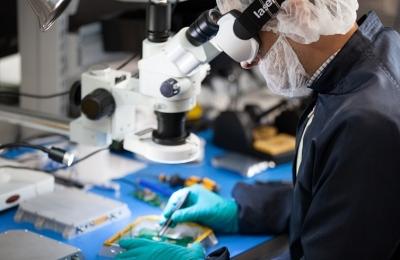
It was a tough first half for photonics company Gooch & Housego (LON: GHH) although management is confident that the second half will be much better. Next year should show a much greater recovery in profit.

In the six months to March 2022, revenues fell by 7% to £54.1m, while pre-tax profit was more than one-quarter lower at £3.6m. Even so, the interim dividend was raised from 4.5p a share to 4.7p a share. Net debt is £5.9m.

Demand for products supplied by the industrials division continued to be strong but staff shortages due to Covid meant that it was difficult to satisfy demand. Component shortages are being managed. This is the one

Life science revenues were slightly lower with increased demand for products for elective surgery offset by the loss of Covid-related ventilator revenues.  

There was a sharp decline in aerospace and defence division revenues. Again, there were staff shortages due to Covid and customer were also hit. That meant that orders could not be delivered to the client. There are indications of recovering commercial aerospace demand. Delays and new contracts mean that the order book is nearly 50% ahead of one year ago.

Forecast

The group order book is 26% ahead at £119.9m. Price rises are being pushed through to cover higher costs.

Forecasts are being maintained. Pre-tax profit could dip from £12.6m to £11m even with the cost benefits of restructuring. That still suggests a small decline in second half profit. The share price jumped 75p to 930p, which is still one-third lower than one year ago. That is 27 times prospective 2021-22 earnings, although it does fall to 19 next year. Gooch & Housego has strong positions in its main markets, so it warrants a high rating. There is also potential for acquisitions to boost earnings. There are available bank facilities to do a significant deal.

JD Sports found guilty of price-fixing Rangers FC merchandise by CMA

0

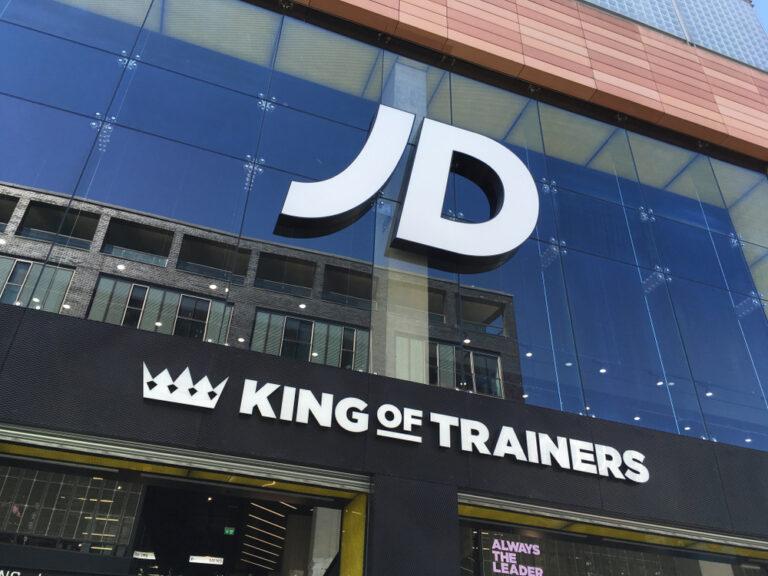
JD Sports shares were down 3.8% to 118.5p in late afternoon trading on Tuesday after the Competitions and Markets Authority (CMA) found the FTSE 100 retailer guilty of fixing prices on Rangers Football Club replica clothing in collaboration with Elite Sports.

The CMA confirmed provisional findings including price-fixing on a number of Rangers-branded replica kits and other products between September 2018 until at least July 2019.

The institution mentioned that Rangers FC were part of the collusion, to the extent of fixing the retail price of adult home short-sleeved replica shirt from September 2018 to mid-November 2018.

The report found that JD Sports and its associates allegedly colluded to stop the company from undercutting the retail price of the shirt on Elite Sports’ Gers Online store.

The CMA stated that Rangers was concerned about JD Sports selling the Rangers replica top at a lower price than Elite, which was functioning as its ‘retail partner’ at the time.

https://twitter.com/CMAgovUK/status/1534057129786716161

The subsequent understanding saw JD Sports raise the price of its Rangers replica football shirt by almost 10% from £55 to £60 in order to bring it in line with prices which Elite was charging on its Gers Online site.

JD Sports and Elite are also under scrutiny for alleged price fixing of training wear and replica kits over a longer time, without the involvement of Rangers FC, including the timing of discounts close to the end of the football season in 2019 to avoid competition between them and to protect their profit margins to the detriment of football club fans.

JD Sports and Elite reportedly confessed to “cartel activity” and requested leniency throughout the CMA’s investigation. The organisation said if both parties comply with the process, they would receive a reduction on the financial penalties imposed by the CMA.

Companies found guilty of infringing on the prohibitions in the Competition Act 1998 may be fined up to 10% of its annual international group turnover.

“We don’t hesitate to take action when we have concerns that companies may be working together to keep costs up,” said CMA executive director of enforcement Michael Grenfell.

“Football fans are well-known for their loyalty towards their teams. We are concerned that, in this case, Elite, JD Sports and, to some extent, Rangers, may have colluded to keep prices high, so that the 2 retailers could pocket more money for themselves at the expense of fans.”

JD Sports confirmed that it would recognise a provision of £2 million in its financial statements for FY 2022 in representation of the company’s best estimate of its payable liability in relation to the investigation, including legal costs.

FTSE 100 retail stocks fall as cost of living bites

0

The FTSE 100 was down 0.2% to 7,590.3 in early afternoon trading as the market appeared to brush the Boris Johnson confidence vote off its shoulder and move ahead to more pressing issues, including hard times on the horizon for consumer-facing businesses.

Figures from the British Retail Consortium (BRC) announced today reported a 1.1% fall in sales across May, marking the second consecutive monthly decline.

“The pressure on households from rapidly rising prices is reflected in weak retail sales data for May and figures from Barclaycard showing spending on essentials like food, fuel and utilities bills is going up rapidly,” said AJ Bell investment director Russ Mould.

“This will send a chill down the spine of any consumer-facing businesses which are dependent on discretionary spending.”

https://twitter.com/HarvirDhillon/status/1534085153361993730

JD Sports shares were down 5.9% to 115.9p on the back of the Competition and Markets Authority (CMA) revealing it had found the retailer and Elite Sports guilty of fixing prices for Rangers Football Club merchandise.

The company currently estimates a £2 million hit on its financial statements to cover the legal costs for its regulatory violation.

“Fresh from the probe into its ill-fated takeover of Footasylum, which was a contributory factor in the departure of long-standing boss Peter Cowgill, the regulator has put the company on the back foot over fixing the price of sales of Rangers FC replica kit,” said Mould.

“The size of the provision to cover any resulting liabilities is modest but, nonetheless, this is an unwelcome distraction as the business looks to reset in the wake of Cowgill’s exit.”

https://twitter.com/CMAgovUK/status/1534057129786716161

Supermarkets suffered a blow as the rate of 4.3% food inflation impacted consumer wallets, with Ocado sliding 3.5% to 917.8p, B&M falling 2.9% to 371.7p, Sainsbury’s down 1.9% to 223.3p and Tesco dipping 1.7% to 256p.

Retailers saw investor interest depart as inflation rates and the rising cost of living devoured consumer expendable income, with DIY giant Kingfisher dropping 4.3% to 255.1p, and fashion company Next declining 2.8% to 6,313p.

Meanwhile, US markets prepared for interest rate hikes on Friday, yet appeared rather steady, with the NASDAQ up 4% to 12,061.3 and the NYSE up 0.3% to 15,848.4.

Zephyr Energy announces State 16-2LN-CC well to recommence, crypto-mining facility

Zephyr Energy shares were down 4.3% to 4.6p in early afternoon trading on Tuesday following the company’s announcement that its State 16-2LN-CC well was set to recommence, facilitated by a co-located crypto-mine facility which is currently under development.

The well is part of the energy firm’s Paradox project in Utah, with liquid volumes produced from the operation set to be sold to refineries in the state, and produced gas volumes to be sold to fuel onsite power generators, which will provide electricity for the co-located crypto-mining facility.

Zephyr Energy confirmed that its initial one megawatt crypto-mining facility would be funded through existing cash resources or from third-party investment, with facility capital payback anticipated in under two years at current crypto-currency prices.

The crypto-mine is scheduled to launch in around eight to 12 weeks, with well work to be conducted over the term during which the State 16-2LN-CC well is expected to recommence production.

“Over the last twelve months, a growing number of U.S. upstream oil and gas operators (including an immediately adjacent Paradox Basin oil and gas operator) have chosen to co-locate crypto-mining facilities at well sites in order to benefit from the growing demand for natural gas to fuel dedicated sources of power generation,” said Zephyr Energy CEO Colin Harrington.

“Our planned crypto-mining facility will enable Zephyr to meet its near-term objectives – it will allow us to accelerate revenues from the State 16-2LN-CC well, to earn additional revenues from the crypto-mine infrastructure, and to enable a long-term test which will provide valuable information about the well’s production profile.”

Dominion Energy

Zephyr Energy added that it expected to tie its gas production to the nearby gas infrastructure recently bought by US Fortunate 500 group Dominion Energy in the longer term, after Dominion reported its plans to refurbish and expand the natural gas infrastructure running across Zephyr’s territory.

The company is estimated to be available to accept gas volumes from Zephyr’s wells in 2023.

Paradox Expansion

Alongside the energy firm’s work on the State 16-2LN-CC well, it also mentioned it was at an advanced stage of planning for a three-well drill programme on the Paradox project, expected to commence in HY2 2022.

“The coming months will be a period of intense activity on the Paradox project,” said Harrington.

“In addition to the re-start of State 16-2LN-CC well production and launch of crypto-mining operations, we are in detailed planning for our forthcoming three well drill programme.”

“We look forward to providing regular updates as we prepare to commence drilling in the upcoming months.”

Zephyr Energy noted that the well design was completed, with all permit applications submitted and negotiations currently in progress with rig vendors.

“We are hugely excited to embark on the next steps to open up the Paradox Basin resource play,” said Harrington.

“The completion of our highly successful initial well test gave the Zephyr team the comfort to proceed with detailed evaluations of both near and long-term off-take solutions for the gas volumes from the State 16-2LN-CC well.” 

“The plan announced today allows us to both accelerate near-term production and benefit from long term gas sales optionality should the economic returns from the co-located crypto-mining facility meet internal expectations.”

Challenger Energy kicks off work at Trinidad & Tobago projects

Challenger Energy shares were down 12.2% to 0.1p in late afternoon trading on Tuesday, after the group released its work update for its assets across Trinidad and Tobago and Suriname for the balance of 2022 and preparatory work for 2023.

The company said its main focus was to deliver near-term production growth in volumes sufficient to offset natural reservoir decline and to hit approximately 550 to 600 barrels of oil per day (bopd) for its average production rate by the end of 2022, which would enable the firm to operate on a cashflow positive basis assuming prevailing oil prices.

Challenger Energy announced a slate of specific projects for its work programme across its Trinidadian assets, including recompletions of 10 to 15 existing wells with work targeted for each of its Gourdron, Inniss-Trinity and Bonasse fields scheduled to be completed by October 2022, following its successful recompletion program from March to April 2022.

The company are also set to reactivate 10 to 12 wells currently not in production, and kick off a schedule of intensive, continuous swabbing across all company fields in a move to reduce significant levels of fluid in the wellbore which have prevented wells from flowing.

The energy group mentioned the purchase of essential equipment, including a swabbing rig, vacuum tankers and additional production-related items, alongside upgrades and refurbishments to equipment and facilities throughout its assets in an effort to increase operational efficiency and bring in production delivery, cashflow improvements and cost savings.

“Over the past six months, we have worked hard to redefine Challenger Energy’s operations around a simple strategic focus: to build cashflow from our production base in Trinidad, and to reach a point where as a group we operate on a cashflow positive basis,” said Challenger Energy CEO Eytan Uliel.

“In the process we have re-evaluated every single aspect of the Trinidad operations, to see how best we can clear legacy items, drive efficiencies, and deploy precious capital in the most effective, production-growth oriented manner. The work program for the balance of 2022 reflects the outcome of this work.”

2023 drilling program

Challenger Energy highlighted nine potential new well opportunities across its Trinidadian portfolio which it was eyeing in support of a 2023 drilling programme, with the aim of hitting its longer-term production target of 1,000 bopd.

The group mentioned it would also be considering an appropriate funding strategy for the wells, in a bid to reduce the capital burden and risk to the firm of drilling activities, including risk-sharing opportunities with contractors and partners.

Challenger Energy also noted its application for an extension of the initial period for undertaking an extended well test in the Weg Naar Zee field in Suriname, recognising delays linked to the Covid-19 pandemic, and is set to facilitate a technical reassessment of the drilling strategy for the project.

It is currently considering the applicability of horizontal drilling and a steam injection enhance oil recovery programme, in a bid to improve recoverability and enhance project economics.

If its application is successful, drilling is expected to occur in 2023. The company is also considering potential partnership opportunities for the licence.

Challenger Energy added that its work program for the balance of 2022 is set to include a single waterflood pattern at the Goudron field, a potential steam injection at the Weg Naar Zee project in Suriname, along with additional waterfloods at the Goudron field, which is under consideration for 2023, and a proposed C02 injection enhanced oil recovery programme for the Inniss-Trinity field, which is currently under technical review for a potential start in 2023.