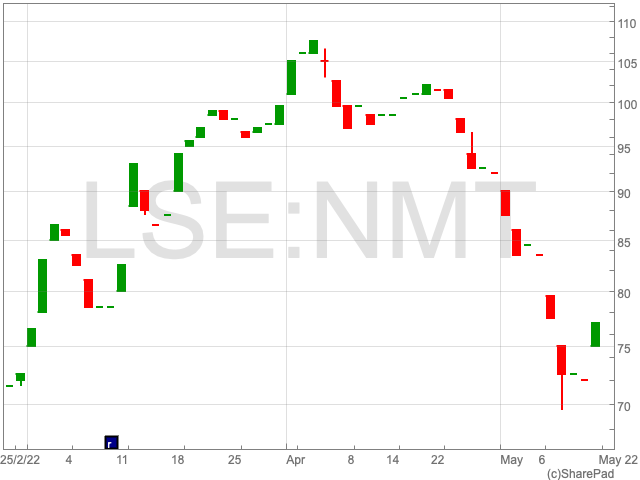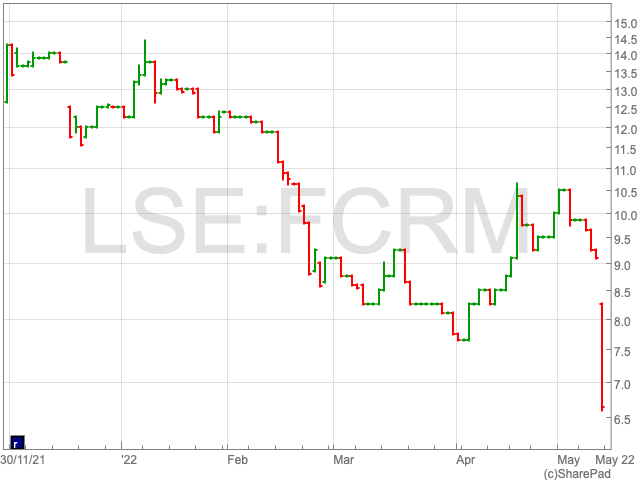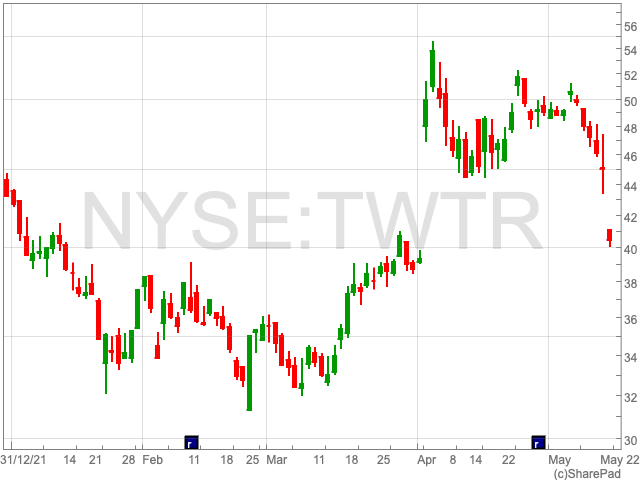
Shell reveals $5m write-down on Russia exit in Q1 update

0

Shell posted an updated outlook for Q1 trading highlighting a write-down between $4bn and $5bn as a result of its losses associated with Russia on Thursday.

Following Moscow’s invasion of Ukraine, Western corporations such as Shell quickly withdrew from Russia, dissolving trading connections and winding down joint ventures leading to a rough start to 2022 for the oil and gas company.

Shell shares have been bouncing with Russian oil bans, however, the rise in oil prices has cushioned the blow.

In the quarter, average oil prices rose to just above $100 a barrel, the highest since 2014, while European gas prices set a new high.

Shell had previously estimated the write-down to amount to $3.4bn on its exit from Russia due to contractual obligations, credit losses and receivable write-downs.

The post-tax impact from impairment of non-current assets and extra costs connected to Shell’s Russian activities is expected to be $4bn to $5bn for the first quarter of 2022 according to the results.

Shell has a market cap of approximately $210bn and it explained that the write-down will not impact the company’s earnings.

Shell has not renewed Russian oil contracts and will only do so if directed by the government, however it is legally obligated to take delivery of crude purchased under contracts made before the invasion.

Shell’s Results

Integrated Gas including Renewables and Energy Solutions

The company’s maintenance activities, including the planned reversal of one of the trains at Pearl GTL, are estimated to drive production between 860 and 910 thousand barrels of oil equivalent per day (kboe/d). The Canadian Shales assets are expected to produce around 50 kboe/d, according to the forecast.

Shell’s LNG liquefaction volumes are projected to be between 7.7 million tonnes (mt) and 8.3mt.

In comparison to the fourth quarter of 2021, trading and optimization results for Integrated Gas are estimated to be better, and the underlying Opex is estimated to be between $1.7bn and $1.9bn for the oil and gas company in Q1 2022.

The company’s depreciation before taxes is projected to be between $1.2bn and $1.4bn. The tax bill is likely to be in the range of $700m to $1.1bn for Shell.

Shell’s renewables and energy solutions are estimated to contribute between $100m and $600m of the overall Integrated Gas adjusted earnings.

Upstream

Between 1,900 and 2,050 kboe/d are predicted to be produced by Shell. The projection includes a 50 kboe/d drop as a result of the transfer of Canada Shales assets to Integrated Gas.

The company’s underlying Opex is estimated to be in the range of $2.3bn to $2.7bn with pre-tax depreciation projected to be between $2.8bn and $3.1bn and the tax bill is expected to range between $2.8bn to $3.3bn.

Oil Products

The marketing results for Shell are estimated to be in line with Q4 2021, with the underlying Opex estimated to be in the range of $1.8bn to $2.0bn and daily sales volume estimated to range between 2.2m and 2.6m barrels.

In terms of the product results of the company, trading and optimisation results are predicted to be much higher than Q4 2021.

The group’s estimated refining profit is around $10.23 per barrel, up from $6.55 per barrel in the fourth quarter of 2021.

Due to fewer turnaround events, refinery utilisation for Shell is predicted to be between 70% and 74%, higher than Q4 2021.

The underlying Opex is estimated to be in the range of $1.6bn to $2bn for Shell, with daily sales volume estimated to range between 1.5m and 2.3m barrels.

The company’s pre-tax depreciation is estimated to range between $700m and $900m, with around half of that going to marketing and the other half to refining and trading.

The tax bill is projected to be between $400m and $700m, with marketing accounting for 20%-30% and refining and trading accounting for 70%-80%.

The pipeline business will be shifted from marketing to the refining and trading sub-segment in the first quarter of 2022 as part of the continuing re-segmentation initiatives.

Chemicals

Shell’s chemicals margins are likely to be flat compared to Q4 2021, owing to lower unit margins due to higher feedstock and utility costs, which will be compensated by higher utilisation.

The volume of chemicals sold is projected to range between 3.1mt and 3.6mt in Q1 2022.

Due to fewer turnaround events, chemical manufacturing plant utilisation is predicted to be between 78% and 82% in Q4 2022, which is higher compared to 2021 for Shell.

The underlying Opex for Shell is projected to be in the range of $800m to $1bn and depreciation is projected to cost between $250m and $300m before taxes.

The company expects credit of up to $100m from the taxation charge and due to higher feedstock and utility costs offset by improved utilisation, adjusted earnings are estimated to be in line with the fourth quarter of 2021.

Shell shares have dropped 1.6% to 2,098p following the announcement of the $4bn write-downs caused by the exit from Russia.

Small & Mid Cap Roundup: Countryside, 888, Engage XR, Ince

0

The FTSE 250 was up 0.1% to 21,128.8 and the AIM was up 0.3% to 1,050.9 in afternoon trading on Thursday, despite another wave of anti-Russian sanctions and minutes from the latest Fed meeting revealing intent to significantly scale back asset purchases and raise rates.

“Both the cure, higher interest rates, and the disease, surging prices, are harmful to markets right now,” said AJ Bell investment director Russ Mould.

“The minutes from the Fed’s latest meeting showed it plans to drastically scale back asset purchases and that there is backing among its members for big rate hikes, all helping to pour cold water on investor sentiment.”

888 Holdings enjoyed a 21.5% increase to 233.4p following the announcement that the price of its William Hill non-US operations acquisition had fallen to £1.95 billion from £2.2 billion. The company currently intends to purchase the assets in June 2022 following its accelerated bookbuild to fund the project.

Wizz Air recovered ground with a 4.1% increase to 28,725p after the company was caught in the Covid-19 wave with staffing shortages alongside companies including EasyJet and IAG earlier in the week.

EasyJet saw a boost of 2.8% to 539.1p as shares rebounded after the company took a significant fall earlier in the week following its cancellation of over 200 flights.

Caledonia Investment shares rose 3.4% to 36,375p after the firm announced its portfolio update, with a 28% total NAV return for Q1 2022.

Countryside Properties took a blow of 9.4% to 251.9p after the company reported a 42% adjusted operating profit fall and a 13% drop in revenue for the last six months, alongside an operational overview that revealed “execution related” failures across its site operations.

Marshalls’ shares fell 4% to 664.7p after the company announced the completion of the £187 million fundraise for part of the acquisition of pitched roof system manufacturer, Marley Group. The acquisition of Marley is going to cost Marshalls £535 million.

Vistry shares took a hit of 3.4% to 930p due to the company joining fellow housing companies Persimmon and Bellway in signing the UK Housing Pledge, which is set to see it shoulder the cost of altering fire hazards across its properties built in the past 30 years.

Meanwhile, on the AIM, Engage XR Holdings shares soared following its partnership with Victory XR announcing the rollout of 10 Metaversities funded by Meta.

The project reportedly features Virtual Reality university campuses for students to attend as an augmented type of remote learning.

Bezant Resources shares were up 11.1% after it reported maiden results in its joint-venture copper-gold mine with Caerus Mineral Resources.

Bezant Resources and Caerus Mineral Resources noted a selected cut-off grade of 0.5% copper, along with a hard rock resource estimate of approximately 2.7 million tonnes at a copper equivalent grade of 0.74%, copper equivalent 0.51% copper and 0.26 grams per tonne of gold.

Arden Partners shares fell 19.4% to 14.5p following the company’s update on its Nomad condition, which revealed that the London Stock Exchange had denied Nomad status to Arden Partners’ takeover by Ince Group, putting the takeover status in question.

Omega Diagnostics dropped 8.9% to 5.1p on the back of its ongoing dispute with the Department of Health and Social Care (DHSC).

The group reported an estimated 41% increase in revenue to £12.3 million despite a drop in Covid-19 related revenues, which are set to account for approximately £2.6 million.

FTSE 100 down following Fed comments

0

FTSE 100 lost 0.2% to 7,571 on Thursday as investors reacted to the latest comments from the Federal Reserve and a further sanctions on Russia.

The negativity was evident across Europe with most major indices trading down on the day.

“European markets started in fairly sober mood – with UK stocks no exception – unsurprising perhaps given some tough rhetoric from the US Federal Reserve on interest rates and the latest round of sanctions imposed by the West on Russia yesterday,” said AJ Bell investment director Russ Mould.

Shell

Shell revealed the impact of Russia through the announcement of a increase in its write-down from $3.4bn to almost $5bn due to its exit from Russia hurting the oil and gas company’s shares.

Shell announced the increase in its write-down earlier today, however, increases in oil prices have been helping the company’s shares gain traction. Among oil and gas companies, BP has also taken a hit due to continued relations with Russia.

Shell shares lost 1.5% to 2,105p following the write-down announcement.

BP shares fell 0.7% to 378p as its connections to Russia remain intact and investors look to “what it might imply for its much larger Russian footprint,” according to Russ Mould, Investment Director, AJ Bell.

Oil prices gained 1% to nearly $102 per barrel on Thursday, which might be the reason why BP and Shell’s losses have been contained.

Halifax confirmed the 1.4% growth in housing prices assessed by the Housing Price Index (HPI). The jump of 1.4% is the largest increase in housing prices in the last 6 months.

The average house price has reached a new record high of £282,753, and “continues to defy gravity” said Mould.

“The dynamics of insufficient supply and strong demand continue to underpin prices, but you have to believe that will change at some point and, when the market turns, it could be painful.”

Along with rising house prices driving housebuilder shares to fall, the Building Safety Pledge by the UK Government is aiding the fall in stock prices.

The cost of remediating for Barratt’s building safety pledge will amount to roughly £400m which is driving Barratt Developements’ share down 3% to 514p.

Persimmons shares fell 1.4% to 2,206p as the company also signed the UK government pledge on Wednesday, which aims to ensure the safety of high-rise buildings. However, rising house prices aren’t helping the company, either.

Aviva shares fell 4% to 426p and abrdn shares dropped nearly 3% to 205p as the stocks were declared ex-dividend, making them the top fallers of the FTSE 100.

Entain shares fell 0.5% to 1,614p despite the company reporting a strong start to 2022 with net gaming revenue of 31% in Q1 2022, supported by the easing of Covid-19 restrictions.

“Entain has become a big beast of a player in the gambling world, and it continues to shoot for the moon in terms of ambitions,” said Mould.

“Never content with making the most of what it already has, the group continues to spread its tentacles with the recent launch of an innovation hub called Ennovate to develop next generation immersive entertainment services.”

Airtel Africa led the FTSE 100 performers with its shares gaining 2.5% to 142p as the company enjoyed the reaction from the market to its adopted regulatory SIM card measures at its Nigeria telecommunications unit.

AstraZeneca shares increased 1.3% to 10,599p as the follow-up results from the Phase III Champion-MG trial showed that Ultomiris demonstrated long-term efficacy in adults with generalised myasthenia gravis, a rare and chronic autoimmune neuromuscular disease that leads to a loss of muscle function and severe weakness.

BT Group gained 2% to 190p and Ocado shares rose 2.5% to 1,233 as the companies enjoyed a rebound.

SSE shares rose 0.5% to 1,814p as the UK Government launched a long-term strategy for secure and sustainable power.

Lithium, Electric Vehicles and Cadence Minerals with Kiran Morzaria

The UK Investor Magazine was thrilled to welcome, Cadence Minerals CEO, Kiran Morzaria, to the podcast for a deep dive into Lithium, Electric Vehicles and Cadence Minerals.

We drill down into the Lithium market and where Cadence Minerals sits on the global stage.

Kiran provides deep insight into the global lithium market as we explore the upcoming supply deficit set to take hold from 2025. With prices Lithium soaring, we look at the longer term projections and the dynamics of Lithium spot prices.

We analyse the current requirements of Electric Vehicle market and how companies like Cadence are working to meet these needs. 

Cadence has two Lithium projects Kiran presents in detail.

We finish by touching on Cadence’s flagship Amapa Iron ore project and what investors can look forward to after Kiran’s recent trip to Brazil. 

Find out more about Cadence Minerals on their website and presentation at the UK Investor Magazine Metals and Mining Conference.

Halifax HPI confirms record house prices

0

Halifax has confirmed record house prices in its Housing Price Index (HPI) released today, and said monthly prices had grown 1.4% at its highest increase in six months.

The index revealed that the average house price reached a new record high of £282,753, with the two years since lockdown seeing a £43,577 increase as consumers sought out more space and better houses in the wake of the Covid-19 pandemic.

Families in particular searched for more space away from cramped conditions as the coronavirus spread rapidly across the UK and lockdown restrictions kicked off in March 2020.

“The story behind such strong house price inflation remains unchanged: limited supply and strong demand, despite the prospect of increasing pressure on households’ finances,” said Halifax managing director Russell Galley.

“Although there is some recent evidence of more homes coming onto the market, the fundamental issue remains that too many buyers are chasing too few properties.”

“The effect on house prices makes it increasingly difficult for first-time buyers looking to make their first step onto the ladder, but also challenges homemovers who face ever bigger leaps to move up the rungs to a larger property.”

The Halifax HPI report estimated that the rising rate of inflation and the cost of living squeeze would bring a slowdown in the housing market over 2022.

However, this trend prediction is not necessarily guaranteed, with some analysts projecting that the housing market growth could continue despite the spiking rate of inflation.

“While other sectors like energy and food have been consistently increasing, the housing market may begin to suffer a slowdown in demand if the current rate of increase continues as more consumers start to struggle to enter the market,” said Walid Koudmani, chief market analyst at financial brokerage XTB.

“On the other hand, demand at current levels remains high and could sustain a continuation of this trend despite measures by the central bank designed to mitigate inflation.”

UK Government sets goal for 95% low carbon energy by 2030

0

The UK Government announced its intention today to hit 95% low carbon energy by 2030 in its newly unveiled British Energy Security Strategy.

The news comes as the Government scrambles for alternative energy sources following Russia’s invasion of Ukraine, which has seen global energy companies divest from the country’s 4 million barrels of oil per day in exports.

The Government announced plans to roll out its expansion of solar, nuclear, wind, and hydrogen, with the ambition of developing one nuclear reactor per year compared to its previous goal of one reactor per decade.

The proposal includes the use of Small Modular Reactors in a key role to ramp up UK nuclear development and produce around 24 gigawatts by 2050, which represents a projected 25% of nationwide electricity demand.

The administration is set to launch a £120 million Future Nuclear Fund later this month to kickstart a wave of new energy projects.

The plan also includes an intention to source 50 gigawatts of energy from offshore wind by 2030, which would reportedly produce enough power for every house in the country.

The Government announced the launch of a heat pump manufacturing competition later on this year worth up to £30 million, which would reduce UK reliance on gas.

Further North Sea gas projects are also scheduled for an increase in funding as the country works to procure a supply pipeline with a lower carbon footprint in its transition to alternative energy.

Additional aims include a 500% rise in the nationwide solar capacity from 14 gigawatts by 2035 and a 200% increase from the current 10 gigawatt capacity for low carbon hydrogen production by 2030.

“We’re setting out bold plans to scale up and accelerate affordable, clean and secure energy made in Britain, for Britain – from new nuclear to offshore wind – in the decade ahead,” said Prime Minister Boris Johnson.

“This will reduce our dependence on power sources exposed to volatile international prices we cannot control, so we can enjoy greater energy self-sufficiency with cheaper bills.”

The move follows a 54% rise in the energy price cap on 1 April 2022, which is set to see the average household energy bill rise £700 per year, on top of a 30-year high 6.2% inflation rate.

The Government said it aims to ease the pain of surging energy costs for consumers with its introduction of alternative, cheaper energy measures.

“We have seen record high gas prices around the world. We need to protect ourselves from price spikes in the future by accelerating our move towards cleaner, cheaper, home-grown energy,” said Business and Energy Secretary Kwasi Kwarteng.

“The simple truth is that the more cheap, clean power we generate within our borders, the less exposed we will be to eye watering fossil fuel prices set by global markets we can’t control.”

“Scaling up cheap renewables and new nuclear, while maximising North Sea production, is the best and only way to ensure our energy independence over the coming years.”

Bellway joins Building Safety Pledge in £486.8m commitment

0

Bellway shares were down 0.4% to 2,542p in early morning trading on Thursday following the company’s announcement that it would shoulder the £486.8 million fire remediation cost for its portfolio of buildings.

The housing firm made the commitment after it accepted the Government’s request for housing companies to take on the cost of fixing faulty cladding and fire risks according to the new Publicly Available Specification (PAS) from the British Standards Institute.

Bellway reportedly withdrew from the Government’s £4 billion housing fund, which had initially been drawn up to fund housing company expenses to fix fire hazards in their properties.

The company joined a series of housebuilders who recently signed up to the Building Safety Pledge, which committed the groups to using private funds to address fire remediation concerns in their properties.

The changes are set to be carried out on all buildings over 11 metres in height that Bellway helped to construct over the last 30 years.

The company said that it has currently altered four buildings, with plans in motion to carry out work on an additional 13 properties and designs in place for a further three developments.

Bellway confirmed that the alterations would not impact its future dividend payments and come at no cost to residents living in its properties.

The property firm said its balance sheet remained well capitalised, with a net cash of £195.8 million, a net asset value of £3.4 billion and committed debt facilities at £530 million.

The company noted that its current assets left it plenty of breathing room to cover its expenses under the fire remediation pledge and reiterated that the cost would not be detrimental to its future growth.

“The issue of life-critical fire safety defects in apartment schemes is a sector-wide challenge and Bellway has engaged extensively and constructively with DLUHC over recent months, both directly and through the Home Builders Federation (‘HBF’),” said Bellway CEO Jason Honeyman.

“We have always taken the issue of building safety very seriously and agree with the Government’s principle that residents should not have to fund life-critical fire safety remedial works.”  

“Our engagement to date and commitment to continue our responsible approach has resulted in Bellway today making a pledge that schemes constructed by us or on our behalf in the last 30 years will be remediated.”

Capita announces two-year contract extension for £50.6m

0

Capita, the digital services company, will continue to offer IT infrastructure and services under the contract extension with Northern Ireland’s Education Authority, which is worth £50.6 million and will run through March 31, 2024.

Capita has been signed a two-year contract extension with Northern Ireland’s Education Authority to continue providing managed IT services to all 1,100 schools in the region.

Local area networks, cloud services, service desk support, networked desktop and portable devices, digital learning services for students and teachers, digital school administration and management services, along with professional development tools for teachers are just a few of the services offered by Capita.

Over the length of the contract extension, Capita will work with the EA and its partners to develop an innovation programme to ensure the service continues to fulfil the digital interests of all stakeholders.

This will entail Capita creating and implementing a new mobile-friendly version of the MySchool platform for students and staff, as well as several initiatives leveraging Microsoft Value BI to harness the power of data throughout the service.

Capita’s 10-year contract renewal with the EA builds on the company’s achievements in assisting Northern Ireland’s schools in adapting to the impact of the Covid-19 epidemic and managing the change to online learning.

Jon Lewis, Capita’s CEO, said, “The extension of our contract with Northern Ireland’s Education Authority reflects the strength of our decade-long relationship with the organisation, along with our significant digital and technology capabilities which have helped improve teaching and learning for Northern Ireland’s pupils and teachers.”

“Our teams will continue to transform the service, by bringing new innovative platforms and digital infrastructure into use. This contract reflects our ability to delight our clients while helping them harness the power of technology to create better outcomes, ensuring both a fair price for our clients and an appropriate return for Capita.”

Capita shares dropped 0.19% to 21p following the announcement in early morning trade on Thursday.

Entain notes NGR up 31% in Q1 ’22

0

The global sports betting and entertainment group Entain reported its results for Q1 2022 where it noted a net gaming revenue (NGR) up 31% as a result of retail sales gaining momentum.

The return of retail has contributed to a strong start to the year, with group NGR up 31% in Q1 2022 compared to 2021.

Due to closures in 2021 due to the pandemic, retail is up significantly YoY with volumes resting between 5% -10% to pre-pandemic levels.

In all major markets of Entain, there is still promise despite online NGR dropping 8% in comparison to strong 2021 benchmarks. The fall of 8% in online NGR was in line with expectations as the boom from lockdown subsides.

The three-year CAGR of online NGR is up 14% (constant currency).

Actives have increased by 34% in the last two years, indicating that the client base is becoming more diverse.

Sports, online and retail along with iGaming revenues make up BetMGM’s revenue. BetMGM, which is consistently the leading iGaming operator with a 29% market share, is currently operational in 23 markets, including four new territories in the first quarter and Ontario on April 4th.

The additions of Avid Gaming, Klondaika, and Totolotek provide strategic growth expansion into new markets.

The Worldwide Gaming Alliance was established to ensure greater standards and protections in the global gaming business. Trials of ARC player protection in international markets are being expanded.

Based on current market assumptions, Entain is on track to achieve a positive EBITDA in 2023.

Under the group’s sustainability charter, it will maintain its focus and make progress toward its goals.

“We have started the year with a good performance across all areas of our business, driven as ever by the strength of our industry-leading platform,” stated Jette Nygaard-Andersen, Entain’s CEO.

“We have delivered strong performances in all of our major markets, and I am pleased to report that Retail is performing well with customers returning for our instore experience.” 

“In the US, BetMGM is firmly established as the number two operator, and our market launches during Q1 mean that we now have access to over 41% of the US adult population.”

“Elsewhere, our strategy of expanding into new markets is continuing at pace, having acquired businesses in Canada, Latvia and Poland during Q1.”

Entain shares dropped 1.5% to 1,595 despite reporting results in line with expectations in Q1 2022.

Marshalls agrees Marley purchase

0

Rooftiles manufacturer Marley Group planned to float last year but it did no go ahead. Fully listed paving and tiles supplier Marshalls (LON:MSLH) is paying £535m for Marley, which adds pitched roofing to its roofing products. This transaction is classed as a reverse takeover.

This deal comes at a time when the UK construction and repair and maintenance markets, which have good medium-term prospects.

There were indications that Marley would have been valued at between £470m and £500m if it had joined the Main Market. Management blamed market instability for pulling the float. It is unclear how much debt would have been included if the flotation had gone ahead.

Valuation

Marshalls is paying £371m in cash, with £187m raised from a placing and open offer, and 24.1 million shares, which includes two million shares issued to Marley management, issued at 680p each. The placing price should be set on Thursday.

The key management of Marley will be staying on and continue to operate Marley as a separate division.

Revenues increased from £165.8m in 73 weeks to end December 2020 to £172.6m in 2021. Last year’s operating profit was £25.3m.

The acquisition price is equivalent to 10.7 times Marley’s 2021 EBITDA and in the first full year of ownership Marley will enhance earnings by double digits.