Capricorn Energy swings back to profit in 2021

0

Capricorn Energy saw its share price fall 2.1% to 208.2p in early morning trading on Tuesday after it reported production of 36,500 boepd and $57.1m revenue in 2021.

The oil producer saw a $1 billion return to shareholders over 2021 and 2022, following a tax dispute with the Indian government which ended with a tax refund to the company in 2021.

Capricorn reported further profit following its procuring of Shell’s Egypt operations in 2021.

The company also reported a $895 million post-tax profit after its devastating $394 million loss in 2020.

Capricorn reported an operating loss of $131 million, however, a slight deterioration in its 2020 loss of $130 million.

“2021 was a transformational year for Capricorn; we continued to successfully reshape our portfolio and achieved a positive resolution of our Indian tax dispute,” said Simon Thomson, Chief Executive at Capricorn Energy.

“We acquired an attractive portfolio of low breakeven oil and gas production in Egypt, where we are already delivering production growth and emission reductions, and which has significant further opportunities for value creation.”

“We also retain the balance sheet capacity to further expand the production base through value-accretive acquisitions.”

“We look forward to continuing to deliver our strategic aims in 2022 with a strong commitment to safety, social responsibility and our pathway to net zero carbon emissions by 2040.”

Greggs sees LFL sales drop and warns of challenging 2022 ahead

0

Greggs saw its share price fall 9.1% in early morning Tuesday trading after the company said it saw like-for-like sales drop and warned on rising costs.

The company reported a pre-tax profit of £145.6 million against a £13.7 million loss in 2020.

Greggs further announced a total sales increase of 5.3% to £1.2 billion as they opened new stores. However, sales fell like-for-like 3.3% on a same store basis.

The food producer reported a diluted earnings per share of 114.3p against a 12.9p loss, alongside a final dividend of 42p per share recommended, resulting in a total ordinary dividend of 57p against the lack of dividend from 2020.

Greggs opened 131 shops in 2021 and closed 28 stores. It currently has a total of 2,181 shops trading from 1 January.

The company is scheduled to open 150 stores in 2022 and reportedly aims to reach 3,000 outlets in time.

“We have started 2022 well, helped by the easing of restrictions,” said Greggs CEO Roger Whiteside. 

“Cost pressures are currently more significant than our initial expectations and, as ever, we will work to mitigate the impact of this on customers, however given this dynamic we do not currently expect material profit progression in the year ahead.”

Analysts have warned that rising inflation and labour shortages will result in a more difficult 2022 for the fast food chain.

“Supply chain issues, cost increases, and labour shortages all pose significant and persistent risks for Greggs,” said Third Bridge analyst Ross Hindle.

“Greggs has had to trim its range due to ingredient shortages, now labour shortages might stunt Greggs’ growth ambitions.”

“Investors will be studying how Greggs manages its cost increases, which could turn out to be double-digit, in order to protect its margins in the months ahead.”

M&G shares fly 13% as investment group exceeds targets on capital generation

0

M&G generated £2.8bn, exceeding the investment management firm’s goals for capital generation, resulting in a share buyback of £500m.

M&G shares were trading up 13.8% to 202.9p on Tuesday morning after news of shares buyback.

Adjusted operating profit before tax dropped by £67m to £721 in 2021 as a result of reduced benefits from changes in lifespan estimates. Retail and savings segment contributed £660m to that figure whereas the corporate centre took away £254m.

Mergers and Demergers

Targets for mergers have reached fruition ahead of schedule with capital generation targets met, and investor cost reduction of £145 million were realised a year ahead of schedule.

IFA Sandringham Financial Partners was acquired by M&G Wealth in early 2022. Highlights of their acquisitions include a stake in Moneyfarm, a digital wealth platform and the buyout of TCF Investment, model portfolio services provider.

A controlling stake of 90% in responsAbility, an impact investing firm, has been agreed upon for M&G to continue growth in their sustainable investing capacity. The remaining 10% will be acquired in due course.

The group plans to expand into Italy with Future+. Future+ is a European version of M&G’s UK PruFund proposition.

John Foley, Chief Executive Officer, M&G said, “it has been another year of robust operational and financial performance, as we have delivered on all our demerger commitments including total capital generation of £2.8 billion over two years, well ahead of our original target.”

“In light of this performance and our strong capital generation we are able to announce today £500 million to be returned to shareholders by way of a buy-back programme, expected to start shortly. Together with dividends paid, we will have returned £1.8 billion of capital to shareholders, equivalent to 32% of M&G’s market value at demerger. Alongside this, we have achieved our annual shareholder cost savings target of £145 million one year ahead of schedule.”

The second interim dividend amounts to 12.2p, in line with M&G’s ‘stable or increasing’ dividends policy.

Dominos delivers piping hot post-tax profits

0

Dominos saw a 97% increase in statutory profit after tax, going from £38.6m in 2020 to £78.3m 2021, as the pizza chain recovers from the pandemic.

Domino’s top line saw an 11% growth to £560.8m. Underlying profit before tax is £113.9m, up 12.5% from 2020 as a result of strong underlying trading.

Recovery from the pandemic, saw a 5.5% growth in order sales in 2021. Collection orders are still recovering but delivery performed well. Digital channel sales contributed to 91.2% of system sales. Average delivery time was around 25 minutes sustaining the group’s service standards.

Franchisee Resolution and Ventures

In an attempt to speed up long and short term growth, Dominos are set out to tap into their franchisees to help drive new stores and boost marketing.

Investment of £20m has been spread over 3 years to make developments in their e-commerce app development and in-store innovations. Marketing investments have grown too, in order to promote new national campaigns.

Franchisee’s have committed to increase the sales through creating a schedule for new stores, resulting in 45 new stores each year for the next 3 years, out of which 30 have already opened for this years quota. In contrast to previous years, a commitment on participating in the upcoming promotional deals has also been agreed upon. The franchisees have agreed to trial and test new technology and innovations for the benefits of the group.

Investments of £6.6m for 46% shares with an association who is operating 22 stores in Northern Ireland to enable future growth plans of the franchisee. The group has exited from directly operated international markets to focus on the UK and Ireland markets.

The group has opened their 3rd supply chain centre in Cambuslang, Scotland.

Net debt has increased 16.2% to £199.7m as the company paid dividends of £56m and share buybacks of £80m. The proposed final dividend for 2021 is 6.8p bringing the total dividend to 9.8p. The dividend yield is 2.9% which is fairly decent compared to the FTSE 250 average.

“There were two major milestones in the year. First, the launch of our new strategy, which is already delivering outstanding results and a better experience for our customers.”

“Secondly, the resolution with our franchisees which has unlocked further potential within the system. Our franchisees are world class operators and the whole team is already embracing a new era of collaboration, with the system working together more closely than ever before,” said Dominic Paul, Chief Executive Officer, Dominos.

Domino’s shares sunk over 5% in early trade on Tuesday morning, before shares recovered to trade just 1% down at the time of writing.

Various Eateries returns to growth

Restaurants and bars operator Various Eateries (LON: VARE) says trading continues to improve following lockdowns in the past two years. There was a blip when there were additional restrictions enforced during December, but the upward trend has subsequently continued.
The company’s sites tend to have sizeable outdoor areas and that helped with the recovery. In the year to 3 October 2021, revenues were 36% ahead at £22.3m and the total loss was £3.7m. That was after £2.5m of insurance proceeds.
The varying periods of lockdown in the two years makes them difficult to compare, although it is certa...

MTI Wireless pulls out of Russia

MTI Wireless Edge (LON: MWE) is ending its operations in Russia and that will hold back growth this year. MTI Wireless had been winning electronic components distribution business in Russia and it already has a prepayment for an order. Despite this problem, profit could still improve this year.
Elsewhere, prospects are good thanks to 5G infrastructure investment and the need to conserve water.  
In 2021, revenues increased 6% to $43.2m, while higher transport costs and exchange rate movements meant that pre-tax profit was flat at $4.04m. Russia accounts for 6% of revenues and 5% of profit...

Sainsbury’s shares offer better value than Tesco

0

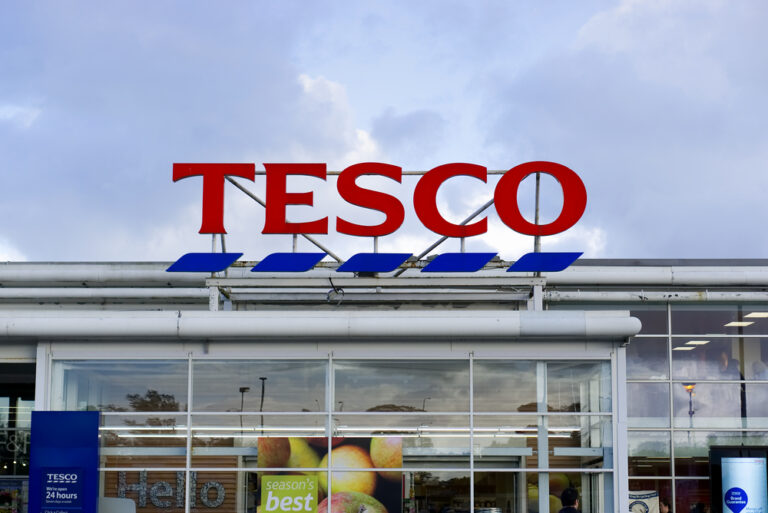
Sainsbury shares may be the pick of the FTSE 100’s two supermarkets with a notably better dividend yield and attractive multiples.

Supermarkets experienced a mixed pandemic with sales jumping as consumers chose higher priced goods due to lockdowns, but the retailers also faced a squeeze on margins as a result of higher costs.

In the key Christmas trading period, Sainsbury’s sales saw an increase of 2.4% as the company saw the benefits of their pricing strategy and a surge in online sales.

Simon Roberts, CEO, J Sainsbury said, “”I am really pleased with how we delivered for customers this Christmas. More people ate at home and our significant investment in value, innovation and service led to market share growth. At the same time, we are pleased to increase profit guidance for the full year.”

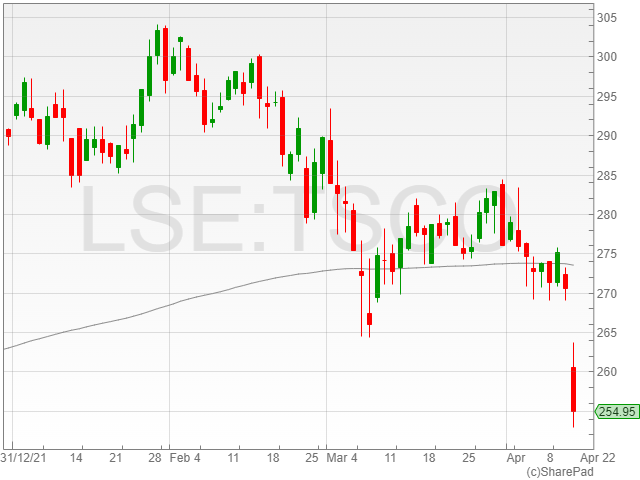
The strong festive period results saw the Sainsbury share price increase. Despite a strong start to the year, their shares have since tumbled and are now trading 10% year-to-date.

This will be catching the eye of investors that follow supermarkets due to their reliable cash flows and relative stability when compared to other sectors.

However, just a consumers will weigh up the value of Sainsbury’s products against competitors, investors will make comparisons between the supermarkets for relative value of their shares.

Following the takeover of Morrisons by a US group, Sainsbury’s and Tesco are the only two supermarkets listed in the FTSE 100.

When a comparison of these two groups are made, Sainsbury’s provides better value than Tesco on a number of key valuation metrics.

Earnings Multiples

Sainsbury’s currently has forward PE Ratio of 10.8 compared to Tesco’s 12.8.

The trailing PE also reflects better value in Sainsbury’s shares with a PE of 21.8 and Tesco’s 23.1.

These are of course small differences, but there is a notable opportunity for Sainsbury’s valuation to move back inline with it’s peer. If Sainsbury’s was to move in line with Tesco it would suggest roughly 20% upside in shares.

Sainsbury’s Dividend

Income investors will also see the attractiveness in Sainsbury’s dividend which is currently providing a yield of 4.3% compared to Tesco’s 3.6%.

Given Sainsbury’s dividend policy is to pay dividends covered by full year underlying earnings or at 1.9 cover, this doesn’t look under threat and has room for an increase in the coming year.

Having paid a 7.40p full year dividend in 2021, one would expect this to increase incrementally as they recover from the pandemic. There should, however, be a note of caution around the impact of inflation and rising prices, whilst Sainsbury’s fight for increased market share.

IP Group smashes records with Microbiotica fundraiser

The IP Group has completed its £50 million series B fundraiser for Microbiotica, a microbiome-based therapeutics and biomarkers company in the Group’s portfolio.

Microbiotica was founded in 2016 at the Sanger Institute, with a company mission to explore the medical applications of the microbiome for human disease treatment and therapy.

The IP Group contributed £4 million to the funding.

The company currently holds an undiluted beneficial holding of 18.2% in Microbiotica at a value of £16.1 million.

The IP Group further holds a recorded net unrealised fair value gain of £2.2 million.

The financial injection was the largest microbiome-related fundraiser in Europe on record.

The funds have been allocated to the progression of Microbiotica’s two lead oral Live Bacterial Therapeutics (LBTs), MB097 and MB310, to the first phase of clinical studies.

The financing will further allow the company to expand its discovery pipeline of biomarkers and LBTs in unexplored disease categories.

“The company’s pre-clinical data suggest that, so far, our thesis is proving correct, and we are delighted that the company’s esteemed new investors are joining us for the next leg of this exciting journey,” said Managing Partner of Life Sciences at IP Group Dr Sam Williams. 

“As a founding investor in Microbiotica, our thesis was that, by culturing, characterising and stratifying the human microbiome, Microbiotica would be able to identify live biotherapeutics with the greatest chance of clinical success in the microbiome field.”

The Group highlighted the contributions of additional investors to the series B fundraiser, including new investors Flerie Invest, Tencent and British Patient Capital.

The contributors joined existing investors IP Group, Cambridge Innovation Capital and Seventure Partners.

IP Group has a portfolio of investments in startups that have a strong level of intellectual property and close links to universities, including the London-listed Actual Experience, Abington Health, DeepMatter Group and Itaconix.

The IP Group’s share price rose 0.2% to 80.5p in Monday early afternoon trading.

Audioboom expands Showcase with New Zealand strategic partnership

4

Audioboom expands into the New Zealand digital media scene with Showcase, their ad-tech platform.

Audioboom is global leading podcast company, which make podcasts available and profitable for podcasters, advertisers and brands.

With the combination of technical assistance, product knowledge and ad sales expertise, Audioboom is able to deliver a user-friendly and cost effective product.

Showcase, launched in 2021, is a global marketplace for tech-enabled advertising created by Audioboom. With the use of Showcase, brands can execute their campaigns effectively with dynamic ad insertions and self-serve portals. Showcase also provides a platform for buyers and sellers to connect and advertise at large levels.

Showcase brought in more over $1m in sales for Audioboom in 2021. The group plans to make over 3bn ad exposures available to Showcase buyers by 2022. Audioboom now plans to expand Showcase into New Zealand with a strategic partnership with New Zealand Media and Entertainment (NZME.)

NZME is New Zealand’s top radio and digital media company. Publishing, radio, digital and events are NZME’s different segments of business.

In their position as Audioboom’s exclusive advertising representative for New Zealand based companies and purchasers, NZME will monetize Audioboom’s 8,000 content channels in Showcase.

According to Triton Digital’s regional podcast ranker, Audioboom is New Zealand’s third largest podcast publisher, with over 900k monthly downloads and 300k individual listeners. This collaboration will enable effective commercialisation of Audioboom’s content in New Zealand, which is the company’s sixth largest market for podcast consumption.

This strategic move demonstrates Audioboom’s continuous global expansion as well as brands’ growing desire for personalised advertising solutions.

Stuart Last, Chief Executive Officer, Audioboom commented, “NZME provide the expertise to further maximise the value of content for our creators, while supporting our goals of efficient global expansion. New Zealand is an important territory for us, and I am excited to create new opportunities for brands to work with our creative talent and high-quality shows.”

Although further expansion of Showcase will be music to the ear’s of Audioboom’s shareholders, Audioboom shares fell nearly 5% to 1,715p on Monday afternoon as geopolitical problems hit markets.

FTSE 100 whipsaws as Russian oil embargo fears rock markets

The FTSE 100 was down as much as 200 points in Monday trade as Russia’s conflict against Ukraine continued to rock the global economy with the prospect of a Russia oil embargo.

However, a recovery later in the session so the index go positive as commodity companies rallied.

The price of commodities surged, with the price of oil jumping as a potential ban on Russian oil exports boost fears of a scarcity.

Brent Crude has jumped past expectations to $128.7 per barrel on Monday, beforte settling to a price of $125. WTI Crude is currently at a price of $123.2 per barrel.

“So far there have been no country-level sanctions on Russian commodity products, merely the decision of various customers not to buy,” said AJ Bell investment director Russ Mould.

“It seems we could be moving to the next stage whereby countries lay down rules to not buy oil and other commodities from Russia which in turn would reduce its funding for the war.”

FTSE 100 oil majors BP and Shell rallied on higher oil prices with BP gaining 3% and Shell surging 7%.

However, Mould highlighted the consequences for wider economy as rising prices added to inflation that was already hurting house holding spending and company squeezing margins.

“This further surge in fuel costs will intensify the inflationary pressures already causing problems for consumers and businesses.”

UK banks

The impact of the Russia-Ukraine conflict was particularly evident in the financial sector as the prospect of higher fuel prices caused concerns around lending activities, resulting in heavy selloffs of UK bank shares. Natwest shares were down 5.4% to 191p and Lloyd’s shares fell 6.5% to 40.5p.

“Banking stocks have also been beaten down amid concerns the lending and investment business could trigger a broader slowdown which will limit consumer spending and corporate borrowing,” said Susannah Streeter, senior investment and markets analyst, Hargreaves Lansdown.

“The move by Visa, MasterCard and Amex to stop transactions is likely to be adding to negative sentiment.”

Evraz and Polymetal

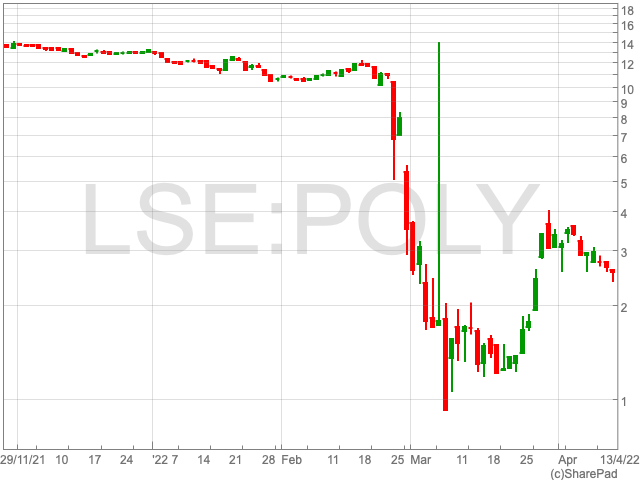
The top risers included Evraz rising 47.1% to 88.1p, Polymetal International rising 29.75% to 223.3p and BAE Systems rising 6.45% to 736p at the time of writing.

Evraz and Polymetal have seen intensive market volatility since the start of the Ukraine crisis, with financial sanctions against Putin’s regime crippling the businesses.

“Russian companies trading on the London Stock Exchange continue to lose board members at pace as directors realise the optics of being linked to these businesses are toxic,” said an analyst at AJ Bell.

“However, it will make any future rehabilitation for these stocks, which already looked unlikely, even more difficult.”

Despite a highly uncertain outlook for Evraz, the plummeting prices have seen bargain hunters swoop in to buy the beaten up stock.

BAE Systems

BAE Systems continued to profit from increased demand in its services, as the arms contractor saw a spike in interest as a direct result of Russia’s war in Ukraine spurring on demand in company’s stock.

CCHBC

Coca-Cola HBC shares continue to fall this week, with a 7% drop to 1464p today. CCHBC is facing the brunt of the geopolitical situation with halted productions of their beverages. At the same time, with large portions of revenue contribution coming from emerging markets, the current situation in Russia and Ukraine is denting investor confidence in CCHBC.

Travel shares

The rippling impact of the oil prices are expected to inflate travel costs for consumers in the near future. As result, investors are departing airline shares with IAG trading down 7.8% to 113p on Monday morning.

“British Airways owner, International Consolidated Airlines Group has flown into severe turbulence today with shares down by nearly 10% in early trade, as investors fretted about mounting fuel costs and the loss of confidence among the travelling public,” said Susannah Streeter.