Polymetal postpones 2021 final dividend payment

0

The Board of Directors of Polymetal has decided to postpone the decision on the final dividend payment for 2021 due to geopolitical tensions announced by the Russian miner on Wednesday.

The company’s latest announcement has led Polymetal shares to lose 4% to 255p further hurting the stock.
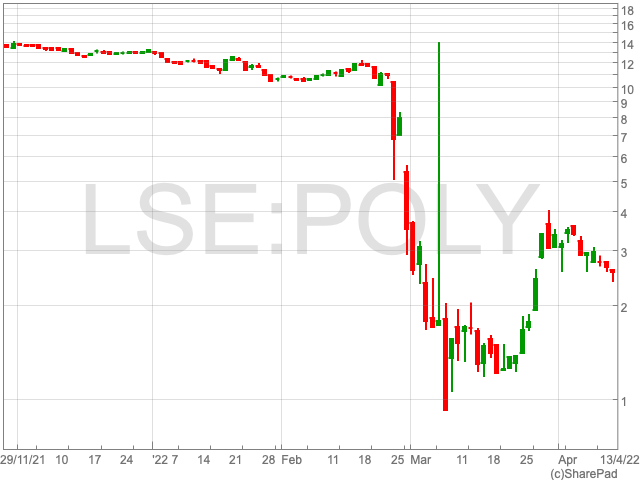
The Russia Ukraine war has impacted Russian companies such as Polymetal in the worst ways with sanctions and bans. Significant changes in operating conditions that the group has experienced in recent weeks have been considered by the Board before delivering the company’s latest announcement.

As a result of this analysis, the Board has determined that it is no longer appropriate to recommend or declare the final dividend payment for 2021, which was scheduled to be presented to shareholders for approval at the Annual General Meeting on 25 April 202.

The Board has decided to postpone the dividend payment decision to August 2022 along with the interim dividend decision for 1H 2022 as a result of restrictions on Russian banks and the economy, which is increasing concern about the availability of funds for Polymetal.

Liquidity constraints and supply chain constraints have resulted in higher working capital requirements for the company whilst lower credit availability and a much greater cost of capital have put pressure on the balance sheet.

Due to the various factors standing in the way for the Board, the resolution on the 2021 final dividend payment that was scheduled to be presented to shareholders for approval at the Annual General Meeting on 25 April 2022 will be withdrawn.

A recent addition to the Board, Riccardo Orcel, Chair of the Board said “We have thoroughly re-evaluated the Board’s March recommendation on dividends taking into account recent changes in macro and regulatory environment and unanimously have come to a conclusion that the payment decision should be postponed in order to sustain the stability and liquidity of the business.”

“We will continue to monitor the operating, funding and regulatory conditions in which the business operates, hoping that stability is restored, improving visibility which would allow us to return to our cash distribution policy.”

Meggitt disposes Meggitt A/S for £59m

0

The international engineering company Meggitt, announced the disposal of Meggitt A/S to CTS Ceramics Denmark A/S for a cash consideration of £59m on Wednesday.

Meggitt has agreed to sell Meggitt A/S to CTS Ceramics Denmark A/S for £59m in cash, subject to net debt and working capital adjustments.

Meggitt A/S produces high-performance piezoelectric ceramic components for medical and industrial use.

The sale is in line with Meggitt’s objective of producing sustainable and innovative solutions for its main end industries of aerospace, defence, and energy, and it comes after a string of sales in the last four years.

Meggitt A/S had gross assets of £23m at the end of the 2021 financial year including goodwill and other intangible assets deriving from the original acquisition of the business and profit before tax of £2.9m.

The completion of the project is contingent on the acquisition of all necessary governmental approvals as well as the fulfilment of other customary closing conditions.

The cash proceeds will be utilised to pay down debt and for general company purposes once the transaction is completed.

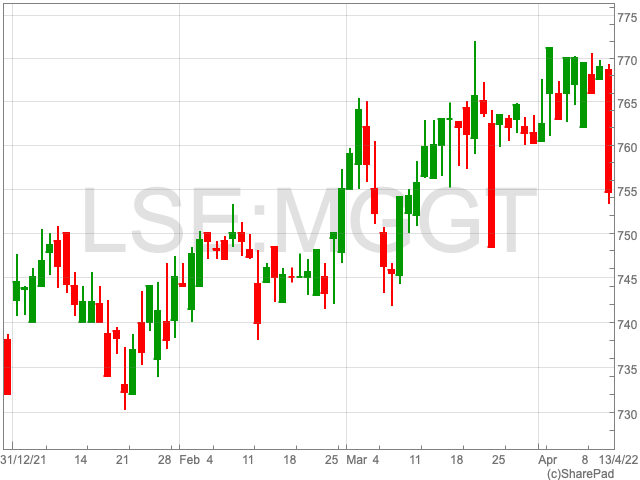
Meggitt shares fell 0.1% to 768p after the company announced the disposal of Meggitt A/S to CTS Ceramics Denmark A/S.

New standard listing: Financials Acquisition Corp looks for insurance deal

Financials Acquisition Corp is a shell looking for a financial services acquisition, particularly in the insurance area which accounts for one-third of the global financial services market. Financials Acquisition Corp has raised a significant amount of cash and seems to have the backing to make a large acquisition.
The focus is technology that is used to make the insurance sector more efficient. This could be used for managing general agents, London insurance market participants or distributors.
Conditional dealings started at 1000.2p and fell to 991.5p. After three days the price was back to ...

US CPI rises to 8.5% as market braces for shocks

0

The US Consumer Price Index (CPI) soared to 8.5% in March this year, hitting its highest climb since 1981 and sending shockwaves across the country as people braced for skyrocketing costs.

The high rate of inflation was reportedly in line with market expectations, which had adjusted for consistently above-forecast CPI prints over the last several months.

The US Labour Department reported that Russia’s invasion of Ukraine had driven energy costs upwards, with the CPI also highlighting an increase in the cost of everything from food to rent expenses.

“It is worth noting that inflation measures in the services sector, which make up close to 60% of the CPI measure, have continued their climb higher,” said Validus Risk Management senior associate Caleb Thibodeau.

“In particular, shelter costs which alone account for 33% of CPI, have printed at 5% year-over-year without accounting for a scorching housing market.”

“This reflects the continued climb of living costs outside of food and energy as well.”

The price surge followed February’s 40-year record climb of 7.9%, resulting from the knock-on effect of supply chain disruptions and oil prices due to economic sanctions against Russia.

The country’s gasoline index rose 18.3% in March and represented over half of all products’ increase across the month.

Food prices also increased 8.8% since the same period in 2021, with a 3.2% rise in rice and potatoes, a 3.8% spike in canned fruit and vegetables and a 2.1% uptick in ground beef.

“Overall, inflation in food and energy will continue to draw the most concern at home and abroad,” said Thibodeau.

“The security of global supply and supply chains in each of these commodity sectors will most certainly be the driving geopolitical force over the coming years, with a high likelihood of outside shocks.”

It will be worth keeping an eye on the more secure investments going forward in the next stage of 2022, as the market looks set for a considerably turbulent period.

Plus500 shares spike as trading company projects 68% revenue surge

0

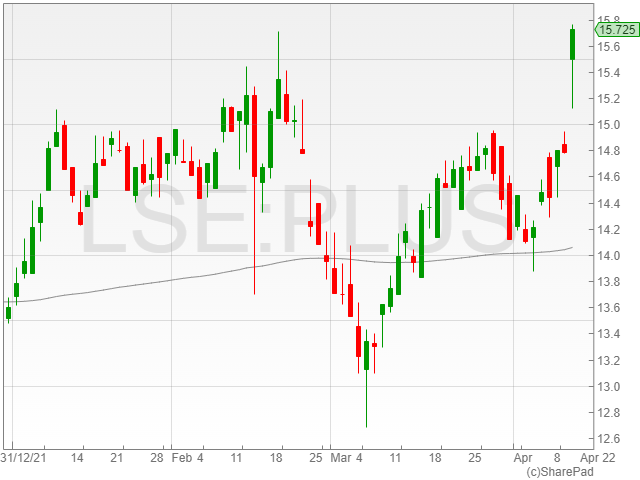
Plus500 shares surged 6.2% to 1,571p in late afternoon trading on Tuesday following the company’s report of a 68% spike in revenue to $270.9 million against $161.1 million over its latest quarter.

The trading firm announced an dramatic EBITDA increase of 128% to $161.6 million compared to $70.9 million, and an EBITDA margin of 60% against 44% in Q4 2021.

The company said that it currently expects its financial results for 2021 to perform ahead of market expectations.

Plus500 marked a slight 2% uptick in new customers to 33,740 compared to 33,187 last quarter, alongside a 3% increase in active customers to 176,642 against 171,922.

The firm reported a series of company high points, including its continued expansion into Europe with its new Estonian licence.

The group further celebrated its expansion into Japan through its acquisition of EZ Invest Securities, and its ongoing integration of its US acquisitions.

Plus500 said that its growth was driven by consistently robust levels of customer income, with its lean and flexible cost base supporting its high EBITDA and EBITDA margin figures.

The company also noted the rollout of its Plus500 invest share dealing platform iOS and Android releases, with the platform’s advancement on track according to the group’s management schedule.

The fintech firm added that its cash balance remained strong with $886.6 million, as a result of continued high performance in cash generation across the quarter.

“Plus500 has produced excellent results for Q1 2022, continuing our significant operational and financial momentum over recent years, and validating our clear strategic roadmap,” said Plus500 CEO David Zruia.

“Our on-going investments in developing our position as a global multi-asset fintech group will enable future growth.”

“In particular, we continue to make organic investments in technology, marketing and our people, as well as actively targeting additional acquisitions and initiating potential strategic partnerships.”

Pennon Group makes a splash with £1.5 billion environmental programme

0

Pennon Group shares decreased 0.6% to 1,045p in late afternoon trading on Tuesday, after the company reported that it was on target to deliver financial results in line with management expectations ahead of its financial results for 2021.

The water firm noted its largest environmental investment programme in 15 years worth £1.4 billion across South West Water and Bristol Water, along with its scheduled acceleration and additional spend of £150 million over the current regulatory period, which was funded by re-investment of RORE outperformance to date.

The programme is set to include wastewater investments of £330 million as part of the company’s WaterFit plans for 2022 to 2025 in a move to improve the quality of rivers and seas across the South West waters region.

“Pennon, and other water companies, have come under fire for pollution incidents linked to their sewage operations so news of a £330m investment into their waste water operations will be welcomed by many,” said Hargreaves Lansdown select fund manager Steve Clayton.

The company highlighted its CMA clearance for its Bristol Water and South West Water merger, with the integration process in motion and synergies targeting £20 million per year identified across the company by 2024 to 2025.

Pennon also announced that it had delivered £200 million of its share buyback programme, with fresh phases scheduled to commence subject to its review of potential growth opportunities.

The Group also drew attention to its bill cut for 2022 to 2023, and said that bills were currently lower than they were 10 years ago for South West Water customers.

“Pennon are performing well, with good plans to drive growth in the years ahead,” said Clayton.

“All in all it is a robust performance. With cost pressures emerging, Pennon will be glad to have the opportunity to create offsetting synergies from the Bristol Water integration which should allow them to have a more resilient financial performance than many UK companies will manage in the next few years.”

“Critically, Pennon are targeting real terms increases in their dividends to shareholders.”

Caledonia Mining strikes gold with record Q1 Zimbabwe production

6

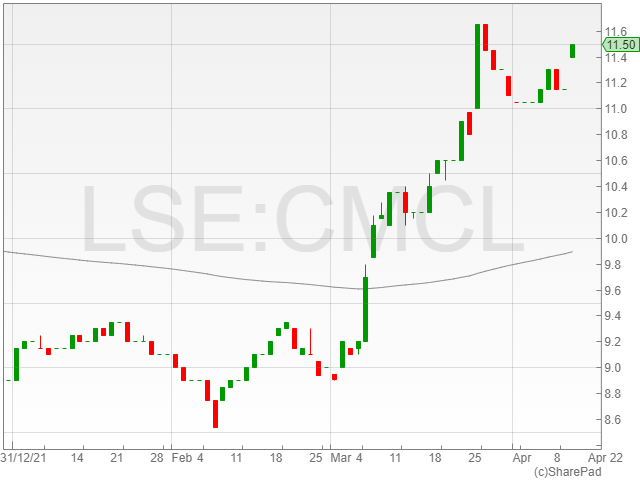
Caledonia Mining shares spiked 6.3% to 1,186p in early afternoon trading on Tuesday after the company reported a record quarterly gold production of 18,515 ounces from its Blanket Mine in Zimbabwe.

The mining firm noted a 40% increase in quarterly production on its result of 13,197 ounces produced in Q1 2021, along with an expected reiterated gold production between 73,000 to 80,000 ounces for 2022.

Caledonia Mining highlighted that its gold production had exceeded management expectations, reflecting the increased capacity at its Blanket Mine Central Shaft.

“I am delighted that during this quarter we have set a new first quarter production record,” said Caledonia Mining CEO Steve Curtis.

“The ramp-up in production towards our quarterly target of 20,000 ounces means that we are on track to meet our annual production target.”

Curtis also remembered 35 year old Andrew Clydon Phiri, a Caledonia employee who tragically passed away in an accident at the Blanket Mine Project over the past quarter.

“As previously announced, very sadly during the quarter a fatal accident resulted in the death of a Blanket employee.”  

“We always take the safety of our employees very seriously and I join my colleagues in expressing our sincere condolences to the family, friends and colleagues of the deceased.”

FTSE 100 flashes red as inflationary woes loom over UK market

0

The FTSE 100 was down 0.4% to 7,582.9 on Tuesday on investor concerns over inflation and rising bond yields.

Defensive stocks such as utilities and insurers suffered the heaviest falls, with companies across the board in the red as the market trudged into a dismal day of trading.

Risk-off sentiment flared up across Europe, with Deutsche Bank decreasing 10% and Commerzbank spiralling almost 9% after reports that a major investor had sold a substantial chunk of their shares in both firms.

“Another day, another decline for key equity indices. European stocks were in the doldrums as investors fretted about inflation, politics, consumer spending and more,” said AJ Bell financial analyst Danni Hewson.

“Corporate news flow is picking up which is giving investors a reason to want to trade the markets, but mixed messages from these businesses is making it hard to call which way equities will move next.”

Commodities prices increased and sent mining stocks on the rise, including a 1.3% increase to 16,860 in Antofagasta, a 1.3% uptick to 527.2p for Glencore shares and a 1% rise for Rio Tinto to 61,400p and Endeavour Mining to 20,050p.

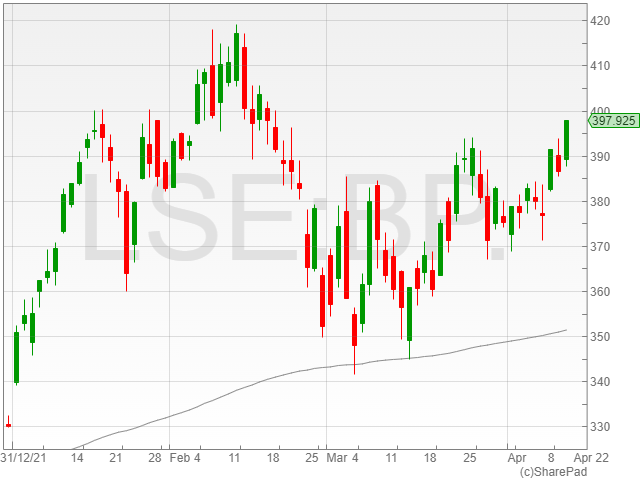
BP soared to the top of the FTSE 100 with a 2.7% rise to 397.5p after the price of Brent Crude increased 3.5% to $102 per barrel.

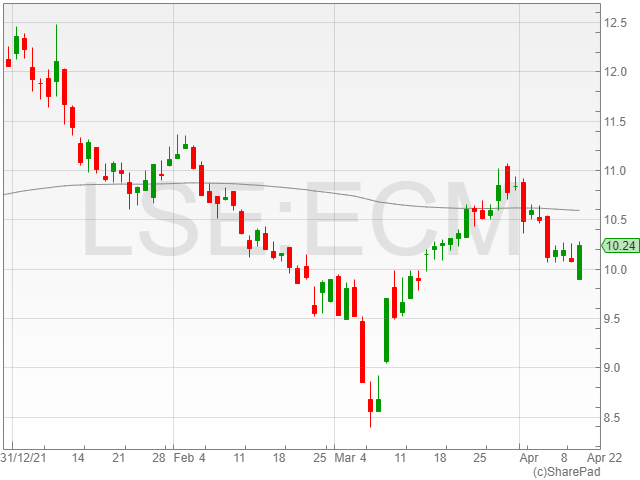
Electrocomponents enjoyed a 1.4% rise to 10,225p on the back of shining projections of a 26% like-for-like revenue growth for 2021, alongside an adjusted operating profit margin at the high end of its management consensus range.

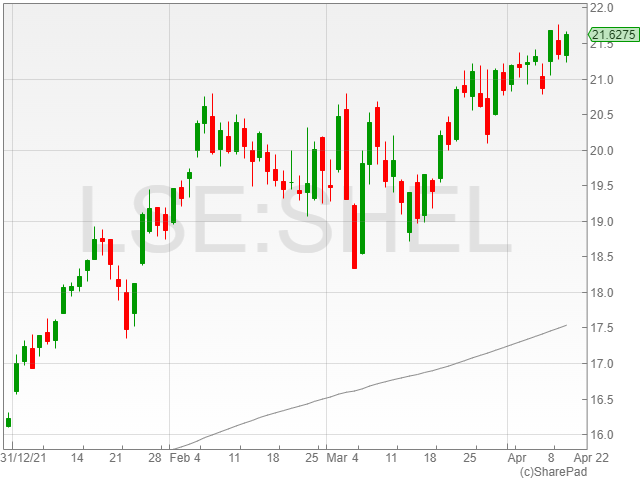
Shell shares rose 1.1% to 21,602p as it also rode the oil price uptick higher.

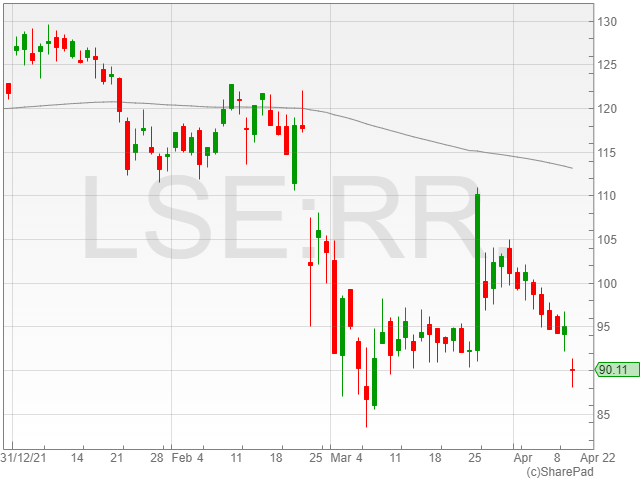
The Rolls Royce Group fell 5% to 90.2p after negative broker comments from JP Morgan toppled investor confidence in the company.

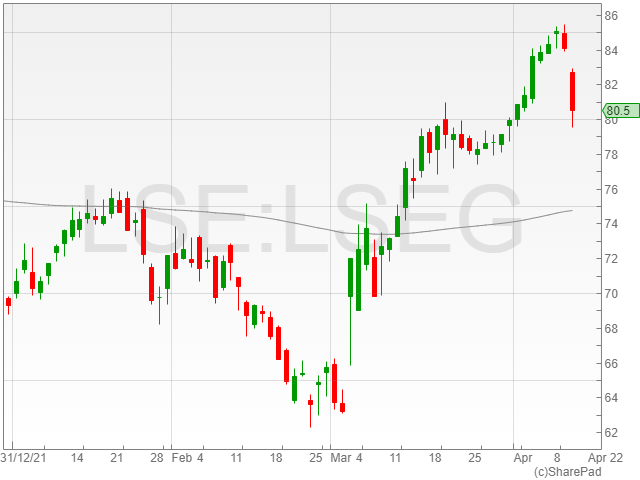
The London Stock Exchange hit the list of fallers as it suffered a 4.1% decrease to 80,590p in light of additional poor recommendations from brokers.

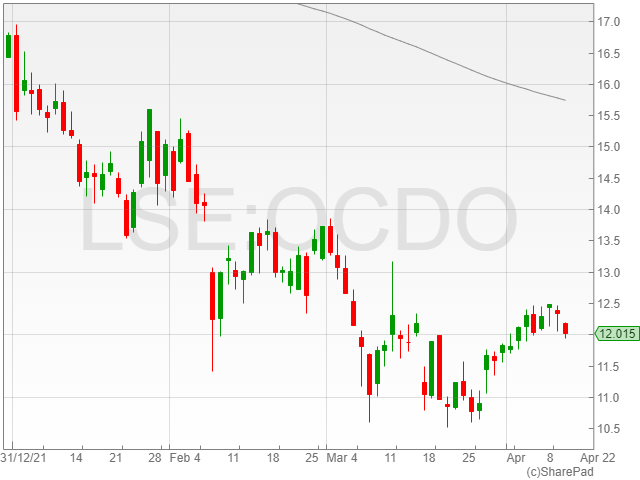
The Ocado Group dropped 2.9% to 12,017p as the struggling online retailer saw its star continue to fall in the new era of post-Covid retail, with the company struggling to adapt to survive its rapidly approaching obsolescence.

ASOS pre-tax profits fall 87% as group braces for inflation crash

0

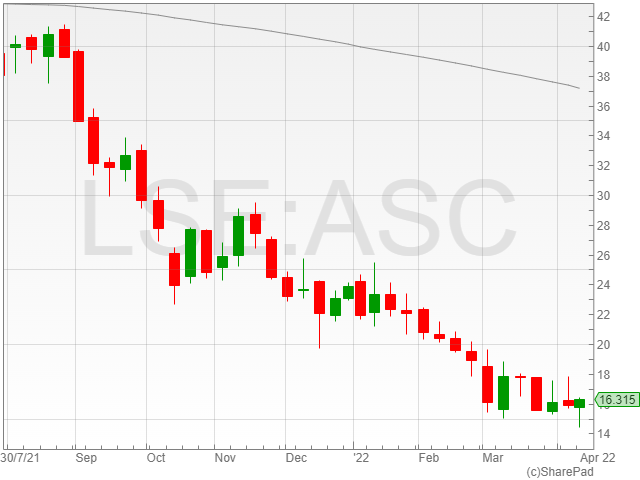
ASOS shares were down 5.3% to 1,620.5p in late morning trading on Tuesday after the fast fashion company reported a pre-tax profit fall from £112.9 million to £14.8 million in its interim results, marking yet another blow for the struggling retail sector.

The online fashion retailer also said it expected a £14 million loss in pre-tax profit due to its suspension of business dealings in Russia.

The group highlighted a 4% revenue growth to £2 billion, with the UK bringing in an 8% sales growth alongside an 11% increase from the US.

ASOS reported a continued triple-digit growth in Topshop brands with a 193% year-on-year rise, highlighting especially strong growth across the UK, US and Germany.

The company also noted an increase in its active customer base to 26.7 million, representing a 300,000 consumer increase over the last six months.

However, the fast fashion firm suffered a slowdown in growth as a result of cycling a term of exceptional customer acquisition in the previous year when the high street was closed.

ASOS forward guidance remained unaltered, however the company cautioned that the impact of inflation has not yet hit its consumer base.

“The broader online retail sector finds itself in somewhat of a sticky spot, with inflation at levels not seen for years the squeeze on finances will slowly start to feed into changing buying habits,” said Hargreaves Lansdown equity analyst Matt Britzman.

“When you add on the resurgence of High Street shopping and higher return rates, the goldilocks conditions seen last year are well and truly over.”

“That’s a pretty sombre backdrop and means the outlook from here is a tricky one to be confident about.”

ASOS reported an adjusted EBITDA of £26.2 million, representing a dramatic 77% fall compared to its £116.2 million result over the same period in 2021.

The company’s adjusted PBT of £14.8 million reflected the unwinding of Covid-19-related benefits from H1 FY21, alongside scheduled investment in marketing and significant cost inflation, particularly across warehouse labour and freight.

“ASOS has delivered an encouraging trading performance, against the continuing backdrop of significant volatility and disruption,” said ASOS COO and CFO Mat Dunn.

“The team has acted with determination and pace and is making good early progress on the strategic plan for the next phase of growth, as set out at our CMD last year.”

“We remain mindful of the potential impact on demand from the growing pressures on consumer spend and will continue to be responsive to any changes in market conditions as we progress the work started in the first half to deliver on our ambitions.”

EasyJet reports £535m loss as it awaits holiday influx

0

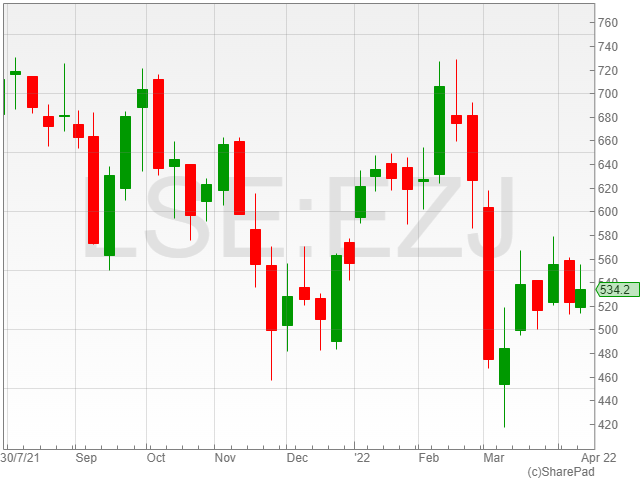
EasyJet shares were down 1.8% to 532.6p in early morning trading on Tuesday following the travel company’s release of an estimated £535 to £565 million pre-tax loss in its interim trading update for HY1 2022.

The budget airline reported a reduction in losses year-on-year, along with an increase in capacity to 80% of FY2019 in March.

The group’s total revenue and headline costs for the period were projected at £1.5 million, with an anticipated £2 million in headline costs.

The company’s passenger numbers increased to 11.5 million in Q2 compared to 1.2 million in Q2 FY2021.

EasyJet noted that its summer bookings for the last six weeks have tracked ahead of the same period in FY2019, with a particular increase in leisure routes.

“As a short-haul operator, easyJet is well positioned to capture demand from holiday-deprived families and individuals, who may be more wary about travelling further afield while there is still so much uncertainty,” said Hargreaves Lansdown lead equity analyst Sophie Lund-Yates.

The group highlighted the addition of five extra aircraft slots in Greece, positioning the travel firm as the largest carrier to the main Greek Islands over summer 2022.

The company also confirmed that 70% of its EasyJet holidays programme has been sold out and at substantially stronger margins against 2019 results.

“Despite a difficult climate, EasyJet has been increasing its operations, reaching a capacity of around 80% of 2019 levels in the first half of 2022,” said Third Bridge senior airlines analyst Allegra Dawes.

“High demand is expected in the European summer seasons as pent-up demand finds an outlet during the holiday season.”

EasyJet confirmed that the company flew at 67% 2019 capacity in Q2, in line with management expectations.

The travel firm suffered a dent in load factor for Q2 as a result of Omicron surges, however the load factor was built back over the second quarter after Covid-19 restrictions began to ease.

“EasyJet’s performance in the second quarter has been driven by improved trading following the UK Government’s decision to relax testing restrictions with an extra boost from self-help measures which saw us outperform market expectations,” said EasyJet CEO Johan Lundgren.

“Since travel restrictions were removed, easyJet has seen a strong recovery in trading which has been sustained, resulting in a positive outlook for Easter and beyond, with daily booking volumes for summer currently tracking ahead of those at the same time in FY19.”