Three nickel shares for the electric vehicle boom

Nickel shares are set to enjoy the benefits of increased demand for their metals as the world moves to increase the adoption of Electric Vehicles (EVs).

The anticipated exponential growth in demand for EVs in the coming years will require a significant ramping up in the production of the metals essential for their manufacture.

Electric vehicles require huge amounts of cobalt, copper, lithium and nickel and demand for these metals has ticked higher inline with EV manufacturing.

Minerals used in EV, according to the International Energy Agency:

-Copper: 53.2kg

-Lithium: 8.9kg

-Nickel: 39.kg

-Manganese: 24.5kg

-Cobalt: 13.3kg

-Graphite: 66.3kg

The surging demand for these metals is most recently evident in the nickel price, which has recently hit the highest level since 2011 on the London Metal Exchange.

Nickel prices traded above $22,000 per tonne on the London Metals Exchange this week, having sunk to lows around $11,000 in March 2020.

The increasing nickel price is of course good news for nickel mining shares and could make them one of the foremost beneficiaries of the EV boom.

Nickel shares

BHP Group (LON:BHP)

BHP is a highly diversified miner with global operations that produce copper, iron ore, potash and nickel.

BHP posted a 69% increase in underlying EBITDA to $37.4bn in 2021 on revenue of $60.8bn.

Nickel accounted for £1.5bn of this revenue in the period from their Nickel West asset in Australia.

Although BHP provides a relatively small exposure to nickel compared to their diversified production of base metals and fossil fuels, they have included nickel – along with copper and potash – as commodities they want to increase their exposure to.
In their 2021 results, BHP outlined forecasts of metal demand over the next 30 years as the world decarbonises to reach climate change targets.

BHP’s forecasts predict nickel demand will increase nearly 400% in a scenario where 1.5 degree targets are met.

Highlighting the importance the group places on nickel, BHP have recently announced a $100m investment into Tanzanian UK private entity, Kabanga Nickel.

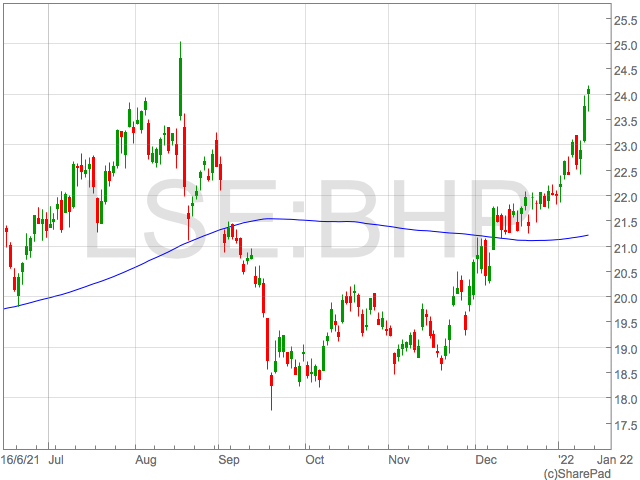
Although BHP offers a marginal exposure to nickel currently, it has plans to ramp their nickel exposure up, and the FTSE 100 stock provides safety through their diversified portfolio of assets and attractive dividend yield.

Horizonte Minerals (LON:HZM)

Horizonte Minerals is dual-listed on the TSX and London’s AIM and operates the Araguaia and Vermelho nickel projects in Brazil.

The company has conducted feasibility studies on the Araguaia projects and is working towards construction of a mine that could produce up to 29,000 of nickel per annum.

Horizonte’s Vermelho nickel cobalt project is being developed specifically to service the needs of the electric vehicle market and is currently undergoing feasibility studies.
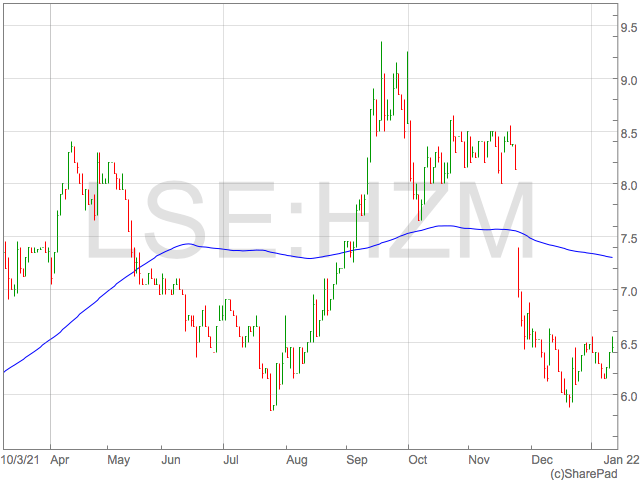
In a tweet from the Horizonte Minerals account on 13th January, they said “At US$22,000/t #nickel Araguaia’s Stage 1 + Stage 2 NPV is US$2.23 billion.”

Their lack of revenues means investors are at risk of dilution should the company need to raise further funds in addition to funding packages already outlined by Horizonte. However, adventurous investors may stomach this risk given the firm has recently completed a £147m fundraise and the NPVs of their projects dwarf the current £245m market cap.

Horizonte Minerals is the purest play on nickel of the three nickel shares we have included.

Technology Minerals (LON:TM1)

Technology Minerals have recently floated on the London Stock Exchange and provide exposure to all battery metals, including nickel.

Having raised approximately £5 million through their IPO, Technology Minerals plan to create a circular economy for battery metals in one group. This will involve the mining of battery metals through multiple projects and recycling of the metals through Recyclus Group. Technology Minerals has a 49% stake in Recyclus Group.
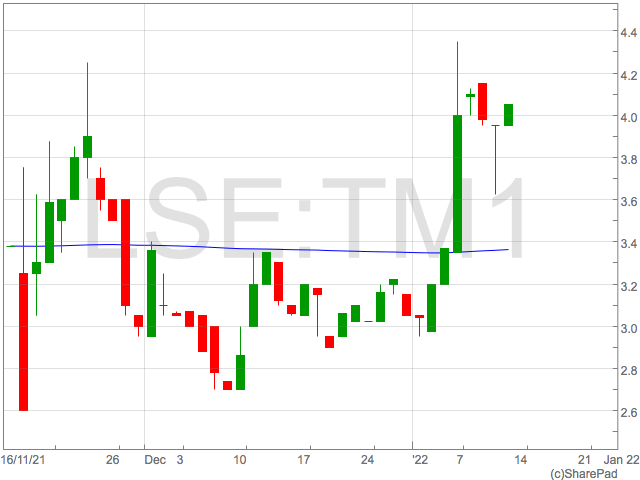
Technology Minerals is at the very early stages of establishing their operations but has commissioned a Competent Persons Report (CPR) for their project in Cameroon and has applied for exploration permits.

The CPR found three of five permits are considered prospective for nickel-cobalt-manganese mineralization.

The report makes similarities to the Nkamouna in southeastern Cameroon operated by Geovic Mining Corp where 120.6 Mt @ 0.65% Ni, 0.23% Co and 1.35% Mn has been identified.

Technology Minerals’ nickel journey is just beginning and may face bumps in the road, however, the overall business model will interest those looking for exposure to the EV and clean energy market, when compared to other nickel shares.
FTSE 100 consolidates above key support level amid mixed corporate updates

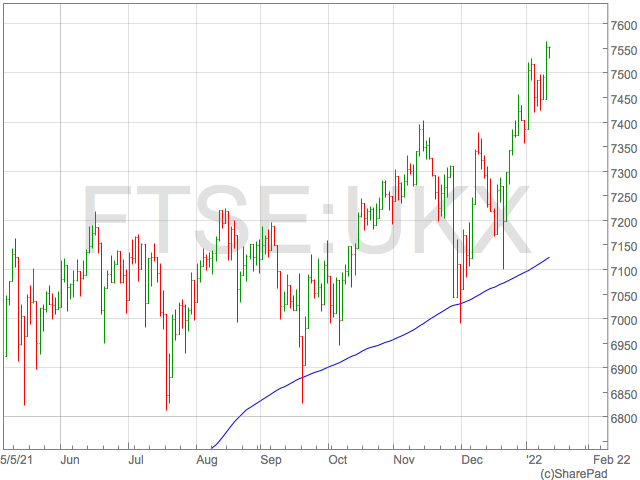
The FTSE 100 traded sideways on Thursday as London’s leading index consolidated recent gains above the key psychological support level of 7,500.

The 7,500 mark provided a stiff point of resistance in the early trading days of 2022 but has convincingly broke through to trade at pre-pandemic highs.

Technical analysts will now be watching the FTSE 100 and a test of 7,500 to judge whether the index can build a base there for the next leg higher. The FTSE 100 was trading at 7,546 at midday in London.

FTSE 100 corporate updates

The FTSE 100 traded sideways as the market digested a number of corporate updates including Tesco’s festive trading update and and an instalment from Persimmon.

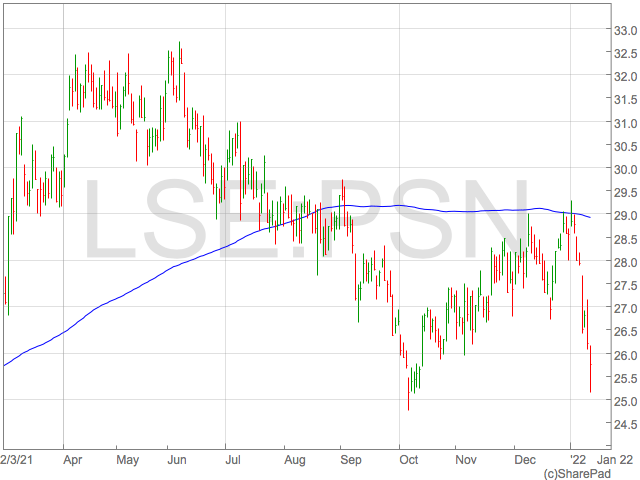
Persimmon shares were knocked down 1.7% after it missed some analyst estimates as completions were pushed back due to Omicron.

“With approaching 300 sites in operation, Persimmon have a lot of moving parts. Some analysts expected turnover to be a shade higher, but then again, the big jump in forward bookings, up from £1.32bn to £1.62bn suggests that demand is fine and most likely, some completions slipped over the year end as Omicron raced through workforces up and down the country,” said Clayton, fund manager at HL Select.

“Having stepped up land purchases, Persimmon should be able to capitalise on demand, so long as they can get the planning system to work for them. With sales rates up 20% in the second half the company is well positioned for the new year.”

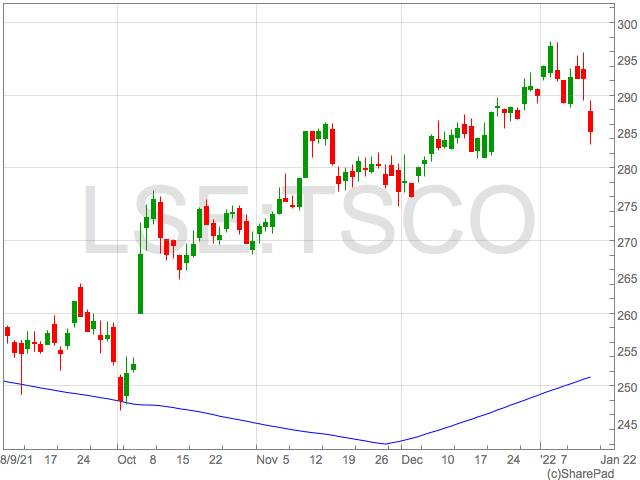
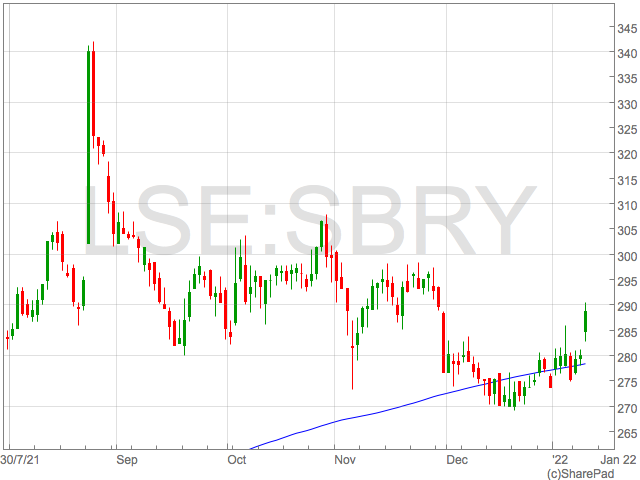
Following a fairly respectable update from Sainsbury’s yesterday in which they upped their profit guidance, helping shares rise on the day, investors showed some disappointment with Tesco as shares gave up 1.5% in Thursday morning trade.

“Despite a strong Christmas and a small upgrade to forecasts, Tesco didn’t do enough to impress the markets, at least in early trading on Thursday,” said AJ Bell investment director Russ Mould.

“However, there was still plenty to please long-term investors. The more focused strategy progressed under Dave Lewis and his successor Ken Murphy has helped deliver the supermarket’s highest market share in four years.”

“Tesco’s online sales continue to track much higher than pre-pandemic levels. This is important as the greater scale in this part of the business is improving its profitability.”

Exploring the Ukrainian Tech sector with Parimatch Tech Deputy-CEO Anna Motruk

The UK Investor Magazine Podcast is joined by the the Deputy-CEO and CFO of Tech company Partimatch Tech, Anna Motruk.

Parimtach has grown from a small startup to a multinational company that operates in 8 countries globally including the UK, Tanzania and Cyprus.

Parimatch provides technology solutions to the gaming industry and has partnerships with Betvictor and a number of football clubs including Chelsea, Leicester and Juventus.

Anna provides deep insight into the Ukrainian tech sector and the factors that have made it one of the fastest growing tech communities globally.

Find out more about Parimatch here:

https://parimatch.tech/

Halfords revenues continue to increase

0

Despite less demand, Halfords has posted a 13.9% rise in two-year revenue growth.

Over the past two years, revenues have soared by 90% as cycling became popular over the pandemic.

Over the first half of the third quarter, sales were strong but were impacted by Omicron.

“These results demonstrate the strength of our motoring services offer, and the outstanding performance from our autocentres business confirms the rationale behind our recent acquisitions,” said chief executive Graham Stapleton.

Profit outlook remains the same, which is £80m to £90m in full-year profits.

Tesco raises profit outlook amid strong results

1

After strong sales in the last quarter, Tesco has raised its profit outlook.

Compared to last year sales were up 0.3%, however, compared to pre-pandemic levels sales jumped 8.8%.

CEO Ken Murphy commented: “We are delighted that we were able to help our customers have a great Christmas.”

“Despite growing cost pressures and supply chain challenges in the industry, we continued to invest to protect availability, doubled down on our commitment to deliver great value and offered our strongest ever festive range.”

“This put us in a strong position to meet customers’ needs as, once again, COVID-19 led to a greater focus on celebrating at home. As a result, we outperformed the market, growing market share and strengthening our value position,” he added.

Richard Lim, CEO at Retail Economics, commented: “The retailer’s single-minded focus on competitive pricing and driving loyalty through its Clubcard-only discounts has won over customers this Christmas. The use of Clubcard has been a masterstroke from the retailer, enhancing the perception of value and playing on the hugely powerful customer instinct of FOMO – the fear of missing out.

“Online continued to deliver strong gains as a wave of new e-commerce converts stuck to a new way of getting their groceries over Christmas. Sales growth was mightily impressive in the wholesale part of the business with Booker seeing double-digit growth as catering and convenience boosted sales.

“Looking forward, the imminent squeeze on incomes will force many households into recessionary behaviours, trading down to own-brand and shopping around as they look to make budgets stretch that little bit further. Tesco is well placed to win new customers with their laser-like focus on value as they double-down on their Clubcard success.”

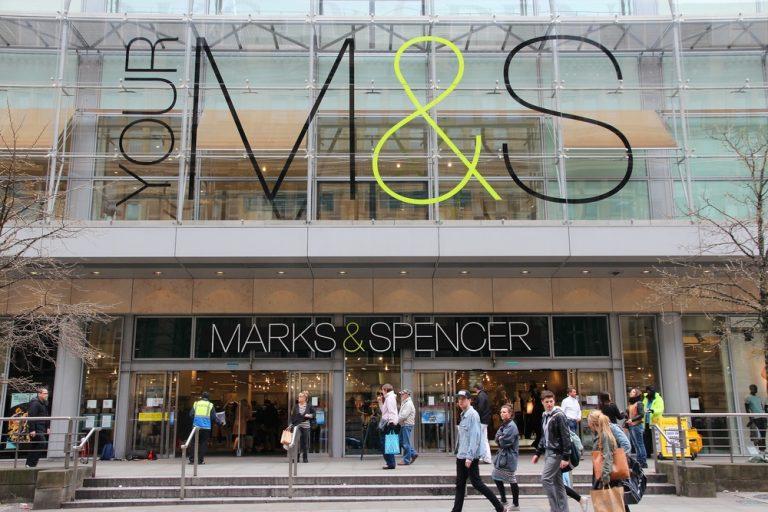
M&S posts strong sales but shares drop

0

M&S has posted strong Christmas results, with sales up 8.9% in the last quarter.

The group posted a rise in food sales by 12.4% and customers increased basket sizes and spent money on higher end products to celebrate the festive season.

Clothing & home sales were up 3.2%.

“Trading over the Christmas period has been strong, demonstrating the continued improvements we’ve made to product and value,” said chief executive, Steve Rowe.

“Clothing & Home has delivered growth for the second successive quarter, supported by robust online and full price sales growth. Food has maintained its momentum, outperforming the market over both 12 and 24 months.”

“The market continues to be impacted by the headwinds and tailwinds that we reported in the first half, but I remain encouraged that our transformation plan is now driving improved performance.”

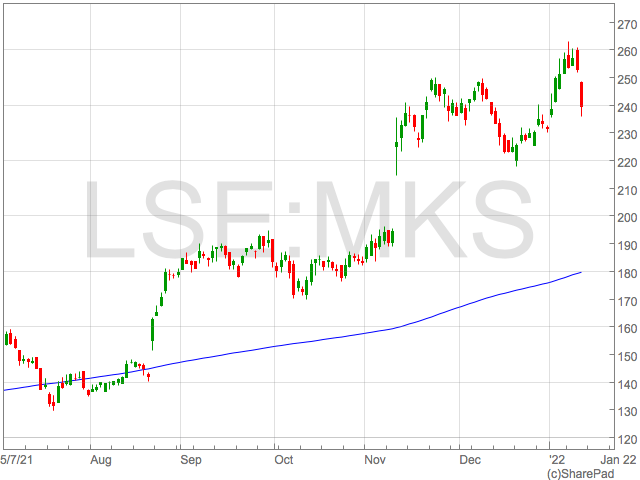
Despite the strong results, shares in M&S dropped 5.6% at the time of writing on Thursday morning.

“Well, “Super” Thursday is traditionally the best day to “bury” bad news about Christmas trading, given the huge number of companies usually reporting at the same time, but the field is a bit thin this year…and although we can’t see any bad news, we can’t see that much good news either, with the City likely to be disappointed by the lack of a profit upgrade at M&S…” said analyst Nick Bubb.

Miners help FTSE 100 trade at pre-pandemic highs

The FTSE 100 continued convincingly broke through 7,500 on Wednesday morning, touching 7,555 and the highest level since January 2020.

The rally was driven by stronger miners that dominated the FTSE 100 top risers in Wednesday trade. Anglo American, Rio Tinto, BHP, Glencore and Antofagasta were among the top gainers as commodity prices surged supporting mining share prices.

A culmination of hopes China’s steel making industry would continue to recover, and disruption in Brazilian iron ore production pushed Iron ore Futures on the key Dalian Exchange in China to the highest level this year.

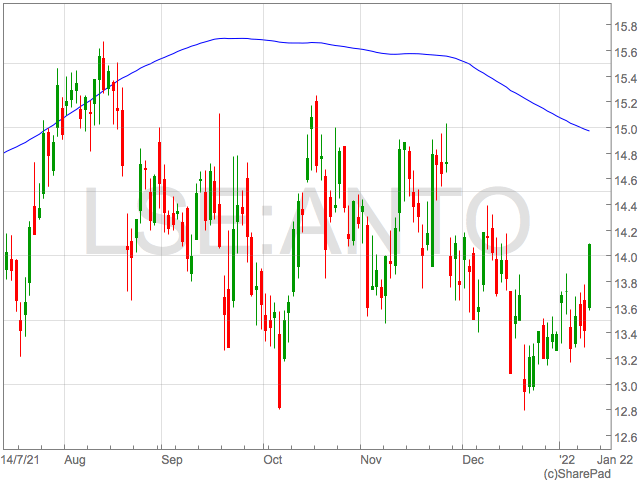
Copper futures traded on the London Metals Exchange also rose to trade above $9,600 per tonne. Copper miner Antofagasta was the FTSE 100 top riser at the time writing, gaining 4.8%.

“The FTSE 100 traded 0.6% higher, with miners dominating the index’s top performers. The top six risers were all metal producers, and this sector is a bellwether for global economic activity,” said Russ Mould, investment director at AJ Bell.

Improving sentiment

The general risk-on rally began in Asia overnight and the optimism continued into the London session, following comments from Fed Chair Powell on the trajectory on inflation, and suggestions interest rate hikes in the US may not be as dramatic as previously thought.

“Volatility is down, equities are up. Investors look to be regaining their confidence after a choppy start to 2022 with all the main indices across Europe and Asia pushing ahead, following a similar performance on Wall Street last night,” said Russ Mould.

“Driving confidence were remarks by Federal Reserve chairman Jay Powell that the central bank would do everything it could to stop inflation running out of control.”

Highlighting the risk-on nature of today’s trade, Mould pointed to declines in defensive shares as investors rotated to cyclical stocks.

“Risk appetite appears to have returned given how more stodgy companies like BT, Reckitt Benckiser and Imperial Brands were among the fallers on the FTSE. Instead, investors were more interested in bidding up some of the tech plays which have been beaten up recently, including Scottish Mortgage,” said Mould.

“Also in vogue were a slew of consumer-facing companies riding high after upbeat trading statements. These included Sainsbury’s which upgraded its profit guidance, and Whitbread which said it continued to trade ahead of the market.”

Sainsbury’s posted an upbeat festive trading report that showed they had gained market shares paying testament to their efforts to take in the discount supermarkets such as Aldi and Lidl.

“Sainsbury’s is the latest supermarket directly trying to take on the discounters, with massive investment in reducing prices helping the supermarket up its market share,” said Sophie Lund-Yates, equity analyst at Hargreaves Lansdown.

“The group also benefitted from another year of customers wanting to treat themselves over the festive season, as rules were relaxed and people went all-out, piling trollies and virtual baskets high.”

Sainsbury’s, Bidstack and US Tech Stocks with Alan Green

The UK Investor Magazine Podcast is joined by Alan Green for a discussion around key market themes and a selection of UK equities.

This Podcast explores Sainsbury’s (LON:SBRY), JD Sports (LON:JD), Bidstack (LON:BIDS) and ECR Minerals (LON:ECR).

Sainsbury’s and JD Sports can be viewed as bellwethers of the UK’s consumer and their festive updates provide an insight into consumer behaviour and propensity to spend.

Sainsbury’s enjoyed the fruits of their strategy to provide low cost lines in an effort to take on discount supermarkets, whilst still offering a significant range of branded goods. Having all if this under one roof proved a success for Sainsbury’s and their festive update was well received by markets.

JD Sports are seemingly immune to the strife elsewhere on the high street posting a respectable set of festive trading figures. We question where growth could come from in 2022.

Bidstack have signed a commercial agreement that guarantees a minimum of $30 million advertising spend through their new partner. This will dramatically increase Bidstack’s revenue in the coming periods and was immediately reflected in the Bidstack share price. However, it may have come too late for Bidstack to take a dominant position in the market given the level of competition in the market.

We also briefly touch on the latest from ECR.

Topps Tiles sales up 21%

0

Topps Tiles has reported strong sales for the 13-week period ended 1 January.

Sales were up 21% over the period for a two year period.

“We have made an encouraging start to the new financial year, with strong customer demand during the first quarter and like-for-like sales growth on both a two year and one year basis against tough comparatives,” said CEO Rob Parker.

“Global supply chain challenges, higher staff absence due to Covid-19 and material cost price inflation continue to provide significant headwinds, however we are managing these challenges effectively.  I am confident that our successful strategy and strong balance sheet leave us well-positioned to deliver sustainable long term growth and our 20% market share goal of ‘1 in 5 by 2025’.”

The group has made many precautions in the last quarter to mitigate against higher shipping costs and inflation.

DFS shares up on strong sales

0

DFS has reported strong results as sales were up 10% compared to the same period in 2019.

Sales remain 2% lower than in 2020, where there was a surge in people carrying out home improvements over the lockdown.

Chief executive Tim Stacey said: “While the market remains hard to predict, we believe our scale, brand strength and integrated retail strategy will allow us to drive market share gains ahead of the competition.”

“Looking ahead we will continue to invest in our digital platforms and our showrooms, our delivery network, our UK manufacturing capacity, and with expansion into other home categories, we are well positioned to succeed.”

Shares in the group jumped 3% in morning trading.