FTSE 100 grinds out weekly gain on strong corporate results

1

FTSE 100 gained Friday with strong corporate update and positive mining stocks offsetting the losses on the index from banking shares provoked by investor concerns over the Bank of England’s meeting next week.

The Ukraine conflict, China’s COVID restrictions, and rising inflation have all weighed on the global economy, causing uncertainty ahead of the Bank of England’s widely anticipated meeting next week, that could see interest rates rise for the fourth time in a row.

“The UK stock market continued its recovery from the big falls seen at the end of last week and beginning of this week amid some solid corporate updates and strong trading in Asia and on Wall Street,” said Russ Mould, Investment Director, AJ Bell.

Mining stocks continued to support the FTSE 100 with gains across the sector during times of volatility caused by China’s lockdown and Russia’s invasion.

Mining stocks such as Anglo American, Glencore, Antofagasta and Rio Tinto saw shares climb between 0.8% to 1.9%, where Anglo American, Glencore, Antofagasta and Rio Tinto shares rose to 3,517p, 489p, 1,548p and 5,677p respectively.

Smurfit Kappa shares rose 4.2% to 3,411p after the company reported YoY revenue growth of 33% to €3.02bn and EBITDA at €514m despite headwinds at the start of the year, in the first quarter of 2022.

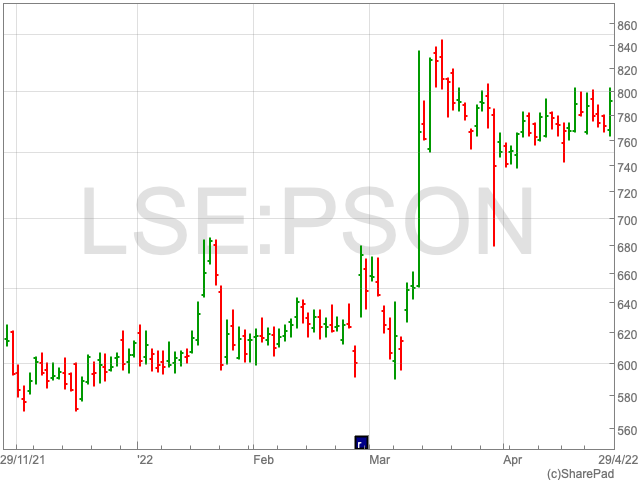
Pearson shares gained 2.5% to 790p after the group reported a 7% underlying sales growth in its first quarter on a strong contribution of 22% from its Assessment & Qualifications and English Language Learning divisions.

Pearson also announced the acquisition of Mondly on Friday which is expected to deliver mid-teens margins for the English Language Learning division by 2025.
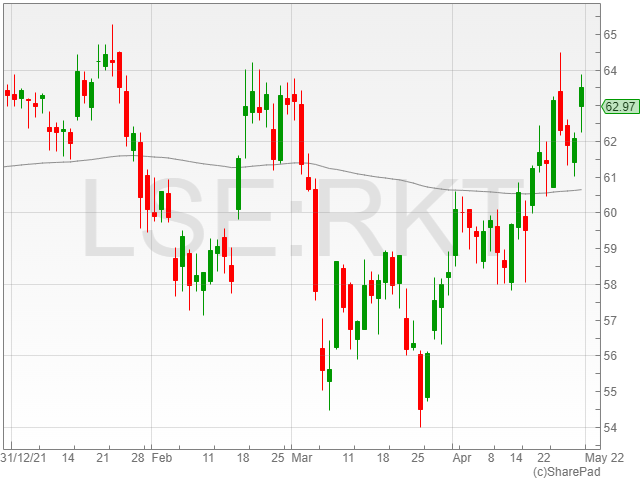
Reckitt Benckiser shares rose 0.5% to 6,235 despite the company reporting a slip in revenue of 2.3% to £3.4bn from £3.51bn in the first quarter of 2022. However, the group’s expectations of net revenue growth remaining at the upper end of its guidance supported the stock.
Hikma Pharmaceutical shares tumbled 6% to 1,903p after the group announced that its Generics business has experienced some headwinds due to increased competition and a challenging pricing environment, resulting in a “slow” start to the year. However, the group expects full-year Generics revenue growth between 8% to 10% for 2022.

Hikma reported a good performance in its Injectables and Branded businesses, and the company expects Branded revenue to be in line with 2021 as it maintains its focus on key therapeutic areas and chronic medications. 

NatWest shares dropped 3.8% to 214p as the company reportedly booked a £38m credit provision release in the first quarter, down from a £98m in 2021, in times when peers are beginning to prepare for potentially slowing economic growth. 

However, the banking group is confident in securing income above £11bn in 2022 from its core operations.

NatWest noted a 41% surge in operating pretax profit to £1.25bn from £885m in Q1 2022, and attributable profit rose 36% to £841m from £620m. 

“Like several of its rivals NatWest smashed forecasts but for investors the focus is much more on the outlook, which despite the boost to profit implied by rising interest rates, is heavily clouded by the risk of an increase in bad debts linked to the cost-of-living crisis,” added Mould.

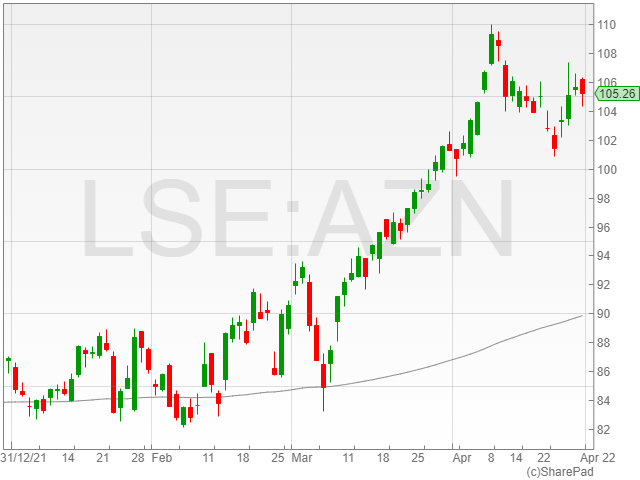
AstraZeneca shares fell 1% to 10,462p after the company reported a decrease of 66% to £553m from £1.6bn in pretax profit in 2022. The company however did record a rise in revenue of 56% to £11.39bn from £7.32bn in 2021 due to the 21% contribution from its oncology arm.
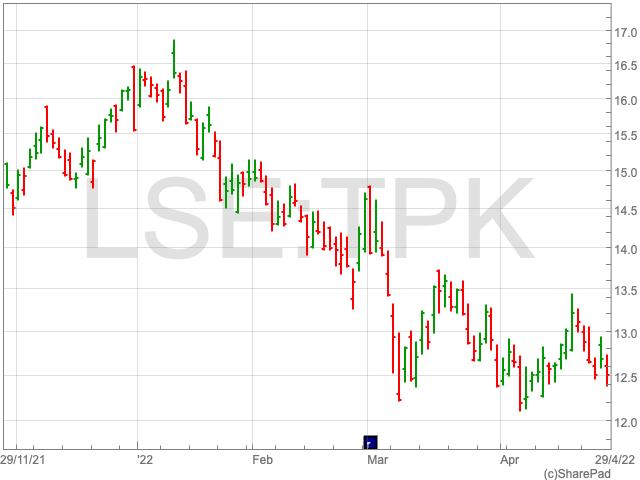
Travis Perkins shares were trading down 1.5% to 1,248p despite the company posting a 14% rise YoY in sales during its Q1 trading update. However, an uncertain outlook for 2022 due to material inflation hindered the stock.

Russ Mould stated, “The most encouraging takeaway from building materials supplier Travis Perkins was its apparent ability to pass on an increase in raw material costs amid strong demand for housing.”

“Crucially while prices are still high, the supply chain issues which affected the sector throughout 2021 are beginning to ease.”
BP gained 0.2% to 388p after the oil and gas company announced the strategic partnership with Volkswagen AG to “boost” the adoption of electric vehicles across Europe. The pair plans to “rapidly” build a fast-charging EV network across Europe by 2024.

However, BP’s peer Shell saw its shares dip 0.8% to 2,167p on Friday despite oil prices rising 1.8% to $109 a barrel.

Price Targets

Smith & Nephew shares were trading up 0.4% to 1,316p after UBS and Citigroup raised the company’s rating to ‘neutral’ and increased its price target to 1,295p and 1,430p respectively.

Glencore’s price target was raised by Barclays and Goldman Sachs to 730p, however, JPMorgan cut it to 630p.

Barclays also raised the price target of other miners such as Anglo American, Antofagasta, Endeavour Mining and Fresnillo to 3,400p; 1,645p; 3,000p; and 880p respectively, however, cut Rio Tinto to 4,800p.

Standard Chartered shares dipped 0.8% to 543p despite Goldman Sachs, Berenberg and Barclays raising their price target to 945p, 750p and 700p respectively, and upgrading it to a ‘buy’ rating.

Barclays shares rose 1.4% to 148p after Credit Suisse raised its price target to 240p from 205p.

Aveva shares gained 4.6% to 2,149p despite facing cuts in its price target from Deutsche Bank and Bank of America to 2,400p and 3,000p.

GlaxoSmithKline shares dropped 1% to 1,791p despite Barclays raising its price target to 1,800p from 1,775p and giving it an ‘equal weight’ rating.

Dechra Pharmaceuticals shares gained 2.5% to 3,664p despite Jefferies cuttin its target from 4,600p to 3,630p.

AB Foods gained 0.3% to 1,620p despite facing price cuts from Deutsche Bank and Credit Suisse to 1,900p and 2,410p respectively.

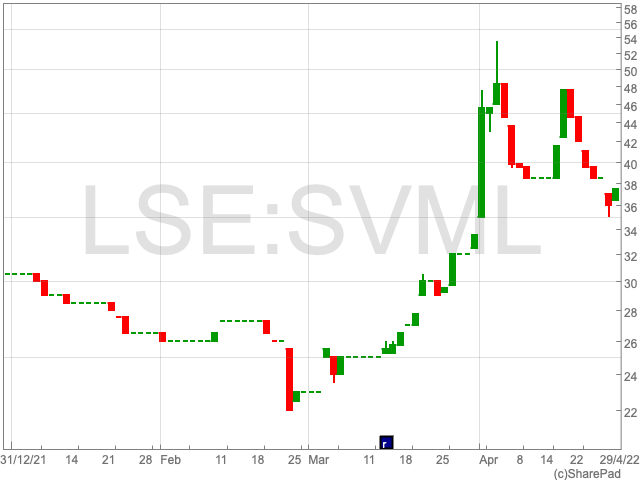
Sovereign Metals marks largest titanium rutile deposit ever discovered in Q1

0

Sovereign Metals announced its Q1 2022 report on Friday where the company said their recent Mineral Resource Estimate (MRE) upgrade confirmed Kasiya in Malawi is the largest rutile deposit ever discovered,

Sovereign Metals shares rose as much as 4% on Friday following the release of their Q1 update.

Kasiya is now a Tier 1 mineral project, with the world’s largest natural rutile deposit and second-largest flake graphite deposit, according to the updated MRE.

The project’s good economics was reaffirmed in the initial Scoping Study, which was based on a prior resource estimate issued in December 2021.

In the quarterly results, Sovereign reported finding 1.8bn tonnes @ 1.01% rutile and 1.32% graphite (Indicated + Inferred) equating to 18m tonnes contained rutile and 23m tonnes contained graphite.

Kasiya was confirmed as the world’s largest rutile deposit and one of the world’s largest flake graphite deposits in the revised MRE. 

A total of 662m tonnes which was 37% of the total MRE reports to the Indicated category @ 1.05% rutile and 1.43% TGC, with a recovered grade of 1.73% RutEq and the high global resource grade was @ 1.64% RutEq.

An updated Scoping Study to expand on the earlier study and analyse the influence of higher grades, larger production volumes, and increased mine life on the MRE scale is underway.

Rutile Market

The rutile market remains robust and current rutile spot prices, according to Iluka Resources, are at ten-year highs.

Demand for high-grade TiO2 feedstocks climbed during the quarter, according to major producers Base Resources and Iluka Resources, as western TiO2 pigment makers raised their production volumes and the welding consumable and titanium metal industries continued to expand.

A lack of titanium feedstock is restricting production rates and hampering the ability of major western pigment producers to meet demand from their end clients, according to reports.

Rutile prices grew dramatically during the quarter, and price increases for the June quarter have been negotiated.

The conflict in Ukraine has wreaked havoc on the titanium feedstock and finished goods supply chains, with bulk exports of ilmenite for pigment production and rutile for welding consumables being particularly hard hit. Ukrainian rutile producers in aggregate supply the world’s welding market with the most rutile.

Titanium metal manufacturing and export have also been harmed as continued disruptions to “mining and processing of titanium feedstock and finished goods” would further restrain supply in an already competitive industry.

Sovereign Metals Life Cycle Assessment

Sovereign’s potential to reduce carbon footprint is demonstrated by industry-leading independent Life Cycle Assessment (LCA).

When compared to other titanium feedstocks and flake graphite products on the market, Scope 1, 2 and 3 benchmark LCA studies for natural rutile and graphite produced from Kasiya offer the potential for a significantly reduced carbon footprint.

The LCA study found that each tonne of natural rutile produced at Kasiya is predicted to have a Global Warming Potential (GWP) of only 0.1 tonnes CO2 eq., which corresponds to a 95% to 97% decrease in total greenhouse gas emissions.

The total greenhouse gas emissions produced at Kasiya are 20 to 33 times less than that of titania slag and synthetic rutile, which are both alternative titanium pigment feedstocks produced by upgrading ilmenite using energy and carbon-intensive processes. 

When compared to natural graphite produced in China, each tonne of graphite produced from Kasiya is predicted to have a GWP of only 0.2 tonnes of CO2e, representing an 80% reduction in greenhouse gas emissions.

MoU with Hascor

Sovereign Metals and international ferroalloy and metal powder supplier Hascor signed a non-binding memorandum of understanding in March for the possible supply of 25,000 tonnes of natural rutile per annum from Kasiya to Hascor’s processing units and clients on five continents.

The MoU with Hascor envisions a five-year supply arrangement for up to 25,000 tonnes per annum of natural rutile to the group and their existing clients, starting from the start of nameplate production.

Volumes can be increased or decreased by mutual agreement. Pricing will be based on market rates in the welding sector at the start, with agreed-upon price fluctuations over the supply period.

With production and distribution centres on five continents, the company is a major processor and global distributor of natural rutile products for the welding industry.

This first MoU is part of Sovereign’s product marketing strategy, as natural rutile demand and pricing are both high, and the global structural supply shortage continues to increase.

Kasiya’s natural rutile has superior chemical properties, indicating that it is suited for all main end-use markets, including welding, TiO2 pigment feedstock, and titanium metal.

Sovereign Metals appointment

Mr Nigel Jones, a well-known international mining executive, has been named Non-Executive Director of Sovereign Metals and Chairman of the ESG Committee.

Mr Jones has over 30 years of mining industry expertise, including 22 years in senior management roles such as the Managing Director of Rio Tinto’s Simandou iron ore project, amongst the world’s largest projected mining developments.

UK’s Critical Minerals Association  

During the quarter, Sovereign joined the Critical Minerals Association in the UK, which aims to improve supply chain self-sufficiency in support of the UK’s industrial policy.

Sovereign Metals made a presentation before the UK Houses of Parliament about its potential to become a major producer of low-carbon natural graphite.

Nightcap – still building the leading premium bar group

The Q3 Trading Update from this fast-expanding bar-owning group has shown continued growth.

It reported that the 14 weeks to 3 April experienced sales 27.7% ahead on a like-for-like basis, even more impressively it was 52.7% better than the similar period in 2019.

The strong returns from the November 2021 acquired Barrio Familia group helped to boost the whole group’s growth trajectory.

Sales revenues were well up at £9.6m for the Q3, against £7.9m in Q2 and £7.6m in Q1.

The group has seen its two recently opened bar sites in Cardiff and Exeter already trading profitably within their first week of opening.

More sites are due to open before the end of next month – at Bristol, Liverpool, Cardiff, and with a ‘flagship’ The Cocktail Club in Birmingham.

There are another 23 sites currently under negotiation or offer that are due to be progressed before the group’s June year-end. The company reported that its Q3 cash at bank position was a healthy £7.6m.

The number of operating bars in situ at the year-end is likely to be 30 against just 19 previously.

We are expecting the group to see revenues rise to £34.5m for the current year against just £5.9m in 2021, enabling a significant turnaround from operating losses of £5.3m to a pre-tax profit of £2.1m. That should see earnings coming out at about 1.45p per share.

Looking into the coming year analyst Matt Butlin, at the group’s brokers Allenby Capital, has estimated that group revenues will jump to over £54m and that it will catapult its pre-tax profits by another 150% to around £5m, worth 2.5p in earnings.

Sarah Willingham, Chief Executive Officer, is obviously very confident and delighted about her group’s progress.

“We continue to deliver on our promise to build the leading premium bar group in the UK. As seen from our Q3 revenue numbers, our run rate revenue is developing nicely.”

“We are mid-build on several new openings, we continue to negotiate on a string of new attractive leases and we have the cash required for our incredible teams to deliver on the strategy for their individual brands.”

Looking ahead the group could well repeat the announcement of a Trading Update just ahead of the year-end, early next month.

The company’s next trading year is getting ever closer upon which its shares will be trading on prospective earnings based upon a 2.5p estimate. 

That would see them well undervalued at just 19.25p.

Amazon reports first loss since 2015, Apple supply fears surge

0

The latest results from Amazon and Apple shook up tech stocks in the US following Amazon’s first reported loss since 2015 of $3.8 billion.

Online retail sales declined 3% in light of sliding consumer interest in online shopping as inflation rates started to burn a hole in consumer wallets.

The e-commerce giant added that a significant portion of its loss was linked to its investment in electric car manufacturer Rivian.

Amazon commented that it estimated a sales growth as low as 3% in the next several months, representing a severe downhill slide from its booming pandemic heights.

Amazon Inflation Concerns

“Amazon’s update was worrying as it not only put the company into its first quarterly loss since 2015, but it also painted a gloomy picture for the retail market in general,” said AJ Bell investment director Russ Mould.

Analysts highlighted the knock-on effect of rising inflationary pressures on consumer spending habits, with customers likely to keep a tighter grip on their wallets going into the remainder of the year.

“A drop in online retail sales no doubt reflects a more cost-conscious consumer. Whereas during the pandemic people were happy to browse and click with little care about the cost, now purchases will be more considered,” said Mould.

“It’s far too early to say we’ve lost our love of online shopping. It’s merely that people are more hesitant when it comes to pressing the ‘buy’ button after filling up their virtual basket.”

The company mentioned a 6% decline in international business, alongside a growth in expenses, with $2 billion in costs from inflation delivering a blow to Amazon’s results.

The retail firm raised its prices for Amazon Prime shipping and video in a bid to offset its spiking costs, including a rise in staff pay and climbing fuel prices bringing an increase in delivery expenses.

“Amazon has put up the price of its Prime delivery and streaming service in the US to try and get additional income to offset rising costs across the group including staff and delivery. That’s likely to be replicated in other parts of the world,” said Mould.

Amazon Remains Optimistic

“We’ve also seen Amazon increase fees for merchants using its platform. Yet Amazon has never been one to worry too much about short-term profit or loss,” continued Mould.

“It has an eye on the longer-term prize and would always prioritise user experience and value for money over jacking up prices big time simply to give its earnings as big a boost as possible.”

The group also reported a 37% increase in its Amazon Web Services cloud computing division and a 23% uptick advertising, with overall sales rising 7% year-on-year to $116.4 billion resulting from the company’s strong Amazon Web Services development.

Apple Profits Rise

Apple highlighted some positive news, with a sales growth of 9% year-on-year to $97.3 billion, with a profits spike of over 10% to $25 billion.

“Apple appears to be surviving the cost-of-living crisis better than most,” said Mould.

“Its latest update shows strong sales and, importantly, more people hooked into its network of services such as streaming and digital storage.”

China supply concerns

However, the iPhone developer issued dire warnings that its sales could suffer an $8 billion hit from supply chain problems as a result of Chinese lockdowns. The country’s zero-Covid policy sent Chinese capital Beijing into lockdown, flinging the markets into turbulence as investor fears surged.

“We are not immune to these challenges but we have great confidence in our teams, in our products and service and in our strategy,” said Apple CEO Tim Cook.

The company said the majority of its chip operations were based in Shanghai, where cases have fallen and most of the group’s operations had kicked off again.

“Almost all of [the] affected final assembly factories have now restarted,” said Cook.

Covid-19 lockdown remained a concern for Apple, and Cook confirmed that he was more concerned about factory disruptions than a decrease in consumer spending over the coming months.

“In the earnings call with investors, chief executive Tim Cook said he was more focused on supply rather than demand,” said Mould.

“Covid-related disruption in China and industry-wide chip shortages present a risk that Apple cannot create enough products to meet demand.”

“That might not be such an issue if demand weakens in line with many other parts of the retail sector, particularly as big-ticket items like tablets are tough purchase decisions to make if you’re under financial pressure.”

Building the UK’s leading growth company exchange with AQUIS

The UK Investor Magazine Podcast was delighted to welcome Alasdair Haynes, CEO of the AQUIS Exchange, for a broad conversation around providing growth capital for UK companies and improving outcomes for investors.

The AQUIS Stock Exchange is setting about improving the listing experience for both companies and investors, while broadening the scope for high-quality UK growth companies to raise capital.

Alasdair outlines how AQUIS is providing both private and institutional investors with the opportunity to invest in exciting growth companies that may have previously only been accessible to a small pool of private equity investors.

We explore how AQUIS is making it easier for companies to list on their exchange, including heavily reduced costs compared to AIM, the removal of red tape and increasing liquidity.

For further information on the AQUIS Exchange and the companies listed on the exchange, please visit their website here.

Travis Perkins says outlook uncertain due to inflation

0

Travis Perkins announced its Q1 trading update on Friday where the group said its recorded an encouraging first quarter which reflects the group’s strategic progress and voiced its concerns regarding material inflation resulting in an uncertain outlook for 2022.

Travis Perkins reported total sales for the first quarter of 2022 were 13.6% higher than in 2021, indicating a solid start to the year for the group.

Total sales increased 17.9% in the Merchanting area, with all businesses functioning in line with expectations, owing almost two-thirds of the rise to pricing as manufacturers continued the raises which will be passed through promptly.

The queue of social and economic infrastructure development, as well as the continued need for additional homes, continue to support strong customer demand across all end markets for Travis Perkins.

SME customers’ order books are still solid, with a growing interest in energy efficiency projects says the group.

Travis Perkins’ Toolstation total sales fell 6.0% in the first quarter, with LFL sales falling 11.9%, reflecting a difficult prior-year comparator and the return of Toolstation’s customer mix to its core trade base, which continues to realise the importance and convenience of the customer proposition.

As the comparison period passes the elimination of pandemic limitations leaves management to be hopeful that business drivers will normalise in the second half of the year.

By the end of 2021, the construction supply chain had mostly normalised, and while the crisis in Ukraine and its influence on the global economy may threaten that relative stability, the group’s stock levels remain robust.

The group’s outlook for materials price inflation, which was previously projected to moderate towards the second half of the year, is now more uncertain, with pricing likely to account for a larger share of sales growth throughout the year than previously anticipated.

Overall, Travis Perkins’ cost inflation is expected to be moderate.

Despite the current uncertain financial and geopolitical environment, order books in the construction industry in the United Kingdom remain strong.

Management’s full-year projections remain unchanged, owing to Travis Perkins’ stable end markets and trade-focused business strategy.

Nick Roberts, Chief Executive Officer, Travis Perkins, commented, “The Group has had an encouraging first quarter and, although the wider economic backdrop remains uncertain, we are well placed to build on this positive start in the coming months.”

“The energy efficiency of the UK’s built environment remains a key focal point for households and politicians alike and the current cost of energy is likely to prompt further demand for improvement in both new and existing buildings. Allied to the significant pipeline of investment in the UK’s social and economic infrastructure, we remain confident in the structural drivers of demand in our end markets.”

“As the UK’s largest building materials supplier and a leading partner to the construction industry, we are uniquely placed to support the country in this drive and are working closely with all key stakeholders, including government, housebuilders, tradespeople and developers, to address these challenges.”

Travis Perkins shares dropped 1.4% to 1,249p on Friday despite the group stating that the start of 2022 was encouraging in its Q1 trading update.

Computacenter shares dip 4% despite top-line growth

0

Computacenter shares dipped 4.2% to 2,623p despite the company announcing that its top-line grew strongly in the first quarter of 2022 on Friday.

Computacenter saw its top line grow strongly in the first quarter of 2022, as planned, but adjusted profit before tax grew more modestly, owing to one extremely large volume customer diluting our overall margin.

Furthermore, the significant elimination of lockdown measures in the areas where the group operates has resulted in a return to a more normal, and more sustainable, cost base post-COVID-19.

As Computacenter reported at the time of its final results, H1 2021 presented a more difficult comparison than the entire year, so being profitable ahead of 2021 after the first quarter is encouraging.

Computacenter Outlook

Although adjusted profit before tax at the end of H1 2022 will likely be lower than in 2021, Computacenter will still be operating in line with its business’s historical seasonality, giving the group confidence for the entire year even though much work remains to be done.

The group is optimistic that FY 2022 will be a year of continued improvement and Computacenter is currently on target for the entire year.

There are certainly numerous issues in the world, and the business, like most firms, is affected by wage inflation and supply chain limitations. However, these challenges provide Computacenter with the opportunity to differentiate itself from the competitors by providing superior execution.

The momentum that Computacenter has developed over many years, as well as the solidity of its balance sheet, invoked confidence in the group’s future and the group said its next scheduled trading update is its Interim Results, which will release on 9 September 2022.

Pearson reports underlying sales growth of 7%

2

Pearson continued the momentum with underlying sales growth of 7% in the first quarter of 2022 and acquired Mondly in English Language Learning said the group on Friday.

Pearson reported an underlying sales growth of 7% in the first quarter of 2022 with Sales of Assessment & Qualifications contributing 22%.

The group’s Sales of Assessments & Qualifications increased by 22% across the board. The outstanding performance of the US Student Assessment can be attributed in part to the normalisation of exam schedules and Clinical Assessment performed admirably, thanks to the phasing of orders.

Pearson enjoyed a strong retention rate in Virtual Schools and growth in OPM helped boost Virtual Learning sales by 3%, where the OPM contract with ASU will expire in June 2023, as revealed on April 19th.

Borders re-opening and improved worldwide mobility boosted English Language Learning revenues by 18% in Q1, with growth in Pearson Test of English volumes weighted to Q1.

Higher Education revenues fell 5% due to predicted declines in US higher education, indicating a continuous decline in enrolments and courses per enrolment for the academic year 2021/22.

Pearson’s GED Testing Service was chosen as an education partner for Amazon’s Career Choice initiative, indicating that the company has made significant strategic development.

Sales of Workforce Skills increased by 9% excluding acquisitions, owing to continued growth in BTEC, GED, and TalentLens for Pearson, and as projected, sales in enterprises undergoing strategic review dropped 11%.

The group also reported a share buyback programme to return £350m to shareholders and stated that the first tranche commenced in April, of which over £75m had already been completed.

Pearson reaffirmed its guidance for adjusted operating profit in 2022.

Pearson acquires Mondly

Pearson announced the acquisition of Mondly, which was a strategic purchase for the English Language Learning division, today.

The acquisition is another step forward in the digital strategy, providing the group with access to the rapidly expanding direct to consumer English language learning sector.

Institutional, Pearson Test of English, and Workforce Skills are all strategic growth areas for Pearson, with synergies and cross-selling opportunities.

Pearson expects mid-teens margins for the division by 2025.

Andy Bird, Chief Executive Officer, Pearson said, “Pearson has continued to make strong strategic, operational and financial progress through the first quarter. Underlying sales grew by 7%, and we remain on track to deliver on our 2022 financial expectations and medium-term guidance.” 

“Our acquisition of Mondly, one of the world’s leading online language learning platforms, is another exciting strategic development. It strengthens Pearson’s direct to consumer strategy and supports our ambition to become the global leader in English language learning for committed learners.” 

“We remain sharply focused on the successful execution of our strategy and we are encouraged by the momentum we are seeing across the business.”

Pearson shares gained 2.6% to 791p on Friday after the group reported its Q1 trading update.

AstraZeneca revenues increase 60%, Covid-19 treatments decline

0

AstraZeneca shares fell 0.3% to 10,522p in early morning trading on Friday, following the group’s reported 60% increase in revenue to $11.3 billion in Q1 2022.

The pharmaceutical company attributed its growth to the contribution of the Alexion medicines and multiple Vaszevria contracts, which are set to complete delivery by HY1 2022.

“AstraZeneca’s product portfolio’s had a boost from its Alexion acquisition and that’s helped the group surpass revenue expectations,” said Hargreaves Lansdown equity analyst Laura Hoy.

The firm highlighted a 25% in total revenue from oncology, with department product sales gaining 18%, a total revenue from cardiovascular, renal and metabolism (CVRM) rise of 18%, respiratory and immunology (R&I) enjoying a 4% boost and rare disease rising 7% across Q1.

Astra announced a core earnings per share increase of 20% to $1.89, and noted that its operating margin benefitted from phasing of costs.

However, Astrazeneca mentioned its EBITDA fell 16% to $2.2 billion, reporting below analyst expectations as a result of a $1.2 billion charge linked to the revaluation of Alexion’s inventory, alongside a 36% increase in research and development costs.

The group mentioned that core operating expenses were likely to increase by the low-to-mid teens percentage across the coming term due to costs including the full-year integration of Alexion expenses.

The firm estimated revenue from Covid-19 medicines would also decline by approximately 20-25%, with the gross margin from coronavirus treatments projected to be lower than the company average.

Astrazeneca added that its expected decline in Vaxzevria sales would probably be slightly offset by growth in Evusheld sales.

“2022 has started strongly for AstraZeneca. Farxiga achieved $1bn revenue in the quarter and our Oncology medicines delivered Product Sales growth of 18%, despite COVID-19 continuing to impact cancer diagnosis and treatment,” said AstraZeneca CEO Pascal Soriot.

“High-level results from the DESTINY-Breast04 trial pointed to Enhertu’s potential to redefine treatment of HER2‑low metastatic breast cancer, and Ultomiris became the first and only long-acting C5 inhibitor approved for generalised myasthenia gravis in the US.”

“Our investments in pioneering science give us confidence of further advances in the years to come.”  

Reckitt Benckiser enjoys 5.6% LFL revenue boost

0

Reckitt Benckiser shares increase 1.4% to 6,300p in early morning trading on Friday, after the consumer goods firm reported a 5.6% boost in total net revenue to £3.4 billion in like-for-like sales in its Q1 2022.

The group said it attributed its growth to continued broad-based growth and market share momentum across all businesses and territories, with 76% of its core category market units either gaining or holding market share.

However, Reckitt Benckiser saw its reported total net revenue fall 2.3%, with hygiene falling 10.7% and nutrition dropping 14.8%.

The firm reported a 15.8% reported gain in health as a result of an increase in OTC, VMS and Intimate Wellness growth, with a 20.6% uptick to £1.4 billion on a like-for like basis.

The company also saw a 20.4% rise to £557 million for nutrition on a like-for-like basis linked to a 30% US IFCN growth with strong execution, despite the hurdle of temporary competitor supply problems.

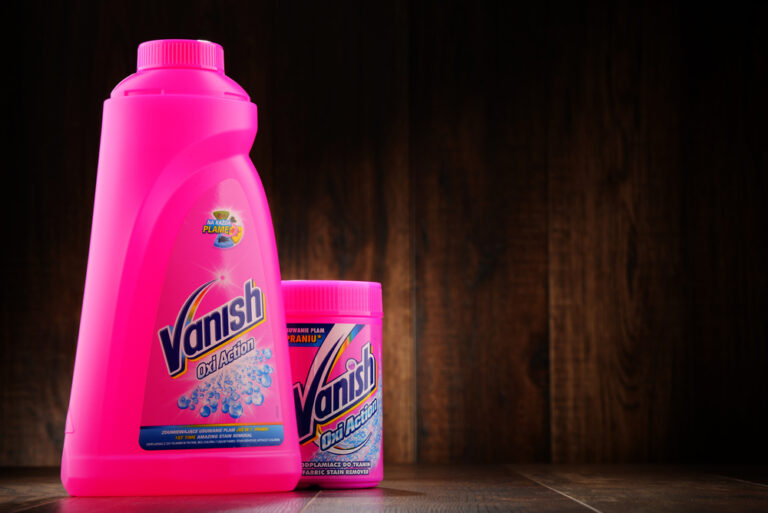
However, the firm experienced a 9% drop in like-for-like sales across its hygiene department, despite noted gains in its Finish, Air Wick, Harpic and Vanish brands as a result of the company’s penetration building initiatives.

The company also confirmed the ongoing offloading of its Russian arm, which it said might include a transfer to a third party or to local employees, moving on from the firm’s decision earlier in the year to freeze all capital investments and marketing in the country after the Ukrainian invasion on 24 February.

Reckitt Benckiser said 70% of its portfolio less sensitive to Covid-19 dynamics grew in the high-single digits.

The group added that its outlook estimated a 1-4% like-for-like net revenue growth at the upper end of management expectations, with adjusted operating margins in line with the previous year and current executive projections, despite significant cost inflation across the board.

“We have made a strong start to the year across all our business units and geographies despite a challenging operating environment.  Investments we have made in brand building, innovation, and execution, have resulted in broad-based market share gains.  These, coupled with pricing and revenue management actions, stand us in good stead to maintain this positive momentum,” said Reckitt Benckiser CEO Laxman Narasimhan.    

“As we look to the balance of the year, the operating environment remains highly unpredictable.  We are well placed to address these market dynamics through the strength of our brands, our favourable product mix, our productivity program and the responsible pricing initiatives already undertaken, with scope to take further actions.”  

“Given our strong start, we expect to deliver LFL net revenue growth at the upper end of our guidance for the year. We expect adjusted operating margins to be in-line with both the prior year and current market expectations, whilst continuing to invest in the long-term growth of our brands.”