Standard Chartered shares up 14% on raised outlook

0

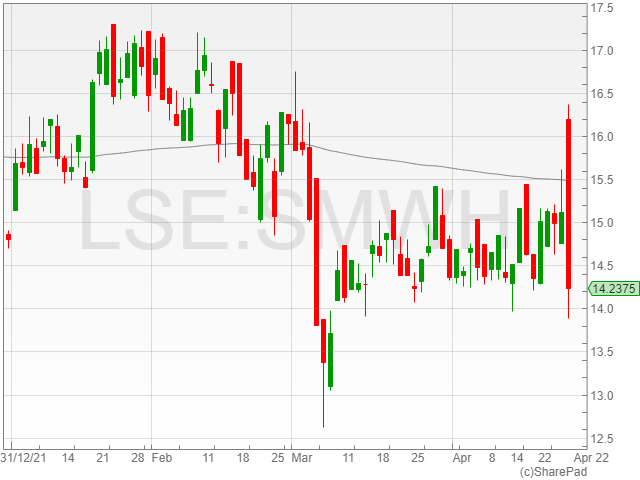
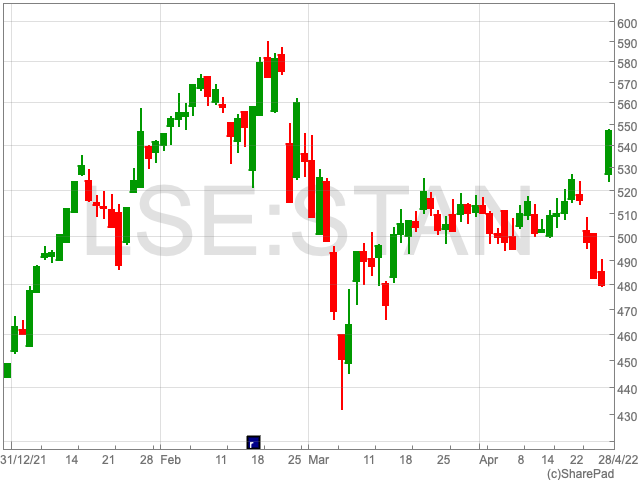
Standard Chartered raised its annual income growth outlook as a result of improving margins reported in its first-quarter results which led the bank’s shares to gain 14% to 546p on Thursday.

Standard Chartered’s net interest income rose 8% to $1.79bn from $1.66bn, while other income was 10% higher at $2.5bn from $2.28bn in the first quarter of 2022 compared to the first quarter of 2021 as a result of rising interest rates and increased hedging balances within Treasury

Standard Chartered reported a 9% rise in its statutory operating income which rose from $3.94bn to $4.29bn in Q1 2022 and the group’s cost to income ratio decreased from 64.2% to 62.1%.

The driver behind the rise in operating income was a “record Financial Markets performance” and the expansion in the net interest margin which was partly offset by lower Wealth Management income.

The company recorded a higher credit impairment from $17m to $200m in line with the charges in the prior quarter, indicating that the bank has begun to build credit reserves once again in 2022.

The impact of a $104m reduction in management overlays, largely linked to COVID-19, was reflected in an $81m release in Stage 1 and 2 impairments.

A $281m charge was incurred due to the impairment of Stage 3 assets, which included a $107m effect from a sovereign rating downgrade of Sri Lanka to stage 3, as well as a $160m charge on China Commercial Real Estate exposures.

The bank recorded a pretax profit of $1.49bn, up 6% from $1.41bn in Q1 2021, where profit from associates and joint ventures contributed $68m due to increased profits at China Bohai Bank.

The group’s profit attributable to ordinary shareholders increased 3% from $1.02bn to $1.05bn in the bank’s first-quarter results.

Standard Chartered’s loans and advances to the customer were reported to be $296bn from $292bn seeing a 1% increase from 2021.

The bank’s adjusted net interest margin jumped 7bps to 1.29% from 1.22% and its liquidity coverage ratio fell 10bps from 150 to 140 in Q1 2022.

Standard Chartered’s NAV per share rose $0.27 to $14.60 and tangible NAV increased by $0.06 to $12.76 in the first quarter.

The group’s ended March 31 with a CET1 ratio of 13.9%, slipping from 14.0%, and RWA declined by $10m to $261bn, however, EPS increased 4% to $0.34.

Operating Income by Product

Transaction Banking income increased 4% to $740m with Trade and Working Capital generating $363m followed by Cash Management which generated $378m as they were partly offset by margin compression for Standard Chartered.

Financial Markets income increased 32% to $1.72bn with Macro Trading seeing a 40% rise as the group’s Commodity income more than doubled due to volatility in energy prices, and FX and Rates income also saw double-digit growth due to the increased client flows.

Standard Chartered’s Credit Markets income rose 7% to $460m with a 17% rise in Financing Solutions & Issuance which was offset by the 16% decrease in Credit Trading due to being negatively impacted by widening credit spreads.

Due to decreased Aviation Finance income for Standard Chartered, Structured Finance income fell 6%, but Financing & Security Services income rose 35%, including $94m in gains on mark-to-market liabilities, which are likely to reverse once funding spreads normalise.

Standard Chartered reported an income decrease of 16% to $146m in its Lending and Portfolio Management income as RWA optimisation actions led to loan sale losses and lower balances in Q1.

As market circumstances got more volatile, transaction volumes decreased, and the impact of COVID-19 restrictions, particularly in Hong Kong and China, resulted in several branch closures, affecting face-to-face sales, the group’s Wealth Management income fell 18% to $530m in the first quarter of 2022.

Standard Chartered’s Retail Products income was flat at $849m with Deposit income rising 6% due to higher margins, increased volumes and improved liability mix and Mortgages & Auto income grew 3%. The lower fee income in Hong Kong led to a 5% fall in Credit Cards and Personal Loans income.

The group’s Treasury income rose 23% as net interest income more than doubled due to an increase in hedged balances and an increased return on assets as interest rates rose in several markets, however, it was partly offset by a $68m reduction in realisation gains.

Operating Income by Region

Asia profits fell 26%, owing to a $227m increase in credit impairments and a 6% increase in expenses, however, profits in Africa and the Middle East climbed by 59% as revenue increased by 12% said Standard Chartered.

Due to robust Financial Markets and Treasury performance, earnings in Europe and the Americas more than quadrupled, with income up 56%.

Central & other regions lost $221m due to greater expenses and a non-repeat of the prior year’s other impairment linked to the aviation leasing portfolio.

Standard Chartered Outlook

Standard Chartered has raised its outlook for 2022 as a result of the bank’s “strong” start to the year.

The previously guided 5-7% range for income growth is projected to be somewhat exceeded.

Due to the sheer impact of greater income growth projections on performance-related pay, operating expenses are estimated to be somewhat higher than the previously guided $10.7bn and the group continues to expect positive income-to-cost jaws.

Credit impairment is likely to begin to normalise towards the 30-35 basis point medium-term loan-loss rate range said Standard Chartered.

The group wants to operate dynamically within the CET1 target range of 13-14% and expects to achieve a 10% return on tangible equity by 2024, if not sooner.
Bill Winters, Group Chief Executive, Standard Chartered said, “Our first quarter performance was strong despite the volatile macro environment.”

“Our profit before tax grew 4% year on year, with strong underlying business momentum. I am also pleased by the early progress we have made against the five strategic actions we outlined in February and we are on track to deliver 10% return on tangible equity by 2024, if not earlier.”
Barclays boosts income to £6.5bn, suspends share buyback scheme

0

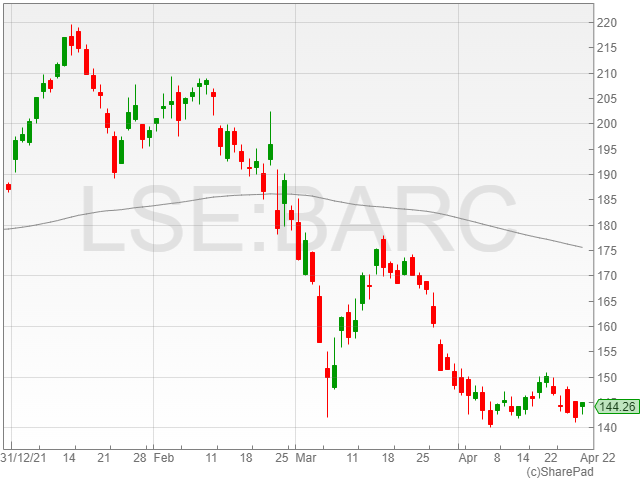
Barclays shares were up 1.4% to 143.9p in early morning trading on Thursday, after the company reported a 10% rise to £6.5 billion in group income in Q1 2022.

The financial institution announced a pre-tax profit of £2.2 billion and a return on tangible equity of 11.5% over the past quarter.

The banking firm also mentioned a cost-to-income ratio of 63% and a CET1 ratio of 13.8%, alongside a tangible net asset value per share of 294p, compared to 291p in Q1 2021.

Barclays said its attributable profit was £1.4 billion including litigation and conduct changes net of tax of £400 million, representing a £300 million drop from its £1.7 billion income in Q1 2021.

The company noted total operating costs of £4.1 billion, compared to £3.6 billion in Q1 2021, which encompassed litigation and conduct charges of £500 million linked to the over-issuance of securities by the institution in the US, alongside customer remediation costs due to a legacy loan portfolio.

“A strong Q1 performance demonstrated Barclays’ ability to deliver broad-based income growth across all operating businesses,” said Barclays Group CEO C.S. Venkatakrishnan.

“Group income was up 10% to £6.5bn, alongside profit before tax of £2.2bn and a RoTE of 11.5%.”

“Our performance includes the relevant costs relating to the over-issuance of securities in the US and customer remediation of a legacy loan portfolio.”

Barclays noted robust UK mortgage lending, strong UK and US consumer spending and payments volumes and tailwind from rising rates as contributing factors to the bank’s recovery in its consumer and payments business.

The company added that it enjoyed a strong CIB income as a result of strong FICC and equities performance with increased rates of activity as the financial group supported its clients throughout the market volatility of the past few months, sufficiently offsetting weaker investment banking fees as a consequence of a reduced fee pool.

The banking group confirmed credit impairment charges of £100 million, driven by low delinquencies and a benign credit environment, along with unsecured lending provision levels at an appropriate level in consideration of inflationary headwinds.

“Our income growth was driven partly by Global Markets, which has been helping clients navigate ongoing market volatility caused by geopolitical and economic challenges including the devastating war in Ukraine, and by the impact of higher interest rates in the US and UK,” said Venkatakrishnan.

Barclays confirmed its target of a return on tangible equity over 10% during 2022, along with a total operating cost estimate of £15 billion and an expected impairment charge below pre-pandemic levels due to reduced unsecured lending balances and appropriate coverage ratios.

The banking company added that it would continue to target a CET1 ratio between 13-14%

The firm also said it would suspend its planned £1 billion share buyback scheme for a second time as a result of the over-issuance of US securities announced on 28 March 2022, with the company clarifying that it aimed to reinstate the buyback programme as soon as possible.

“We remain focused on the impact higher prices are having on our customers and our small business and corporate clients, all of whom are facing far harder conditions this year as a result of inflation, supply chain issues and higher energy costs,” said Venkatakrishnan.

“We will support them through this difficult period wherever we can, and support the wider economy just as we did through the COVID-19 pandemic.”

Primary Health Properties says rental income up in Q1

0

Primary Health Properties announced its Q1 2022 Trading Update on Wednesday where the company addressed its Net Zero Carbon Framework and its increase in rental income from its robust pipeline.

Primary Health Properties made significant progress in turning the year-end pipeline into committed agreements, and it has already announced the £34.5m purchase of a huge, state-of-the-art diagnostic centre in Chiswick, rented to HCA Healthcare, and the £6.95m purchase of a clinical facility in Chertsey, rented to the NHS.

Primary Health Properties announced its first Net Zero Carbon (NZC) direct development, a new purpose-built medical centre in Eastergate, West Sussex, with a gross development value of £6.7m, in line with PHP’s NZC Framework. 

The project will be one of the first NZC healthcare facilities in the UK, and it highlights its strategic commitment to converting all of its operational, development, and asset management activities to NZC by 2030, as well as assisting its tenants in achieving NZC by 2040.

Primary Health Properties continue to build and grow a robust pipeline totalling £360m in the UK and £122m in Ireland, including standing investments, direct and forward funded developments, and asset management projects, with £65m and £74m in legal due diligence, respectively.

With £0.8 million in increased rental income from the rent review and asset management efforts in the first quarter of 2022, Primary Health Properties generated an additional £0.9m, or 0.6%, compared to the first quarter of 2021.

The group continues to see an increase in rent review growth, with an additional £0.6m in revenue earned in the first quarter from 99 settled reviews, equivalent to 2.0% on an annualised basis, compared to £0.5m and 1.7% in Q1 2021.

Primary Health Properties’ asset management activities generated a further £0.3m in the quarter, the same as in 2021, with the completion of ten projects, and the six schemes on-site that, in addition to extending lease lengths, will improve the environmental performance of the buildings.

The group’s net debt was £1.21bn at the end of March 2022, up from £1.19bn the previous quarter, and the Loan to Value ratio was 43.3% on a proforma basis, compared to 42.9%.

Following capital commitments, Primary Health Properties has £270m in undrawn borrowing facilities and cash on deposit, giving significant liquidity headroom.

For a weighted average period of slightly over nine years, 97% of the group’s net debt is fixed or hedged, offering significant protection from rising interest rates.

Primary Health Properties announced its second quarterly interim dividend of 1.625p per Ordinary Share on March 24, 2022, payable to shareholders on May 20, 2022.

The payout will be fully made up of regular dividends. On an annualised basis, the dividend is equal to 6.5p, a 4.8% increase over the 6.2p given in 2021.

The company aims to keep paying a progressive dividend in equal quarterly instalments, which will be funded by underlying earnings in each fiscal year. In August and November 2022, more dividend payments are expected for Primary Health Properties.

Harry Hyman, CEO of Primary Health Properties, said, “The first quarter of 2022 has seen a good start to the year for PHP good progress converting our year-end pipeline into committed deals along with stronger organic like-for-like rental growth across our rent review and asset management activities, including the environmental upgrades that are required to meet our sustainability targets.”  

“We expect to benefit from the current inflationary environment with an improving rental growth outlook and with the majority of our debt fixed or hedged we expect to remain in a very strong and robust position in the current volatile economic environment.”

“In a capital constrained NHS, the access to capital that our business can bring can assist with the increased utilisation of primary care in order to relieve the pressures being placed on healthcare systems, hospitals and A&E departments from demographic drivers and the backlog of procedures missed over the last couple of years following the COVID-19 pandemic. We are proud of the role we play and look forward to continuing to expand our business in the interest of the NHS and all of our stakeholders.”

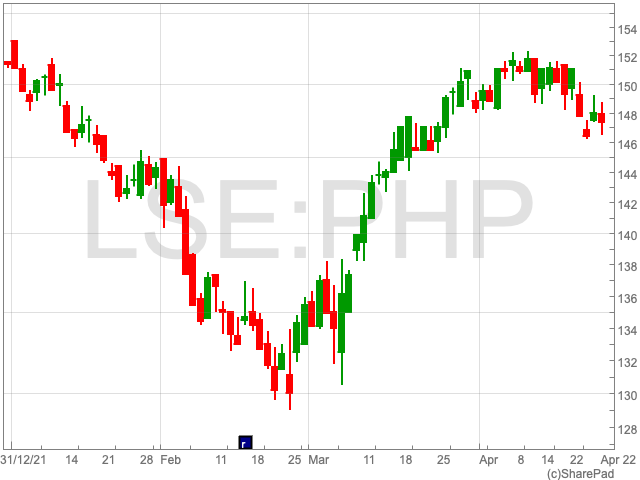
Primary Health Properties shares fell 0.1% to 147p in closing trade on Wednesday.

Tritax Eurobox and MIGS acquire land for €21.4m

0

Tritax Eurobox and Nordic developer MIGS acquire 95,000sqm of development land for €21.4m in Malmo and set out to create Tritax’s first speculative development project announced the company on Wednesday.

Tritax EuroBox is a REIT which invests in high-quality, premium logistics real estate across continental Europe. It has engaged in a speculative development project with established Nordic developer MIGS to acquire 95,000sqm of development land for €21.4m.

The project is a brownfield redevelopment prospect in a key Swedish logistics market, the Fosie industrial area south of Malmo, where development land is scarce.

Given its location between Malmo’s two major ring roads, which provide good linkages to the rest of Sweden and Denmark, demand from tenants and occupants in this highly sought-after neighbourhood is significant.

The current occupant, Atria Firm, a renowned Scandinavian food manufacturing group, is selling the property.

Until their planned relocation in February 2024, Atria Group will continue to use the existing site and pay a rent of €1.25m per year. This will allow for the site’s reconstruction to begin, with a completion date of early 2025.

Nearly 60,700sqm of prime logistics space will be built on the 95,000sqm property, with an annual rental value of over €4.4m.

The existing asset is valued at €21.4m, with a building cost of €65.3m predicted in the future. The initiative is expected to be worth more than €115m when completed.

The goal of this sustainable development is to offset carbon emissions during construction, with the finished building aiming for a BREEAM Very Good accreditation.

This is Tritax EuroBox’s first development project, with a target completion date of February 2025 at the earliest.

During the planning and permitting phases, this deal allows the company to capture future development earnings while also providing an excellent income yield.

“We are delighted to be announcing our first development project, located in one of the most sought after logistics markets in the Nordics.  This exemplifies our strategic aim in building up a portfolio of high quality, sustainable logistics assets in prime markets, through partnering with local development specialists such as MIGS, adopting a disciplined approach to development and allowing the Company to access development profits,” said Alina Iorgulescu, Assistant Fund Manager of Tritax EuroBox.

“This is our first off-market deal with MIGS and we are looking forward to developing our relationship with them on future projects.”

“This is the fourth Swedish investment for Tritax EuroBox, bringing our total amount invested in the country to over SEK 1.4 billion. The powerful structural trends in the Swedish market find demand outstripping supply, providing us with long-term embedded value.  We see significant potential in this site in southern Malmö, which is experiencing significant demand from occupiers, while available land remains highly constrained.”

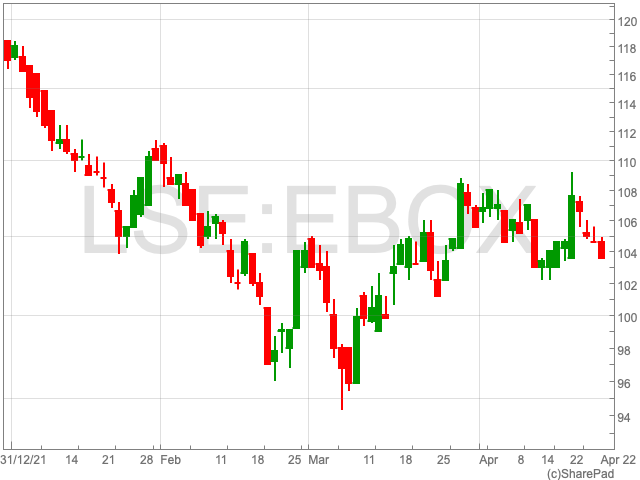
Tritax Eurobox shares fell 1% to 103p after the company announced the acquisition of developmental land with MIGS on Wednesday.

Drax Group projected to ride the green wave to profits

0

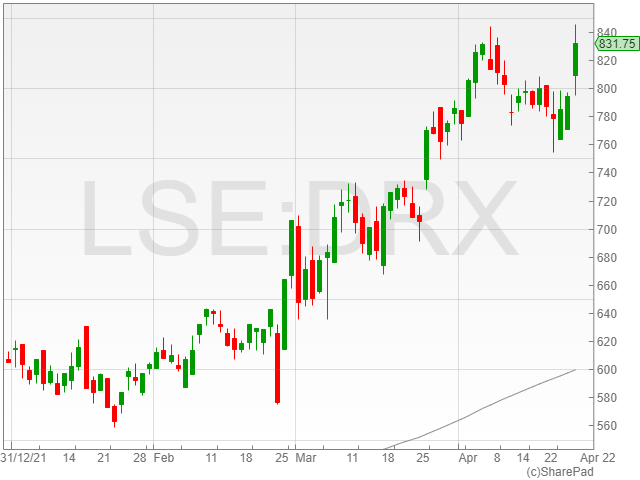
Drax Group shares were up 4.5% to 830p in late afternoon trading on Wednesday, after the company reported an adjusted EBITDA for 2022 at the top range of analysts expectations in its trading update for Q1 2022, pending strong operational performance.

The firm said it estimated a net debt to adjusted EBITDA to come in significantly below 200% by the end of the year.

Drax Group highlighted a rate of over 99% in energy generated from renewables, including sustainable biomass, hydro and pumped storage.

The company further noted 400 kilo-tonnes of new biomass pellet production capacity which it commissioned in the southeast US.

Drax Group announced a final dividend of 11.3p paid to shareholders today, and a total dividend of 18.8p per share for 2021, against a 17.1p dividend in 2020.

“In the first quarter of 2022 we delivered a strong system support performance as our reliable, renewable electricity continued to support UK energy security and helped to keep the lights on for millions of British homes and businesses,” said Drax Group CEO Will Gardiner.

“With the right government support, Drax is ready to invest £3bn this decade in delivering vital renewable energy technologies including BECCS, a carbon removal technology that is cost-effective but also the only one that generates reliable, renewable electricity while removing millions of tonnes of CO2 from the atmosphere.”

WH Smith swings back to £14m profit on travel recovery

0

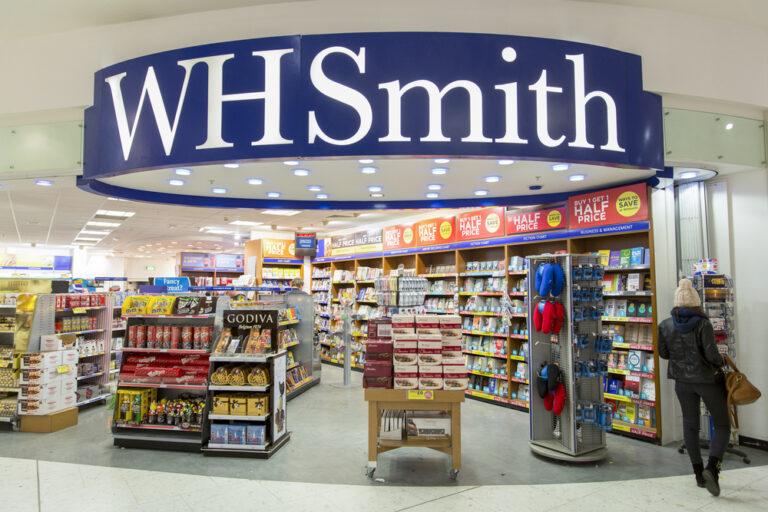
WH Smith shares were down 5.1% to 1,433 in late afternoon trading following the company’s release of its interim results, reporting a swing back to pre-tax profit of £14 million compared to a loss of £19 million in 2021.

The group reported a total travel trading profit of £10 million against a loss of £28 million the previous year, alongside a high street trading profit of £26 million from £24 million.

“The Group has delivered a good performance with a strong rebound in profitability. We have seen a recovery across all our travel markets despite the impact of the Omicron variant in Q2, and we are in a strong position to capture growth as the recovery continues,” said WH Smith CEO Carl Cowling.

The company said it had a new store pipeline of over 125 outlets in its travel sector, including 63 in North America and 31 in Spain.

The firm also noted 28 new InMotion technology stores across UK airports in its global rollout.

“We have opened 28 new technology stores in the UK under our InMotion brand, including our recently opened flagship store at Heathrow Terminal 5,” said Cowling.

“These stores have received excellent feedback from landlords and customers. Outside of the US and the UK, we have opened and won a further 11 InMotion stores across 6 countries and we see significant potential to grow the brand globally.”

The group added that it had £336 million in headline debt, with access to £315 million of liquidity, consisting of £65 million cash on deposit and £250 million undrawn revolving credit facility.

WH Smith confirmed continued recovery across its travel stores in its outlook for 2022, with its high street stores positioned to maintain cash generation across the company.

The group added that its low ticket-value categories and strong supplier relationships helped it in mitigating the impact of inflationary pressures.

“Looking ahead, we continue to invest in the business where we see attractive growth opportunities and have positioned the Group well to benefit from the return of passenger numbers,” said Cowling.

“We have improved the scale and footprint of the business and are operationally stronger than prior to the pandemic.”

“While there are some uncertainties in the broader global economy, the Group is well positioned to capitalise on the ongoing recovery in our key markets and take advantage of the many opportunities ahead.”

Shaftesbury: Portfolio valuation is £3.2bn

0

Shaftesbury announced that the portfolio valuation of the Real Estate Investment Trust was £3.26bn in its latest portfolio update on Wednesday compared to the £3.01bn in September 2021.

Shaftesbury is a Real Estate Investment Trust that owns a 16-acre portfolio in London’s West End.

The wholly-owned portfolio’s indicated external valuation was £3.26bn on March 31, 2022, compared to £3.01bn in September 2021.

On a like-for-like basis, this reflects a 7.5% growth in the six months since 1 October 2021, compared to a 5.2% gain in the six months prior to 30 September 2021.

The increase in valuation was primarily driven by 6.4% like-for-like ERV growth, with increases across all uses, demonstrating ongoing occupier demand and low vacancy levels as footfall and trading in its locations continue to rebound to pre-pandemic levels.

The strength of our occupational market, together with increased investor optimism, has resulted in a 5 basis point tightening of the portfolio’s equivalent yield, which was 3.92% in September 2021.

Brian Bickell, Chief Executive Officer, Shaftesbury commented, “I am pleased to report that confidence, footfall and sales across our villages continue to recover well.”

“Demand/supply tension in our locations, reflecting strong interest from potential occupiers across all uses and low vacancy, is driving a recovery in rental levels which has been the main component of the valuation increase over the six months to 31 March 2022.”

“We are now looking forward to an extended period of uninterrupted trading as we enter the important summer season.”

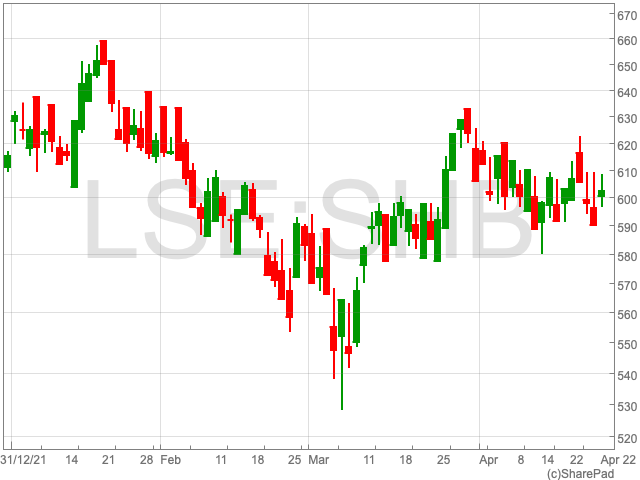
Shaftesbury shares gained 1.1% to 602p after the company updated investors on its portfolio valuation ahead of its half-yearly results.

LondonMetric acquires 2 properties for £29m

1

LondonMetric Property announced the acquisition of two urban logistics properties for £28.8m which are expected to generate £1.4m per year in rent on Wednesday.

LondonMetric paid £28.8 million for two urban logistics properties in separate transactions, implying a blended return of 4.5% and a reversionary yield of 5.0%.

One of the properties is a 125,000sqft urban logistics forward fund development consisting of two units at Crosslink 646 in Leicester, which is planned to be completed at the beginning of 2023.

It is the largest unit, with a total area of 90,000sqft which has been pre-let to EM Pharma for a new 15-year lease at £7.25 per sqft with RPI linked rent reviews.

The smaller 35,000sqft property will be built on the speculative market and is estimated to offer a 5% return on investment with the benefit of a solar PV system, the property is likely to be certified BREEAM “Very Good”.

The other acquisition is a piece of land in Droitwich that amounts to 9-acre and is now utilised for car storage which has been leased to Amazon for another five years with CPI-linked rent increases.

It’s in the front of a well-established industrial development near the A38, two miles from M5 J5.

The property’s parking area features EV charging facilities for 100 vans, thanks to Amazon’s contribution and has a 200,000sqft distribution warehouse which has been approved for the site.

LondonMetric’s latest acquisitions are expected to generate rent of £1.4m per annum.

Andrew Jones, CEO of LondonMetric, commented, “We are continuing to allocate capital into the strongest geographies within the distribution sector, where we can benefit from attractive entry yields and structurally supported occupier demand to capture superior rental growth.”

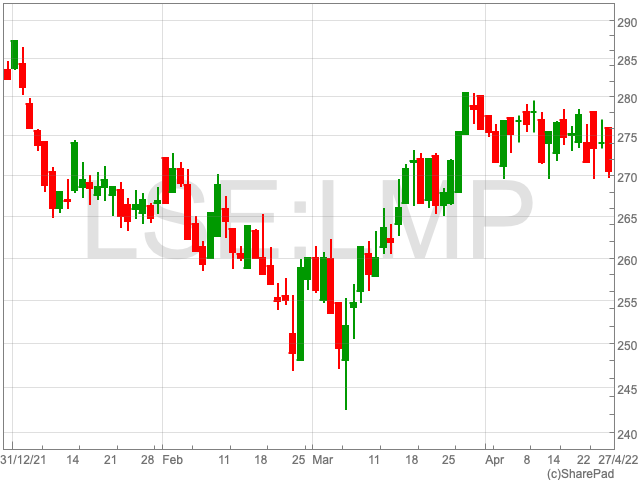
LondonMetric shares dropped 1.2% to 270p on Wednesday after the company announced the acquisition of two separate properties for £29m.

Russia turns the gas tap off for Poland and Bulgaria

0

On Wednesday, Moscow cut off gas supplies to Poland and Bulgaria as the countries refused to breach sanctions imposed by the West on Russia for invading Ukraine. Germany also confirmed that was on its way to cutting its dependence on Russian gas supplies.

Russia cuts gas

In a huge escalation of Russia’s broader fight with the West over its invasion of Ukraine, Russian energy giant Gazprom has informed Poland and Bulgaria that gas supplies will be cut off to both countries as of Wednesday.

Since Moscow began what it terms a military campaign in Ukraine on February 24, Poland and Bulgaria would be the first nations to have their gas supplies shut off by Europe’s principal supplier. The decision to cut off supply came after Warsaw slapped restrictions on Russian persons and corporations.

Moscow appears to be following through on a promise to cut off gas supplies to countries who refuse to pay in rubles, as Vladimir Putin has demanded.

Europe has stated that doing so would be a violation of sanctions and would significantly boost Russia’s hand. Poland has been particularly vocal in its condemnation of Russia during the conflict.

PGNiG, Poland’s largest gas provider, has been warned that all gas flows will cease on Wednesday. Minutes earlier, Gazprom, the Russian gas company, had warned Poland that it would have to pay for its gas supplies on Tuesday in Russian currency.

“I can confirm we’ve received such threats from Gazprom which are linked among other things to the means of payment,” said Poland’s Prime Minister Mateusz Morawiecki

“Poland is sticking to the arrangements and maybe Russia will try to punish Poland” by cutting deliveries.

Cutoffs have been looming for weeks, but there was some hint last week that the European Union was considering a way out of the impasse.

The payments for April for the first batch of Russian gas supply under the new terms are due in late April and early May, and European politicians and executives are still figuring out how to respond. Europe is heavily reliant on Russian gas and has thus far mostly avoided sanctions on the energy sector.

Poland has been prepping for life without Russian gas, and the government declared on Tuesday that it had sufficient fuel in store. Warsaw has been advocating for stronger measures against Russia, but other EU countries have objected.

Germany will manage Russian oil embargo

Germany intends to replace Russian oil with supplies from other sources within days, according to Economy Minister Robert Habeck, who said that Germany would then be able to cope with an EU embargo on Russian oil imports.

Germany has previously stated that it might wean itself off of Russian oil by the end of the year, under pressure to lessen its reliance on Russian energy following Moscow’s invasion of Ukraine. However, it has rejected the concept of a blanket ban on imports into the European Union.

Before the Ukraine conflict, Russian oil supplied around a third of Germany’s needs. Robert Habeck the Vice Chancellor of Germany announced a month earlier that Germany’s reliance on Russian oil had been reduced to 25% of total imports.

Habeck stated on Tuesday that Russian oil now made up only 12% of Germany’s supply and that it went to only one refinery, the PCK refinery in Schwedt, near Berlin. Rosneft, the Russian state-owned oil business, owns and operates PCK.

Computacenter aims to be Carbon Neutral in 2022

0

Computacenter announced that it aims to be Carbon Neutral in 2022 for Scope 1 and 2 emissions which is 5 years ahead of schedule on Wednesday.

Computacenter is a technology transformation company that has declared that it will achieve carbon neutrality for Scope 1 and 2 emissions in 2022, five years ahead of schedule.

Despite the group’s tremendous growth in scale and reach throughout that time, the group’s Scope 1 and 2 carbon emissions in 2021 were roughly 74% lower than in 2019, according to Computacenter’s Sustainability Report for 2021.

Direct emissions, such as facilities, and indirect emissions, such as power utilised, are included in Scope 1 and 2 according to Computacenter.

Computacenter’s new Net Zero target, which includes Scope 3 emissions, is 2040, ten years earlier than its previous goal.

All additional indirect emissions, such as those from business transportation, as well as those from sources that Computacenter does not own or actively control, such as the supply chain and products from its technology partners, are included in Scope 3.

Solar output at Hatfield, which generated 1.8m kWh in 2021, saving around 400,000kg of annual carbon emissions, and Kerpen, which is scheduled to create 1.5m kWh in 2022, are examples of investments in new and existing facilities to reduce electricity usage.

The switch to electricity contracts from green energy suppliers and the investments aimed at reducing the use of electricity are initiatives Computacenter took over recent years to contribute to achieving the Carbon Neutral milestone in 2022.

As a result, renewable energy provided 73% of Computacenter’s electricity in 2021. This indicates Computacenter can become carbon neutral for Scope 1 and 2 in 2022 with minimum carbon offsets.

Tony Conophy, Group Finance Director and Chair of Computacenter’s Climate Committee said, “Achievement of Carbon Neutral (Scopes 1 & 2) in 2022 will be a major milestone on our journey to Net Zero, based on years of carbon reduction efforts across the business that we are confident can be sustained and improved upon. We’re proud that will be one of the first companies in our industry to achieve this.”

“We’re proud of what our people have achieved to hit this milestone. We haven’t talked much about it, we’ve just delivered. We will continue to improve, invest and innovate in all areas of sustainability in line with our broader Sustainability Strategy. We’ll be the best that we can be; a company that our people, customers, partners and communities can be proud of,” added Mo Siddiqi, Computacenter’s Group Development Director.

Computacenter shares fell 2% to 2,712p on Wednesday despite the company announcing the preponement of its Carbon Neutral for Scope 1 and 2 goals.