Next sees 140% rise in pre-tax profit due to online sales

0

Next’s pre-tax profit increased from £342m to £823m in 2022, rising 140% as online sales recovered the gap created by the pandemic in retail sales.

The retailers saw total group revenue grow 34% to £4.8bn in 2022, with significant contributions of £3.1bn from the online segment.

Next’s retail sales saw an increase of 50% from £954m to £1.4bn in 2022.

Total brand full-price sales for the company rose 32.4% to £4.7bn in 2022.

Next saw online sales grow specifically in homeware and kids apparel during lockdown over their first quarter.

The company managed to meet the demand for adult clothing despite stock shortages in the second half, where consumers spent lockdown savings.

Steve Clayton, HL Select fund manager said, “we hold NEXT plc in our UK funds because it is a superbly managed retailer, with the highest online exposure of any High Street operator in the UK and a cash generative business model.”

“The business is performing strongly in unusual circumstances. Demand is holding up well, with the stores trading ahead of expectations, although some of this is a function of pulling business back from the website, post lockdowns.”  

Net debt excluding lease debt reduced from £610m to £600m.

Earnings per share rose 138% in 2022 to 530.8p compared to 223.3p in 2021.

Like many big names such as McDonald’s and Starbucks, Next halted their business in Ukraine and Russia generated by their website.

The company has lowered their sales guidance by 2% and profit guidance by 1.2% for the coming year.

Next reportedly expects to mitigate losses from lower margin sales from overseas and costs incurred from increased markdowns through better performance in the UK retail market.

The company predicted a 5% increase in full-price sales, alongside group profits of £850m in 2023.

“Having previously sold well online in Russia, there is an obvious hit that has to be taken, but the business is more than strong enough to cope,” said Clayton.

The group has a business model for the next 15 years for how the company will fare, through which a cash generation of £15bn is what they are capable of.

Steve Clayton highlighted the potential value in the stock by making a comparison to their forecast cash generation and Next’s market cap, currently under £9bn.

“The group has long had a policy of returning all excess cash to shareholders, and today announced a return to pre-pandemic dividend levels, augmented by share buy-backs to absorb surplus cash.”

“If their modelling is anywhere near accurate, then shareholders can look forward to a lot more of that in future,” stated Steve Clayton.

“The market’s reaction, knocking the shares back a couple of per cent in early trading seems a knee-jerk to the reduction in sales forecasts. But all of that relates to the events in Ukraine and cash generation expectations for the current year are actually improved.”

“Longer term, that cash flow modelling suggests that there is in fact much for investors to look forward to.”

Next shares were trading down 3% to 6,198p as a reaction to the company’s lowered growth forecasts.

CVS enjoys 11.4% revenue boost on increased membership subscriptions

0

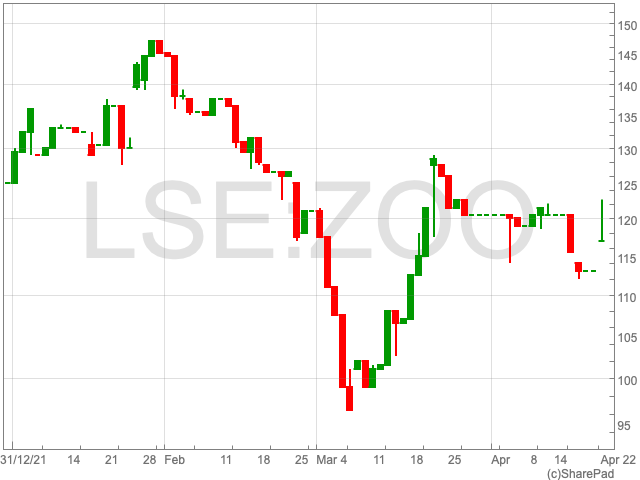
CVS saw its share price fall 0.9% to 106.2p in early morning trading on Thursday despite the company reporting an 11.4% increase in revenue to £273.7 in its half-year results due to rising vet care membership rates and organic growth.

The veterinary firm reported an adjusted EBITDA of £52 million compared to £45.1 million in 2020.

CVS enjoyed a £36.2 million pre-tax profit against £29.7 million in 2020 as a result of 461,000 new subscribers to its ‘Healthy Pet Club’ affordable preventative healthcare scheme.

The company saw a 9.6% rise in like-for-like sales and predicted a growth of 10% in the first eight months.

The firm paid a final dividend for the year of £4.6 million, which represented a 6.5p per share payout.

CVS confirmed its trading outlook is currently positioned for future growth after increased investment in its facilities, equipment and potential acquisitions pipeline.

“I am pleased to report on another strong set of results which reflect the commitment, dedication and professionalism of our colleagues,” said CVS CEO Richard Fairman.

“Our ongoing strategy of investment in our people, in our practice and other facilities, and in our clinical equipment is generating beneficial returns through organic growth.”

“The positive trading momentum in H1 2022 has continued into the first two months of our second half, and with a strongly cash generative model we remain well placed to continue to invest and acquire to deliver future growth.”

Analysts noted CVS’ strong momentum going forward and the company’s strategy for organic growth in 2022.

“While acquisitions are an important part of the story, with huge scope for further consolidation of the UK’s vet market, a focus on organics is very pleasing,” said Sophie Lund-Yates, Equity Analyst, Hargreaves Lansdown.

“The potential for growth in Europe is another window of opportunity, feeding into the long-term attractions of the business.”

“The UK pet boom seen during the pandemic should act as a long-term growth driver too.”

“As the puppies and kittens welcomed in lockdown age, they will require more trips to the vets.”

“This bolstered source of income isn’t fully reflected in the group’s valuation, which has come down some way from previous highs.”

Playtech hits the jackpot with 25% surge in EBITDA from Americas and Italy

0

Playtech saw its share price rise 2.3% to 622.5p following a 25% increase in EBITDA to €317.1 million compared to €253.6 million in 2020 on the back of outperformance in the America markets and rising sales in Italian subsidiary Snaitech.

The company reported a revenue increase of 12% to €1.2 billion against €1 billion after B2B growth led by the outperformance in the Americas.

Playtech attributed its especially high 366% surge in post-tax profit of €127.6 million compared to €27.3 million in 2020 to unrealised gain linked to the company’s embedded options in Latin American agreements.

Snaitech accounted for an adjusted EBITDA growth of 38% across 2021, and the subsidiary achieved revenue growth of 45% to €299.9 million throughout the year.

The Italian group topped the rankings across retail and online sports betting in Italy in 2021.

Playtech reported a promising start to the financial year, with the strong performance expected to continue from B2B and B2C businesses across the board.

The company didn’t pay out a dividend for 2021.

Playtech CEO Mor Weizer stated confidence in the company’s future prospects in 2022.

“Our full year results demonstrate the quality of Playtech’s technology and the momentum across the Group,” said Weizer.

“Our strong performance is underpinned by our B2B business, in particular the tremendous growth we have seen in the Americas.”

“We have made real progress in the execution of our US strategy, supported by new licences, new launches and new partnerships, and we continue to go from strength to strength in Latin America, buoyed by new strategic agreements across the region.”

“In B2C, the story is similar, with Snaitech continuing to outperform the market, achieving the position of the number one brand across sports betting and retail in Italy.”

AstraZeneca: CALLA Phase III Trial for Imfinzi fails to achieve statistical significance

1

AstraZeneca did not achieve statistical significance in its CALLA Phase III study for locally advanced cervical cancer using Imfinzi with chemoradiotherapy.

The advancement of progression-free survival (PFS) for patients with locally advanced cervical cancer through the CALLA Phase III study for Imfinzi (durvalumab) assisted by chemoradiotherapy failed to achieve statistical significance compared to administering chemoradiotherapy alone.

The trial’s safety and tolerability were consistent in both arms, and no new unexpected adverse findings were discovered.

Bradley Monk, MD, Professor at the University of Arizona College of Medicine and principal investigator in the CALLA Phase III trial, said, “while today’s results were not statistically significant, they underscore the need for further evaluation of novel therapeutic options and will inform future strategies to improve treatment for patients with locally advanced cervical cancer.”

Cervical cancer is diagnosed in appoximately 600,000 people each year with 40-50% patients facing locally advanced cervical cancer.

CALLA is a worldwide Phase III trial, in which 770 patients with locally advanced cervical cancer were administered basic chemotherapy with either a 1,500mg fixed dosage of Imfinzi or a placebo every four weeks for up to 24 cycles, or until disease progression.

The trial took place across 120 locations in 15 countries, including the United States, Europe, Latin America, Africa, and Asia.

The primary goal was PFS, with overall survival, safety and tolerability as significant secondary outcomes.

Imfinzi (durvalumab) is a human monoclonal antibody that disrupts the interaction of PD-L1 with the PD-1 and CD80 proteins, preventing the tumour from evading the immune system.

Based on the PACIFIC Phase III trial, Imfinzi is the only immunotherapy approved for the curative-intent treatment of unresectable, Stage III non-small cell lung cancer in patients whose illness has not progressed after chemoradiotherapy.

Imfinzi has shown clinical efficacy in various cancer cases in the last year, including advanced biliary tract cancer (TOPAZ-1), unresectable advanced liver cancer (HIMALAYA), and metastatic NSCLC, including favourable Phase III trials (POSEIDON).

Susan Galbraith, Executive Vice President, Oncology R&D, AstraZeneca, said, “CALLA tested a novel immunotherapy approach in locally advanced cervical cancer, a devastating and complex disease where many patients progress following available treatments.”

“While the results were not what we hoped for, insights from the trial will advance our understanding and application of immunotherapy across our broad clinical development programme, exploring the benefits of Imfinzi in many tumour types.”

AstraZeneca shares gained 0.5% to 9,781 following the announcement of its CALLA Phase III study not achieving statistical significance.

New standard listing: RC365 payments technology roll out

RC365 Holding was set up to acquire Hong Kong-focused Regal Crown UK, which had developed payment gateway technology and provides other IT services. The payment gateway is aimed at the Asian market, although there are talks with UK and European merchants that want access to Asian business.
The majority of the cash raised is earmarked for funding potential licence application work. There are also plans to boost marketing and establish a development centre.
The top five shareholders own nearly 87% of the company. The share price ended the first day of trading at 7p, although the bid/offer spread...

Tasty recovery

Restaurants operator Tasty (LON:TAST) suffered from lockdowns in the past two years but it did bounce back into profit last year. The share price increased by 10% to 5.5p, which values the AIM-quoted company at £7.8m. That is less than the cash pile.
There was £11m in the bank at the end of 2021 and there are £1.25m of borrowings to offset against this. Even if deferred payments are taken into account, then net cash is still £6.8m, which is not far below the market capitalisation. Net assets are £1.9m.
Tasty has two brands. Wildwood is a pizza, pasta, grill restaurant that has high street and ...

Catenae Innovation shares tumble on suspension request

0

Catenae Innovation’s shares sank 50% to 0.2p on Wednesday following the request for ‘temporary suspension’ of shares trading on the AIM due to the company not being a position to complete the audit of their financial results.

The company also said a dispute had arisen around the acquisition for Hyperneph Software.

Catenae Innovation said they will not be able to release their audited financial statements by 31 March 2022 and request ‘temporary suspension’ of its shares trading on the AIM.

The company’s shares will suspend trading from 7:30 a.m. on 1 April 2022 until the company audited reports have been published. The audited reports are expected to be published around 29 April 2022.

The request for suspension came as Catenae Innovation announced a dispute with minority shareholders of Hyperneph.

Catenae said they would not be issuing new ordinary shares as part of the consideration for Hyperneph, or make the final cash instalment of £52,500.

Catenae Innovation acquired Hyperneph Software in May 2021 for a total consideration of £270,000, yet to be paid in full.

Chancellor’s Spring Statement fails to bring adequate relief to struggling households

2

Chancellor Rishi Sunak’s Spring Statement brought a mixed bag of results, with a tiny dent in soaring fuel costs and a cut to income tax rates which is scheduled for 2024. However, there was minimal relief for suffering households on Wednesday as the UK’s inflation hit a 30-year high of 6.2%.

The inflation rate is expected to average 7.4% for the remainder of 2022, with a peak of 8.4% expected in the final quarter of the year when winter bites a massive chunk out of household budgets with rising energy costs.

The Office for Budget Responsibility (OBR) also reported that the UK economy is forecasted to grow at a reduced level of 3.8% compared to 6% in 2021, serving up bad news for struggling consumer brands and retail companies.

Fuel and Energy

Sunak announced that fuel duty will be cut by 5p per litre until March 2023, however, the concession will provide little comfort for households dealing with the skyrocketing cost of filling up their cars.

“The giveaway for motorists was in the cutting of fuel duty by 5p litre, saving British motorists £7m a day,” said AJ Bell head of personal finance Laura Suter.

“This means for the average 55 litre car someone will save £3.30 each time they fill up.”

“However, this is a tiny portion of the amount we’ve all seen fuel costs rise by: since the start of the month alone petrol prices have risen by 13p and diesel prices by 21p.” 

Global sales trader at Saxo Markets Mike Owens added: “Fuel duty cut by 5p per litre feels like a drop in the ocean compared to the price rises we’ve seen at the pump and also when you consider the energy bill cap is rising 54% in April.”

The Chancellor also announced that additions of energy-efficient upgrades to houses will not be subject to VAT for the coming five years, however, this move will probably only benefit households that already have the extra money to spend on solar panels and new energy-efficient infrastructure, providing little assistance to households dangling dangerously close to poverty.

Standard of Living

The Chancellor announced a rise in the income threshold for national insurance of £3,000 to £12,570 per year.

The move will undoubtedly elicit a sigh of relief from households, who stand to keep an extra £330 a year on average.

“As concessions go, raising the National Insurance threshold to £12,570, in line with the personal allowance, is a big one,” said interactive investor head of savings and pensions Becky O’Connor.

“It will come as a relief to those worried about the impact of the Health and Social Care levy. The typical saving of £330 a year is significant.”

Despite this announcement, the Office for Budget Responsibility said the UK was facing “the biggest fall in living standards in any single financial year since ONS records began in 1956-7”.

Sunak further announced an increase to the household support fund by £500 million, to be given to local authorities from April, resulting in a total fund of £1 billion to assist vulnerable households with rising living costs.

However, these measures are unlikely to provide sufficient relief in the face of soaring inflation.

“The big rabbit out of Rishi Sunak’s hat was announcing a cut to income tax rates from 2024, and while that will grab the headlines it’s precisely zero help to families struggling with the cost-of-living crisis now – or indeed for the next two years,” said Suter of AJ Bell.

Small & Mid Cap Roundup: Plus500, Catenae Innovation, Tullow Oil and ITM Power

1

The FTSE 250 index slipped 0.7% to 20,964 and AIM market fell 0.65% to 1,030 on Wednesday as investors digested record high inflation.

The FTSE 250 was dragged by companies reliant on consumer spending while homebuilders and REITs took a big hit.

FTSE 250 Fallers

Plus500 shares fell 0.5% to 1,458p after the company reported a 25% loss in EBITDA due to a 33% decrease in new customers acquired.

Ultra Electronic shares were trading down 0.24% to 3,334p despite seeing an increase in orders to £1.3bn. The acquisition of Ultra Electronics by Advent Cobham is still pending government approval and will not meet the previously expected deadline of Q1 2022.

TBC Bank Group shares dropped 1.6% to 1,033p following the announcement that the bank’s subsidiary JSC TBC Bank will issue a tender offer for an outstanding $300m 5.75% notes due 2024.

FTSE 250 Risers

Harbour Energy shares are up 2.97% to 464p following the company’s reported increase of revenue to $3.6bn and a post-tax profit of $101m as opposed to the $778m loss in 2020.

Increased sales and lower impairment charges from exploration and evaluation costs drove the Harbour Energy’s profit.

Tullow Oil shares gained 3.2% to 52.6p as oil price rose following the recent sale of Occidental Petroleum’s share in the Jubilee and TEN fields in Ghana to Kosmos Energy increased Tullow’s interest in the project.

AIM Fallers

Capital Metals shares fell 3.3% to 7.2p after the company experienced backlogs associated with the analysis of mineral samples from their Eastern Minerals Project in Sri Lanka.

ValiRx, the biomedical innovator saw shares plummet 13% to 23p due to delays in licensing the VAL201 drug to TheoremRx because of insufficient funds.

Catenae Innovation shares plummeted 56% to 0.18p following the announcement the company made the decision not pay part of the £270,000 consideration for the acquisition of Hyperneph, and requested a suspension of trading.

88 energy shares sank 6.7% to 2.1p despite favourable results from the Merlin-2 well.

AIM Risers

4D Pharma saw shares soared 59% to 71p – before falling back – as the company announced positive results regarding the Phase I and II study for the treatment of Renal Cell Carcinoma using the combination of MRx0518 and KEYTRUDA.

TPXImpact, the digital transformation provider, saw shares jump as much as 22% to 195p following the announcement of their broadening artificial intelligence capacity with the acquisition of Peak Indicators and Swirl IT.

Restaurant operator Tasty saw shares gain 10% to 5.5p with reported revenues of £34.9m in 2021, almost £10m greater than 2020. The company also saw post-tax profits of £1.2m compared to a loss of £12.7m in 2020 as a result of restaurants reopening post covid.

ITM Power and Ceres Power shares rose 2.8% and 0.5% respectively as the Chancellor announced VAT cuts in green home improvements during Wednesday’s Spring Statement.

Surgical Innovations shares gained as the company said they were expecting higher sales with an increase in elective surgeries post-pandemic.

FTSE 100 dips as inflation hits 30-year high

0

The FTSE 100 saw a 0.1% fall as sterling slightly weakened against the dollar following Chancellor Rishi Sunak’s Spring Statement in early afternoon trading on Wednesday.

The market was anchored by a 4.2% rise to $120 per barrel in the price of Brent Crude.

The FTSE 100 had gained in morning trade and clawed back most of its year-to-date losses after the shock of Russia’s invasion of Ukraine in late February.

Retail stocks have been on shaky ground over the past few weeks, and major retailers held their breath to see if Sunak’s Spring Statement would give consumer spending budgets a modicum of relief in the coming months.

“Shares in retail companies have been weak in recent months as investors speculate there could be a sharp drop in consumer spending once the energy price cap goes up in April,” said Russ Mould of AJ Bell.

“Any measures by Sunak to help with the cost-of-living crisis could trigger a relief rally in the retail sector on the stock market.”

Mini-Budget

The Chancellor announced several minor concessions for households to assist consumers with the back-breaking rate of inflation, which is predicted to peak at 8.7% in the final quarter of 2022.

Sunak said the threshold for national insurance payments is set to rise to £12,570 a year, giving the average taxpayer a slight amount of room to breathe in the coming year.

“The average worker who earns more than the £12,570 threshold will save £330 a year, once the change kicks in,” said AJ Bell head of personal finance Laura Suter.

“The Government says that 70% of people currently paying National Insurance will see a reduction in their bill, even with pushing ahead with the increased 1.25% levy.”

Oil Strength

The top risers on the FTSE 100 included BP with a 3.4% rise to 384.1p on the back of the rising Brent Crude price following disruption to Russian and Kazakh oil supplies through the CPC pipeline.

Shell also benefited from the surge in oil prices with a 3.2% increase to 2,072.5p.

Electrocomponents rose 2.8% to 1,060p following an increase in market share and a widening customer base over the last few months.

The FTSE 100 top fallers were led by Persimmon’s decline of 3.1% to 2,211.5p on the back of increased housing prices and the cost of construction continued to climb.

The Reckitt Benckiser Group saw a dip of 2.7% to 5,717p as the company led other consumer staples lower over consumer spending fears.

Kingfisher continued its downward spiral with a 2.5% fall to 266p as consumer spending on DIY and home improvement looked set to decline following record high inflation and a gradual increase in hybrid and office work systems.