Miton Global (LON:MIGO), the deep value and special situations fund, is significantly outperforming its benchmark so far in 2021. The ‘Premier Miton UK Value Opportunities’ fund has returned 21.8% year-to-date, exceeding its benchmark, the FTSE All Share index, by 10.1%.
The strong returns come amid a challenging environment for investors, as uncertainty plagues the world economy, and investors are undecided on whether to go with value or growth stocks.
Miton Global’s fund is one of a few in the UK value strategy category to outperform its benchmark. Others include: VT Cape Wrath Focus and Consistent Opportunities Unit Trust.
Premier Miton UK Value Opportunities has found its groove since the pandemic-induced crash in early 2020. Over the past 12 months it has added 56.92%.
Miton Global Opportunities
Founded in 2004, Miton Global Opportunities has evolved to become a deep value and special situations fund. The fund’s aim is to buy discounted investment trusts that have a “catalyst for change”. Miton Global offers a diversified fund with a range of geographical locations and a variety of assets, including equities (34.7%), private equities (24.1%), property (15.8%) and mining (11.8%). The company sets itself apart by avoiding mainstream markets, instead seeking to buy esoteric, overlooked assets.
Buying trusts at a discount
Miton Global Opportunities aims to buy companies where the NAV (net asset value) both exceeds the share price and is growing over time. This can be achieved in a number of ways. For example, an asset class coming back into favour, or a company employing a new leadership team. One of Miton Global’s key strategies is to target the acquisition of assets worth £1 for as little as 70p.
In 2017, Miton Global Opportunities purchased Ecofin Global Utilities & Infrastructure Trust when its NAV exceeded its share price by over 10%. Due to poor performance levels by the management team, a discount had been created. A new management team was then appointed and became a “catalyst for change”, turning around the company’s prospects. New investors were found, narrowing the NAV discount, while the NAV rose by 23%. In January 2020 Miton Global sold and reaped the benefits.
Unless you’re Warren Buffett, collecting beautiful artworks or rare whiskies is a lot more fun than watching the stock market. Wealthy investors have long known that these types of passion assets can be a smart counterweight to stock market volatility. Not only do they act as a hedge against inflation, they also typically retain their value during economic downturns and deliver impressive mid to long-term returns.
One key gauge of the health of the luxury goods sector is the Knight Frank Luxury Investment Index.
In 2020 fine wine came in second place with 13% growth over the year and 10-year growth of 127%, hot on the heels of the niche luxury handbag market with 17% growth.
Rare whisky is another strong performer, with 478% growth over the past decade.
Investors interested in diversifying their portfolio and acquiring statement pieces for their home may want to consider the art market. While this might conjure up images of dusty portraits by Rembrandt or soft Impressionist landscapes, experts now consider Contemporary Art to be the category with greatest growth potential. The sector has experienced a truly meteoric rise in auction turnover from just $92 million in 2000 to $1,993 million in 2019, equivalent to a 2,100% increase. According to the Artprice Contemporary Art Market Report 2020, “Contemporary Art has become the primary growth driver of the global art market” in the 21st century.
While fine wine, contemporary art and rare whisky all look good on paper, like any savvy investor you’re probably wondering if it’s all too good to be true. We spoke to three experts in the fine wine, contemporary art, and rare whisky markets to get their insider tips on profiting safely with these luxury assets.
Fine Wine
Justin Knock is Director of Wine at Oeno, a wine investment firm based in the City of London, and one of just a few hundred Masters of Wine who must pass an extremely taxing set of exams to secure their sought-after title.
“Wine has been a wonderful investment for long-term collectors, and has a decades-long track record of excellent returns that have often exceeded 10% per annum. The wine market is becoming increasingly diversified beyond the top producers from Bordeaux, with Burgundy, Champagne, Tuscany, Piedmont and the Napa Valley all becoming more desirable and growing nicely in value over the last decade.
The fundamentals for further growth also look strong. The pandemic has seen a marked rise in the quality of wine consumed at home, and the recently reopened restaurant trade reflects that strength. Wine consumption is also increasingly diversified and growing beyond traditional European and North American markets, while on the supply side we are seeing the influence of climate change on the production of fine wine recently. Fires in 2020 in Australia and California, devastating frosts and hail across much of Europe this spring and now flooding in Germany and central Europe are becoming indicative of annual difficulties in wine production.
All of these factors combine to present a strong and growing demand scenario underpinned by supply challenges. Ultimately the investment returns in wine are driven by consumption so we can see exciting investment returns ahead this decade.
Exit strategies have historically been an under-developed part of the market with few companies offering nothing more than a buy-and-hope strategy and costly brokerage to liquidate. Smart investors should interrogate their portfolio managers on their exit strategies. The best will be able to offer a full range of options beyond under-bond brokerage. This is one reason why we’ve developed Oeno House – a luxury retail venue and wine bar that also offers elite concierge services – to broaden and hasten exit options whilst generating alpha on returns.”
Contemporary Art
Julian Usher is Head of Sales at Red Eight Gallery which specialises connecting investors with emerging talent and established artists.
“As we look back over the past year or so, it’s only natural to breathe a sigh of relief. For smart investors this is also a great moment to consider diversifying your portfolio ahead of anticipated stock market volatility as our economies continue to recover from COVID-19. When it comes to investment potential, contemporary art has held its value despite the pandemic, remaining little affected by wider market factors like macroeconomics and political drivers.
What excites me personally about art is that this market is truly unique in offering investors great potential returns as well as the opportunity to acquire a stunning piece to display in your home or work space. I think that’s why we’re seeing more investors come to us than ever before, thanks to our strong roster of emerging and established talent who have used the lockdowns over the past year to produce some truly incredible work.
My key tips for starting an investment-oriented art collection would be to enter at a level you feel comfortable with and build from there. There is lots of online research material out there to educate yourself and build a base you can then move forward from, including excellent industry reports from the likes of Artprice and Art Basel/UBS. Understand the different mediums used to produce art and the different movers and shakers within the industry.
At Red Eight our business model centres on our relationships with both our artists and investors. We work closely with all our artists to help them build their careers. This in turn delivers greater returns for our investors as their artworks appreciate in line with the artist’s reputation and demand for a particular artist’s work.
The past 12 months have also seen the rise of NFTs (non-fungible tokens) and a global conversation around digital art. As a forward-thinking gallery, we have partnered with Rare.Markets so our investors can purchase both a physical artwork and an NFT giving them digital ownership of that piece. This is a fascinating but fairly new market, so I always recommend investors speak to an expert to understand their options before taking the plunge.”
Whisky Investment
Jass Patel has worked in the spirits industry for over two decades, and his passion for sourcing rare whisky casks and bottles inspired him to co-found Tomoka Casks which helps investors enter the whisky cask market.
“Whisky has been a great investment platform for many years mainly thanks to the bottle market. In 2019 a 60 year old single malt from The Macallan claimed the title of the world’s most expensive whisky ever sold with a hammer price of $1.9 million, marking a watershed moment for investor interest in this lucrative sector. The growth in the rare whisky bottle trade has also uplifted the cask market, with more and more investors enquiring about cask purchases thanks to their strong mid to long-term potential.
Bottles require many factors to be considered investment-grade, such as a good review, a limited number of bottles on the market, limited editions, prestigious awards, and so on. Casks have the advantage here because they are always appreciating in value; the longer the whisky stays in the cask, the older it gets and the more expensive it becomes. Now whilst this may be true for any whisky that sits in bond, investors and collectors will only see big returns on old and rare single malts such as Ardbeg, Highland park, Dalmore and Bowmore to name a few. The tricky part is finding whiskies from these iconic distilleries in good condition and with excellent provenance.
If you’re considering entering this market, bear in mind that casks are at a premium at the moment and the exit offered by many brokers could be outside what is achievable in the years to come. I highly recommend speaking to an expert to get some awareness of the market and define your goal for your investment. Some casks are purely for portfolio diversification and some would be considered investment-grade, so make sure you know what you are buying and whether it fits your requirements.
The COVID-19 pandemic had a pronounced impact on whisky production last year because lots of distilleries had to shut down in the first lockdown. This means demand for casks from 2020 is likely to exceed supply in coming years, so investors might want to look out for whiskies from this year.
Tomoka is a retailer of both bottles and casks, so we’re always happy to discuss which options are best for you. Unlike other whisky investment services, our hybrid retail and broking structure means we can provide a clear and reliable exit to your investment whether it’s casks or bottles.
For any investors who are new to the whisky market, my final tip would be to consider that the cask whisky market is very popular right now. There have been instances of unscrupulous suppliers and brokers promising impossibly high returns. Stay safe in the market by being realistic on what your cask can return, and make sure you work with trusted experts who know the market inside out.
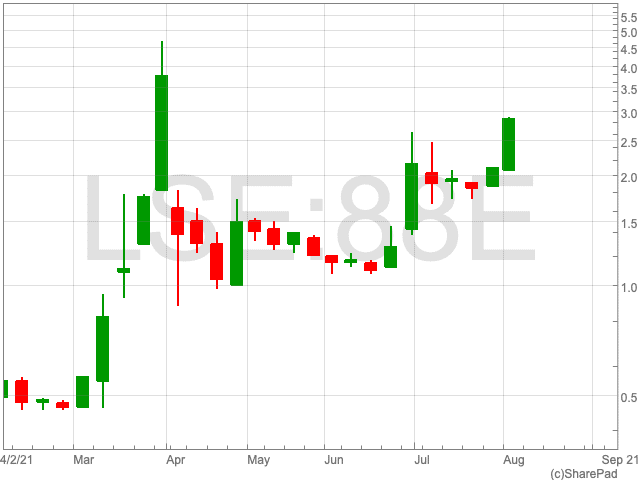
The 88 Energy share price is flying on Wednesday as the oil company provided a field update. At the time of writing, the 88 Energy share price has added 18.49%, bringing its value to 2.87p. The move caps an outstanding week or so for the AIM-listed company, which made gains following the announcement of a new Non-Executive Chairman. Over the past five trading days, the 88 Energy share price is up 45.56%. Investors will be hoping the recent news is a sign of things to come.
Umiat Oil Field
The 88 Energy share price is ripping after the company provided an update on its Umiat oil field in Alaska, USA.
88 Energy has received a two-year extension for its obligation at the Umiat oil field, ending in August 2023, as the company continues to deepen its understanding of the land.
The oil company is going over its vast collection of data, in addition to findings from the Merlin-1 well, from the adjacent Project Peregrine permit.
88 Energy said that deferral allows for optimisation of a full field development plan, including evaluation of potential synergies with Project Peregrine plans.
Studies underway to review historical Umiat oil field development plans have also identified potential cost savings on planned development CAPEX.
Integrating the Linc/Malamute interpretation has provided a better understanding of the Peregrine reservoir geometries to the north as well as enriching our petrophysical database with additional well control (Umiat-8 and Umiat-23H), the company said in a statement today.
Philip Byrne
88 Energy announced on Monday that Philip Byrne has been appointed as Non-Executive Chairman and to the board of the oil exploration company.
Byrne will replace Michael Evans, who retired after seven years in the role.
The new 88 Energy Non-Executive Chairman, Phil Byrne, commented: “I am delighted to be joining the 88 Energy team at this exciting time. The Company’s suite of world-class acreage on the North Slope of Alaska offers huge potential for shareholder value in my eyes. I look forward to assisting the management team in the drive to unlock this value through our appraisal and exploration activities over coming seasons.”
Byrne is a petroleum geologist with over 40 years’ experience in the international oil and gas industry.
The transition will come into effect on Thursday, according to Reuters, slightly behind the initially planned date.
The upgrade will technically have taken place once the 12,965,000th block on the blockchain has been verified.
Ethereum Improvement Proposal 1559
The ‘Ethereum Improvement Proposal’ (EIP) 1559 shares similarities to a bitcoin ‘halving’ in which the supply of the cryptocurrency is gradually reduced. When it comes to bitcoin, historically, halvings have preceded bull-runs to higher price points.
However, while bitcoin is considered more of a store of value in the world of de-fi, Ethereum is the most prominent financial infrastructure technology.
EIP 1559 is a software upgrade that alters the way transactions on the Ethereum blockchain are processed. It does this by giving clear pricing on transaction fees in Ether paid to miners in order to validate transactions. Additionally, it ‘burns’ a small number of tokens, meaning they are removed from circulation.
This means that the tokens become rarer and therefore more valuable.
Price Outlook
Andrew Keys, managing partner at DARMA Capital, believes that ether’s current price point fails to take into account the coming software upgrade.
Keys suggested that tomorrow’s upgrade, along with another similar upgrade in early 2022, will “”easily quintuple the price of ether” by next year.
Toyota (LON:TYT) posted on Wednesday a record $8.2bn profit for Q1 in a show of the car company’s robustness in the face of the challenges posed by the pandemic.
For the same period a year ago the company recorded a profit of $127.4m.
Its quarterly sales rocketed on a year-on-year basis to $73bn, a new record for the Japanese company.
Despite the impressive results, concerns remain for the car manufacturer, including a shortage of semiconductors and an increase in the cost of materials.
As a result, Toyota did not upgrade its forecasts for the year, instead opting to keep them at the same level of $21bn profit and 9.6m vehicles in global retail sales.
The Toyota share price on the London Stock Exchange is up by 0.11% in the early afternoon on Wednesday.
We would like you to know that Digital Asset Management (DAM/DAMEX) is now public on Crowdcube as the first Gibraltar registered company to crowdfund.
In the first few days of being live in Dam’s community, the company has raised over 1,000,000 GBP.
Dam is now overfunding and at the time of writing, we have achieved 108% of our initial target. There is still a limited allocation of shares available during the public phase of our crowdfund, so now’s the time to invest before it’s too late following the link crowdcube.com/dam
Established in 2017, DAM is one of 12 DLT licensed and regulated companies in Gibraltar, taking advantage of the regulatory certainty offered by the Gibraltar Government. DAM is licensed and regulated to offer crypto OTC (Over-The-Counter) brokerage and custodial services by the GFSC. The company has 32 employees, most of which are based in Gibraltar and has ambitions to enter the American markets in 2022.
DAM has over 400 OTC clients and has traded +500m euros worth of crypto in the first half of 2021 alone and over 1B since 2019.The company is launching Damex in Q4 this year. Damex is a retail application focused on health and finance which has gained over 80,000 sign ups on a waiting list so far.
Aside from the DLT license in Gibraltar, which allows DAM to buy/sell and store crypto for their clients as a financial institution, DAM
is also registered with the FCA in the UK as an EMI (Electronic Money Institution) agency company under Modulr Finance Ltd. Which allows DAM to issue IBANs (International Bank Account Numbers) and Sort Codes to their clients within the Damex mobile application.
Additionally, the DAMEX debit card has been approved by Visa and shipments will begin before the end of the year.
DAM’s CEO, Sam Buxton commented:‘‘Our first four years have been a successful grind and we are now well positioned for the next four years to be game changing for the company. We truly believe our Damex Application will make a positive impact in our communities.” “We’re excited to welcome the public into our family and we look forward to the journey ahead with the community by our side.”
Sign up to crowdcube.com/damand join DAM’s social media channels to stay up to date with upcoming announcements.
Alan Green joins the UK Investor Magazine for a broad discussion of UK Banks, China result from Taylor Wimpey.
We discuss Natwest (LON:NWG), Lloyds (LON:LLOY), Taylor Wimpey (LON:TW) and Mode (LON:MODE).
Natwest and Lloyds reported after we looked at Barclays results on last week’s Podcast and where largely similar in terms of earnings growth driven by a reversal of COVID provisions that ravaged profit last year.
Taylor Wimpey released bumper half year results which demonstrated the robustness of the UK housing market and we look at what investors can expect going forward.
We also pay attention to China and how relevant their growth story is as we emerge from the pandemic.
Rolls-Royce (LON:RR) has struck an agreement to sell Bergen Engines, its Norwegian maritime engine business, to Langley Holdings, the UK engineering group, for €63m (£53.6m).
Rolls-Royce will keep €110m (£93.6m) as part of the agreement, €70m from the deal, as well Bergen’s current €40m cash holding.
Bergen employs more than 900 people across the world and made revenues of around €200m last year.
The deal is awaiting approval from the Norwegian government as they have expressed concerns over the company being sold to a Russian company due to national security concerns.
The sale by Rolls-Royce is part of its wider plan to generate money from disposals to aid its recovery from the devastating impact of the coronavirus pandemic on its balance sheet.
The FTSE 100 company initially put Bergen up for sale in March, however, it was vetoed at that point by the Norwegian government.
Rolls-Royce had put Bergen back on sale in March after a deal to sell the company to a Russian group for €150m (£132.5m) was vetoed by Norwegian politicians on national security grounds.
Warren East, CEO of Rolls-Royce, commented on the sale: “We believe that this agreement will provide Bergen Engines and its skilled workforce with a new owner able to take the business on the next step of its journey. The sale of Bergen Engines is a part of our ongoing portfolio management to create a simpler, more focused group and contributes towards our target to generate at least £2bn from disposals, as announced last year.”
Recent rise of the Delta variant in China is causing concern
Data emerging from China revealed that the nation’s service sector growth sped up in July, reaching its highest level since May.
However, the ongoing spread of the Delta variant of the coronavirus remains a concern and is posing a threat to a full recovery.
The Caixin /Markit services Purchasing Managers’ Index (PMI) rose to 54.9 in July, up by 4.6 from the month before. Any value above 50 represents monthly growth rather than contraction.
So far the recovery of the service sector in China has been outpaced by that of its manufacturing sector.
However, the more recent rise of the Delta variant is causing concern and leading to an element of uncertainty of China’s near-term outlook.
July figures suggested Covid-19 was successfully contained in the southern region of China, according to Wang Zhe, senior economist at Caixin Insight Group, however, he said the latest outbreak would be likely too negatively impact August’s PMI figures.
“The economy still faces enormous downward pressure, and we need to ensure business owners remain confident,” Wang said.
The FTSE 100 continues to fight back after a sell-off in mid-July, rising by 0.28% to 7,126 during the morning session on Wednesday.
“If it can break the 7,217 intraday high seen on 16 June, then the index would be trading at levels not seen since February 2020 when global markets started to crash as the pandemic spread,” says Russ Mould, investment director at AJ Bell.
“Hitting that level looks possible this summer in the absence of any major negative news to trouble investors,” Mould added.
“Sadly, it doesn’t take much to rattle the markets, and there are plenty of reasons to remain cautious, such as many stocks trading on elevated valuations and the Delta variant continuing to cause disruption.”
The UK market on Wednesday was supported by BP extending gains for a second day following yesterday’s results, while banks and housebuilders were also on the menu for investors.
“What’s interesting is how demand for certain industries has remained strong post-lockdowns. There was a feeling that some sectors would see a drop-off as life starts to return to normal, but in many cases that hasn’t happened,” said Mould.
FTSE 100 Top Movers
Taylor Wimpey (3.02%), Legal and General (2.26%) and Prudential (2.05%) are leading the way on the UK index less than two hours into trading.
Just Eat (-2.35%), Fresnillo (-2%) and Ocado (-0.99%) are trailing the pack on the FTSE 100.
FTSE 100
Taylor Wimpey, the homebuilder, has constructed a record number of homes over the past half-year, boosting the company’s revenue levels in the process.
Over the last six months the FTSE 100 company completed 7,303 homes, a substantial increase from 2,771 during the same period a year ago.
The additional 4,500 properties saw its revenue surge by 191.1% to £2.1bn.
Taylor Wimpey also confirmed it raised its full-year profit guidance as the average selling price rose by 7%.