Vietnam Holding celebrates 15th anniversary

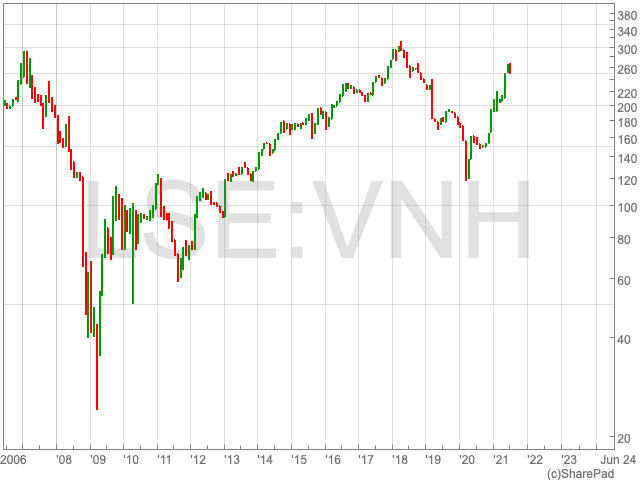
Vietnam Holding (LON:VNH), the closed-ended fund that invests in high-growth companies in Vietnam, is celebrating its 15th anniversary today. The London-listed investment trust, launched in 2006, has followed the Southeast Asian nation through its astonishing transformation since its inception.

History

The fund got off to a strong start in 2006, however, it was soon greeted by the destructive global financial crisis in 2008, which put the world economy in a stranglehold. Following the crisis, Vietnam underwent massive changes, surpassing Brazil as the world’s largest coffee exporter in 2012, followed by high levels of growth in 2013 after years of stagnation.

Vietnam has liberalised its economy over the past few decades and has recorded high economic growth in the process. With the country’s ideal location for manufacturing and established trade deals, in addition to a young and increasingly literate population, this phenomenon shows no sign of letting up. Vietnam was one of the highest growing economies in the world last year at just under 3%.

Over the past five years, the Vietnam Holding share price, now at 246.90p, has risen by 44.1%. Since its inception, 15 years ago, it has added 55.42%.
Vietnam Holding Portfolio

The fund’s portfolio is concentrated with two thirds of its holdings in its top ten companies. Fianancial services, the top sector, makes up 41.06% of the fund’s portfolio, closely followed by technology and real estate at 18.32% and 14.31%. Its weighting towards industrial goods and real estate play towards the aforementioned processes of industrialisation and urbanisation in Vietnam.

UK Investor Magazine Conference 

Vietnam Holding presented at the UK Investor Magazine Virtual Conference in March.

Craig Martin, Chairman of Dynam Capital, the manager of Vietnam Holding, presented the case of investing in Vietnam and provided detailed insight into the Southeast Asian economy.

Worker shortages cause slowdown in UK recovery amid ‘pingdemic’

0

IHS Markit UK composite PMI dropped to 57.7 in July

UK private sector growth is at its lowest point in four months, a survey by IHS Markit revealed, while staff shortages dragged on the economic recovery this month.

A phenomenon being referred to as the “pingdemic” is causing a number of healthy workers to isolate at home as they are alerted by the NHS test and trace app. Firms have reported back to IHS Markit that the “pingdemic” is causing material and staff shortages, resulting in the slowest recovery since March.

The stalling momentum is causing levels of optimism to fall to the lowest level in over nine months.

IHS Markit UK composite PMI dropped to 57.7 in July, down from 62.2 the previous month, representing a significant fall. Readings above 50 indicate an expansion in business activity.

Chris Williamson, Chief Business Economist at IHS Markit, commented on the figures released on Friday by IHS Markit: “July saw the UK economy’s recent growth spurt stifled by the rising wave of virus infections, which subdued customer demand, disrupted supply chains and caused widespread staff shortages, and also cast a darkening shadow over the outlook.”

“Although business activity continued to grow, aided by the easing of lockdown restrictions to the lowest since the pandemic began, the rate of expansion slowed sharply to the weakest since March.”

“Transport, hospitality and other consumer-facing services companies were the hardest hit, though manufacturing also saw growth weaken markedly during the month,” Williamson said.

BoE to make green gilts eligible for QE

0

The move caters to high demand for environmentally friendly investments

The Bank of England (BoE) revealed on Friday that it plans to buy new green gilts issued by the UK government later in 2021.

The move is part of the central bank’s asset purchase programme, which considers the gilts to be the same as other government debt.

In an effort to cater for high demand for environmentally friendly investments, the UK government intends to issue a minimum of £15bn of new debt during the current financial year.

David Barmes, Senior Economist at Positive Money, welcomed the Bank’s decision to make green gilts eligible across its operations. “The Bank should now go a step further and consider actively favouring green gilts in order to support green government spending and fulfill its mandate to support the net zero transition,” Barmes said.

Barmes also drew attention to other European nations which have been quicker out of the box.

“Compared to countries like France and Poland, the UK has been relatively slow to start issuing green bonds. With a huge green investment gap to fill ahead of COP26, the Bank and the Treasury should closely coordinate on how the government can rapidly expand its green spending while keeping borrowing costs low.”

The Bank of England confirmed that the green gilts will be equally eligible to already existing gilts. They can also be used as collateral in other BoE operations by banks.

IAG share price dives ahead of H1 results next week

0

IAG Share Price

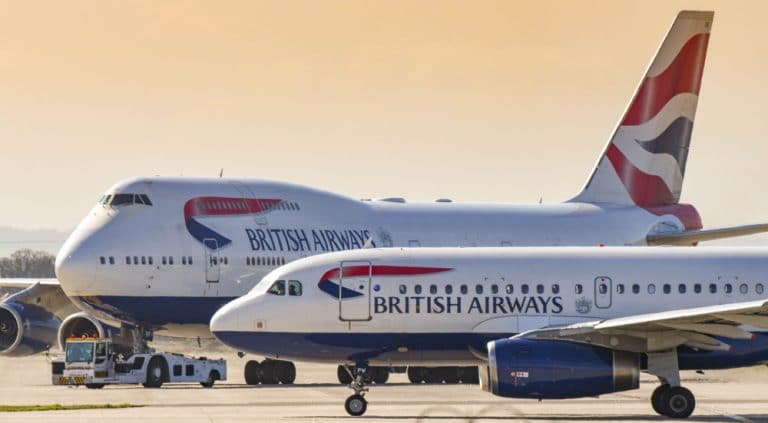
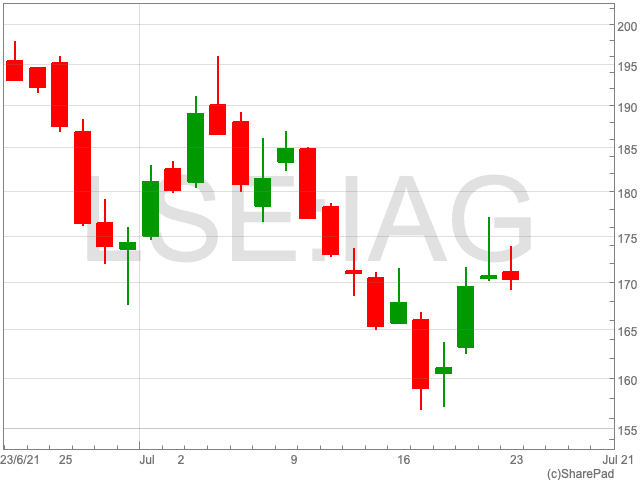
The IAG share price (LON:IAG) is down by 11.84% over the past month as ‘Freedom Day’ and the ongoing relaxing of restrictions failed to support the airline in a sustained way. IAG has struggled to gain any momentum since the middle of March, when its share price looked as though it might take off, amid what in hindsight proved to be blind optimism. Year-to-date the IAG share price is up by 13.59%, however, the uncertainty and lack of passenger numbers is cause for concern for the airline.

Covid-19

While the already delayed ‘Freedom Day’ was supposed to be the point at which things could return to normal, it has proved to be nothing of the sort. Especially for those with a desire to travel internationally.

With reports saying cases could rise to 100,000 a day in the UK without restrictions, many Brits are having to isolate. This is causing demand for flights to dive as more people are being told to self-isolate, while many are cancelling pre-booked vacations.

IAG is having to carry on paying its fixed costs and is subsequently losing out on revenue, which is becoming increasingly concerning to investors.

Finances

That leads on to the the company’s balance sheet and how it is effecting the IAG share price. Back in May, IAG posted a loss of £1.14 billion in Q1. At the time the company decided not to provide a guidance for the following quarter due to the uncertainty. They were proved right as uncertainty has persisted throughout the second quarter.

Investors could soon have a clearer indication of IAG’s current financial predicament. IAG’s half year results will be revealed in a week’s time and will provide a clearer indication of the company’s outlook. It is possible that investors are anticipating negative results which could already be factored into the IAG share price.

Sterling down as Delta variant concerns investors

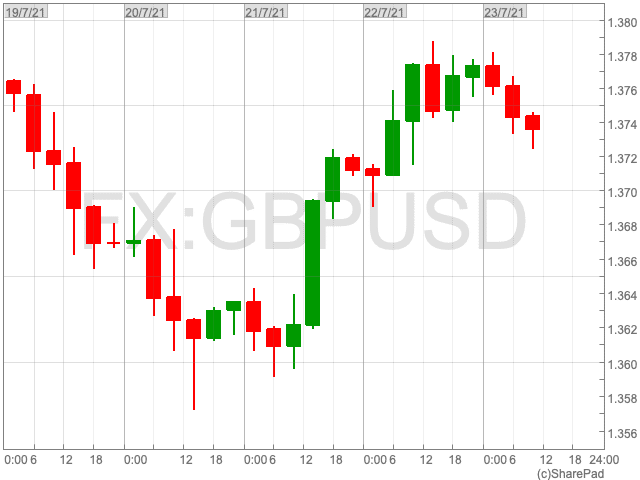
The pound was 0.25% lower against the dollar early on Friday morning

Sterling dipped on Friday as retail sales surpassed expectations, while uncertainty remains over rising Covid-19 cases and the impact on the UK economy.

The reaction was muted in the FX market “with both EUR and GBP trying to recover some of the losses against the dollar, testing the $1.18 and $1.38 resistance levels,” Jesús Cabra Guisasola, Associate at Validus Risk Management, said.

The pound has held relatively steady over the past week amid the threat of a wide selloff in a number of currencies due to concerns over the spread of the Delta variant.

At 1116 GMT, the pound was 0.25% lower against the dollar at $1.3739, and down by a similar amount versus the euro.

Retail sales jumped in June, as football fans eat and drank their way through the Euro 2020 football championship, following a slump in May. 

The Office for National Statistics revealed on Friday that month-on-month retail sales in the UK rose by 0.5% between May and June.

Commenting on GBP and EUR reaction to the latest PMI figures, Jesús Cabra Guisasola said: “While the Eurozone PMI composite came out higher than expected in July 60.6 (vs 60 estimated) and rising for the fifth consecutive month, PMI in the UK fell considerably and unexpectedly to 57.7 from 62.2 in June, compared to the consensus of 61.5.”

“On the UK side, the economic recovery has been stronger due to the success in its vaccination programme and new daily Covid-19 cases have been coming in lower during the past few days. However, it will be important to see if this is sustained in the long run given the reopening could help to spread the virus more rapidly.

“Meanwhile, risks continue to be on the table for the euro area with the delta variant spreading across the continent. Moreover, inflation has been well below the ECB’s target, which has provided some further support for the central bank to maintain its ultra-dovish tone and favourable financing conditions.”

UK retail sales see resurgence in June, boosted by Euros

0

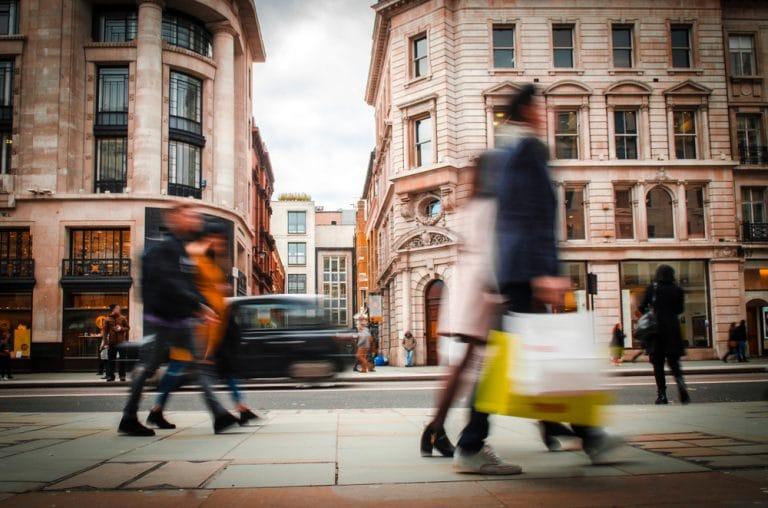
UK retail sales up by 0.5% month-on-month

Retail sales jumped in June, as football fans eat and drank their way through the Euro 2020 football championship, following a slump in May.

The Office for National Statistics revealed on Friday that month-on-month retail sales in the UK rose by 0.5% between May and June.

The figure is 0.1% higher than the expansion expected by economists, according to a poll by Reuters.

Sales at food stores, which saw increases of 4.2%, were the biggest contributor to June’s figures. The ONS also said that they were directly linked to the Euro 2020 football championship, in which England reached the final but fell short at the final hurdle.

“June’s retail sales have picked up again following the dip seen last month, with the main driver coming from food and drink sales, boosted by football fans across Britain enjoying the Euros,” said Darren Morgan, ONS director of economic statistics.

Danni Hewson AJ Bell financial analyst, commented on the latest retail figures:

“The crisp aisle in my local supermarket told the tale writ large in the latest UK retail figures; the day England trounced Germany the shelves looked like they’d been ravaged by nacho-loving hordes. The surge in instore food sales helped give a nice little lift to the sector which had seen a fall-back last month as consumers flocked back to bars and restaurants.”

Data also revealed that spending on home improvement products has slowed down, as non-food shop sales falling by 1.7% in June.

On the other hand, automotive sales rose, as workers increasingly need to find a way to get in to the office, while other are travelling within the UK for the holidays.

“With life finding its new normal more people were filling up their vehicles either for the commute or for a pleasure jaunt, but salesare still down on pre-pandemic levels with hybrid working expected to keep a lid on the number of times drivers need to go back to the pumps,” said Hewson.

“What these figures do share with us is the fact that people are spending and they’re embracing every new opportunity that comes their way. Novelty, excitement, opportunity, all key factors after months of constraints. Whether new freedoms will tempt more people out or push people to stay away from busy indoor spaces is a difficult question to answer and savings can only be spent once.”

FTSE 100 set to end the week in the green

0

At the end of a tumultuous week, the FTSE 100 has managed to recover from all the weakness and is on track to end the five-day session marginally ahead. Less than a couple of hours into the morning session the FTSE 100 is up by 0.76% to 7,021, having opened the week at 7008.9.

“Investors who panicked when global markets took a dive on Monday may now be regretting their decisions to dump holdings,” said Russ Mould, investment director at AJ Bell.

“Commodity producers helped to drive up the FTSE 100 on Friday, supported by several unloved stocks starting to regain favour with investors including BT and Rolls-Royce.”

Up next week is the latest meeting from the Federal Open Markets Committee. The market will be eagerly watching for any signs of a change to US central bank policy. “Investors are worried that economic growth could be losing momentum, but equally inflation is affecting us all. The Fed is unlikely to make any major changes to its current stance, but the market will look for every little sign of what the central bank could do next,” Mould said.

FTSE 100 Top Movers

Heading up the FTSE 100 on Friday is Rolls-Royce (3.06%), Melrose Industries (2.59%) and Natwest (2.48%).

At the other end, Royal Mail (-0.79%), Avast (-0.72%) and Flutter Entertainment (-0.50%), are the bottom three companies on the UK index, albeit with narrow falls.

Vodafone

Vodafone said its sales increased during the last quarter as its consumer and business operations saw improvements.

While the telecommunications company is not yet at pre-Covid levels, it made €11.1bn during Q1.

Upon the update by the company, the the FTSE 100 company’s share price is up by 2.2% during the morning session on Friday.

Vodafone pulls in €11.1bn in revenue during Q1

0

Vodafone said much of its growth was down to growth in Europe and Africa

Vodafone (LON:VOD) said its sales increased during the last quarter as its consumer and business operations saw improvements.

While the telecommunications company is not yet at pre-Covid levels, it made €11.1bn during Q1.

Upon the update by the company, the Vodafone share price is up by 2.2% during the morning session on Friday.

Its revenue from services, where Vodafone makes most of its money, rose by 3.1% to €9.39bn. The company said this was down to growth in Europe and Africa.

Revenue generated from selling handsets recovered from Covid-induced disruptions, rising by 5.7%.

Russ Mould, investment director at AJ Bell provided context to Vodafone’s results announcement:

“Full year numbers from Vodafone in May really created a stink. It fell short on profit and gave investors the unpalatable message that it would have to increase spending on its network, putting a dividend which had already suffered a heavy cut in 2019 potentially back in the firing line. Growth targets also left the market feeling distinctly uninspired,” said Mould.

“While the bad smell has hung around the stock since then, Vodafone’s first quarter trading statement has acted as a bit of an air freshener as it reports revenue growth across its consumer and business segments.”

Nick Read, chief executive of Vodafone, commented: “I am pleased to report that we are back to service revenue growth in Europe, as well as Africa. This growth was broad-based within both Consumer and Business segments, with the vast majority of our markets contributing. This is a result of our commercial and operating momentum built over the past 3 years as part of our strategic transformation,” said Read

“In Europe, the operating and retail environment has not yet returned to normal conditions, but we are delivering a good service revenue performance. In our Business segment, we are seeing stronger growth with our public sector and corporate customers, whilst further building a pipeline of demand for our digital services, such as IoT, security and cloud.”

“In May we announced, for the first time, our medium-term growth ambition. We have entered the year in line with this ambition, on track to deliver our guidance for the year, and with a continued focus to optimise our portfolio, to accelerate the delivery of shareholder value.”

Hotel Chocolat raises £40m to support ambitious growth plans

0

Hotel Chocolat expects to see its sales jump as restrictions ease further

Hotel Chocolat, the British chocolatier, has raised £40m in a recent share placement as it eyes a new digital-based strategy.

The share placing, led by Peel Hunt and Liberum Capital, was reportedly oversubscribed.

“The £40m growth capital raised today will be invested in our fast-growing business, furthering our aim of becoming a global digital-led chocolate brand. I’m delighted that our issue was oversubscribed, demonstrating the support Hotel Chocolat enjoys with its investors,” said co-founder and CEO Angus Thirlwell.

Hotel Chocolat considers now to be an opportune time to raise funds as it expects to see its sales jump as restrictions ease further.

The company recently released a trading update suggesting its profits for the year to 27 June would surpass previous expectations.

Since the pandemic began, this is the second time that the retailer has raised money from its shareholders. In 2020, just before the UK’s first Nationwide lockdown, Hotel Chocolat confirmed a £20m placing.

At that point, despite the potential oncoming downturn, the placement’s purpose was to support the company’s growth strategy rather than to guard against financial distress.

Since then, Hotel Chocolat’s growth has predominantly come via digital channels.

The Hotel Chocolat share price (LON:HOTC) is down by 0.6% on Friday morning to 357.80p per share.

Euro strengthens as Lagarde pledges to persist with low rates

The announcement comes after the ECB raised its inflation target to 2%

The European Central Bank (ECB) committed to maintaining its low interest rates on Thursday, in addition to buying bonds, in an effort to move the eurozone economy away from slow-moving inflation.

Lagarde said in here press conference that the ECB will persist with negative interest rates until inflation reaches 2% well ahead of the end of its projection horizon and for the rest of the projection horizon.

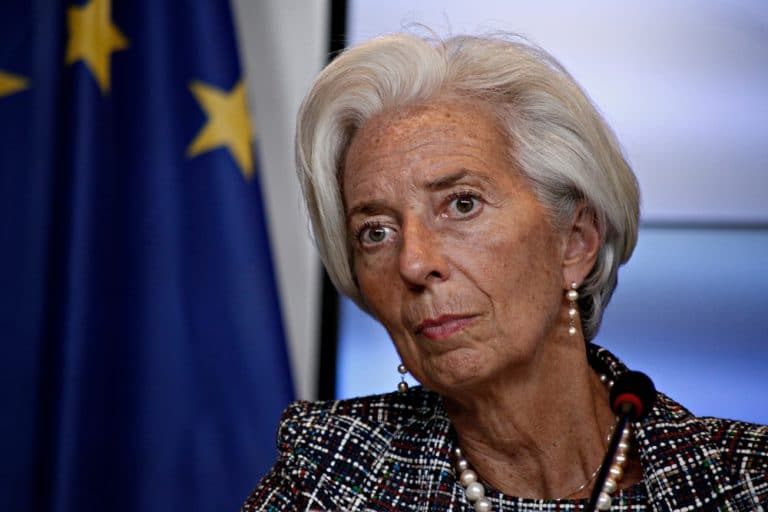
“We did so to underline our commitment to maintain a persistently accommodative monetary policy stance to meet our inflation target,” ECB President Christine Lagarde added.

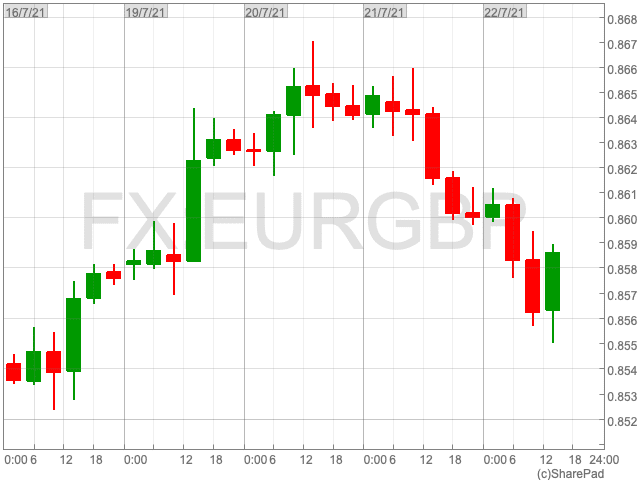
The Euro is down by 0.2% against the pound on the back of the announcement to £0.858525. While, after initially weakening, the Euro strengthened against the dollar by 0.19% to $1.18177.

The announcement comes shortly after the ECB set forward its updated strategy to raise its inflation target to 2%, where the central bank said it would be comfortable with inflation exceeding the target on a temporary basis.

Over the past ten years, inflation has fallen short of the ECB’s target, and this has been excacerbated by the

Commenting on the EUR/USD reaction to the latest ECB policy decision statement, Ben Carter, Analyst, Global Capital Markets at Validus Risk Management, said: “Much like the Fed, the ECB will be letting inflation run hot and are looking for prints of 2% “durably” for the rest of the projection horizon before considering any change in rates. Meanwhile, as expected, there were no changes in the PEPP program and this is looking like it will be a decision for later in the year, possibly the start of 2022, shifting the attention to the September meeting. With lots of talk around the Fed beginning to taper their purchases before year end, the EUR may struggle to gain any ground against the USD over the next few months as Lagarde comments that inflation has picked up but remains subdued.”

“Leading up to the decision, volatility in the EUR was subdued and EUR/USD traded below 1.18. Looking ahead, Lagarde’s dovish comments around inflation decreasing next year, due to significant slack in the economy, does not bode well for the EUR, while any rate hike certainly seems a long way off.”