Sunak’s Green Bonds could provide a litmus test for green savings

0

The success of the new green bond will likely depend on the interest rate on offer

Rishi Sunak is expected to confirm plans for £15bn worth of green savings bonds in the coming days, which will allow Brits to invest in renewable energy schemes.

The bonds, expected to be among the biggest in the world, will be accessible via NS&I, a savings organisation backed by the treasury.

The announcement by the chancellor comes as the UK government steps up its efforts to go green ahead of the upcoming Cop26 climate conference in Scotland.

Sunak has previously said that Britain will market its first green bond in 2021 to meet growing investor demand for such assets designed to fund an environmentally friendly allocation of resources.

The success of the new green bond will likely depend on the interest rate on offer.

“Savers showed they’re willing to vote with their feet when NS&I cut interest rates across a swathe of accounts last November, and if the green savings bond offers a paltry rate of interest, it might fail to ignite demand from the public. On the flip side, if the interest rate is too high, it will raise questions about the cost to the taxpayer, because the green savings bond is ultimately just government borrowing by another name,” said Laith Khalaf, financial analyst at AJ Bell.

Thanks to the Bank of England’s quantitative easing programme and ultra-low interest rates, the government is able to borrow money cheaply, currently around 0.4% per year for 5 years.

“Any premium offered by the green savings bond above prevailing gilt yields is effectively an extra burden for the taxpayer, and costs incurred in this way will naturally be weighed up against other fiscal decisions taken by the Chancellor to repair the nation’s finances in the wake of the pandemic,” Khalaf added.

The longer-term nature of funding green projects means that the Treasury will need to decided how long they keep savers’ money stored away.

“Presumably the government won’t want money flowing in and out regularly, so an instant access account doesn’t look feasible, and a product that locks up savings for say five years looks more appropriate. The longer the government asks savers to keep their money in the bond, the less take-up they are likely to get without offering a seriously big slice of interest.”

There has been a substantial rise in demand for ESG investment funds recently, with inflows into the industry reaching £10bn in 202, up from £3bn the year before.

“The new NS&I bond will be a litmus test to see if there is appetite in the savings market for sustainable products on a big scale. In theory a green NS&I bond is a great idea which will give consumers the option of an environmentally friendly savings account from a trusted provider. But the Treasury faces challenges in the design of the bond to ensure it hits the mark with savers, and at the same time doesn’t cost the taxpayer too much money,” said Khalaf.
FTSE 100 and DAX hungover from historic night at Wembley

0

The FTSE 100 fell 0.94% to 7,021 while the DAX slipped 1.35%, following slow starts to the day on the back of England’s historic victory over Germany at Wembley.

“Investors in each of these markets clearly did not want to get out of bed, either because of hangovers or disappointment respectively”, said Russ Mould, investment director at AJ Bell.

“Healthcare and technology stocks did their best to continue the party in the UK, but it wasn’t enough to revive the FTSE, with financials, energy, real estate and miners in the red,” Mould added.

IAG, owner of British Airways, continued its poor run of form as investors appear to be concerned over the aviation industry in general. The IAG share price is now down by 18.8% over the past month.

“In Germany, the Dax was pulled down by similar sectors to the FTSE 100, with automotive-related stocks also stuck in reverse. Having shot up earlier this year as investors hoped it would be a major success in the electric vehicle space, Volkswagen was the Dax’s biggest faller on Wednesday, followed by chassis and powertrain specialist Continental,” said Mould.

FTSE 100 Top Risers

The top three risers on the FTSE 100 on Wednesday, and the only three in the green at the time of writing, are Croda (0.46%), Sainsbury (0.21%) and Smith and Nephew (0.19%).

Rolls-Royce (-3.51%), IAG (-3.35%) and Taylor Wimpey (-2.43%) are trailing the pack of the UK index during the morning session.

Serco looks beyond pandemic following strong first half of the year

0

Serco revealed growth in its underlying profit of more than 50%

Serco (LON:SRP) reported a 19% increase in revenue on Wednesday, as the company provided an update for H1 2021 and its guidance for the whole year.

The FTSE 250 company revealed growth in its underlying trading profit of more than 50%, while its order intake is at record levels of nearly £4bn.

This includes major contracts with the UK Ministry of Defence, the Department of Work & Pensions and the Royal Canadian Airforce.

Serco is in a ‘robust financial position’ with adjusted net debt expected to be around £275m, while leverage is towards the bottom end of its target range of 1-2 times net debt.

“For the year as a whole, we expect to deliver Underlying Trading Profit of around £200m, or nearly 30% growth in constant currency,” said Rupert Soames, Serco chief executive.

“Profits will be weighted to the first half, and will include contributions from the WBB and FFA acquisitions, which will enable us to absorb the impact of the end of the AWE contract, the mobilisation costs of the recently-signed DWP contract and an expected reduction in Covid-19 related activities.”

Serco also intends to capitalise on the current strong trading to temporarily increase its rate of investment in its systems platform, cyber resilience, and business development spend to “respond to a strong pipeline of opportunities”.

Neil Shah, Director of Research at Edison Group, commented on Serco’s trading update:

“What’s interesting is that the company has reported Covid-19 contracts to have surged, representing £340m of first half revenues expected to be related to the pandemic, up from a comparatively low £80m in the prior year – a figure complemented by the recent £322m deal signed for the firm to run test and trace centres for the next 12 months,” said Shah.

“Serco will expect their new acquisitions FFA and WBB, both focused on long term activities, to continue their positive impact (having already contributed about 5% to revenues), as the firm seeks to ensure growth outside a pandemic context.”

Earlier this week, Serco secured a new £322m contract to continue operating Covid-19 testing locations.

Stagecoach arrives at a fork in the road

0

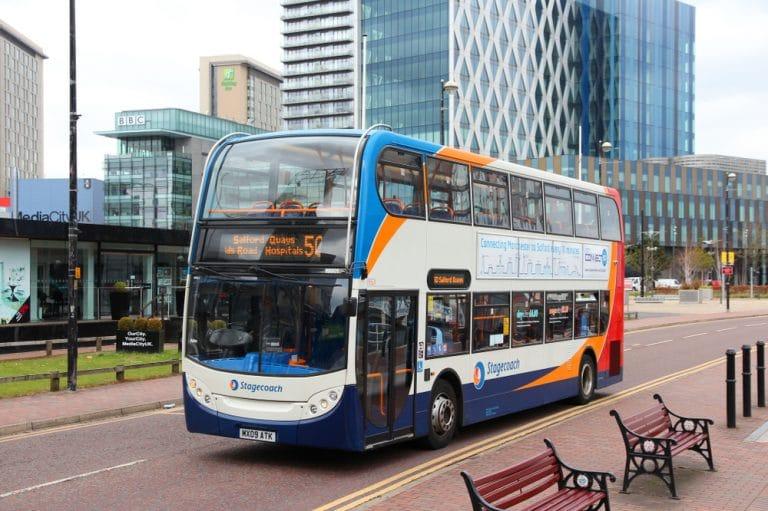
Stagecoach sees its pre-tax profit fall by 40% to £24.7m

Stagecoach (LON:SGC), the Scottish transport group, confirmed its profit and revenue declined during the pandemic as lockdowns negatively impacted the industry.

The group also revealed that it is getting rid of its full year dividend.

Stagecoach saw its profit before tax fall by 40% to £24.7m, while revenue for the year ending in May fell by £0.472bn to £928m.

“During the worst of the lockdowns, bus operators like Stagecoach saw just 25% of regular passenger numbers, this was back up to 50% by May and is still climbing. Stagecoach is now beholden to a new set of circumstances beyond their control such as public confidence, hybrid working patterns and the vaccine rollout,” said Ben Nuttall, Senior Analyst at Third Bridge.

“Rail journeys are more driven by people heading to work, whereas bus journeys are driven by leisure activities. This implies hybrid working patterns are more likely to have a long-term impact on trains rather than buses.”

Stagecoach is looking to the future now which could involve a shift in how transport is used.

“We expect a reconfiguration of demand within local transport networks,” the company said.

23% of its bus journeys outside of London were made by residents for commuting and business, meaning the company is less reliant on these travellers than other modes of transport.

“We see an overall net positive opportunity as government policy, changing consumer attitudes, health drivers and climate change targets necessitate less use of cars and more use of sustainable public transport and active travel,” the company said.

Stagecoach added: “It remains difficult to reliably predict the speed and extent of the recovery in the short-term, including the level of profit for the new financial year ending 30 April 2022.”

“The Government’s bus strategy marks a fork in the road for the UK bus sector,” say Nuttall.

“Our experts predict that where Stagecoach don’t achieve the partnership model they are pushing for, foreign operators, like RATPDev and Abellio, are likely to swoop in – given that Stagecoach is unlikely to accept the low margin of a franchise.”

Stagecoach faces some difficult structural issues around congestion, the decline of the high street, and the UK’s changing demographic.

“The pandemic has pushed bus operators like stagecoach to think a lot harder about the presentation and cleanliness of their vehicles as they fight to get passengers back on board.”

Dixons Carphone posts £4.9bn revenue on growing demand for tech during pandemic

0

Dixons Carphone will resume dividend payments

Dixons Carphone (LON:DC) confirmed on Wednesday that it made £4.9bn in revenue across the UK and Ireland as demand for technology products soared during the pandemic.

The company also posted a 34% increase in yearly profit and committed to resuming its dividend payments.

The group, better known s Currys PC World and Carphone Warehouse in the UK, announced an adjusted profit before tax of £156m for the year ended at the beginning of May.

“Technology has become even more central to people’s lives,” said Alex Baldock, CEO of Dixons Carphone.

James Andrews, Personal Finance Expert at money.co.uk, commented on how Dixons Carphone outperformed other retailers throughout the pandemic.

“The secret to its success has been its ability to successfully market products online to rival that of in-store shopping. The online push – which includes the ShopLive service connecting potential customers with real-life store staff for demonstrations and more – started before the virus hit, seeing the high street chain already one step ahead of many rivals,” Andrews said.

“Thanks to Dixons Carphone’s strong online offering, the retailer has managed to keep profitable despite the closure of its stores around the UK. Over the past year, digital sales have grown by triple digit figures, backing up the sentiment that a smooth online buying process is imperative to its 2021 success.”

“The retailer had a quick decision to shutter stores that had become unsustainable and move stand-alone Carphone branches into Dixons or Currys PC World stores, also helped the retailer drastically limit its losses.”

“This week Dixons Carphone also secured an exclusive deal with Vodafone to its mobile phone plans across its 300 stores. This is a strong signal to customers and investors, following EE and O2’s decision to sever its contracts after being hit by financial penalties for not reaching sales targets.”

Seraphim Space IT set for lift off

Seraphim Space Investment Trust is providing investors with an opportunity to invest in advanced space technology and the growing companies that are developing that technology. There is an intermediaries offer so small investors have a chance to take part in the £150m fundraising.
As well as the fundraising at 100p a share, Seraphim Space is issuing up to 30 million shares to acquire an existing portfolio of space-related investments. The current valuation of the portfolio is £26.1m, but four of the investee companies are in the middle of funding rounds and the final price depends on the valua...

Media Tech SPAC launches PrimaryBid offer

Media Tech SPAC is raising cash via Primary Bid ahead of a standard listing later this summer. The investment company is seeking to acquire media and technology companies. The company wants to raise up to £6m at 10p a share.
Riverfort Global Capital, which is likely to seek to launch other SPACs, and Barry Downes of Sure Valley Ventures are behind the venture. The focus is technology businesses in Europe that have a strong management team and innovative, scalable technology.
Areas of interest include digital technology, cyber security, social media, content distribution, virtual reality, gamin...

EasyJet share price: time is ticking on summer 2021 as CEO calls for easing of restrictions

0

EsyJet Share Price

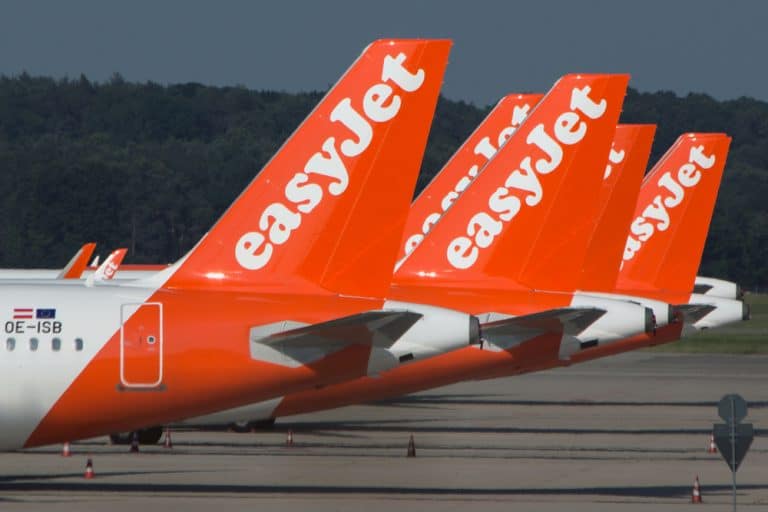
As reported yesterday, the EasyJet share price (LON:EZJ) took a hit, as Angela Merkel suggested that the EU should categorise the UK as a “country of concern”, in addition to implementing restrictions to those travelling from the UK.

With the EasyJet share price down another 2.26% on Tuesday, it has lost 11.98% over the past five days. Heading into July, and with the rising spectre of the Delta variant, investors will be concerned about the future prospects of the low-budget airline.

Balance Sheet

The good news for investors is that EasyJet’s finances are relatively strong. The airline should not have to undergo any drastic measures in the near future.

This is because the company has £2.9bn in cash and unused debt, while over the past year, EasyJet has also carried out a significant restructuring and cost reduction process.

The cash could allow the EasyJet share price to bounce back as the airline recovers when restrictions are eventually lifted, and will keep it operational in the meantime, even in the event of the worst case scenario.

Air Travel

So, what is the worst case scenario? It could take years for EasyJet to reach pre-pandemic levels of flights. And the airline could miss out on a whole summer of travel. But it remains difficult to know if this will happen.

What is known is that the emergence of the highly infectious Delta variant led the UK government to delay England’s reopening phase by a month, now July 19.

The airline industry, including Johan Lundgren, chief executive of EasyJet, has called on Boris Johnson to relax restrictions, especially for vaccinated people, but it appears to be to no avail.

It has been estimated that up to 195,000 travel jobs have gone or are at risk of being lost due to the pandemic.

Lundgren usurprisingly believes “that much of European travel could be opening up in a safe way”.

While the recent fall in the EasyJet share price could attract investors, there could also be further to go. In the meantime, investors and travellers alike may have to show a little more patience.

Ethos Invest launches world’s largest sharia-compliant fund

The fund is a milestone in promoting Sharia-compliant and ethical investments in the Western world

Ethos Invest, based in the UK, has launched its Financial Services & Technologies Fund, which will seek to raise £1bn in funds for private equity investments in sharia-compliant and ethical SMEs.

The fund will be the first of its kind and will invest in disruptive financial services companies.

While most of its capital will be deployed in the UK, there will be additional investments across Europe, Asia and North America.

“The uniqueness of the Fund is that it bridges the gap for private equity funds between the UK and other Islamic countries such as Saudi Arabia,” said Abdullah Medallah at Abdullah Medallah & Co. LLP who acted as a Legal Counsel.

The fast-growing Sharia-compliant investment industry is available across 80 countries but remains in relative nascence in Western markets.

This fund is a milestone in promoting Sharia-compliant and ethical investments in the Western world.

Shariah-compliant funds are investment funds that follow by the rules of Shariah law and the principles of the Islamic religion more generally.

“The fund brings together a team of experienced investment professionals, the Al Inma Investment Company, BMO Global Asset Management’s private equity team and Vistra, who serve as the Fund’s administrator,” Ethos Invest said in a statement.

Dr Quintan Wiktorowicz, partner at Ethos Invest, expressed delight at the launch of the fund:

“The Ethos team is excited to launch this Fund which represents a real milestone for Islamic and ethical finance in the UK and around the world. SMEs with strong ethical credentials are vital as we look towards a brighter future for the global economy and ensuring that these companies have access to capital is key. The Fund will ensure that this is taking place, especially in the Financial Services and wider technology spaces, and we look forward to partnering with many exciting businesses.”

US dollar strengthens ahead of this week’s US non-farm payroll report

‘A number significantly above the 700,000 mark could really get the dollar freight train running’

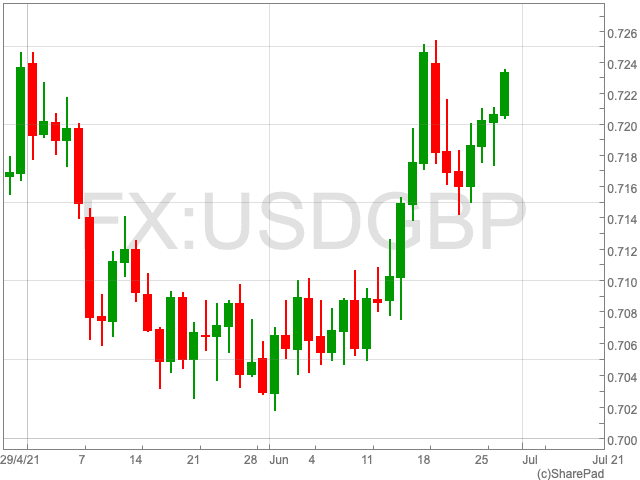
The US dollar is up by 0.38% on Tuesday against the pound as investors await this week’s non-farm payroll report. At the time of writing, the dollar is valued at £0.723076.

“Dollar strength continues to weigh on the euro and sterling, giving a modest boost to indices this side of the pond, while in the US despite some weakness in the futures markets remain in strong form,” said Chris Beauchamp, chief market analyst at IG.

“Money continues to flow into the US dollar, as the greenback continues its recovery from the lows of last week. The rosier US outlook is driving a renewed appreciation of US assets, even if the Fed has managed to muddy the waters on policy thanks to the recent FOMC meeting and the speeches following it.”

According to economists polled by Reuters, the US Labor Department will report a gain of 690,000 jobs for June, which would be up from 559,000 in May. Unemployment is expect to fall by 0.1% to 5.7%.

“This rise in the greenback is taking its toll on commodity prices, with gold under renewed pressure while oil becomes increasingly nervous ahead of this week’s OPEC get-together,” Beauchamp added.

Since the Federal Reserve’s policy meeting earlier in June, the dollar has been moving up, as the Fed said that the first interest rate rise could come in 2023.

“The potential for an upside surprise (in the U.S. jobs data) that pulls monetary tapering and tightening expectations forward is looming ever bigger for investors,” Karl Schamotta, chief market strategist at Cambridge Global Payments in Toronto, told CNBC.

“A number significantly above the 700,000 mark could really get the dollar freight train running, and no one wants to be tied to the tracks if that happens.”